This site is supported by our readers. We may earn a commission, at no cost to you, if you purchase through links.
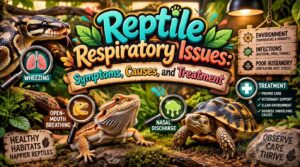
Your reptile just started breathing with its mouth open. Before you chalk it up to curiosity, know this: open-mouth breathing in reptiles is almost never normal. A snake that wheezes, a bearded dragon with cloudy discharge at the nostrils, or a tortoise tilting its head to breathe, these are signals worth taking seriously fast.
Reptile respiratory issues progress quietly and quickly. Because reptiles mask illness well, by the time symptoms are obvious, the infection has often taken hold.
Catching the right signs early, understanding the causes, and knowing your treatment options can change the outcome entirely.
Table Of Contents
- Key Takeaways
- Reptile Respiratory Issues: Symptoms and When to See a Vet
- What Causes Respiratory Infections in Reptiles?
- How Reptile Respiratory Problems Are Diagnosed
- Treating Reptile Respiratory Infections and Supporting Recovery
- Preventing Respiratory Disease With Proper Husbandry and Biosecurity
- Frequently Asked Questions (FAQs)
- Can I treat my reptile’s respiratory infection at home?
- Is there an upper respiratory virus going around?
- Can reptiles recover from respiratory infections without meds?
- What are some natural remedies for upper respiratory infections?
- What causes respiratory tract infection in reptiles?
- Do reptiles have chronic respiratory tract disease?
- How to prevent respiratory disease in reptiles?
- Do reptiles have bacterial pneumonia?
- How is respiratory disease diagnosed in reptiles?
- How to tell if a reptile has a respiratory infection?
- Conclusion
Key Takeaways
- Open-mouth breathing is almost never normal in reptiles — treat it as an urgent warning sign of an urgent warning, not a quirky behavior, because by the time symptoms are visible, the infection has usually already taken hold.
- The cause of a respiratory infection — bacterial, viral, fungal, or parasitic — determines the treatment, so skipping diagnostic testing and guessing at medication often lets the real pathogen win.
- Systemic warning signs like lethargy, inability to right itself, and cold extremities alongside labored breathing signal a body-wide emergency that needs same-day veterinary care, not a wait-and-see approach.
- Locking in proper temperature gradients, consistent airflow, enclosure hygiene, and a 30-day quarantine for new arrivals eliminates most of the conditions that allow respiratory pathogens to take hold in the first place.
Reptile Respiratory Issues: Symptoms and When to See a Vet

Reptiles are good at hiding illness, which means respiratory symptoms often go unnoticed until things get serious. Knowing what to watch for gives you a real head start. Here are the key signs that should be on your radar.
Understanding ball python biology and natural behaviors helps explain why these instincts for masking vulnerability make early symptom recognition so critical.
Common Respiratory Symptoms
When your reptile starts acting off, catching symptoms early makes all the difference. Here’s what to look for:
- Nasal discharge: clear to cloudy mucus around the nostrils
- Wheezing: audible whistling or crackling sounds while breathing
- Open-mouth breathing: persistent gaping that isn’t brief exploration
- Lethargy: reduced movement and a noticeably low appetite
These signs often appear before labored breathing sets in.
Labored Breathing Signs
Those early symptoms can escalate fast. Labored breathing looks different depending on your species. In lizards and snakes, watch for visible rib or flank movement with each breath. Snakes may force exhalations visibly. Tortoises show pronounced gular pumping and forelimb movement instead. Aquatic turtles? Look for lopsided swimming or inability to submerge.
Effort and depth matter more than breathing rate. Audible clicking or wheezing during breathing are among the key signs of respiratory infection that warrant prompt veterinary attention.
Systemic Warning Signs
When labored breathing pairs with lethargy or decreased appetite, you’ve moved well past a simple airway problem. That combination points to systemic infection.
A reptile that can’t right itself, stays on the floor, or keeps its eyes shut is deteriorating fast. Sunken eyes and cold extremities confirm it. Persistent open-mouth breathing alongside these signs means respiratory distress is now body-wide.
Urgent Veterinary Care
Once those systemic signs appear, don’t wait. Respiratory distress at that level needs same-day urgent veterinary care, not a cautious watch-and-see approach.
Vitamin toxicity and deficiency—common culprits behind sudden decline—are worth understanding in advance through resources like reptile health supplement guides for reptile owners.
Open-mouth breathing alongside collapse tells your vet exactly how serious things are. Oxygen therapy usually comes first to stabilize breathing. Fluid therapy corrects dangerous dehydration fast. Bring your husbandry records, symptom timeline, and any prior treatments. They matter.
What Causes Respiratory Infections in Reptiles?
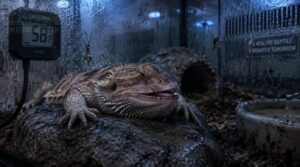
Respiratory infections in reptiles don’t just happen out of nowhere — something in their world triggered it. Knowing the source changes everything about how you respond. Here are the main culprits you need to know.
Bacterial Pathogens
Bacteria are the most common culprits in reptile respiratory diseases. Gram-negative species like Pseudomonas and Aeromonas top the offender list, and Mycoplasma drives stubborn, recurring infections that resist standard antibiotic therapy.
Don’t guess the pathogen. Culture and cytology from respiratory samples give you real answers. Empiric enrofloxacin may help early on, but resistant strains win when you skip susceptibility testing.
Viral Pathogens
Though bacteria dominate the conversation, viral respiratory conditions are just as dangerous. Paramyxovirus, serpentovirus, inclusion body virus, and reptarenavirus can each damage airways and trigger systemic illness. Intermittent shedding means your reptiles that look healthy can’t be cleared without testing.
Key facts:
- Viral spread travels through contact and contaminated secretions
- Stress accelerates viral replication
- PCR testing confirms the viral cause
Fungal Overgrowth
Think of fungal overgrowth like mold creeping into damp walls. When humidity stays high and airflow is poor, Aspergillus moves in fast. It colonizes airways, builds biofilms, and digs deep.
A lung wash pulls the evidence you need. Pair that with cytology and culture, and you’ll know exactly what you’re fighting. Treatment means targeted antifungals like itraconazole, not just guesswork.
Parasitic Infections
A ball python sharing habitat items with an infected cage mate can pick up lung worm larvae fast. Roundworms, coccidia, and mites can all quietly damage respiratory tissue before obvious symptoms appear. Because these parasites spread so easily, keeping a trusted antiparasitic drops for reptiles on hand makes early treatment far less stressful.
Watch for:
- Wheezing or labored breathing that worsens gradually
- Unexplained weight loss despite regular feeding
- Lethargy paired with nasal discharge
- Open-mouth breathing during rest
Antiparasitic drugs work well when caught early, but parasite control means routine vet checks, not just reacting to symptoms.
Poor Husbandry Conditions
Your enclosure is either working for your reptile or against it. Stagnant air and rising humidity give pathogens exactly what they want. Cold temperatures suppress immune function, making infections harder to fight off. Keep your ventilation system dialed in and gradients accurate.
Don’t underestimate enclosure hygiene. Dirty water and soiled substrate load the air with irritants. Solid biosecurity starts here.
A reptile-safe enclosure disinfectant kills pathogens without leaving chemical residues that could irritate your animal’s respiratory tract.
How Reptile Respiratory Problems Are Diagnosed
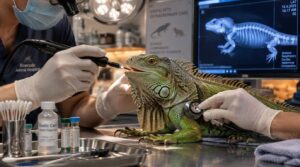
Getting a clear diagnosis is the first real step toward helping your reptile recover. Your vet has a few key tools for figuring out exactly what’s going on inside those airways. Here’s what the diagnostic process usually looks like.
Since respiratory problems sometimes come with skin issues or other visible symptoms, our guide to common reptile skin issues can help you spot additional warning signs worth mentioning to your vet.
Physical Examination
The exam starts before anyone even touches your reptile. Your vet carefully watches for nasal discharge, open-mouth breathing, and respiratory distress while it’s calm. Your temperature and humidity history directly shapes how all those findings are interpreted. Key checkpoints include:
- Nares for discharge or crusting
- Mouth posture and gular movement
- Chest effort and abdominal pumping
- Body condition and oral health
Imaging and Bloodwork
After the physical exam flags a concern, your vet moves straight to diagnostic imaging and bloodwork. Radiographs, or X-rays, give a snapshot of your reptile’s lung and air-sac spaces, craniocaudal views included, catching opacity patterns palpation misses.
Bloodwork analysis checks leukocyte shifts and chemistry panels, flagging organ stress or systemic spread. Together, they map this infection’s footprint before treatment begins.
PCR, Culture, and Lung Washes
Imaging shows the damage. Now you need the cause.
A lung wash pulls lower-airway fluid directly, giving the lab real material. From a single collection:
- PCR testing detects pathogen DNA fast, even post-antibiotics
- Culture grows live organisms and guides antibiotic selection
- Cytology reveals the cellular response and inflammation type
That combination turns a positive result into a real treatment plan.
Treating Reptile Respiratory Infections and Supporting Recovery

Treatment works best when it targets the actual cause, not just the symptoms. The right approach depends on whether you’re dealing with a bacterial, fungal, or viral infection—and each one requires a different toolkit. Here’s what effective treatment looks like at each level.
Pathogen-Specific Medication
Say your tortoise tests positive for Mycoplasma. Enrofloxacin won’t cut it here, but doxycycline often will. That’s the whole point of pathogen-specific treatment: matching the drug to the confirmed organism, not just guessing.
If culture reveals Aspergillus instead, you’re switching to itraconazole, because antibacterials simply can’t touch fungi. Get the diagnosis right first, and the right medication practically chooses itself.
Supportive Care
Getting the right medication is half the battle. Supportive care takes care of the other half.
Fluid therapy keeps your reptile hydrated, which directly improves mucous clearance and airway function. Dehydrated airways hold secretions longer, making breathing harder. If your reptile isn’t drinking, your vet may give fluids subcutaneously.
Oxygen therapy directly reduces breathing effort when your airways are struggling. Pair that with precise temperature gradients and humidity control, and you’re building the environment your reptile needs to heal effectively. Less stress also translates to better immune function and appetite. Those two shifts alone can change the whole recovery arc.
Chronic and Recurring Infections
Sometimes a respiratory infection just goes quiet instead of resolving. Bacteria hide in biofilm-like reservoirs, surviving below symptom threshold until stress triggers a relapse. That’s chronic pneumonia in action.
Don’t let improvement fool you. Push your vet for organism-level testing post-treatment. Better reptile husbandry and supportive care cut recurrence risk, but only culture-guided therapy breaks the cycle of recurring infections.
Preventing Respiratory Disease With Proper Husbandry and Biosecurity
For most reptiles, prevention beats treatment every time. Lock in solid temperature control and humidity regulation first; these two variables do more heavy lifting than any supplement ever will. Stagnant air and moisture spikes create exactly the microclimatic conditions that pathogens love, so keep airflow consistent and check your hygrometer daily.
Prevention beats treatment: control temperature, humidity, and airflow before pathogens get a foothold
Enclosure hygiene isn’t just about spot-cleaning visible waste. Remove damp substrate before biofilms take hold, and run full sanitation protocols on a regular schedule. Organic debris shields pathogens from disinfectants, so clean first, then disinfect. A dedicated reptile substrate sanitation kit makes it easier to stay consistent between full cleanouts, targeting problem spots before biofilms establish.
Any new arrival goes into a dedicated quarantine period of at least 30 days. Use separate tools for each enclosure and wash your hands between animals. That one simple habit stops pathogens from hitchhiking.
Frequently Asked Questions (FAQs)
Can I treat my reptile’s respiratory infection at home?
Home supportive care, like temperature control and humidity regulation, can ease mild symptoms, but it won’t cure an infection.
Without identifying the pathogen, you risk missing the real problem entirely. Get a vet involved fast.
Is there an upper respiratory virus going around?
There’s no confirmed upper respiratory virus sweeping reptile collections right now. Most respiratory infections trace back to bacteria, husbandry gaps, or new animal introductions. Without actual pathogen testing, "going around" is really just a guess.
Can reptiles recover from respiratory infections without meds?
Technically, yes, but don’t ever bet your reptile’s life on it. Early intervention and stress reduction give their immune response a real fighting chance, but true infections almost always need targeted medication for complete recovery.
What are some natural remedies for upper respiratory infections?
Warm steam sessions temporarily loosen nasal secretions and ease breathing. Adjust temperature gradients so your reptile can thermoregulate actively. Reduce handling stress, keep humidity species-appropriate, and maintain solid hydration to support your reptile’s immune function.
What causes respiratory tract infection in reptiles?
Picture a bearded dragon kept at a chilly 70°F. That alone tanks immune function, letting bacterial respiratory diseases, viruses, fungi, and parasites exploit weakened defenses. Dusty substrates, poor ventilation, and stress finish the job quickly.
Do reptiles have chronic respiratory tract disease?
Some reptiles spend months fighting the same infection. Chronic respiratory disease (CRD) happens when untreated infections, poor husbandry, or ongoing stress keep undermining your reptile’s ability to recover, turning one episode into a recurring battle.
How to prevent respiratory disease in reptiles?
Think of prevention as building a fortress. Lock down your temperature gradients and humidity control, make sure solid enclosure ventilation, and always quarantine new arrivals. A balanced diet and routine vet checks help catch problems early.
Do reptiles have bacterial pneumonia?
Like a crack in armor, poor husbandry can invite bacterial pneumonia straight into your reptile’s airways and lungs. Watch for labored breathing or mucus. Your vet confirms it and starts antibiotic therapy with supportive care.
How is respiratory disease diagnosed in reptiles?
Your vet doesn’t guess. They start with a thorough physical exam, then use diagnostic imaging like radiography to spot lung changes. PCR testing and nasal swabbing together help pinpoint exactly which pathogen’s driving the infection.
How to tell if a reptile has a respiratory infection?
Your reptile might have a respiratory infection if you’re spotting open-mouth breathing, nasal discharge, or wheezing sounds. Labored breathing at rest, combined with lethargy and reduced appetite, are your clearest warning signs to act on.
Conclusion
Studies show that respiratory infections account for up to 30% of illness cases seen in captive reptiles, making them one of the most common reasons exotic vets see patients. That number drops sharply when husbandry is dialed in.
Catching reptile respiratory issues early, keeping temperatures right, and cleaning enclosures consistently are your real tools here. You don’t need to be an expert. You just need to pay attention and act fast when something looks off.