This site is supported by our readers. We may earn a commission, at no cost to you, if you purchase through links.

Your python skipped a meal. You shrugged it off, assuming shedding. Two weeks later, it’s still refusing food, and now you hear a faint click with every breath. That’s the moment most keepers realize they missed the early signs of illness in pythons.
Snakes hide sickness until it’s serious. A python that looks "fine" one week can be fighting a respiratory infection the next, and by the time it stops flicking its tongue, you’re racing the clock. You need to know what to watch for before the crisis hits.
Below, you’ll find the symptoms, causes, and warning signs that demand action, plus the top 9 health products that keep your snake thriving.
Table Of Contents
- Key Takeaways
- Key Signs Your Python is Sick: Appetite, Breathing, and Weight Changes
- Common Python Illnesses: Respiratory Infections, Mouth Rot, and Parasites
- Shedding Problems and Skin Abnormalities That Signal Health Issues
- Behavior and Movement Changes That Point to Illness in Pythons
- Top 9 Products for Python Health
- 1. Zilla Shed Ease Reptile Bath
- 2. Gargeer Reptile Probiotics Gut Health Supplement
- 3. WiFi Reptile Mister Terrarium Misting System
- 4. Ball Python Health Record Keeper
- 5. Ball Python Retro Metal Sign
- 6. Breeding Ball Pythons A Practical Guide
- 7. Reptile Thermometer Humidity Gauge 2 Pack
- 8. Ball Python Care and Health Log
- 9. Reptile Oral Health Support Tablets
- Frequently Asked Questions (FAQs)
- What is the most common cause of death in snakes?
- Will a snakes respiratory infection go away on its own?
- What are the signs of sepsis in snakes?
- How to tell if a snake is in distress?
- How do you know if a ball python is sick?
- What diseases affect ball pythons?
- Do ball pythons get sick?
- Do ball pythons have skin problems?
- Do ball pythons have neurological problems?
- What should I do if my ball python is sick?
- Conclusion
Key Takeaways
- Weigh your python weekly and watch for food refusal lasting weeks, wheezing, clicking, bubbles at the nostrils, or open-mouth breathing, because snakes hide illness until it’s serious and these signs mean you need a vet right away.
- Most common problems like respiratory infections, stuck shed, and mouth rot trace back to husbandry, so keep temperatures and humidity steady and check them with gauges on both the warm and cool sides.
- Parasites, mouth rot, and scale rot need a vet’s diagnosis and treatment, and supplements, sprays, and homeopathic tablets can only support care, never replace antibiotics.
- Stargazing, head tremors, wobbly coordination, or a snake that can’t flip itself back over point to a neurological problem such as Inclusion Body Disease, so call an exotic vet the same day.
Key Signs Your Python is Sick: Appetite, Breathing, and Weight Changes
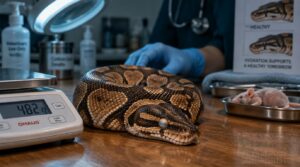
How can you tell your python is truly sick? Start with the appetite. A skipped meal before a shed isn’t alarming. Food refusal lasting weeks is.
For a deeper look at how long is too long without food, this guide on ball pythons going without eating breaks down what’s normal and what’s not.
Watch the breathing next. Wheezing, clicking, or bubbles around the nostrils mean trouble. Open-mouth breathing and labored breathing are emergencies, so call your vet immediately.
Weigh your snake weekly. Weight loss shows up fast. If you can see the spine, or your python’s body looks flat like a loaf instead of round like a rope, act now. Think of that rounded shape as a fuel gauge. Regular weighing on a digital gram scale can also help you detect illness weeks early, before visible symptoms appear.
Check the face. Cloudy eyes outside a shed, lethargy, or runny discharge add up. Don’t wait. Reptiles hide illness like poker players, so early action protects your python.
Reptiles hide illness like poker players, so cloudy eyes, lethargy, or discharge mean act early to protect your python
Common Python Illnesses: Respiratory Infections, Mouth Rot, and Parasites
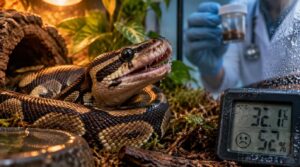
Once you’ve spotted the warning signs, the next question is what’s causing them. Three problems show up most often.
A respiratory infection usually traces back to husbandry. Low temperatures, poor ventilation, or wrong humidity set the stage. Expect wheezing, bubbles, stringy mucus, and labored breathing. Think of the lungs like a damp basement: moisture without airflow breeds trouble. Keeping humidity steady between 60–80% is easier when you follow this vet-approved ball python diet and hydration guide, which also covers water and shedding.
Mouth rot looks ugly. Swollen, red gums, cheesy discharge, and a foul smell mean bacteria have taken hold, often after a mouth injury. Your python may refuse food. After a vet confirms the diagnosis, a reptile-safe antiseptic solution can help keep the mouth clean alongside prescribed antibiotics.
Parasites hide in plain sight. Tiny moving dots around the eyes and vent point to mites. Roundworms or coccidia bring weight loss, regurgitation, and bloody feces. Bring a fresh stool sample to your vet.
If mites are the culprit, a reptile-safe snake mite spray can help treat the enclosure, though your vet should confirm the right product first.
Shedding Problems and Skin Abnormalities That Signal Health Issues
Skin tells its own story. Once you’ve ruled out the big three, check how your python sheds. A gentle reptile shedding aid spray can add a quick boost of moisture while you fix humidity and help stubborn skin loosen up.
Healthy shedding comes off in one clean piece. Dysecdysis, the medical term for abnormal shedding, looks different: patchy shedding, ragged flakes, or skin clinging in rings along the tail. That’s stuck shed, and it usually means your humidity is too low. Ball pythons need 50 to 70 percent.
Check the head next. Retained eye caps make the eye look dull, sunken, or wrinkled like a raisin. Don’t pick at them. Your vet can remove them safely.
Cuts, burns, and blisters matter too. Left alone, they can turn into scale rot, a nasty bacterial infection. Call your vet fast. Don’t wait for it to spread.
Behavior and Movement Changes That Point to Illness in Pythons

Skin isn’t the only clue. Watch how your python moves, too.
Unusual stillness is your first red flag. A healthy python rests, then explores. A sick one lies like a dropped rope and ignores everything. Lethargy also shows up as a dragging belly, weak grip, and no reaction when you approach. Before assuming illness, double-check your enclosure with a reptile digital thermometer hygrometer, since cold or dry conditions can leave a healthy python sluggish.
Now check the head. Stargazing posture, where your snake holds its head up and stares at the ceiling, points to a nervous system problem. Head tremors, wobbly coordination, and disorientation matter just as much.
Try one test. Gently turn your snake over. If it can’t flip back, that’s loss of righting reflex. Call your vet today. Don’t wait and hope it passes. These signs mean the brain is struggling.
Top 9 Products for Python Health
You can’t fix what you can’t catch early, so the right python health products make your job easier. Below are nine picks that help you monitor, support, and protect your snake, from shedding and hydration to tracking and learning. Read each one closely and choose what fits your setup.
1. Zilla Shed Ease Reptile Bath

Stuck shed is a warning sign, not a cosmetic flaw.
Zilla Shed Ease gives your python a soothing bath that actually works. The aloe vera formula penetrates and loosens old skin, like warm water melting a stubborn label.
Mix 10 ml of concentrate with 16 oz of lukewarm water. Soak your python for 10 to 20 minutes, depending on the species. Stay close. Use filtered, distilled, or dechlorinated water for best results.
It’s a concentrate, not a spray, so always dilute it. When your 8 oz bottle arrives, check the lid, since some buyers report leaks. Don’t skip that.
| Best For | Reptile owners with pythons, iguanas, geckos, or other lizards and snakes who need a gentle soak to help loosen stubborn old skin during shedding. |
|---|---|
| Product Type | Shed soak concentrate |
| Primary Use | Loosening stuck shed |
| Target Users | Python and lizard owners |
| Setup Method | Dilute 10 ml per 16 oz |
| Main Drawback | Leaky lids reported |
| Format | 8 oz bottle |
| Additional Features |
|
- Aloe vera formula penetrates and helps loosen old skin for easier shedding
- Supports the emergence of healthy, lustrous new skin
- Works for all types of lizards and snakes, with soaks of 10 to 20 minutes depending on the reptile
- Some customers report leaking or broken lids when the bottle arrives
- Not a spray, so it must be diluted (10 ml per 16 oz of lukewarm water) before every use
- Needs filtered, distilled, or dechlorinated water for best results
2. Gargeer Reptile Probiotics Gut Health Supplement
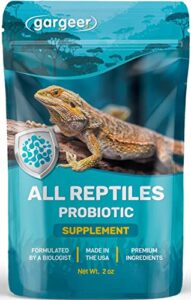
A sluggish python with poor appetite needs more than guesswork. Gargeer Probiotics targets gastrointestinal health with 200 million CFU per gram, plus prebiotic fibers that feed the good bacteria.
Here’s how to use it:
- Measure one teaspoon per pound of food.
- Dust it onto feeder insects. The ultrafine powder sticks.
- Serve once weekly.
- Pair it with a feeding schedule review.
Digestive issues, nutritional deficiencies, and immune system weakness often travel together. This 2-ounce bag covers roughly 10 to 12 pounds of food. Stay consistent.
| Product Type | N/A |
|---|---|
| Primary Use | N/A |
| Target Users | N/A |
| Setup Method | N/A |
| Main Drawback | N/A |
| Format | N/A |
| Additional Features |
|
3. WiFi Reptile Mister Terrarium Misting System

Picture a rainforest morning, fog drifting through the trees, rolling over your snake’s hide. That’s what the Moistenland SOP16 delivers.
Its fine mist raises humidity fast, and the Smartlife app lets you set daily or cyclical schedules from your phone. Need a quick boost? Press the button once for a manual spray.
Here’s the catch. Push tubing connectors in deep, or they’ll leak and soak your substrate. Some owners report units dying after two months, and the app can be finicky. Check your settings often. Verify humidity with a separate gauge.
| Best For | Reptile owners with snakes, lizards, chameleons, geckos, iguanas, or turtles who want to automate misting and set humidity schedules from their phone, and who don’t mind checking the setup regularly. |
|---|---|
| Product Type | Automatic reptile mister |
| Primary Use | Raising humidity automatically |
| Target Users | Snake and reptile owners |
| Setup Method | Smartlife app schedules |
| Main Drawback | Units may fail early |
| Format | WiFi mister with tubing |
| Additional Features |
|
- Fine, high-density mist raises humidity quickly to support reptile health and shedding.
- The Smartlife app lets you set daily or cyclical misting schedules and control the mister remotely over WiFi.
- A short button press triggers a manual mist, and DIY installation accessories are included for attaching it to a terrarium.
- Connectors or tubing can leak if they aren’t pushed in deeply, which can soak the substrate.
- Some units reportedly stop working after about two months.
- The app can be finicky, with settings sometimes failing to update or save.
4. Ball Python Health Record Keeper

Say your ball python refuses two meals in a row. Is that a hunger strike or a warning sign? Without notes, you’re guessing.
If the refusals continue, it helps to understand how a snake’s liver and kidneys work, since problems there often show up as appetite loss before anything else.
Your Ball Python Health Record Keeper ends the guessing. Its 200 pages hold a feeding log for date, prey type, quantity, and weight, plus growth curves for weight and height. Log every vet visit and treatment too, so your vet sees the full story.
Fill it out weekly. Patterns jump out: shrinking weight, skipped meals, odd sheds.
It’s a paper book, so you’ll enter everything by hand. At 6 x 9 inches and 12.8 ounces, it fits beside the enclosure.
| Best For | Ball python owners who want a simple paper book to track feeding, growth, and vet visits in one place. |
|---|---|
| Product Type | Paper health journal |
| Primary Use | Tracking feeding and growth |
| Target Users | Ball python owners |
| Setup Method | Handwritten weekly entries |
| Main Drawback | Ball pythons only |
| Format | 6 x 9 in book |
| Additional Features |
|
- Feeding log captures date, prey type, quantity, and weight, making it easy to spot skipped meals
- Growth curves for weight and height show trends over time
- Space to record vet visits and treatments gives your vet the full history
- Designed only for ball pythons, so it won’t suit other reptile species
- No digital version or app integration
- Every entry must be written by hand
5. Ball Python Retro Metal Sign

Think of this sign as a daily nudge on your wall. It won’t treat a sick snake, but it keeps care front and center.
The tinplate metal sign measures about 8 x 12 inches. Its finish is waterproof, non-glare, and colorfast, so humid reptile rooms won’t wreck it. Four pre-drilled holes sit in the corners, each about 0.3 cm wide. Mount it with nails, double-sided tape, or blu-tack.
Be careful, though. Tin bends under pressure, so handle it gently. The design also includes blood spatter detail, which won’t suit every taste. Check the style before you hang.
| Best For | Reptile keepers and bar, cafe, or hotel owners who want a small, moisture-resistant retro sign with an edgy, fashionable look. |
|---|---|
| Product Type | Tinplate wall sign |
| Primary Use | Wall decoration |
| Target Users | Reptile keepers and bar owners |
| Setup Method | Nails, tape, or blu-tack |
| Main Drawback | Bends easily |
| Format | 8 x 12 in sign |
| Additional Features |
|
- Waterproof, non-glare, and colorfast finish holds up well in humid rooms
- Four pre-drilled corner holes allow mounting with nails, double-sided tape, or blu-tack
- Adds a contracted but fashionable atmosphere to a bar, cafe, dining room, or hotel wall
- At about 8 x 12 inches, it may be too small for large spaces
- The tinplate metal can bend easily under pressure
- The blood spatter detail may not suit all tastes
6. Breeding Ball Pythons A Practical Guide

Breeding isn’t a hobby you stumble into. Breeding Ball Pythons A Practical Guide walks you through it step by step, from enclosure setup to egg incubation.
You’ll learn to read readiness signs, like a female hunting the cool side of her enclosure. You’ll also cover genetics, so you avoid pairings linked to corkscrewing and feeding trouble.
Health comes first. Use weight monitoring to confirm your female hits 1,350 grams. Track her feeding schedule and shedding cycle too. Book veterinary visits before pairing, and watch for egg binding signs.
Some reviewers found it repetitive. Beginners still benefit from that repetition, and you will.
| Product Type | N/A |
|---|---|
| Primary Use | N/A |
| Target Users | N/A |
| Setup Method | N/A |
| Main Drawback | N/A |
| Format | N/A |
| Additional Features |
|
7. Reptile Thermometer Humidity Gauge 2 Pack
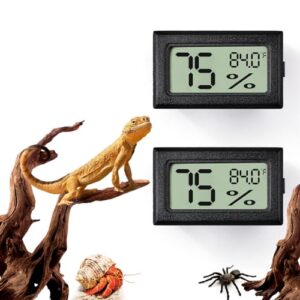
Breeding season taught you to track weight. Now track your temps, because a sick python often starts with a sick enclosure. This Reptile Thermometer Humidity Gauge 2 Pack works like a stethoscope on your snake’s habitat. Each unit reads -58°F to 158°F with ±1°F accuracy and humidity from 10% to 99% RH at ±5%. Pair those readings with this ball python temperature care guide to see which warm-side and cool-side targets your gauges should actually be showing.
Snap one gauge on the warm side, one on the cool side. Digital displays refresh fast, so you catch dangerous swings before they become respiratory infections or bad sheds. Mounting is simple with adhesive backing. Battery runs over a year. Watch for inconsistent readings between units, and swap the spare battery early. Your python’s lungs will thank you.
| Best For | Snake and reptile keepers who need affordable temperature and humidity monitoring on both sides of a terrarium, especially for species like ball pythons, leopard geckos, and bearded dragons. |
|---|---|
| Product Type | Digital thermometer and hygrometer |
| Primary Use | Monitoring temperature and humidity |
| Target Users | Snake and reptile keepers |
| Setup Method | Adhesive backing mount |
| Main Drawback | Inconsistent readings reported |
| Format | 2-pack digital gauges |
| Additional Features |
|
- Comes as a 2-pack, so you can monitor warm and cool sides of the enclosure at the same time
- Wide temperature range (-58°F to 158°F) with ±1°F accuracy and humidity tracking from 10% to 99% RH
- Simple adhesive mounting and a battery that lasts over a year
- Some users report inconsistent readings between the two units
- Adhesive may not stick securely to all tank surfaces
- Battery life and measurement accuracy receive mixed customer feedback
8. Ball Python Care and Health Log

Your gauges tell you the environment. This Ball Python Care and Health Log tells you the snake. It’s the case file for your detective work.
This is a 100-page journal, published November 18, 2023, in a roomy 8.5 x 11 inch format that’s easy to write in. Log prey type and size, feed dates, refusals, shed completion, eye caps, and weight in grams every time. Record it immediately, never from memory.
Here’s the payoff. When your python refuses food or drops weight, your logs become objective evidence for your vet. Facts, not guesses. Note the limits: no pre-filled templates and no medical advice, just clean pages for your data. Consistent records catch patterns early. Your snake can’t speak. Your log can.
| Best For | Ball python owners who want a simple, structured way to track feeding, shedding, weight, and behavior over time and share accurate records with their vet. |
|---|
- Large 8.5 x 11 inch format gives plenty of room to write detailed entries
- 100 pages support long-term tracking of feeding, shedding, and weight trends
- Objective written records make vet visits more productive when problems arise
- No pre-filled templates or structured forms to guide entries
- Contains no veterinary advice or species-specific care guidance
- Blank-page format requires the owner to design their own logging system
9. Reptile Oral Health Support Tablets

When mouth rot strikes, you need backup beyond basic care. That’s where Reptile Oral Health Support Tablets come in. Made in the USA by HealthyAnimals4Ever, each bottle holds 300 homeopathic tablets with ingredients like Chamomilla and Merc Sol, chosen to target swelling, discharge, and gum discomfort. Think of them as an insurance policy for your python’s mouth.
Crush a tablet and mix it into food or water. Daily dosing matters, like brushing teeth, consistency wins.
Honest limits: efficacy isn’t clinically proven, and tablets may need crushing to dissolve. For mild irritation, pair them with solid husbandry. Severe infections need veterinary antibiotics, no exceptions. Supplemental support, never a substitute.
| Best For | Reptile owners of lizards, snakes, turtles, or bearded dragons dealing with mild mouth rot symptoms who want a homeopathic supplement to support daily oral care alongside good husbandry. |
|---|
- Formulated with ingredients like Chamomilla and Merc Sol to target swelling, discharge, and gum discomfort
- Comes with 300 tablets per bottle, offering a long-lasting supply for consistent daily use
- Easy to administer by crushing tablets into food or water, and suitable for a wide range of reptiles
- Homeopathic remedy with no clinically proven efficacy
- Tablets may not dissolve in water unless crushed first
- Requires consistent daily dosing, and severe infections still need veterinary antibiotics
Frequently Asked Questions (FAQs)
What is the most common cause of death in snakes?
Your snake looks calm, and that’s the deadly part. Bacterial septicemia kills most, usually after a quiet respiratory infection or Inclusion Body Disease.
Environmental stress opens the door. Parasite prevention and weight monitoring catch trouble.
Will a snakes respiratory infection go away on its own?
Rarely, no. A snake’s respiratory infection almost never clears on its own. Wheezing sounds, labored breathing, and nasal discharge mean bacteria are winning. Don’t wait. Call your vet now, because untreated cases turn into fatal pneumonia.
What are the signs of sepsis in snakes?
Sepsis moves fast. Watch for sudden lethargy, weight loss, and refusing food. Check the belly for red scales or tiny purple spots. Labored breathing or openmouth breathing signals a respiratory infection. Call your vet immediately.
How to tell if a snake is in distress?
Your snake talks in body language, so listen up. Open-mouth breathing or wheezing means a respiratory infection. Lethargy, weight loss, cloudy eyes, or sunken eyes also signal trouble. Don’t wait. Call your vet today.
How do you know if a ball python is sick?
A healthy ball python can skip meals for weeks, so don’t panic over one refused rat. Panic when refusal comes with unexplained weight loss, labored breathing with mouth open, cloudy or sunken eyes, abnormal posture, and inactivity.
What diseases affect ball pythons?
Most ball python illnesses trace back to poor husbandry. Watch for respiratory distress, scale rot, mouth rot, and parasitic infections. Inclusion Body Disease is fatal, so a stargazing posture means call your exotic vet today.
Do ball pythons get sick?
Think your python is invincible? Ball pythons get sick.
Watch for unexplained weight loss, labored breathing with mouth open, abnormal droppings, retained shed not resolving, or visible wounds, swellings or abscesses. Call your vet fast.
Do ball pythons have skin problems?
Yes, and you’ll see it fast. Dysecdysis shows up as stuck shed, especially on the eyes and tail tip. Dark or reddish scale discoloration signals a skin infection. Fix humidity and cleanliness now.
Do ball pythons have neurological problems?
Can pythons go neurological? Sadly, yes. Inclusion Body Disease causes neurological symptoms: stargazing, disorientation, loss of righting reflex, jaw tremors and weak hind legs.
See your vet fast. Don’t wait, early action protects your snake.
What should I do if my ball python is sick?
A sick snake is a quiet alarm bell. Call an exotic vet today. Don’t wait.
Check for lethargy, mouth rot, weight loss, stuck shed, and dehydration signs. Keep temps 78-80°F cool, 88-92°F basking, humidity 50-60%.
Conclusion
Most sick pythons reach an exotic vet only after weeks of hidden symptoms. Don’t let yours become one of them.
Learning the signs of illness in pythons turns you into your snake’s early warning system. Track appetite, weight, shedding, and breathing weekly. Keep temperatures and humidity steady. Call your vet the moment something feels off. A few minutes of attention today can save your python months of suffering tomorrow. You’re the first line of defense.