This site is supported by our readers. We may earn a commission, at no cost to you, if you purchase through links.
Most snake keepers obsess over heating and lighting—and overlook the one thing their snake actually lives in. The substrate matters more than people think. It shapes humidity, comfort, odor control, and even your snake’s stress levels.
Coconut husk snake bedding has become the go-to choice for a reason. It holds moisture without going soggy, breaks down ammonia from waste naturally, and gives burrowing species something real to dig into. It comes from the fibrous shell of coconut, processed into chips, fine coir, or mulch—each format suited to different needs.
Picking the right type for your snake isn’t complicated once you know what to look for.
Table Of Contents
- Key Takeaways
- What is Coconut Husk Snake Bedding?
- Key Benefits for Pet Snakes
- Top 8 Coconut Bedding Products
- 1. Loose coconut fiber reptile bedding
- 2. Organic Coconut Chip Reptile Substrate
- 3. Natural Coconut Fiber Reptile Substrate
- 4. Natural Coconut Husk Reptile Substrate
- 5. Organic Coconut Husk Reptile Substrate
- 6. Organic Coconut Fiber Reptile Substrate
- 7. ReptiChip Loose Coconut Chip Reptile Bedding
- 8. Zoo Med Aspen Snake Bedding
- Choosing The Right Coconut Substrate
- Using Coconut Husk Bedding Safely
- Frequently Asked Questions (FAQs)
- Is coconut husk bedding good for snakes?
- What not to use for snake bedding?
- How often should I change my coco husk substrate?
- Can coconut husk bedding cause impaction in snakes?
- Does coconut husk substrate attract or carry mites?
- How do you dispose of used coconut bedding?
- Is coconut husk safe for baby or juvenile snakes?
- Can you reuse or sterilize coconut husk substrate?
- Can coconut husk bedding be mixed with other substrates?
- How does coconut husk affect snake shedding cycles?
- Conclusion
Key Takeaways
- Coconut husk bedding outperforms most substrates by naturally controlling humidity, absorbing ammonia from waste, and giving burrowing snakes something real to dig into.
- Matching the substrate form to your snake matters — fine coir suits small burrowers like hognose and sand boas, while chunky husk chips work better for larger species like ball pythons.
- Compressed bricks need 24–72 hours of soaking to fully expand, and the bedding requires spot-cleaning daily plus a full swap every 4–8 weeks to stay safe and odor-free.
- Feeding your snake outside its enclosure and choosing coarser chip sizes are the two most effective habits for preventing accidental ingestion and impaction risk.
What is Coconut Husk Snake Bedding?
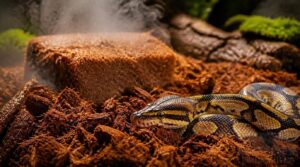
Coconut husk bedding comes from the outer shell of coconuts, and it’s one of the most flexible substrates you can use for snakes. It shows up in a few different forms — chips, fine fiber, and compressed bricks — each suited to different species and setups. Here’s a closer look at what sets them apart.
All three forms are non-toxic and reptile-safe, which is why they’re among the top picks covered in this guide to choosing safe substrates for pet snakes.
Coconut Husk Versus Fiber
Husk and fiber both come from the coconut shell, but they behave differently in your enclosure. Husk is coarser and more rigid, with higher lignin content that resists decay and mold. Fiber is finer and compresses easily under a snake’s weight.
That structural difference matters — husk holds its shape longer, while fiber breaks down faster and needs more frequent replacement. This material is a natural organic fiber that’s both renewable and biodegradable.
Chips, Coir, and Mulch
These terms often get mixed up, but they’re not the same thing. Coco coir is the fine, soil-like fiber. Coconut chips are the chunky, rigid pieces. Mulch sits somewhere between — coarser than coir, finer than chips.
Each form has a different moisture retention level and texture, which directly affects how well it works as a coconut substrate for your snake.
How It is Processed
What goes into your snake’s bedding starts long before it reaches the bag. Harvested husk passes through mechanical separation, where fibers are stripped and sorted by size. Steam cleaning removes dust and contaminants. Then microbial testing confirms the coconut substrate is safe.
Compressed brick formats come from that same cleaned, dried material — just packed tight for easy storage.
Natural Texture and Structure
Once the processing is done, what you’re left with is a fibrous matrix worth understanding. Coconut husk isn’t uniform — it’s a mix of coarse chunks and finer coir filaments, all oriented irregularly. That heterogeneous strand orientation creates natural air pockets for ventilation and gives the surface real grip.
Your snake won’t slide. Neither will hides or water dishes.
Eco-friendly Substrate Basics
Coconut is one of the few natural bedding materials that gives back after its job is done. The lignin and cellulose in the fibers are fully biodegradable, so used substrate goes straight to your garden compost.
It’s a renewable crop with no synthetic additives, making coconut substrate bedding a genuinely low-impact choice for your snake and the environment.
Key Benefits for Pet Snakes
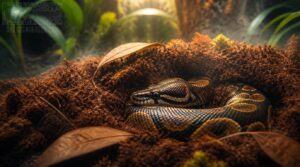
Coconut husk does a lot of quiet, steady work inside a snake enclosure. It controls humidity, keeps odors in check, cushions movement, stays low on dust, and gives snakes a substrate they can actually dig into. Here’s a closer look at each of those benefits.
Humidity Support
Keeping humidity steady is one of the biggest challenges in snake care. Coconut substrate bedding controls this naturally — damp bedding releases moisture slowly over 6 to 24 hours, maintaining a stable environment without constant misting.
Three ways it helps with humidity control:
- Retains moisture up to 2–4 inches deep
- Creates a damp microclimate snakes burrow into
- Aids 40–60% humidity for tropical species
Odor Control
Snake enclosures can smell fast. Coconut husk absorbs ammonia from urine within 24 hours, cutting odor intensity noticeably. Its natural enzymes do the heavy lifting between cleanings.
Pair it with activated carbon filtration or zeolite minerals and you get even better results. Enzyme cleaners handle what the substrate misses. Spot-clean daily, and your snake’s space stays fresh without much effort.
Soft Cushioning
A loose layer of coconut husk works like a soft landing pad inside your snake’s enclosure. When your snake drops from a branch or shifts quickly across the floor, coconut husk chips absorb that impact rather than letting it jar their body.
The chunky texture stays firm enough to support weight but gives slightly under pressure — which makes a real difference for larger snakes like ball pythons.
Low-dust Comfort
Dust matters more than most keepers realize. When your snake moves through its habitat, fine particles lift into the air — and your snake breathes all of it.
Premium coconut substrate stays coarse enough that disturbance during burrowing or cleaning doesn’t kick up clouds. That means better respiratory health for your snake and easier maintenance handling for you.
Natural Burrowing Behavior
Burrowing isn’t just play — it’s survival. In the wild, snakes dig to find microclimate stability, moving between warmer and cooler pockets as temperatures shift.
A premium coconut substrate mimics that natural feel, staying loose enough for smaller species like hatchling hognose or sand boas to push through easily. Give them the right material, and they’ll use it exactly the way nature intended.
Premium coconut substrate lets hatchling hognose and sand boas burrow exactly as nature intended
Top 8 Coconut Bedding Products
There’s no shortage of coconut bedding options out there, and the differences between them actually matter for your snake’s health and comfort. Finding the right fit comes down to your snake’s size, species, and how you manage humidity in the enclosure. Here are eight products worth knowing about.
1. Loose coconut fiber reptile bedding
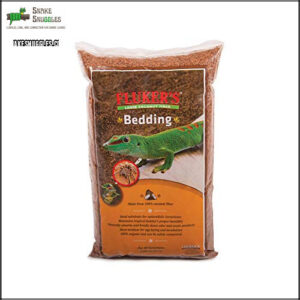
One of the most flexible options you’ll find is loose coconut fiber bedding, made from natural coconut husks and kept in a ready-to-use form. You can spread it straight into the enclosure without any prep work.
It holds moisture well, supporting humidity between 60 and 80 percent — which makes it a solid pick for tropical setups. Fluker’s loose coconut fiber is a reliable example, weighing just over a pound and working well for snakes, lizards, frogs, and even egg incubation.
| Best For | Reptile and amphibian owners who need a natural, humidity-friendly substrate for tropical terrariums housing frogs, toads, turtles, lizards, snakes, or invertebrates. |
|---|---|
| Material | Coconut fiber |
| Format | Loose fiber |
| Odor Control | Yes |
| Absorbency | High |
| Biodegradable | Yes |
| Weight | 1.08 lbs |
| Additional Features |
|
- Made from all-natural coconut husks, making it safe, compostable, and eco-friendly
- Absorbs moisture well to maintain humidity levels between 60–80%, ideal for tropical habitats
- Versatile enough to use as everyday bedding, an egg-laying medium, or an incubation substrate
- Designed specifically for terrarium use, so it’s not a multipurpose garden or potting product
- Only available in loose coconut fiber form, which may not suit keepers who prefer compressed bricks or mats
- At just over a pound, the package size may require frequent repurchasing for larger enclosures
2. Organic Coconut Chip Reptile Substrate
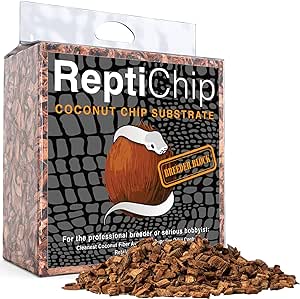
If you loved the simplicity of loose fiber, chips take things a step further. Organic coconut chip substrate comes compressed into a brick — just add water, and it expands into roughly 72 quarts of bedding. That’s serious coverage from a compact package.
The chips are naturally porous and antimicrobial, which keeps odors manageable between cleanings. Ball pythons and carpet pythons do especially well on this size chip. It cushions their movement without packing down flat.
| Best For | Reptile and exotic pet owners who need high-humidity bedding that supports burrowing, bioactive setups, and natural behaviors for species like ball pythons, geckos, tortoises, and amphibians. |
|---|---|
| Material | Coconut husk chips |
| Format | Compressed brick |
| Odor Control | Yes |
| Absorbency | High |
| Biodegradable | Yes |
| Weight | ~10 lbs |
| Additional Features |
|
- Expands from a single compact brick into 72 quarts of bedding — great value and easy to store
- Naturally controls odors and resists bacteria, cutting down on how often you need to clean
- Uniform chip size supports burrowing and works beautifully in bioactive terrariums
- Requires water to activate and manual breaking apart before it’s ready to use
- Moisture levels need careful adjustment depending on your specific species’ needs
- Not ideal for desert reptiles that require dry, low-humidity environments
3. Natural Coconut Fiber Reptile Substrate
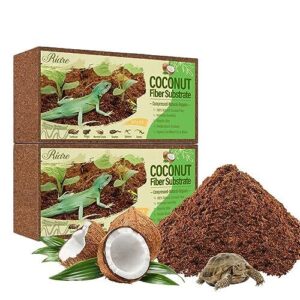
Fine coconut fiber is a step away from chips — softer, finer texture that works especially well for smaller snakes that like to dig and burrow through their substrate.
The R-Reptiles coco bricks come in a 2-pack compressed format, measuring 7.8 x 3.9 x 1.97 inches each. Just soak them and they expand into a fluffy, ready-to-use bedding. It retains moisture well, helping you hold steady humidity between 60 and 80 percent — exactly what tropical species need.
| Best For | Owners of smaller reptiles, amphibians, and invertebrates — like snakes, frogs, and hermit crabs — who need a soft, moisture-retaining substrate that supports natural digging and burrowing. |
|---|---|
| Material | Coconut fiber |
| Format | Compressed bricks x2 |
| Odor Control | Yes |
| Absorbency | High |
| Biodegradable | Yes |
| Weight | 2.73 lbs |
| Additional Features |
|
- Holds humidity well, making it easy to keep tropical enclosures in that 60–80% sweet spot
- Soft, fine texture is gentle on smaller snakes and burrowing species
- Biodegradable and compostable — can pull double duty as garden fertilizer or seed-starting mix
- Needs to be soaked before use, which adds a prep step before setup
- Two bricks may not go far enough for larger enclosures
- Requires regular re-moisturizing to keep humidity levels consistent over time
4. Natural Coconut Husk Reptile Substrate
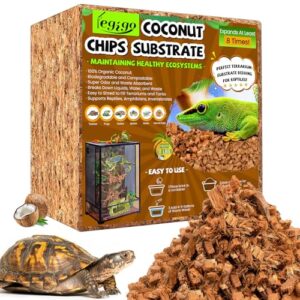
If coconut fiber is soft and fine, husk chips sit on the opposite end of the spectrum — chunkier, more structured, and built for bigger snakes.
The Legigo 10 lb brick measures 11.81 x 11.81 x 5.31 inches and expands into a generous amount of fluffy, cushioning bedding once hydrated. The chunky pieces don’t have sharp edges, so your snake can move and rest safely. It also absorbs waste well, helping you keep odors under control between cleanings.
| Best For | Owners of larger reptiles like ball pythons, tortoises, and snakes who need a chunky, structured substrate that supports burrowing and humidity control. |
|---|---|
| Material | Coconut husk chips |
| Format | Compressed brick |
| Odor Control | Yes |
| Absorbency | High |
| Biodegradable | Yes |
| Weight | 10 lbs |
| Additional Features |
|
- Made from 100% organic coconut husk — a natural, sustainable material that’s safe for your reptile
- Absorbs waste and odors effectively, keeping enclosures fresher between cleanings
- Expands from a compact 10 lb brick into a generous amount of fluffy, non-sharp bedding
- Requires hydration before use, adding an extra prep step before it’s ready for your enclosure
- Needs periodic rehydration if the environment gets too dry, so it takes some ongoing attention
- Volume and weight change significantly once expanded, which can make estimating coverage a bit tricky
5. Organic Coconut Husk Reptile Substrate
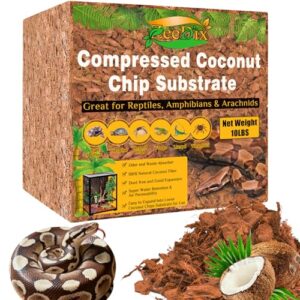
Riare’s 2-pack bricks bring something extra to the table — they’re fully biodegradable and compostable, so used bedding can go straight to your garden when you’re done. The material is pH balanced and low in salt, which matters for keeping your enclosure environment stable over time.
Each brick hydrates easily and expands into chunky, absorbent bedding that controls moisture and waste well. It’s a practical pick for ball pythons or carpet pythons and pulls double duty when cleanup time comes around.
| Best For | Reptile and amphibian owners who want a natural, eco-friendly substrate that handles moisture well and doubles as compost when it’s time to swap it out. |
|---|---|
| Material | Coconut husk chips |
| Format | Compressed brick |
| Odor Control | Yes |
| Absorbency | High |
| Biodegradable | Yes |
| Weight | 10 lbs |
| Additional Features |
|
- Expands to a generous ~72 quarts from a compact brick, giving you plenty of bedding without taking up storage space
- Biodegradable and compostable — used substrate can go straight into the garden instead of the trash
- Absorbs moisture and odors effectively, making it a solid choice for ball pythons, tortoises, geckos, and tarantulas
- Needs to be hydrated and expanded before use, which adds a step compared to ready-to-use substrates
- Easy to overwater, and too much moisture can make the bedding soggy and hard to manage
- Occasionally contains small debris like stones mixed into the material
6. Organic Coconut Fiber Reptile Substrate
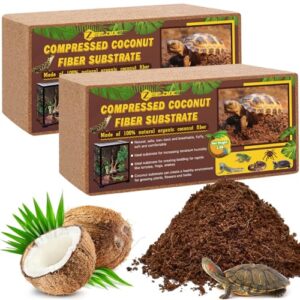
ZeeDix fiber bricks are a solid pick if you keep smaller snakes that love to dig. The fine coconut fiber creates a soft, soil-like layer that hatchling hognose snakes and sand boas take to right away. It holds moisture well, so maintaining humidity between misting sessions is easy.
For builds that go deeper, pairing coir with a LECA drainage layer for bioactive reptile setups keeps the substrate from getting waterlogged between mistings.
The bricks are low in salt and pH balanced, which keeps the enclosure environment stable. Just know the fine texture can get messy with larger species — it has a habit of scattering.
| Best For | Reptile keepers with smaller species like hognose snakes, sand boas, frogs, and hermit crabs who need a natural, moisture-retaining substrate. |
|---|---|
| Material | Coconut coir |
| Format | Compressed bricks x2 |
| Odor Control | Yes |
| Absorbency | High |
| Biodegradable | Yes |
| Weight | ~2.81 lbs |
| Additional Features |
|
- Holds humidity well between misting sessions, making it easy to maintain stable enclosure conditions
- Natural coconut coir supports instinctive digging and egg-laying behaviors
- Biodegradable, compostable, and free from harsh chemicals — safe for the environment and sensitive animals
- Fine texture can scatter easily, making it messy for enclosures with larger, more active species
- May need multiple rinses to reduce salt content enough for particularly sensitive animals
- Not safe for all reptiles — species prone to ingesting substrate, like bearded dragons, face impaction risks
7. ReptiChip Loose Coconut Chip Reptile Bedding
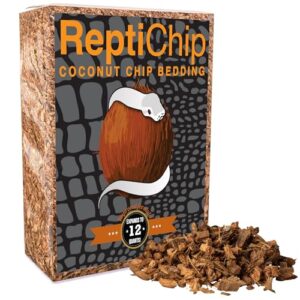
ReptiChip’s loose coconut chip bedding is one of those products that just works. The 12-quart bag comes ready to use — no soaking, no waiting. The chips are dust-free and well-sorted, so your snake isn’t breathing in fine particles all day.
It holds moisture deep in the substrate while staying manageable on the surface, making spot-cleaning straightforward. Ball pythons and carpet pythons do well on it. The chip size cushions landings and won’t splinter like some wood-based options.
| Best For | Reptile and invertebrate owners — especially those keeping snakes, tortoises, geckos, tarantulas, or hermit crabs — who want a natural, low-dust substrate that supports burrowing and humidity control. |
|---|---|
| Material | Coconut chips |
| Format | Loose chips |
| Odor Control | Yes |
| Absorbency | High |
| Biodegradable | Yes |
| Weight | 2.29 lbs |
| Additional Features |
|
- Dust-free and well-sorted chips make for cleaner air quality inside the enclosure
- Naturally controls odors without any chemical additives, keeping things fresh between cleanings
- Holds moisture effectively when dampened, making it ideal for species that need higher humidity
- Can leave a slight reddish tint on the undersides of some animals over time
- Absorbs liquid waste quickly, which means substrate changes may be needed more often than with other bedding types
- A single 12-quart bag may not go far enough for larger enclosures, so you might need to buy multiple
8. Zoo Med Aspen Snake Bedding
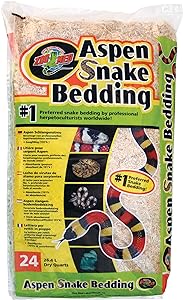
Zoo Med Aspen Snake Bedding isn’t coconut-based, but it earns its spot here as a solid alternative worth knowing. Made from natural aspen shavings, it’s free from the toxic oils found in cedar or pine. The 191% absorbency rating keeps enclosures dry between cleanings, and the low-dust formula protects sensitive respiratory systems.
It encourages burrowing for snakes that like to dig, works across multiple species, and comes in a practical 24-quart bag for most standard setups.
| Best For | Snake keepers and reptile owners who want a natural, low-dust bedding that supports burrowing behavior across a wide range of species. |
|---|---|
| Material | Aspen wood |
| Format | Loose shavings |
| Odor Control | Yes |
| Absorbency | 191% rated |
| Biodegradable | Yes |
| Weight | 5.4 lbs |
| Additional Features |
|
- Exceptional 191% absorbency keeps enclosures dry and odor-free between cleanings
- Free from toxic oils found in cedar and pine, making it safe for sensitive reptiles
- Encourages natural burrowing and nesting instincts across multiple species
- Not coconut-based, so it may not hold humidity as well for tropical species that need higher moisture levels
- Requires frequent spot cleaning depending on the animal’s activity and waste output
- Intended for indoor use only, limiting versatility for outdoor or naturalistic setups
Choosing The Right Coconut Substrate
Not every coconut substrate works for every snake, and picking the wrong one can cause real problems. Your snake’s size, natural habitat, and behavior all play a role in what bedding actually fits. Here’s what to look at before you choose.
Snake Species Needs
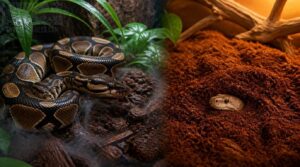
Not every snake thrives on the same substrate. Desert species want dry substrate, while tropical snake species need higher moisture retention to support healthy humidity and shedding.
A ball python or carpet python does well with larger coconut husk chips, which hold moisture without staying soggy. Hatchling sand boas and hognose snakes need fine coconut fiber for burrowing.
Chip Size Safety
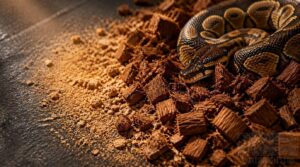
Chip size matters more than most keepers realize. The wrong size can cause impaction risk or respiratory irritation from fine dust particles.
Choose based on your snake’s size:
- Small chips (1–5 mm) suit hatchlings
- Larger chips work for ball pythons
- Low dust formulas protect sensitive airways
- Uniform sizing helps burrowing stability
- Avoid fragments that break into swallowable pieces
Premium coconut substrate brands list chip size ranges on packaging — always check before buying.
Moisture Retention Level
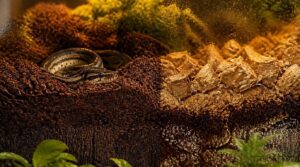
Size choice also shapes humidity retention. Finer coconut-based beddings hold moisture longer than chunky chips.
| Substrate Type | Humidity Effect |
|---|---|
| Fine coconut fiber | Steady 60–70% humidity |
| Chunky husk chips | Moderate, faster drying |
| Premium coconut substrate | Immediate microclimate stability |
| Dry husk | Low humidity, desert use |
Capillary moisture action distributes water evenly, reducing dry pockets and cutting how often you need to rehydrate.
Burrowing Versus Surface Use
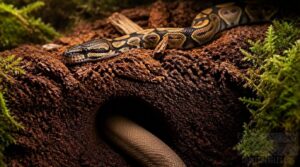
Some snakes love to disappear underground, while others prefer cruising the surface. Tunnel stability depends on substrate moisture — coconut-based beddings hold shape better when lightly damp.
- Burrowers need finer fiber for stable tunnel walls
- Surface-active snakes do well with chunky chips
- Moisture gradients guide where snakes dig
- Deeper burrows support thermal regulation during temperature swings
Match the substrate to your snake’s natural habits.
Quarantine Bedding Alternatives
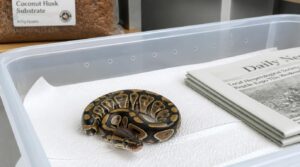
When a new snake arrives, coconut-based beddings take a back seat. Paper towels are the go-to for quarantine tubs — easy to change, zero hiding spots for parasites, and crystal-clear visibility of waste.
| Substrate | Best Use |
|---|---|
| Paper towels | Quarantine, hospitalization, neonates |
| Newspaper | Budget quarantine setup |
| Coconut husk | Established, healthy enclosures |
Neonate safety depends on clean, simple surfaces until the animal is cleared.
Using Coconut Husk Bedding Safely
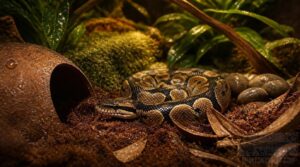
Getting the substrate right is only half the job — how you maintain it matters just as much. A few simple habits will keep your snake’s enclosure clean, safe, and working the way it should. Here’s what you need to know to use coconut husk bedding the right way.
If you’re still deciding whether coconut husk fits your snake’s needs, this beginner’s guide to choosing snake substrate breaks down what to look for based on your species’ natural habitat.
And since stress often shows up as self-directed biting, pairing good substrate care with the tips in what causes snakes to bite themselves can help you catch problems early.
Hydrating Compressed Bricks
Compressed bricks need time — don’t rush them. Place your ReptiChip Breeder Block in a bucket with about a gallon of water and let capillary action pull moisture through the pore structure.
Peak absorption usually happens within 24 to 72 hours. The substrate expands fully and becomes workable once moisture distributes evenly, giving you consistent, ready-to-use coconut fiber substrate.
Spot-cleaning Waste
Daily spot cleaning keeps your habitat fresh without tearing everything apart.
- Look for damp patches or discoloration after feeding events
- Apply an enzyme cleaner to break down organic waste and odor
- Use disposable gloves and a small hand brush to remove soiled areas
- Dry the spot completely before reintroducing your snake
Ammonia buildup irritates airways fast — don’t let waste sit.
Preventing Mold Buildup
Mold thrives where moisture control breaks down. Aim for 30–50% humidity control indoors and use humidity monitoring tools in both enclosure zones.
| Risk Factor | Solution |
|---|---|
| Soggy coconut fiber substrate | Mist lightly; never soak |
| Poor air circulation | Add ventilation system upgrades |
| Clumped, compacted bedding | Aerate with substrate aeration techniques |
| Persistent damp patches | Replace within 24–48 hours |
Substrate moisture retention is coconut fiber’s strength — but let it dry between mistings to keep mold out.
Feeding Outside Substrate
Feeding your snake away from the coconut fiber substrate is one of the simplest ways to prevent impaction risk during meals.
- Use smooth plastic tiles as a clean, non-porous feeding surface
- Present prey with tongs or forceps to avoid direct finger contact
- Remove uneaten prey promptly to stop bacteria from reaching bedding
- Return your snake once feeding ends to support digestion monitoring
- Keep the surface elevated to minimize substrate contact during strikes
Replacing Old Bedding
Even coconut husk has a lifespan. Replace your substrate fully every 4 to 8 weeks, or sooner if you notice odor retention or visible waste buildup.
| Sign | Action |
|---|---|
| Persistent odor | Replace immediately |
| Mold spots | Remove and disinfect |
| Clumped, wet patches | Spot-clean or full swap |
| Dull, degraded texture | Schedule full replacement |
Fresh bedding keeps your snake’s habitat safe, clean, and healthy.
Frequently Asked Questions (FAQs)
Is coconut husk bedding good for snakes?
Coconut husk is one of the kinder choices you can make for your snake. It helps with humidity retention, absorbs odors, and encourages natural burrowing — all while staying gentle on their skin and respiratory system.
What not to use for snake bedding?
Some substrates are flat-out dangerous. Cedar and pine shavings release toxic oils that damage a snake’s lungs. Sand causes fatal impaction. Garden soil carries pesticides. Fragrant paper products irritate airways.
Even common household materials can pose hidden risks, so reviewing a complete guide to safe snake enclosure materials helps you avoid costly mistakes before setting up your habitat.
How often should I change my coco husk substrate?
Think of your snake’s bedding like a kitchen sponge — useful until it’s not. Spot clean daily, do a full substrate change every 4–6 months, and replace immediately if you detect mold or a sour smell.
Can coconut husk bedding cause impaction in snakes?
Yes, it can — but the risk is low with good habits. Feed snakes separately from their enclosure and choose coarse chip sizes over fine fiber to keep accidental ingestion unlikely.
Does coconut husk substrate attract or carry mites?
It can, yes. Like any organic bedding, damp coconut husk creates conditions mites enjoy. Watch for white specks on the surface. Freezing new substrate before use kills eggs and reduces your risk a lot.
How do you dispose of used coconut bedding?
Used coconut bedding can go into a home compost pile if it’s free of feces. Dry, clean portions also work as garden mulch or can be donated to local reptile rescues.
Is coconut husk safe for baby or juvenile snakes?
Coconut husk is safe for baby and juvenile snakes when used correctly. Fine fiber helps with shedding and burrowing, but feed outside the enclosure to avoid ingestion and impaction risks with young snakes.
Can you reuse or sterilize coconut husk substrate?
You can reuse coconut husk substrate, but clean it thoroughly first. Remove waste, rinse, and fully air dry before storing. Avoid reusing it with hatchlings — they’re too sensitive to residual contamination.
Can coconut husk bedding be mixed with other substrates?
Mixing it with coconut fiber is a great option. A 25/75 husk-to-fiber mix balances airflow and moisture retention, keeping humidity stable without oversaturation — ideal for snakes that love to burrow.
How does coconut husk affect snake shedding cycles?
Shed skin tells the whole story. Stable humidity is the key — it keeps eye membranes pliable, reduces dry patches, and helps your snake complete a clean, one-piece molt without retained caps.
Conclusion
Choosing the right coconut husk snake bedding isn’t rocket science — but it does take a little shell-f awareness. Match the substrate to your snake’s needs: a burrower wants depth, a tropical species wants moisture, and every snake deserves a clean, dust-free home.
Spot-clean often, replace fully on schedule, and feed outside the enclosure. Get those habits right, and the bedding takes care of the rest. Your snake notices the difference. Trust that.