This site is supported by our readers. We may earn a commission, at no cost to you, if you purchase through links.

Grab the wrong bag of bedding, and your new snake could end up impacted, dehydrated, or fighting a respiratory infection within weeks. That’s the harsh truth new keepers learn the hard way. Substrate isn’t just the stuff lining the tank floor, it’s the foundation for humidity, burrowing, and your snake’s day-to-day comfort.
Get substrate bedding for beginners right, and you’ll dodge the shedding problems, odor battles, and vet visits that plague first-time owners. Every species has its own needs, from desert dwellers craving bone-dry aspen to tropical boas needing damp coconut fiber. Here’s how to match the bedding to the snake, and set it up so it actually works.
Table Of Contents
- Key Takeaways
- Choosing Snake Substrate Bedding
- Best Beginner Snake Substrate Types
- Matching Bedding to Snake Species
- Setting Up Snake Substrate Step-by-Step
- Using and Maintaining Substrate Safely
- Top 5 Beginner Substrate Products
- Frequently Asked Questions (FAQs)
- What is the best substrate for beginners?
- What is the easiest aquarium substrate to keep clean?
- What kind of bedding do you use for lizards?
- What’s the best substrate for ball pythons?
- Can substrate affect a snakes shedding process?
- How does substrate impact enclosure odor control?
- What substrate works best for snake egg incubation?
- Can bioactive substrates work for beginner snake keepers?
- How deep should substrate be for juvenile snakes?
- How much does snake substrate typically cost?
- Conclusion
Key Takeaways
- Match your substrate to your snake’s natural habitat—desert species need dry, loose bedding like aspen, while tropical species like ball pythons and boas need moisture-retentive options like coconut fiber to stay at 60-80% humidity. If your snake struggles to hold humidity, this guide to the best substrate for retaining humidity compares options so you can keep moisture steady between misting sessions.
- Skip pine and cedar shavings entirely, since they release volatile oils that irritate your snake’s skin and lungs, and stick with safer choices like aspen, coconut fiber, or cypress mulch instead.
- Give hatchlings shallow paper towel bedding for easy waste monitoring and zero impaction risk, then graduate to deeper, species-appropriate substrate as they grow into adults.
- Check your enclosure daily for damp clumps, mold, or ammonia smells, and replace degraded substrate within 24 hours to prevent bacteria buildup and keep your snake’s shedding and health on track.
Choosing Snake Substrate Bedding
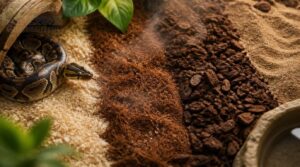
Picking the right substrate isn’t just about looks — it’s about matching bedding to what your snake actually needs to thrive. Species, humidity, burrowing habits, cleaning routines, and age all play a role in the decision. Here’s what to weigh before you fill that enclosure.
For a deeper breakdown of which materials suit burrowers versus arboreal species, this guide to choosing the best snake substrate walks through humidity and safety considerations in detail.
Species and Habitat Needs
Every snake species evolved for a specific home range, and your substrate choice should mirror that habitat. Species and habitat needs drive everything: desert snakes want loose, dry bedding for burrowing, while tropical species need deeper layers supporting thermoregulation zones, humidity gradients, and natural digging instincts your snake can’t ignore.
Humidity and Moisture Retention
Habitat mimicry doesn’t stop at burrowing room, humidity matters just as much. Substrate water absorption and moisture retention create the microclimate your snake needs to shed cleanly. Ball pythons want 50-60% humidity, tropical species need 70-90%. Coconut fiber holds 60-80% moisture while staying dry on top.
Pairing the right substrate with a hygrometer takes the guesswork out of humidity, and creative reptile habitat design ideas can help you arrange hides and ventilation to keep that moisture balanced throughout the enclosure.
Check humidity levels daily with a hygrometer, since dry pockets sabotage sheds fast. Research on dynamic indoor humidity variation shows that moisture sources create uneven spatial distribution early on before leveling out, which is why spot-checking multiple areas of the enclosure gives a truer humidity picture than a single reading.
Burrowing and Traction Needs
Beyond humidity, your snake needs to dig. Loose substrate digging builds tunnel stability confidence, while grip surface texture keeps belly scales from slipping.
- Loose aspen for easy tunneling
- Coarse coconut fiber for traction
- 3-6 inch burrow depth balance
- Textured surfaces for vertical grip
- Firm base for coil support
Arboreal species skip deep digging entirely, prioritizing traction for arboreal species over burrow depth.
Cleaning and Odor Control
Traction and burrowing sorted, now think about smell. Daily spot checks with tongs stop ammonia buildup before it starts. Wipe spills with diluted white vinegar, a safe, cheap disinfectant.
Watch for fuzzy mold or damp pockets. Full swaps every 4-12 weeks, plus decent ventilation, keep odor control manageable and your snake’s enclosure genuinely fresh.
Juvenile Versus Adult Needs
A baby snake isn’t just a small adult, its whole biology runs faster. Higher metabolic rates mean juveniles need shallow 0.5-1 inch paper substrate for safe feeding and easy waste monitoring.
Adults settle into 2-4 inch established layers with predictable replacement schedules. As growth slows, so does risk, letting you graduate toward naturalistic, species-appropriate bedding.
Best Beginner Snake Substrate Types
Now that you know what to look for, let’s talk about what actually works. Five substrates cover almost every beginner setup you’ll build, from bare-bones hatchling tubs to full tropical terrariums. Here’s how each one stacks up.
Paper Towels for Hatchlings
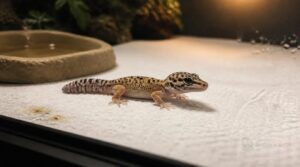
For hatchlings, boring is best. Plain paper towels give you full waste visibility, zero impaction risk, and dust-free handling that fragile necos need. They absorb moisture fast, holding humidity near 50-60%, and swap out in seconds.
That makes them perfect for quarantine use too, letting you spot-check health daily without hiding problems under loose bedding.
Aspen for Dry Enclosures
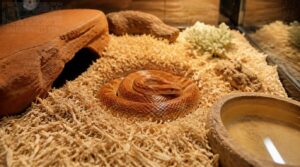
Wood shavings work hard for dry-climate snakes. Aspen bedding offers dust-free safety, solid moisture retention, and real odor absorption between cleanings.
Perks worth knowing:
- Allows shallow burrowing without collapsing
- Dries fast, aiding humidity control
- Scoops easily during spot cleaning
Full replacement every few weeks keeps mold and ammonia smells away, so your enclosure stays fresh and manageable.
Coconut Fiber for Humidity
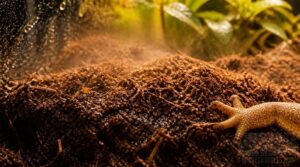
Think of coconut fiber as a slow-release humidity sponge. It holds 2 to 3 times its dry weight in water, keeping humidity levels steady for 24 to 48 hours.
This makes it an excellent substrate choice during shedding cycles, though pairing it with a ball python shedding soak routine can help loosen stubborn stuck shed even faster.
That moisture retention helps with gentle burrowing and shedding, while its resistance to mold keeps odor absorption reliable.
Daily spot cleaning removes waste before ammonia builds, making it ideal for tropical species needing consistent substrate moisture.
Cypress Mulch for Tropical Setups
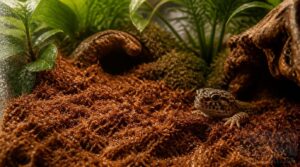
A reddish-brown mulch made from shredded bald cypress or pond cypress, this substrate brings real humidity control to tropical setups. It’s naturally pest- and fungus-resistant, aiding mold prevention while decomposing slowly, so you’re not replacing it every few weeks.
- Reduces evaporation
- Resists fungus
- Slow decomposition
- Comfortable footing
- Helps with burrowing
Fine pieces offer solid traction for arboreal species too.
Reptile Carpet Benefits and Drawbacks
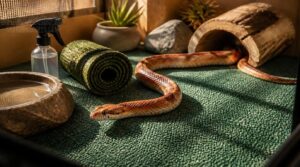
Want zero mess and zero dust? Reptile carpet delivers a soft, non-abrasive surface that protects your snake’s scales during movement, plus reusable cleaning ease with soap and water.
It resists fine dust and offers moisture barrier protection in arid setups. Drawback: it needs daily checks and washing, since bacteria can hide in the fibers, undermining enclosure hygiene without consistent spot cleaning.
Matching Bedding to Snake Species
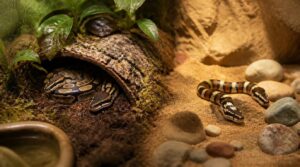
No single substrate works for every snake — species dictate the setup, not the other way around. A ball python and a desert kingsnake have completely different needs, and using the wrong bedding can cause real health problems down the line.
Species dictate the setup, not the other way around — the wrong bedding can cost your snake its health
Here’s how to match your snake’s species to the right substrate choice.
Ball Python Substrate Needs
Since ball pythons burrow and shed based on moisture, get humidity balance right first: 55-65%, checked with a hygrometer.
- 3-4 inches substrate depth
- Coconut fiber for burrowing depth and traction
- Daily spot cleaning routine
- Watch for mold prevention
Adjust as juveniles mature; safety precautions like avoiding dust matter most in juvenile care.
Corn Snake Substrate Needs
Corn snakes are far more forgiving than ball pythons.
Aspen bedding works great, or try aspen-coconut fiber blends for light humidity control. Keep humidity moderate, not tropical. Avoid pine or cedar entirely, and choose kiln-dried, smooth-particle substrate to prevent impaction risk. Watch for mold prevention in damp corners, and give juveniles shallow, dust-free paper substrate for safe early feeding.
Boa Constrictor Substrate Needs
Unlike corn snakes, boas want humidity retention around 60-70%. Coco coir works well, holding moisture without turning soggy.
Boas dig shallow burrows for security, so allow light burrowing depth. Watch for mold, scoop waste often, and keep juveniles on finer, absorbent bedding.
- Monitor humidity with a gauge
- Refresh substrate weekly
- Choose inert, dust-free materials
Desert and Grassland Snakes
Boas love moisture, but desert snakes like sandy boas and gopher snakes need the opposite. Keep humidity below 40% with loose, dry aspen or sand. Add 2–3 inches of depth for burrowing behavior and heat tolerance.
Grassland species tolerate slightly more moisture. Provide a basking zone (85–95°F) for thermoregulation, and spot-clean waste to prevent mold.
Arboreal Snake Bedding Needs
Think vertical, not deep. Arboreal snakes need perch stability over burrow depth, so use a thin 1-2 inch layer with firm footing near climbing branches for real traction for climbing.
Keep humidity at 60-80% through moisture without pooling, misting zones snakes can absorb slowly. Map out humid corners versus dry perches to mirror their natural canopy world.
Setting Up Snake Substrate Step-by-Step
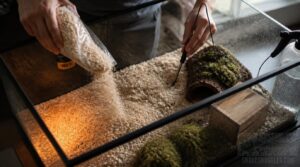
Picking the right substrate is only half the job — setup matters just as much. A rushed job leads to uneven heat, trapped moisture, or dust your snake breathes in every day. Here’s how to get it right, step by step.
Before you begin, it’s worth brushing up on which substrates are genuinely harmful to snakes — cedar, pine, and calcium sand can cause serious damage before you even notice a problem.
Clean and Prepare Enclosure
A blank enclosure is your cleanest starting point, literally. Remove all old substrate and debris, then wash walls with mild soap and warm water, rinsing well. Dry every surface completely before disinfecting high-touch spots with a reptile-safe cleaner. Check seams for cracks or wear.
- Scrub, rinse, dry
- Disinfect high-touch zones
- Inspect for damage
Inspect Bedding for Dust
Before adding fresh bedding, grab a handful and rub it between your fingers. Fine white or gray particles signal dust, especially with aspen or coconut fiber.
Sift with a fine mesh sieve, and check enclosure corners where debris settles.
Dustfree substrate matters most for respiratory health, so choose kiln-dried bedding material and inspect particle size before every fill-up.
Add Species-appropriate Substrate Depth
How deep is deep enough? It depends entirely on who’s living in the tank.
- Burrowers: 2–3 times body length, minimum 4 inches
- Terrestrial species: 1–2 inches for surface roaming
- Tropical humidity-lovers: 3–4 inches retains moisture
- Arboreal snakes: just 0.5–1.5 inches
- Juveniles: start shallow, increase gradually as they grow
Create an Even Temperature Gradient
A snake without a proper gradient can’t regulate its body temperature, and that’s a real problem. Pair a ceramic heater or under tank heater with a thermostat to hold temps within 2-3°C across the enclosure. Add reflective shielding to spread heat evenly, and keep ventilation steady so fluctuations stay under 5%. Layered substrate helps too, insulating the base while the top layer breathes.
Test Humidity Before Housing
Would you trust a thermostat you’d never checked? Treat humidity the same way. Place a hygrometer where your snake will actually live, and log readings morning and night for two days before move-in.
Watch how substrate moisture retention shifts those numbers. Dry aspen can drop humidity 5-15%, while damp coconut fiber pushes it up. Confirm your baseline sits in the species’ range first.
Using and Maintaining Substrate Safely
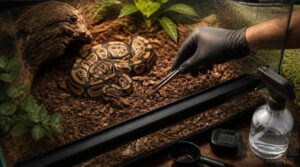
Picking the right substrate is only half the job — using it safely day to day matters just as much. Small habits, done consistently, keep your snake healthy and your enclosure free of hidden hazards. Here’s what to watch for once that bedding is down.
Avoid Pine and Cedar
Because pine and cedar release volatile oils, they belong nowhere near your enclosure. These oils irritate skin and mucous membranes, and their dust triggers sneezing, coughing, and mouth gaping. Mold and bacteria can hide in the wood grain too.
For real respiratory safety bedding, stick with aspen, coconut fiber, or cypress mulch instead.
Reduce Dust and Impaction
Cutting toxic material risks and impaction hazards comes down to two habits: keeping bedding dustfree and choosing particle size uniformity.
Skip stringy fibers that wrap around your snake, and manage feeding areas separately with finer substrate. That’s real impaction prevention, and it keeps enclosure hygiene solid without extra guesswork.
Complete Daily Spot Checks
Beyond dust and particle size, your eyes and nose do the rest of the work. Every 24 hours, do a quick moisture assessment, check for mold, and spot clean waste.
- Damp clumps or dark patches
- Fuzzy mold spots
- Ammonia odor
- Uneven humidity readings
Log what you find. These daily habits stop bacterial buildup before it starts.
Replace Degraded Substrate Promptly
Found damp clumps, dark patches, or that telltale ammonia smell during your spot check? Don’t wait. Replace degraded substrate within 24 hours, especially in warm, humid setups where bacteria multiply fast.
Fresh bedding restores proper humidity, rebuilds traction, and cuts impaction risk in snakes that ingest substrate while feeding. It also lowers your snake’s stress by keeping conditions stable and prevents mold before it takes hold.
Watch for Mold and Odors
Green, gray, or black patches can appear within 24 to 72 hours of trapped moisture, so check hides and corners daily. A musty smell often shows up before you see anything, signaling hidden growth.
Trace odor hotspots near water dishes, fix leaks fast, boost ventilation, and pull damp substrate immediately, mold spreads quicker than most beginners expect.
Top 5 Beginner Substrate Products
Knowing what to look for is one thing — finding it on a shelf is another. You don’t need to test a dozen bags of bedding to figure out what works, especially when a few products already do the job right. Here are five beginner-friendly options worth putting in your cart.
1. Zilla Reptile Terrarium Bedding
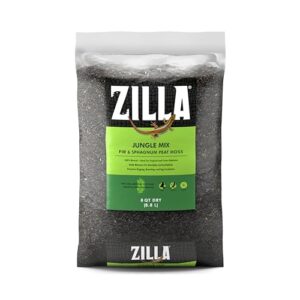
Zilla’s Jungle Mix blends aged Douglas fir bark and sphagnum peat moss, giving you a soft, earthy substrate built for humidity-loving species. It’s a solid pick for frogs, rainforest geckos, toads, and moisture-dependent snakes.
Because substrate choice shapes everything from humidity to shedding success in young snakes, it’s worth reviewing the best substrate materials for juvenile snakes before you commit to a mix.
Keep it at 1 to 2 inches deep, and expect monthly replacement (sooner if soiling piles up). One catch: dry handling can cause splinters, so mist it lightly before working with your hands.
| Best For | Keepers of frogs, rainforest geckos, toads, and moisture-loving snakes who need a bioactive, humidity-retaining setup. |
|---|---|
| Primary Material | Douglas fir bark & peat moss |
| Moisture Retention | High |
| Best Species Use | Frogs, geckos, toads |
| Supports Burrowing | Yes |
| Replacement Frequency | Monthly |
| Bioactive Compatible | Yes |
| Additional Features |
|
- Made from 100% organic Douglas fir bark and sphagnum peat moss
- Holds humidity well for tropical and forest-style vivariums
- Encourages natural digging, nesting, and breeding behaviors
- Can produce splinters if handled while dry
- Needs monthly replacement (or sooner if soiled)
- Only works within a narrow 1 to 2 inch depth range for best results
2. Bio Dude Terra Aranea Substrate
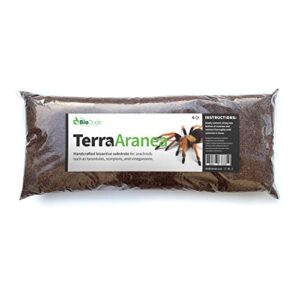
Though it’s marketed for tarantulas, Terra Aranea earns its spot for bioactive reptile setups, too. This handcrafted mix holds moisture without waterlogging, so you get steady humidity while surface layers stay workable for burrowing and tunneling.
Pair it with springtails or isopods and it becomes largely self-cleaning. Watch out, though: some users report mold blooms in humid pockets, so airflow and occasional resurfacing matter. At roughly $24.95, it’s pricier than basics, but the tunnel stability is hard to beat.
| Best For | Keepers setting up bioactive enclosures for burrowing tarantulas, humidity-loving reptiles like crested geckos, or terrariums housing isopods and springtails. |
|---|---|
| Primary Material | Bioactive soil blend |
| Moisture Retention | High |
| Best Species Use | Tarantulas, crested geckos |
| Supports Burrowing | Yes |
| Replacement Frequency | Occasional resurfacing |
| Bioactive Compatible | Yes |
| Additional Features |
|
- Holds humidity while keeping the surface dry enough for digging and burrowing
- Supports bioactive cleanup crews and stays largely self-maintaining with isopods or springtails
- Low-dust formula that’s ready to use straight from the bag
- Pricier than basic substrates, especially when bought directly from the manufacturer
- Some users report mold or yellow spore growth in humid pockets without good airflow
- One reported case of foreign material found in a bag
3. Halatool Coconut Fiber Reptile Substrate
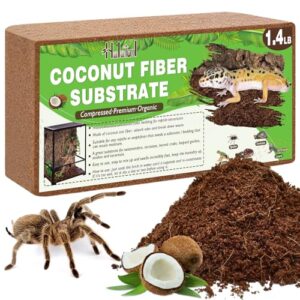
These compressed bricks solve the "how much do I actually buy" problem. Each one expands to roughly 2.1 gallons and holds 8 to 10 times its weight in water, giving you a fluffy, moisture-rich base without added dyes or synthetic binders.
Soak it a few minutes, fluff it up, and you’re set. It works for shedding and burrowing for ball pythons and geckos alike, though feeding from a dish helps avoid accidental ingestion.
| Best For | Reptile, amphibian, and tarantula keepers who want a natural, high-moisture substrate for species like leopard geckos and ball pythons that need help with shedding and burrowing. |
|---|---|
| Primary Material | Coconut husk fiber |
| Moisture Retention | Very High (8-10x weight) |
| Best Species Use | Ball pythons, geckos |
| Supports Burrowing | Yes |
| Replacement Frequency | As needed |
| Bioactive Compatible | Limited |
| Additional Features |
|
- Expands up to ten times its compacted size, so one brick goes a long way
- Made from pure organic coconut husk fiber with no dirt, dyes, or synthetic binders
- Helps control odor and supports a cleaner terrarium by breaking down waste naturally
- Some reptiles may need to be fed from a dish to avoid accidentally ingesting the substrate
- Cleaning ease can vary depending on how consistently the terrarium is maintained
- Particle size may be too coarse for smaller or more sensitive species without extra processing
4. Josh’s Frogs Burrowing Substrate
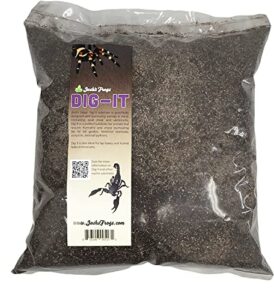
Peat moss and vermiculite make an unlikely pair, but together they create a soft, moisture-rich digging medium that cushions every tunnel your snake carves out. It’s fine enough for delicate hatchlings, yet holds up well for adults too.
Mist it lightly and it stays workable without turning slick. Since vermiculite retains water so well, it doubles as lay box substrate for egg-laying species, though sectioning it off in gecko tanks helps avoid accidental ingestion.
| Best For | This substrate is best for keepers of snakes, frogs, tarantulas, scorpions, and jumping spiders who want a soft, moisture-retentive burrowing medium that supports natural digging behavior. |
|---|---|
| Primary Material | Peat moss & vermiculite |
| Moisture Retention | High |
| Best Species Use | Snakes, frogs, tarantulas |
| Supports Burrowing | Yes |
| Replacement Frequency | As needed |
| Bioactive Compatible | Yes |
| Additional Features |
|
- Soft, fine texture is gentle on delicate pets and hatchlings
- Retains moisture well, making it useful as lay box substrate for egg-laying species
- Versatile enough to support both humid tropical setups and drier arid enclosures
- Can be too fine and dry for certain scorpion species
- Costs more per volume compared to larger substrate options
- Poses a risk of accidental ingestion in gecko enclosures unless properly sectioned off
5. Riare Coconut Fiber Reptile Substrate
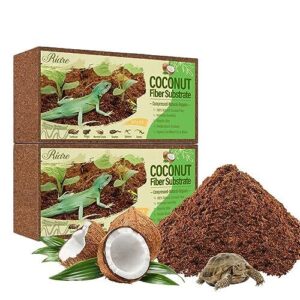
Two compressed bricks, one big payoff: soak them and you get fluffy, soil-like bedding that holds 60–80% humidity for tropical species. It expands fast, stays airy instead of compacting, and absorbs waste well.
Some keepers notice a sour smell during initial soaking, and full hydration can take a while. Fibers need work to separate evenly. Still, for burrowers needing stable moisture, it’s a solid, chemical-free choice that composts easily once retired.
| Best For | Reptile, amphibian, and invertebrate owners who want a natural, humidity-retaining substrate for burrowing species like snakes, frogs, geckos, and hermit crabs. |
|---|---|
| Primary Material | Coconut fiber |
| Moisture Retention | High |
| Best Species Use | Snakes, turtles, frogs |
| Supports Burrowing | Yes |
| Replacement Frequency | As needed |
| Bioactive Compatible | Limited |
| Additional Features |
|
- Expands into fluffy, soil-like bedding that supports natural digging and burrowing behavior
- Effectively absorbs liquids, waste, and odors while helping maintain enclosure humidity
- Biodegradable and compostable, making disposal easy and garden-friendly
- Some users notice a sour odor during initial soaking or drying
- Rehydration and drying can take longer than expected
- Fibers may need extra effort to separate and spread evenly after expanding
Frequently Asked Questions (FAQs)
What is the best substrate for beginners?
For most new keepers, paper towels win on safety and ease, while aspen shavings suit dry-climate species. Both are dust-free, cheap, and simple to spot-clean, making them forgiving choices while you learn your snake’s habits.
What is the easiest aquarium substrate to keep clean?
You don’t need fancy gear for this one. A bare bottom tank wins for easy cleaning, but if you want substrate, coarse sand or smooth glass liners rinse clean fast with routine siphoning and minimal buildup.
What kind of bedding do you use for lizards?
For lizards, it depends on the species. Tropical types do best on coconut fiber for humidity, while dry-climate lizards prefer aspen or reptile carpet, and hatchlings should stick with paper towels.
What’s the best substrate for ball pythons?
Curious what actually works? Coconut fiber wins for ball pythons, holding 60-80% humidity for smooth sheds while supporting light burrowing. It’s beginner-friendly, odor-manageable, and mimics their natural tropical floor better than drier options like aspen.
Can substrate affect a snakes shedding process?
Absolutely, yes. Humidity between 60 and 80 percent keeps skin from cracking during shedding, while rough textures add friction that helps peel it loose. Dry, smooth, or dusty bedding often leads to partial sheds or retained skin.
How does substrate impact enclosure odor control?
Absorbent bedding like aspen or coconut fiber traps moisture and waste, cutting ammonia buildup at the source. Deeper layers help disperse odor, while good ventilation and regular spot cleaning keep smells from lingering between full substrate changes.
What substrate works best for snake egg incubation?
A breeder incubating corn snake eggs used a 1:1 vermiculite-perlite mix, premoistened to clump without dripping. That sterile mixture resists mold, holds steady humidity, and cushions eggs at 2-3 times their diameter for safe development.
Can bioactive substrates work for beginner snake keepers?
Yes, if you start simple. Stick to a proven recipe, moderate humidity species, and a small enclosure. Add springtails and isopods gradually, and stay ready to switch back to standard substrate if issues arise.
How deep should substrate be for juvenile snakes?
More depth isn’t always safer. Non-burrowing juveniles do fine at two to three inches, but active diggers need three to four inches minimum, up to six for deep burrowers, balancing movement, humidity buffering, and low impaction risk.
How much does snake substrate typically cost?
Expect to spend 8 to 20 dollars per bag, depending on type. Paper towels run 5 to 10 dollars a roll, aspen 10 to 25 dollars, and coconut fiber 6 to 18 dollars, with yearly upkeep landing around 50 to 150 dollars.
Conclusion
A keeper once lost a healthy corn snake to impaction from loose walnut shell, a cheap five dollar mistake that cost a life. That’s what smart substrate bedding for beginners prevents.
Match the material to the species, keep humidity in range, and check for dust before it ever touches the tank. Your snake can’t tell you when something’s wrong, so the enclosure has to speak for it.
Get the basics right, and comfort becomes automatic.