This site is supported by our readers. We may earn a commission, at no cost to you, if you purchase through links.
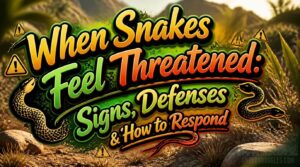
A snake’s strike happens faster than your eye can follow, sometimes in under a tenth of a second. That speed isn’t aggression. It’s survival wiring, built by millions of years of being both predator and prey.
Understanding when snakes feel threatened means reading a language written in body posture, not words. A flattened neck, a coiled S-curve, a sudden freeze: each signals a nervous system calculating risk before conscious thought even catches up. Get the signs wrong, and you risk a bite. Get them right, and you can defuse a dangerous moment before it starts.
What follows breaks down the triggers, defenses, and warning signs that turn a calm snake into a defensive one, and how you can respond without making things worse.
Table Of Contents
- Key Takeaways
- Snakes Feel Threatened by Sudden, Close Danger
- How Threatened Snakes Defend Themselves
- Warning Signs a Snake Feels Threatened
- Why Snake Defensive Responses Vary
- How to Respond Safely to Threatened Snakes
- Frequently Asked Questions (FAQs)
- What do snakes do when they feel threatened?
- What scares snakes away?
- What time of year are snakes most aggressive?
- Do snakes only bite if they feel threatened?
- What do snakes do when threatened?
- What repels snakes immediately?
- How to tell if a snake feels threatened?
- How to not make a snake feel threatened?
- Can snakes recognize the same threat twice?
- Do snakes feel threatened by other snake species?
- Conclusion
Key Takeaways
- A snake’s defensive reactions—freezing, fleeing, hissing, striking—happen through instinct, not conscious choice, so speed and body language matter more than intent.
- Warning signs like a raised S-curve, flattened neck, hissing, and tail vibration follow a predictable escalation order, giving you a chance to back off before a bite happens.
- Snake defense strategies vary by species, size, age, and even temperature, meaning there’s no single "normal" reaction to expect from every snake.
- The safest response to a threatened snake is to freeze, retreat slowly while giving it a clear escape route, and never grab, corner, or restrain it.
Snakes Feel Threatened by Sudden, Close Danger
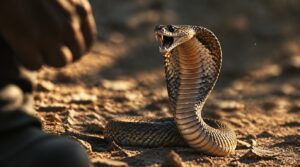
A snake doesn’t weigh its options before reacting to danger — its nervous system decides first, and thought comes second. That split-second wiring shapes everything from a startled flinch to a full defensive stance. Here’s what actually sets that alarm off.
Often that alarm sounds off as a sharp hiss, and understanding why snakes hiss when they feel threatened can help you read the warning before it escalates.
A snake’s nervous system reacts to danger before its brain even catches up
Automatic Threat Detection
Get within a body length or two of a snake, and its nervous system reacts before its brain catches up. This sensory threat detection happens fast, like a security system running real-time threat monitoring.
- Sight, heat-sensing pits, and vibration all feed threat assessment
- Processing occurs before conscious thought engages
- Fear responses are hardwired, not chosen
Movement Toward The Head
Once threat detection fires, your next move matters most. Reach toward a snake’s head, and neck muscles snap it upward within 0.2 to 0.5 seconds, eyes tracking your hand’s path instantly. Jaw preparation begins before you’d notice. Posture stabilization follows: head flattening, neck spreading, sometimes a cobra hood display. That’s a defensive posture, not aggression.
Careful, close observation of an animal’s behavior mirrors the data-centered approach to reading that researchers use to interpret visual information accurately.
Handling, Restraint, and Cornering
Restraint amplifies threat perception fast. A snake pinned by hands reads that grip as predation, not help, triggering full defensive escalation.
Proper hook use lifts the body first; follow with a gentle support grip at neck and midbody. Keep the head away position throughout. Move slow, straight, no jarring. Release only when calm, back in its enclosure.
Habitat Changes and Missing Hides
Handling isn’t the only stressor: a snake without hides feels exposed around the clock. Vegetation fragmentation and burrow collapse strip away escape routes, leaving snakes with nowhere to retreat.
- Cracked, sun-baked soil where a cool burrow once sat
- Bare ground where fallen logs used to offer cover
- Thinning shrubs exposing basking spots to every passing predator
Enclosure changes create the same panic, minus the escape route.
Past Negative Handling Experiences
Memory shapes fear. A snake that’s endured rough grabbing or pinning starts raising its head and striking sooner next time, even without new provocation.
| Prior Experience | Behavioral Change | Recovery Approach |
|---|---|---|
| Rough restraint | Elevated strikes | Gentle reintroduction |
| Frequent pinning | Approach avoidance | Positive reinforcement |
| Harsh contact | Erratic movement | Gradual habituation |
Trust rebuilds slowly, monitor stress indicators closely.
Before each session, check for common signs of snake stress and aggression so you can pause before pushing too far, too fast.
How Threatened Snakes Defend Themselves
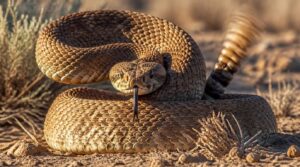
Once a snake decides you’re a threat, it doesn’t have many options — just a handful of tactics, used in a fairly predictable order. Some snakes freeze and hope you walk past; others bolt, hiss, or puff up like they’ve doubled in size. Here’s the rundown of defenses you’re most likely to see, from the subtle to the unmistakable.
Freezing and Relying on Camouflage
A snake’s first move is often no move at all. Freezing behavior relies on staying dead still, letting cryptic coloring do the work: browns, grays, and olive tones merge into leaf litter, bark, or sand. This background matching fools predators scanning for motion.
Effective camouflage buys time, and time, for a snake, often means survival without ever needing to strike.
Fleeing and Seeking Concealment
When camouflage fails, most snakes simply bolt. Given a clear ground-level exit, they’ll move steadily toward rocks, logs, or thick brush, prioritizing shelter utilization over confrontation.
This isn’t panic, it’s calculated escape route prioritization. Once inside cover, concealment through motion stops, stillness returns. Cross that flight initiation distance and retreat speed jumps, snakes sprint for safety the moment "safe distance" disappears.
Hissing, Flattening, and Tail Vibration
Sound and posture do the talking here. Hissing mechanics force air through the glottis, sometimes topping 100 decibels, while lateral flattening widens the neck for a bigger silhouette.
- Hiss intensity builds with proximity
- Tail vibration hits 10-60 Hz
- Signals often fire together
- Coordination extends the display
- Buys time to flee
Musk, Cloacal Popping, Playing Dead
When hissing and posturing fail, snakes escalate to chemistry and theater.
Musk secretion floods attackers with foul-smelling compounds from cloacal glands. Combined cloacal popping releases air and musk together, a startle tactic meant to shock predators into hesitating.
If that fails, some species commit fully: thanatosis, or playing dead, means rolling belly-up, gaping the mouth, and going limp, betting predators lose interest in what looks already dead.
Bluff Strikes, Bites, and Constriction
Cornered snakes escalate fast: bluff strikes lunge without venom, testing your reaction before committing.
True bites deliver venom or defensive force, sometimes striking multiple times.
- coiled body poised like a loaded spring
- head darting forward, then retreating
- jaws snapping shut on empty air
- fangs sinking in, then quick release
- muscular coils tightening with each breath
Constrictors squeeze until resistance stops, then retreat.
Warning Signs a Snake Feels Threatened
A snake rarely attacks without warning first — it tells you exactly how it feels through body language. Learning to read those signals means you can back off before things escalate. Here’s what to watch for.
Defensive S-Curve and Raised Head
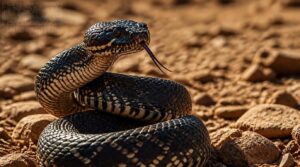
Picture a snake pulling its neck into a tight "S," head raised above the body: that’s the defensive S-curve, a classic threat posturing signal. This head elevation display makes the snake look bigger and more dangerous while keeping muscles coiled and ready.
Watch the head, too. Quick scanning movements mean threat detection is active, and a strike could follow fast.
Body Flattening or Neck Spreading
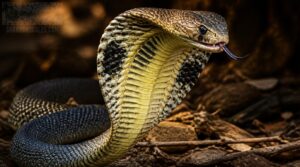
Once the S-curve locks in, watch the neck: it may widen dramatically. This is lateral flattening, muscles pulling the throat outward, skin stretching taut. Cobras take it furthest with their iconic hood display, but rat snakes and kingsnakes flatten subtly too.
The wider profile also gives the lungs a respiratory buffer for louder hissing. If you see it, back off; that snake means business.
Hissing, Puffing, and Tail Vibrations
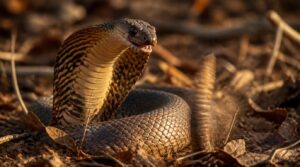
That flattened neck often comes paired with sound. Air forces through the glottis, producing a hiss that scales with threat level, soft warnings versus sharp bursts. Puffing pulls extra air into the lungs, inflating the body for volume and size.
Tails add rhythm: vibrating 20 to 120 Hz against dry leaves, mimicking rattlesnakes. Combined, these create layered warning systems demanding respect.
Freezing or Frantic Escape Attempts

Sound isn’t the only signal. Some snakes go still instead, betting on camouflage effectiveness over noise. Others bolt, weighing predator proximity against known escape routes.
Freeze duration often hinges on threat intensity, seconds to minutes. Flight initiation distance shrinks near cover, since retreat opportunity depends entirely on nearby shelter.
Tongue Flicking Needs Context
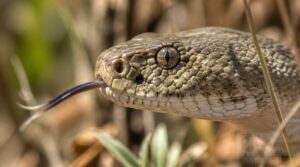
That flicking tongue isn’t automatically fear. It’s scent trail analysis, part of ordinary habitat navigation and predator assessment.
Context decides the meaning: rapid bursts near you signal threat detection and alertness, while slow, steady flicks during exploration suggest calm curiosity.
Pair it with posture, distance, and body language before reading it as a genuine warning signal.
Why Snake Defensive Responses Vary
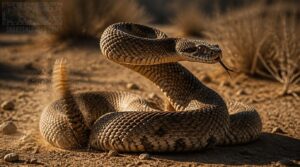
No two snakes read a threat the same way. Species, size, age, and even the weather all shape what happens next. Here’s what actually drives that response.
Species-Specific Defense Strategies
No two snakes read the same threat manual.
A cobra rises into its iconic hood display, while a rattlesnake buzzes its tail as fair warning. Vipers rely on blinding strike speed, pythons favor constriction defense, and sea snakes trust aquatic evasion.
These behavioral adaptations reflect millions of years of survival instinct, tuned precisely to each species’ body plan and habitat.
Venomous Versus Nonvenomous Defenses
Ask a viper and a rat snake how they’d handle the same threat, and you’ll get very different answers.
Venomous species favor defensive bite mechanics and striking readiness; nonvenomous ones lean on constriction or pure escape strategy differences.
- Venom potency varies widely by species
- Hooding signals venomous warning displays
- Nonvenomous snakes mimic colors for protection
- Constriction disables prey without toxins
- Musk deters without any bite
Juvenile Versus Adult Reactions
A young snake bolts first and thinks later, while an adult stands its ground.
Juvenile snake reactivity runs hot: rapid tongue flicking, quick head turns, faster juvenile escape patterns. Bites come easy under stress.
| Trait | Juvenile | Adult |
|---|---|---|
| First response | Flee | Freeze |
| Reaction speed | Fast | Deliberate |
| Handling tolerance | Low | Higher |
Adult defensive postures stay steadier, backed by slower, more deliberate threat assessment.
Body Size and Escape Options
Size shapes strategy. Bigger snakes face body width constraints in tight cover, so they favor open ground and speed over squeezing into crevices.
Smaller snakes exploit tight gaps for escape and concealment, while habitat complexity affects each differently.
Larger individuals weigh risk versus retreat opportunity, often choosing bold, rapid straight-line escapes instead of hiding.
Temperature, Habituation, and Past Stress
Cold snakes strike faster, oddly enough. Cold exposure sharpens the thermal stress response, spiking heart rate within minutes. Warm conditions speed recovery, shortening cooldown after a scare.
Habituation training matters too: snakes handled gently and often learn threats aren’t constant. But past stress impact lingers. One rough grab can prime a snake toward defensive escalation for months afterward.
How to Respond Safely to Threatened Snakes
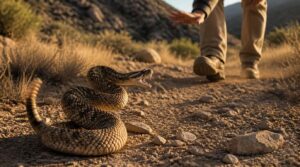
Knowing why a snake reacts is one thing—knowing how to act on it is another. Your response in the moment can mean the difference between a calm retreat and an unnecessary bite. Here’s what to keep in mind, step by step.
Stop Moving and Increase Distance
Freeze first. A snake mid-threat assessment is reading your motion, not your intent, so any sudden shift reads as attack.
Stay still, hips squared, hands low. Then retreat slowly, stepping sideways rather than backward, widening that safe distance until you’ve cleared several body lengths. Slow beats fast, every time.
Give The Snake an Escape Route
Once you’ve backed off, look at what’s behind the snake, not just around you. A clear, unobstructed corridor toward tall grass, a burrow, or brush gives it a reason to retreat instead of defend.
Skip the shortcuts: no cornering against walls or gear. Quiet, minimal movement lets the snake read escape as safer than standing its ground.
Avoid Grabbing or Cornering
An open corridor means nothing if you close it back up. Grabbing or cornering forces defensive escalation, turning a calm retreat into strikes or bites. Keep safe distance, resist the urge to restrain, and let slow retreat do the work.
No hands near the head or tail. No boxing it in against a wall. Patience beats restraint, every time.
Reduce Stress for Pet Snakes
Distance and patience handle single encounters, but pet snakes need daily stress reduction.
Set up temperature gradients near 75-90°F, secure hiding spots, and consistent lighting cycles. Add enrichment like branches and rocks for exploration.
Gentle handling, approaching slowly from the side, builds habituation over time. Less disturbance means fewer alarm moments, and a calmer reptile stress response overall.
Respond Safely After a Bite
A bite changes everything: this isn’t the moment for guesswork. Wash the area, immobilize the limb at heart level, and get to a hospital immediately. Not every bite means venom injection, thanks to dry bite rates and venom metering, but only a clinician can confirm that.
- Skip home remedies: no tourniquets, cutting, or suction.
- Note bite time and snake appearance if safe to do so.
- Watch for delayed swelling signaling defensive envenomation.
Frequently Asked Questions (FAQs)
What do snakes do when they feel threatened?
Threat assessment happens fast: within one to two body lengths, a snake freezes, relies on camouflage, hisses, flattens its body, or flees toward concealment, choosing whichever defensive display its instincts favor first.
What scares snakes away?
Like a curtain snapping shut on a stage, a snake’s world closes fast. Sudden movements, loud noises, bright lights, and strong vibrations trigger threat detection, pushing it toward retreat rather than confrontation.
What time of year are snakes most aggressive?
Spring brings peak defensiveness: rising temperatures end brumation, pushing snakes toward feeding and mating. Territorial behavior spikes, and early-season visibility means more surprise encounters, especially near emerging refuges where startled snakes react fastest.
Do snakes only bite if they feel threatened?
Not exactly, though it’s close. Two motives drive a bite: hunger and fear. Defensive bites stem from perceived danger, while predatory strikes target prey. Environmental triggers, cornering, or startling almost always precede the defensive kind.
What do snakes do when threatened?
A snake’s response follows a clear order: freezing behavior and camouflage first, escape second, defensive posturing and hissing third, and biting or thanatosis behavior only as a last resort when cornered.
What repels snakes immediately?
Does scent really send a snake fleeing? Yes: cinnamon oil spray and clove oil eugenol trigger genuine escape responses.
Aim directly at the head, aerosol mixtures work fastest, and commercial mixture purity determines whether that retreat opportunity actually happens.
How to tell if a snake feels threatened?
Look for a tight S-curve, raised head, flattened neck, and rapid tail vibration. Hissing, frantic tongue flicking, and sudden escape attempts confirm threat perception has triggered your snake’s defensive posture.
How to not make a snake feel threatened?
Like approaching a sleeping baby, tread lightly. Stay calm, move slowly, and give space. Avoid handling, skip sudden light or noise, and let retreat opportunities stay open, quiet respect prevents defensive stress before it starts.
Can snakes recognize the same threat twice?
Yes, through defensive recall: sensory cues like scent, heat, and movement link to past danger. Repeated stimulus response sharpens habituation, so familiar threat memory cues trigger faster, more confident defensive reactions the second time around.
Do snakes feel threatened by other snake species?
Absolutely, and often more intensely than with predators. Interspecies threat perception triggers coiling, hissing, and retreat when an unfamiliar species intrudes, especially near shared burrows, showing that defensive postures and alarm signals aren’t reserved for humans or predators alone.
Conclusion
You might think a snake’s defense is random, but it never is. Every hiss, coil, and freeze follows the same logic: survival first, aggression never. Recognizing when snakes feel threatened isn’t about memorizing fear, it’s about reading intent before it becomes instinct. Give a snake space, respect its signals, and you remove the need for conflict entirely. The safest encounters aren’t lucky. They’re earned through understanding, one calm, deliberate step at a time.