This site is supported by our readers. We may earn a commission, at no cost to you, if you purchase through links.
A pygmy rattlesnake uncoiled on warm sand strikes far more often than one wound tight in a defensive spiral. That single detail tells you something most people miss: coiling isn’t one behavior. It’s a whole vocabulary.
Body posture shifts with temperature, threat, mood, even the texture of the ground beneath a snake’s belly. A loose loop on a sunny rock means something entirely different from a stacked, muscle-tense ball near your boot. Learning snake coiling behavior meanings turns guesswork into genuine read of intent, useful whether you’re a keeper, a hiker, or someone who just wants to understand the animal a little better.
The coils are talking. Here’s how to listen.
Table Of Contents
- Key Takeaways
- What Does Snake Coiling Behavior Mean?
- Why Snakes Coil for Temperature and Rest
- Defensive and Predatory Coiling Meanings
- Species-Specific Snake Coiling Patterns
- When Coiling Signals Stress or Illness
- Frequently Asked Questions (FAQs)
- Do snakes coil when scared?
- Can coiling behavior indicate a snakes age?
- How does pregnancy affect snake coiling habits?
- Do snakes coil differently in captivity vs. wild?
- Can coiling patterns vary between male and female snakes?
- How does humidity influence a snakes coiling behavior?
- How often should a healthy snake change coiling positions?
- Can coiling behavior differ between captive and wild snakes?
- Does age affect how a snake typically coils?
- Why do snakes coil differently after eating meals?
- Conclusion
Key Takeaways
- Coiling isn’t random—tight coils trap body heat while loose ones release it, since snakes have no other way to regulate their temperature
- A snake’s posture tells you its intent before it acts, with raised heads and tense muscles signaling readiness to strike and relaxed, tucked heads signaling calm
- Defensive coiling (like a ball python’s tight ball or a rattlesnake’s stacked spiral) protects vital organs and explains why coiled snakes strike less often than uncoiled ones
- Rigid, unmoving coils paired with signs like gaping breath or fixed eyes usually point to stress or illness, not normal behavior, and warrant a vet check
What Does Snake Coiling Behavior Mean?
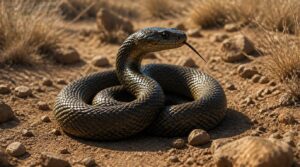
A coiled snake is never just resting—it’s telling you something. Tension, shape, and head position all carry meaning, and learning to read them puts you ahead of trouble before it starts. Here’s what to watch for.
A tight coil with a raised, pulled-back head usually signals stress, so if you’re unsure what your snake is telling you, these corn snake care tips can help you spot the difference between defensive and relaxed postures.
Common Snake Coiling Positions
Watch a snake long enough and you’ll notice it rarely holds one shape twice. Three postures dominate: tight thermoregulatory coils for warmth, loose resting loops for basking, and defensive coil stacks that shield organs.
- Tight coil, heat retained
- Loose coil, heat released
- Layered coil, body protected
Each posture is body language, a readable signal of what the snake needs right now. A study of pygmy rattlesnakes found that uncoiled snakes struck more often than coiled ones, showing how posture directly shapes defensive response.
Relaxed Versus Alert Coils
So what separates calm from cautious? A relaxed coil shows wide loops, smooth spine curvature, minimal muscle tension. Head rests forward, low vigilance.
An alert coil tightens fast. Substrate contact firms up, muscle readiness spikes, tail twitches. Head tucks lower.
Environmental triggers, like temperature drops or nearby movement, flip this switch instantly. Body posture analysis starts here.
Coil Tension and Head Position
Tension and head position work together. A lifted, forward head with a compressed neck arc signals readiness to strike, pupils narrowed, eye focus locked on target.
Tucked heads level with the coil mean calm.
Higher neck tension shortens strike distance. Firm substrates support tighter coils; soft ground lets tension slip, softening posture.
Interpreting Coils in Context
No single coil tells the whole story. You need context: temperature, substrate, recent activity, even time of day.
Ask yourself:
- Is the surface warm or cool?
- What’s the head position?
- Any hissing or muscle tension?
- Does habitat (arboreal, aquatic, ground) match the coil style?
Read coil rotation, posture, and environmental cues together, and the snake’s body language becomes obvious.
Why Snakes Coil for Temperature and Rest
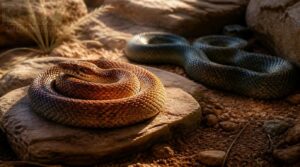
A snake without sweat glands or shivering muscles has one real tool for managing body heat: its own body shape. Coiling tighter or looser changes how much skin touches the air, and that simple shift does a lot of work.
A well-designed enclosure with a proper basking spot and cooler retreat lets your snake coil or stretch as needed, and choosing a species suited to your setup starts with these beginner-friendly snake species profiles.
Without sweat glands or shivering muscles, a snake manages its body heat by simply coiling tighter or looser
Here’s what your snake’s posture is telling you about temperature, rest, and everything in between.
Tight Coils Retain Warmth
A tight coil works like a living thermos. By pulling into a compact spiral, a snake slashes exposed surface area, trapping metabolic heat inside the loops. Blood flow concentrates near the coil’s center, and body temperature control improves as convective loss drops.
| Coil Type | Heat Retained | Best Use Case |
|---|---|---|
| Tight spiral | 1–2°C higher | Cool nights |
| Stacked loops | Moderate | Resting |
| Compact ball | High | Stress/cold |
| Substrate-hugging | Very high | Basking surfaces |
| Core-focused | Stable | Energy conservation |
Loose Coils Release Heat
Spread wide across warm stone, a loose coil turns the body into a radiator. More skin meets air, convection speeds up, and heat escapes fast.
Substrate contact cooling helps too. Damp earth or smooth rock pulls warmth out by conduction, especially with airflow enhancement.
Basking cooling behavior follows a pattern:
- Loosen coils
- Increase surface exposure
- Shed heat gradually
Resting and Energy Conservation
Sleep isn’t idle for a snake. Slowed breathing and a low heart rate mark energy-saving coil postures, with head tucking cutting heat loss further.
| Rest Trait | What It Signals |
|---|---|
| Tight, tucked coil | Deep, low-energy rest |
| Loose coil | Light, alert rest |
| Days of stillness | Stable fat reserves |
Cooler climates stretch rest cycles; warmth shortens them.
Humidity and Substrate Effects
Ever notice how a snake tightens up the moment the air turns dry? Below 40% humidity, moisture retention coils kick in, pulling the body inward to guard against dehydration. Humid environment looseness lets loops relax and spread.
Substrate temperature exchange matters too. Tile, stone, or warmed enclosure floors pull heat through contact, shaping how snakes press or lift their coils during basking surface adaptation.
Coiling During Shedding
Shedding rewrites the coiling rulebook entirely. In the preshed phase, you’ll spot loose coil formation with the head tucked near the vent, protecting vulnerable areas as skin protection during shedding becomes priority one.
During active peel and midshed, watch for:
- Dull, frosted scales within the coil
- Minimal movement to conserve energy
- Stable coil temperature despite reduced activity
Postshed brings looser coils and coil stability returning gradually.
Defensive and Predatory Coiling Meanings
Not every coil is about staying warm. Some shapes exist purely for survival, whether that means fending off a threat or launching a strike. Here’s what your snake’s body is really telling you when things turn serious.
Defensive Coils Protect Vital Organs
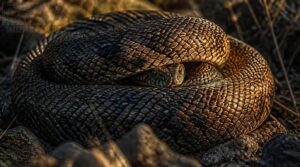
A threatened snake doesn’t just curl up, it builds a shield. Organ shielding mechanics tuck the head under muscular loops while ribs cushion the thorax, absorbing bite impact before it reaches the heart or lungs. Tight coils lower the center of gravity, and scale alignment resists puncture. It’s essential protection through layered defense, nothing accidental about it.
Body Flattening and Size Displays
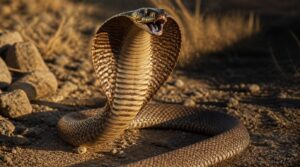
Coiling isn’t the only trick in a snake’s defense playbook. Rib spreading doubles visible width through body flattening, while head flattening and neck expansion turn a slender body into something wider, flatter, harder to ignore.
Add puffing displays, that inflated circumference paired with hissing, and you’ve got warning signals designed for one job: making a threat postures reconsider its odds.
S-Curves Before Striking
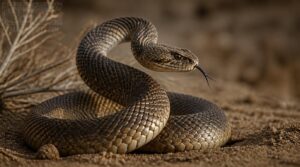
Puffing up is one thing. But watch the body form an S-shaped strike coil, and you’re seeing real predatory mechanics at work.
The midsection lowers, head glides forward along that curve, storing elastic energy in flexed vertebrae. It’s a spring-loaded anchor, substrate grip locked in, ready to release a vertebral propulsion wave the instant muscle contraction timing says go.
Hissing and Tail Vibration
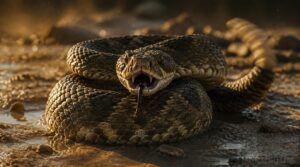
Sound and motion often arrive before the strike does. A hiss pushes air through the glottis, hitting 70 decibels up close, a raw acoustic warning. Pair it with tail vibration exceeding 10 cycles per second and you’ve got layered threat signals.
- Loud hiss, tight coils: high risk
- Soft hiss, loose coils: likely bluff
- Wet ground mutes hissing, amplifies tail cues
- Desert species hiss high-pitched to save moisture
Ambush Coils and Strike Anchoring

Once the noise fades, stillness takes over. Ambush coils hold a compact stance, head raised and hidden, ready for spring-loaded strike mechanics. The coil’s curvature allows precise head alignment, while strike anchoring grips the substrate for accuracy. Elastic energy stores along the spine, waiting. Coil tension control and thermal cues from facial pits guide the perfect, explosive lunge.
Species-Specific Snake Coiling Patterns

Not every snake coils the same way, and that’s not an accident. Genetics, habitat, and hunting style all shape how a species uses its body under pressure or at rest. Here’s what coiling looks like across five snakes you’re likely to encounter.
Understanding those differences gets even richer when you explore the biology behind why snakes coil tightly—the mechanics reveal just how purposeful each position really is.
Ball Python Defensive Balling
Ever seen a ball python vanish into itself? That’s Rapid Defensive Curling in action, a last-resort escape when retreat isn’t possible.
Using the Head Tucking Technique, the head hides deep inside the coils. Tail Wrapping Stabilization locks the sphere tight, achieving Surface Area Minimization. Stress Trigger Recognition matters here: sudden handling or looming shadows often trigger this defensive coiling, a clear signal of stress and discomfort through body language.
Boa Constrictor Stacked Coils
A boa doesn’t ball up like its smaller cousin. It stacks, layering loops into a tight, layered circle along a vertical axis, head near center for balance.
This structure maximizes coil stability mechanics and thermal retention efficiency while shielding essential organs.
On firm substrate, the compact stack tightens further, boosting warmth retention and defensive readiness in one coiled posture.
Corn Snake Relaxed Loops
Ease is the corn snake’s default. Rather than balling up, it drapes into a loose resting coil, loops spaced unevenly, head raised just above the curves. Dry substrate keeps loops low; humidity swells them softer. Watch for:
- Smooth loop spacing
- Elevated, steady head
- Closed mouth, calm eyes
Rigid kinks or flattened posture mean something’s off.
Arboreal Snake Branch Coils
Balance beats brute strength up in the canopy. Green tree pythons wrap compact, circular coils around limbs for arboreal grip stability, scales gripping bark while tail extends for extra friction.
Colubrids stay looser, ready to descend fast. Coils track branch diameter and sunlight exposure angle, letting the snake regulate heat while staying camouflaged among leaves and shadow.
Puff Adder Ambush Coiling
Patience is the puff adder’s real weapon. It can hold an ambush posture for weeks, motionless in dry grass, banded patterns melting into leaf litter for near-perfect camouflage effectiveness.
Prey detection stillness keeps the tail quiet and fangs venom-ready. Once movement enters ambush strike range, springloaded strike mechanics fire, body flattening slightly to anchor the coil before the lunge.
When Coiling Signals Stress or Illness

Not every coil means comfort or curiosity. Sometimes your snake’s body is telling you something’s wrong, and that message shows up in specific, recognizable postures. Here’s what to watch for, and when it’s time to call the vet.
Cloudy eyes may signal an upcoming shed, so review snake shedding-stage eye changes before assuming illness.
Rigid or Unresponsive Coils
A snake frozen mid-coil for minutes isn’t resting, it’s alarmed. Rigid or unresponsive coiling means taut muscles, fixed pupils, and firm substrate contact with zero adjustment. Head position stays oriented toward threats, not relaxed.
Coil tension analysis matters here: true stillness beyond a few seconds, absent shedding or brumation, often flags stress, pain, or illness in coiling behavior, especially with shallow breathing.
Corkscrewing and Stargazing
Context matters here. Corkscrewing during a hunt means strike anchor preparation, tail-stabilized, head elevated, tightening toward launch. Same twist appearing randomly, disconnected from prey, screams neurological disorders, sometimes inclusion body disease.
Stargazing while ambush hunting keeps eyes upward for silhouettes. Stargazing alone, rigid, eyes fixed skyward with no prey present, signals brain dysfunction demanding immediate veterinary evaluation.
Open-Mouth Breathing Postures
A gaping jaw paired with rigid coiling rarely means curiosity. It’s often respiratory infection or acute stress and discomfort, sometimes a defensive warning if cornered.
Watch for:
- Persistent gaping unrelated to feeding
- Audible clicking or wheezing
- Mucus near the mouth
Unlike basking thermoregulation, this posture won’t resolve with a heat lamp adjustment. It needs closer scrutiny.
When Veterinary Care is Needed
That gaping jaw is a cue, not a diagnosis. So when do you actually call the vet?
Treat these as emergency symptoms: labored breathing, collapse, inability to eliminate, uncontrolled bleeding, toxic exposure, or trauma. Rigid coils paired with any of these aren’t behavior quirks, they’re distress signals demanding urgent veterinary advice. Waiting risks systemic disease taking hold fast.
Frequently Asked Questions (FAQs)
Do snakes coil when scared?
Picture a ball python spotted mid-terrarium cleaning: it balls up instantly, head tucked. That’s textbook fear-induced coiling.
Yes, snakes coil when scared, a defensive posture triggering tight muscle tension that shields organs and signals genuine threat perception.
Can coiling behavior indicate a snakes age?
Not precisely. Coil tightness hints at development stage, not exact age, since growth is indeterminate. Juvenile boas favor reactive, pliable coils; adults settle into deeper, stiffer ones. Muscle tone, tail proportion, and body condition tell you more.
How does pregnancy affect snake coiling habits?
Like a mother rearranging pillows before rest, a gravid snake reshapes every coil around her young.
Gravid coil adjustments loosen tension, favoring stable thermal regulation pregnancy demands over quick defensive reflexes, protecting developing embryos through breathing room and warmth.
Do snakes coil differently in captivity vs. wild?
Yes. Enclosure size effects limit rectilinear movement, boosting resting coil frequency indoors.
Wild snakes show varied coils from natural habitat scanning and prey ambush positioning.
Thermal enrichment impacts captive coil tightness too, loosening coils in warmer zones for easier heat exchange.
Can coiling patterns vary between male and female snakes?
Yes. Sexual dimorphism shapes coiling: females often carry greater body mass and girth, producing broader, stable loops, while males show leaner muscle distribution and tighter coils. Tail base width also differs, subtly altering defensive and resting postures between sexes.
How does humidity influence a snakes coiling behavior?
Dry air pulls moisture from your snake’s skin, tightening coils for protection. Proper humidity control lets muscles relax into loose, rounded loops. Substrate moisture effects shift coil height too, balancing thermoregulation with hydration needs during rest and shedding.
How often should a healthy snake change coiling positions?
Think of it like shifting in your seat: healthy snakes reposition every 20 to 60 minutes at rest, or 10 to 30 minutes when actively thermoregulating, tied closely to coil frequency thermoregulation and comfort needs.
Can coiling behavior differ between captive and wild snakes?
Absolutely, environment shapes coiling mechanics. Wild snakes adjust rapidly to predators, prey, and shifting microclimates, while captive snakes lean on refuge reliance and enclosure design, often showing tighter, more uniform coils when enrichment falls short.
Does age affect how a snake typically coils?
Like a fist slowly opening into a palm, coils loosen with age. Hatchling coil tightness gives way to juvenile exploration coils, then adult coil broadening, and finally senior joint relief coils as mobility and metabolism shift.
Why do snakes coil differently after eating meals?
Digestive workload spikes metabolism, so postmeal coiling tightens to trap heat while organs process the meal. As digestion progresses, loose coils ease internal pressure.
Larger meals mean longer, tighter rest periods, smaller ones barely change posture at all.
Conclusion
Read between the lines, and a snake never lies to you. Tight, stacked, or loose and draped, each coil is a decision built from temperature, threat, and instinct working together.
Mastering snake coiling behavior meanings means you stop reacting to a snake and start understanding one. That shift changes everything. You’ll spot a warning before it becomes a strike, and calm before it becomes stress. Watch the coil. It’s already telling you what comes next.