This site is supported by our readers. We may earn a commission, at no cost to you, if you purchase through links.

Your snake finished shedding, but a cloudy patch still covers one eye, and the belly feels tight as a drum. That combination worries owners for good reason. Stuck shed and constipation often show up together, since low humidity dries out old skin while a firm, distended gut signals something isn’t moving through like it should.
Both problems stem from fixable habitat issues, not mysterious illness. Humidity, temperature, and prey size drive most cases, and catching the signs early keeps a minor snag from becoming an infection or impaction. Get the setup right, and you’ll know exactly when a soak and gentle wipe-down will do the job, and when it’s time to call your vet.
Table Of Contents
- Key Takeaways
- Recognize Stuck Shed and Constipation
- Correct Humidity, Heat, and Substrate
- Remove Stuck Shed Safely
- Help a Constipated Snake Poop
- Decide When Veterinary Care is Needed
- Frequently Asked Questions (FAQs)
- How do you unconstipate a snake?
- How to help a snake with a stuck shed?
- Is it normal for my snake to poop after shedding?
- How long can a snake go without pooping?
- How often should healthy snakes normally shed skin?
- Are certain snake species more prone to shedding problems?
- How long can a snake safely go without pooping?
- Conclusion
Key Takeaways
- Stuck shed and constipation almost always trace back to your habitat setup, not illness, so fixing humidity, temperature, and prey size solves most cases.
- Soak your snake at 85-90°F for 15-20 minutes, then gently wipe head to tail with a damp cloth, and never pull resistant shed since it can tear scales or detach eye caps.
- Keep prey no wider than 1.5 times your snake’s thickest point, and use a warm soak plus gentle self-directed movement to relieve constipation instead of pressing on the belly.
- Call your vet right away for multiple layers of retained eye caps, a rigid swollen abdomen with lethargy, or any bleeding, discharge, or vomiting, since these signal real danger beyond home care.
Recognize Stuck Shed and Constipation
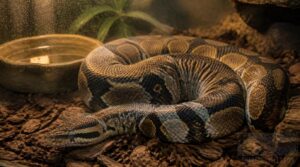
Your snake’s body gives you clear signals when shedding or digestion goes wrong. You just need to know what to look for before a small problem turns serious. Here are the five signs worth watching closely.
If you notice retained eye caps or patchy skin left behind, it helps to understand what causes incomplete sheds and how to fix them before it leads to infection.
Retained Skin and Eye Caps
Cloudy patches over one or both eyes signal retained eye caps, even when the rest of the shed came off clean. Check for missing eye holes in shed skin, a clear red flag.
Watch for head rubbing or sudden food refusal. Low humidity is often the cause. Attempting to peel off a stuck cap yourself is risky, since manual removal at home can cause corneal trauma. Gentle warm water soaks help loosen caps, but resistant ones need veterinary removal.
Dry, Flaky, Patchy Shed
Beyond the eyes, check the whole body. Shed that comes off in broken fragments instead of one sheet points to humidity below the 50% threshold. Skin looks dull, wrinkly, and stays attached in patches.
Juveniles shed every 4-6 weeks and often show this first. Fix it with proper humidity levels and moisture-retaining substrate before stuck shed becomes routine.
Bloating and Firm Abdomen
Run a hand along your snake’s belly. A firm, rigid abdomen that won’t indent under light pressure signals trouble, often gas distention or impaction from substrate or poor digestion.
Watch for:
- Rigid, non-indenting swelling
- Soft, shifting fullness (fluid buildup)
- Belly bulging past normal contour
- Cooler skin over the swollen area
Warm soaks at 85-90°F for 15-20 minutes often ease mild bloating tied to stuck shed or constipation.
Reduced Stool and Appetite
A firm belly often comes with a quiet food bowl. Appetite loss during shedding is normal, lasting up to a week before and after, tied to hormonal shifts that slow metabolism.
Stool frequency drops too, sometimes to once weekly. Low humidity worsens both problems. Offer smaller prey, check hydration, and expect appetite to return within 48-72 hours post-shed.
Stress, Lethargy, Unusual Posture
Watch how your snake moves, not just what it sheds. A ball python coiled tight for days, avoiding new corners, signals elevated stress. Cloudy eyes bring hiding and stillness, that’s normal. But red flags differ:
Use a snake overall health check guide to spot changes in the eyes, mouth, skin, body, and vent early.
- Stargazing posture (head twisted skyward)
- Lethargy past 48 hours
- Aggression during normal handling
These suggest neurological trouble, not routine shedding complications or constipation.
If you’re unsure whether your snake’s symptoms point to something more serious, this guide on what to feed a constipated snake can help you rule out digestive causes first.
Correct Humidity, Heat, and Substrate
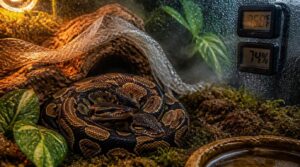
Most stuck shed and constipation problems trace back to the enclosure itself, not the snake. Get the humidity, heat, and substrate right, and you’ll fix the root cause instead of just treating symptoms. Here’s what your setup actually needs.
Species-Appropriate Humidity Ranges
Different species need different humidity, and guessing gets you stuck shed. Ball pythons want 55 to 70 percent, spiking to 80 during shedding. Leopard geckos need only 30 to 40 percent. Crested geckos require 60 to 80 percent. Know your species’ needs, build a humidity gradient across the enclosure, and you’ll prevent most shedding problems before they start.
Calibrating a Digital Hygrometer
A cheap hygrometer can lie to you by 10 percent or more. Test yours with the salt solution method: damp table salt in a sealed bag with the device, sensor exposed, not touching the salt. Wait several hours for stabilization, avoid condensation, then adjust.
Two-point calibration checks accuracy across your target 60-80% range.
Safe Warm-Side Temperatures
Temperature drives digestion. Corn snakes need an 83-88°F warm surface; ball pythons need 88-92°F. Measure the basking spot directly, not mid-air readings, since surface can run 10°F higher.
Keep these ranges in mind when you travel with your snake too, since a car or carrier can overheat quickly, and these safe temperatures for transporting pet snakes help prevent stress.
If you keep several enclosures, a set of compact digital thermometers with extension probes for multiple terrariums lets you check each basking surface directly.
Getting these temps right becomes much easier once you’ve chosen the right heat source, so our guide to the best heat lamps for snakes walks through wattage and lamp types matched to enclosure size.
Nighttime warm side shouldn’t drop below 75°F. Pair a calibrated thermostat with a 10-15°F gradient across the enclosure, letting your snake choose its zone and digest properly.
Moist Hides and Fresh Water
A dry hide is a shed disaster waiting to happen. Give your snake a hide with a coconut fiber liner holding moisture 6 hours post-misting, plus a 500ml water reservoir releasing moisture over 8 hours.
Place the water bowl 4 inches off, elevated on stone to dodge substrate. Filter water weekly; clean bowls prevent biofilm.
Moisture-Retaining, Non-Impaction Substrates
What’s under your snake’s belly matters as much as the air above it. Choose coconut fiber or cypress mulch, both fully digestible if swallowed, so accidental ingestion won’t cause impaction.
Layer substrate 3 inches deep for burrowing and steady moisture retention. Cypress resists mold; both stay dust-free, protecting lungs while holding humidity between soaks.
Remove Stuck Shed Safely
Once humidity and heat are dialed in, you can turn your attention to the stuck shed itself. Removing it takes patience, a light touch, and the right order of steps. Here’s how to do it safely, from soak to final wipe.
Supervised Lukewarm Soaks
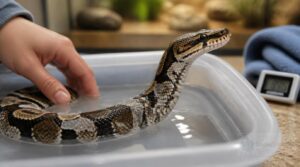
Before touching stuck shed, soak your snake. Fill a dedicated tub with lukewarm water, 82-85°F, reaching only to the shoulders.
Stay within arm’s reach for 15-20 minutes.
- Check water temp every 5 minutes
- Watch the head stays above water
- Keep sessions supervised, never unattended
- Allow frequent breaks if stressed
- Pat dry afterward, return to enclosure
Gentle Head-to-Tail Wiping
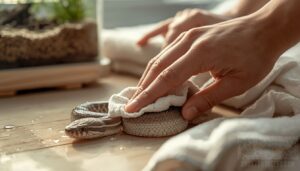
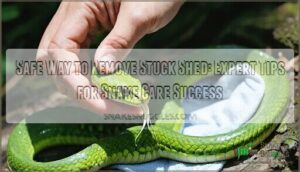
Once the soak loosens things up, grab a damp cloth or paper towel, wrung out so it’s moist, not dripping. Wipe head to tail, following the scale direction. Use light, even pressure, letting the snake slide through the cloth on a smooth, non-abrasive surface. Re-wet every few minutes to keep moisture steady.
Never Pull Resistant Shed
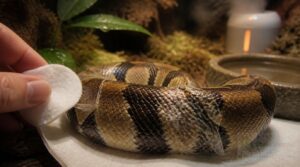
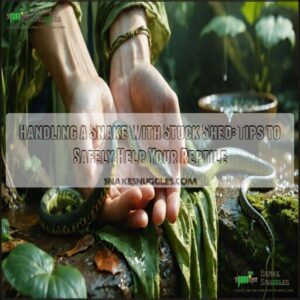
If a patch won’t budge after wiping, stop. Never pull resistant shed, it tears scales and can detach eye caps, causing permanent damage. Instead:
Never pull resistant shed—it tears scales and can detach eye caps, causing permanent damage
- Re-soak 10 minutes
- Wipe with light pressure only
- Take a break
- Recheck humidity
Give it another day. Forcing things risks infection and stress your snake doesn’t need.
Cautious Use of Natural Oils
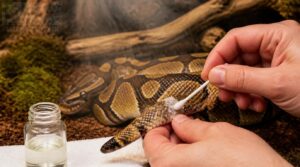
Oils help, but only stubborn patches need them. Use coconut or olive oil sparingly, diluted 10-25%, applied with a cotton swab. Wait 10-15 minutes before gentle removal.
Avoid citrus, tea tree, or cedar oils, they irritate skin and stress breathing. Watch for redness or wheezing after use. Reapply every 24 hours only if shed persists.
Stress-Reducing Handling and Breaks

Since stress slows shedding, keep sessions short and calm.
- Calm handling intervals with frequent breaks
- Gentle body support, no gripping
- Quiet environment, dim light, minimal touch
- Predictable handling routines your snake learns
Use light pressure only and pause if your snake resists. Quiet recovery in its enclosure afterward matters just as much as the shed removal itself.
Help a Constipated Snake Poop
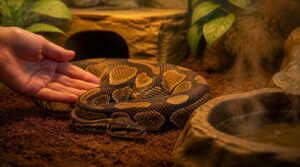
A constipated snake needs your help getting things moving again, and it starts with a few simple checks. You don’t need fancy equipment, just patience and the right approach. Here’s what to look at first.
Review Feeding and Prey Size
Constipation often starts on the plate. Check your prey size against your snake’s girth, never wider than 1.5 times its thickest point, and follow proper age-based prey progression from pinkies to adults.
Oversized prey and a loose feeding schedule strain reptile digestive health. Weigh meals at 10% body weight to avoid overfeeding’s impact.
Warm Soaks for Hydration
When your snake hasn’t pooped in a while, a warm soak works wonders. Fill a shallow container with 85-90°F water, no deeper than shoulder height. Soak 10-20 minutes, supervised. Skin absorbs water directly, boosting hydration levels fast.
- Use dechlorinated water
- Verify temp with a thermometer
- Keep sessions occasional
- Watch your snake throughout
Encourage Safe, Gentle Movement
Movement gets the gut working. After a soak, let your snake explore the enclosure on its own instead of holding it.
Open floor space and secure furnishings support stress-free stretching and calm body alignment as it moves. Slow, self-directed travel through the tank beats forced handling every time. Reduce handling, keep humidity in range, and give frequent breaks between soaks.
Avoid Forceful Abdominal Massage
Pressing hard on a snake’s belly can do real damage. Gentle handling techniques matter here, not force.
Skip deep kneading. If you notice:
- Flinching or jerking
- Body tightening
- Swelling
- Strong resistance
- Lethargy
…stop immediately. Proper abdominal support stays light. Rely on a safe soaking approach and proper humidity levels for safe constipation relief instead.
Monitor Pooping After Shedding
A healthy shed should end with a bowel movement, so watch the clock. Timing after shed varies by species: ball pythons around a week, rat snakes 2-7 days.
Check fecal consistency: firm brown log, chalky white urate. Dry or absent stool past a week signals trouble. Keep humidity correct and reduce handling to support normal post-shed digestion.
Decide When Veterinary Care is Needed
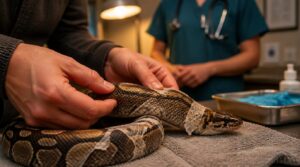
Home care solves most shedding and pooping problems, but not all of them. Some signs mean it’s time to call a vet, no more waiting. Here’s what to watch for.
Normal Poop Timing by Species
Timing varies by species, so know your snake’s baseline before assuming trouble. Ball pythons usually go 6-8 days post-meal at proper temperatures. Juveniles process food faster than adults, often 2-4 days versus 6-8. Prey size and warmth shift this window too.
- Small meals: 3-5 days
- Medium prey: 7-10 days
- Large prey: 10-14 days
Track your pet’s normal pattern; deviations signal possible constipation.
Retained Eye Caps or Bands
Cloudy eyes that don’t clear after shedding mean a retained cap, a form of dysecdysis. One layer, you can usually soak and clear it. Multiple scale layer buildup raises real ocular infection risk and can fuse to the eye.
Low humidity is often the culprit, so check your humidity impact assessment first. Don’t gamble with your snake’s sight, call your vet for vision impairment prevention.
Severe Swelling, Pain, or Lethargy
Eyes are one thing. A swollen, tight abdomen paired with lethargy is another story entirely.
Watch for puffy or shiny skin (edema), curved posture, straining, or a snake that won’t move or eat. These signs point to real pain, not just stuck shed or mild constipation.
Rapid swelling or fading responsiveness is an emergency. Call your reptile veterinarian immediately.
Vomiting, Bleeding, or Discharge
Vomiting changes the picture fast. A snake that regurgitates a meal, especially one kept below 75°F, needs its setup checked first.
Bleeding from the mouth, nose, or vent isn’t normal, and neither is yellow-green nasal discharge or gurgling breath. These signs, alongside stuck shed or constipation, mean it’s time to call your vet.
Veterinary Diagnosis and Treatment
Once you’re at the clinic, expect a thorough physical exam checking skin, eyes, and abdomen. Your vet may order diagnostic imaging or bloodwork to confirm impaction or infection.
Treatment often starts with enemas and fluid therapy, sometimes laxative administration. Severe cases need surgical care. Follow-up radiographs confirm success before your snake returns home.
Frequently Asked Questions (FAQs)
How do you unconstipate a snake?
A rock-hard, weeks-stuck belly needs action now. Give a warm water soak at 85-90°F for 15-30 minutes, encourage gentle movement, skip abdominal massage, and adjust prey size. Persistent cases beyond 6-8 days need veterinary care.
How to help a snake with a stuck shed?
Soak your snake 10-15 minutes in 85-90°F water, then gently wipe head to tail with a damp cloth. Never pull resistant patches. Apply natural oils sparingly if shed sticks, and keep humidity elevated to prevent recurrence.
Is it normal for my snake to poop after shedding?
Why would waste and shedding share timing at all? The cloaca controls both, so post-shed digestion often resumes together. Expect normal dark feces with white urates. Reduced output or straining points toward constipation, not routine post-shed digestion.
How long can a snake go without pooping?
Fecal retention varies widely by species: active hunters like rat snakes go 2-7 days, while ambush predators may wait months.
Digestion speed depends on temperature, prey size, and hydration, so gut motility and warm soaks help constipation resolve naturally.
How often should healthy snakes normally shed skin?
Growth rate drives it: juveniles shed every few weeks, while adult shedding schedules slow to just a handful per year. Species shedding variation and overall health both shape the shedding cycle, so proper humidity levels matter throughout.
Are certain snake species more prone to shedding problems?
Yes. Green tree pythons carry a genetic predisposition toward dysecdysis, needing stable humidity above 70%. Rainforest species evolved for constant moisture, so their skin adapts poorly to dry conditions, raising shedding complications more than desert-adapted snakes ever face.
How long can a snake safely go without pooping?
Defecation frequency ranges from every 3 days to several months, depending on species, meal size, and temperature. Ideal warmth speeds gut motility. If your enclosure stays cool, digestion slows.
Watch for bloating or lethargy, warning signs that call for hydration therapy or warm water soaks.
Conclusion
Every shed is a small molt of trust between you and your snake, proof that its world is finally right. Snake stuck shed and constipation rarely spell disaster. They usually mean your humidity, heat, or prey size needs a second look. Fix those basics, and most cases resolve within a soak or two. Watch closely, act early, and call your vet when signs persist. Your snake depends on you to notice.