This site is supported by our readers. We may earn a commission, at no cost to you, if you purchase through links.

Most people blame pollen counts, pet dander, or dust for their allergy symptoms—and they’re right. But the thermostat sitting on your wall has more influence over indoor air quality than almost any other device in your home.
Set it wrong and your HVAC system pushes allergens through every room on a loop. Set it right and it becomes your first line of defense.
The best thermostats for allergies don’t just regulate temperature—they control humidity, trigger filtered air circulation, and remind you when your system needs maintenance.
Pair one with the right devices and your home working against allergens instead of spreading them.
Table Of Contents
- Key Takeaways
- Top 5 Allergy-Control Devices
- Thermostat Features That Reduce Allergens
- Pairing Thermostats With Air Devices
- Settings and Maintenance for Allergy Relief
- Frequently Asked Questions (FAQs)
- What is the 3 day rule for allergies?
- What are the 9 major foods that cause 90% of allergic reactions?
- What is the best HVAC system for allergies?
- What is the best room temperature for allergies?
- Can thermostats help reduce seasonal pollen indoors?
- Do smart thermostats work with existing HVAC systems?
- What humidity level is best for allergy sufferers?
- How often should I replace my air filters?
- Are voice-controlled thermostats worth the investment for allergies?
- Can thermostats reduce outdoor pollen from entering homes?
- Conclusion
Key Takeaways
- Your thermostat controls more than temperature — it manages humidity, triggers filtered air circulation, and sends filter reminders, making it your strongest tool against indoor allergens.
- Keeping indoor humidity between 40–50% is the single most effective setting you can dial in, because it starves dust mites and slows mold growth without drying out your airways.
- Smart devices work best as a team — pairing a learning thermostat with an air purifier, humidity monitor, and robot vacuum creates an automatic system that cuts allergens before you notice them.
- Filter replacements can’t wait: standard 1-inch filters need to be swapped every 30 days during pollen season, and pushing that deadline means your HVAC is just recirculating the problem.
Top 5 Allergy-Control Devices
Managing allergies at home takes more than one gadget—it’s really a team effort. The right combination of devices can filter, monitor, and control your air automatically.
Here are five tools that work together to keep allergens in check.
Together, they address the same principles behind snake terrarium air quality and climate control, where ventilation, humidity, and temperature must all work in sync to prevent irritants from building up.
1. Levoit Vital 200S Air Purifier
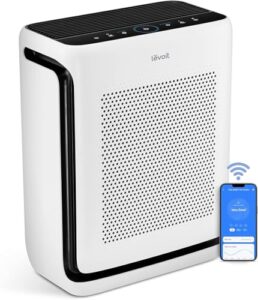
The Levoit Essentials 200S is a smart pick if spring pollen is making your home feel like the outdoors. It covers up to 380 square feet and pushes out a pollen CADR of 289 CFM — enough to turn over air quickly when counts climb.
The three-stage filtration (pre-filter, true HEPA, activated carbon) catches 99.97% of particles down to 0.3 microns.
Sleep Mode keeps things quiet at night. And the VeSync app lets you monitor air quality and adjust settings without leaving the couch.
| Best For | Allergy sufferers, pet owners, and anyone who wants smart air quality control in a large open-plan space. |
|---|---|
| Smart App Control | Wi-Fi + mobile app |
| Voice Assistant | Alexa compatible |
| Auto Mode | Auto fan speed adjustment |
| Sleep Mode | HEPA Sleep Mode |
| Safety Certification | AHAM VERIFIDE certified |
| Noise Level | Low on quiet settings |
| Additional Features |
|
- Covers up to 1,875 sq ft with strong CADR ratings across smoke, dust, and pollen — solid real-world performance backed by AHAM certification
- Built-in air quality sensor with app control and Alexa support makes it easy to manage without thinking about it
- Washable pre-filter cuts down on maintenance costs and stretches the main filter to about 9–12 months
- Gets noticeably loud on higher fan speeds, which can be annoying in quieter rooms or at night
- VOC and odor removal isn’t great out of the box — you’d need specialty filters for serious smoke or chemical smells
- No listed power consumption, so it’s hard to know what it’ll add to your electricity bill
2. SwitchBot Indoor CO2 Air Quality Monitor
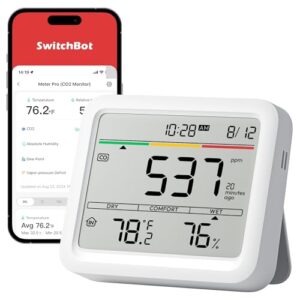
Clean air matters, but so does knowing what’s actually in it. The SwitchBot Indoor CO2 Air Quality Monitor gives you real-time readings on CO₂, temperature, and humidity — all on one 3.6-inch display.
Its Swiss-made NDIR sensor hits ±50 ppm accuracy, updating every second when plugged in. That’s fast enough to catch a stuffy room before it becomes a problem.
Pair it with a SwitchBot Hub and it can automatically trigger your purifier when air quality drops.
| Best For | Anyone who wants a reliable, portable air quality monitor for home, office, or classroom use — especially if they’re already in the SwitchBot ecosystem. |
|---|---|
| Smart App Control | Bluetooth + SwitchBot app |
| Voice Assistant | Requires SwitchBot Hub |
| Auto Mode | Auto CO2 alerts |
| Sleep Mode | Not available |
| Safety Certification | Not disclosed |
| Noise Level | Silent operation |
| Additional Features |
|
- Swiss-made NDIR sensor delivers solid ±50 ppm accuracy, updating every second when plugged in
- Long 12-month battery life makes it easy to place anywhere without worrying about constant recharging
- Tracks CO₂, temperature, and humidity all in one compact, wall-mountable unit
- Push notifications require a separate SwitchBot Hub (~$50), which bumps up the total cost
- CO₂ readings can freeze when plugged in, and battery mode only updates every 5 minutes
- No built-in Wi-Fi means you’re relying on Bluetooth, which can drop connection occasionally
3. Google Nest Learning Thermostat Obsidian
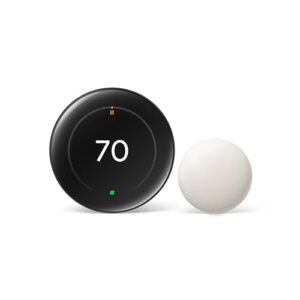
Knowing your air quality is step one. Acting on it automatically is step two — and that’s where the Google Nest Learning Thermostat Obsidian earns its place.
At $215, it comes bundled with a second-gen temperature sensor. The learning algorithm adjusts to your schedule within about a week. It keeps humidity between 40–50%, which is the sweet spot for suppressing dust mites. Filter replacement reminders keep your HVAC actually filtering. Works with Alexa, Google Assistant, and Siri.
| Best For | Homeowners who want a hands-off, set-it-and-forget-it thermostat that learns their routine and helps cut energy bills over time. |
|---|---|
| Smart App Control | Google Home app |
| Voice Assistant | Alexa, Google, Siri |
| Auto Mode | Auto-learning schedule |
| Sleep Mode | Scheduled quiet hours |
| Safety Certification | Not disclosed |
| Noise Level | Standard HVAC noise |
| Additional Features |
|
- The learning algorithm figures out your schedule within a week and runs your system more efficiently — potentially saving up to 31% on heating and cooling costs.
- Comes bundled with a second-gen temperature sensor, so it can prioritize comfort in the room you actually spend time in, not just where the thermostat is mounted.
- Works with Alexa, Google Assistant, and Siri, and connects to most 24V HVAC systems without needing a C-wire.
- At $215, it’s a noticeable upfront cost — and the savings only pan out if your habits and system are a good fit for the learning algorithm.
- The included temperature sensor can occasionally give unreliable readings, which can throw off the whole comfort-prioritization feature.
- Not compatible with UK HVAC systems, and older homes with non-standard wiring may need extra adapters before installation works smoothly.
4. Levoit Smart Large Room Humidifier
Controlling temperature is only half the equation. Dry air makes inflamed nasal passages worse — and that’s where humidity management earns its keep.
Pairing a humidifier with a smart thermostat built for vacation homes lets you monitor both temperature and moisture levels remotely, so dry air never sneaks up on your guests.
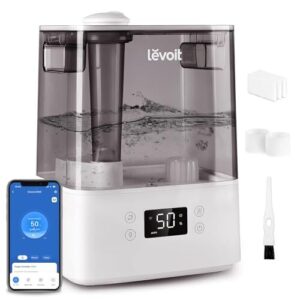
The Levoit Smart Large Room Humidifier runs up to 60 hours on a single 6-liter fill. Its built‑in Auto Mode holds your room between 40–50% relative humidity without constant adjusting.
You can schedule it through the VeSync app or set it with a voice command.
Quiet enough for bedrooms. Smart enough to handle itself.
| Best For | Anyone who wants a set-it-and-forget-it humidifier for a bedroom, nursery, or living room — especially if you like controlling things from your phone. |
|---|---|
| Smart App Control | VeSync Wi-Fi app |
| Voice Assistant | Alexa + Google Assistant |
| Auto Mode | Auto humidity adjustment |
| Sleep Mode | Dedicated Sleep Mode |
| Safety Certification | ETL certified |
| Noise Level | ≤30 dB |
| Additional Features |
|
- Runs up to 60 hours on one fill, so you’re not constantly topping it off
- Auto Mode keeps humidity where you want it without any babysitting
- Whisper-quiet at 30 dB or less — you won’t notice it at night
- Tap water causes white dust buildup, so you’ll need distilled water for best results
- The touch buttons have no tactile feedback, which gets annoying in a dark room
- Smart features are useless if your Wi-Fi drops — it falls back to basic manual controls only
5. Roborock Qrevo Curv 2 Flow Robot Vacuum
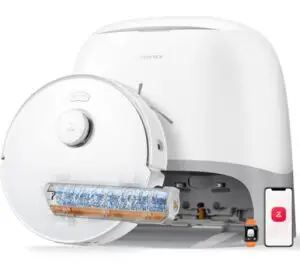
Pollen doesn’t just float through your windows — it settles. On floors, rugs, furniture, everywhere. That’s where the Roborock Qrevo Curv 2 Flow earns its place on this list.
Its 20,000 Pa suction pulls allergens deep from carpet fibers. The SpiraFlow roller mop self-cleans at 220 RPM, so it’s not just pushing dirt around.
AI-powered sensors detect dry particles versus wet spills and adjust automatically. Less allergen buildup on your floors means less of it cycling back into the air you breathe.
| Best For | Pet owners and allergy sufferers who want a hands-off cleaning routine that handles both vacuuming and mopping without babysitting it. |
|---|---|
| Smart App Control | Roborock Wi-Fi app |
| Voice Assistant | Major smart assistants |
| Auto Mode | AI DirTect auto strategy |
| Sleep Mode | Low-noise night cleaning |
| Safety Certification | Not disclosed |
| Noise Level | Low during operation |
| Additional Features |
|
- Zero-tangle dual rollers actually deal with pet hair instead of just jamming on it
- The dock does the dirty work — cleans, dries, and refills the mop so you barely have to touch it
- Smart spill detection lifts the brushes and switches modes automatically, so liquid messes don’t turn into streaks
- At 31 lbs with a fixed chassis, it’ll struggle under low furniture and can’t handle door thresholds
- Only works on 2.4 GHz Wi-Fi, and some users run into app connection headaches
- The dock’s drying fan runs loud — not ideal if you were hoping for a quiet night cycle
Thermostat Features That Reduce Allergens
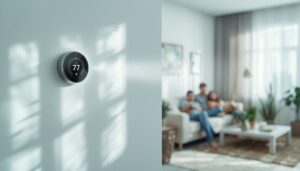
Not all thermostats are built the same concerning allergy control. The right one does more than just adjust temperature — it actively works to keep the air in your home cleaner.
Here are the key features to look for.
HVAC Fan Circulation for Filtered Air
Your HVAC fan does more than move air — it runs every breath in your home through a filter. The continuous fan mode improves overall air quality by moving more air through the filter.
Smart thermostats handle Fan Speed Optimization and Airflow Balancing automatically, keeping indoor air quality high without any manual adjusting.
HVAC fan usage for clean air means:
- Higher fan speeds push more particles through the filter media
- Consistent circulation eliminates stagnant zones where allergens settle
- Scheduled Fan Maintenance Schedule routines prevent buildup that reduces airflow
Duct Pressure Management and Noise Level Mitigation keep the system running smoothly without disrupting your space.
Built-in Air Quality Sensing
smart thermostats today do more than control temperature — they watch the air you breathe. air quality sensors track CO2, Occupancy Detection, VOC Detection, and PM2.5 Monitoring in real time.
Sensor Fusion combines those readings into one clear picture of your indoor air quality.
smart home integration, allergy relief automation kicks in automatically.
Sensor Calibration keeps those readings accurate over time.
Humidity Control for Dust Mites and Mold
Humidity is where dust mites and mold actually live or die. Keep indoor humidity between 40–50% — that’s the RH Target Optimization sweet spot — and mites start dying off within weeks.
Keep indoor humidity between 40–50% and dust mites start dying off within weeks
Your smart thermostat manages Dehumidifier Scheduling automatically, triggering humidity regulation before levels climb.
Hygrometer Calibration keeps readings honest. Accurate data means real Mold Growth Prevention and genuine Dust Mite Desiccation, not just guesswork.
Filter Replacement Reminders
A dirty filter is a silent saboteur.
Smart thermostats take the guesswork out with Smart Reminder Timing — most send push alerts 2 to 3 weeks before your replacement date. Sensor-Driven Alerts go further, adjusting schedules based on actual air conditions. User Customization Options let you set seasonal modes during peak pollen. Purchase Link Integration points you straight to compatible filters, making smart home maintenance reminders for filter replacement genuinely easy.
Voice Control and App Scheduling
Your voice does more than turn lights off — it can now protect your air.
- Custom Voice Phrases like "dust mode" triggers multi-room routines instantly
- Multi-Device Routines sync your Google Nest Learning Thermostat with purifiers simultaneously
- Scheduling Conflict Alerts flag overlapping automation rules before they cause problems
- Privacy Data Controls let you manage what’s stored and for how long
- Time Zone Automation keeps IFTTT automation and smart home integration platforms synced correctly while traveling
Pairing Thermostats With Air Devices
Your thermostat works best when it’s not working alone. Pairing it with air purifiers, humidifiers, and monitors turns a single device into a full allergy-control system.
Here’s how to connect everything so it all runs together.
Syncing Thermostats With Air Purifiers
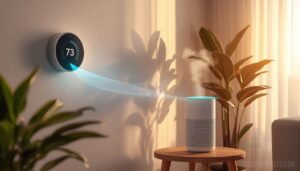
When your Google Nest Learning Thermostat detects rising PM2.5 levels, it can automatically wake your air purifier and ramp up adjustable fan speed — no manual intervention needed.
Through Matter integration and smart home integration, both devices share real-time data across user-defined thresholds.
Cross-device alerts keep your HEPA filter working at the right intensity, supporting genuine energy optimization without overworking the system.
Connecting Humidity Control to Humidifiers
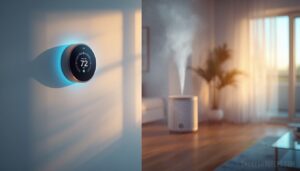
Once PM2.5 levels drop, your next concern becomes moisture. Smart thermostat settings for an ideal indoor humidity target that 40–50% sweet spot are tight enough to stop dust mites, loose enough to prevent mold growth.
Ultrasonic Humidifier Integration and Hybrid Humidity Systems let your thermostat apply adjustable RH Setpoints automatically.
Zone-specific Humidification balances moisture room by room, while Safety Shutoff Logic cuts the smart humidifier if conditions turn unsafe.
Automated humidity control to manage allergens has never been more hands‑off.
Using Indoor Air Monitors for Automation Triggers
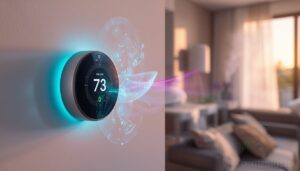
Your smart air quality monitor does the watching so you don’t have to. Real-Time Data Integration means your system responds before you even notice a problem.
Here’s triggers automation:
- PM2.5 above 15 µg/m³ activates purifiers
- CO₂ over 1,000 ppm triggers Adaptive Ventilation Schedules
- Threshold-Based Alerts push mobile notifications
- Energy-Aware Automation scales fan speed by occupancy
- User Confirmation Workflows confirm major changes first
Pausing Ventilation When Windows Are Open
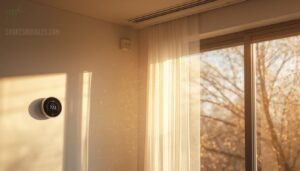
Window Sensor Integration catches something most setups miss — an open window basically turns your HVAC into a money pit while pulling in pollen. Automated Ventilation Pause kicks in within minutes, triggering Energy Conservation Mode to halt automated fan operation for air circulation until the window closes.
Combined with Pollen Forecast Sync and Occupancy Ventilation Control, your indoor air quality management stays tight without any manual adjustments needed.
Linking Allergen Alerts to HVAC Fan Settings
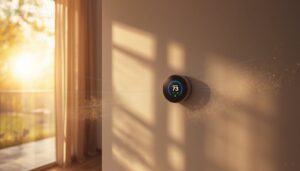
When pollen counts spike, your thermostat shouldn’t wait for you to notice.
Allergen alerts trigger Automatic Fan Speed adjustments automatically — that’s Threshold Fan Activation doing its job.
Fan Boost Alerts push airflow through your filters at the right moment, while Adaptive Fan Control and Seasonal Fan Tuning keep your IoT air quality monitor’s data driving automated fan operation for air circulation, optimizing HVAC fan usage for clean air all season.
Settings and Maintenance for Allergy Relief
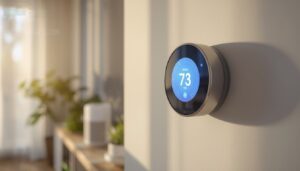
Getting your thermostat settings right makes a bigger difference than most people expect. A few smart adjustments — and a simple maintenance routine — can keep allergens from sneaking back in.
Here’s what to dial in for year-round relief.
Ideal Temperature and Humidity Ranges
Your thermostat does more than heat and cool — it sets the foundation for allergy relief. Nail these three targets:
- Comfort Temperature Zones: 20–22°C for living areas, 18–19°C for bedrooms
- Ideal RH Levels: Keep humidity between 40–50% — humidity drops below 40%, dry air out your airways
- Temp Humidity Interaction: Above 60% RH, dust mites thrive
Smart thermostat settings for ideal indoor humidity and humidity regulation, to prevent mold growth, directly support indoor environmental health through smart devices. Thermal Comfort Metrics and Seasonal Humidity Shifts matter year‑round.
Seasonal Schedule Adjustments for Pollen Spikes
Spring and fall shift your indoor air game entirely. During high pollen days, lean on Pollen Forecast Integration to pre-schedule Morning Window Closure and trigger an Evening Fan Boost before counts drop.
Activity Time Shifting keeps you indoors during peak hours. Humidity Preconditioning stabilizes moisture before surges hit.
Smart thermostat settings for ideal indoor humidity, combined with integrating smart thermostats with air quality monitors, turn seasonal allergy management from reactive to automatic.
HVAC Filter Replacement Timing
Your filter is the first line of defense — and a clogged one is basically useless. A solid Seasonal Filter Schedule matters more than most people realize.
Standard 1-inch filters need swapping every 30 days during peak pollen season; Pet Dander Frequency pushes that closer to 20 days. High Pollen Load Impact shortens every interval.
MERV Rating Timing and Energy Efficiency Tradeoffs balance allergen filtration against airflow. Smart thermostat settings for ideal indoor humidity include air filter replacement reminders that keep your HVAC filtration sharp automatically.
Multi-room Sensor Placement
One misplaced sensor can leave an entire bedroom flying blind. Smart sensors work best when you treat placement like a system, not an afterthought.
For Coverage Optimization and Blind Spot Reduction, aim for 4 to 6 units across a 150–250 square meter home. Height Calibration matters too — mount them at 1.2 to 1.5 meters, aligned with HVAC Path Alignment for accurate air quality monitoring across multiple rooms.
Daily Automation Checks for Cleaner Indoor Air
daily automation checks as your home’s morning briefing.
Each day, verify your purifier’s Filter Status Alerts, confirm Airflow Rate Monitoring stays within rated limits, and review Humidity Trend Analysis for unexpected spikes.
Sensor Calibration keeps readings honest across rooms.
Run Alert Threshold Testing weekly to confirm notifications fire correctly.
Smart home automation for indoor environmental health only works when the system actually knows something’s wrong.
Frequently Asked Questions (FAQs)
What is the 3 day rule for allergies?
The 3-day rule is a staggered allergen exposure method.
You wait three days between introducing new triggers, then use a symptom monitoring log to pinpoint the cause through careful trigger identification.
What are the 9 major foods that cause 90% of allergic reactions?
The nine major food allergens are peanut allergens, tree nut triggers, milk protein sensitivity, egg exposure sources, wheat, soy, sesame, fish, and shellfish — responsible for over 90% of allergic reactions.
What is the best HVAC system for allergies?
A system with a Variable Speed Blower, MERV 13 Filters, and Zoned Air Distribution manages allergens best. Add UV-C Air Sterilization and Smart Duct Sealing for thorough protection.
What is the best room temperature for allergies?
Aim for an allergy-friendly temperature between 68 and 71°F.
That thermal comfort threshold keeps airways comfortable and helps your humidity-temperature balance stay stable — reducing dust mite activity without drying out your nasal passages.
Can thermostats help reduce seasonal pollen indoors?
Yes — smart thermostat can reduce seasonal pollen indoors by syncing Outdoor Pollen Sync data, running HVAC filtration during peak hours, and using Predictive Pollen Modeling to keep airborne allergens low before they build up.
Do smart thermostats work with existing HVAC systems?
Most homes handle smart thermostat upgrades without drama. Central forced-air systems, heat pumps, and multi-stage setups fall squarely on the HVAC Compatibility Matrix.
You’ll just need C-Wire Necessity covered — and a Power Extender Kit fixes that fast.
What humidity level is best for allergy sufferers?
Keep humidity between 30% and 50%—that’s the EPA Humidity Guidelines sweet spot.
Too dry irritates nasal passages. Too damp, and you’re feeding dust mites and mold.
Around 40%–50% hits the ideal humidity level for most allergy sufferers.
How often should I replace my air filters?
Most people treat filter changes like oil changes — they wait until something goes wrong. Don’t.
Swap standard 1-inch filters monthly, especially during peak pollen season when airborne particles clog media fast.
Are voice-controlled thermostats worth the investment for allergies?
Voice-controlled thermostats offer hands‑free convenience that’s genuinely useful when symptoms flare. Voice command accuracy has improved enough to trust, for quick smart thermostat settings adjustments.
Assistant integration makes indoor environmental monitoring feel easy.
Can thermostats reduce outdoor pollen from entering homes?
Not completely, but smart HVAC integration gets you close.
Ventilation scheduling, pollen forecast integration, and occupancy-based airflow work together to limit how much outdoor pollen actually makes it inside your living spaces.
Conclusion
Take someone who runs their Nest thermostat at 68°F, keeps humidity between 45–50%, and runs a Levoit purifier on a schedule. Their morning allergy symptoms drop within weeks—not because of luck, but because their home stops recycling the same air and allergens.
The right thermostats for allergies give you that kind of control. Set your schedules, replace your filters on time, and your home quietly does the hard work while you breathe easier.