This site is supported by our readers. We may earn a commission, at no cost to you, if you purchase through links.
A corn snake can look healthy while its feeding plan is quietly drifting off course. I see it often: prey too large, meals spaced too far apart, or a well-meaning owner offering variety when the snake would do better on consistent whole rodents.
Good corn snake diet and nutrition starts with matching prey to age, body condition, and metabolism, not guessing by appetite alone. A hatchling needs a different rhythm than an adult, and one poor feeding choice can end in regurgitation, stalled growth, or obesity. Once you understand prey size, timing, and condition scoring, feeding becomes safer, steadier, and far more precise.
Table Of Contents
- Key Takeaways
- What Do Corn Snakes Eat in The Wild?
- Best Foods for Pet Corn Snakes
- Corn Snake Feeding Schedule by Age
- How to Choose and Prepare Prey
- Preventing Nutrition and Feeding Problems
- Frequently Asked Questions (FAQs)
- What is the biggest thing a corn snake can eat?
- What to avoid with corn snakes?
- How to tell if a corn snake is hungry?
- Can you overfeed a corn snake?
- Can corn snakes eat fish or seafood?
- How long after feeding should I handle my snake?
- What causes regurgitation and how to prevent it?
- Do corn snakes need vitamin or calcium supplements?
- Should I feed my snake in a separate container?
- How long can corn snakes go unfed?
- Conclusion
Key Takeaways
- The safest corn snake diet is a consistent whole-rodent plan, usually frozen-thawed, with prey matched to your snake’s age, body condition, and widest girth to avoid regurgitation, poor growth, and obesity.
- Feeding schedules should change as your snake matures, with hatchlings eating about every 5 to 7 days, juveniles every 7 to 10 days, adults every 10 to 14 days, and seniors every 14 to 21 days. For a deeper look at how prey size and feeding intervals evolve together, this ball python feeding guide walks through each life stage in detail. Because temperature and species also affect how quickly your snake digests, this snake feeding frequency guide can help you fine-tune meal timing for your setup. Larger species grow quickly and need sturdier setups, so this reticulated python care guide explains how their feeding and handling needs change.
- Most healthy corn snakes don’t need routine vitamin or calcium supplements because properly stored whole prey already provides complete nutrition, and unnecessary supplementation can cause problems.
- Good feeding results depend on careful prey preparation, steady weight and body-condition tracking, and quick correction of stress, refusal, or repeated regurgitation before they turn into bigger health issues.
For a deeper look at how metabolism and nutritional needs shift at each life stage, snake feeding requirements by age and growth stage offers practical guidance to help you adjust your schedule with confidence.
What Do Corn Snakes Eat in The Wild?

A corn snake’s wild diet is more varied than many owners expect, and it changes with age, season, and habitat. That matters because what a snake hunts in the field helps you understand its natural feeding patterns. The breakdown below shows the main prey types and how those choices shift over time.
For a closer look at one staple prey choice, this guide to whether corn snakes can eat mice explains why rodents matter.
Rodents, Birds, Reptiles, and Amphibians
Flexibility defines the wild corn snake menu.
- Rodents dominate, especially mice, because they offer reliable nutrient balance.
- In spring, birds and nestlings rise in riparian habitats as seasonal prey shifts occur.
- Where mammals run scarce, snakes add lizards and amphibians, showing habitat-based diet flexibility.
Many of these prey species are defined by continuously growing incisors, a key rodent adaptation.
This wild prey diversity guides captive use of frozen rodents matched to prey size and helps feeding frequency across growth stages.
Hatchling Diet and Hunting Behavior
In the wild, a hatchling corn snake starts small and hunts fast. It favors frogs, lizards, and pinky mice that measure about one third to one half of its widest girth.
Movement, heat, and scent guide the strike during cool mornings. Short ambushes, quick retreats, and meals every five to seven days build coordination, prey acceptance, and steady early growth.
Juvenile Dietary Shifts
As hatchlings gain size, the juvenile phase changes the menu fast.
- Prey size progression: pinkies to fuzzies.
- Feeding frequency: usually 7 to 10 days.
- Growth spurts: bigger meals before shorter intervals.
- Dietary needs: more protein, fat, and balanced whole prey.
- Hunting behavior development: stronger pursuit, with growth monitoring guiding safe shifts as jaws strengthen and digestive efficiency improves with age.
Seasonal and Habitat-Based Changes
As juveniles range farther, the landscape calls the shots. Rain after spells boosts rodent movement, while heat and cold change hunting windows along temperature gradients at dawn and dusk.
Corn snakes shift between woods, fields, wetlands, and urban edges, easing into brumation in winter.
Breeding follows spring prey pulses, so prey size, feeding schedule, and growth monitoring must remain informed.
Best Foods for Pet Corn Snakes
For most pet corn snakes, the best diet is simple once you know what to look for.
A good guide to feeding snakes with prey variety can help you add safe variety without overcomplicating mealtimes.
The right prey type, feeding method, and basic nutrition choices make a real difference in growth, weight, and long-term health.
The foods below will show you what to offer, what to avoid, and when extras usually aren’t needed.
Whole Rodents as Staple Prey
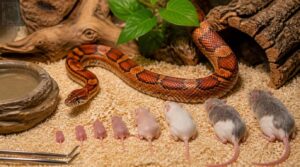
For most pet corn snakes, whole prey rodents are the safest nutritional foundation. Mice and small rats offer nutritional completeness, steady protein, and usable fat, with year-round availability that makes feeding schedules consistent.
Match prey size to your snake’s girth, because oversized meals raise regurgitation risk.
As your snake matures, rodent protein sources and fat-to-protein ratios can scale with growth.
Frozen-Thawed Versus Live Prey
Although live prey can trigger a stronger movement response, frozen-thawed mice are usually the better choice for feeding safety. They prevent bites, cut pathogen exposure, and support ethical feeding choices.
Most corn snakes switch within weeks if prey size, warmth, scent, and feeding techniques are right. Digestive effort stays comparable, even when strike behavior starts slower than with live feeding.
Chicks and Alternative Prey
When rodents aren’t practical, chicks can work as occasional whole prey for some corn snakes.
- Choose reputable sources only.
- Match prey size to girth.
- Offer thawed, warmed chicks with tongs, then watch for refusal or regurgitation.
- Use them to add diet variety, not replace a rodent-based feeding schedule, unless your snake clearly maintains condition over time.
Nutrients Provided by Whole Prey
Think of whole prey as a complete package: protein content builds muscle, fat balance fuels metabolism, and micronutrient diversity helps bone, skin, and enzyme function. Vitamin sources from organs and water content aid hydration and digestion.
Correct prey size, careful prey preparation, and consistent nutrient balance are what make whole prey such reliable nutritional balance for corn snakes kept well.
Do Corn Snakes Need Supplements?
Usually, no. A whole-prey diet already supplies nutrient balance, trace mineral needs, vitamin A, vitamin B, and much of the vitamin E your corn snake needs.
UVB helps vitamin D synthesis, so routine D3 dusting often does more harm than good.
Use supplements only when prey preparation, storage age, intake, or veterinary findings reveal a shortfall in that animal.
Corn Snake Feeding Schedule by Age

A corn snake’s feeding schedule should change as it grows, because its body and energy needs don’t stay the same. Getting that rhythm right helps you support steady growth without pushing your snake toward stress or excess weight.
Here’s how feeding timing usually changes from hatchling to senior, with a few important exceptions to keep in mind.
Hatchlings: Every 5–7 Days
Fast growth leaves little room for guesswork. Hatchlings do best on a 5 to 7 day feeding frequency, using whole prey about 1 to 1.5 times their widest body point.
Watch for head flicking and extra activity before meals. Weigh weekly, review growth every two to four weeks, and use light scenting if prey acceptance stalls or appetite begins fading.
Juveniles: Every 7–10 Days
Once the hatchling sprint eases, juveniles do best on a 7 to 10 day feeding interval. Keep prey at 1 to 1.5 times mid-body width, moving from fuzzies to hoppers near 50 grams.
Track weight twice monthly, aim for steady gains, and use body condition scoring during sheds. If growth stalls or shed cycles tighten, shorten intervals slightly when needed.
Adults: Every 10–14 Days
By adulthood, snakes settle into a 10 to 14 day feeding frequency. Offer frozen-thawed mice with prey size matched to body diameter, never above 1.5 times widest girth. Adults over 300 grams may need longer intervals.
Use body condition scoring for feeding frequency adjustments. If activity rises, feed sooner. If fat deposits appear or refusal follows stress, wait and reassess.
Seniors: Every 14–21 Days
Older corn snakes do best on a 14 to 21 day feeding frequency because metabolic slowdown lowers energy demand.
Base prey size on body weight, about 10%, and keep it under 1.5 times widest girth for digestive health.
Use monthly body condition assessment and weight monitoring.
If feeding refusal occurs, wait 5 to 7 days before retrying, then adjust flexibility.
Breeding, Growth, and Activity Adjustments
As growth and breeding change the picture, feeding adjustments matter. Juveniles in growth spurts often need meals every 7 to 10 days, with portion sizes matched to girth and weekly gains near 2 to 3 grams.
Adults ready to breed show good body condition and cycling appetite. Warmer temperatures raise activity, while cooler seasons call for slightly less frequent meals.
How to Choose and Prepare Prey
Choosing and preparing prey well makes feeding safer, easier, and more consistent for your corn snake. A few simple checks before each meal can help you avoid common problems and improve feeding response. The points below show what to look at each time you select, thaw, warm, and offer prey.
Matching Prey Size to Girth

Choose prey by girth first. Compare the prey’s widest point to your snake’s head width and allow only a small margin for jaw gape safety.
- Too thick strains swallowing
- Slightly smaller means slower digestion
- Rotate sizes gradually
Use a feeding chart, watch portion sizes, and match prey item diversity to steady growth while keeping prey temperature appropriate during each meal.
Safe Thawing and Storage Practices

Because bacteria move fast, thaw frozen-thawed mice in the refrigerator first, or in sealed cold water with changes every 30 minutes. Keep storage at 40 F or below, label dates, and handle packages with clean hands, surfaces, and feeding tongs.
During transport, use leak-proof coolers. Good thawing and warming techniques, plus scenting methods, help limit pathogen exposure over time safely.
Warming Prey Before Feeding
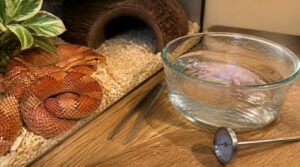
Once thawed, warm prey to 36 to 40 C, never above 45 C. Use feeding tongs and keep thawing and warming techniques consistent, because cold spots can trigger refusal or regurgitation.
- Use a water bath.
- Check with a thermometer.
- Match warmth, prey size regulation, feeding frequency, and feeding schedule optimization to your snake’s needs at every feeding session.
Scenting Prey for Reluctant Eaters
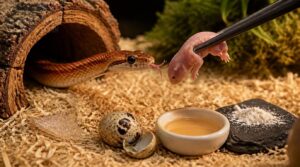
Picky feeders test patience, but scenting prey often turns hesitation into feeding success. Start with lizard skin or brain tissue exposure on a warmed pinky’s head. If feeding refusal continues, try tuna juice, quail egg, or critical care dusting after washing old odors away, in most cases.
| Method | Best use | Goal |
|---|---|---|
| Lizard/brain | hatchlings | trigger strike |
| Tuna/egg/powder | juveniles | improve feeding success |
Safe Tong-Feeding Techniques
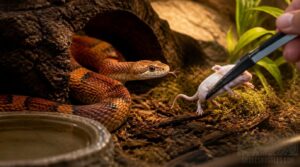
Safe tong-feeding techniques start with calm, steady hands. Use long, rubber-tipped tongs for tong grip safety, hold prey above substrate, and add slight motion for prey movement simulation, feeding cues, and feeding behavior. Keep strike zone distance consistent.
For emergency tong response, if your snake bites the tongs, wait it out.
Reserve feeding container use for snakes showing feeding stress.
Preventing Nutrition and Feeding Problems
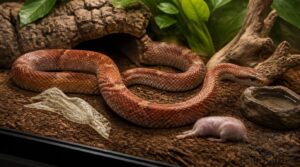
Most feeding problems start small, then show up in your snake’s body condition, appetite, or digestion. If you know what to watch for, you can catch issues early and make safer adjustments. The next points walk you through the warning signs and the basics of keeping feeding on track.
Tracking Weight and Body Condition
What gets measured gets managed. Use a feeding chart and digital tracking app to log weight monitoring before meals. Hatchlings need weekly checks, juveniles twice monthly, adults monthly. Pair body scoring with growth chart benchmarks and growth rate monitoring. Calculate prey at 8 to 10% body weight, then adjust feeding intervals if trends drift.
Track weight and body condition consistently, and let the trend—not guesswork—guide prey size and feeding intervals
- Log weights
- Score shape
- Compare growth
Recognizing Overfeeding and Obesity
Once you start tracking weight, overfeeding stands out fast.
A corn snake with obesity often looks blocky, keeps belly fullness between meals, and feels soft instead of firm. Scales may seem puffy, body scoring worsens, and food-seeking can rise despite low metabolic needs. Tight feeding frequency, not hunger, often drives unhealthy fat gain and related health risks over time too.
Spotting Underfeeding and Deficiencies
Thinness is the other side of poor feeding. With underfeeding, your corn snake may show weight loss, a visible spine, dull skin, sunken eyes, low activity, and bad sheds. Track weight and body condition every few weeks.
Repeated refusal can reflect prey mismatch or illness, lowering nutrient absorption and delaying recovery, even when prey acceptance rates seem normal at home.
Reducing Stress and Supporting Digestion
Poor body condition often traces back to stress as much as food. Use quiet handling before meals, keep a stable warm enclosure, and follow steady feeding intervals. Warm, properly thawed prey and gentle tong-feeding help snakes settle.
Between meals, provide fresh water, a stressfree environment, and calm post-feeding time. For reluctant eaters, scenting prey can improve acceptance without upsetting digestion.
Refusal, Regurgitation, and Veterinary Care
When a corn snake skips meals, check temperature, shedding, recent handling, and prey scent before offering food again.
Regurgitation is different, it usually means swallowed prey never reached the stomach and can signal obstruction. See a vet for repeated episodes, breathing changes, or weight loss. The exam may include feeding history, mouth checks, imaging, and a delayed, monitored recovery plan.
Frequently Asked Questions (FAQs)
What is the biggest thing a corn snake can eat?
Usually, the biggest meal is one rodent about 5 times your snake’s widest girth, roughly 5 to 10 percent of body weight, often an adult mouse or small rat; larger prey raises regurgitation risk a lot.
What to avoid with corn snakes?
The safest feeding often means doing less: avoid oversized prey, erratic schedules, live prey injuries, unsafe thawing, needless supplements, and post-meal handling. These trigger regurgitation, refusal, obesity, underfeeding, and missed dietary needs over time easily.
How to tell if a corn snake is hungry?
Watch for increased activity, frequent tongue flicking, glass cruising, forward head extension, alert S-shaped posture, and a fast feeding response. Strong prey interest suggests hunger, while stress, shedding, cool temperatures, or illness may cause refusal.
Can you overfeed a corn snake?
By the book, yes, overfeeding a corn snake causes obesity, digestion, and lethargy. Keep prey matched to girth, adjust feeding routine for juveniles and adults, and track weight to catch bulky shape or regurgitation early.
Can corn snakes eat fish or seafood?
Fish or seafood can be eaten, but they don’t meet a corn snake’s dietary needs. Thiaminase can cause vitamin B1 deficiency, and parasites add risk. Follow feeding guidelines: use rodents for nutrition and prey variety.
Sticking to rodents also makes handling safer — see how using feeding tongs with corn snakes reduces strike risk and builds better feeding habits.
How long after feeding should I handle my snake?
Think of digestion as a closed door: wait 48 hours after feeding before handling. Check digestion readiness first, no lump, normal movement, stress. If regurgitation risk or slow metabolic rate appears, extend timing and monitoring.
What causes regurgitation and how to prevent it?
Regurgitation usually follows oversized prey, cool enclosure temperatures, shedding stress, overhandling, or overfeeding. Prevent it with correctly sized meals, an 80°F-plus digestive zone, secure hides, tong-feeding, and at least 48–72 hours without handling after meals.
Do corn snakes need vitamin or calcium supplements?
Dumping supplements into every meal is the fastest way to create problems. Most healthy corn snakes on whole prey and proper UVB lighting don’t need calcium or vitamins, except cautious, occasional use when gaps appear.
Should I feed my snake in a separate container?
Use a separate tub if you need cleaner feeding and control, but it isn’t required. Keep it warm, dim, and secure, let your snake settle, then return it gently after swallowing. In-tank feeding also works.
How long can corn snakes go unfed?
How long is too long? Adult corn snakes may manage 2 to 3 months unfed, juveniles 2 to 4 weeks, hatchlings 7 to 12 days. Cool temperatures, shedding, stress, or weight loss make fasting riskier.
Conclusion
Like a compass in steady hands, corn snake diet and nutrition keeps growth on course and trouble from creeping in. When prey size, meal timing, and body condition align, your snake doesn’t just eat, it thrives with fewer setbacks and stronger long-term health.
Feed with observation, not guesswork. Small adjustments made early protect digestion, prevent obesity, and turn routine husbandry into the quiet discipline that keeps a corn snake well for years at every stage.