This site is supported by our readers. We may earn a commission, at no cost to you, if you purchase through links.

Pet stores love to sell you a starter kit that your snake outgrows in six months. Then you’re back at the register, buying the same setup twice.
An affordable snake habitat setup isn’t about buying cheap; it’s about buying right the first time. Spend 60% of your budget on the enclosure and heating, and you’ll dodge the replacement cycle that drains most new keepers.
A 4-foot snake needs a 6-foot footprint, a thermostat with a cutoff, and locks it can’t defeat.
This guide walks you through each step, from budget math to bulk frozen feeders, so you build once and build well.
Table Of Contents
- Key Takeaways
- Plan Your Snake Habitat Budget
- Choose and Prepare The Right Enclosure
- Install Safe Heating and Humidity Controls
- Furnish and Maintain The Habitat Affordably
- Top 4 Affordable Snake Habitat Products
- Frequently Asked Questions (FAQs)
- How to build a cheap snake enclosure?
- How much does it cost to set up a snake enclosure?
- What is the average monthly cost of owning a snake?
- What is the best habitat for a snake?
- Is it cheaper to build or buy a reptile enclosure?
- What snake species are best for beginners?
- How often should I replace substrate material?
- Can I house multiple snakes together safely?
- What are signs of an unhealthy snake?
- Do all snakes need UVB lighting?
- Conclusion
Key Takeaways
- Buy right the first time: allocate roughly 60% of your budget to the enclosure and heating, since cheap gear replaced twice costs more than quality bought once.
- Size for the adult snake, not the hatchling—a 4-foot snake needs a 6-to-7-foot footprint, plus an escape-proof setup with locks and a thermostat cutoff set at 88–92°F.
- Maintain a thermal gradient of 82–88°F on the warm side and 70–78°F on the cool side, with 40–60% humidity, and skip heat rods entirely because they’re burn risks.
- Keep ongoing costs low by using affordable substrates like coconut fiber or cypress mulch, buying frozen feeders in bulk, and batching cleaning chores on feeding days—expect about $60–$120 to set up and $10–$40 monthly.
Plan Your Snake Habitat Budget

Set a hard monthly ceiling before you spend anything on gear. For budget reptile keeping, separating your setup costs from ongoing expenses like feeding and vet visits keeps your math clean and your stress low. That separation is everything.
A detailed classroom substrate liner guide breaks down which materials hold up to daily handling and which ones quietly drain your budget over time. For example, this guide to reptile substrates for classrooms compares aspen, coconut fiber, and cypress mulch on durability and long-term replacement costs.
Split your enclosure budget with intention: 60% toward enclosure and heating, 25% for accessories, and hold 15% back as a contingency buffer. Surprises happen, and that cushion will save you.
Spread major purchases over 6 to 12 months. An affordable snake habitat doesn’t mean cheap; it means planned. Amortizing big-ticket items protects your wallet without sacrificing quality.
Long-term savings come from buying right the first time. Skimping on heating or cost-effective substrates creates replacement costs that quietly erase any early discount.
Buying cheap gear twice costs more than buying quality once
Choose and Prepare The Right Enclosure
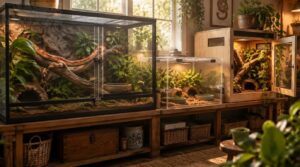
With your budget mapped, the snake enclosure choice is where the real decisions start.
Enclosure size matters most. A 4-foot snake needs a 6-to-7-foot footprint, minimum. Undersizing means replacing sooner, which is exactly the cost creep your budget plan was built to stop.
Pick your material based on your actual priorities:
- Glass: durable and easy to clean, heavier and pricier upfront
- Acrylic: lightweight with clear visibility, though it’ll warp at higher humidity
- DIY options: sealed plywood cuts entry costs if you vent it correctly
- Reptile Habitat Enclosure Tank: a mid-range pick that balances build quality with price
Escapeproofing is non-negotiable. Sliding doors need secondary locks, and mesh panels must be rated for your species’ bite strength.
Install Safe Heating and Humidity Controls
Enclosure locked down? Good. Now make it livable.
Once the safety basics are handled, dialing in a stable thermal gradient matters just as much, and our snake enclosure temperature control guide walks you through it step by step. It also covers the science behind each sensor type, so you’ll know exactly why your digital probe and infrared gun sometimes disagree.
Your thermal gradient is the backbone here: warm zone at 82–88°F, cool side at 70–78°F. Use a thermostat with a probe, set the high-limit cutoff at 88–92°F, and verify everything with an infrared thermometer. Heat mats give broad, gentle warmth; ceramic emitters add radiant heat without wetting your substrate.
Humidity regulation matters just as much. Target 40–60% for most temperate species, and place hygrometers at both basking and cool zones. More than 5% variance? Fix your airflow.
| Control | Your Move |
|---|---|
| Thermostat | Dual sensors, ±2–3°F stability |
| Heat source | Barrier-mounted, never bare |
| Hygrometers | One per zone, weekly checks |
| Backup | UPS or battery, tested quarterly |
Skip heat rods entirely. They’re burn risks in a box, and your snake will find them.
Furnish and Maintain The Habitat Affordably
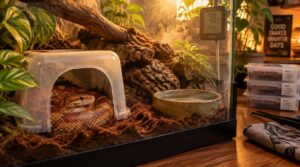
Heat and humidity dialed in? Now make it feel like home without draining your wallet.
Furnishing is where budgets die quietly, so get smart. Cost-effective substrates like coconut fiber or cypress mulch run cheap and hold humidity well. Hides? Flip plastic containers or use cork bark. Your snake cares about snugness, not price tags.
Follow this maintenance rhythm:
- Spot-clean waste within 24 hours.
- Replace substrate monthly to quarterly, based on waste load.
- Disinfect water dishes weekly.
- Check hides and climbing surfaces for sharp edges.
- Log hygrometer readings to catch drift early.
Feeding and cleaning on a budget pair nicely: buy frozen feeders in bulk, thaw as needed, and clean during feeding days. Batch your chores and you’ll cut ongoing maintenance expenses dramatically.
Top 4 Affordable Snake Habitat Products
You’ve got the plan, the heat, and the substrate sorted. Now let’s talk enclosures, because the right tank makes everything else easier. Here are four budget-friendly options that balance cost, safety, and long-term durability.
1. Eco Friendly Reptile Terrarium Enclosure
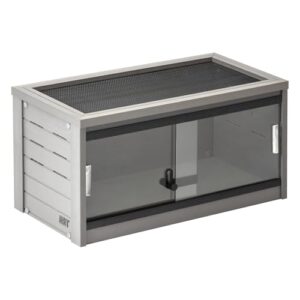
Here’s your entry-level workhorse. The Eco Friendly Reptile Terrarium Enclosure pairs tempered glass with sanded edges, so no sharp surprises when you reach in. The secure latching system keeps even the cleverest escape artist contained.
At 18×12×12 inches, it suits hatchlings and smaller species perfectly. You’ll spend 20–40% less than purpose-built terrariums cost, and you can redirect that savings toward heating gear. Seal any joints with reptile-rated silicone, cure it 72 hours, then run humidity trials before your snake moves in.
| Best For | Budget-conscious keepers of hatchlings and small reptiles who want an affordable glass enclosure they can customize with sealed joints and their own heating setup. |
|---|---|
| Locking Access | Secure latch system |
| Ventilation | N/A |
| Front Access | N/A |
| Assembly Required | Sealing required |
| Moisture Resistance | N/A |
| Lighting Compatibility | N/A |
| Additional Features |
|
- Tempered glass with sanded edges means safe handling and no sharp spots when reaching in.
- Secure latching system keeps escape-prone species contained.
- Costs 20–40% less than purpose-built terrariums, freeing up budget for heating gear.
- At 18×12×12 inches, it’s too small for larger species or long-term adult housing.
- Joints require sealing with reptile-rated silicone and a 72-hour cure before use.
- Humidity performance isn’t guaranteed out of the box, so trials are needed before adding your animal.
2. Reptile Habitat Enclosure Tank
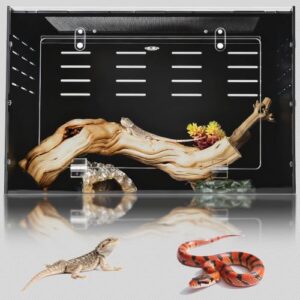
When you need a workhorse tank without the glass price tag, the Reptile Habitat Enclosure Tank earns its spot. It measures 24" x 16" x 16", holds roughly 25 gallons, and pairs lightweight PVC panels with clear acrylic windows.
You get a lockable front-opening panel, side and rear vents to fight moisture buildup, and shatter-resistant construction that survives moves better than glass. Better heat retention means steadier temps for ball pythons or leopard geckos.
Just mind the scratches and expect some assembly.
| Best For | Keepers of ground-dwelling reptiles like leopard geckos, ball pythons, or bearded dragons who want a lightweight, affordable alternative to glass tanks. |
|---|---|
| Locking Access | Lockable front panel |
| Ventilation | Side and rear vents |
| Front Access | Front-opening panel |
| Assembly Required | Yes |
| Moisture Resistance | Vents reduce buildup |
| Lighting Compatibility | N/A |
| Additional Features |
|
- Lockable front-opening panel provides secure, convenient access
- Lightweight, shatter-resistant PVC and acrylic construction is easier to move than glass
- Better heat retention supports steadier temperatures, with vents to prevent moisture buildup
- Acrylic surfaces scratch easily and require careful handling
- Horizontal orientation limits vertical climbing space
- Assembly required despite included instructions and video
3. Reptile Habitat Enclosure Tank System
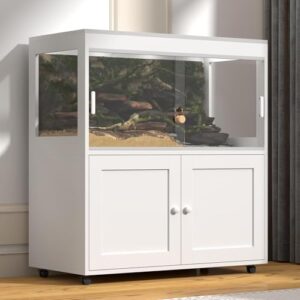
Picture your snake cruising a perfectly lit, crystal-clear acrylic enclosure while you store every accessory behind the cabinet doors below. The Annzoe system pulls that off.
Over 92% light transmittance means nothing hides, and the heat-resistant metal mesh top keeps your UV and heating setup secure. At 37.8 x 18.9 x 41.2 inches, it’s substantial. The removable sliding glass doors lock firmly, and the moisture-resistant material wipes clean fast. Assembly’s required, but labeled parts and spare components make it straightforward.
| Best For | Reptile owners who want a sleek, all-in-one enclosure with built-in storage and excellent visibility for snakes, lizards, and similar pets. |
|---|---|
| Locking Access | Locking sliding doors |
| Ventilation | N/A |
| Front Access | Sliding glass doors |
| Assembly Required | Yes |
| Moisture Resistance | Moisture-resistant surfaces |
| Lighting Compatibility | Heat-resistant mesh top |
| Additional Features |
|
- Crystal-clear acrylic with 92% light transmittance gives you an unobstructed view from every angle
- Locking sliding glass doors and moisture-resistant surfaces make daily access and cleaning effortless
- The built-in wooden cabinet base keeps food, supplements, and accessories neatly out of sight
- Cannot hold water, so it’s unsuitable for semi-aquatic reptiles or setups requiring standing water
- Requires assembly, which adds setup time before your pet can move in
- At nearly 42 inches tall, the footprint and size may be challenging in smaller spaces
4. Reptile Habitat Eco Friendly Enclosure
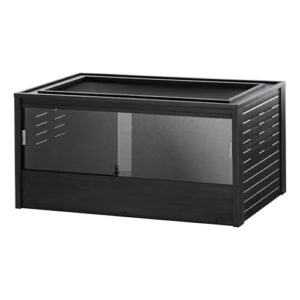
Think of this enclosure as a green certification for your snake room. The material is ECOFLEX, a composite of recycled polymers and reclaimed wood fiber that resists moisture without retaining any odors over time. The non-toxic finish means your snake won’t be breathing off-gassed chemicals from the moment you close the lid.
There are some real limits. The material isn’t chew-proof, heat lamps must not contact it, and the seams can leak fine substrate or feeder insects without additional sealing.
| Best For | Eco-conscious snake and reptile keepers who want a spacious, odor-resistant habitat for indoor or outdoor use and don’t need a watertight enclosure. |
|---|---|
| Locking Access | Locking glass doors |
| Ventilation | Vented panels and mesh top |
| Front Access | Sliding front doors |
| Assembly Required | Yes, 20–30 minutes |
| Moisture Resistance | Moisture-resistant ECOFLEX |
| Lighting Compatibility | Mesh screen top |
| Additional Features |
|
- ECOFLEX construction uses recycled materials, resists moisture, and won’t retain odors over time.
- Sliding glass doors with locks offer secure viewing and easy access for feeding or cleaning.
- Quick 20–30 minute assembly with included hardware, backed by a 10-year limited warranty.
- Not watertight, so it’s unsuitable for animals needing standing water in their enclosure.
- ECOFLEX isn’t chew-proof, and heat lamps must never touch the material.
- Seams and vents can let feeder insects escape or fine substrate leak without extra sealing.
Frequently Asked Questions (FAQs)
How to build a cheap snake enclosure?
Cheap doesn’t mean flimsy. Your DIY snake enclosure starts with a solid 20-gallon glass tank, uses cost-effective substrates like paper towels, and includes secure hides crafted from basic PVC scraps for a fraction of retail.
How much does it cost to set up a snake enclosure?
Setup costs for a basic, affordable snake habitat run $60 to $120, covering the enclosure, substrate, and essential accessories. Monthly upkeep adds another $10 to $
What is the average monthly cost of owning a snake?
Take my corn snake, Noodle: her monthly bill runs about $30. That’s roughly $10–$40 for heat and humidity control, $15–$25 for frozen feeders and substrate, plus $5–$15 averaged vet care.
What is the best habitat for a snake?
Worried you need a pricey tank? You don’t. The best snake habitat is a sealed, escape-proof enclosure sized to your snake, with a thermostatic heat source, proper humidity, hides, and substrate. Match the enclosure type to your species.
Is it cheaper to build or buy a reptile enclosure?
The math usually surprises people. DIY reptile projects using IKEA cabinets or PVC sheets often beat retail prices, but your time, tools, and mistakes add up.
For most keepers, buying a Reptile Habitat Enclosure Tank wins. It’s safer, faster, and honestly cheaper once you count hidden DIY costs.
What snake species are best for beginners?
Start with a corn snake or ball python. Both are docile, captive-bred, and forgiving. Corn snakes eat rodents eagerly; ball pythons need steady warmth. Kingsnakes work too. Match snake species requirements to your commitment level.
How often should I replace substrate material?
Plan on a full substrate change every 4–8 weeks, with spot-cleaning between. Burrowers and humid setups need a refresh every 2–4 weeks. Mold, odor, or dampness? Replace it immediately, no schedule required.
Can I house multiple snakes together safely?
Short answer: usually no. Snake cohabitation risks outweigh benefits. House adults separately, especially carpet pythons needing 6–8 ft enclosures. If attempting it, match sizes, separate during feeding, and watch for reptile stress signals daily.
What are signs of an unhealthy snake?
Wondering if your snake is sick? Watch for open-mouth breathing, mucus at the nostrils, mouth rot, pink belly scales, mites, regurgitation, or stargazing. Limpness and tremors mean emergency.
Daily snake behavior observation catches problems early.
Learning the 10 signs of a sick reptile can help you know exactly when to see a vet.
Do all snakes need UVB lighting?
Sunlight feeds the desert; some snakes sip it, others skip it. No, not all need UVB lighting. Many thrive on prey-based vitamin D3, but species-specific reptile lighting requirements matter, so research your snake’s habitat setup needs.
Conclusion
Think of your snake’s home as a house, not a hotel. Hotels get replaced; houses get built to last.
A snake that feels secure in its enclosure is far less likely to act defensively, and understanding how snakes show territorial behavior makes their warning signs easier to read.
Your affordable snake habitat setup works the same way. Buy the right enclosure once, lock in a thermostat you trust, and feed from bulk suppliers instead of retail markups. Every dollar you spend up front saves three down the road.
Build it right, maintain it simply, and your snake thrives for decades. That’s the whole game.