This site is supported by our readers. We may earn a commission, at no cost to you, if you purchase through links.

Most corn snakes outgrow their first enclosure before their owner realizes it happened. A snake that fits comfortably in a 20-gallon tank at six months can spend years cramped in the same space—because gallon ratings tell you nothing about usable floor area.
Adult corn snakes need room to thermoregulate, stretch, and behave like the active hunters they are. The right corn snake enclosure size for adults starts at a 4×2 foot base, and getting the dimensions right changes everything about how your snake eats, sheds, and moves through its environment.
Table Of Contents
- Key Takeaways
- Best Adult Corn Snake Enclosure Size
- Adult Corn Snake Space Needs
- Choosing The Right Enclosure Type
- Sizing The Interior Setup
- Adult Enclosure Setup Checklist
- Frequently Asked Questions (FAQs)
- Can corn snakes live in 20-gallon tanks?
- Do corn snakes need vertical climbing space?
- How often should enclosures be upgraded?
- Can multiple corn snakes share one enclosure?
- Whats the maximum enclosure size needed?
- How often should adult corn snakes be fed?
- How do you clean an adult corn snake enclosure?
- When should you upgrade your corn snakes enclosure size?
- Conclusion
Key Takeaways
- Adult corn snakes need a minimum 4×2 foot base (48×24 inches) — gallon ratings are meaningless, floor dimensions are what actually matter.
- Use the formula 0.7 × snake length for minimum enclosure length and 0.5 × snake length for minimum width to verify any tank before you buy.
- Skip the starter tank and go straight to the adult-sized enclosure — buying small and upgrading costs more and stresses your snake unnecessarily.
- A properly sized enclosure only works if the interior is set up right: two snug hides, 3–5 inches of substrate, a cool-side water bowl, and a thermostat keeping the warm side at 85–88°F.
Best Adult Corn Snake Enclosure Size
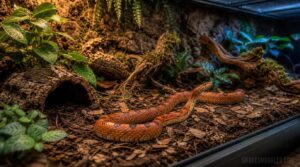
Getting the enclosure size right is one of the most important decisions you’ll make for your adult corn snake. It affects everything from temperature gradients to how comfortable your snake feels moving around. Here’s what you need to know before picking one.
If you’re just starting out, a beginner corn snake kit can take a lot of the guesswork out of getting the setup right.
Recommended 4×2 Foot Base
The 4×2 foot base is the standard recommendation for adult corn snakes — and for good reason. It gives your snake 8 square feet of floor space, enough to stretch, explore, and thermoregulate comfortably.
That’s room for hides, a water bowl, and clear travel lanes across the enclosure without crowding. For most adults reaching 4 to 5 feet, this snake enclosure footprint fits their needs precisely.
Minimum Floor Space Formula
There’s actually a simple space calculation method you can use to verify any enclosure. Multiply 0.7 × snake length for the minimum floor length, and 0.5 × snake length for the minimum width.
For a 4-foot adult, that’s 2.8 ft × 2 ft — roughly 5.6 square feet of minimum floor dimensions. The standard 4×2 base clears that easily.
Gallons Versus Dimensions
You already know the floor area your snake needs — but what about the gallon label on the tank?
Here’s the thing: gallons measure volume, not usable space. Two tanks can share the same gallon rating but have completely different footprints.
Refer to a gallon calculator for tanks to convert those dimensions into both US and imperial gallons.
What actually matters for corn snakes:
- Floor length and width determine movement room
- Tall, narrow tanks waste vertical volume your snake won’t use
- A 40-gallon breeder (36×18 in base) suits subadults, not adults
- The adult standard — 48L × 24W × 24H — prioritizes base area over volume
Use the dimension calculation formula, not gallons, to evaluate any enclosure.
Planning for Full Growth
Plan for the end goal from the start. Adult corn snakes reach 3–5 feet, so buying a small starter tank and upgrading later costs more over time. Go straight to a 48 × 24-inch base enclosure. It fits your snake at full size and skips the repeated setups.nn| Life Stage | Snake Length | Minimum Enclosure Size |n|————|————-|———————-|n| Hatchling | 10–14 in | 20 × 10 in (10 gal) |n| Juvenile | 15–30 in | 30 × 12 in (20 gal long) |n| Subadult | 30–48 in | 36 × 18 in (40 gal breeder) |n| Adult | 3–5 ft | 48 × 24 in (48 gal+) |n| Senior Adult | 5+ ft | 48 × 24 in minimum, larger preferred |nnScaling the enclosure with each life stage reduces stress and promotes healthy movement. One adult-sized enclosure, bought once, beats three upgrades.
Adult Corn Snake Space Needs
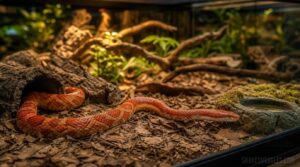
Before you size an enclosure, you need to know what you’re actually working with. Adult corn snakes vary more than most people expect — in length, build, and how much space they actually use. Here’s what drives those differences and why each one matters for getting the setup right.
Typical Adult Length
Most adult corn snakes reach 48 to 72 inches in total length, with many settling around 5 to 6 feet. That range matters when choosing a corn snake terrarium size.
If you’re just getting started, this beginner’s guide to pet snakes can help you understand how that adult size translates into real enclosure decisions.
Full growth usually happens within 2 to 3 years, so sizing up early saves money. Your enclosure size guidelines should assume maximum length, not where your snake is today.
Male and Female Differences
Sex plays a small but real role in corn snake adult length. Males usually reach 48 to 60 inches, while females can stretch to 68 inches.
Females also tend toward higher feeding frequency near breeding cycles. For your enclosure size guidelines, plan around the female maximum — that way, your adult-sized enclosure comfortably fits either sex without adjustment.
Activity and Stretching Room
A corn snake isn’t just sitting still all day — it explores, climbs, and stretches to its full length regularly. Your enclosure needs to offer a foundation for that movement:
- A 4 ft × 2 ft base gives minimum stretching room
- Warm and cool zones allow natural behavioral transitions
- Climbing logs or branches add vertical activity space
- Stable substrate depth offers a foundation for confident movement
- Good airflow keeps muscles relaxed during active periods
Why Width Matters
Width is the dimension most keepers overlook — and it’s where snakes actually live. Width at least half your snake’s length is the baseline.
For a 4-foot adult, that means 24 inches minimum. This allows sideways coiling, stable hide placement, and even heat distribution across the floor.
More width also means multiple hiding spots without crowding, and a lower risk of tipping or escape.
Choosing The Right Enclosure Type
Once you’ve nailed down the right size, the next decision is what the enclosure is actually made of. Material and design affect temperature control, humidity, and how easily your snake can escape. Here’s what to keep in mind before you buy.
PVC Versus Glass Tanks
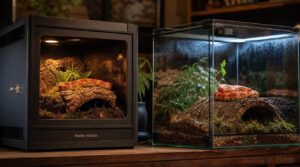
Two materials dominate the adult-sized enclosure market: PVC and glass.
PVC insulates better, holding heat steadily without constant thermostat correction. It also seals tightly, making moisture control easier.
Glass offers excellent visual clarity but loses heat faster and dries out humidity more quickly.
For a corn snake terrarium size of 4×2 feet, PVC front-opening designs are generally the smarter long-term choice.
Front Opening Terrariums
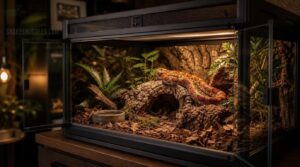
Front-opening terrariums make daily care noticeably easier. Instead of reaching down from above, you access everything through front-opening doors that swing outward — cleaner angles, less stress on your snake.
The Zen Habitats 4×2×2 PVC Reptile Enclosure pairs this access with a ventilated top panel, balancing airflow and humidity without sacrificing visibility.
Secure Lids and Doors
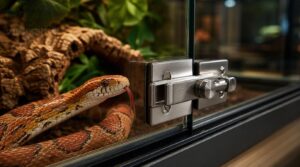
Easy door access means nothing if your snake can slip out the moment you look away. Secure lids and doors are non-negotiable.
- Latches that auto-engage when doors close prevent accidental openings
- Lockable front-opening doors stop curious hands and persistent snakes
- Stainless steel clasps won’t loosen after hundreds of open-close cycles
- Lid clips eliminate gaps larger than 0.25 inches on screen tops
- Reinforced hinges resist flex that could compromise the door frame
Ventilation and Humidity Balance
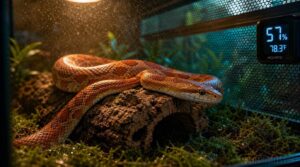
Good locks keep your snake in — but ventilation management keeps your snake healthy. Airflow and humidity work together inside any enclosure.
| Factor | Target Range |
|---|---|
| Relative humidity | 40–60 % normal / 60–70 % during shed |
| Temperature gradient | 72–78 °F cool side / 85–88 °F warm side |
A digital hygrometer confirms both. Check it daily.
Sizing The Interior Setup
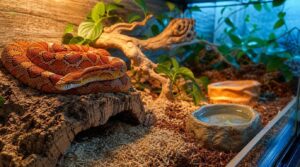
Getting the size right is just the beginning — what you put inside matters just as much. Your corn snake needs a few key setups to actually feel safe, regulate its temperature, and behave naturally. Here’s what to include in every adult enclosure.
Warm and Cool Hides
Your corn snake needs at least two hides: one on the warm side, one on the cool side. Place the warm hide directly over your heat source so your snake absorbs belly heat while resting. The cool hide sits at the opposite end, giving your snake a stable retreat for digestion and sleep.
Here’s what makes hides work properly:
- Snug-fitting hides let your snake contact the walls on all sides — that physical security is what actually reduces stress.
- Hide material choices matter: ceramic retains heat well on the warm side, while plastic or cork keeps the cool side insulated.
- Hide cleaning routine should happen weekly — use reptile-safe soap, rinse thoroughly, and dry completely before placing the hide back.
Hide temperature control is easy to overlook. Verify both hides with an infrared thermometer regularly. If your warm hide reads below 85 °F or your cool hide creeps above 80 °F, adjust your heat source placement or check airflow. A proper temperature gradient only works if both ends hold their target range consistently.
Substrate Depth Requirements
Substrate depth does more work than most keepers realize. Aim for 3–5 inches of depth — enough to support natural burrowing behavior without trapping waste.
Cypress mulch and coco coir hold moisture well, stabilizing humidity through shed cycles. Loose substrate lets your snake burrow freely.
Spot-clean weekly; fully refresh every 6–12 months to prevent bacterial buildup beneath the surface.
Water Bowl Placement
Place the bowl on the cool side, at least 6 inches from warm hides. This keeps water at room temperature and slows evaporation.
- Position it so the lip sits no higher than 8–12 inches above substrate
- Use a wide ceramic or stainless bowl for stability
- Keep it 8–12 inches from the food dish
- Rinse and refill daily
- Inspect weekly for cracks
Climbing Height and Branches
Corn snakes are natural climbers, so enclosure height of at least 2 ft (60 cm) isn’t optional — it’s where real activity happens. Branches with 4–8 inch diameters give adults solid grip.
Space them 6–12 inches apart vertically, and anchor every branch securely — no wobble, no sharp edges. That’s climbing space your snake will actually use.
Damp Hide for Shedding
When your corn snake starts to shed, the damp hide earns its place fast. It creates a localized humid microclimate — 70–90% humidity — that softens old skin without affecting your enclosure’s humidity baseline.
Here’s what makes it work:
- Pack the hide with sphagnum moss
- Place it on the warm side
- Keep moss damp, never dripping
- Replace moss every 2–4 weeks
Adult Enclosure Setup Checklist
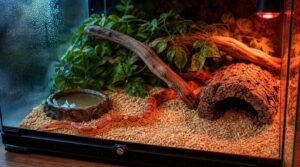
Before your corn snake moves in, run through a few key checks to make sure the enclosure is actually ready. Getting this right the first time saves you from scrambling later. Here’s what to go through before you introduce your snake.
Test Temperatures First
Before your snake moves in, the enclosure needs to prove it can hold stable temperatures — not just hit them once.
Aim for a warm side of 88–92°F and a cool side of 78–82°F during the day. That 10–15°F thermal gradient is what drives your snake to move naturally between zones.
For setup tips on placing your probe and hotspot correctly, this ball python temperature gradient guide shows how to build a reliable gradient.
| Zone | Target Temperature |
|---|---|
| Warm Side | 88–92°F |
| Cool Side | 78–82°F |
Use two digital thermometers — one at each end — and check them daily. At night, let temperatures drop 5–10°F to mimic natural field conditions. If readings drift more than 2°F outside target, adjust your thermostat calibration gradually. Don’t rush it.
Secure Escape Points
A corn snake can find the one gap you missed — and it will.
Corn snakes will find the one gap you missed — count on it
Start your escape-proofing check with these four points:
- Test locking mechanisms by pressing firmly on doors and lids
- Add binder clips on screen tops to eliminate gaps over 0.25 in
- Seal cable pass-throughs with ventilation seals like foam grommets
- Check tamper indicators monthly for wear or misalignment
Add Proper Thermostats
A thermostat isn’t optional — it’s the difference between a healthy snake and a burned one.
| Thermostat | Best For | Control Type |
|---|---|---|
| Vivarium Electronics VE-100 | Precise heat regulation | Non-programmable |
| Inkbird ITC-306A | Smart control via app | Wi-Fi programmable |
| Zoo Med ReptiTherm | Budget under-tank heating | On/off switch |
| Line voltage models | Electric baseboard setups | Direct 120–240V |
| Low voltage types | HVAC-linked enclosures | 24V signal |
Pair your Zoo Med ReptiTherm Under Tank Heater with either the Vivarium Electronics VE-100 or Inkbird ITC-306A for reliable temperature zoning. Place the probe at substrate level on the warm side for accurate thermostat placement and true thermal regulation.
Monitor Humidity Levels
Once your thermostat is dialed in, humidity becomes your next checkpoint. Ambient humidity should stay at 40–60% for most adults. During a shed, nudge it to 60–70% for 24–48 hours, then bring it back down. A digital hygrometer placed at mid-height in the center of the enclosure gives you the most reliable baseline reading.
Avoid Oversized Empty Spaces
With humidity sorted, turn your attention to space efficiency. A well-sized adult enclosure isn’t just big — it’s proportionally balanced. Empty corners and unused floor area can stress a corn snake, making it feel exposed rather than secure.
Aim for a 4×2 foot base minimum, fill it intentionally with snug‑fitting hides, a water bowl, and climbing branches that support a healthy thermal gradient without wasting space.
Frequently Asked Questions (FAQs)
Can corn snakes live in 20-gallon tanks?
A 20-gallon tank works for juveniles, not adults. At 3–5 feet, a Corn Snake needs minimum 40×18 inches of floor space. A 20-gallon simply can’t support proper heat distribution or movement.
Do corn snakes need vertical climbing space?
Yes, but it’s secondary. Vertical space adds enrichment and mental stimulation, but floor area matters more. Secure climbing branches encourage natural behavior without replacing essential horizontal room.
How often should enclosures be upgraded?
Upgrade when your snake outgrows its space or the enclosure shows wear. Life stage upgrades matter most — move to an adult-sized enclosure by age two, then replace aging setups every five to seven years.
Can multiple corn snakes share one enclosure?
Corn snakes are solitary by nature. Cohabitation risks are real — territorial disputes, feeding competition, and stress are common. Keep them separate. It’s the simplest way to keep both snakes healthy.
Whats the maximum enclosure size needed?
Bigger isn’t always better. For most adults, a 4 ft × 2 ft floor area hits the sweet spot. Beyond that, oversized empty spaces can stress your snake rather than benefit it.
How often should adult corn snakes be fed?
Feed adult corn snakes every 14–21 days. Match prey width to your snake’s widest point. Skip meals during shedding. Adjust the schedule if weight shifts.
How do you clean an adult corn snake enclosure?
Stay on top of things with a quick daily routine. Remove waste and rinse the water bowl daily. Do a weekly deep clean with diluted bleach, rinse fully, and dry before returning your snake.
When should you upgrade your corn snakes enclosure size?
Upgrade when your snake consistently stretches past two-thirds of the enclosure length. That’s your clearest cue. Around 48–60 inches, move to an adult-sized enclosure with a proper 4×2-foot base.
Conclusion
A cramped corn snake isn’t thriving—it’s enduring. Getting the corn snake enclosure size for adults right isn’t about generosity; it’s about biology.
4×2 foot base gives your snake the room to regulate temperature, move naturally, and shed cleanly. Skip the guesswork of gallon ratings.
Measure floor space, verify your hides, and check your thermostat before your snake ever moves in. Do it right once, and your snake will show you the difference.