This site is supported by our readers. We may earn a commission, at no cost to you, if you purchase through links.

A hatchling ball python eats every five days. Its 1,500-gram adult counterpart might go six weeks between meals, sometimes longer. That gap trips up new owners more than anything else in the hobby.
Feeding frequency isn’t a fixed rule. It shifts with age, weight, and even the breeding season, and getting it wrong leads to obese adults or stunted juveniles. Knowing how often to feed python at each life stage keeps your snake’s growth on track and its body condition where it should be.
Below, you’ll find the exact schedule, from hatchling to adult, plus how to adjust it using weight and body condition together.
Table Of Contents
- Key Takeaways
- How Often Should You Feed a Ball Python?
- How Much and What Should Ball Pythons Eat?
- How to Feed Your Ball Python Safely
- When Should You Adjust Feeding Frequency?
- What if Your Ball Python Refuses Food?
- Frequently Asked Questions (FAQs)
- How to tell when a python is hungry?
- Can ball pythons go 2 weeks without eating?
- Can you feed ball python 2 days in a row?
- What is a python’s favorite food?
- Can pythons eat eggs or birds?
- What temperatures affect python feeding schedules?
- Do breeding pythons need different feeding?
- Should sick pythons eat less frequently?
- How does shedding impact feeding timing?
- Can you switch a ball pythons prey type suddenly?
- Conclusion
Key Takeaways
- Feeding frequency shifts dramatically as your python grows, from every five days as a hatchling to every 4-6 weeks as an adult over 1,500 grams.
- Don’t rely on the calendar alone—pair weight tracking with body condition scoring (checking spine, tail fat, and midbody roundness) to know when to adjust feeding.
- Always thaw prey in the fridge or cool water and warm it to 95-100°F before feeding, and never microwave it, since uneven heating can cause it to burst.
- Most food refusals come down to normal causes like shedding or seasonal fasting rather than illness, so check husbandry and weight loss (under 10%) before worrying.
How Often Should You Feed a Ball Python?

Feeding frequency isn’t one-size-fits-all with ball pythons. Age and weight both play a role in how often your snake needs a meal. Here’s how the schedule breaks down as your python grows.
For a full breakdown by life stage, this ball python feeding schedule guide covers costs and practical tips to keep your snake growing healthy.
Hatchlings: About Every Five Days
Right out of the egg, hatchlings run on a fast metabolism, so plan on feeding every five days. Offer prey around 15-20% of body weight, sized to match girth without exceeding it by a third.
Weigh weekly to track growth and body condition. Watch for regurgitation or gaping, both signs the prey size or setup needs adjusting.
Juveniles: Every Seven to Ten Days
Once your snake tops 300 grams, it’s time to stretch the feeding schedule to every seven to ten days. This slower feeding frequency matches slower growth, so track weight weekly and watch body condition. Expect roughly 50 grams gained monthly.
Prey size should scale up too, fuzzy rats or rat pups work well once mice no longer satisfy that juvenile appetite.
For a fuller picture of what’s normal at each stage, check this ball python weight benchmarks by age.
Sub-Adults: Every Ten to Fourteen Days
Somewhere between 300 and 700 grams, growth slows again, and the schedule stretches to every 10-14 days.
- Weight monitoring: weigh weekly
- Prey size: small to medium rats, 45-175 grams
- Digestion time: 48-72 hours, so don’t rush the next meal
Watch body condition, not just the calendar, seasonal adjustments and appetite matter more than a fixed feeding schedule.
Adults: Every Two to Six Weeks
Once your python tops 1,500 grams, the feeding schedule stretches out considerably. Most adults do well on every 4-6 weeks, though some in the 1,000-1,500 gram range eat every 3-6 weeks depending on metabolism.
Breeding females may fast during follicle development. Males often need extra meals before breeding season. Track body condition and weight monthly, not just the calendar, since individual variation is real.
Use Weight and Condition Together
Calendars only tell half the story. Pair your feeding schedule with body condition scoring (1-9 scale) and weight tracking trends for the full picture.
Calendars tell half the story—pair feeding schedules with body condition scoring and weight trends for the full picture
If weight climbs 10-15% while condition stays solid, stretch feeding intervals. If condition drops to 3-4 with stable weight, feed more often. This combined assessment method catches problems calendars miss.
How Much and What Should Ball Pythons Eat?

Feeding your ball python well means more than sticking to a schedule. What you feed and how much matters just as much as when. Here’s what to know before your next feeding day.
Choose Nutritionally Complete Whole Prey
Whole prey isn’t just food, it’s a complete nutrient package. Bones deliver a calcium to phosphorus ratio near 1:1 to 2:1, guarding against metabolic bone disease. Gut contents add enzymes and probiotics you can’t buy separately.
Tracking these benefits in a nutrition log helps you spot patterns over time, and this complete guide to proper snake nutrition breaks down exactly what whole prey provides at each life stage.
Rotate mice, rats, and quail for balanced vitamins. Frozen storage at -20°C preserves fatty acids, though thiamine dips slightly, so occasional supplementation helps.
Match Prey to Body Width
Grab a mental ruler: prey width should roughly match your snake’s midbody thickness, never exceed it by more than 1.5 times.
- Jawline stretch check: gape should close naturally, no forcing
- Too wide risks regurgitation
- Too narrow slows growth
Run a prey width assessment before every meal, adjusting for seasonal width adjustments and tracking growth alongside your hatchling feeding or juvenile schedule.
Use Body-Weight Prey Ratios
Width matters, but weight ties it all together. Your snake’s meal should land between 20 and 45 percent of its body weight, with 25-35 percent as the sweet spot for steady growth. Hatchlings start lower, adults run higher.
Weigh both snake and prey regularly, then reassess every two to three meals as growth shifts the numbers.
Mice Versus Rats
Not all rodents feed alike. Mice suit juveniles, while rats deliver denser nutrition adults need.
- Rats outweigh mice ten to twenty times over, matching bigger appetites
- Faster mouse reproduction means smaller, leaner bodies
- Rats’ calorie density helps longer stretches between meals
Switch prey types as body condition and weight climb, not by habit alone.
Supplements Are Usually Unnecessary
Do you really need a vitamin powder for a snake that swallows a whole, balanced meal? Usually not. Whole prey nutrition already covers protein, fat, and micronutrients, so supplements only matter with a proven dietary deficiency, not routine habit.
Quality and dose aren’t regulated like drugs, so supplement safety varies by brand. Get veterinary guidance before adding anything to your feeding schedule.
How to Feed Your Ball Python Safely
Knowing when to feed your ball python is only half the job. How you feed it matters just as much for its safety and digestion. Here’s what to keep in mind before the next meal goes in the enclosure.
Since hatchlings grow so quickly, sticking to a proper ball python feeding schedule by age helps you adjust meal frequency as your snake matures.
If you’re wondering whether a bigger appetite means a bigger meal, check out whether feeding your snake two mice in one day is safe before adjusting portions.
Frozen-Thawed Prey is Safest
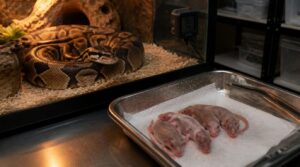
Live rodents can bite back. That’s the simplest reason frozen-thawed prey is safest for your ball python.
Freezing for 30 days kills parasites and mites, while eliminating injury risk from defensive scratches. You also get precise temperature control and consistent nutrition every feeding.
- Fewer parasites and pathogens
- No bite or scratch injuries
- Reliable calcium-to-phosphorus ratios
Store prey separately from human food to avoid contamination.
Thaw and Warm Prey Properly
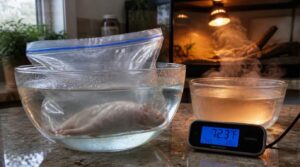
Once frozen prey is out of the freezer, how you thaw it matters as much as the freezing itself.
Refrigerator thawing overnight is safest, keeping food at 40°F or below. In a hurry? Cold water thawing works too, provided water stays below 70°F and thawing finishes within two hours.
Always use leak-proof packaging to block contamination, then warm prey to 95-100°F before offering it.
Never Microwave Frozen Rodents

That microwave sitting in your kitchen? Keep it far away from prey. Microwaving causes uneven heating, cooking the outside while the middle stays frozen, and trapped steam can make a rodent burst.
This creates real problems:
- Burnt or scalded prey your snake refuses
- Splattered tissue contaminating your microwave
- Popped rodents unsafe for feeding
Stick to refrigerator or water thawing instead.
Offer Prey With Feeding Tongs
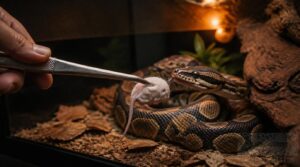
Once prey is warmed, your hands shouldn’t touch it. Feeding tongs keep fingers safe and let you control prey presentation with steady, deliberate movements.
| Feature | Why It Matters | Recommendation |
|---|---|---|
| Tong Length | Enclosure reach | 8-12 inches |
| Tipping Material | Reduces snagging | Stainless steel |
| Grip Design | Prevents fatigue | Comfortable, textured |
Sanitize tongs after every feeding to stop bacterial transfer between meals.
Avoid Handling After Meals

Post-meal restraint tests your patience most. Wait at least 48 hours before handling, since digestion needs time to work undisturbed.
Picking up your snake too soon risks regurgitation, a traumatic setback that can injure the esophagus. Reduced activity and hiding are normal now. Keep the warm side near 88°F, skip handling, and let digestion finish before your next feeding schedule check.
When Should You Adjust Feeding Frequency?

Feeding schedules aren’t set in stone. Your snake’s weight, age, and even the season all play a role in when changes make sense. Here’s what to watch before you adjust anything.
Track Juvenile Weight Weekly
Your scale tells the truth your eyes might miss. Weigh juveniles weekly, same time, same container, after the digestion window settles.
Growth trend analysis matters more than any single number. Pair each weigh-in with quick body condition notes: tail taper, spine fullness.
- Record date and weight
- Note recent feeding or shedding
- Compare to prior weeks
Weigh Adult Pythons Monthly
Once a month, same day, same routine, that’s the rhythm for adult weigh-ins. Use a digital scale accurate to 1 gram, tare your container first.
| Metric | Healthy Range |
|---|---|
| Monthly gain | 20-40g |
| Weight stability | ±50g |
| Weight loss alert | 10% (150g/1500g snake) |
| Weighing frequency | Once monthly |
Log everything. Feeding adjustment cues start with the numbers.
Assess Body Condition Regularly
Numbers only tell half the story. Run a visual check alongside every weigh-in:
- Spine visibility against natural posture
- Tail base fat cover, tapered or thick
- Midbody roundness from a side view
- Muscle tone when the snake moves
- Skin health and shed quality
Gentle finger pressure reveals whether the spine feels sharp or padded. Combine this with weight monitoring for real snake weight management.
Adjust for Breeding and Seasons
Your snake’s calendar matters as much as its scale. Shorter days and cooler temps often cue seasonal fasting, even in well-fed adults.
Breeding females may eat every 7-10 days to build reproductive body condition; males taper to every 10-14 days. Non-breeding adults do fine on 14-21 day intervals. Photoperiod shifts can quietly reset appetite, so don’t panic. Adjust gradually, watching weight rather than the calendar alone.
Check Husbandry Before Changing Schedules
Before tweaking a feeding schedule, rule out husbandry problems first. A refusal often has nothing to do with age or feeding frequency.
Check these:
- Temperature and humidity zones
- Hide placement on both sides
- Water dish cleanliness
- Enclosure security and substrate safety
Fix these, then weigh your snake and reassess body condition before changing anything else.
What if Your Ball Python Refuses Food?

A ball python turning down a meal isn’t rare, and it usually isn’t an emergency either. Most refusals trace back to a handful of predictable causes you can spot once you know what to look for. Here’s what usually drives food refusal, and how to tell normal from concerning.
Common Causes of Feeding Refusal
Refusals rarely come from one cause alone. Check these areas first:
| Category | Common Trigger | Fix Direction |
|---|---|---|
| Temperature | Warm side below 88°F | Recalibrate thermostat |
| Humidity | Below 50% | Add substrate moisture |
| Prey | Wrong size or type | Match prey to body width |
Health issues like mouth rot or stuck shed also suppress appetite and warrant a closer look.
Normal Shedding and Seasonal Fasts
Before assuming illness, rule out the two biggest normal culprits: shedding and seasonal fasting.
Milky blue eyes 3-7 days before a shed often kill appetite entirely, that’s your cue to raise humidity, not force food.
Wild adults average just 10 meals yearly. A healthy 1-3 month fast, even up to 11 months rarely, isn’t cause for alarm if body condition holds.
Improve Temperature and Feeding Setup
Once shedding and seasonal patterns are ruled out, check your setup. Verify the temperature gradient with a digital thermometer: warm side 88-92°F, cool side 76-80°F. Calibrate your thermostat monthly.
Warm prey properly using hot water, never a microwave. Offer food with feeding tongs in a dim, secure container. Place tight hides on both sides to ease feeding stress.
Monitor Weight During Fasting
Once you’ve fixed the setup, keep tracking weight. Get a baseline weight before the fast starts, then compare weekly.
For juveniles, weigh every 7 days, they should gain, never lose. Adults get monthly checks. A 5-10% drop is normal fasting behavior. Past 10% over 2-4 weeks? That’s your cue to call the vet.
Recognize Veterinary Warning Signs
Not every skipped meal is harmless. Watch for wheezing, gaping, or mucus around the nose, mouth rot’s swollen gums and pus, or neurological red flags like stargazing and head tremors.
Lethargy paired with rapid symptom progression can signal viral illness. Any wound, burn, or prolapse needs same-day care. When refusal meets these signs, don’t wait, call your vet.
Frequently Asked Questions (FAQs)
How to tell when a python is hungry?
You’ll notice increased tongue flicking and active searching near dusk. Hunger cues also include a head held above the hide, purposeful glass pacing, and stronger food interest, all signs of genuine meal readiness rather than random activity.
Can ball pythons go 2 weeks without eating?
Two weeks sounds alarming, yet it’s often unremarkable. Adults commonly fast that long without issue. Check body condition and weight loss under 10%; if husbandry is correct and weight holds steady, there’s usually no cause for concern.
Can you feed ball python 2 days in a row?
Back-to-back meals aren’t recommended. It overrides your snake’s normal feeding interval and raises overfeeding risks. Stick to the age-based schedule, then use body condition checks and weight tracking to confirm you’re on the right track.
What is a python’s favorite food?
Rats usually win out over mice once your snake outgrows them. Higher protein content helps with bigger growth, and frozen-thawed prey, warmed and appropriately sized, keeps meals safe, nutritious, and satisfying.
Can pythons eat eggs or birds?
Yes, ball pythons can eat both. Wild pythons prey on birds and raid nests for eggs, so offering appropriately sized birds or eggs occasionally adds safe dietary variety, though shells and prey size need careful attention beforehand.
What temperatures affect python feeding schedules?
A 4°F drop can stall digestion for days. Keep the warm side at 88-92°F, cool side 76-80°F. Stable thermal gradients and a steady basking spot support predictable digestion and consistent feeding responses.
For the full picture on pairing heat stability with early handling, ball python hatchling socialization techniques walk you through building a routine that keeps both temperature and trust consistent.
Before pairing, run through a ball python breeding health and husbandry checklist to confirm your snake’s digestion and thermoregulation are on track.
Prey sizing also plays a role—following a solid snake feeding guide for sizing pinky mice and appropriately sized prey helps prevent the kind of digestive strain that temperature fluctuations can compound.
Do breeding pythons need different feeding?
Breeding males often shift to shorter feeding cycles, while a gravid female may fast for weeks, conserving energy for clutch development instead of digestion. Adjust portions and timing around courtship, ovulation, and post-breeding recovery for best results.
Should sick pythons eat less frequently?
A sick snake needs an illness feeding pause, not its normal schedule. Digestion drains resources your python needs to heal.
Fix husbandry first, track weight closely, and resume feeding gradually, with veterinary consultation if refusal persists past two to three months.
How does shedding impact feeding timing?
Cloudy eyes signal the shedding cycle starting, and appetite naturally drops for 7-14 days beforehand. Skip feeding attempts during this fast. Once the old skin sheds fully, resume within 24-48 hours, when feeding behavior usually returns strong.
Can you switch a ball pythons prey type suddenly?
Sudden switches often backfire. Juveniles adapt fairly well, but adults can refuse meals for weeks. A gradual mixing approach over 7-10 days, blending new prey with familiar food, lowers stress and prevents feeding refusals.
Conclusion
Picture a coiled python, sleek and calm, its body a quiet record of every meal it’s had. That shape tells the real story.
Learning how often to feed python at each stage isn’t about counting days on a calendar. It’s about reading weight, width, and behavior together. Feed too often and fat pads appear. Feed too rarely and growth stalls. Trust the scale, trust the snake, and the schedule follows naturally.