This site is supported by our readers. We may earn a commission, at no cost to you, if you purchase through links.

Pick up a corn snake and it’ll likely explore your hands like nothing happened. Pick up a stressed ball python, and you might find yourself holding a tight, defensive ball instead. Same hobby, wildly different animals.
That gap isn’t random luck or bad handling. It’s biology. Understanding snake temperament by species means recognizing that genetics, habitat history, and life stage all shape how a snake reacts to you, long before you ever open the enclosure.
Once you see those patterns, the puzzling behaviors start making sense, and so does the animal in front of you.
Table Of Contents
- Key Takeaways
- What Shapes Snake Temperament Across Species?
- Beginner Snake Temperament Comparison by Species
- How Snakes Show Stress and Defensiveness
- How Husbandry Affects Snake Temperament
- Safe Handling and Trust-Building by Species
- Frequently Asked Questions (FAQs)
- Do snakes show affection toward their owners?
- Which species are most likely to bite?
- Can snake temperament change with seasons?
- Do male and female snakes behave differently?
- How long before new snakes calm down?
- Can a snakes temperament change as it ages?
- Do all snake species recognize their owners over time?
- Whats the best beginner snake for families with kids?
- Can diet or feeding schedule influence a snakes temperament?
- Are some snake morphs known for calmer or bolder temperaments?
- Conclusion
Key Takeaways
- Your snake’s temperament comes from genetics and species history, not from anything you did right or wrong with handling.
- Each species has its own personality: corn snakes and rosy boas stay calm and easygoing, ball pythons ball up when stressed, and kingsnakes and milk snakes run bold or skittish.
- Getting the enclosure right—proper size, temperature, humidity, and enough hides—does more to keep your snake relaxed than almost anything else you can do.
- Learning to read your snake’s body language, like balling, musking, or a tightening J-shape, helps you spot stress early and build trust through calm, consistent handling.
What Shapes Snake Temperament Across Species?

Ever wonder why one snake calmly wraps around your hand while another balls up tight? Temperament isn’t random, and it isn’t just about "good" or "bad" snakes either. Here’s what’s actually going on under the scales.
That instinctive grip is just your snake seeking stability, and understanding how to read your snake’s body language during handling can turn a nervous moment into a bonding one.
Temperament Versus Human Personality
Ever wonder why your corn snake stays chill while your buddy’s kingsnake nips at everything? That’s temperament, not personality.
Temperament is your snake’s biological foundation, innate reactivity patterns present from birth. Personality, by contrast, develops through experience.
Snake personality assessment focuses on stable, automatic responses, not learned habits. Individual variation exists, but central reactivity stays remarkably consistent across a snake’s life.
Genetics and Natural Survival Strategies
That biological foundation traces straight back to species genetics. Genetic variation within a species shapes aggression and alertness, and those traits pass down through generations. Understanding this process requires grasping how genetic inheritance works at the molecular level, since gene function underlies these inherited temperament traits.
Natural selection favors wariness in open habitats but stillness in ambush predators. Bolder foraging often links to reproductive strategy, while habitat adaptation carves out shy, stealthy niches. Nature builds the blueprint before any handling begins.
Captive-Bred Versus Wild-Caught Behavior
Nature writes the blueprint, but where a snake grows up edits the story. Captive breeding lowers stress response and boosts feeding acceptance fast, while wildcaught snakes carry parasite risks and shakier handling tolerance.
- Faster acclimation
- Steadier temperament consistency
- Fewer health surprises
Individual factors still matter, so temperament testing each snake beats assuming genetics alone.
Age, Sex, and Life Stage
Genetics sets the stage, but age and sex shape the performance. Young snakes bite more, especially California kings at 40% during early handling, a phase often called juvenile nippiness.
Females usually grow larger, though sex rarely predicts temperament. Watch for reproductive maturity too, since breeding season hormones can spike defensiveness.
Older snakes generally settle, moving slower and tolerating handling better.
Individual Variation Within Species
Two corn snakes from the same clutch can act like strangers. That’s individual personality at work, shaped by genetic diversity, early handling, and enclosure conditions.
Three things to test early:
- Feeding habits, bold or picky
- Boldness vs. shyness during handling
- Stress recovery speed
Behavioral plasticity means today’s shy snake can become tomorrow’s calm one.
Beginner Snake Temperament Comparison by Species
So how do the popular beginner species actually stack up against each other? Each one carries its own personality, shaped by genetics, history, and a little bit of attitude. Let’s break down five species you’re likely to meet at the pet store.
Corn Snakes: Calm and Adaptable
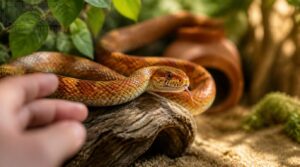
Corn snakes are the golden retrievers of the snake world: easygoing and willing to adapt. They tolerate handling with minimal stress and settle into new enclosures within two to four weeks.
During this settling-in period, sticking to safe feeding practices for snakes in separate enclosures helps keep your corn snake calm and stress-free.
| Trait | Corn Snake Behavior | Timeframe |
|---|---|---|
| Acclimation | Calm exploration | 2-4 weeks |
| Feeding Response | Gentle, no strikes | 24-72 hrs |
| Handling | Short, steady sessions | Ongoing |
Ball Pythons: Shy and Stress-Sensitive

Shyness defines the ball python: 90% ball into a tight knot when stressed, hiding their head. They need multiple secure hides and a stable 88-92°F warm side.
| Trigger | Response |
|---|---|
| Handling too soon | Balling |
| Poor thermal gradient | Feeding refusal |
| Single hide only | Chronic stress |
Individual variation matters, even within one clutch.
California Kingsnakes: Bold and Food-Driven
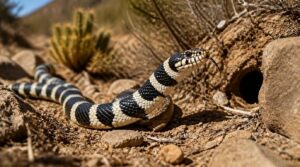
Ever met a snake that acts like a curious dog? That’s a California kingsnake for you. Bold temperament drives constant exploration, calm handling tolerance, and daytime foraging.
| Trait | Behavior | Why It Matters |
|---|---|---|
| Diet | Rodents, lizards, snakes | Broad prey adaptability |
| Activity | Diurnal patrol | Confident, food-driven |
| Feeding response | Strong strike | Species-specific behavior |
Milk Snakes: Active and Skittish
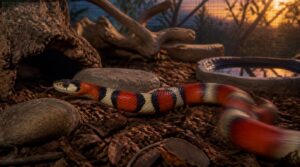
Milk snakes never sit still. Their active behavior peaks at dawn and dusk, with quick bursts across enclosure zones rather than slow patrols.
That energy brings a skittish temperament, so handling sensitivity runs higher.
| Trait | Behavior |
|---|---|
| Activity | Dawn/dusk bursts |
| Temperament | Skittish, alert |
| Enrichment | Reduces stress |
Enrichment helps settle nerves, supporting steadier handling tolerance over time.
Rosy Boas: Slow and Docile
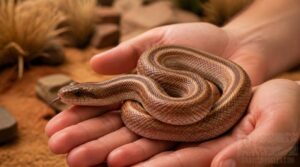
Picture a snake that moves like it’s got nowhere to be. That’s a rosy boa for you.
Adults stay small, 2 to 3 feet, with docile nature and steady feeding response.
| Trait | Behavior |
|---|---|
| Movement | Slow, deliberate |
| Handling | Minimal thrashing |
| Feeding | Calm, predictable |
| Tolerance | High, routine checks |
Gentle interaction builds trust fast, easing handling readiness.
How Snakes Show Stress and Defensiveness

Every snake has its own way of saying "back off," and learning to read those signals keeps both you and your pet safe. Some tells are loud and obvious, while others are subtle enough to miss if you’re not paying attention. Here’s what to watch for, species by species.
Every snake has its own way of saying back off, and learning to read those signals keeps you both safe
Balling, Musking, and Tail Vibrations
When stress builds, snakes don’t panic quietly, they show it. Ball pythons ball up in 90% of stressful encounters, tucking their heads for protection.
Musking twists the body away from threats, while tail vibration signals warn "back off" before things escalate.
Learning this body language is basic temperament testing, and it keeps handling stress indicators from turning into bites.
Strike Posture and Defensive Coiling
Beyond balling and musking, some snakes escalate further with strike posture, raising the head, arching the neck, and tightening coil tension. Watch for:
- Neck arch with raised head
- Tail flick signaling
- Body tilt protection
Rapid breathing and stiffened defensive coiling often follow, so give space and let the threat display settle before continuing.
Pre-Bite Body Language
Once the neck arches, watch the finer details too. A tightening J-shaped body, forward-leaning head, and stiffened jaw all signal escalation.
Tongue flicks slow down as focus narrows, while tail tremors test distance. These pre-bite arousal patterns are your last clear warning, so back off calmly rather than testing the snake’s patience further.
Feeding Strikes Versus Defensive Strikes
Not every strike means fear. Feeding strikes target prey, driven by hunger cues and scent, while defensive strikes answer threat perception.
Quick checklist:
- Body aimed straight (feeding) vs. coiled sideways (defense)
- Fast retreat after contact (feeding)
- Tail vibrating (defense)
- Recent meal history raises strike timing (feeding)
- Handling stress triggers defensive behaviors regardless of hunger
Species-Specific Stress Triggers
No two snakes stress the same way. Temperature gradient stress hits ball pythons hard, while kingsnakes shrug off minor swings.
Humidity shedding stress plagues milk snakes in dry tanks. Social hierarchy tension, feeding cue disruptions, and enrichment gaps all trigger species-specific reactions.
Knowing your snake’s particular buttons, not generic snake behavior, is what actually keeps handling sessions calm and safe.
How Husbandry Affects Snake Temperament

Genetics set the baseline, but the enclosure you build shapes the day-to-day mood. A stressed snake and a calm one often live in the exact same species, just different setups. Here’s what actually moves the needle on temperament, room by room.
Enclosure Size and Security
A cramped tank breeds a nervous snake. Tank size guidelines call for 40-gallon minimums, plus locking security latch types rated for your species’ jaw strength.
Escape prevention methods matter too: sealed doors, tamper-resistant hinges, no gaps. Follow substrate depth rules for burrowers, and place hides on warm and cool sides.
Get hiding spots and enclosure security right, and stress-driven escape attempts drop fast.
Thermal Gradients and Temperature Stress
Get the heat wrong, and even a chill snake turns jumpy. Basking zone optimization matters as much as cool zone importance, since ball pythons need 28-32 C one side, 22-26 C the other.
Skimp on enclosure size and gradients collapse. Temperature fluctuation risks feeding cessation and stress hormones. Check both zones daily with a probe thermometer.
Humidity and Shedding Discomfort
Dry air makes shedding painful, and stressed snakes bite more. Low humidity causes stuck shed and skin irritation, while soggy enclosures breed fungus.
Fix it with a humidity gradient, humid hides, and daily misting during active phases.
- Stuck shed
- Fungal spots
- Irritated skin
- Feeding refusal
- Defensive strikes
Track shedding events and adjust seasonally.
Hides, Clutter, and Enrichment
A snake’s hide isn’t a decoration, it’s a security blanket. Offer multiple tight, shadowed hides across warm and cool zones, with smooth, easy-clean materials.
| Setup Choice | Behavioral Effect |
|---|---|
| Multiple hides | Reduces stress |
| Clear sight lines | Fewer strikes |
| Anchored décor | Prevents entrapment |
| Rotated enrichment | Curbs boredom |
| Organized clutter | Easier navigation |
Health Changes That Affect Behavior
A sudden mood shift often means your snake’s body, not its personality, is talking. Respiratory infections bring wheezing and open-mouth breathing. Parasites and mites cause lethargy, anemia, and extra strikes. Watch for:
- Wheezing or clicking sounds
- Reduced tongue-flicks
- Appetite loss (viral signs)
- Rubbing against surfaces (mites)
- Weak, uncoiled posture
Regular health checks catch trouble early.
Safe Handling and Trust-Building by Species
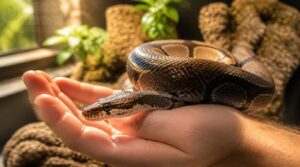
Trust between you and your snake doesn’t happen by accident, it’s built one calm interaction at a time. Every species reads your hands a little differently, and what works for a bold kingsnake might spook a shy ball python. Here’s what to know before you reach into that enclosure.
Patience matters most in those first weeks, especially if you’re navigating the right time to start handling a new snake when it’s still settling in.
Before you build that trust, get the basics right by checking this guide to handling a snake after feeding, since a rushed touch too soon can undo weeks of progress.
Acclimation Before First Handling
Before you touch your new snake, let it just be for a week. This quiet enclosure time, paired with short daily observation sessions, builds trust without pressure.
| Week | Focus | Sign of Progress |
|---|---|---|
| 1 | Quiet time, no handling | Normal appetite |
| 2 | Gentle presence, hides intact | Steady shedding |
| 3 | Brief, calm handling begins | Relaxed body language |
Avoiding Accidental Feeding Responses
By week three, gentle handling begins, but here’s where snakes mix up hands with dinner. Keep handling-feeding separation strict: never handle right before or after meals. Learn your snake’s feeding cues (head bobbing, tongue flicking toward you) versus calm curiosity. Predictable feeding schedules prevent confusion, so your snake learns hands mean trust, not food.
Supporting Species-Specific Body Types
Body shape isn’t just looks, it’s function. A rosy boa’s short, thick build needs full body weight support with two hands, while a corn snake’s slender frame moves easier through loose loops.
Match your grip to species genetics:
- Wide-bodied snakes need broad palm support
- Long, thin species need multi-point contact
- Heat-sensing pits mean keep hands slow near the face
Handling Frequency and Session Length
Grip matters, but so does timing. Start with 2 to 3 minute sessions, adding a minute or two weekly as your snake stays calm.
Every snake has its own limits, so this guide on how much handling snakes tolerate helps you spot stress signs before they affect feeding or shedding.
Cap handling at 3 to 5 sessions per week. Handle after feeding or shedding settles, and always end with a gentle return to the hide, it builds trust fast.
When to Pause Handling
Some days, your snake just needs to be left alone, and that’s okay.
Pause handling for shedding cycles, recent health recovery, feeding response cues, or defensive behaviors like tight coiling.
- Tail vibrations with gaping mouth
- Refusing to uncoil after 5 minutes
- Sudden color dulling, rapid breathing
- Feeding strikes near enclosure
- Territorial stress from tank mates
Watch for these stress responses and wait it out.
Frequently Asked Questions (FAQs)
Do snakes show affection toward their owners?
Not quite love, but real recognition. Snakes learn scent recognition and handling routines, showing comfort cues and reduced startle responses. Consistent trust building beats any hope of true affection, since owner bonding here means safety, not sentiment.
Which species are most likely to bite?
Ever meet a snake with a grudge? Rare. Most "aggressive" snakes are just scared. Wild-caught specimens and jumpy kingsnakes bite most, while calm, captive-bred corn snakes rarely strike unless cornered, startled, or mid-feeding response.
Can snake temperament change with seasons?
Yes, temperament shifts with the seasons. Warmer months bring feeding-driven assertiveness and quicker strikes, while cooler weather triggers brumation-like calm. Rapid temperature swings or poor humidity can spike stress, so watch for seasonal, individual variation.
Do male and female snakes behave differently?
Boys versus girls? Not much of a rivalry here. Sex differences stay minor compared to individual variation, though hormonal shifts and roaming behavior tied to mating season can nudge activity levels and feeding patterns temporarily, regardless of captive breeding background.
How long before new snakes calm down?
Most snakes need two to four weeks in a stable enclosure before settling down. Some calm within ten days, while cautious individuals take six to eight weeks. Routine feeding and gentle, consistent handling speed up the process considerably.
Can a snakes temperament change as it ages?
Absolutely, temperament shifts with maturity. Juvenile boldness or nippiness often fades into adult calmness, then senior stability. Genetic predisposition, early experiences, and individual variation all shape how smoothly a snake settles as it ages.
Do all snake species recognize their owners over time?
Funny enough, not every snake reads its owner the same way. Recognition depends on scent-based recognition cues and consistent handling routines, not a dog-like bond, and individual variation in bonding means some species habituate faster than others.
Whats the best beginner snake for families with kids?
For kids, corn snakes win, calm in over 95% of handling, plus gentle ball pythons or rosy boas (under 2% bite incidents). All three tolerate frequent handling, small enclosures, and beginner mistakes with minimal stress.
Can diet or feeding schedule influence a snakes temperament?
Yes, diet shapes behavior more than most owners realize. Irregular feeding schedules trigger hunger stress and defensiveness, while predictable feeding routines calm startle responses.
Meal size and prey type also affect digestion comfort, keeping arousal levels lower during handling.
Are some snake morphs known for calmer or bolder temperaments?
Some morphs do run cooler-headed than others. Certain calm morph selection lines in ball pythons show smoother feeding responses and lower baseline stress.
Still, individual factors and captive breeding matter more than color patterns alone.
Standard corn snakes stay reliably easygoing.
Conclusion
Think of each species as its own coiled chapter, some wound tight, some loose and easy. Understanding snake temperament by species won’t turn every ball python friendly or every corn snake fearless, but it hands you a map instead of a guess.
Watch the body language. Respect the thermal needs. Let trust build slowly, one calm session at a time. Read the snake in front of you, not its reputation. That’s real mastery.
If you’re curious why your hognose bluffs, rolls over, and plays dead, this guide to hognose snake personality traits explains the quirks behind the performance.