This site is supported by our readers. We may earn a commission, at no cost to you, if you purchase through links.

A snake that strikes when you open the enclosure often isn’t “aggressive” in the way people mean it. It may be reacting to prey scent on your hands, a cold hide, cloudy shed-cycle vision, or the vibration of footsteps through the stand.
That distinction matters. Defensive behavior is information, and it usually appears before a bite: a tight S-curve, fixed stare, rapid tongue flicks, or a vibrating tail.
To prevent pet snake aggression, stop treating each strike as a handling problem. Read the trigger, correct the husbandry gap, and build routines your snake can predict.
Table Of Contents
- Key Takeaways
- Identify Your Snake’s Aggression Triggers
- Recognize Defensive Body Language Early
- Create a Calm, Secure Enclosure
- Reduce Noise, Vibrations, and Disruptions
- Prevent Feeding-Response Strikes
- Give Snakes Space During Shedding
- Build Trust Through Calm Handling
- De-Escalate Defensive Behavior Safely
- Rule Out Pain and Illness
- Track Progress and Prevent Relapses
- Frequently Asked Questions (FAQs)
- Conclusion
Key Takeaways
- Treat striking as a signal of fear, feeding response, shedding discomfort, environmental stress, pain, or individual temperament—not deliberate aggression.
- Learn warning signs such as a tense S-curve, fixed stare, hissing, rapid tongue flicks, and tail vibration, then stop handling and give your snake space.
- Prevent defensiveness with species-appropriate heat, humidity, secure hides, visual cover, low vibration, consistent light cycles, and predictable feeding and handling routines.
- Rule out illness after sudden behavior changes, avoid handling during shedding or after meals, and consult a reptile veterinarian for breathing problems, swelling, regurgitation, weight loss, or pain.
Identify Your Snake’s Aggression Triggers

Aggression in pet snakes almost always has a root cause—and identifying it is the first step toward fixing it. Your snake isn’t aggressive without reason; something in its environment, body, or routine is driving that defensive response. These five triggers are the most common culprits.
Understanding how corn snakes can be tamed also helps distinguish fear-based behavior from normal adjustment.
Snake aggression has a cause—look to its health, environment, and routine to find it
Hunger and Feeding Responses
When your snake tracks your hand like it’s prey, hunger triggers are almost always to blame. A hungry snake ramps up tongue flicking and active searching, and its feeding response threshold drops sharply. Prolonged fasting makes this considerably worse.
Use feeding tongs every session, wash your hands thoroughly to eliminate scent transfer risks, and stick to a reliable feeding schedule. Practicing hook training before handling conditions your snake to shift from an alert state to a relaxed posture, greatly reducing mistaken strikes during non-feeding interactions.
Shedding Discomfort
Hunger isn’t the only trigger. Shedding brings its own defensive response, driven by cloudy eyes and skin sensitivity during the "in blue" phase. That discomfort makes even calm snakes reactive to touch. Recognize dull skin and reduced appetite as early pre-shed signals.
- Boost enclosure humidity to prevent dysecdysis
- Avoid handling until the shed completes
- Check for retained eye caps after each cycle
Environmental Stress
Shedding passes, but environmental stressors persist. A snake’s enclosure conditions shape behavior every hour.
| Stressor | Behavioral Impact |
|---|---|
| Temperature gradient gaps | Defensive striking, chronic vigilance |
| Humidity control failure | Lowered aggression threshold |
| Light cycle disruption | Increased irritability |
Vibration control matters as much as temperature. Offer hides for hiding behavior, cover two sides for visual security, and keep appliances at a distance.
Pain or Illness
Illness turns even a docile animal defensive. When your snake is hurting, aggression is communication.
Watch for:
- Excessive saliva or swollen, red gums indicating mouth rot
- Open-mouth breathing or audible wheezing from respiratory infection
- Abdominal swelling or regurgitation signaling digestive obstruction
- Stargazing or muscle tremors pointing to neurological disease
Sudden behavioral shifts warrant a vet call, not a handling session.
Individual Temperament
Why does one corn snake tolerate daily handling while another strikes at any approach? Individual temperament sits on the shyness-boldness continuum from birth.
| Temperament Type | Boldness Level | Handling Tolerance |
|---|---|---|
| Bold explorer | High | Tolerates easily |
| Mid-range | Moderate | Context-dependent |
| Shy-social | Low | Often defensive |
Behavioral tracking over time reveals your snake’s baseline. Build predictable routines around it.
Recognize Defensive Body Language Early
Your snake won’t announce its mood with words — it communicates through posture, movement, and subtle physical cues that fire off well before any strike lands. Learning to read these signals is the difference between a safe interaction and a puncture wound. Here are the five defensive behaviors to recognize immediately.
Tense S-Curve Posture
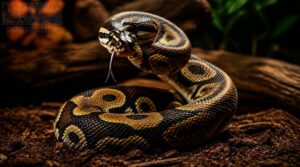
The tense S-curve is the clearest warning your snake can give you. When the neck pulls back and the body coils into that rigid S-shape, the snake is primed to strike, not just posturing. It’s actively storing elastic energy in its muscles for explosive forward propulsion. Don’t test it. Back off immediately and stop all handling until the posture fully relaxes.
Hissing and Fixed Staring

When a snake hisses and locks its gaze on you, the threat display is fully active. Hissing can reach 80 decibels, and that fixed stare narrows visual focus directly onto you. Together, both signals indicate real energy expenditure, and the snake won’t sustain this for long.
Watch for:
- Loud, forced hissing
- Unblinking, locked gaze
- Both signals together
Back off now.
Tail Vibrations
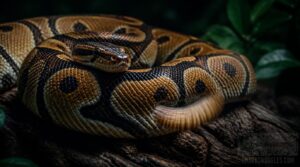
Tail vibrations are a deliberate warning. When your snake perceives an immediate threat, rapid tail shaking begins. Some species produce an audible rattle; others vibrate silently. Vibration intensity scales with stress level. Back off before this escalates.
| Signal Level | What to Do |
|---|---|
| Slow shaking | Give space |
| Rapid vibration | Stop moving |
| Audible rattling | Back away |
| Sustained shaking | End session |
Rapid Tongue Flicking

Rapid tongue flicking tells you your snake is actively processing its environment at high speed. Chemical detection speed spikes when threat assessment is underway, meaning more frequent flicks signal rising alertness.
During shedding, support healthy skin turnover with reptile vitamins for shedding while watching for stress-related behavior changes.
If your snake flicks rapidly toward your hand, it’s sampling you as a potential threat. Slow down, pull back, and let it fully reset before making any handling attempt.
Sudden Striking

Sudden striking is usually a last-second decision, not unprovoked aggression. A defensive lunge can launch and retract in under 0.5 seconds.
- Freeze when you see it.
- Back away slowly.
- Check vibration sensitivity.
- Separate feeding response from handling techniques.
- Improve enclosure conditions.
Defensive bluffing and strike conditioning lower thresholds; calm defensive posture recognition prevents repeat bites and keeps your snake safer.
Create a Calm, Secure Enclosure

A defensive snake often reacts to an enclosure that leaves it exposed, uncomfortable, or constantly on alert. Your setup should give it reliable control over temperature, cover, and visual stimulation. Start by checking these five enclosure essentials.
Species-Appropriate Enclosure Size
Space sets the tone. A species-appropriate enclosure lets your snake extend, retreat, climb and choose secure hiding places rather than meeting every disturbance at the glass.
| Need | Provide | Result |
|---|---|---|
| Floor movement | Open pathways, enrichment | Less confinement |
| Height | Stable climbing options | More choice |
| Escape space | Visual barriers, fresh-air ventilation | Safer retreats |
Size effectively allows temperature gradients and humidity levels without crowding.
Correct Temperature Gradient
Enclosure size creates choice, but temperature gradients make that choice functional. Set a basking zone at one end, using a thermostat-controlled halogen or ceramic emitter, and preserve a cool zone at the opposite end.
Place digital probes at snake level in both areas. Check twice daily, then adjust heat-source height or output as seasonal enclosure conditions change. Reliable temperature control prevents thermal stress and helps maintain calm behavior.
Stable Humidity Levels
Thermal stability must pair with humidity stability. Use calibrated digital hygrometers at snake level, then maintain species-appropriate humidity thresholds without daily swings.
Prevent condensation on glass, substrate, and cool surfaces by improving ventilation before adding moisture. Make each humidity range adjustment slowly, over 24–48 hours.
Use moisture buffering materials such as appropriate substrate, but don’t let them replace active humidity control. Check humidifier output weekly against a reliable reference.
Two Secure Hides
Humidity stability works best when your snake can choose security at either end of the gradient. Provide two opaque hides:
- Place one on the warm side for digestion.
- Place one on the cool side for thermoregulation balance.
- Keep both snug, identical, and non-porous.
- Use one as a humid hide during shedding.
This secure hide provision helps with stress reduction, humidity gradient control, and natural behavior.
Visual Barriers and Clutter
Your snake reads its environment constantly. Visual barriers on the most active enclosure sides block perceived threats and cut defensive behavior. Moderate clutter, including cork bark, leaf litter, and branches, encourages thigmotaxis and natural hiding without restricting movement.
| Barrier Type | Best For |
|---|---|
| Opaque panels | Ground-dwelling species |
| Vertical cork | Arboreal species |
| Dense leaf litter | Burrowing species |
| Low, minimal barriers | Desert species |
Reduce Noise, Vibrations, and Disruptions

Your snake’s nervous system is always listening — even when you think the room is quiet. Chronic environmental noise and vibration register as persistent threat signals, keeping your animal in a low-grade defensive state that makes aggression far more likely.
Here’s what to adjust in your setup to cut that sensory load down a lot.
Choose a Quiet Location
Where you place the enclosure matters more than most keepers realize. A low traffic area, away from busy hallways, kitchens, and frequently opened doors, gives your snake the stable environment placement it needs to stay calm.
Rooms with predictable, minimal human movement reduce chronic stress accumulation. Choose a quiet room where noise exposure stays consistently low throughout the day.
Cushion Groundborne Vibrations
Even low-level floor vibrations register in a snake’s somatosensory system long before you notice anything. Placing the enclosure on a viscoelastic or rubber-based cushion pad decouples it from groundborne transmission, attenuating frequencies in the 10 to 100 Hz range where snakes are most sensitive.
Distribute weight evenly across the pad to prevent compression points that bypass isolation entirely.
Limit Enclosure Traffic
Every pass near the enclosure registers as a potential threat. Limit foot traffic to a single, predictable approach route, and designate one consistent entry point for all access. Restrict visits to scheduled windows, not unplanned interruptions.
Visual disruption compounds fast, so keep the enclosure front less exposed during high-activity periods, and always time your checks when the room is quietest.
Make Changes Gradually
Abrupt changes destabilize snakes fast. Stagger every modification:
- Enclosure Upgrades: one element at a time, one week apart
- Temperature Adjustments: no more than 2°F per day
- Humidity Transitions: shift no more than 5% daily
- Lighting Changes: adjust photoperiods 15-30 minutes at a time
- Handling Progression: add 1-2 minutes per session gradually
Monitor behavior after each step; predictable routines prevent relapses.
Maintain Day-Night Cycles
Snakes read light like a clock. Their circadian rhythms depend on consistent day-night cycles to regulate behavior, feeding drives, and stress responses. Set a programmable timer to hold a stable 12-hour photoperiod every day. Kill all ambient light during the dark phase. Screen glow and room lighting both count as disruptions and can shift your snake’s internal timing.
Prevent Feeding-Response Strikes

Feeding strikes are one of the most preventable forms of aggression — and they almost always come down to your habits, not your snake’s temperament. A hungry snake doesn’t distinguish between a thawed mouse and your hand if both arrive the same way. These five practices will sharpen your feeding routine and keep your fingers out of the strike zone.
Follow Species-Specific Feeding Schedules
A corn snake on a predictable routine is a calmer snake. Feeding frequency shifts with age: hatchlings eat every 5-7 days, juveniles every 7-10, and adults every 14-21. Weight-based adjustments matter too. Overweight adults go every 21-35 days, while underweight ones may need food every 10-14. Since corn snakes are diurnal, offer prey during daylight, then wait 48 hours before handling.
Once your schedule is locked in, matching prey size to your snake’s girth becomes the next priority — proper frozen feeder preparation techniques ensure each meal is both safe and appropriately sized.
Present Prey With Tongs
Once your schedule is set, tongs aren’t optional. 16-inch stainless steel tongs keep your hand well outside the strike zone and give you precise prey control.
Three things to get right:
- Grip near the midpoint for better control
- Present prey at a 30-45 degree angle
- Move slowly, with a side-to-side motion
Rinse and disinfect after every feeding.
Keep Hands Scent-Free
Tongs handle the prey side. Your hands carry scent information your snake reads before contact.
Wash with unscented soap before every session. Skip scented lotions, use fragrance-free sanitizer if soap isn’t handy, and change clothes after handling feeder animals. Keep nails short and clean. Scent particles accumulate there and trigger a feeding response before you’ve even begun.
Use Consistent Feeding Cues
Your snake builds predictable feeding cues from repeated patterns, not instinct alone.
Feed at the same time, same day, from the same spot every week. Match your handler routine exactly, from approach to prey presentation.
- Same prey type and size class
- Identical thaw method, consistent rest time before offering
- Fixed enclosure location for every presentation
- Stable room lighting and ambient sound level
Avoid Handling Around Meals
The feeding response feeding response doesn’t switch off the moment prey disappears. Wait at least 24 hours after a large meal before resuming handling, and don’t approach the enclosure within 4 hours of a scheduled feeding. Wash your hands to eliminate prey scent** before any contact.
That buffer consistently reduces feeding aggression and keeps your routine something the snake can reliably anticipate.
Give Snakes Space During Shedding
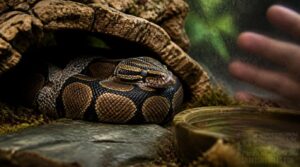
Shedding puts your snake in a genuinely vulnerable state — vision is compromised, skin is hypersensitive, and defensive behavior spikes without warning. Pushing through that window with regular handling is one of the fastest ways to undo weeks of trust-building.
Here’s what to watch for and how to manage each stage of the shed cycle.
Recognize Early Shedding Signs
The shedding cycle rarely arrives without warning. Cloudy eyes are the clearest early signal, appearing milky or bluish-gray as lymphatic fluid separates the epidermal layers, and they usually clear 24-48 hours before actual shedding begins.
Skin dulling, appetite loss, and hiding increase follow quickly, and humid seeking behavior intensifies as shedding discomfort builds. Learn these signs before you miss them.
Maintain Proper Humidity
Humidity during shedding isn’t optional. Place a humid hide box in the cool third of the enclosure, packed with damp sphagnum moss.
Your hygrometer calibration matters here: a drifting sensor gives false confidence. Mist once daily, then let ventilation work. Substrate moisture balance keeps ambient RH stable without soaking the bedding, giving the shedding cycle the consistent support it needs.
Avoid Unnecessary Handling
During the shed cycle, avoid all handling unless medically necessary. Your snake’s vision is compromised, reflexes are heightened, and stress tolerance is near zero.
Wait 24 to 48 hours after a completed shed before resuming contact. Minimize handling frequency during this window entirely. When you do return to sessions, keep them brief and calm, letting the snake set the pace.
Check for Retained Shed
Once your snake has shed, do a full skin condition check before anything else. Look closely for retained eye caps, which appear as cloudy or wrinkled scales over the eyes, and examine the tail tip, where constricted shed can cut off circulation within 48-72 hours. Any sign of incomplete shedding warrants a 15-minute warm soak. Repeated failures need veterinary consultation.
Resume Handling Gradually
Confirm post-shed handling readiness after complete skin removal. Handling environment setup should be quiet, scent-free, and padded.
- Keep handling session duration at 2–3 minutes.
- Handle predictably at dusk.
- Limit handling frequency increase to one session weekly.
- Cap reintroduction at 10–15 minutes.
Use gradual handling and safe techniques. Behavioral response tracking guides habituation techniques and consistent routines; stop for stress immediately.
Build Trust Through Calm Handling

Calm, predictable handling teaches your snake that your presence is not a threat. Move with purpose, read its body language, and stop before stress escalates. Use the following handling practices to build tolerance gradually and safely.
Approach From The Side
When you approach from the side, your snake can track your hand without reading it as an aerial threat. Keep visual contact with the head, move slowly, and leave a clear route forward or backward.
Front-opening enclosures make this easier. Read body language first: delay handling if you see an S-curve, fixed stare, or rigid muscles. Consistent side access builds predictable, lower-stress handling.
Support The Entire Body
Once your hand comes in from the side, lift with balanced weight distribution. Place one hand a few inches behind the head and the other near the tail, supporting the spine without pinning it.
For specimens over 8 feet, use multi-hand support. Let the body travel freely across supported hands. Stable enclosure conditions, temperature gradients, and humidity control make this handling technique easier.
Begin With Short Sessions
After supporting the body correctly, begin with short sessions of no more than 5 minutes. Schedule trust building sessions 2–3 times weekly at predictable times, which improves handling frequency optimization and reduces anticipatory stress.
Return your snake only when calm. This calm return practice teaches that stress-free handling ends without conflict. Use gradual handling, increasing to 10 minutes only after several settled sessions.
Avoid Sudden Restraint
After calm five-minute sessions, avoid pinning or grabbing your snake without warning. Use Slow Movement Techniques: maintain light, steady contact, then guide the body rather than immobilizing it.
This Gentle Handling Approach encourages Stress-Free Interaction. The Minimal Contact Method and sudden change avoidance reduce defensive escalation, while predictable handling gives your snake control. These safe handling techniques strengthen deescalation strategies without disrupting handling frequency optimization.
Increase Handling Gradually
Start at 2 to 3 minutes, then record each session. Extend handling by only 30 to 60 seconds when relaxed posture, slow tongue flicks, and voluntary exploration remain consistent.
Use body language interpretation, not a timer alone. Ball pythons often need slower species-based progression than corn snakes. Maintain predictable routines every 3 to 4 days; consistent handling protects trust. End immediately if tension, escape behavior, or striking appears.
De-Escalate Defensive Behavior Safely

When your snake turns defensive, stop trying to “work through” the reaction. Your immediate goal is to lower arousal, protect both of you, and avoid reinforcing the strike response. Use these steps to regain control without escalating the encounter.
Pause and Give Space
Pause and Give Space when body language shifts. A tight S-curve, fixed stare, hissing, or tail vibration means you should stop moving and respect personal boundaries.
- Let the snake see an open retreat route
- Avoid cornering snakes against enclosure walls
- Wait for movement away from you
- Allow voluntary approach, never pursuit
Give retreat space for several minutes. Shorter handling duration limits and lower handling frequency support stress reduction in snakes.
Remove Immediate Stressors
Strip away the trigger before you reassess the snake. Reduce sensory disturbance: dim abrupt lighting, silence nearby music, and limit enclosure traffic.
| Stressor | Immediate correction | Result |
|---|---|---|
| Passing movement | Place visual barriers along exposed sides | Less vigilance |
| Footsteps | Add foam beneath enclosure | Fewer vibrations |
Verify temperature gradients and humidity control, then keep enclosure conditions stable. These environmental stressors often sustain defensiveness.
Avoid Forced Interaction
Respecting Snake Autonomy prevents escalation. If your snake retreats, freezes, or holds a tense posture, stop.
- Allowing Voluntary Engagement at the enclosure threshold
- Stopping Forced Handling after withdrawal signals
- Reducing handling frequency for several days
- Keeping handling duration under 2 minutes
Trust building with reptiles depends on gradual handling. Avoid forced interaction, then let curiosity return on the snake’s terms.
Never Pull During Bites
Never pull away when a snake bites and holds. Stay still, then support snake body to prevent spinal injury.
| Do | Don’t |
|---|---|
| Use body support | Pull backward |
| Apply gentle head pressure | Avoid jaw prying |
| Keep handling duration brief | Escalate restraint |
These handling techniques protect animal and keeper, help prevent defensive strikes, and support trust building with reptiles during every controlled bite-release response.
Allow Time to Settle
A defensive episode requires Stress Recovery Time. Allow Time to Settle in a quiet enclosure, with secure hiding spots and no forced contact, until normal tongue flicking and Enclosure Exploration Phase behavior return.
After Post-Feeding Recovery, Shedding Completion Wait, or a 2–4 week Environmental Adjustment Period, resume gradual handling only briefly. Correct enclosure size and reliable routines drive stress reduction, not persistence.
Rule Out Pain and Illness

A snake that becomes defensive without warning may be reacting to pain, not a handling problem. Don’t assume the behavior will resolve through acclimation alone. Use the checks below to identify warning signs and decide when veterinary care is needed.
Watch for Sudden Changes
When your snake’s behavior changes overnight, treat it as information, not attitude. Sudden changes in tongue flicking, hiding, appetite, activity, or tolerance for handling can precede visible health issues.
Record enclosure temperatures, humidity, lighting, feeding response, and body condition. A disrupted temperature gradient, environmental factors, weight loss, altered posture, or irritability helps separate stress from pain and guides veterinary care.
Check Mouth and Breathing
After sudden behavior changes, inspect the mouth and nares. Open-mouth breathing, neck elevation, bubbles, saliva discharge, or crusted nostrils demand prompt reptile-veterinary assessment.
Healthy breathing is silent. Wheezing, clicking, gurgling, visible rib effort, reduced tongue flicking, or thick yellow oral material can signal respiratory issues or oral disorders. Seek immediate veterinary intervention for bubbles or labored breathing.
Monitor Weight and Appetite
Alongside respiratory checks, log weight weekly on a digital gram scale, using the same container and weighing at the same point after meals. Record every feeding attempt: prey type, prey size, acceptance, swallowing, and refusals. A downward trend or feeding dropoff lasting two scheduled meals warrants review. Check humidity, water access, condition, and movement, seek veterinary guidance if loss persists.
Note Pain During Handling
After weighing and feeding records, let your hands supply another data point. Use gentle pressure sequentially along the body, then compare matching points on both sides. Flinching, guarding, handling-induced stiffness, facial tension, wheezing, or an increased handling bite incidence can indicate pain, not temperament. Cold, dehydration, and abrasive substrate increase stress hormone spikes. Treat sensitivity or swelling as veterinary urgency.
Contact a Reptile Veterinarian
Act early when symptom combinations suggest pain or systemic disease; veterinary intervention timing determines whether defensive behavior escalates.
- Find local reptile vets; use trusted vet directories.
- Verify vet reptile experience.
- Check clinic equipment setup.
- Prepare visit documentation with health monitoring logs.
A qualified Reptile veterinarian improves health issue detection and treatment. Bring records, weights, photographs, and treatment plans for clinic review.
Track Progress and Prevent Relapses

Lasting progress comes from observing patterns, not assuming one calm week means the problem is solved. Your snake’s behavior can shift with routine changes, seasonal cycles, shedding, or subtle husbandry errors. Use the following practices to measure improvement and catch relapse triggers early.
Keep a Behavior Log
Keep a behavior log. Record date and time, objective behavior, antecedent context, consequence, and intervention notes immediately after each incident.
| Record | Example |
|---|---|
| Trigger | 7:15 p.m., hand entered enclosure after thawing prey |
| Outcome | S-curved, struck, retreated after hook introduction |
Track stress indicators, handling techniques, and behavior shift causation. Over several weeks, behavioral progress tracking reveals which conditions reliably precede defensive responses.
Maintain Predictable Routines
Reliable husbandry creates a predictable experience your snake can learn.
- Feeding Schedule Consistency: offer matched frozen-thawed prey on the same cadence.
- Handling Routine Stability: use brief, calm sessions, reinforcing handling protocol stability.
- Environmental Consistency: preserve gradients, hides, substrate, light-cycle regularity, and shedding process predictability.
These consistent routines strengthen predictable experience building; routine consistency impact helps behavioral conditioning longevity over time.
Review Recurring Triggers
Review your behavior log weekly. Compare aggression triggers against feeding dates, shedding, handling techniques, noise, and temperature gradients. Trigger pattern analysis often shows that one stressor is tolerated, while two or three exceed the snake’s threshold.
Record early stress indicators, then compare interventions before and after changes. This stressor combination review reveals whether fewer disturbances, altered handling, or steadier conditions reduce defensive behavior.
Adjust Species-Specific Care
One template never fits every snake. Match species-specific needs to its biology, then adjust them through individual personality assessment.
- Dietary needs and water requirements
- Lighting cycles and substrate preferences
- Handling frequency and species temperament
A calm corn snake may accept weekly sessions; a defensive ball python may need less contact. Modify your deescalation protocol safely. This precision helps longterm behavior change.
Monitor Improvement Over Time
Long-term observation turns impressions into evidence. Use behavior trend analysis and progress tracking methods to log strikes, feeding, shedding, handling frequency impact, and enclosure enrichment efficacy weekly.
Your success measurement tools should document behavioral improvement, stress hormone reduction with testing, and defensive behavior reduction percentage. Consistent monitoring practices reveal relapse triggers early, allowing you to correct husbandry before aggression returns.
Frequently Asked Questions (FAQs)
How to get a pet snake to release its bite?
Use a calm release technique: maintain self-release support, never pull, and use gentle pressure method or water application to shorten bite duration. Biting is last resort; begin handling moratorium, defensive-strike prevention, positive reinforcement, and trust-building.
How to calm down an aggressive snake?
Speak in a gentle voice and approach with slow movements. Remove environmental stressors, verify enclosure conditions and temperature gradients, then offer enrichment. Build positive associations through calm handling techniques, consistent routine reinforcement, and behavioral conditioning.
Can pet snakes be aggressive?
Snake aggression is often defense, not malice: snake behavior myths ignore feeding cues, species temperament, stress indicators, environmental factors, humidity levels, handling techniques, and health issues. For handling safety, stay calm and support its body.
Which pet snake is least likely to bite?
For most beginners, rubber boas are least likely to bite. Ball pythons, corn snakes, and rosy boas also show calm demeanor traits when captive-bred, properly housed, fed with tongs, and handled gently.
How to deal with an aggressive pet snake?
When tension coils like a spring, pause. Improve enclosure conditions, reduce environmental stressors, and use calm handling techniques. Build trust through brief sessions, track reactions, and seek veterinary help for sudden aggression or illness.
Conclusion
Like a weather vane, your snake’s behavior points toward the condition that needs attention. Read the signal before you reach inside: correct heat, humidity, cover, feeding cues, and handling timing will prevent pet snake aggression more reliably than forcing tolerance. Keep records, respect warning postures, and act quickly when behavior changes without an obvious trigger. A settled snake isn’t conquered. it’s secure enough to stop treating your presence as danger inside its home.