This site is supported by our readers. We may earn a commission, at no cost to you, if you purchase through links.
The rodent in your freezer survived the supply chain intact. Whether it stays safe depends entirely on what you do next. Most keepers lose control of biosecurity not at the source, but during thawing and preparation, where bacterial load can spike before prey ever reaches the enclosure.
Freezing doesn’t sterilize. Salmonella and other zoonotic pathogens survive frozen storage, then multiply during improper thaw conditions. A few degrees off-target, a microwave shortcut, or a single refreezing cycle can turn a clean feeder into a health risk. Frozen snake food preparation follows a specific sequence for a reason.
Table Of Contents
- Key Takeaways
- Choose The Right Frozen Snake Food
- Store Frozen Rodents Safely
- Thaw Frozen Snake Food Safely
- Warm and Prepare Thawed Prey
- Present Frozen Prey and Clean Up
- Frequently Asked Questions (FAQs)
- How to prep frozen mice for snakes?
- My ball python won’t eat frozen thawed food. What can I do?
- How long can a snake stay frozen?
- Is it better to feed snakes live or frozen?
- Can I refreeze thawed rodents for later use?
- How often should I feed my snake?
- What if my snake refuses frozen food entirely?
- Should I remove uneaten prey from the enclosure?
- What should I do if my snake refuses food?
- Can frozen prey meet all nutritional needs?
- Conclusion
Key Takeaways
- Buy traceable, hygienically packaged frozen rodents, inspect each item for damage or spoilage, and store them sealed at 0°F in a freezer area separate from human food.
- Thaw prey only while double-bagged in a 34–40°F refrigerator for 12–24 hours or in 5–15°C cold water changed every 30 minutes; never use room temperature, hot water, microwaves, or refreezing.
- Warm thawed prey gradually in a sealed bag, dry it, and verify a safe feeding temperature with a probe before offering it with long feeding tongs.
- Remove any uneaten prey promptly, discard it rather than refreezing it, then wash your hands and disinfect tongs, surfaces, and preparation containers.
Choose The Right Frozen Snake Food
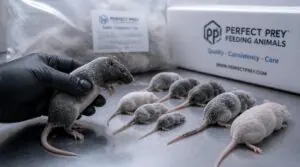
Getting this part right sets the foundation for everything that follows. The quality of your frozen feeder starts long before it hits your snake’s enclosure—it starts with what you select and from whom. Here’s what to look for before anything ends up in your freezer.
Even sourcing quality prey is only half the equation—knowing how to properly feed your snake rats ensures that careful selection pays off at every step of the process.
Choose Traceable, Hygienic Feeder Suppliers
The supplier you choose sets the first biosecurity checkpoint in your entire feeding protocol. Look for vendors that provide batch-level traceability, including harvest dates, lot codes, and origin maps tied to each processing facility. Current HACCP certification and documented third-party audits are non-negotiable standards. Temperature-controlled transport and randomized microbiological sampling are the baseline, not optional extras.
Just as researchers use data-centered reading approaches to rigorously interpret scientific evidence, applying the same systematic scrutiny to supplier documentation ensures no critical biosecurity detail is overlooked.
Match Prey Size to Snake
Once supply chain verification checks out, prey size matching is the next critical decision.
- Prey width shouldn’t exceed the snake’s widest neck girth
- Juveniles need prey at 1.5x girth; adults up to 2.5x
- Use feeding tongs to present safely without direct hand contact
- Confirm prey temperature with a temperature gun before offering
- Increase prey size gradually as your snake matures
Check Nutritional Labels and Packaging
Sizing prey correctly gets you halfway there. The other half is knowing what’s actually inside that frozen package.
Reputable frozen rodent suppliers list species, age class, and origin on the label. Check that the packaging is vacuum-sealed with no broken seams. A printed lot number and freeze date lets you trace product quality and confirm you’re not feeding nutritionally degraded stock past its best storage window.
Inspect Rodents Before Preparation
Once you’ve confirmed the packaging, inspect rodents before preparation as your final quality filter. Frozen stock from reputable sources can still arrive compromised after poor transit.
Look for:
- No visible sores, swelling, or discoloration
- Fur consistent with expected rodent size and coat condition
- No off-odor indicating bacterial activity before freezing
Confirming prey is disease-free helps cross-contamination prevention throughout prep.
Store Frozen Rodents Safely
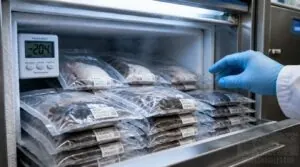
Proper storage is where food safety actually begins—long before you ever pick up the tongs. How you manage your freezer directly affects the nutritional integrity and microbial safety of every rodent you feed. Keep these four practices in place to protect both your collection and yourself.
For a full breakdown of thawing safely and avoiding common mistakes, proper whole prey feeding and handling techniques covers everything from freezer setup to tong hygiene.
Keep Freezer at 0°F
Your freezer needs to hold a steady 0°F to keep frozen rodents viable long-term. Even a few degrees higher accelerates ice crystal formation, degrading prey texture and nutritional value. Verify the setting with a dedicated thermometer placed at the center shelf, away from the door.
Consistent cold prevents bacterial activity and allows safe storage up to 6 months.
Use Sealed, Leak-Proof Packaging
Packaging integrity is your first defense against cross-contamination during cold storage. Leakproof double-bagging traps any drip if a seal weakens, protecting your freezer interior from odor and bacterial spread. Polypropylene or high-density polyethylene bags resist puncture and hold tight at 0°F.
After each handling session, practice proper hand hygiene and wipe down your dedicated preparation area with a food-safe disinfectant.
Separate Prey From Human Food
Zoonotic risk doesn’t stay in the enclosure. Dedicate one freezer drawer exclusively to prey, and keep household contamination barriers firm by never stacking rodents above human food.
- Assign dedicated preparation areas with separate tongs and containers
- Practice surface disinfection after every handling session
- Prioritize hand hygiene before and after contact with prey
Check for Freezer Burn
Discoloration tells you more than date labels ever will. Gray or white patches on packaging, dry leathery skin on rodent edges, and off-putting odors all signal freezer burn has compromised tissue quality.
Frozen rodents stored beyond 12 months, or kept in a freezer running above 0°F, are the most vulnerable.
Discard any prey showing these signs before it reaches your snake.
Thaw Frozen Snake Food Safely
Thawing is where most feeding mistakes actually happen—and the method you choose directly affects both your snake’s safety and your own. Done wrong, it creates bacterial hotspots and spoiled prey that can make your animal seriously ill. Here’s exactly how to thaw frozen rodents the right way.
Before thawing begins, make sure your prey was stored frozen correctly at home—improperly frozen rodents thaw unevenly and harbor bacteria from the start.
Thaw Rodents in Refrigerator
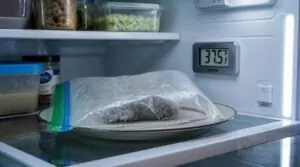
The refrigerator is your safest option for thawing a frozen mouse or rat. Set your fridge between 34 and 40°F, then place the prey, still inside its leakproof double-bagged packaging, on a low shelf with a plate beneath it to catch any drips.
Plan on 12 to 24 hours. That slow, steady temperature keeps bacterial growth in check.
Use Cold Water When Needed
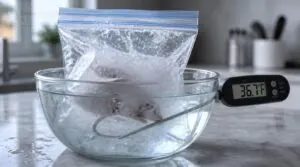
When the fridge isn’t an option, cold water thawing is your next safest method. Submerge the double-bagged prey in 5 to 15°C water and swap it out every 30 minutes to maintain a consistent temperature gradient.
- Keep prey sealed in its leakproof double-bag
- Use water between 5 and 15°C
- Change water every 30 minutes
- Wash hands when finished
Keep Prey Sealed While Thawing
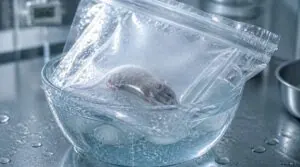
Whether you’re using the refrigerator or cold water method, the seal never comes off during thawing. Leakproof double-bagging is your primary line of cross-contamination prevention, blocking bacterial transfer and keeping juices away from your prep area. At a proper thawing temperature of 28 to 40°F, the sealed barrier controls moisture loss, so prey reaches the feeding station in better shape.
| Thaw Method | Sealed Bag Required | Max Safe Duration |
|---|---|---|
| Refrigerator thawing | Yes | 24 hours |
| Cold water thawing | Yes | 2 hours |
| Room temperature | Not recommended | N/A |
Avoid Microwaves and Hot Water
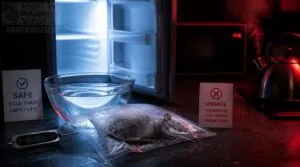
That sealed barrier does its job only when the thaw itself is carefully controlled. Microwaves create uneven heat distribution, leaving cold spots where bacteria survive even when the outer surface feels warm.
Hot water degrades fat quality and texture fast. Both bypass the controlled temperature range that makes refrigerator and cold water thawing safe. Never the microwave, never hot water.
Never Refreeze Thawed Prey
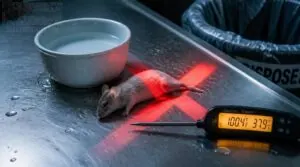
Once a frozen rodent thaws, the bacterial clock starts immediately. Refreezing thawed prey doesn’t reset that clock; it compounds the damage. Ice crystal formation breaks down tissue structure, and each freeze-thaw cycle accelerates microbial load.
If your snake refuses a thaw, discard it. One skipped meal costs nothing compared to a foodborne illness your snake can’t communicate to you.
Discard refused prey without hesitation—one skipped meal costs far less than an illness your snake cannot tell you about
Warm and Prepare Thawed Prey

Thawing gets the prey safe—warming gets it accepted. Your snake’s feeding response depends heavily on thermal cues, so how you finish the prep matters just as much as how you started it. Here’s exactly what to do before that rodent ever touches the enclosure.
Rinse and Pat Prey Dry
The rinse step is quick but not optional. Hold the thawed prey under cool running water briefly to clear surface residue, then move it to a sanitized, dry surface.
Pat skin and fur with a clean paper towel until the surface feels matte, not slick. Check joints and the head, where moisture usually lingers.
Warm Prey in Sealed Bag
Once patted dry, slip the prey into a food-grade sealed bag and submerge in warm water. The bag maintains a stable thermal gradient across the surface, warming prey evenly without creating hotspots that strip scent cues.
Temperature control matters here: keep the soak to 5 to 8 minutes. Gradual, even warming preserves tissue quality and keeps natural odors intact.
Reach The Correct Feeding Temperature
After the warm water soak, prey temperature should reach 80 to 90 degrees Fahrenheit at the center. Consistent temperature regulation during warming preserves scent integrity and triggers a strong thermal cue response.
Signs you’ve hit the target:
- Center reads 80–90°F on a digital probe
- No cold spots remain at the head or tail
- Surface feels evenly warm, not hot
- Natural odor remains fully intact
Verify Temperature Before Feeding
Touch alone won’t cut it. Verify prey temperature with a digital probe in the thickest portion, targeting 85 to 95°F. Any reading outside that window means the prey needs attention before your snake feeds.
| Reading | Action | Next Step |
|---|---|---|
| 85–95°F | Proceed to feeding | Use feeding tongs |
| Below 85°F | Rewarm sealed bag | Recheck center temp |
| Above 95°F | Discard immediately | Replace prey item |
Use Scenting or Braining Sparingly
Most snakes don’t need scent enrichment at all. Use scenting and braining techniques only when your snake consistently refuses prey.
- Apply prey scent transfer to the enclosure rim only
- Brain the rodent sparingly, under 5% of feedings
- Let scenting frozen prey agents fully evaporate before contact
- Never apply scent near the snake’s mouth
- Track acceptance rates; reduce if aggression rises
Present Frozen Prey and Clean Up
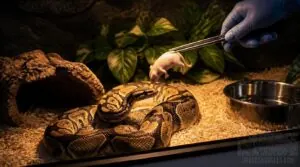
Getting prey in front of your snake—and doing it right—takes more than just dropping it in the enclosure. How you present the meal and handle cleanup afterward directly affects your snake’s safety and yours. Here’s what to keep in mind at each step.
Use Long Feeding Tongs
Long feeding tongs are non-negotiable for using feeding tongs safely. Keep your hands 12 to 18 inches from the strike zone.
When handling prey with tongs, look for rubber-tipped ends and non-slip grips.
Stainless steel construction simplifies feeding tongs sanitation between sessions. Match your tong feeding technique to prey size: straight tips for small items, curved tips for larger ones.
Choose stainless steel reptile feeding tongs with rubber tips to improve prey control while protecting delicate mouths.
Mimic Natural Prey Movement
A thawed rodent at the right temperature still needs motion to actually trigger a reliable strike response. Use your tongs to simulate erratic prey movement: short pauses, slow creeps, and sudden directional shifts.
Variable pacing keeps your snake engaged far better than a static presentation. Even prey warmed to 95-100°F won’t reliably attract a strike without convincing, unpredictable movement cues.
Reduce Stress During Feeding
Even convincing movement won’t help if the feeding enclosure environment is off. Keep these in check:
- Dim overhead lighting at least 10 minutes before sessions
- Stay quiet and still while using your feeding tongs
- Limit pre-feeding handling to reduce stress in captive snakes
- Watch feeding response monitoring cues like rapid tongue flicking
Adjust at the first sign of repeated refusal.
Discard Uneaten Prey Promptly
Remove uneaten prey from the feeding enclosure within 15 minutes. Lingering scents increase stress for your snake and bacterial contamination develops fast at room temperature.
Seal the prey in a leak-proof bag, double-bag if there’s visible saliva or blood, and label it with the date. That small step keeps crosscontamination prevention in check and your disposal log accurate.
Wash Hands and Disinfect Tools
Once disposal is done, wash your hands before touching anything else. Scrub with plain soap for at least 20 seconds, getting between fingers and under nails, then rinse and dry with a clean towel.
Tongs and any surface the prey touched need a disinfectant wipe-down. Use an EPA-registered disinfectant, hold the labeled contact time, then rinse clean.
Frequently Asked Questions (FAQs)
How to prep frozen mice for snakes?
Don’t mouse around: thaw sealed rodents overnight in the refrigerator, or use cold water. Warm the bag in 100–110°F water, dry prey, verify under 104°F, feed with tongs, then disinfect surfaces.
My ball python won’t eat frozen thawed food. What can I do?
Check enclosure temperatures, minimize handling, and offer correctly sized prey warmed to 98–100°F with tongs. Feed on schedule, not daily. Try gentle movement or brief scent introduction. If refusal persists, consult a reptile veterinarian.
How long can a snake stay frozen?
Frozen solid, a snake is not a time capsule: most cannot safely remain frozen beyond several hours near 28°F. Store frozen prey at 0°F, thaw refrigerated overnight, offer it fresh, and never refreeze leftovers afterward.
Is it better to feed snakes live or frozen?
Feed frozen rodents whenever possible. They prevent injuries from live prey handling and reduce feeding stress. Use safe prey warming methods to trigger normal snake feeding behavior; reserve live prey only for documented refusal cases.
Can I refreeze thawed rodents for later use?
Like milk left on counter, thawed rodents cross a line. Don’t refreeze thawed rodents; frozen rodent thawing invites bacterial growth danger zone risks.
Follow food safety protocols, always discard leftovers, and prioritize feeding stress minimization.
How often should I feed my snake?
Set feeding frequency by species, age, and body condition: hatchlings every 5–7 days, juveniles 7–14, adults 14– Use prey size guidelines, a secure feeding enclosure, proper temperature gradient, and monitor your snake’s response to food.
What if my snake refuses frozen food entirely?
Sometimes, refusal coincides with shedding or an enclosure change. Perform feeding refusal evaluation: confirm temperatures, enclosure security, and prey size. Thaw safely, warm prey, introduce familiar scent, then seek veterinary care if weight declines over time.
Should I remove uneaten prey from the enclosure?
Yes. Remove uneaten prey within 30 to 60 minutes to limit bacterial growth, odors, and contamination. Prompt enclosure cleaning helps feeding response training. Never refreeze it; if refusals continue, seek a vet consultation.
What should I do if my snake refuses food?
When appetite falters, treat it as a signal. Check the temperature gradient, shed status, and stress; offer prey during natural activity. Monitor your snake’s response and weight. A 10% loss or refusal beyond 6–8 weeks requires a reptile vet.
Can frozen prey meet all nutritional needs?
Frozen or fresh prey can meet nutritional adequacy standards when whole, diseasefree, species-appropriate items retain prey tissue integrity. Rotate prey sizes and types, monitor growth, and use vitamin D3 supplementation only with veterinary guidance.
Conclusion
Think of frozen snake food preparation as a biosecurity chain: each controlled link, from freezer storage to tong feeding, protects your snake and the people handling it. Keep prey sealed, thaw it under refrigeration or cold water, warm it safely, and discard leftovers after each feeding attempt. These steps prevent avoidable bacterial growth and preserve prey quality.
Precision matters here. A prepared rodent is more than a meal; it’s the safeguard in disciplined husbandry.