This site is supported by our readers. We may earn a commission, at no cost to you, if you purchase through links.
Most corn snakes need less hands-on work than a planted aquarium, yet they can share your home for 15 to 20 years. Their white or speckled scales may change the price tag, but not the essential husbandry.
That makes corn snake morphs low maintenance pets in a practical sense, not a carefree one. You’ll still manage an 88–92°F warm side, fresh water, secure hides, and a frozen-thawed mouse on schedule. A calm snake also comes from steady, gentle handling, not its color.
Compare morphs by appearance, visibility, cost, and genetics, then build a routine around the one that earns attention.
Table Of Contents
- Key Takeaways
- Why Corn Snake Morphs Are Low Maintenance
- Best Beginner Corn Snake Morphs Compared
- How to Choose a Corn Snake Morph
- Care Requirements for Every Corn Snake Morph
- Buying a Corn Snake Morph Responsibly
- Frequently Asked Questions (FAQs)
- What are some cheap morphs of corn snakes?
- Are corn snakes low maintenance pets?
- What is the lowest maintenance snake?
- What is the best corn snake morph?
- Can corn snakes live with other snakes?
- Do corn snakes recognize their owners?
- What substrate works best for corn snakes?
- How often do corn snakes need veterinary checkups?
- Are corn snakes escape artists or climbers?
- Do corn snake morphs need UVB lighting?
- Conclusion
Key Takeaways
- Corn snake morphs differ mainly in color, pattern, genetics, visibility, and price, while their core care needs remain the same.
- A low-maintenance corn snake still needs a locked, spacious enclosure, a warm side around 88–92°F, a cooler area, fresh water, hides, and regular cleaning.
- Feed appropriately sized frozen-thawed mice weekly for juveniles and every 10–14 days for adults, and handle calmly while avoiding handling after meals or during shedding.
- Choose a healthy snake from a transparent breeder with documented lineage and health history, then plan for setup costs, routine veterinary care, and a 15–20 year commitment.
Why Corn Snake Morphs Are Low Maintenance
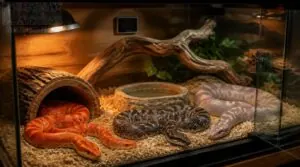
Corn snake morphs are low maintenance because their color and pattern don’t change the basics of good husbandry. With a secure setup, steady routine, and gentle handling, most are straightforward pets for beginners. Start by choosing an enclosure that fits your snake’s age and size.
For a fuller overview, explore whether a corn snake is the right beginner pet before bringing one home.
Morphs Share Similar Care Needs
Every color and pattern follows the same practical blueprint, which keeps Corn Snake Morphs among the most reliable Low Maintenance Pets. Your snake needs:
- A secure enclosure
- Temperature control, 88–92°F warm side
- Humidity monitoring and fresh water
Provide hides, clean substrate, and a cooler 78–85°F area. These BeginnerFriendly Pets don’t need morph-specific equipment. Data-centered reading approaches can help prospective owners evaluate care information in primary research.
Temperament Comes From Habituation
A morph’s color doesn’t determine its docile temperament. Calm behavior comes from learned familiarity with your scent, movements, and routine care.
Use short, gentle sessions at consistent times. Support the middle of the body and move slowly. This builds handling tolerance while helping you practice stress recognition, such as tight curling, rapid retreat, or persistent hissing. That predictability makes corn snakes genuinely BeginnerFriendly Pets.
Beginner-Friendly Feeding Requirements
Feeding a corn snake is refreshingly simple. You’ll offer frozen-thawed mice on a weekly feeding schedule, with prey sized to roughly match the snake’s widest body point.
Thaw prey overnight in the refrigerator, then warm it in water before offering with tongs. No live prey, no supplements, no complicated prep. It’s one of the most manageable routines in reptile keeping.
Manageable Cleaning and Handling
Cleaning follows the same simple rhythm. Spot clean daily, removing waste and changing the water dish. Disinfect monthly with a reptile-safe cleaner. Good enclosure hygiene rarely takes more than ten minutes a week.
When handling, move slowly and support the full body length. Keeping safe handling practices consistent builds trust quickly. That’s the real key to stress reduction in snakes.
Lifespan and Long-Term Commitment
When you bring home a corn snake, you’re signing up for 15 to 20 years of daily care. That’s the honest reality of long-term commitment, worth considering before you buy.
Bringing home a corn snake means committing to 15–20 years of daily care, so choose thoughtfully
Choosing reputable breeders who document genetic history gives you a healthier snake from the start. Ethical purchasing isn’t just good practice; it’s the foundation of two rewarding decades together.
Best Beginner Corn Snake Morphs Compared
With over 800 recognized morphs available, picking your first corn snake can feel like standing in front of an endless menu.
The good news is that a handful of beginner-friendly options consistently rise to the top for new keepers.
For a clearer picture of inheritance and pairing choices, explore this guide to corn snake morph genetics.
Here’s how the most popular choices compare, from budget basics to premium standouts.
Normal and Classic Corn Snakes
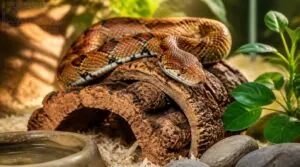
The normal corn snake is the original. Its orange-brown body with dark saddle markings and that iconic checkerboard belly is exactly what wild corn snakes look like.
Among all Corn Snake Morphs, this one costs least from reputable breeders, fits in a 30-gallon tank, thrives on weekly feedings, and has a docile temperament that makes first-time handling genuinely easy.
Amelanistic and Anerythristic Morphs
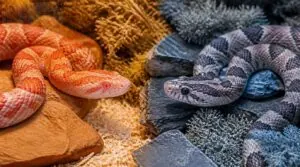
Step up from the classic and you hit two morphs that couldn’t look more different from each other. Amelanistic corn snakes drop all melanin, giving you vivid reds, oranges, and those signature pink-tinted eyes. Anerythristic morphs strip out the red instead, leaving cool grays and tans with dark eyes.
Both genetic traits follow recessive inheritance, so reputable breeders track lineage carefully.
Snow and Blizzard Morphs
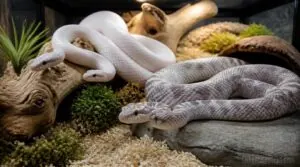
The snow morph layers both previous genetics, giving you a pure white snake with cool dark eyes. The blizzard morph pairs that white base with bold marbled patterning.
- Pure white coloring that genuinely turns heads
- Genetic traits that reputable breeders document and track carefully
- Enclosure security and standard husbandry, with no special adjustments
Both are moderately priced and widely available.
Okeetee and Tessera Morphs
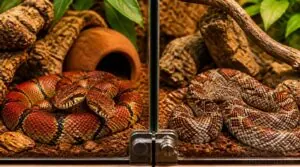
The Okeetee morph has a brick-red body with crisp black borders, like a painter’s outline on every scale. The Tessera morph adds a bold tile-like pattern along the spine.
Genetic traits count. Tessera is dominant, so roughly half of offspring inherit it. Ethical breeding practices and lineage records help avoid recessive surprises. Enclosure security means the same standard 40-gallon setup.
| Feature | Detail |
|---|---|
| Base color | Brick-red with cream background |
| Pattern type | Tile-like, netlike spine design |
| Tessera genetics | Dominant trait |
| Enclosure security | 40-gallon minimum for adults |
| Ethical breeding | Lineage records per generation |
Palmetto and Premium Morphs
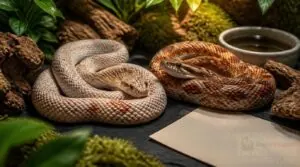
The Palmetto morph looks like someone flicked white paint across a vivid canvas, bold and unpredictable in the best way.
Pairing it with premium morphs boosts both genetic diversity and morph rarity, which explains the steeper price tags.
Reputable sellers follow ethical breeding practices and provide full pedigree records, so always ask for documentation before you commit to a purchase.
How to Choose a Corn Snake Morph
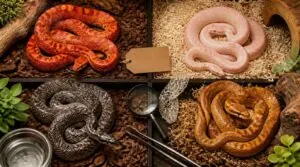
Picking a corn snake morph isn’t just about grabbing the prettiest one you see. A few practical factors — price, genetics, and even how easy the snake is to spot during daily checks — can make a real difference in your experience as an owner. Here’s what to think about before you decide.
Color and Pattern Preferences
What draws most people to corn snakes is the sheer variety of looks available. Color morph variations range from fiery red-orange to soft cream in the albino morph.
The Okeetee pattern uses bold black borders, while the quieter ghost morph delivers soft, earthy tones. Because pattern inheritance is predictable, you can confidently pick a look you’ll truly love for decades.
Morph Prices and Availability
A look you love still needs to fit your budget. Morph Prices and Availability shift with consumer demand, market saturation, season, and breeder reputation.
Common Corn Snake Morphs, including normal and amelanistic juveniles, often cost $50 to $350. Snow, Tessera, and Okeetee animals commonly run $150 to $600. Premium Palmettos may exceed $600.
Buy from a breeder with clear photos, current inventory, and transparent shipping terms.
Genetic Traits and Inheritance
Price reflects rarity, but Genetic Traits and Inheritance explain what you may produce if breeding later. Most corn snake morphs follow simple recessive or dominant patterns. A recessive visual needs two copies of its allele, while a heterozygous snake may look normal but carry it.
Ask for Lineage tracking and bloodline documentation. Clear Snake genetics records make future pairings predictable. Morph-specific care usually remains the same.
Line-Specific Health Risks
Genetics records reveal morph-linked concerns. Ask breeders about fertility history and neurological or spinal problems.
- Avoid linebred pairings.
- Request genetic health records.
- Choose breeders committed to inbreeding avoidance.
Lavender lines may show kinks, while stargazer-linked Sunkissed animals can develop coordination problems. Palmetto homozygotes may breed less reliably. Bloodline purity never outranks health monitoring or genetic diversity. Keep detailed notes, too.
Visibility During Enclosure Checks
At feeding time, a high-contrast morph is easier to confirm at a glance, especially beneath climbing branches.
| Check | Practical choice |
|---|---|
| Basking spot | Clear view |
| Cool end | Open-front hide |
| Humidity | Digital hygrometer |
Use pale substrate, clean glass, and adjustable 5000K LEDs. Keep the thermal gradient visible, then shift decor during enclosure cleaning. A visible tail coil beats guessing every single day.
Care Requirements for Every Corn Snake Morph
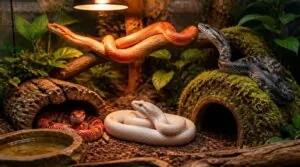
Every corn snake morph needs the same solid husbandry foundation; color and pattern don’t change the essentials. Your focus should be a secure setup that lets the snake regulate its temperature, hide, climb, feed, and shed comfortably. Start with these enclosure options and essential setup choices.
Adult Enclosure Size and Security
Adult Enclosure Size and Security matter more than morph. Give adults at least a 40-gallon, front-opening habitat, with generous floor space for roaming.
- Choose horizontal room.
- Fit a locking lid.
- Check seams weekly.
- Provide two hides.
- Keep floors gap-free.
Secure enclosures prevent stressful escapes. Use heat-resistant latches and removable panels, never zippered tops. Place the habitat at eye level, where you can inspect your snake and maintain its temperature gradient safely.
Temperature and Humidity Gradients
Creating a temperature gradient lets your corn snake regulate body temperature naturally. Keep the warm side at 28–30°C and the cool side at 22–24°C, using a thermostat-controlled heat source.
Maintain 40–60% humidity overall, with a humidity hide nearer the cool end for shedding. Check conditions at several points with digital probes. Good temperature control and humidity control make thermoregulation simple.
Substrate, Hides, and Climbing Enrichment
Your substrate choice shapes daily comfort more than most beginners expect.
Aspen shavings and cypress mulch both work well, and a substrate depth of 5–8 cm lets your snake burrow naturally. Add a damp moss hide near the cool end for clean shedding.
Simple climbing structures like cork bark or low branches keep your snake active without crowding the space.
Choose sturdy reptile climbing branches with smooth surfaces and secure placement to prevent falls.
Frozen-Thawed Prey and Feeding Schedule
Frozen-thawed mice are the standard for corn snakes, and they’re safer than live prey. Thaw your mouse in a sealed bag using warm water around 38 to 43°C (100 to 110°F), never a microwave.
Prey size should roughly match your snake’s widest body point. Juveniles eat weekly, while adults feed every 10 to 14 days. Discard anything uneaten, and don’t refreeze it.
For a closer look at which prey animals suit different species, this guide to natural prey for common pet snakes helps you rotate mice, rats, and chicks wisely.
If your snake is still turning away from meals, feeding tools that help nervous or picky snakes eat can make a real difference in getting them back on track.
Handling, Shedding, and Routine Cleaning
Handle your corn snake with calm, steady support: one hand beneath the midsection, one supporting the tail. Avoid handling for 24 hours after meals and during shedding, especially when eyes look cloudy.
Provide a Humid hide. Spot-clean daily, replace soiled bedding promptly, and complete Routine Cleaning every 4–6 weeks. Keep substrate depth shallow enough to find waste before it accumulates.
Buying a Corn Snake Morph Responsibly
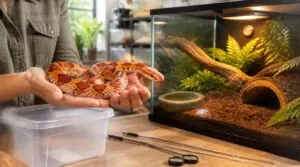
Buying a corn snake morph responsibly starts well before you bring one home. A healthy, ethically bred snake and a ready enclosure give you the best possible start. Here’s what to check before choosing where—and from whom—you’ll buy.
Reputable Breeder Warning Signs
When a seller can’t give straight answers, walk away. Poor communication, missing hatch dates, vague origins, and vague health policies leave you guessing about the snake’s background.
Watch for:
- Pressure to pay immediately, before questions are answered
- No lineage records or clear breeder reputation
- Refusal to discuss facility practices
Look for responsive answers, written terms, and documentation. A trustworthy breeder welcomes careful buyers.
Health Checks Before Purchase
Clear answers matter, but the snake itself gets the final vote. Check for clear eyes, intact scales, a clean vent, and no stuck shed on the eye caps or tail tip.
During calm handling, avoid wheezing, bubbles, open-mouth breathing, wounds, severe thinness, or limp posture. Ask for hatch dates, feeding histories, health guarantees, breeder reputation, and lineage documentation. A healthy corn snake should look alert, solid, and clean.
Ethical Breeding and Genetic Records
A healthy appearance is only half the picture. Ask how the breeder produced the animal and whether genetic records follow its family line.
Ethical reptile breeding puts welfare before rare colors. Good lineage documentation records parents, morphs, hatch dates, feeding, health checks, and inherited concerns. Bloodline tracking helps breeders avoid risky pairings and retire unstable lines.
Choose breeder transparency over vague promises.
Setup Costs and Ongoing Expenses
Lineage records protect your purchase, but a sound budget protects daily care. Plan for a 30gallon tank, secure lid, Heat mat, thermostat, hides, and substrate: roughly $100 to $250 to start.
- Frozenthawed mice: $5 to $15 monthly
- Electricity and cleaning: $10 to $25 monthly
- Annual vet exams: $40 to $100
- Optional upgrades: $20 to $60
Preparing for Decades of Care
Planning for 15–20 years turns a low-maintenance pet into a reliable responsibility. Corn Snake Morphs need the same steady reptile husbandry: temperature control, clean water, secure housing, and weekly feedings.
Keep a written care and medical log, budget for replacement heaters and vet visits, and arrange backup heat during outages. Before buying, identify a reptile-savvy caretaker. Good preparation keeps care calm, safe, and predictable.
Frequently Asked Questions (FAQs)
What are some cheap morphs of corn snakes?
Normal, amelanistic, anerythristic, Snow, and Blizzard Corn Snake Morphs are affordable beginner reptile pets, often $70–$ With over 800 morphs, compare Price and breeder records on MorphMarket before choosing your snake.
Are corn snakes low maintenance pets?
Quiet but not carefree, corn snakes are low maintenance when you meet essential husbandry requirements. Their docile temperament and minimal handling help, but reputable breeders, weekly feeding, cleaning, and health monitoring remain essential for long-term success.
What is the lowest maintenance snake?
For most beginners, a corn snake is lowest maintenance: docile temperament, reliable feeding, minimal handling, and straightforward care. Provide stable temps, secure enclosures, clean water, and routine vet visits for long-term success.
What is the best corn snake morph?
Like choosing a map before a hike, the best choice is a healthy normal or Okeetee. Corn Snake Morphs, including an amelanistic morph and Snow, need similar care; choose color you love and genetic selection.
Can corn snakes live with other snakes?
Corn snakes should live alone. Cohabitation raises cannibalism risk, disease spread, feeding stress, and injuries. Their escape artistry also makes enclosure security harder. Use separate secure habitats, then practice calm handling techniques with each snake individually.
Do corn snakes recognize their owners?
Your Corn Snake learns you like a familiar trail learns the woods: scentbased recognition, vibrations, and calm Handling create safety. In Colubrid care, Community reputation favors routine, not emotional attachment.
What substrate works best for corn snakes?
Aspen shavings are the best all-purpose choice: affordable, low-dust, and easy to burrow in. Cypress mulch suits drier homes. Provide 3–4 inches of safe substrates, avoid sand, spotclean daily. Paper towels work only temporarily.
How often do corn snakes need veterinary checkups?
Routine vet visits offer a safety net: snakes can look perfect while illness stays hidden. Schedule annual veterinary checkups for adults; young and senior snakes need semiannual visits, with health monitoring focused on respiratory health.
Are corn snakes escape artists or climbers?
Yes, they’re both climbers and escape artists. Provide secure climbing branches, vertical enrichment, and hiding spots, but prioritize enclosure security. Locked lids and sealed gaps are essential escape prevention, especially for young, curious snakes.
Since factory latches often fail against a determined constrictor, adding secure locks for glass snake tanks is a simple upgrade that keeps curious climbers safely inside.
Do corn snake morphs need UVB lighting?
The ball is in your court: UVB lighting isn’t essential, but low-output UVB can help. For Temperature and Lighting, provide shade. Sound Enclosure setup, Feeding and Diet, and monitoring Common Health Issues matter more overall.
Conclusion
The quiet evening check is where your choice proves itself: a healthy snake tucked beneath a hide, clean water nearby, and a secure enclosure holding steady heat. This is what makes corn snake morphs low maintenance pets in the practical sense.
Choose color you’ll enjoy seeing, verify sound genetics and breeder records, then commit to the routine. Good husbandry lets the animal, not the price tag, become the lasting reward through years of calm, attentive care.