This site is supported by our readers. We may earn a commission, at no cost to you, if you purchase through links.

Keeping a reptile in a college dorm is already a logistical puzzle. Add a heat lamp to that picture, and suddenly you’re dealing with roommate consent forms, fire safety inspections, and wattage limits most students never even knew existed.
Here’s what catches people off guard: dorm heat lamp approval isn’t just about plugging something in and hoping no one notices. Housing offices require UL-certified fixtures, ceramic sockets rated for high-wattage bulbs, and minimum 12-inch clearance from anything flammable. Get it wrong, and you’re looking at a confiscated setup at the worst possible time.
The right bulb simplifies all of it. These ten options balance heating performance, dorm compliance, and reptile-specific requirements so your animal stays healthy without putting your housing situation at risk.
Table Of Contents
- Key Takeaways
- 10 Best Reptile Heat Lamps for College Dorms
- 1. REPTI ZOO 100W Reptile Heat Lamp Bulb
- 2. LUCKY HERP 100W Ceramic Heat Emitter
- 3. Fluker’s Basking Spotlight Bulbs for Reptiles
- 4. REPTI ZOO 100W Ceramic Heat Emitter Bulb
- 5. Lucky Herp 100W Reptile Basking Bulb 2 Pack
- 6. ReptiKing 100W Daylight Basking Spot Lamp
- 7. Fluker’s 100 Watt Reptile Basking Bulb
- 8. Repti Zoo Reptile Heat Lamp Bulb
- 9. LUCKY HERP 150W Ceramic Heat Emitter
- 10. REPTI ZOO Infrared Heat Lamp 100W
- Check Dorm Rules Before Buying
- How We Ranked Dorm Heat Lamps
- Compare Reptile Heat Lamp Types
- Match Wattage to Enclosure Size
- Use Thermostats for Safer Heating
- Prevent Burns and Fire Hazards
- Compare Energy Costs and Lifespans
- Match Lamps to Reptile Needs
- Frequently Asked Questions (FAQs)
- Can you leave a reptile heat lamp on all night?
- What is the safest heat lamp for reptiles?
- What is the difference between a basking lamp and a heat lamp?
- Do reptile heat lamps use a lot of electricity?
- Can heat lamps overheat a small dorm room?
- How often should heat lamp bulbs be replaced?
- Do heat lamps work with extension cords safely?
- What happens if a heat lamp falls overnight?
- Are heat lamps loud or disruptive during sleep?
- Conclusion
Key Takeaways
- Before buying any heat lamp, check your dorm’s specific rules — many colleges ban them outright or require UL certification, ceramic sockets, and 12 inches of clearance from flammables.
- A thermostat isn’t optional: without one, your lamp runs at full power constantly and can spike temps fast enough to harm your reptile or trigger a fire inspection.
- Ceramic heat emitters beat standard basking bulbs for dorm setups — they run silently, emit no visible light, last up to 10,000 hours, and convert nearly all energy into usable heat.
- Match wattage to enclosure size or you’ll either underheat your reptile or overheat your room — 25W works for a 10-gallon, while large habitats need 150W or more.
10 Best Reptile Heat Lamps for College Dorms
Finding the right heat lamp for a dorm setup comes down to three things: safety, wattage, and whether your fixture can handle the bulb. Not every option works the same way, and the wrong choice can overheat a small space fast.
Before buying anything, it’s worth checking snake heating lamp requirements and enclosure guidelines to make sure your wattage matches your actual tank size and species.
Here are the ten best reptile heat lamps worth considering for 2026.
1. REPTI ZOO 100W Reptile Heat Lamp Bulb
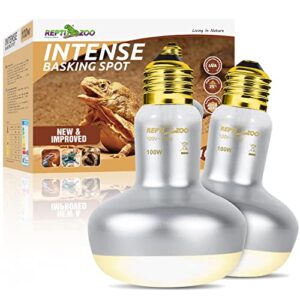
The REPTI ZOO 100W runs on a standard E26 base, so it fits most dome fixtures you already own. It produces UVA light alongside infrared heat, which helps trigger natural basking behavior in species like bearded dragons and leopard geckos. The flat-bottom reflector focuses heat more efficiently than a standard round bulb.
reliability is inconsistent — multiple buyers report early burnout within weeks, and some received broken units straight from the box.
| Best For | Reptile owners looking for an affordable basking bulb for bearded dragons, leopard geckos, turtles, and similar species who don’t mind replacing bulbs more frequently in exchange for a lower upfront cost. |
|---|---|
| Socket Type | E26 |
| Wattage | 100W |
| Rated Lifespan | 2,000–3,000 hrs |
| Light Emission | UVA white |
| Primary Use | Basking + UVA |
| Heat Technology | Incandescent reflector |
| Additional Features |
|
- Produces UVA light alongside heat, supporting natural basking behavior and appetite in reptiles
- Flat-bottom reflector focuses heat and light more efficiently than standard round bulbs
- Fits standard E26 dome fixtures, so no special equipment needed
- Multiple buyers report early burnout, with some bulbs failing within weeks of use
- Metal base can detach from the glass, creating a risk of getting stuck in the fixture
- Quality control is inconsistent — some units arrive broken or non-functional out of the box
2. LUCKY HERP 100W Ceramic Heat Emitter
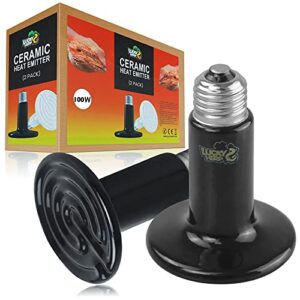
If nighttime heat without a glowing bulb is what you need, the Lucky Herp 100W Ceramic Heat Emitter covers that job well. It uses a standard E26 base, heats up in about 4 minutes, and emits no visible light, so it won’t disrupt your reptile’s sleep cycle.
Keep it at least 30cm away from your pet. Some units fail early despite the 10,000-hour rating, so pair it with a thermostat.
| Best For | Reptile and amphibian owners who need a reliable nighttime heat source that won’t disturb their pet’s natural light cycle. |
|---|---|
| Socket Type | E26 |
| Wattage | 100W |
| Rated Lifespan | Up to 10,000 hrs |
| Light Emission | None |
| Primary Use | Nocturnal heat |
| Heat Technology | Ceramic emitter |
| Additional Features |
|
- Emits zero visible light, making it ideal for maintaining natural day/night cycles in reptile enclosures
- Heats up quickly — reaching operating temperature in just 4 minutes
- Fits a standard E26 base, so it works with most common lamp fixtures
- Some units fail well before the advertised 10,000-hour lifespan, with reports of burnout within six weeks
- Must be kept at least 30cm from pets at all times to avoid overheating risks
- Frequent on/off cycling can shorten its lifespan, so it works best when left running consistently
3. Fluker’s Basking Spotlight Bulbs for Reptiles
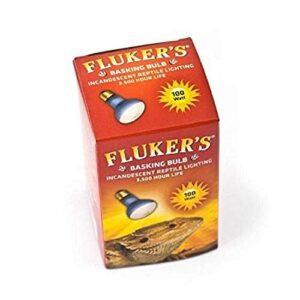
If you want visible light alongside heat, Fluker’s Basking Spotlight is a straightforward pick. The 75W incandescent bulb fits standard clamp lamp sockets and creates a focused basking zone without any special wiring.
It emits no meaningful UVB, so pair it with a separate UVB source if your reptile needs it. Humid enclosures can shorten its lifespan, and at roughly $38 annually to run 12 hours daily, it’s an affordable daytime option.
| Best For | Reptile owners who want a simple, affordable heat source that also provides visible basking light without needing special fixtures. |
|---|---|
| Socket Type | E26 |
| Wattage | 75W |
| Rated Lifespan | Not specified |
| Light Emission | Incandescent yellow |
| Primary Use | Basking spot |
| Heat Technology | Incandescent spotlight |
| Additional Features |
|
- Fits standard clamp lamp sockets — no special wiring or adapters needed
- Creates a focused basking zone that supports natural thermoregulation behaviors in lizards, snakes, and turtles
- Affordable to run at roughly $38 annually on a 12-hour daily schedule
- Emits no meaningful UVB, so a separate UVB bulb is required for reptiles that need vitamin D3
- Lifespan can be shorter in humid or wet enclosures
- Produces a yellowish, dim-looking light that some owners find less appealing than daylight-spectrum bulbs
4. REPTI ZOO 100W Ceramic Heat Emitter Bulb
Fluker’s spotlight controls the daytime shift well, but once the lights go out, your reptile still needs heat.
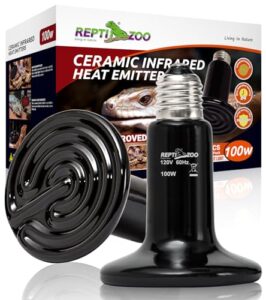
That’s where the REPTI ZOO 100W Ceramic Heat Emitter earns its place. It produces steady infrared heat with zero visible light, so nighttime temperatures stay consistent without disturbing sleep cycles. It’s rated for up to 10,000 hours, fits standard E26 sockets, and grips humid enclosures without cracking.
Use it with a thermostat, keep a thermometer inside the tank, and you’re set.
| Best For | Reptile and amphibian keepers who need reliable overnight heat without any light disruption to their animals’ sleep cycles. |
|---|---|
| Socket Type | E26 |
| Wattage | 100W |
| Rated Lifespan | Up to 10,000 hrs |
| Light Emission | None |
| Primary Use | Nocturnal heat |
| Heat Technology | Ceramic emitter |
| Additional Features |
|
- Emits pure infrared heat with no visible light, keeping nocturnal routines undisturbed
- Rated for up to 10,000 hours and built to handle high-humidity enclosures without cracking
- Fits standard E26 sockets and pairs easily with thermostats for precise temperature control
- Produces no UVB, so a separate UVB bulb is still required for vitamin D synthesis
- Surface temperatures can exceed 300°F, meaning a lamp guard and proper spacing are a must
- Lifespan can be inconsistent — some units fail within weeks while others last well beyond expectations
5. Lucky Herp 100W Reptile Basking Bulb 2 Pack
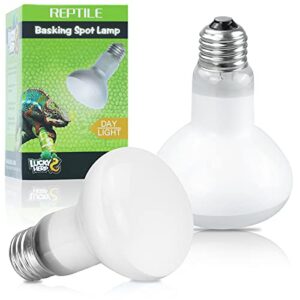
Two bulbs for the price of one sounds like a win, and for budget-conscious dorm setups, it often is. The Lucky Herp 100W basking bulbs emit warm white UVA light designed to support natural behaviors in bearded dragons, geckos, and tortoises. Each R25-style bulb fits a standard E26 ceramic socket and runs at 120V.
That said, reliability is the real question. Multiple buyers report bulbs failing within days. Treat the second bulb as a backup, not a bonus.
| Best For | Budget-conscious reptile owners who want a low-cost basking solution and don’t mind keeping a spare bulb on hand. |
|---|---|
| Socket Type | E26 |
| Wattage | 100W |
| Rated Lifespan | Up to 2,000 hrs |
| Light Emission | UVA white |
| Primary Use | Basking + UVA |
| Heat Technology | Incandescent basking |
| Additional Features |
|
- Comes in a two-pack, so you always have a backup ready
- Emits UVA light that supports natural basking behavior in bearded dragons, geckos, and tortoises
- Fits standard E26 ceramic sockets and runs on regular 120V — no special setup needed
- Multiple buyers report bulbs burning out within days or weeks
- Lifespan is inconsistent, making long-term reliability hard to count on
- Not a great value if you end up replacing them frequently
6. ReptiKing 100W Daylight Basking Spot Lamp
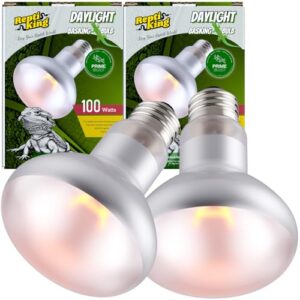
The ReptiKing 100W Daylight Basking Spot Lamp earns its spot here mainly because of its fixture pairing. It ships knowing you’ll likely use it with the ReptiKing 5.5-inch dome, which has a ceramic socket rated for 150W — enough headroom for this 100W bulb to run safely.
The focused beam creates a defined basking hotspot, and the E26 base fits most standard dorm-safe clamp lamps without adapter fuss.
| Best For | Reptile owners using a ReptiKing dome fixture who want a reliable basking bulb with standard E26 compatibility and no adapter hassle. |
|---|---|
| Socket Type | E26 |
| Wattage | 100W |
| Rated Lifespan | 2,000 hrs |
| Light Emission | Daylight spectrum |
| Primary Use | Daytime basking |
| Heat Technology | Incandescent basking |
| Additional Features |
|
- Creates a focused basking hotspot that supports thermoregulation for species like bearded dragons and turtles
- Fits standard E26 fixtures and pairs seamlessly with the ReptiKing 5.5-inch dome
- Supports natural day-night cycles with its daylight spectrum output
- Lifespan can be inconsistent, with some units failing within weeks of use
- Light skews more yellow than typical halogen basking bulbs, which may not suit all setups
- May need frequent replacement, adding to long-term cost
7. Fluker’s 100 Watt Reptile Basking Bulb
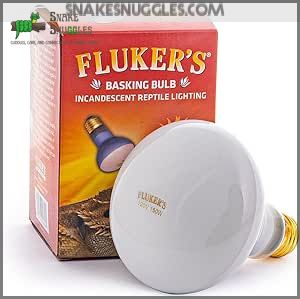
It’s a budget pick, and that’s both its strength and its weak spot. Fluker’s 100W basking bulb hits 90°F basking temps reliably, fits standard E26 clamp lamp sockets, and works on a 120V dorm circuit without any extra hardware.
If you want tighter temperature control than a basic basking bulb can offer, pairing it with a ceramic heat emitter vs heat lamp setup and a thermostat keeps warmth steady around the clock without disrupting your reptile’s light cycle.
The durability complaints are real, though. Some users report burnout within weeks. At this price point, buying two upfront makes sense. Pair it with a thermostat and you’ll protect the bulb and your reptile.
| Best For | Budget-conscious reptile owners who need reliable basking heat for bearded dragons or ball pythons and don’t mind replacing bulbs occasionally. |
|---|---|
| Socket Type | E26 |
| Wattage | 100W |
| Rated Lifespan | Not specified |
| Light Emission | Infrared |
| Primary Use | Basking spot |
| Heat Technology | Incandescent infrared |
| Additional Features |
|
- Consistently reaches 90°F basking temps right out of the box
- Fits standard E26 clamp lamp sockets with no extra hardware needed
- Low upfront cost makes it easy to keep a spare on hand
- Some bulbs burn out within just a few weeks of use
- Durability is hit or miss, making long-term value unpredictable
- Occasional reports of bulbs breaking shortly after installation
8. Repti Zoo Reptile Heat Lamp Bulb
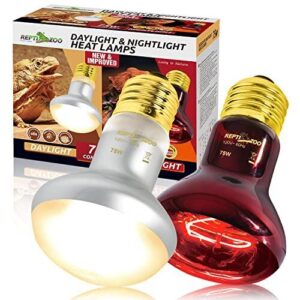
This combo pack comes with two bulbs: one infrared and one UVA daylight lamp, both rated at 75W. That’s a smart setup if your reptile needs heat through the night without a bright light killing its sleep cycle. The infrared bulb emits a soft red glow rather than white light, so nighttime observation stays low-impact.
Lifespan is where some buyers get frustrated. Expect 2,000 to 3,000 hours, not the longer run of ceramic alternatives.
| Best For | Reptile and amphibian owners who need a combined day/night heating solution that supports natural light cycles without disrupting their animal’s sleep. |
|---|---|
| Socket Type | E26 |
| Wattage | 75W |
| Rated Lifespan | 2,000–3,000 hrs |
| Light Emission | Infrared + UVA |
| Primary Use | Day/night combo |
| Heat Technology | Glass bulb infrared |
| Additional Features |
|
- Comes as a two-bulb combo (infrared UVA), covering both nighttime heat and daytime light in one purchase
- The infrared bulb’s soft red glow lets you check on your reptile at night without breaking its circadian rhythm
- UVA output actively supports appetite and healthy growth, not just warmth
- Real-world lifespan often falls short of the 2,000–3,000 hour rating, with some bulbs burning out within a few months
- Bulbs run hot, so you’ll need to keep a close eye on distance and ventilation to avoid overheating
- Not a good fit for enclosed fixtures — they need open airflow to work safely and last longer
9. LUCKY HERP 150W Ceramic Heat Emitter
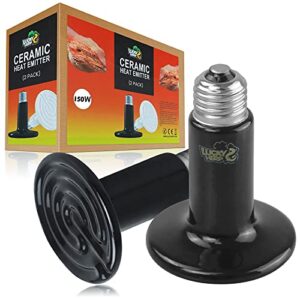
If your reptile needs heat overnight, this one pulls its weight. The Lucky Herp 150W Ceramic Heat Emitter produces no visible light, so your animal’s sleep cycle stays intact.
It reaches operating temperature in about 4 minutes and is built to last up to 10,000 hours. Just know that some units have failed far sooner.
Always pair it with a ceramic socket rated for 150W, and keep a 30cm minimum clearance from your animal.
| Best For | Reptile, amphibian, and small mammal owners who need reliable overnight heating without disturbing their animals’ natural sleep cycles. |
|---|---|
| Socket Type | E26 |
| Wattage | 150W |
| Rated Lifespan | Up to 10,000 hrs |
| Light Emission | None |
| Primary Use | Nocturnal heat |
| Heat Technology | Ceramic emitter |
| Additional Features |
|
- Emits zero visible light, keeping nighttime routines and circadian rhythms undisturbed
- Heats up fast — ready to use in about 4 minutes
- Standard E26 base makes it easy to fit into most setups
- Some units have failed well short of the advertised 10,000-hour lifespan
- Requires a ceramic socket rated for at least 150W — a standard bulb holder won’t cut it
- Must be mounted at least 30cm from animals to avoid burns, which limits placement flexibility
10. REPTI ZOO Infrared Heat Lamp 100W
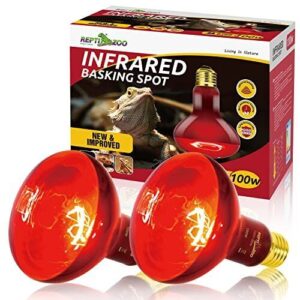
The REPTI ZOO Infrared Heat Lamp runs at 100W on a standard E26 socket, so it drops into most dome fixtures without an adapter. The red infrared glow keeps surfaces warm while staying dim enough not to disturb sleep, yours or your reptile’s.
Expect around 2,000 hours of service life, though some users report early failure. Pair it with a thermostat and keep flammables at least 30cm away.
| Best For | Reptile, amphibian, and chicken keepers who need consistent, low-light heat that won’t disrupt natural day/night cycles. |
|---|---|
| Socket Type | E26 |
| Wattage | 100W |
| Rated Lifespan | 2,000+ hrs |
| Light Emission | Infrared red |
| Primary Use | Low-light heat |
| Heat Technology | Glass infrared |
| Additional Features |
|
- Emits infrared heat without visible light, so it won’t disturb your animals’ sleep or behavior
- Fits standard E26 dome fixtures with no adapter needed — easy plug-and-play setup
- Dual-pack gives you a ready backup or lets you heat multiple zones cost-effectively
- Service life is inconsistent, with some users reporting failure in as little as 2–12 weeks
- Produces no visible light, so it can’t double as a lighting source
- May not generate enough heat for high-temperature basking species without a supplemental heat source
Check Dorm Rules Before Buying
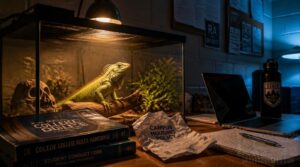
Before you buy a single bulb, check what your dorm actually allows — this step can save you a lot of trouble. Many colleges ban heat lamps outright, and some go further by prohibiting reptiles entirely without written approval. Here’s what to look into before you spend a dime.
Heat Lamp Restrictions
Most dorms require heat lamps to carry UL approval and use ceramic collars with metal guards to prevent burns and breakage. Wattage limits apply, so check before you buy. You’ll also need to maintain 12 inches of clearance from all flammable materials.
Fire safety inspections confirm lamps are properly mounted with cords intact.
It’s worth knowing that infrared heat is directional, allowing you to focus warmth precisely on your reptile’s basking zone without overheating the entire room.
Reptile Housing Policies
Heat restrictions cover wiring and wattage, but reptile housing policies reach into your roommate’s rights too.
Check these four areas before unpacking anything:
- Roommate consent – most schools need written agreement before move-in
- Housing application – list species, enclosure size, and wattage
- Noise restrictions – fans and pumps must stay under noise limits
- Light regulations – bright basking bulbs can’t run past quiet hours
Written Housing Approval
Policies alone won’t get your reptile approved. You need written housing approval before setting up any basking spot lamp or ceramic heat emitter.
Submit an enclosure diagram with dimensions, a materials list, and your heat lamp’s brand and model number. Include electrical load calculations and emergency contacts too. Approval expires yearly, so plan to resubmit each fall.
Fire Safety Inspections
That written approval is only step one. Inspectors visit dorms annually and confiscate prohibited items on the spot, without any warning.
They’ll check for:
- Clear exits and minimum enclosure clearance distances
- Fire alarm and sprinkler equipment testing records
- Documentation review of your housing approval paperwork
- Hazardous materials storage and heat lamp safety guards
- Fixture safety certification and power surge protection
Policy-Compliant Alternatives
If your campus bans heat lamps outright, ceramic heat emitters are your cleanest workaround. They plug into any E26 standard socket, produce no visible light, and pair with thermostat temperature control to hold precise basking temps.
Vented lamps with shatterproof housings cut heat buildup in small spaces. Both support reptile enclosure safety and make dorm approvals easier to secure.
How We Ranked Dorm Heat Lamps
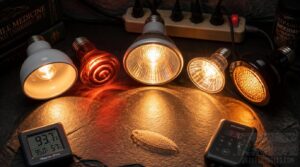
Not every heat lamp earns a spot in a dorm room setup — we only ranked bulbs that actually hold up where dorm life gets complicated.
Each one was evaluated across five factors: heating performance, fixture compatibility, thermostat support, energy consumption, and bulb lifespan.
Here’s what made the cut.
Heating Performance
The thermal gradient is everything. A 100W emitter raises the basking spot to 90 to 95°F. That temperature gap between the hot and cool sides is what lets your reptile actually self-regulate.
We checked:
- Infrared penetration depth within 6 to 12 inches of the lamp
- Heat distribution evenness across the enclosure floor
- Whether lamp angle stabilized the warm microclimate without hot spots
Fixture Compatibility
Not every fixture accepts every bulb. Anything above 60W needs a ceramic socket fixture. Plastic sockets melt and create fire risk.
| Fixture | Socket | Wattage Limit |
|---|---|---|
| Dome clamp lamp | Ceramic | 150W |
| Wire cage lamp | Porcelain | 150W |
| Standard clip lamp | Plastic | 60W |
Verify socket type matching first. Confirm E26 base fit, and use a base adapter only if thread sizes don’t align.
Thermostat Support
A thermostat isn’t optional. It’s the line between stable temps and a heat emergency. On/off thermostats cut power at the setpoint. Dimming thermostats modulate output for smoother control. PID thermostats hold within 1°F.
Place your probe in the basking zone, not near the glass. Misplaced sensors understate temperatures.
We ranked lamps higher when they left wattage headroom for thermostat cycling.
Energy Consumption
A 100W lamp running 12 hours daily costs about $50 a year. That adds up fast in a dorm room.
Thermostat duty cycling cuts energy use by up to 40%, which matters when you’re splitting a shared electric bill.
Ceramic emitters convert nearly all power to usable heat, giving you more warmth per watt than most standard basking bulbs do.
Bulb Lifespan
Basking bulbs usually last around 2,000 hours. Ceramic heat emitters reach 10,000+ hours since there’s no filament to fail.
- Watch for filament degradation signs: dimming output or visible color shift
- Switching frequency wears filaments faster than steady, continuous use
- Poor heat dissipation around the fixture cuts lifespan short
Store spare bulbs properly and replace before failure, not after.
Compare Reptile Heat Lamp Types
Not all heat lamps work the same way, and picking the wrong type can leave your reptile cold — or worse, disrupt its sleep cycle. Each lamp type has a specific job, and understanding the difference helps you make a smarter choice for your setup. Here’s a breakdown of the five main types you’ll encounter.
Daytime Basking Bulbs
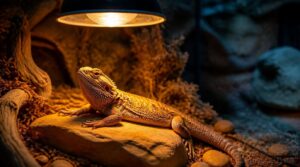
Daytime basking bulbs combine visible light and radiant heat to build a tight basking spot your reptile actually uses. Most range from 40 to 150 watts, with built-in reflectors that concentrate heat onto a compact area.
That focused output creates a thermal gradient without overheating the cool side, giving your reptile real temperature choice inside the enclosure.
Ceramic Heat Emitters
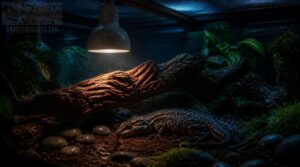
Where basking bulbs go dark at night, ceramic heat emitters (CHEs) keep working around the clock without a flicker of visible light. That makes them ideal for nocturnal species that need steady warmth without disrupted sleep cycles.
CHEs convert nearly all electricity into infrared heat, and most last 10,000 hours or more — far longer than the 2,000-hour ceiling on standard basking bulbs.
Infrared Heat Lamps
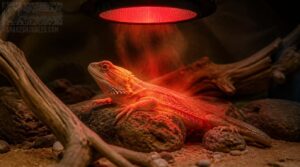
Infrared heat lamps emit infrared-A and infrared-B wavelengths that penetrate muscle tissue directly, not just warming the surface. That deeper infrared radiation penetration means your reptile absorbs heat where it counts.
At 100W, they produce no visible light and work well paired with a thermostat for control. Ceramic infrared emitters often reach a 10,000-hour lifespan, keeping replacement costs low over time.
Deep Heat Projectors
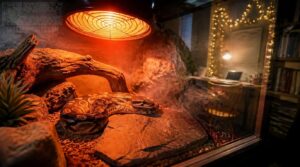
Deep heat projectors push infrared radiation penetration deeper into tissue than any standard lamp. The carbon filament design emits IR-A and IR-B wavelengths that warm muscle directly, not just the surface.
Available in 50W and 80W, they screw into ceramic sockets and pair nicely with a thermostat for control. Maintain proper enclosure clearance and monitor surface temperatures to prevent burns.
Mercury Vapor Bulbs
Mercury vapor bulbs do three jobs at once: heat, UVA, and UVB output from a single bulb. The LUCKY HERP 100W UVA/UVB Mercury Vapor Bulb is a popular pick.
A ballast requirement and mandatory warm-up period apply. They’re incompatible with dimmers and require a quartz tube ceramic socket.
Handle with care, as mercury handling and disposal follows hazardous waste guidelines.
Match Wattage to Enclosure Size
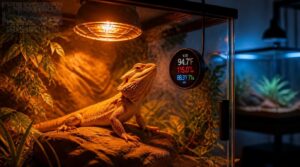
Getting the wattage wrong is the fastest way to either cook your reptile or leave it shivering. The right number depends almost entirely on how much space you’re heating and how warm your dorm room runs. Here’s what works for each common enclosure size.
10. Gallon Enclosures
A 10-gallon enclosure is small, and that works in your favor. In a 72°F room, 25W is usually enough to hold an 85-90°F basking spot.
- Use a basking spot lamp or CHE
- Pair it with a thermostat
- Keep the cool side at 72-78°F
- Start low, increase only if needed
20. Gallon Enclosures
A 20-gallon tank needs more power than a 10-gallon. In a 72°F room, 40 to 60 watts is your sweet spot for reaching a solid reptile basking temperature of 85-95°F.
Place the heat source at one end to build a proper thermal gradient for reptiles, keeping the cool side near 72-78°F. Pair any bulb with a thermostat to stay in control.
40. Gallon Enclosures
A 40-gallon tank, measuring roughly 36-40 inches long, needs 75-100 watts to heat properly in a 72°F room.
- Place the lamp at one end only
- Target 85-95°F on the warm side
- Keep the cool side at 72-78°F
- Maintain 30cm clearance minimum between bulb and reptile
Large Reptile Habitats
For large reptile habitats, think 4x2x2 enclosures or bigger, you’re looking at 150W or higher when your room runs 65°F or cooler.
A ceramic heat emitter provides nighttime warmth without disrupting your animal’s cycle. Pair it with a basking spot lamp and a 55 Inch Dome with Dimming Thermostat to dial in a 90-110°F basking zone.
Dorm Room Temperature
Dorm rooms usually hover between 68 and 72°F during the day, dropping to 65°F at night. That swing matters.
Your reptile needs a stable heat gradient, but the ambient room temperature shifts that baseline. A cooler room means your lamp works harder, so don’t size down on wattage just to save a few dollars.
Use Thermostats for Safer Heating
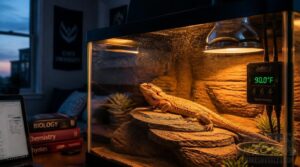
A thermostat is the difference between a stable habitat and a dangerous guessing game. Without one, your heat lamp runs at full power constantly — and temperatures can spike fast in a small dorm enclosure. Here’s what you need to know about each thermostat type before you buy.
Without a thermostat, your heat lamp runs at full power constantly — and that’s a disaster waiting to happen
On-Off Thermostats
An on-off thermostat is your most affordable entry into temperature control. It switches your ceramic heat emitter or basking spot lamp fully on or off using a setpoint and deadband.
Adjust the deadband to limit how far temps swing between cycles. Place your sensor away from direct heat.
Confirm relay compatibility with your lamp’s wattage for reptile heat lamp safety.
Proportional Thermostats
Where on-off models cycle fully, a proportional thermostat (or dimming thermostat) dims your lamp gradually, smoothing temperature swings.
- Proportional Gain Tuning controls response speed
- Follow sensor placement tips for accurate readings
- Confirm thermostat compatibility and wattage headroom
- Apply system calibration methods every few months
That temperature stability control gives you real energy efficiency benefits without all-or-nothing cycling.
PID Temperature Control
A PID thermostat goes further than proportional dimming by using three layered controls. The proportional term reacts instantly to temperature gaps, the accumulated term corrects lingering drift, and the derivative term slows the response before overshoot hits.
Combined, they hold your reptile enclosure within 1°F of setpoint consistently, making them the most precise option available.
Probe Placement
Even the best PID result means nothing if your probe lands in the wrong spot. Probe placement directly shapes your thermal gradient.
Place yours:
- At least 6 inches from any heat source to avoid skewed basking spot readings
- At mid-enclosure height for stable ambient temperature and gradient tracking
- Secured with adhesive clips, with cables routed to stay clear of lids
Thermometer Accuracy Checks
Your infrared thermometer only tells the truth if it’s calibrated. Run an Ice Water Test (target: 32°F) or a Boiling Point Check at 212°F every few months.
Room Temp Verification catches slow sensor drift between checks. For backup, try a Reference Comparison against a certified unit. Consistent Sensor Drift Tracking protects reptile enclosure temperature stability, your basking spot, and heat lamp longevity.
Prevent Burns and Fire Hazards
A heat lamp that’s even slightly out of place can burn your reptile or start a fire. Getting the setup right comes down to five key safety practices every dorm keeper needs to follow. Here’s what you need to know before plugging anything in.
Ceramic Socket Requirements
Any bulb over 60W needs a ceramic socket fixture. Plastic melts under sustained heat. Ceramic resists temperatures up to 500°F, keeping contacts stable through thousands of on/off cycles.
Look for sockets rated at 150W or higher and confirm they’re UL listed or ETL certified before buying. Standard E26/E27 base compatibility covers most reptile heat lamp fixture options at 120V.
Safe Bulb Clearance
Keep at least 6 inches of clearance between the bulb and any combustible material.
At 12 to 18 inches above the enclosure, surface temperatures can hit 180-200°F on ceramic heat emitters and basking spot lamps.
Route cords away from heat, leave 12 inches around the fixture for airflow, and inspect sockets for cracks before each use.
Secure Lamp Mounting
A wobbly lamp tips easily and starts fires. Fixtures like the Zilla Premium Black Reflector Dome need wall stud installation or rated anchors.
- Use heat-resistant brackets rated above 150°C to handle basking lamp temperatures safely
- Add a swivel joint to direct heat precisely at the basking spot without drift
- Route cords with cable management clips to prevent any socket strain
Surface Temperature Monitoring
A surface reading above 200°F can burn your reptile before you notice. Place a digital probe thermometer at the basking spot, not near the heat source itself. Check three to five points to map your temperature gradient accurately.
If you’re running a ceramic heat emitter, pair it with a thermostat that triggers a high-temp alarm before things get dangerous.
Flammable Material Clearance
Your heat lamp is always on. Nearby clutter is a fire waiting to happen.
- Move bedding and paper at least 30cm from any CHE.
- Store flammable items in approved metal containers, not loose on shelves.
- Keep exit routes clear and a fire extinguisher within reach.
Make sure your fixture is UL listed before running at full power.
Compare Energy Costs and Lifespans
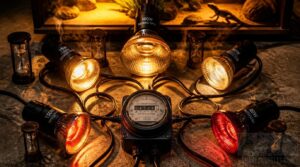
Running a heat lamp adds up faster than most people expect. Before you commit to a bulb, it’s worth knowing what you’ll spend on electricity each year — and how long the bulb will actually last. Here’s how the most common options compare on both fronts.
Annual Electricity Costs
Running a 100W bulb for 8 hours daily costs about $35 per year at $0.12 per kWh. That’s manageable, but dorm setups often run longer than planned. Bump usage to 12 hours and you’re closer to $50 annually.
A good thermostat cuts that back by 15 to 30 percent, keeping your cost per watt-hour lower without sacrificing your reptile’s comfort.
Low-Wattage Savings
Dropping from 100W to 75W saves roughly $12.50 per year. Not life-changing, but in a dorm where every dollar counts, lower wattage bulbs add up across a semester.
A 75W bulb works for most 20 to 40-gallon setups just fine. Pair it with a thermostat and you’re not pulling full power constantly, cutting your actual energy cost without changing your setup.
Ceramic Emitter Efficiency
Ceramic heat emitters win on efficiency because they convert nearly all electricity into infrared heat, with almost nothing wasted as light. That thermal mass also stabilizes surface temperature, so you’re not seeing wild swings during a study session.
CHEs maintain stable output across a wide voltage range, which matters in older dorms with inconsistent power.
Basking Bulb Lifespan
Basking bulbs last 1,000 to 2,000 hours with daily use. At 12 hours a day, that’s about 5 months before you’re buying another one.
- On-off cycling stresses filaments and cuts lifespan short
- Reflector design reduces base overheating during long sessions
- Electrical supply stability protects filaments in older dorm wiring
- Filament quality and brand engineering push you toward the upper limit
Replacement Cost Comparison
Over a year, replacement cost adds up fast. Basking bulbs run $6 to $15 each and need replacing every 5 to 6 months. Ceramic emitters cost $14 to $28 but last 12 to 24 months, making them cheaper long-term.
Two-pack deals cut per-unit cost by up to 25 percent, which matters when you’re replacing bulbs twice a year.
Match Lamps to Reptile Needs
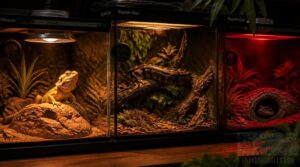
Not every reptile needs the same kind of heat, and picking the wrong lamp can throw off your animal’s whole routine. Your ball python, corn snake, or bearded dragon each has specific temperature needs that change how you shop for bulbs. Here’s how to match the right lamp to your reptile.
Ball Python Nighttime Heating
Ball pythons need nocturnal ambient heat around 70-82°F, but no visible light. A ceramic heat emitter (CHE) does this perfectly, with a 10,000-hour lifespan.
- Mount the CHE at least 30cm above the warm hide
- Set your thermostat to 88-92°F on the warm side
- Use cypress substrate to hold humidity at 50-60%
Adequate ventilation prevents heat buildup without drying the air.
Corn Snake Temperature Gradients
Corn snakes need a clear thermal gradient to digest and shed properly. Aim for 85-90°F on the warm side and 75-78°F on the cool end. Measure at substrate level, not air height. If your basking spot drifts past 92°F, stress and burns follow.
A reliable thermometer takes the guesswork out of hitting those numbers, and our guide on whether corn snakes need a thermometer in their enclosure covers the best options for tracking both zones.
| Zone | Target Temp | Function |
|---|---|---|
| Basking spot | 88-90°F | Active digestion |
| Warm side | 85-88°F | Main temperature control |
| Cool side | 75-78°F | Recovery and rest |
Boa Constrictor Enclosure Heating
Boas run warm. You need a basking spot at 88-90°F and a cool side staying between 75-85°F. A ceramic heat emitter works well for this, since it delivers steady radiant heat without light disruption.
Pairing your heat setup with the right enclosure materials makes a real difference — browse these ball python vivarium setup ideas to see how wood builds create a more natural thermal gradient than bare PVC.
Place your thermostat probe near the basking zone, not the center. Start with 100W and adjust from there. Keep substrate clear of the heat source to prevent hidden burns.
Diurnal Reptile Basking
Diurnal reptiles run on sunlight. They need a bright basking spot between 88-100°F, placed on a dark, matte surface for maximum heat absorption. A 100W basking bulb works for most 20-40 gallon setups and lasts up to 2,000 hours.
Pair it with a cool side at 75-80°F. That thermal gradient lets your reptile move between zones and self-regulate naturally.
Circadian Rhythm Protection
Your reptile’s internal clock runs on light, not luck. Nocturnal reptile heating requires a ceramic heat emitter, which produces zero visible light and keeps their circadian rhythm intact through the night.
For diurnal species, switch the basking bulb on at a consistent time each morning. A steady 12-hour on, 12-hour off light cycle reduces stress and keeps behavior reliably predictable.
Frequently Asked Questions (FAQs)
Can you leave a reptile heat lamp on all night?
Think of light as a cue, not just warmth. Leaving a visible-light heat lamp on all night disrupts sleep cycles. A ceramic heat emitter provides 24-hour heat without that problem.
What is the safest heat lamp for reptiles?
A ceramic heat emitter in a ceramic socket fixture is the safest option. It produces no light, runs on a dimming thermostat, and won’t overheat exposed surfaces when mounted at proper clearance.
What is the difference between a basking lamp and a heat lamp?
A basking lamp delivers visible light, heat, and often UVA to create a defined hotspot. A heat lamp or ceramic heat emitter raises ambient temperature using infrared, with little to no visible light.
Do reptile heat lamps use a lot of electricity?
A heat lamp draws far less power than a hair dryer. Running a 100W bulb for 12 hours daily adds just about 2 kWh per day, roughly $50 a year at typical US electricity rates.
Can heat lamps overheat a small dorm room?
Yes, a 100W lamp in a small, poorly ventilated room can raise ambient temperatures noticeably. Limited airflow amplifies heat buildup by 10-20%. A thermostat keeps things from running hot.
How often should heat lamp bulbs be replaced?
Most bulbs last 6 to 12 months. Higher wattage like 150W wears out closer to six months. If your bulb dims or flickers, replace it immediately regardless of age.
Do heat lamps work with extension cords safely?
Yes, but only if you use an indoor-rated cord with the right gauge for your lamp’s wattage. Plug directly into a wall outlet whenever possible. Never run cords under carpet.
What happens if a heat lamp falls overnight?
A fallen lamp can ignite bedding within minutes. The housing scorches nearby surfaces, exposed wires raise shock risk, and shattered glass scatters. Worst part: if it happens overnight, you won’t catch it fast enough.
Are heat lamps loud or disruptive during sleep?
Most lamps are quiet roommates. Ceramic heat emitters run silently, no hum, no buzz. A basking lamp may produce a faint 20-40 dB hum, barely noticeable during sleep.
Conclusion
One wrong bulb can end your entire dorm setup overnight. Choosing the right reptile heat lamps for college dorms means your animal stays warm, your housing approval stays intact, and your semester doesn’t get derailed over a simple fire inspection.
Match wattage to enclosure size. Always run a thermostat on every heat source. Keep clearances tight and get written permission before anything plugs in.
Do that, and your reptile thrives without costing you your room.