This site is supported by our readers. We may earn a commission, at no cost to you, if you purchase through links.

Your snake can cook in a tank that looks perfectly fine. A heat mat without a thermostat can push the surface past 110°F, and a ball python won’t always warn you before it’s too late.
So can snakes get too hot in tank setups? Yes, and it happens faster than most keepers expect. Snakes can’t sweat or pant their way to safety. They depend on you to build a gradient where they can retreat from the heat. Overheating can lead to organ damage, neurological injury, and death.
Here’s how to spot the warning signs, act fast, and keep your snake’s enclosure safe.
Table Of Contents
- Key Takeaways
- Can Snakes Get Too Hot in Their Tank?
- What Are The Signs Your Snake is Overheating?
- What Health Problems Can Overheating Cause in Snakes?
- What Should You Do if Your Snake Overheats?
- How Can You Prevent Your Snake’s Tank From Overheating?
- Frequently Asked Questions (FAQs)
- How hot is too hot for a snake tank?
- Are snakes out in 100 degree weather?
- How to tell if a snake is too hot?
- How do I cool down my snakes tank?
- What happens if snakes get too hot?
- How to tell if a snake is overheating?
- What temperature is too hot for a snake?
- How to cool down a snake enclosure?
- Do different snake species have different heat tolerances?
- Can room temperature affect my snakes tank?
- Conclusion
Key Takeaways
- Your snake can overheat fast in a tank that looks fine, because it can’t cool itself and a heat source without a thermostat can quickly push temperatures past safe limits.
- Mouth gaping, glass surfing, pressing against cool glass, and lethargy are your early warnings, and tremors or stargazing mean heatstroke is close.
- If your snake overheats, unplug every heat source, move it to a ventilated container at room temperature, cool it gradually with a lukewarm soak (never ice), and call an exotic vet right away if you see twitching, collapse, or no improvement.
- Prevent overheating by putting every heat source on a thermostat, keeping the tank out of direct sun, checking the basking surface with a thermometer, and always giving your snake a cooler retreat within a species-appropriate gradient.
Can Snakes Get Too Hot in Their Tank?

Snakes can absolutely get too hot in their tanks, and it happens more often than most keepers realize.
Hot rocks, bare heat bulbs, and poorly regulated heat mats are common culprits, so it helps to review safe snake health and husbandry practices before setting up any heating.
Snakes overheat in their tanks far more often than most keepers realize, and they can’t cool themselves down
Your snake can’t generate its own warmth or cool itself down, so it relies entirely on the setup you build. A heat mat or lamp without a thermostat can push temps past safe limits fast, and a glass tank traps that heat.
Good temperature control means offering a proper thermal gradient: a warm end for basking and a cooler end for retreating.
Without that choice, overheating quickly leads to heat stress, and mouth gaping is one of the first warnings you’ll likely see.
What Are The Signs Your Snake is Overheating?
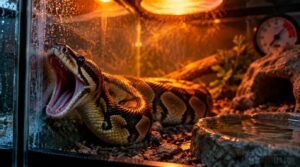
Mouth gaping is usually the first red flag, but it’s rarely the only one. Watch for rapid, open-mouthed breathing that continues even after your snake leaves the warm side.
Behavior changes next. Your snake may refuse to bask, press against cool glass, or glass surf along the walls, searching for an exit. Some snakes become restless, while others slip into lethargy and barely move.
Physical signs matter too. Skin may look darker or oddly pale, and the body feels hot to the touch. Wobbliness, tremors, or stargazing mean heatstroke is close. A limp, unresponsive snake needs help now, because dehydration and organ damage can follow quickly.
If a snake stays stiff or limp even after you correct its temperature, this guide to common snake illnesses and their warning signs can help you tell heat stress from something more serious.
Don’t wait for symptoms to line up. Check temps the moment you spot one. Because heat rises from the basking lamp, the vertical heat distribution in your tank can leave the upper levels much hotter than the air near the floor.
What Health Problems Can Overheating Cause in Snakes?

Surviving the heat doesn’t mean your snake is in the clear. Hyperthermia can leave damage that shows up days or weeks later.
The brain takes the first hit. Severe heatstroke can cause permanent neurological damage, including tremors, stargazing, and poor coordination that never fully clears.
Inside, the liver and kidneys suffer quietly. Organ damage often stays hidden until weeks after the event, and dehydration makes it worse. Meanwhile, the gut leaks bacteria into the bloodstream, which triggers inflammation and weakens immunity.
That’s why respiratory infections like pneumonia are common afterward. Watch for wheezing, mucus, open-mouth breathing, and lethargy. Feeding trouble and chronic digestive problems can linger too.
Recovery is slow, and outcomes are never guaranteed. Treat every overheating episode seriously.
What Should You Do if Your Snake Overheats?

If your snake is overheating, you have minutes, not hours, to act. Cooling it the wrong way can do as much harm as the heat itself. Below, you’ll find the immediate cooling steps to take first and the signs that mean it’s time to call a vet.
Immediate Steps for Safe Cooling
Say you find your corn snake gaping, rubbing against the glass, and pressed to the hot side after a thermostat stuck on. Move fast. Lift her out and set her in a ventilated container at room temperature. Unplug every heat source.
Start gradual cooling with a shallow lukewarm soak, head clear of the water. Never use ice.
When to Seek Emergency Veterinary Care
Heatstroke in snakes is a veterinary emergency, and waiting rarely helps. Call your exotic vet right away if you see:
- Twitching, rigidity, or a snake that can’t right itself.
- Collapse, unresponsiveness, or open-mouth breathing.
- Burned or blistered scales, or no improvement after cooling.
Don’t ignore subtle signs. Lethargy can signal organ damage, and thermal injury worsens fast. Get emergency care.
How Can You Prevent Your Snake’s Tank From Overheating?
Prevention beats emergency cooling every time, and it starts with how you set up your snake’s enclosure. Below, you’ll find three areas to get right: safe temperature gradients, heating equipment and thermostat setup, and the monitoring, airflow, and sunlight habits that keep your tank stable. Work through each one, because a single gap can turn a safe tank into a dangerous one.
Safe Temperatures and Species-Specific Gradients

Your snake can’t sweat or shiver, so your temperature control does all the work. Build a thermal gradient, not one hot box.
Ball pythons need 88–92°F on the warm side and 76–80°F on the cool side. Corn snakes want 85–88°F and 70–75°F. Boas should stay above 80°F. Keep each species-specific ideal temperature range, and always leave a cool safe zone.
Heating Equipment Placement and Thermostat Control

Picture a heat mat running flat out under a hide, glowing like a stovetop burner while your snake curls on top of it. That’s life without a thermostat.
Put every mat, tape, and heater on a thermostat for temperature control. Secure the probe where your snake can’t shift it.
Check heat source placement with a digital thermometer to catch overheating.
Temperature Monitoring, Ventilation, and Sunlight Risks

Picture a sunbeam sliding across the glass at noon. Within minutes, your tank becomes an oven.
Keep tanks out of direct sun. Skip ventilation and overheating follows.
- Probe the basking spot surface, not the air.
- Heat stress happens silently.
- Your snake can’t tell you it’s suffering.
Make temperature monitoring a habit, and recheck after every bulb change or move.
Frequently Asked Questions (FAQs)
How hot is too hot for a snake tank?
Think a warm tank can’t hurt? It can. Air above 95°F risks overheating in ball pythons.
Stay within your species’ ideal temperature range, and use a thermostat for temperature control, or dangerous heat stress follows.
Are snakes out in 100 degree weather?
Myth: snakes love scorching days. Truth: above 100°F, they hide, since overheating brings heat stress and heatstroke.
You’ll spot them at dawn, dusk, or night, seeking shade. They need a thermal gradient for temperature control.
How to tell if a snake is too hot?
Snakes love heat, so you might assume they can’t overdo it. They can.
Watch for open-mouth gaping, glass surfing, and lethargy. Heat stress can escalate to dehydration, heatstroke, and neurological symptoms like tremors or stargazing.
How do I cool down my snakes tank?
Start by moving your snake to a shaded, still spot while you fix the tank. Cut the heat source, boost ventilation and airflow with a small fan, and mist lightly for evaporative cooling. Cool gradually; never use ice.
What happens if snakes get too hot?
What happens when your snake can’t cool down? Heat stress sets in fast, bringing dehydration and lethargy.
Left unchecked, heatstroke causes organ damage, immune suppression, and neurological injury. Your snake’s chances drop once thermoregulation fails.
How to tell if a snake is overheating?
Ever seen your snake gape like it’s gasping? That’s rapid mouth breathing, and it’s a red flag.
Watch for erratic behavior, frantic pacing, lethargy, disorientation, or dehydration. Move your snake to somewhere cooler right now.
What temperature is too hot for a snake?
Heat is a quiet thief. Your snake won’t complain.
Basking spots above 92°F or ambient air past 85°F cause heat stress, and sustained 90°F means overheating. Keep a thermal gradient, because critical temperature arrives fast.
How to cool down a snake enclosure?
Shade your tank, put heaters on a thermostat for temperature control. Add a screen lid for ventilation, aim a fan for airflow, set ceramic tiles on the cool side, and mist for emergency cooling.
Do different snake species have different heat tolerances?
Does one temperature really suit every snake? No. Species-specific temperature ranges matter, because a ball python’s thermal gradient would cause heat stress in many forest species.
Size and age matter too; hatchlings overheat much faster.
Can room temperature affect my snakes tank?
Your tank is an island in a room-sized sea, and that sea sets your thermal environment.
Warm rooms narrow your thermal gradient, risking overheating and heat stress. Cold rooms shrink basking temperature ranges. Watch both.
Conclusion
Picture a keeper who ignores a flickering thermostat, shrugs, and goes to bed. By morning, the hot side reads 108°F and the snake is gaping on the floor.
So can snakes get too hot in tank setups? Yes, but habits prevent it. Check temperatures daily, put a thermostat on every heat source, and offer a cool retreat. Do that, and your snake never has to survive your mistakes. It just gets to be a snake.