This site is supported by our readers. We may earn a commission, at no cost to you, if you purchase through links.

Your snake won’t eat. You’ve tried wiggling the prey, warming it longer, switching proteins, and still it retreats to the corner the moment you open the lid.
That defensive posture isn’t pickiness. It’s stress. Nervous snakes often refuse food because the presentation itself feels threatening, and your hand hovering over the enclosure is frequently the trigger. Feeding tools work by creating distance between you and the prey, giving your snake space to smell, track, and strike without feeling cornered.
Small adjustments in how you deliver the meal can completely transform your snake’s willingness to eat.
Table Of Contents
Key Takeaways
- Feeding refusals in nervous snakes are usually stress, not pickiness, and long tongs create the 15–20 cm distance your snake needs to feel safe enough to strike.
- Use the right gear and technique: present prey head-first with slow side-approach movements, match prey size to your snake’s girth, and remove uneaten prey within 15–30 minutes.
- Calm conditions matter as much as tools—maintain a proper temperature gradient, dim lights, feed during quiet dusk hours, and try leaving the room so your snake can hunt in privacy.
- Before blaming pickiness, check husbandry basics (temperature, humidity, water, substrate), track weight weekly or monthly, and see a reptile vet if refusal lasts weeks or your snake loses 10% of its baseline weight.
Feeding Tools Reduce Stress and Encourage Eating
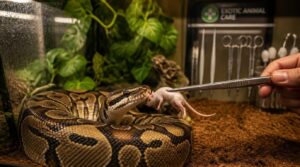
A nervous snake can turn feeding time into a stressful standoff, but the right tools change everything. In my practice, I’ve watched picky eaters calm down the moment keepers stopped using their bare hands.
Long tongs and pre-warmed prey make all the difference, and this guide to feeding snakes whole prey safely walks you through the exact techniques I recommend to nervous keepers.
Here are four key ways feeding tools reduce stress and get reluctant snakes eating again.
Maintaining a Comfortable Distance
Picture your snake’s personal bubble. Nervous snakes need about 15 to 20 centimeters of space. Closer tools feel like a threat. That distance lets them smell prey without fear.
Hold longhandled tongs steady. Pause briefly before offering. Watch your snake’s body language. Calm posture means you’ve found the sweet spot.
This simple habit builds feeding confidence building over time, creating stressfree feeding sessions.
Preventing Hand-Food Associations
Snakes learn fast. If your hand always delivers dinner, your hand becomes the dinner bell. That’s a bite waiting to happen.
The tongs method breaks this link. Your snake keys on tool movement, not fingers, so prey presentation stays predictable. Feeding tongs also keep your scent off the food, so safe prey handling means fewer mixed signals.
Feeding safety starts here.
Encouraging Natural Feeding Responses
Feeding tools do more than protect fingers. They trigger the hunt. When tongs mimic prey motion at a distance, your snake’s instincts wake up, and eating feels natural instead of scary.
Encouraging feeding in picky snakes often comes down to these feeding response triggers:
- Slow, lifelike prey movement
- Steady distance from your body
- Consistent presentation each session
- Warm prey with natural scent
Build feeding routine confidence through repetition. Predictable feeding techniques turn hesitant snakes into willing eaters.
Reducing Defensive Strikes
A strike isn’t aggression. It’s panic. When your hands stay far from the action, your snake feels less cornered and bites less often.
| Trigger | Snake Reaction | Safer Choice |
|---|---|---|
| Hand near head | Defensive strike | Use long tongs |
| Fast approach | Startled lunge | Move prey slowly |
| Wrong prey size | Overstimulation | Match prey to body |
Follow these safety precautions every feeding. Your calm distance builds trust, and avoiding snake bites becomes simple habit.
Choose Safe Tools and Appropriate Prey

Now that you know why feeding tools work, let’s talk about picking the right gear. The wrong tool or prey size can turn a calm meal into a stressful standoff. Here’s what to look for when you build your nervous snake feeding kit.
Since your snake picks up on every sound and movement, choosing quiet, low-stress gear matters just as much as prey size — this guide to ball python feeding habits breaks down which tools keep mealtime calm.
Tongs Versus Hemostats
So which tool should you grab? Feeding tongs and hemostats both work, but they feel different. Tongs open wide, grip gently, and let you wiggle prey like it’s alive. Hemostats lock in place and reach farther, which helps with avoiding snake bites. Start with tongs if you’re new. They’re lighter, easier to clean, and forgiving. Either choice beats your fingers every time.
Choosing a Safe Tool Length
Aim for distance, not drama. With feeding tongs, set your reach so the prey lands 10–15 cm past the snout for small to mid-size snakes. For large species, keep your hand 20–30 cm out of range.
Longer isn’t always better, so do a quick tool ergonomics evaluation, then adjust to your enclosure and the snake’s comfort cues.
Matching Prey to Snake Size
Pick prey based on your snake’s body, not the package size. Use prey sizing accuracy so prey width matches the snake’s widest point. If you’re unsure, choose the next smaller option for smoother digestion stress relief.
Small to mid-size usually swallow best when the prey is size-matched, so your snake can move it through the stomach without strain. Avoid mismatches. Keep bites incremental if needed.
Preparing Frozen-Thawed Prey Safely
Before you offer frozen-thawed prey, check for ice crystals and any soft spots. Thaw using safe thawing techniques in clean conditions. Warm it to near your snake’s body temperature, so the first touch doesn’t feel like a cold shock.
Keep air time short during presentation, and move gently and smoothly to avoid startling. Discard damaged prey, too.
Inspecting and Sanitizing Tools
Before each feeding, inspect your stainless steel tongs. Check alignment, cleanliness, and joint tightness. Look for rust, cracks, and tiny nicks that trap germs.
Use non-porous, food-grade materials, not wood. Rinse warm, then disinfect with 70% isopropyl alcohol or a chlorhexidine-based disinfectant. Let everything fully dry before storage and use smooth, confident handling.
Present Prey Without Startling Your Snake
When your snake feels safe, it eats better. Keep the first contact calm and predictable, then let your prey presentation do the work. Get ready to choose the right setup that helps you keep control without rushing your nervous eater.
Offer Prey Head-First

Head-first prey helps your snake line up its bite and use natural swallowing cues. Use feeding tongs to present the head end first, and keep your grip steady. This reduces reach and grabbing attempts, so your feeding response stays calm.
Let the jaws engage at the start of the prey. Don’t rush it. You’ll often see faster, cleaner acceptance.
Use Gentle Prey Movement

Use gentle prey movement after the tongs method lines up the head. Aim for slow lateral wandering that mimics foraging, not dashing. Move in short inches, then pause. Keep prey scenting in range and let your snake track the tongue. If your snake hesitates, reduce motion even more.
Remember 5 calming checks: distance, speed, pauses, grip, and warmth.
Avoid Sudden Tong Movements
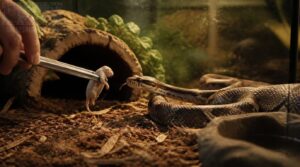
Gentle motion means nothing if your tongs jerk mid-approach. One quick twitch can undo minutes of patient stalking. Keep your wrist locked and let the feeding tongs glide in one smooth line. Approach from the side, never from above.
| Sudden Move | Snake’s Reaction | Safer Habit |
|---|---|---|
| Dropping prey in | Startle, retreat | Lower slowly |
| Jerky tong flicks | Defensive coil | Smooth glide |
| Overhead reach | Strike reflex | Side entry |
| Quick retreat | Abandoned strike | Pause, then lift |
| Hand-waving | Alarm tongue flicks | Still hands |
Think of your feeding environment like a library. Quiet, predictable, boring. Feeding consistency builds trust, and safety precautions protect fingers.
Try Leave-and-Walk-Away Feeding

Sometimes the best move is no move at all. Leave-and-walk-away feeding means placing prey gently with your feeding tongs, then leaving the room. Nervous snakes often refuse to eat while watched. Privacy lets natural hunting instincts kick in.
Sometimes the best feeding move is walking away—nervous snakes often eat only when given privacy
Before you walk away, set the stage:
- Match prey size to your snake’s girth
- Place prey in a quiet feeding area
- Lower lights and reduce noise
- Log the attempt in your feeding chart
- Check back after 30 minutes
If you use separate container feeding, this method works there too. Offer the prey, close the lid, and give your snake space. Patience wins. Trust builds one calm meal at a time.
Remove Uneaten Prey Promptly

That 30-minute check matters. If prey sits untouched, remove uneaten prey promptly. A leftover rodent grows bacteria fast, and its scent can attract pests or other predators. Grab it with your tongs, never your hands, and dispose of it safely.
Then focus on cleaning feeding areas and sanitizing equipment before the next attempt. Your snake’s feeding observation notes will guide future feeding adjustments.
Pair Feeding Tools With Calm Conditions

Even the best feeding tongs can’t do the whole job alone. Your snake’s surroundings matter just as much as the tool in your hand. Here’s how to set the stage for a calm, successful meal.
Maintain Proper Enclosure Temperatures
A hungry snake with a cold belly often refuses to eat. Digestion depends entirely on proper thermal regulation, so check your temperatures before blaming the prey.
- Create a warm-to-cool gradient of 10–15°C
- Use temperature monitoring tools at different heights
- Log readings morning and night
- Inspect heaters for hot spots
Simple temperature verification methods prevent stress-related refusals.
Feed During Quieter Hours
After sundown, most snakes settle into their natural hunting rhythm. Feed during quiet hours and you’ll notice calmer strikes and steadier appetite. Keep the room still. Turn off loud appliances. Skip feeding time when the house is busy, since noise and footsteps can shut down a nervous eater. A consistent feeding routine at night builds trust. Your snake learns the pattern and eats with confidence.
Dim Bright Enclosure Lighting
A bright tank can feel like a spotlight on stage. Dim bright enclosure lighting before you feed, and watch your snake relax. Lower light eases eye glare and slows those jumpy head movements. Pair this with your feeding tools and calm handling, and you build behavioral conditioning that says feeding time is safe.
Try these steps:
- Dim lights gradually, never all at once
- Feed during natural dusk-to-night hours
- Use soft gradients, not harsh shadows
- Keep lighting consistent week to week
Stress reduction starts with a gentle feeding environment.
Limit People and Pet Traffic
An audience makes feeding harder. Your snake reads every footstep, voice, and passing dog as a possible threat.
Clear the room before you offer prey. Keep pets out, close the door, and let the feeding area go quiet.
Stress reduction depends on a calm, low-traffic feeding environment your snake can trust.
Follow a Consistent Schedule
Snakes thrive on rhythm. A consistent feeding schedule tells your snake when dinner is coming, and that predictability calms nerves.
Pick one or two feeding days each week. Stick to them. Keep the feeding time near dusk or dawn, when activity peaks.
After breeding or seasonal shifts, ramp up feeding frequency slowly. Small changes protect the feeding routine your snake trusts.
Troubleshoot Feeding Refusal and Seek Help

Even with perfect tools and technique, some snakes still refuse a meal. Don’t panic, and don’t take it personally. Here’s how to troubleshoot feeding refusal calmly and know exactly when to call in professional help.
Avoid Forceful Prey Presentation
Pushing prey at a shy snake never works. It feels like an ambush, not a meal. In my clinic, I’ve seen three common mistakes:
- Tapping the snout with tongs
- Chasing the snake around the enclosure
- Holding prey against the body
Instead, present gently with your feeding tools, then stop. Trust builds appetite.
Check Husbandry Before Retrying
Before you retry a meal, look at the habitat. Most refusals trace back to husbandry practices, not picky snakes. Check these basics:
| Check | Target |
|---|---|
| Warm side temperature | Species-appropriate gradient |
| Humidity | Species-typical range |
| Water bowl | Clean and full |
| Substrate | Dry, odor-free |
Fix problems first, then wait a few days. Feeding tools work best when conditions feel right.
Watch Weight and Body Condition
Numbers tell the real story, so track them. Weigh your snake weekly if it’s a baby, monthly if it’s an adult. Log each result in a feeding chart alongside meals offered and refused.
Watch body condition too. Ribs or backbone showing means trouble. A 10% weight loss from baseline needs a reptile vet, even without other symptoms. Don’t wait it out. Keep in mind that voluntary fasting in snakes can occur naturally during breeding season, pre-shed periods, or hibernation attempts, so a temporary refusal to eat isn’t always an emergency.
Recognize Seasonal Appetite Changes
Seasonal appetite changes are normal. Shorter days can lower metabolic rate and reduce appetite. Cooler autumn nights may also cut feeding frequency.
Watch your feeding schedule and hunger cues closely during pre-shed periods. Dry fall humidity can affect digestion, and temperature swings can blunt the feeding response.
Some keep steady hunger. Your snake’s age, sex, and past feeding success change how much it varies.
Contact a Reptile Veterinarian
When a slowdown stretches past a few weeks or your snake drops weight, contact a reptile veterinarian. Knowing when to seek veterinary advice early can prevent small problems from growing.
Bring your feeding session documentation, including prey type, timing, and tools. Vets also review your feeding equipment picks and feeding tool sterilization habits. That full picture speeds up their assessment.
Frequently Asked Questions (FAQs)
Can feeding tools replace warming prey before offering it?
No, they can’t. Feeding tools present prey safely; they don’t warm it. Before using your feeding equipment picks, thaw and warm prey to ideal temperature separately, mimicking natural body heat. Warming prey to ideal temperature stays essential.
How long should you wait before removing uneaten prey?
Give your snake 15 to 20 minutes with untouched prey. Nervous eaters may need longer, but don’t leave prey overnight. Uneaten rodents spoil, attract bacteria, and harm feeding hygiene. Remove, discard, and retry later.
Do nervous snakes eventually accept hand feeding again?
Yes, most do. Think of trust as a bridge rebuilt plank by plank. With calm handling, gradual desensitization, and patience, nervous snakes often regain confidence and accept hand feeding again.
Are colored or metal tongs better for shy snakes?
Colored tongs usually win for shy snakes. Their bright contrast helps you judge bite distance and keeps focus off your snake. Metal tongs feel cold and rigid, which can startle sensitive feeders.
Conclusion
One of my patients, a young ball python named Momo, refused meals for six weeks. Her owner switched to long tongs, dimmed the lights, and stepped back. Momo ate that same night.
That’s how feeding tools help nervous snakes eat. They give your snake room to feel safe.
Trust the process, stay patient, and let distance do the work. A calm snake with a full belly is your reward.