This site is supported by our readers. We may earn a commission, at no cost to you, if you purchase through links.
Your snake just finished its meal, and now you’re staring at a soiled corner of the enclosure, wondering whether to clean it right away. Hold off. Handling or deep cleaning too soon can stress a snake mid-digestion, and a stressed snake may regurgitate its food.
Cleaning after snake feeding takes timing, a gentle touch, and a plan. Waste, urates, and a fouled water bowl won’t wait forever, but your snake’s digestion window matters more.
Here’s how to choose the right moment, spot-clean without disturbance, move your snake safely, and restore the habitat so everything stays calm and healthy.
Table Of Contents
Key Takeaways
- Clean up urgent messes like vomit, feces, and urates right away with a scoop, but hold off on handling your snake or doing routine upkeep for at least 48 hours so you don’t trigger regurgitation.
- Wait for the bulge to disappear before a deep clean, and add extra days after a large meal, for a juvenile, or if your enclosure runs cool, since heat drives digestion.
- When you do spot-clean, lift the surrounding bedding and check the water bowl too, because urates seep outward and leave odor and bacteria behind if you only remove what you can see.
- For a full clean, move your calm snake to a warm, ventilated temporary container, disinfect with a reptile-safe product (not bleach, ammonia, or scented cleaners), let everything dry completely, then confirm your humidity and temperature gradient before returning it.
Choose Safe Cleaning Times After Snake Feeding
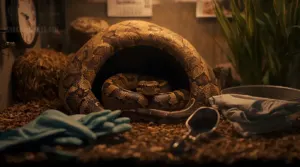
When you clean after a feeding, timing matters as much as technique. Waiting a day or two usually keeps your snake calm and lowers regurgitation risk. The two points below help you decide when a mess can wait and when it can’t.
Larger meals may need two to four days of rest, so check this guide on how to hold a pet snake before moving yours.
Routine Cleaning Versus Urgent Messes
Messes fall into two groups, and each calls for a different response. Urgent ones, like vomited food, feces, or urates, need immediate spot-cleaning with tongs or a scoop, because bacteria multiply fast. Do it quietly, away from your snake.
Routine upkeep, such as water changes, can wait for digestion. Handling a snake too soon can trigger regurgitation, so wait 48 hours after a meal before picking it up. Deep cleaning shouldn’t happen until the bulge has fully smoothed.
Digestion, Meal Size, and Temperature
How long to wait depends on three things you can check.
- Meal size: bigger prey takes days, sometimes weeks, to digest.
- Temperature gradient: keep a warm side, since heat drives digestion.
- Age: juveniles digest slower.
- Bulge: wait until it’s gone.
- Handling: skip it for 48 hours or longer.
If your enclosure runs cool, add extra days.
Slower digestion at lower temperatures also affects timing, so check when to start feeding baby corn snakes before settling on a schedule.
Spot-Clean Feeding Mess Without Disturbing Your Snake
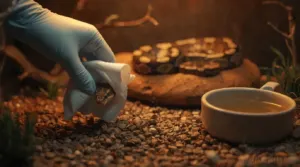
Once you’ve waited for the appropriate time to clean, you can tidy up without bothering your snake. Work quietly and keep your movements slow, since most snakes tolerate brief maintenance nearby.
Use paper towels or a scoop to remove soiled substrate and waste, taking the surrounding bedding too. Urates seep outward, so lifting only the visible lump leaves odor and bacteria behind. Check the water bowl as well, because snakes often defecate in it.
Cleaning only what you can see leaves the real problem behind, so lift the surrounding bedding and the water bowl too
| Your snake’s behavior | What to do |
|---|---|
| Resting calmly | Finish your quick clean |
| Tense, hiding, or bulging | Stop and try again later |
Finish with fresh water, then step back. A calm, quick clean protects your snake’s digestion and keeps you firmly in control of the whole routine.
Since hydration and warmth shift with your home’s conditions, adjust this routine using snake care tips for different climates.
Transfer Your Snake Safely Before Deep Cleaning
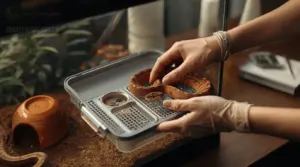
A spot clean is quick, but a full cleaning means moving your snake out of its home. Wait 24 to 48 hours after feeding until digestion is complete, and lean toward 48 after a large meal or in a cooler room. Avoid handling too soon after feeding to prevent regurgitation, which costs your snake a meal and stresses it.
Before you reach in, make sure your snake is calm and not showing stress signals such as hissing, musking, or frantic movement. Wash your hands first so food scents don’t confuse it.
Transfer your snake to a temporary enclosure or a clean container with ventilation, a hide, and matching temperature. Then gently move your snake using a snake hook or soft tips.
Clean and Disinfect Your Snake’s Enclosure
Once your snake is safely settled in its temporary enclosure, you can start the deep clean. Two parts make up this job, and you’ll want to handle them in order so nothing gets missed. Here’s what to cover, with reptile-safe products in mind.
Replacing Substrate and Cleaning Furnishings
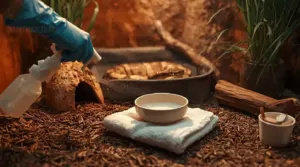
Fresh bedding calms your snake. Swap mulch every one to two months, or sooner if it’s soiled.
- Mix in clean old substrate to reduce stress.
- Wipe hides and bowls with reptile-safe disinfectant.
- Bake wood and cork bark at 250°F for 2-3 hours.
- Soak non-porous items in diluted bleach solution for 10-15 minutes.
- Spot-clean only soiled patches plus a small margin.
Safe Disinfection, Rinsing, and Drying
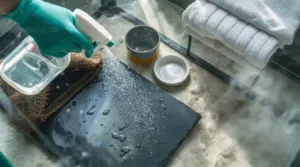
You’ll want to start with hot, soapy water, then apply a reptile-safe disinfectant like F10SC at 1:250. Keep surfaces wet for the full 10 minutes, since wiping early weakens the kill. Skip bleach, ammonia, and scented cleaners, which can irritate your snake’s lungs.
Rinse every crevice thoroughly, then let everything air dry completely. Damp surfaces invite bacteria.
Restore Habitat Conditions and Monitor Your Snake
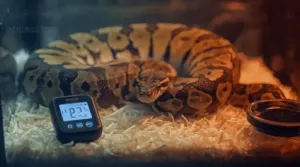
Picture a ball python named Juniper, back in her freshly scrubbed enclosure, hiding on the cool side with a hygrometer reading 78%. Her keeper thought wetter was better, but that much moisture invites scale rot.
Once you’ve finished, put your snake’s world back in balance. Check humidity levels at snake level, aiming for 50 to 70% for ball pythons, and keep the probe away from mist. Confirm your thermostat holds a warm side and a cool side for healthy digestion.
- Feel proud when your snake settles calmly, because your care made that possible.
- Don’t ignore mold or odors, since hidden buildup can quietly hurt your snake.
- Trust your instincts, and call a vet if something feels wrong.
Frequently Asked Questions (FAQs)
What if my snake regurgitates after feeding?
Leave your snake alone for at least 48 hours, since handling can cause more stress and esophageal damage. Skip feeding for 14 days, then offer a much smaller meal. Call a vet if it happens again.
How long after feeding do snakes poop?
You might expect a quick, predictable answer, but there isn’t one. Most snakes poop roughly 3 to 7 days after eating, though larger meals can stretch that to weeks, and cooler temperatures slow digestion further.
Should I feed my snake in a separate container?
Wondering if a separate feeding enclosure is worth it? Usually, it isn’t. Feed your snake in its own enclosure with tweezers or a dish. You’ll also avoid extra handling, stress, regurgitation, and substrate impaction risks.
How do I remove lingering snake enclosure odors?
Say your ball python regurgitated last night and the smell still hangs around after you’ve wiped everything down. Replace the soiled substrate completely, scrub the decor with diluted bleach solution, then rinse, dry, and ventilate well.
Do snakes need darkness while digesting meals?
No, your snake doesn’t need darkness to digest. Steady warmth drives the process, so keep the warm side at its proper temperature. Stick with a regular 12-hour light and dark cycle, and offer a hide for rest.
Conclusion
Picture a ball python finishing a rat on Saturday night, with a soiled corner begging for attention. Resist the urge. Wait until the digestion window closes, then clean with calm hands.
Good cleaning after snake feeding isn’t about speed. It’s about timing, gentleness, and a plan you trust. Spot-clean emergencies, move your snake carefully, and sanitize only when it’s settled. Do that, and your enclosure stays fresh while your snake stays calm and well fed.
- https://www.zubairkhalid.com/knowledge/veterinary-medicine/reptile-care/ball-python-substrate-selection-evaluating-safety-humidity-retention-and-ease-of-cleaning
- https://thetyedyediguana.com/blog/wait-you-mean-i-can-clean-and-reuse-substrate-6959ea
- https://fullwoodanimalhospital.com/reptile-habitat-cleaning-tips