This site is supported by our readers. We may earn a commission, at no cost to you, if you purchase through links.

Your corn snake will outlive your last three phones. Twenty years is a normal lifespan, and some pets pass 23. That’s a lot of Sunday cleanings.
Corn snakes are calm, forgiving, and easy on the eyes. They’re also escape artists that need a locked lid, a thawed mouse on schedule, and a vet who actually treats reptiles. Charm gets you through the first month. Daily habits get you through the next two decades.
So is a corn snake right for you? Check your space, schedule, and budget with the quiz below, then see where you land.
Table Of Contents
- Key Takeaways
- Is a Corn Snake Right for Me?
- Will Corn Snake Temperament Suit My Expectations?
- Can I Meet Corn Snake Care Needs?
- Can I Commit to Decades of Care?
- Which Corn Snake Should I Choose?
- Frequently Asked Questions (FAQs)
- Can corn snakes bond with humans?
- How to tell if a corn snake trusts you?
- What are the downsides of owning a corn snake?
- Do corn snakes like to be petted?
- Are corn snakes easy to handle?
- Are corn snakes a good first time pet?
- How to care for a corn snake?
- Can you play with a corn snake?
- Are corn snakes fussy?
- Are corn snakes receptive to humans?
- Conclusion
Key Takeaways
- You’re signing up for 15 to 20 years or more of daily habits, steady costs, and a reptile-savvy vet, so decide based on a routine you’d keep, not a cute photo.
- Your corn snake needs a locking 40-gallon adult enclosure with a 75 to 85°F temperature gradient, 40 to 50 percent humidity, and dry aspen bedding, because these escape artists test every seam.
- You’ll feed frozen-thawed mice every 7 to 14 days once your snake is grown, wait 48 hours after meals before handling, and skip handling during sheds to avoid stress and regurgitation.
- Corn snakes are calm, beginner-friendly pets that tolerate handling rather than bond with you, so a landlord’s ban or an immunocompromised housemate is a deal-breaker, and you should quarantine any new snake for 30 days.
Is a Corn Snake Right for Me?
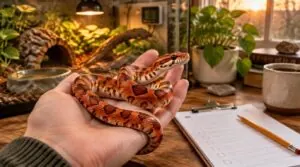
Corn snakes are remarkably easy to love, but love alone doesn’t keep one healthy. Before you bring one home, you’ll take a quick owner readiness quiz to check that your space, schedule, and budget fit. Then you’ll learn how to read your results and spot any deal-breakers.
Once you know your setup works, a beginner’s corn snake care guide can walk you through enclosure setup, feeding, and spotting signs of a healthy animal.
Take The Owner Readiness Quiz
How ready are you, really? Corn snakes have a calm temperament and a reputation as low-maintenance pets, but they’re still a long-term commitment.
Grab a pen and answer honestly:
- Can you spend time daily on feeding, cleaning, and checks?
- Can you cover setup and food costs?
- Will you thaw frozen mice calmly?
Weigh the pros and cons first. No rush!
Interpret Your Results and Deal-Breakers
Mostly yes? Great news. You’re likely ready, so pull up a snake care sheet and start planning your setup.
A few no’s mean you’ve got homework. Costs, thawing mice, or daily checks can be fixed with a budget and practice.
If hand-feeding makes you nervous, this guide to feeding snakes safely without getting bitten walks through simple tong techniques that keep both you and your snake calm.
Deal-breakers are firmer. A landlord’s ban, an HOA rule, or an immunocompromised housemate means pause now. Safety comes first.
Will Corn Snake Temperament Suit My Expectations?
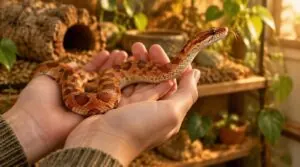
Now that your quiz is done, let’s talk personality. Corn snakes have a remarkably calm temperament, and their docile temperament makes them ideal for first-timers. They’d rather flee than fight.
Here’s what to expect:
- Hatchlings may nip, then settle after 2 to 4 weeks of gentle handling.
- Handling once or twice weekly keeps them tame.
- They’re active at night, so expect daytime hiding.
- Shedding snakes see poorly and may mistake hands for food.
- Hissing and tail buzzing mean "back off," not "I’m a villain."
Every snake is different. Some are curious cuddlers, others prefer seclusion. Trust building takes patience, so start with five-minute sessions. Think of it as a long term commitment to one personality, so pick one you’ll love. Remember to wait at least 48 hours after a meal before handling, since handling after feeding too soon can stress your snake.
Can I Meet Corn Snake Care Needs?
You’ve seen the temperament side, so now let’s check whether your home and habits can keep up. Corn snakes are remarkably easy keepers, but they still need the right setup from day one. Here are the five care areas to size up before you commit.
If you’re still deciding which color and pattern suits you, this guide to beginner-friendly snake morphs compares options like pastel, snow, and amelanistic corn snakes by price and care needs.
Adult Size and Escape-Proof Housing

Picture a noodle with a master’s degree in lock-picking. That’s your corn snake. Most adults stretch 3 to 5 feet, so plan on a 40-gallon tank at minimum. Remarkably, they’re escape artists.
Choose a locking enclosure with clips at all four corners. Skip Velcro. For truly escapeproof housing, check every seam. Enclosure security isn’t optional, friend. Your snake tests everything.
Heating, Humidity, and Habitat Setup
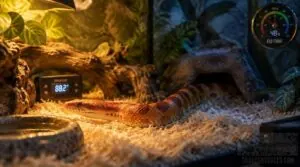
How warm should your setup be? Build a temperature gradient: 85°F on the warm end, 75°F on the cool end. Put a heat mat under one-third of the floor, and run it through a thermostat. That warm basking area is remarkably important.
Keep humidity levels at 40 to 50 percent, and choose dry aspen substrate that won’t hold extra moisture.
Feeding Frozen-Thawed Mice
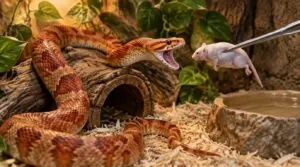
Most corn snakes happily accept frozen mice, which makes feeding remarkably simple. For snake feeding proper size, choose a mouse as wide as your snake’s thickest section. Thaw it fully, then warm it in water, never a microwave.
Snake feeding frozen prey is easiest with snake feeding tongs, so skip hand-feeding. For snake feeding safety, always toss leftovers within hours.
Safe Handling and Hygiene

Picture Mia, a first-time owner, scooping up her corn snake straight from the aspen shavings, an hour after dinner. Oops. Regurgitation city.
Gentle handling and trust building start with good timing. Here’s your quick checklist:
- Wait 48 hours after feeding
- Skip handling during shedding
- Wash hands for salmonella prevention
- Support the whole body
- Keep proper humidity steady for easy sheds
Cleaning, Health Checks, and Veterinary Care
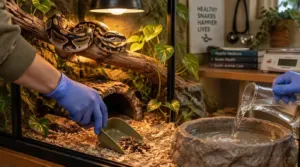
Picture Maya, three weeks into corn snake ownership, spotting a wet patch of urates at breakfast. She scoops it out right away. Smart move!
That’s snake cleaning in short: spot-clean within 24 hours, refresh the water daily, and swap the substrate every 4 to 6 weeks.
Pair it with weekly snake health monitoring and book a routine specialist exam with a reptile vet early.
Can I Commit to Decades of Care?

Here’s a bold truth: your corn snake could outlast your next three apartments. The average snake lifespan runs 15 to 20 years, and some individuals pass 23. That’s a remarkably long longterm commitment, so plan like it.
Your corn snake could live 15 to 20 years, outlasting your next three apartments, so plan for a long commitment
Think of it as a very quiet roommate with very specific needs. The snake feeding schedule is easy at first. Juveniles eat weekly, and adults eat every 7 to 14 days. Mice cost about $1 to $3 each, but bedding and heat add up monthly.
Good snake maintenance also means good snake health care. Respiratory infections, scale rot, and parasites can show up years in. Find a reptile-savvy vet now, and line up backup care for trips.
Ask yourself: will roommates, landlords, or future kids be on board?
Which Corn Snake Should I Choose?

Ready to pick your snake? Good news: this part is the fun one.
Start with these three choices:
- Age: Hatchlings need frequent feeding, but you’ll raise them yourself. Adults eat weekly, though their handling history may be unknown.
- Morph: Most color morphs need identical care. Skip extreme types like palmetto, which can bring eye or shedding trouble.
- Health: Look for clear eyes, smooth scales, and no mites. Confirm the snake eats frozen mice.
Females grow bigger, males stay slimmer, and both have a calm temperament. Size the tank to your snake, not your dreams: a 10-gallon for hatchlings, a 20-gallon tank for juveniles, then a 40-gallon adult home.
Quarantine your new pal for 30 days. You’ll love this low-maintenance buddy.
Frequently Asked Questions (FAQs)
Can corn snakes bond with humans?
Not the way a dog does. Corn snakes can’t form emotional bonds, but regular interaction builds calm tolerance. Trust building really means habituation. Keep gentle handling short, watch snake temperament, and stop when stress shows.
How to tell if a corn snake trusts you?
Ten to fifteen minutes of regular interaction fuels trust building over weeks. Use gentle handling techniques, then watch for a loose body, slow tongue flicks, and calm temperament.
No striking during snake handling confirms trust.
What are the downsides of owning a corn snake?
A corn snake is a coiled promise that lasts twenty years. Food costs and vet bills keep coming, and respiratory infections, mouth rot, or metabolic disease can strike fast.
Stay sharp, and budget early, friend.
Do corn snakes like to be petted?
Think your snake craves cuddles? Not quite. Corn snakes have a calm, docile, gentle temperament, so they tolerate handling, not petting.
Keep snake handling short, support the whole body, and watch for stress signs early.
Are corn snakes easy to handle?
Yes, they’re remarkably easy! Corn snakes have a calm temperament and rarely bite. Support the full body with both hands, move slowly, and wash up before and after. Skip handling after meals.
Are corn snakes a good first time pet?
Think of a corn snake as training wheels for reptile keeping. It’s a calm temperament beginner reptile that rarely bites, stays small, and eats frozen-thawed mice. That makes snake ownership remarkably approachable, though it still demands commitment.
How to care for a corn snake?
Give your corn snake a 40-gallon enclosure with secure latches. Build a temperature gradient from 75°F to 85°F, with a 90°F basking spot. Keep humidity levels near 40 to 50%. Feed frozen-thawed mice weekly.
Can you play with a corn snake?
Not in the way you’d play with a puppy. Corn snakes have a docile temperament, but they tolerate handling rather than enjoy it. Keep gentle handling short, about ten minutes, and support their whole body.
Are corn snakes fussy?
Corn snakes are lowmaintenance, with a docile temperament that makes snake handling easy. They happily eat frozen mice and just need proper humidity.
Skip a meal during shed? Don’t panic, it’s normal.
Are corn snakes receptive to humans?
Think they’ll never warm up to you? Not quite. Corn snakes learn your scent, and regular interaction keeps them calm. Gentle handling builds trust, though it’s tolerance, not cuddles. Remarkably, that’s enough for most keepers.
Conclusion
Picture Maya, three years in, tying her shoes at 6 a.m. Sunday. She checks the lid latch, thaws a mouse, and scans Kiwi’s belly for stuck shed. She does it anyway.
That’s your answer. When you ask yourself, "is a corn snake right for me," picture that morning, not the first cute photo. If it feels like a routine you’d keep, you’re ready. Choose a healthy hatchling, lock the lid, and enjoy twenty years together.