This site is supported by our readers. We may earn a commission, at no cost to you, if you purchase through links.

Your snake won’t tell you the tank feels small. It’ll just stop eating, hide for days, or strike at the glass every time you walk by. Those aren’t quirks of personality. They’re signals.
Snake health and enclosure size are tied together more tightly than most keepers realize. A few inches too tight, and you get muscle atrophy, blocked sheds, even chronic stress that shows up in bloodwork. Get the dimensions right, and you’ll watch a nervous animal turn confident within weeks.
The fix isn’t guesswork. It’s measurement, and knowing exactly what your species needs to thrive.
Table Of Contents
- Key Takeaways
- Why Enclosure Size Matters for Snake Health
- How to Calculate The Right Snake Enclosure Size
- Snake Enclosure Sizes by Species and Life Stage
- How Enclosure Design Supports Snake Health
- Monitor Snake Health and Know When to Upgrade
- Frequently Asked Questions (FAQs)
- What is the recommended size for a snake enclosure?
- What snake is worth $100,000?
- What size tank is recommended for a snake?
- How do I know if my snake needs a bigger enclosure?
- What happens if a snake enclosure is too small?
- How big should a snake enclosure be?
- How to choose the right enclosure for a pet snake?
- Why do snakes need a larger enclosure?
- Are wooden snake enclosures a good option?
- Are multi-level enclosures good for snakes?
- Conclusion
Key Takeaways
- A tank that’s too small isn’t just uncomfortable for your snake, it can trigger real health problems like muscle atrophy, blocked sheds, and stress that shows up in bloodwork.
- You’ll want to size the enclosure around your snake’s adult length, not its current size, since perimeter should equal or exceed body length and width should be at least half that length.
- Getting the temperature and humidity gradients right matters as much as floor space, since your snake needs room to move between warm and cool zones to digest, shed, and feel secure.
- Watch for warning signs like appetite loss past two weeks, constant glass-striking, or repeated escape attempts, because these tell you it’s time to upgrade before problems set in.
Why Enclosure Size Matters for Snake Health
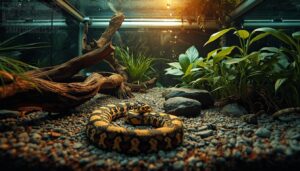
Enclosure size isn’t just about looks, it directly shapes how your snake behaves and feels day to day. A cramped tank can quietly chip away at appetite, muscle health, and even breathing. Here’s what you need to know about why the right size matters so much.
Beyond square footage, factors like maintaining proper humidity levels in a snake terrarium play a huge role in keeping your snake comfortable and healthy.
Stress, Appetite, and Defensive Behavior
When a snake feels cramped, its body reacts before you ever notice. Corticosterone spikes disrupt appetite regulation, and cramped quarters trigger real stress-related health issues:
- Reduced feeding rates
- Increased hiding behavior
- Elevated heterophil/lymphocyte ratios
- More hissing and striking
- Poor defensive posture space
Snakes lack ghrelin entirely, so hunger cues differ from ours, making stress reduction through proper sizing non-negotiable for reptile nutrition. For adult corn snakes, a minimum enclosure size guide recommends at least 48 in × 18 in × 18 in to reduce these stress responses.
Movement, Muscle Tone, and Exploration
A stressed snake stops moving, and a snake that stops moving loses muscle tone fast. Type II fibers need real space for sidewinding and full stretching. Cramped tanks limit locomotor performance, causing muscle atrophy over time.
Vertical perches activate epaxial muscles during climbing. Substrate variation and rotating enrichment encourage exploratory behavior, keeping your snake’s spatial requirements met and its body genuinely fit.
Thermoregulation Across Temperature Zones
Fitness needs space, and so does body heat. Your enclosure must fit a full temperature gradient, 28-32°C on the warm side, 22-26°C on the cool side, so your snake can move to regulate itself. A cramped tank blurs that heat gradient.
Add a basking spot near 32-35°C, then let night time cooling drop things 5-10°C. That’s real thermoregulation.
Shedding and Respiratory Health Risks
Heat gradients aren’t the only thing a bigger tank protects. Cramped enclosures trap stagnant air, pushing humidity past the humidity shedding threshold your snake needs for clean sheds.
Low airflow raises eye cap retention risk and invites respiratory problems. Proper enclosure size helps ventilation humidity balance, easing winter humidity management and cutting stress related health issues before they start.
How to Calculate The Right Snake Enclosure Size
You don’t need to guess at enclosure size, and you shouldn’t. A few simple measurements will tell you exactly what your snake needs to move, stretch, and thermoregulate properly. Here’s how to work out the right dimensions step by step.
How to Measure Total Length
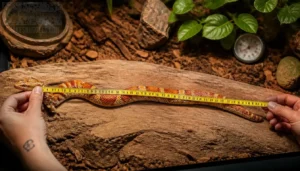
Get the tape out before you buy anything. Snout-to-tail measurement along the spine is the standard you need, not a guess.
Once you have that number, plan for the snake’s adult length rather than its current size, since this guide on essential snake enclosure requirements breaks down the length-to-width ratios that keep growing snakes comfortable.
Use a flexible measuring tape for live snakes, take two readings within 5mm, and average them. Coiled snake? Try the string method, accurate within 0.2%. Digital imaging works too, though it’s better suited to careful setups. Accuracy here drives every future dimensional calculation.
Inside Perimeter and Floor Space
Once you’ve got your snake’s length, math takes over. Perimeter must equal or exceed body length, so a 6-foot snake needs an 18-foot minimum layout.
- Floor Area Calculation: length x width in square feet
- Clear Space Ratio: 30-40% left open
- Turning Space Requirement: room to reverse direction
Horizontal floor space isn’t optional. It’s survival math.
For a snake, horizontal floor space isn’t optional, it’s survival math
Width for Turning and Movement
Length isn’t the whole story. Your snake also needs room to turn, and that’s where width comes in.
Follow the Minimum Width Ratio: at least half your snake’s length. A 4-footer needs 2 feet of width; account for body diameter clearance and turning radius needs, especially for juveniles, whose tighter turns demand proportionally more space than adults.
For a step-by-step walkthrough on measuring your snake and matching it to the right tank, this guide to choosing an appropriate snake enclosure size is a handy reference.
Height for Climbing Species

Vertical height matters as much as floor space for arboreal climbers. Match ceiling height to total body length, up to 6-8 feet for larger species. Boas need half their length in height.
Extend climbing structure from floor to ceiling. Place heat sources up top, since warmth and humidity naturally rise, and shield them with mesh safety barriers.
Planning Around Adult Size
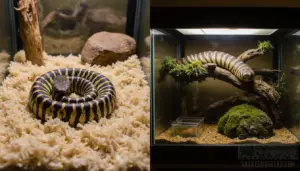
That hatchling won’t stay pocket-sized for long, so buy for the snake it becomes, not the one it is today.
Growth ratio planning means sizing up early: ball pythons hit 4-5 feet, corn snakes 3-5 feet. Choose modular expansion options or go 150% beyond projected adult size. Smart space efficiency strategies now save you an unnecessary upgrade, and a second upgrade budget, later.
Snake Enclosure Sizes by Species and Life Stage
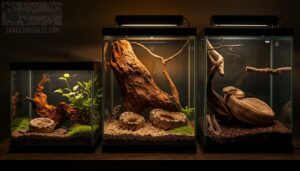
No two snakes need the same setup, and guessing leads to costly mistakes. Species and life stage change the math for length, height, and floor space every time. Here’s what the numbers actually look like for the snakes you’re most likely keeping.
Terrestrial Snake Minimum Dimensions
Ground-dwelling snakes need horizontal floor space, not ceiling height. Length‑to‑width ratio should hit 2:1 minimum, with width at least half your snake’s length. A 6‑foot corn snake needs 36 inches of width for comfortable turning.
Enclosure dimensions must match adult size from the start. Skip the "growing into it" mindset; growth planning now prevents a costly upgrade later.
Arboreal Snake Vertical Requirements
Tree-dwelling species flip the script entirely: height matters more than floor space here. Aim for ceilings at least 48 inches tall, with branches anchored securely at varying diameters. Space perches so your snake moves laterally without touching glass.
Smooth, splinter-free branch ends and thermostat-controlled warm zones up top keep climbing safe and stress low.
Ball Python Enclosure Sizing
Ground-dwelling ball pythons need floor space, not height. Minimum size for adults is 36×24×24 inches, though 4×2×2 ft suits most setups better.
Enclosure length should match thermal gradient length, letting your snake move between an 88-96°F basking spot and a 78-80°F cool side. Place hides in both zones.
Plan for adult size early. Growth upgrade planning saves you from repeated purchases.
Corn Snake Enclosure Sizing
Corn snakes trade the ball python’s bulk for speed and curiosity, so floor space beats height here too. A 40-gallon breeder or 36×18×18 setup covers adults reaching 3-5 feet.
Keep gaps under 0.25 inches; corn snakes squeeze through anything looser. Balance ventilation with security, plan corner space for hides, and watch substrate depth against usable floor area.
Juvenile Housing and Upgrades
That squeeze-through rule applies to juveniles too, only more so. Young corn snakes start in 3x2x2 setups, while baby ball pythons often begin in 10-gallon tanks.
Plan the upgrade before you need it. Wait 48 hours post-feeding before handling during moves, keep lighting dim, and add extra hides. Growing snakes need room to grow into, not stay in.
How Enclosure Design Supports Snake Health
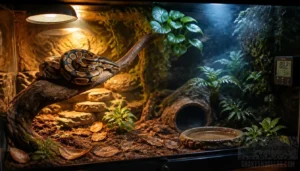
Size alone won’t keep your snake healthy. The layout inside the enclosure matters just as much as its footprint. Here’s what a well-designed setup needs to get right.
Warm and Cool Zone Access
A snake without a heat gradient can’t digest, move, or feel safe. Temperature gradient design needs a warm side near 85°F and a cool side around 75-80°F, roughly a 10°F split. Place heat sources at the back, calibrate thermostats weekly, and monitor surface temps with an infrared gun. Zone size matters too:
- Warm zone: 40% of floor space
- Cool zone: 30%
- Neutral area: 30%
- Boundary gap: 12 inches minimum
Humidity, Ventilation, and Air Quality
Get humidity wrong and you’re inviting respiratory infections. Humidity gradient management means 60-80% for ball pythons, 40-60% for corn snakes, checked twice daily.
Ventilation fan placement matters just as much: fans plus vents prevent stagnant air and mold. Watch CO2 buildup and airflow patterns closely. Bigger enclosure size helps here too, since cramped spaces trap moisture fast.
Hides, Water, and Privacy
Think of hides as your snake’s off switch from the world. Place one on each end of the gradient so it can digest warm and cool off without stress. Fit matters more than space: snug beats spacious. Set the water dish cool-side, near a hide, for private, hydrating soaks.
Climbing and Behavioral Enrichment
A bare tank is a bored snake, and boredom shows up as pacing or poor appetite.
Recognizing these as early stress signals—not bad habits—lets you step in before they escalate, and common snake behavior problems explained can help you tell the difference.
Add vertical climbing structures with stable, textured perches your snake can grip without slipping. Design pathway connectivity so routes avoid dead ends. Follow enrichment safety protocols: secure items firmly, check for sharp edges. Rotate accessories periodically. This behavioral enrichment helps natural activity levels, especially in arboreal species.
Safe Substrates and Materials
What’s under your snake matters as much as what’s around it. Skip pine or cedar shavings; they release toxic fumes. Choose non-toxic substrate like aspen, coconut fiber, or cypress mulch.
- Aspen: low humidity, digestible if ingested
- Coconut fiber: holds humidity for juveniles
- Cypress mulch: 50-70% humidity retention
- PVC/melamine: heat-resistant, easy-clean
- GE Silicone I: safe sealing adhesive
Match substrate depth to species.
Monitor Snake Health and Know When to Upgrade
A well-built enclosure only works if you keep watching what’s happening inside it. Your snake can’t tell you something’s wrong, but its behavior, its skin, and its habitat will. Here’s what to check and when it’s time to size up.
Pay close attention to feeding cues too — safe snake feeding practices like proper prey temperature and timing can prevent health issues before they start.
Digital Temperature and Humidity Checks
Numbers don’t lie, and that’s the point. Use a digital thermometer and hygrometer at warm, cool, and mid zones for real-time temperature gradient tracking, plus data logging for trends.
| Sensor | Accuracy |
|---|---|
| Thermometer | ±1°F |
| Hygrometer | ±3-5% |
| Warm zone | Daily check |
| Cool zone | Daily check |
| Calibration | Monthly |
Pair with thermostat alerts. You’ll catch drift before it stresses your snake.
Signs The Enclosure is Small
Your thermometer readings look fine, yet your snake still presses against glass, refuses to stretch out, or strikes at the walls. That’s your answer.
Watch for repeated escape attempts, tight partial coiling instead of full extension, and constant wall contact. A 20-gallon tank can trigger 5-10 escape attempts daily. Zero space to turn means zero comfort.
Stress and Illness Warning Signs
A cramped enclosure doesn’t just bruise the ego, it wears down the body. Watch for appetite loss past two weeks, hiding over 80% of the day, or sheds coming off in pieces. Chronic stress shows up as weight loss, gaping, or nasal discharge. Catch these early, because waiting rarely helps.
Cleaning, Mold, and Waste Control
Illness and dirty enclosures go hand in hand, so tighten your cleanup routine.
- Spot-clean waste daily; remove feces and uneaten prey fast.
- Replace urine-soaked substrate before odor builds.
- Dry damp spots within 48 hours using minimal water and safe cleaners.
- Wear gloves and an N95 for mold; contain debris and keep ventilation running.
Upgrade Timing and Budget Planning
A clean cage means little if your snake’s outgrowing it. Plan upgrades around adult size, not current length.
Ball pythons need 4x2x2 ft by year two. Budget $400-$900 for standard setups, more for large boas. Reuse substrate and hides to cut costs.
Fast growers may need upgrades within 6-12 months, so forecast early rather than scrambling later.
Frequently Asked Questions (FAQs)
What is the recommended size for a snake enclosure?
Match enclosure length to your snake’s total length, with floor space scaled to species. Ball pythons need 4×2 ft footprints, corn snakes 48×24 inches. Always plan around adult size prediction, not current length.
What snake is worth $100,000?
Two-headed rarity drives the top prices, like "We," the albino rat snake once listed near $150, Proven breeding females with rare morphs and documented genetic lineage can also approach six figures among serious collectors.
What size tank is recommended for a snake?
For adult ball pythons, aim for 48 x 24 x 24 inches. Corn snakes need at least 48 x 18 x 18 inches. Base tank size on your snake’s adult length, not its juvenile starting size.
Once you know the right footprint, this step-by-step snake terrarium building guide walks you through choosing materials and framing the enclosure to those exact dimensions.
How do I know if my snake needs a bigger enclosure?
The writing’s on the wall once your snake can’t fully stretch along two walls. Watch for behavioral stress, restlessness, or reduced hiding, alongside body length nearing enclosure size. These growth indicators mean it’s upgrade time.
What happens if a snake enclosure is too small?
Cramped quarters trigger stress-induced appetite loss, defensive posturing, and muscle atrophy from limited movement.
You’ll also see disrupted thermoregulation, humidity management challenges, shedding difficulties, and respiratory problems, since a snake with no space to choose zones can’t self-regulate properly.
How big should a snake enclosure be?
Bigger isn’t always better, but skimping sure backfires. Length should match or exceed body length, width at least two-thirds of that, height a third. Always calculate around adult size, not the juvenile you brought home.
How to choose the right enclosure for a pet snake?
Research your species’ adult size first, then pick a tank meeting minimum length and width for that build. Add secure locks, proper ventilation, and defined warm/cool zones so your snake thrives long-term.
Why do snakes need a larger enclosure?
Your snake needs space for stretching, cover for privacy, and room across a temperature gradient. Tight quarters trigger behavioral stress, shedding difficulties, and even respiratory problems, since cramped enclosures limit growth accommodation and enrichment opportunities snakes need to thrive.
Are wooden snake enclosures a good option?
Picture a snake dodging splinters from a bargain pine box, not exactly luxury living.
Choose void-free hardwood, water-based finishes, balanced ventilation, and tight latches. Solid wood insulates beautifully, resists moisture, and prevents escapes when built right.
Are multi-level enclosures good for snakes?
Yes, especially for arboreal species. Multi-level enclosures add climbing pathways and basking heights, supporting thermal gradient access, natural movement patterns, and habitat enrichment, while terrestrial snakes still need generous floor space over vertical complexity.
Conclusion
You might think a bigger tank just means more cost and more cleaning, but proper sizing actually cuts vet visits, shedding problems, and stress-driven illness. Snake health and enclosure size aren’t separate concerns, they’re the same conversation.
Measure twice, buy once, and upgrade before your snake outgrows its space. A confident snake in the right home rarely strikes at glass. It simply settles in and lives well.