This site is supported by our readers. We may earn a commission, at no cost to you, if you purchase through links.
Back in 1992, a single wild-caught ball python with no dark pigment at all changed the entire industry, and breeders still chase that same red-eyed magic today. One recessive gene, hidden in the tyrosinase pathway, and suddenly you get snakes glowing white, yellow, or lavender instead of the usual brown and black.
That founder animal spawned a whole family tree: Classic Albinos, Lavenders, Pieds, Clowns, and combos most keepers haven’t even heard of. Prices range from $300 to well over a grand, depending on line and contrast.
Curious which albino ball python morphs fit your goals, budget, and breeding project? Let’s break down the genetics, the visuals, and the care specifics that actually matter.
Table Of Contents
- Key Takeaways
- Popular Albino Ball Python Morphs
- Albino Ball Python Genetics Explained
- How Albino Morphs Differ Visually
- Breeding Albino Designer Morphs
- Albino Morph Prices, Care, and Health
- Frequently Asked Questions (FAQs)
- What ball python morphs are white?
- How rare is an albino ball python?
- What is the rarest morph of ball python?
- Which ball python morphs to avoid?
- What are the different types of albino ball pythons?
- How rare are albino pythons?
- What is the most sought after ball python morph?
- What is the prettiest ball python morph?
- How long does the breeding process take?
- What are the specific lighting requirements?
- Conclusion
Key Takeaways
- Every albino ball python traces back to one wild-caught snake found in 1992, whose recessive tyrosinase gene wipes out melanin and produces that classic white-and-yellow, red-eyed look.
- Getting the albino trait requires two copies of the recessive gene (one from each parent), so pairing two carriers (hets) only yields about 25% true albino offspring.
- Prices vary widely by morph and contrast, from $150-400 for a Classic Albino up to $2,500+ up to $2,500+ for an Albino Clown, with rarer combos like the lavender albino sometimes fetching far more.
- Because albinos lack melanin, their eyes are extra sensitive to light, so proper care means gentle, diffused lighting, careful UVB use, and steady humidity (50-60%, higher during sheds) to keep them healthy and vibrant.
Popular Albino Ball Python Morphs
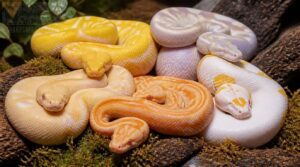
Albino ball pythons aren’t just one look—breeders have stacked the albino gene with other morphs to create some genuinely wild results.
Pairing albino with genes like piebald or clown can produce showstopping combos, so it’s worth studying how different morphs interact genetically before planning a pairing.
From classic lemon-yellow beauties to pattern-busting combos, there’s a lot of ground to cover here.
Let’s break down five of the most popular albino morphs you’ll run into on the market today.
Classic Albino
Picture a snake that lost its melanin and gained a spotlight: that’s the Classic Albino. White to yellow body, red-pink eyes staying vivid from hatchling to adult. Two carriers (recessive genotype) must pair up for that phenotype to show. Banding stays normal, just less blotchy. Eye clarity? Sharp despite the pigment loss.
A Classic Albino ball python loses its melanin but gains a spotlight, glowing white to yellow with vivid red-pink eyes for life
This absence of melanin production is what defines albinism across species, from ball pythons to mammals and birds. Historically, this founder morph fetched jaw-dropping prices back in ’92.
Lavender Albino
Now take that same tyrosinase gene disruption and add a lavender wash, and you’ve got the Lavender Albino. Pale lavender-pink body, gold crown up top, red eyes glowing.
- Softer white patches than Classic
- Fine lavender scale rims
- Golden head patch
- Recessive genetic inheritance
Any breeding program pairing two carriers can produce this phenotype. Watch shedding closely; humidity around 50-60% keeps things smooth.
Albino Pied
Now stack piebald patterning onto that same albino gene, and you get pure chaos, in the best way.
Albino Pied blends white blotches with lemon-yellow patches, red eyes glowing throughout. Two separate recessive genes working together means careful pairing of het carriers. Expect $800+ price tags.
Keep temps 78-88°F, feed appropriately-sized prey, and protect those light-sensitive eyes from harsh UV.
Albino Clown
From pied chaos, we jump to the albino clown ball python, another two-gene cross. Clown pattern retention stays strong into adulthood, with pattern density varying by lineage.
Juvenile eye intensity often outshines adults’. Handling stress can dull that vivid coloration, so keep it gentle.
Price? Expect $1,200+.
Black Pastel Albino
When a Black Pastel carries the albino gene, you get charcoal-toned blacks fading into bright yellow-orange, with pink eyes replacing black ones. That’s amelanism at work, wiping out melanin entirely.
Genetic stability matters here, so track lineage carefully. Breed two carriers and you’ll see roughly 25% true black pastel albino ball python offspring. Prices run $300+, with eye clarity worth watching closely.
Once you’ve confirmed the genetics, pair your feeding schedule with this guide to picking the right mouse size for ball pythons to keep growth on track.
Albino Ball Python Genetics Explained
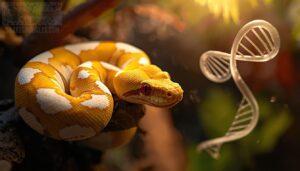
Alright, let’s get into the actual science, because those gorgeous yellow patterns didn’t just happen by accident. Genetics can sound intimidating, but trust me, once you see it laid out, it clicks fast. Here’s everything you need to know about how the albino trait works, from recessive genes to what happens when you pair up parents.
Recessive Albino Inheritance
Ever wonder why two normal-looking ball pythons can produce albino babies? Recessive genes hide until paired up.
Albino needs a homozygous genotype, two mutant tyrosinase alleles, to zero out melanin production.
Basic Punnett square basics: het x het gives 25% albino, 50% carriers, 25% normal, textbook Mendelian ratios.
That’s the genotype-phenotype link driving every albino hatch you’ll see.
Albino Versus Het Albino
So what’s the real difference? It’s all in the genotype comparison. An albino ball python is homozygous, two albino genes. A het albino ball python is heterozygous, carrying just one.
Phenotype differences show it best: albinos display bright yellow patterning, hets look totally normal. That’s your carrier identification puzzle, solved only through lineage or breeding history.
Amelanism and Melanin Loss
Ever wonder why albinos glow yellow instead of going pale gray? Blame a TYR gene mutation killing tyrosinase activity, the enzyme melanin needs. That’s melanin pathway disruption basically, an amelanistic ball python.
Result: melanin deficiency, iris pigment loss (hello, pink eyes!), scale reflectivity change, and increased UV sensitivity. Spooky stuff, genetically speaking!
Albino Gene Compatibility
Not every morph plays nice together, but albino sure does. It’s a simple recessive gene, so pairing with Mojave, Pastel, or Spider just layers new allelic combinations onto that amelanistic base.
Albino Mojave Interaction boosts contrast, Albino Pastel Combination brightens ground color, and Albino Spider Interaction keeps that webby pattern visible.
Homozygous, heterozygous, doesn’t matter, compatibility’s rarely the issue here!
Predicting Offspring Ratios
Want to know what you’re hatching before eggs even pip? Grab a Punnett square. Carrier cross (het x het) gives 25% homozygous albino, 50% heterozygous, 25% normal.
- Het x het: 25% albino
- Albino x albino: 100% albino
- Albino x het: 50% albino
- Genotype probability stays fixed
- Offspring ratio ignores clutch size
How Albino Morphs Differ Visually
Genetics tell you what’s possible, but your eyes tell you what’s actually sitting in that tub. No two albinos wear the mutation quite the same way, and the differences show up fast once you know where to look. Let’s break down exactly what separates a stunning albino from a merely "eh, it’s yellow" one.
Yellow and White Patterning
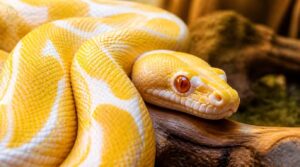
Splashy yellow against creamy white, that’s the albino’s calling card. Bold yellow patterns form high-contrast blotches, sometimes bright lemon, edges sharp on juveniles.
| Trait | Classic Albino | Lavender Line |
|---|---|---|
| Yellow Hue | Cream-lemon | Deep lemon |
| White Contrast | Bold | Bold |
| Edge Clarity | Sharp | Sharp |
Scale reflection amplifies the glow. Lineage keeps patterns consistent, generation after generation.
Red or Pink Eyes
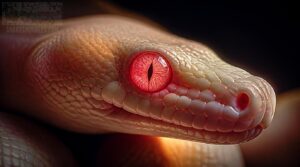
Now flip to the eyes, and you’ll spot the trait’s real giveaway: red or pink eye color. That’s ocular albinism at work, the amelanistic trait knocking out melanin so vessels show through.
- Hatchlings often show the brightest red
- Color can fade slightly with age
- Irritation from substrate causes false redness
Watch UV exposure and hydration, harsh light and dry eyes both dull that glow.
High-Contrast Albino Lines
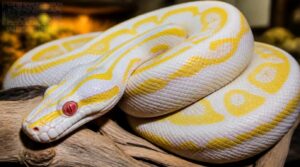
That red or pink eye color sets the stage, but the real showstopper is what happens across the body: high-contrast yellow blotches popping against creamy white skin. Crisp white blaze width, sharp scale border definition, distinct lateral tracking lines.
| Feature | High-Contrast Trait |
|---|---|
| Blotches | Bright lemon yellow |
| Blaze | 1-2 scales wide |
| Eyes | Red/pink |
| Borders | Crisp |
| Symmetry | Left-right matched |
Low-Contrast Adult Fading
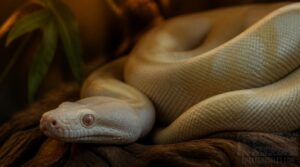
Not every albino keeps that crisp look forever, though. Low-contrast lines fade with age, that bold amelanism softening into muted cream and gold.
- Red eyes fade to pale pink
- Pattern blurs, less defined saddles
- Matte scales replace glossy sheen
- Head markings dull, lose contrast
Around 60% show this by age two. Watch UV exposure, light sensitivity, since fading eyes need gentler lighting.
Breeding Albino Designer Morphs
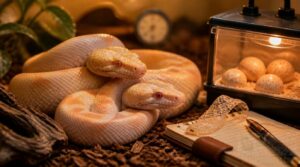
So you’ve got a solid grasp on genetics and you’re itching to pair up your first albino project? Smart move, but breeding for specific looks takes more than just tossing two snakes together and hoping for magic.
Here’s what actually goes into planning a successful albino pairing, from picking partners to protecting the babies you produce.
Pairing Compatible Morph Genes
Ever wonder how breeders stack morphs without losing the albino trait? Gene stacking basics come down to recessive trait matching: both parents must carry albino to guarantee expression.
Pairing Lavender Albino with Albino Pied gives yellow-white patterning and pink eyes. Albino Clown crossed with Classic Albino boosts head contrast and reddens eyes. Black Pastel Albino plus Lavender deepens shading while keeping amelanism intact.
Breeding Age and Weight
Two years minimum, but weight matters more than age. Females need 1200+ grams before pairing; males can go around 700-1200 grams. Rushing an underweight female risks ovulation failure.
Steady gains over 6-8 weeks, consistent feeding, and body condition above 3/5 tell you she’s ready. Patience here pays off in healthy clutches later.
Enhancing Color and Contrast
Chasing that showstopping pop between high-contrast yellow blotches and creamy white skin? Genetics sets the stage, but husbandry finishes the job.
Since albino ball pythons lack melanin production, carotenoid pigments do the heavy lifting for those warm yellows. Solid UV lighting, clean water, and low-stress conditions keep colors vivid, letting that lemon-drop brilliance really shine come shed time.
Avoiding Genetic Health Risks
Not every morph pairing deserves a spot in your breeding rack. Caramel Albino crosses can raise kinking defect rates, and Super Lesser x Albino often produces eye defects.
Test for carrier status before pairing heterozygous animals, avoid stacking harmful recessive genes, and keep lineage records.
Smart screening prevents inbreeding depression and protects healthy phenotypic expression down the line.
Albino Morph Prices, Care, and Health
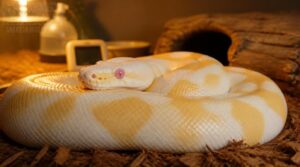
So you’ve got your pairing planned and your offspring ratios figured out—now let’s talk dollars and daily care. Prices swing a lot depending on the morph, and those pink eyes need special handling you won’t find in a standard care sheet. Here’s what actually matters once that albino comes home.
Price Differences by Morph
Money talks, and albino morphs speak volumes! Classic Albino runs $150-400. Lavender Albino hits $500-1200. Albino Pied commands $600-1800.
- Pattern sharpness drives premiums
- Breeding season spikes prices
- Collector demand pushes rarity value up
- Age affects cost (hatchlings cost less)
Albino Clown tops out near $2500. Market valuation shifts constantly, so shop smart!
Rarity, Sex, and Lineage
Rarity isn’t just hype, it’s genetics doing math. Combine albino with pied or clown lineages and you get true rare clutches. Sex distribution stays roughly balanced, though breeder selection tweaks the odds.
| Factor | Impact on Value |
|---|---|
| Lineage purity | Higher resale |
| Rare clutch frequency | Premium pricing |
| Pedigree tracking | Buyer confidence |
| Founding male albino | Bloodline prestige |
| Documented generations | Trust signal |
Lighting for Sensitive Eyes
Pedigree’s great, but let’s talk eyeballs. Albino ball pythons lack melanin, so UV sensitivity is real. Use a 5.0 UVB T5 HO bulb, mounted 8-10 inches up, running 4-6 hours daily. Watch for squinting or hiding, those are photophobia red flags.
Diffusion screens and amber LEDs help balance thermoregulation without frying those pink eyes. Spooky, but manageable!
Humidity and Enclosure Needs
Eyes aren’t the only sensitive bit, your albino’s skin cares about humidity too. Keep levels at 50-60%, bumping to 60-70% for sheds. Use a humid hide, moist substrate, and light misting.
- Enclosure size: 36" adult, 20-gallon juvenile
- Substrate depth: 2-4 inches
- Airflow: screened lid, no stagnant air
Choosing a Reputable Breeder
Got humidity dialed in? Good. Now the real work: finding a breeder worth your money.
Check breeder reputation on World of Ball Pythons and MorphMarket reviews. Demand genetic testing documentation, health guarantees, and licensing proof. Ask about vet care and facility security.
Reputable sellers (think Wilbanks-caliber) offer real lineage records, not just a pretty Instagram feed.
Frequently Asked Questions (FAQs)
What ball python morphs are white?
White, in the reptile world, isn’t a color so much as an absence, a canvas waiting for accent.
White Morph Variants worth knowing: Classic Albino, Lavender Albino, Albino Pied, Albino Clown, and Black Pastel Albino, each showing creamy white skin pigmentation with its own splash of yellow or lavender.
How rare is an albino ball python?
Not common at all. Since it’s a recessive gene, two heterozygous parents only produce roughly 25% albino offspring, so genetic probability, wild sightings, and careful lineage tracking all keep true albino ball pythons scarce and in steady market demand.
What is the rarest morph of ball python?
Honestly? Most breeders point to the Blue Eyed Leucistic, thanks to complete leucism plus icy blue eyes.
Scaleless Albinos and Lavender Albino Pied combos are close contenders, ultra rare designer morphs driven by tricky recessive genes and painstaking genetic rarity factors.
Which ball python morphs to avoid?
Steer clear of Desert morph females, Super Lesser eye issues, and Lethal BEL combos. Watch Caramel Albino sub-fertility and Spider wobble too. For albino spider, bumblebee, or pinstripe pairings, weigh photosensitivity and light sensitivity risks carefully.
What are the different types of albino ball pythons?
Several distinct lines exist, each with unique tyrosinase status, eye hue, and pattern genetics: classic, lavender, pied, clown, caramel, and spider.
Contrast retention and gene combo outcomes vary widely, driving price tiers from budget hatchlings to premium designer morphs.
How rare are albino pythons?
Good things come in small, spotted packages.
Rare finds two ways: low wild population density and low carrier allele frequency make natural albinism scarce, while breeding success rates between two heterozygous parents yield just 25% albino offspring per clutch.
What is the most sought after ball python morph?
Ask ten breeders and you’ll get ten answers, but the lavender albino ball python takes the crown right now, commanding up to $40,000 thanks to brutal rarity, stunning contrast, and sky-high collector demand.
What is the prettiest ball python morph?
Beauty’s in the eye of the beholder, but designer morphs stealing the spotlight combine lavender albino ball python genes with other color morphs, boosting Color Contrast, Pattern Symmetry, and Eye Brightness into one gorgeous, rare phenotype.
How long does the breeding process take?
Patience is the name of the game here. Count on 6 to 8 months from pairing to egg laying, then add 50 to 55 days of incubation before those hatchlings finally pip.
What are the specific lighting requirements?
Dim, diffuse light does the trick here. Skip UVB entirely, keep basking spots at 90-95°F, run a steady day/night cycle, and always favor diffused ambient lighting over anything harsh or direct.
Conclusion
That 1992 founder snake fetched a small fortune, yet its single recessive gene still writes every white and yellow pattern seen in the hobby today. That’s the quiet power of albino ball python morphs: one tiny mutation, endless creative combinations.
Whether you’re chasing high-contrast lavenders or a budget-friendly classic, the genetics don’t lie, and neither does the payoff. Learn the pairings, respect the husbandry, and your collection will keep glowing for years to come.