This site is supported by our readers. We may earn a commission, at no cost to you, if you purchase through links.

A snake can go weeks without eating, but it can’t skip water for long. Dehydration sneaks up fast, and a bowl that’s too shallow, too deep, or placed in the wrong spot causes more harm than most keepers realize. Your snake needs to drink, soak, and sometimes shed with that water’s help, so the setup matters more than it looks.
Setting up snake water bowls the right way means matching material, size, and placement to your snake’s exact needs, not just tossing in whatever bowl fits. Get it wrong and you’re looking at tipped water, bacteria buildup, or a snake that can’t reach the bowl at all. Here’s how to build a setup that stays clean, stable, and safe.
Table Of Contents
- Key Takeaways
- Choose a Safe, Properly Sized Water Bowl
- Position The Bowl Inside The Enclosure
- Fill The Bowl to a Safe Depth
- Establish a Cleaning and Refilling Routine
- Troubleshoot Common Water Bowl Problems
- Frequently Asked Questions (FAQs)
- Where should a snakes water bowl be placed?
- Why put a penny in a snake water bowl?
- How often do I change my snakes water bowl?
- How to set up a water bowl?
- How often should water bowls be replaced?
- Can snakes drink from automatic water dispensers?
- What water temperature is best for snakes?
- Should I add vitamins or supplements to water?
- How do I winterize outdoor snake water systems?
- How many water bowls does one enclosure need?
- Conclusion
Key Takeaways
- Fill your snake’s water to about one-third of its body height, deep enough for a real soak but shallow enough that its nostrils stay clear above the surface.
- Place the bowl on the cool side of the enclosure, near the hide with a clear path to it, to control evaporation and keep your snake stress-free when it wants a drink.
- Pick a bowl based on material and size, ceramic, glass, or stainless steel all beat plastic, with weighted or non-slip bases to stop tipping and spills.
- Stick to a cleaning routine: check and change water daily, scrub weekly with a reptile-safe disinfectant, and replace the whole bowl every 2 to 4 weeks to keep bacteria and mineral buildup from taking hold.
Choose a Safe, Properly Sized Water Bowl
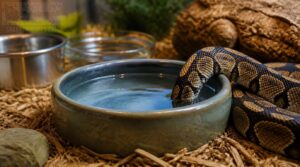
The right water bowl isn’t just a bowl—it’s a piece of safety equipment. Get the material, size, and shape wrong, and you’re setting yourself up for spills, bacteria, or a snake that can’t soak properly during shed. Here’s what to look for before you buy.
For a closer look at material tradeoffs, this guide to choosing water bowls for desert reptile enclosures breaks down which options resist bacteria best.
A water bowl isn’t just a bowl—it’s safety equipment, and getting it wrong risks spills, bacteria, or a snake unable to soak during shed
Ceramic, Glass, or Stainless Steel
For proper bowl selection, ceramic glass or stainless steel bowls all beat plastic. Ceramic offers weight stability but chips if dropped. Glass shows dirt fast for easy monitoring, though it’s fragile. Stainless steel resists breakage and grips high heat, but skip bleach, and don’t let water sit too long or you’ll get a metallic taste.
Choosing between these materials often comes down to durability and food safety, since both are non-reactive options that won’t leach substances into your snake’s water.
Hatchling and Juvenile Bowl Sizes
Once material’s sorted, size comes next. Hatchlings need tiny bowl dimensions, roughly 1 to 1.5 inches across, with shallow depth near 0.5 inches for hatchling safety.
- Snout-friendly rims for easy drinking
- Water depth one-third body height
- Weighted base to prevent tipping
- Juvenile bowl capacity around 16 ounces
Consistency beats precision here. Small, steady sizing allows head swimming access and confident soaking.
Adult and Large-Species Sizing
Adults need more room to work with. You’re looking at bowls holding up to a liter, 8-10 inches across, sized to 50-70% of your snake’s body width.
Big-bodied species like olive pythons often need 4-6 inch diameters and depths reaching 12 cm deep. Water volume should cover 10-20% of body length daily, with depth at one-third body height for a full soak.
Stable, Tip-Resistant Bowl Designs
Big bowls tip easy, especially when a heavy-bodied snake leans in for a drink.
Look for a weighted base design with non-slip feet or a rubberized bottom grip. Textured friction surfaces add real hold on smooth flooring.
Interchangeable weighted inserts let you fine-tune stability without buying new dishes, and nonslip mats under wide weighted bases lock in water bowl stability.
Allowing Safe Soaking Space
Since your snake needs room to lower its shoulders while keeping its nose clear, size matters more than looks. Aim for water depth one-third body height, with a substrate-free zone and clear access path nearby.
- Shoulders submerged, nostrils dry
- Wide weighted bases for stability
- Bowl height for easy entry
- Quiet placement area, low stress
Always run a quick bowl stability check before filling.
Set the bowl on a flat surface inside the hide and give it a nudge—if it wobbles or tips, size down using this guide to choosing boa constrictor hides for large enclosures to find the right snug fit.
Position The Bowl Inside The Enclosure
Picking the right bowl is only half the job—where you put it matters just as much. Placement affects everything from bacteria growth to how comfortable your snake feels soaking. Here’s what to think about when choosing a spot inside the enclosure.
Cool-Side Placement for Most Setups
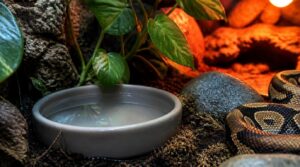
Where you put the bowl matters almost as much as picking one. Cool side placement keeps water 6-12°F cooler and cuts evaporation by up to 30%, holding a steady 72-78°F. It also keeps water clear of basking spots, so you won’t burn yourself reaching in during handling.
Your specific setup—substrate, enclosure size, even your snake’s quirks—can shift the ideal spot, so checking a guide on how often to change your snake’s water bowl helps you dial in a routine that actually works.
Heat, Evaporation, and Humidity
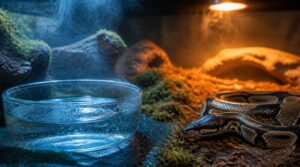
Since water absorbs heat from nearby surfaces, bowl placement drives evaporation speed. Three factors push water loss up fast:
- Direct heat exposure raising vapor pressure
- Low humidity pulling moisture into dry air
- Airflow sweeping vapor away
Cool side placement slows all three, supporting steady thermal gradient management without stressing your snake’s respiratory tract or skin.
Stable, Level Placement Surfaces
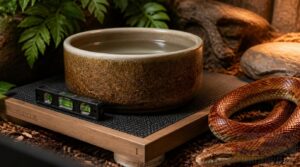
A wobbly bowl spells trouble fast. You’ll want a flat, solid surface, checked with a level if your enclosure floor isn’t perfectly even.
Non-slip mats or rubber feet add grip and vibration damping against tail bumps. Weighted bases, PVC couplers, or recessed trays boost water dish stability, keeping bowls seated firmly no matter how your snake moves around them.
Distance From Substrate Dig Zones
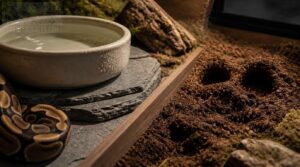
Snakes dig, and dirt flies. Keep a 2 to 3 inch gap minimum, more for burrowers, using a substrate barrier lip or raised tray.
- Elevated placement stops splash-back
- Barriers block tunneling underneath
- Clean paths prevent contamination
Corner placement with a rough 25 cm gap from dig zones keeps water clean and your snake soaking safely.
Clear Access From Hides
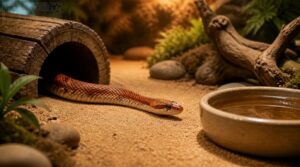
A hide with no straight shot to water just adds stress. You’ll want a clear ground corridor, 8-12 cm wide, under 20 cm long, with no sharp turns.
Skip the elevated dish mounts here if they block entry. Smooth substrate underneath keeps scales from snagging as your snake slides from hide to bowl.
Fill The Bowl to a Safe Depth
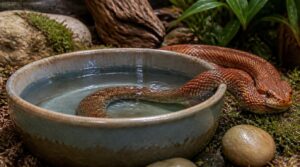
Getting the bowl in the right spot is only half the job. You’ll also need to fill it just right, deep enough for a good soak but not so deep it’s risky. Here’s what that looks like at every stage of your snake’s life.
Water Depth by Snake Size
Depth changes with age. Hatchlings need just 1-2 inches, juveniles 1.5-3 inches, and adults 3-5 inches (up to 6 for larger species). A good rule of thumb: water depth around one-third body height. Getting depth right matters even more when your snake’s already on edge, so pair it with tips for building a low-stress snake environment to keep the whole enclosure calming.
Proper bowl selection matters here too, since a weighted base and the right bowl height for accessibility keep things stable as depth increases.
Keeping Nostrils Above Water
Getting the depth right on paper doesn’t help if your snake still has to dunk its face to drink. Do a quick nostril safety check: watch it rest with its head naturally elevated. If nostrils dip under, adjust depth down.
Good bowl selection with the right height for accessibility makes this easy to judge at a glance.
Safe Soaking During Shedding
Shedding time changes the rules a bit. Your snake may spend longer soaks working stuck skin loose, so stability matters more than ever.
- Water depth at one-third body height
- Bowl that resists tipping under weight shifts
- Wide base for escape prevention
- Sanitize weekly to stop bacterial buildup
- Room to fully submerge shedding patches
Using Room-Temperature Water
That soak works best with water that’s neither hot nor cold. Aim for 20 to 25°C (68 to 77°F), easy on the tongue and gentle on skin.
Room-temperature water also slows evaporation and steadies humidity. Change it daily, sanitize weekly, and keep depth at one-third body height for safe, steady hydration.
Preventing Spills and Drowning
Since spills cause almost as much trouble as drowning risk, both deserve equal attention. Water depth control matters most: keep it at one-third body height.
- Choose tip-resistant design with weighted bases
- Try PVC couplers for stability
- Use elevated bowl designs for spill guard protection
- Check nostril clearance daily
Daily water changes and a substrate barrier keep things safe and dry.
Establish a Cleaning and Refilling Routine
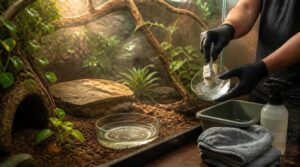
A clean bowl isn’t a one-and-done job—it’s a routine you’ll want to build into your regular care schedule. Bacteria, scum, and mineral buildup creep in fast, especially in warm, humid enclosures. Here’s what that routine should actually look like, from daily glances to deeper weekly cleans.
Daily Water Checks and Changes
A stagnant bowl is a bacteria buffet. Check water level daily, top it off to keep depth at one-third body height, and glance for debris or cloudiness.
Change water daily if you spot contamination, otherwise every 1-3 days works. Let tap water rest so chlorine dissipates, and confirm temperature stays stable before refilling.
Weekly Scrubbing and Disinfection
Rinsing alone won’t cut it once a week rolls around. You’ll need a real weekly sanitizing routine: hot soapy water first, then a dedicated scrub brush to break up biofilm, followed by a reptile-safe disinfectant (1:10 bleach or 3% peroxide, 5-minute contact time).
- Scrub every crevice
- Rinse 30+ seconds
- Air-dry fully
- Log the date
Material-Specific Cleaning Methods
Not every bowl gets scrubbed the same way. Ceramic bowls need a non-abrasive sponge with mild soap, nothing that scratches the glaze. Glass bowls handle warm soapy water fine, but skip sudden temperature swings, they can crack.
Stainless steel takes a soft brush confidently, though bleach causes pitting over time. For bleach-free sanitizing, try chlorhexidine or F10SC instead. Dry everything fully.
Removing Scum and Mineral Scale
That white crust isn’t just ugly, it’s a bacteria magnet. Hard water leaves calcium and magnesium behind as it evaporates, so you’ll want to catch it early.
- Chalky white rings near the waterline
- Cloudy film across the bottom
- Rough, gritty texture under your fingers
- Slight odor when scale mixes with slime
Try a vinegar solution soak, or a baking soda paste with mechanical scrubbing for stubborn spots.
Inspecting Cracks and Sharp Edges
A hairline crack can hide until it slices delicate belly scales. Wipe the bowl clean, then check edges under bright, grazing light from two angles.
Real cracks stay consistent width and don’t shift when rotated. Cracks past 0.5mm or touching the rim mean immediate replacement, sharp or jagged edges too. Ceramic and glass show hairlines under oblique light; steel shows stress whitening.
Troubleshoot Common Water Bowl Problems

Even with a solid setup, things can still go sideways. Bowls tip, water turns cloudy, or your snake starts acting off, and it’s not always obvious why. Here’s how to spot the issue fast and fix it before it becomes a bigger problem.
Repeated Tipping and Spills
Tipping usually comes down to physics, not bad luck. Round, light bowls slide and flip easily, so switch to a weighted base or PVC coupler design.
Add a non-slip mat underneath for enclosure surface grip, and keep water at 60-70% capacity for water level control and daily debris removal near the bowl.
Substrate Contamination Solutions
Bark bits and loose soil find their way into bowls constantly, and that’s where substrate barrier prevention earns its keep. Try:
- Elevated bowl placement
- Barrier lips or liners
- Avoiding dig zones
- Daily debris removal
- Weighted bases or PVC couplers
Sealed rim designs and quick visual water checks round out clean substrate maintenance.
Mold, Slime, and Biofilm
Slimy film on the bowl edge? That’s biofilm, microbes glued down by their own sticky matrix, resisting scrubs. Biofilm growth causes trace back to damp surfaces left too long.
| Sign | Fix |
|---|---|
| Slick residue | Scrub weekly |
| Cloudy water | Change daily |
| Musty smell | Disinfect bowl |
| Scale buildup | Vinegar soak |
| Recurring film | Swap material |
Excessive Soaking or Mites
Biofilm’s one thing. A snake parked in its bowl for hours is another story entirely, and it usually means mites, not stubbornness.
Watch for:
- Tiny black specks floating on the surface
- Pinhead dots near eyes or heat pits
- Moving specks on your hands after handling
- Water bowl removed 24 hours during treatment
- Daily fresh water once Nix fully dries
Dehydration and Humidity Adjustments
A snake avoiding water yet showing sunken eyes or wrinkled skin needs a hydration check. Bump humidity with a digital hygrometer, adjust airflow, and balance substrate moisture. Keep water at one-third body height, changed daily. Higher heat speeds evaporation, so watch bowl placement. Fresh water and steady humidity prevent mold, bacteria, and dehydration together.
Frequently Asked Questions (FAQs)
Where should a snakes water bowl be placed?
You’ll want the cooler side, near a hide for easy access, on a stable corner spot. This balances evaporation control, keeps a clear pathway, and prevents a weighted, tip-resistant bowl from disrupting humidity.
Why put a penny in a snake water bowl?
Old copper pennies get dropped in for algae and biofilm control, the theory being trace copper ions slow slime growth. Results vary though, and it never replaces regular scrubbing, weekly sanitizing, and proper bowl material choice.
How often do I change my snakes water bowl?
Change water daily to every other day, sooner if you spot debris or waste. Empty and scrub the bowl right after soaking accidents, then refill with fresh, dechlorinated water to keep bacteria in check.
How to set up a water bowl?
Like building a tiny pool, sizing matters most: pick a non-porous bowl, size it to your snake, set it on the cool side, fill to one-third body height, then commit to weekly sanitizing.
How often should water bowls be replaced?
Most bowls need full replacement every 2 to 4 weeks, but watch for triggers: cracks, cloudy residue, or persistent odor after scrubbing. Stainless steel lasts 3-6 months; plastic wears faster, every 2-3 months. Sync replacement with your weekly cleaning routine.
Can snakes drink from automatic water dispensers?
Fancy tech, unimpressed snake: automatic dispensers sound modern but most snakes ignore them. Continuous flow spooks many species, so keep flow rate slow and a backup bowl ready for reliable water access.
What water temperature is best for snakes?
Room temperature, roughly 68-78°F, works best, matching your cool end gradient. Skip heated water bowls or submersible heaters; sudden warmth breeds bacteria fast, and cold water risks thermal shock prevention failures for your snake’s system.
Should I add vitamins or supplements to water?
It seems helpful, but no. Skip vitamin water and supplements entirely. Plain water covers hydration needs; extra nutrients belong in diet, not the bowl, where they’ll fuel bacteria growth and throw off nutrient balance fast.
How do I winterize outdoor snake water systems?
Winterizing means heated bases or submersible heaters to prevent freezing, plus insulate water lines, heat tape around pipes, and backup power systems for outages.
Elevated placement drains better, and monitoring ambient temps daily keeps outdoor setups safe through frost.
How many water bowls does one enclosure need?
One bowl works, but two is the golden rule. That gives continuous water access during rotation, backup coverage, and easier hygiene, especially in multisnake setups or larger enclosures needing space efficiency.
Conclusion
A million tiny things could go wrong with one water bowl, but they rarely do once you know what to watch for.
Setting up snake water bowls right isn’t complicated. It’s just consistent: right size, right depth, right spot, checked daily.
Your snake won’t thank you, snakes don’t work that way, but a hydrated, calm animal tells you everything went right.
Lock in the basics, and this becomes one habit you’ll never think twice about again.