This site is supported by our readers. We may earn a commission, at no cost to you, if you purchase through links.
Your snake can’t whimper when something’s wrong, and it won’t limp or lose its appetite the way a dog does. It hides pain instead, a survival trick honed over millions of years in the wild. That silence means owners often miss trouble until it’s already serious.
A dull patch of scales, a slightly longer pause between meals, a shed that comes off in pieces instead of one clean sleeve. These small signals carry real weight. Understanding snake health and behavior turns you from a passive observer into someone who catches problems early, when they’re still easy to fix.
You’ll learn to read your snake’s body the way a vet does, spotting the difference between a lazy Sunday coil and a stress response before it escalates.
Table Of Contents
- Key Takeaways
- How to Tell if Your Snake is Healthy
- How to Read Snake Body Language
- Normal and Abnormal Snake Behaviors
- How Habitat Affects Snake Health and Behavior
- Common Snake Health Problems and Warning Signs
- Frequently Asked Questions (FAQs)
- How can you tell if a snake is healthy?
- What smell does a snake hate?
- How to tell if snakes are happy?
- What did Jesus say about snakes?
- How often should snakes shed their skin?
- Can snakes recognize their owners or handlers?
- What sounds do snakes make besides hissing?
- How long can snakes go without eating?
- Do snakes sleep and dream like mammals?
- How often should I clean my snakes enclosure?
- Conclusion
Key Takeaways
- Snakes instinctively hide pain and illness, so you have to actively check their eyes, scales, weight, breathing, and shedding regularly to catch problems early.
- Body language like loose coiling and steady tongue flicks signals calm, while rigid posture, prolonged hiding, or a tightened S-curve strike stance signal stress or danger you should respect immediately.
- Getting the habitat right—proper temperature gradients, species-specific humidity, secure hides, and a consistent day-night cycle—is the biggest factor in preventing health and behavior problems in the first place.
- Certain warning signs, like open-mouth breathing, weeks of appetite refusal, or recurring bad sheds, mean it’s time to call an exotic vet rather than wait and see.
If you notice flattened sides or unusually firm coils, it’s worth pausing to check this guide to boa constrictor body language and stress signals before handling.
How to Tell if Your Snake is Healthy
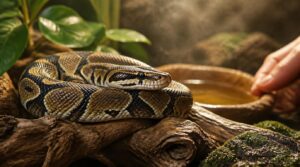
Your snake can’t tell you how it feels, so you have to read the signs yourself. Good news: a healthy snake gives you plenty to work with, from its eyes to its skin to how it eats. Here’s exactly what to check, one piece at a time.
Feeding habits vary a lot by age, so it helps to understand how often snakes eat feeder mice at different life stages before drawing conclusions about what’s normal for yours.
Appetite is one of the biggest tells, so if feeding time seems off, this pet snake feeding guide can help you figure out what’s normal and what’s not.
Smooth Scales and Clear Eyes
Run your fingers along your snake’s body: smooth, shiny scales without cracks or dull patches signal good health, thanks to their glossy, ridge-free surface.
Check for:
- Clear, bright eyes with sharp gleam
- No cloudy discharge outside shedding
- No blistering or discoloration
Dull sheen or scale damage often points to nutritional gaps or infection. Regularly checking for these key snake health indicators can help you catch potential issues before they become serious.
Healthy Weight and Muscle Tone
Beyond the scales, feel what’s underneath. Use the Body Condition Score (1-5 scale) to check muscle tone: palpate ribs and spine, aiming for score 2.5, firm epaxial muscles, no sharp bones.
| BCS | Appearance | Action |
|---|---|---|
| 1 | Vertebrae visible | Vet visit |
| 2.5 | Ideal girth | Maintain |
| 5 | Fat folds | Adjust feeding |
Keep a Weight Monitoring Log weekly.
Normal Breathing and Mouth Condition
Watch your snake breathe at rest for a full minute. Count 2 to 10 breaths, quiet, nostril-driven, no gaping mouth.
Check mouth color: pink to light red, moist, no swelling or discharge. Tongue flicks every 5-30 seconds show alert curiosity. Wheezing, clicking, or open-mouth breathing signals possible respiratory infections, so call your vet promptly.
Complete Sheds and Healthy Skin
A healthy mouth tells you plenty, but skin quality tells you the rest of the story. Look for smooth, shiny scales, a single intact shed resembling an inverted sock, and clear eyes within 7-15 days post-shed. Watch for:
- Retained shed pieces near eyes or tail tip
- Dry, tube-like (not fragmented) discarded skin
- Preserved scale patterns matching species norms
- Stable humidity control during the shedding cycle
Appetite, Hydration, and Digestion
A confident feeder tells you plenty about internal health, and appetite is your clearest daily signal. Hatchlings eat every 5-7 days; adults every 14-21. Match prey width to girth, keep temps at 82-91°F for digestion, and offer a soakable water dish. Wrinkled skin or sunken eyes flags dehydration, so monitor hydration closely.
Since feeding frequency shifts as your snake grows, checking a corn snake maturity timeline helps you know when to stretch those intervals from weekly to every 10-14 days.
How to Read Snake Body Language
Your snake talks constantly, just not with words. Every coil, flick, and posture change carries real information about how it feels in the moment. Here’s what to watch for, and what each signal is actually telling you.
Relaxed Movement and Loose Coiling

A relaxed snake moves like water finding its path: slow, gliding motion with no wasted effort. Loose coiling, wide gaps between body segments, lets muscles rest and heat spread evenly.
Notice the head resting on the third coil. This posture signals energy conservation and comfort, key snake comfort indicators every owner should recognize.
Tongue Flicking and Environmental Interest
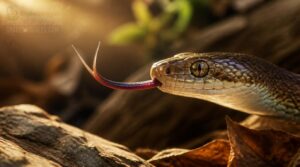
That flickering tongue is a data-collection tool, not a nervous tic. Forked tongue mechanics widen sampling area, pulling scent molecules to the Jacobson’s organ.
Rising odor sampling frequency near new hides or substrate signals healthy curiosity. Juveniles flick more during exploration; desert species favor air current detection.
Calm, alert tongueflicking paired with steady movement reflects good snake behavior worth noting in daily observation.
Fear, Stress, and Rigid Posture

A rigid, unmoving snake isn’t calm, it’s often bracing. True stress rigidity shows locked muscles, minimal tongue flicking, and defensive coiling.
Temperature swings over 5°C in 24 hours spike corticosterone, freezing snakes in place. Handling stress or cloacal stress pheromones can trigger this too, sometimes causing stress-induced regurgitation after meals. Prolonged hiding beyond normal patterns often signals the same root tension.
Defensive Coiling, Hissing, and Flattening

When a snake feels cornered, it doesn’t panic, it performs. Defensive coiling protects essential organs while hissing (forced air through the glottis) and flattening add visual bulk. Five key signals:
- Tight spiral coils
- Body flattening
- Loud hissing
- Muscle tensing
- Blocked escape routes
These defensive postures work together as one coordinated warning system.
Strike Readiness and Safe Responses

Once the S-curve tightens and the head pulls back, you’re looking at strike posture, not idle warning.
| Distance | Risk |
|---|---|
| Under half body length | Strike zone |
| Beyond it | Physically safe |
| 66-90ms | Strike duration |
| 60-400ms | Your reaction time |
Retreat now. Human reflexes can’t outrun a committed strike, so distance is your only real defense.
Human reflexes can’t outrun a committed strike, so distance is your only real defense
Normal and Abnormal Snake Behaviors
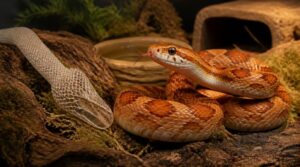
Body language tells you a lot, but daily habits fill in the rest of the picture. Some behaviors that look alarming are perfectly normal, while others signal trouble brewing beneath the surface. Here’s what to expect from a snake going about its everyday routine, and where to draw the line.
Hiding, Basking, and Exploration
Watch where your snake spends its day and you’ll learn more than any checklist could teach.
Hiding, basking, and exploration form a daily rhythm: retreating to secure spots, warming along the gradient, then roaming to investigate scents and textures. Enrichment, varied hides, and stable temperature gradients keep this cycle healthy.
Skipped basking or restless wandering often signals stress before other symptoms appear.
Feeding and Post-Meal Behavior
That same exploration drive shows up at mealtime too. Active tongue flicking and head fixation toward prey are strong feeding cues, while adults eating every 1-2 weeks should show a visible lump resolving in 48-72 hours.
Skip handling for 24-48 hours post-meal. Refusal isn’t always trouble; seasonal appetite suppression is normal, especially in autumn.
Pre-Shed and Shedding Behavior
A full belly means little once eye cloudiness sets in, that milky blue film signaling shedding is near. Your snake’s vision blurs, so it retreats to hide, refusing food.
Skin turns dull, almost grayish. Raise humidity to 65-70% now, dry conditions cause stuck sheds. A complete, single-piece shed with clear eye caps means recovery’s on track.
Seasonal Activity and Appetite Changes
Once your snake sheds cleanly, its calendar takes over. Cooling fall air below 60°F triggers Brumation Metabolism Drop, slowing digestion to a crawl.
Beforehand, expect a Pre-Brumation Weight Gain, appetite surging 10-20%. Spring brings the opposite: warming temperatures spark the Spring Feeding Surge as breeding season nears, driven by Temperature Activity Thresholds and shifting Winter Activity Patterns.
Normal Habits Versus Warning Signs
Where’s the line between quirky and concerning? Track Activity Level Shifts and Tongue Flick Frequency as your baseline. A quick Skin Tenting Test reveals dehydration fast.
Watch Eye Cloudiness Duration, past 7 days signals Incomplete Shedding Signs. Relaxed snakes explore steadily; stressed animals hide over 24 hours. That gap defines normal snake behavior versus a genuine health concern.
How Habitat Affects Snake Health and Behavior

Your snake’s enclosure isn’t just a container—it’s the single biggest factor shaping its health and daily behavior. Every choice you make, from temperature to lighting, sends a signal your snake reads and reacts to instinctively. Let’s walk through the five habitat elements you need to get right.
Warm and Cool Temperature Zones
Your snake can’t shiver or sweat, so it relies entirely on you for proper enclosure design. Set a basking spot at 88-92°F using correctly placed heat lamps, with the cool side around 75-82°F. This thermal gradient lets thermoregulation happen naturally. Monitor both zones with separate thermometers daily, since incorrect temperatures cause sluggishness, poor digestion, and shedding problems.
Correct Humidity for Each Species
Since humidity needs vary by species, match your setup to natural habitat requirements: tropical boas and reticulated pythons need 60-80%, ball pythons and corn snakes prefer 40-60%, while green tree pythons thrive at 70-90%.
Track levels twice daily with a digital hygrometer at head height. Proper humidity control prevents blistering, respiratory stress, and incomplete sheds, keeping your snake healthy year-round.
Secure Hides and Suitable Substrate
A snake without a hide is a snake stuck in fight-or-flight mode. Provide dual hides in warm and cool zones, plus a humidity hide packed with damp moss or coconut husk for shedding support.
Layer substrate 2-4 inches deep using aspen or coconut husk, never sand. Multiple hiding places curb territorial stress and add real environmental enrichment.
Lighting and Day-Night Cycles
Does your snake know when it’s bedtime? Run lights on a photoperiod timer for a consistent 12-hour cycle, keeping nighttime dark and using non-visible heat only.
- Use full-spectrum bulbs by day
- Keep basking light off at night
- Match brightness to natural daylight
- Avoid dim, ambiguous "day" lighting
Blurred day-night contrast disrupts appetite and activity, straining any temperature gradient you’ve built.
Enrichment That Reduces Captive Stress
Boredom is stressful too. Add foraging enrichment by hiding scent trails or frozen prey in substrate, and rotate hide placement for choice and control.
Physical structure complexity, branches, tunnels, varied textures, matters as much as humidity control. These sensory shifts curb stress-driven behaviors, giving your snake real opportunities to act naturally instead of just existing in a box.
Common Snake Health Problems and Warning Signs
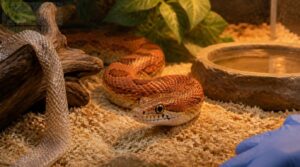
Even with a perfect setup, snakes can still get sick, and knowing what to watch for makes all the difference. Some problems announce themselves clearly, while others hide in small changes you’d only catch if you know where to look. Here are the warning signs every owner needs on their radar.
Respiratory Infection Warning Signs
Watch for labored breathing and open-mouth gaping at rest, wheezing sounds, or nasal discharge.
Frothy or recurring nasal discharge after each shed is a particularly telling sign — explore the full list of snake respiratory infection warning signs to know when it’s time to see a vet.
If you notice any of these symptoms, our guide to snake respiratory infection warning signs can help you decide when a vet visit is urgent.
Lethargy, appetite loss, and activity changes often follow. Temperature stress worsens symptoms fast, so keep gradients species-appropriate.
Steady, quiet breathing is normal; anything labored or noisy warrants a vet call.
Mouth Rot and Oral Symptoms
A snake with clear bright eyes but drooling or pawing at its mouth may be signaling early mouth rot. Watch for red, swollen gums or small ulcers, distinct from wheezing sounds tied to respiratory infections.
Severe cases bring cheesy discharge and jaw swelling. Vets diagnose via culture, prescribe enrofloxacin, and daily flushes clear mild infections fast.
Parasites, Weight Loss, and Dehydration
Mouth issues show up fast. Parasites work slower, quietly draining weight until ribs show. Fecal flotation catches culprits like Entamoeba or Cryptosporidium early. Since chronic parasite loads can leave a snake lethargic and withdrawn well before weight loss is obvious, it helps to cross-check what you’re seeing against signs of stress in snake body language before assuming illness alone is to blame.
Watch for:
- Gradual weight loss
- Sunken eyes, dry chalky urates
- Diarrhea or lethargy
Treatment pairs fenbendazole with fluid therapy and electrolytes, restoring hydration while follow-up fecals confirm clearance two weeks out.
Abnormal Sheds and Scale Damage
A bad shed rarely comes out of nowhere. Low humidity levels top the list of causes, leaving retained patches near the tail and eyes.
| Sign | Likely Cause | Action |
|---|---|---|
| Stuck eye caps | Dry enclosure setup | Soak, vet check |
| Patchy skin | Poor hydration | Humidity fix |
| Red, blistered belly | Blister disease | Clean substrate |
Never peel dry skin by force. Scale rot demands prompt attention too.
When to Contact an Exotic Veterinarian
Some problems can’t wait for a follow-up appointment. Open-mouth breathing, wheezing, or sudden lethargy signal emergencies. So does refusal to eat past two weeks, regurgitation after feeding, sunken eyes, or stool changes that stick around. Recurrent bad sheds, lumps under the skin, or sudden aggression count too. When in doubt, call an exotic vet, not a general practice.
Frequently Asked Questions (FAQs)
How can you tell if a snake is healthy?
Funny how a creature with no eyelids can still give you an honest look. Check eye clarity, skin condition, muscle tone, shedding quality, and breathing pattern, these physical cues reveal true snake health before behavior even enters the picture.
What smell does a snake hate?
Since snakes rely on chemical communication through their tongues, strong odors overwhelm them fast. Citrus oils, clove oil, vinegar spray, an ammonia barrier, and garlic scent all trigger stress and defensive behavior, especially when environmental factors leave them nowhere to retreat from handling.
How to tell if snakes are happy?
Happiness in a snake looks like ease, not excitement. Watch for relaxed body language, steady tongue flicks, normal appetite behavior, comfortable exploration, and stress-free resting, all signs of a calm, low-stress environment.
What did Jesus say about snakes?
In Matthew 10:16, Jesus urges serpent wisdom paired with dove-like innocence, and in Matthew 3:7 warns of a "brood of vipers." Both are figurative speech about human conduct, not literal snake health or behavior guidance.
How often should snakes shed their skin?
Snakes shed like clockwork, but the clock speeds up when they’re young. Hatchlings shed every 2 to 6 weeks, while adults slow to just a few times yearly, shaped by growth rate, species, and enclosure conditions.
Tracking your snake’s individual pattern is easier when you understand how long the snake shedding process typically takes from start to finish.
Can snakes recognize their owners or handlers?
Yes, through scent-based recognition, not sight. Your snake’s Jacobson’s organ distinguishes your smell from a stranger’s using its tongue. This reflects learned conditioning, built through consistent handling, rather than the emotional bonding you’d see in a dog.
What sounds do snakes make besides hissing?
A rattlesnake’s buzz can hit 60 rattles per second. Beyond hissing, you’ll notice tail vibration sounds, jaw clicking, throat rumbles, and scale rustling, each a distinct form of snake communication tied to stress or body language.
How long can snakes go without eating?
Fasting duration varies widely: some species tolerate weeks, others nearly two years, depending on age, size, and species. Adults naturally fast longer than hatchlings, since slower metabolism and stored energy reserves reduce their need for frequent meals.
Do snakes sleep and dream like mammals?
No eyelids close, yet the brain still slows. Your snake’s rest brings lowered heart rate and reduced responsiveness, not mammal-style dreaming. No cortex, no REM, just quiet recovery shaped by temperature and a secure hide.
How often should I clean my snakes enclosure?
Spot clean waste daily, refresh the water bowl daily, and run a full deep clean monthly with reptile-safe disinfectants, replacing substrate and scrubbing surfaces to keep your snake habitat hygienic and odor-free.
Conclusion
A thousand tiny signals pass across your snake’s body every single day, and most owners miss all of them. You don’t have to.
Understanding snake health and behavior turns guesswork into skill, letting you catch a dull eye or a rigid coil before it becomes an emergency vet visit. Your snake can’t tell you it’s hurting. But now, you know how to listen anyway.
That quiet fluency is the real reward of careful ownership.