This site is supported by our readers. We may earn a commission, at no cost to you, if you purchase through links.
Snakes can’t cough. That one biological quirk turns what starts as a minor infection into a fast-moving respiratory crisis with almost no warning. By the time your ball python starts wheezing or breathing with its mouth open, that infection has usually been building quietly for days.
Snake respiratory infection signs often begin so subtle that most owners write them off as normal behavior, right up until things spiral. Knowing what to watch for, what triggers these infections, and exactly how vets diagnose and treat them gives you the best shot at catching the problem before it gets critical.
Table Of Contents
- Key Takeaways
- 9 Snake Respiratory Infection Signs to Watch For
- When Snake Respiratory Symptoms Require Urgent Veterinary Care
- What Causes Respiratory Infections in Snakes
- How Veterinarians Diagnose and Treat Snake Respiratory Infections
- How to Support Recovery and Prevent Respiratory Infections
- Frequently Asked Questions (FAQs)
- Will a snakes respiratory infection go away on its own?
- How can I treat my snake’s respiratory infection at home?
- Can reptiles recover from respiratory infections without meds?
- What are the symptoms of respiratory infections in snakes?
- How long do symptoms of rsv last?
- What is a respiratory infection in snakes?
- What are the signs of illness in snakes?
- How do you know if a snake has pneumonia?
- Do snakes have respiratory problems?
- How do I know if my snake has a respiratory infection?
- Conclusion
Key Takeaways
- Snakes can’t cough or clear their airways, so respiratory infections build silently — by the time you notice open-mouth breathing or wheezing, the problem has often been progressing for days.
- Nine warning signs exist, but open-mouth breathing, frothy nasal discharge, audible gurgling, and collapse are emergencies that demand same-day veterinary care, not a wait-and-see approach.
- Most respiratory infections trace back to fixable husbandry failures — wrong temperature, poor ventilation, dirty enclosures, and chronic stress all weaken your snake’s immune defenses and invite bacterial or fungal pathogens in.
- Home treatment won’t cut it for a true respiratory infection; vets rely on culture testing, targeted antibiotics, nebulizer therapy, and fluid support to actually clear the infection and give your snake a real shot at full recovery.
9 Snake Respiratory Infection Signs to Watch For
Because snakes can’t blow their nose or cough dramatically, spotting early signs of a respiratory infection falls entirely on you. Your snake is basically sending you distress signals, and your job is to decode them fast.
Watch for wheezing, open-mouth breathing, or unusual mucus — signs covered in detail in this guide to treating snake respiratory infections before they turn critical.
Your snake sends distress signals—your job is to decode them before it’s too late
Watch for wheezing sounds during handling or at rest. Nasal discharge, especially if it’s frothy or keeps coming back after every shed, is a clear red flag. Labored breathing looks like visible straining or an unusual hunched body posture. Open-mouth breathing means your snake is working overtime just to move air.
Also keep an eye on lethargy, reduced appetite, persistent clicking or bubbling noises while breathing, and noticeably rapid irregular breathing patterns. Nine signs total, and any one of them deserves your immediate attention.
When Snake Respiratory Symptoms Require Urgent Veterinary Care

Some respiratory symptoms can wait for a scheduled appointment—but these five can’t. If your snake is showing any of the signs below, you’re looking at a potential emergency. Get your exotic vet on the phone now, not tomorrow.
Open-Mouth Breathing
Why is your snake gaping like it’s auditioning for a fish impression? That’s open-mouth breathing, a sign of labored breathing when airways fail. Mucus buildup blocks normal airflow, forcing your snake to breathe through its mouth.
Watch for:
- Persistent mouth gaping
- Wheezing sounds during breathing
- Visible mucus near the mouth
- Lethargy or refusal to eat
- Mouth redness or lesions
Veterinary care prevents serious complications.
Labored Respiration
Beyond open-mouth breathing, labored respiration takes things a step further. You’ll notice your snake visibly straining, its sides heaving with each breath. Thick mucus and airway inflammation make every inhale a workout.
In severe cases, mucus may also visibly collect around the nostrils, so reviewing common snake respiratory symptoms and care can help you act quickly.
This respiratory distress often produces wheezing sounds or gurgling sounds as air pushes through blocked passages. When breathing looks like a struggle, it is. Call your vet now.
Persistent Breathing Noises
Labored breathing often comes with its own soundtrack. Healthy snakes breathe silently, so any persistent noise is a red flag you can’t ignore.
Listen for:
- Wheezing sounds pointing to airway constriction
- Gurgling sounds signaling fluid in the lungs
- Clicking or popping with each breath cycle
That last one often means early infection. Wheezing or gurgling? Same-day vet visit, no exceptions. Understanding abnormal snake breathing sounds can help you distinguish a defensive hiss from a genuine respiratory emergency.
Frothy Nasal Discharge
Around the nostrils, frothy nasal discharge looks like tiny soap bubbles clinging to your snake’s face, and that’s your cue something’s wrong. Inflamed airways ramp up mucus production, and exhaled air turns that mucus into foam. One-sided nasal discharge can point to a localized respiratory infection. Either way, these respiratory symptoms won’t clear up on their own. Call your vet.
Weakness Or Collapse
A snake that can’t right itself or hold its posture isn’t just worn out. Lethargy can progress quickly, and once weakness or collapse kicks in, your snake’s respiratory distress has already gone way beyond a local airway issue.
When collapse follows labored breathing, the underlying cause often runs deeper than it looks — common snake wheezing causes and what they signal can help you piece together whether you’re dealing with infection, parasites, or something your husbandry quietly allowed to develop.
At that point, the body is genuinely losing the oxygen and energy battle. Get veterinary care immediately. This is a real emergency.
What Causes Respiratory Infections in Snakes
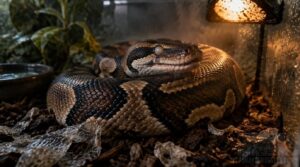
Respiratory infections don’t just appear out of nowhere — something in the environment usually opens the door. Your snake’s setup, stress levels, and even what it inhales can all tip the scales toward illness. Here are the six main culprits you need to know.
Incorrect Temperature And Humidity
Your enclosure’s temperature regulation is basically your snake’s immune system support crew. Get it wrong, and respiratory trouble follows quickly.
- Improper humidity dries out airways, letting pathogens take hold easily
- Poor thermal gradients slow digestion and weaken immune defenses
- Sudden humidity spikes irritate the respiratory tract fast
Good humidity control keeps that airway mucus moving exactly the way it should.
Poor Ventilation And Sanitation
Picture your corn snake in a sealed tank without airflow. You’d be surprised how fast things go wrong.
| Issue | Risk | Fix |
|---|---|---|
| No airflow | Moisture rises | Add vents |
| Wet liner | Mold growth | Spot-clean daily |
| Missed cleans | Biofilm forms | Weekly clean |
Ventilation adequacy and enclosure sanitation are linked. Weak husbandry practices invite problems that environmental modifications can’t fix without strong infection control.
A dedicated reptile-safe disinfectant spray makes weekly deep cleans far more effective at eliminating the biofilm and bacteria that poor airflow helps sustain.
Bacterial And Fungal Pathogens
Your snake’s lungs can host a whole microbial party. Bacterial infection is the most common culprit, driven by bacteria like Pseudomonas, Klebsiella, or Mycoplasma. Fungal infection sneaks in when immunity dips. Here’s what your vet uses to fight back:
- Culture and sensitivity testing to pinpoint the exact pathogen
- Antibiotic therapy matched to the results
- Antifungal drugs when fungi are confirmed
Viral And Parasitic Pathogens
Some invaders are invisible. Viral infections like nidovirus and paramyxovirus attack your snake’s respiratory epithelium, triggering mucus buildup, nasal discharge, and steady decline. They spread fast in crowded collections.
Parasitic infections hit differently. A lungworm infestation physically clogs airways, and signs can wax and wane as larvae migrate. Co-infections blur the picture, so your vet needs lab tests to confirm.
Stress And Immune Suppression
Viruses and parasites are tough, but stress is the silent accomplice. When your snake is chronically stressed, glucocorticoids shut down immune defenses, turning a subclinical infection into full stress-induced illness.
Immune suppression acts fast. Bad temps and rough handling push the reptile immune system into the red. Prioritize stress reduction now. It’s the foundation all immune system support depends on.
Foreign Material Aspiration
Stress weakens defenses, but foreign material aspiration piles on another threat. Inhaled water, substrate dust, or prey fluids inflame the airway and set up perfect conditions for aspiration pneumonia, a serious secondary infection. Switching to a dust-free reptile substrate significantly reduces the particulate matter your snake inhales with every breath.
You’ll spot gurgling sounds, open-mouth breathing, or sudden respiratory distress, especially after feeding. Use low-dust substrate, avoid splashing water bowls, and keep your handling calm and steady.
How Veterinarians Diagnose and Treat Snake Respiratory Infections
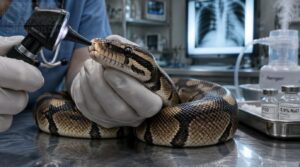
Once you know what’s driving the infection, your vet can start building a real game plan. Veterinary diagnosis starts with a hands-on physical exam, checking breathing effort, nasal discharge, and overall airflow patterns. From there, expect:
- Imaging (radiographs) to spot lung involvement consistent with pneumonia
- Swabs and cultures to identify the bacteria or fungi causing trouble
- Bloodwork to check for dehydration or organ stress
Treatment usually combines antibiotic treatments targeting the specific pathogen, nebulizer therapy to deliver medication directly into the airways, and fluid therapy to keep your snake hydrated and stable.
Your vet may also adjust the plan if symptoms don’t improve within the expected window. Good veterinary care means treating the whole animal, not just the cough symptom.
How to Support Recovery and Prevent Respiratory Infections

Treatment does the heavy lifting, but your setup determines whether the recovery sticks. While antibiotic therapy takes care of the pathogen, your snake’s environment either fights with you or against you.
Here’s what helps a real comeback:
- Nailing temperature and humidity removes the conditions that let infections linger
- Consistent hydration management keeps tissues healthy and helps immune response
- Environmental enrichment reduces stress, which directly strengthens immune defenses
- Clean enclosures break the cycle before a new respiratory infection can take hold
Keep veterinary care appointments even when your snake looks better. Infections can rebound fast if treatment stops early. Sanitize thoroughly, dial in your temps, and cut handling during recovery. Your snake’s doing the hard work. Make the enclosure worth coming back to.
Frequently Asked Questions (FAQs)
Will a snakes respiratory infection go away on its own?
Mild irritation sometimes clears up with corrected husbandry, but a true respiratory infection won’t resolve on its own. Pathogens keep replicating, and without proper care or antibiotic treatments, your snake’s condition will only get worse.
How can I treat my snake’s respiratory infection at home?
Imagine your snake’s lungs as waterlogged sponges. You really can’t wring them out safely at home. Proper care buys a little time, but antibiotic treatments, fluid therapy, and oxygen therapy always need a qualified vet.
Can reptiles recover from respiratory infections without meds?
Rarely. Supportive care and corrected husbandry can help in early, mild cases, but once bacteria or fungi really dig in, your snake needs medication. Without it, infections usually worsen and full recovery becomes increasingly unlikely.
What are the symptoms of respiratory infections in snakes?
Think of it like a bad cold that just won’t quit. Your snake may show wheezing sounds, nasal discharge, and labored breathing, plus lethargy and loss of appetite, sometimes alongside open-mouth breathing or frothy mucus.
How long do symptoms of rsv last?
Symptom duration depends on the cause, your husbandry conditions, and how fast you get your snake to a vet. Without treatment, respiratory infection signs usually worsen over time rather than clearing up on their own.
What is a respiratory infection in snakes?
A snake respiratory infection means your snake’s nasal passages, upper airway, or lungs are inflamed and under attack from bacteria, viruses, or fungi. It’s more common than you’d think, and without treatment, it turns serious.
What are the signs of illness in snakes?
Your snake may show open-mouth breathing, labored breathing, nasal discharge, lethargy, or loss of appetite. Bubbles near the mouth and unusual wheezing or clicking sounds are also very clear warning signs that something’s seriously wrong.
How do you know if a snake has pneumonia?
Watch for open-mouth breathing, audible wheezing, and labored breathing that doesn’t stop even at rest. Frothy nasal discharge really seals the deal, especially when your snake also shows lethargy and a clear loss of appetite.
Do snakes have respiratory problems?
Yes, your snake can absolutely get respiratory infections. Bacterial and fungal pathogens, poor husbandry, and chronic stress all work together to create the perfect storm, triggering nasal discharge, open-mouth breathing, lethargy, and loss of appetite.
How do I know if my snake has a respiratory infection?
Imagine your ball python gaping at you like a fish out of water. That’s a red flag. Look for open-mouth breathing, wheezing, nasal discharge, or lethargy. Loss of appetite seals the deal. Call your vet.
Conclusion
Think of your snake as a silent alarm with no siren. It can’t cough, can’t alert you, and can’t buy itself any extra time. Snake respiratory infection signs only work in your favor when you actually know what they look like and act fast.
Watch the temps, monitor the humidity, and never shrug off mouth breathing. Catch problems early, get your vet involved quickly, and your snake stands a real shot at a full recovery.