This site is supported by our readers. We may earn a commission, at no cost to you, if you purchase through links.
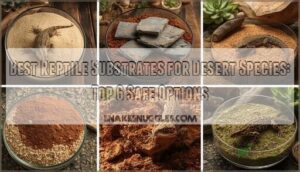
Desert reptiles evolved over millions of years to thrive on substrates that would seem impossibly harsh to most creatures—yet choosing the wrong bedding for your captive leopard gecko or bearded dragon can trigger impaction, respiratory disease, or behavioral stress within weeks.
The substrates you select for your terrarium directly influence thermoregulation, burrowing behavior, humidity control, and long-term health outcomes, making this decision one of the most consequential aspects of desert reptile husbandry.
While pet stores stock dozens of substrate options marketed for arid-habitat species, particle size, mineral composition, moisture dynamics, and digestibility vary dramatically between products.
Understanding how substrates function in captive ecosystems—and which formulations best replicate the complex physical properties of natural desert environments—ensures your reptile doesn’t just survive, but exhibits the natural behaviors that define species-appropriate care.
Table Of Contents
Key Takeaways
- Substrate particle size between 0.5–2.0 mm prevents impaction while allowing natural burrowing, making grain texture the most critical safety factor when selecting materials for desert reptiles.
- Natural options like washed quartz sand and soil-sand mixtures (70% sand, 30% topsoil) replicate arid habitats effectively, while synthetic alternatives like reptile carpet eliminate ingestion risks for species prone to substrate consumption.
- Moisture balance requires careful monitoring—desert substrates must drain rapidly to prevent mold and respiratory disease, yet retain enough humidity in localized areas to support proper shedding cycles.
- Regular maintenance including weekly spot cleaning, monthly partial replacement, and daily humidity checks with calibrated hygrometers prevents the three major substrate failures: compaction, persistent moisture issues, and particulate buildup causing respiratory distress.
Key Features of Desert Reptile Substrates
When you’re setting up a habitat for desert reptiles, the substrate you choose directly impacts their health, behavior, and ability to thermoregulate. Not all substrates work equally well—some promote natural burrowing and proper humidity levels, while others carry serious risks like impaction or respiratory issues.
Let’s examine the essential features you need to look for when selecting a substrate that truly sustains your desert species’ wellbeing.
Mimicking Natural Desert Environments
Your desert reptiles thrive when their substrate replicates arid ecosystems they evolved in. Natural dune formation in sand dunes involves mineral-rich particles that create burrowing resistance and support territorial behaviors.
Desert geology influences substrate texture, with fine-to-medium grains mimicking authentic desert habitat conditions. Bioactive substrates incorporating coarse sand and larger granules establish air gaps essential for natural digging, while mineral compositions reflect rocky desert tones your reptile habitat materials should emulate.
The use of scientific study summaries with methodological rigor can help inform the creation of ideal reptile habitats.
Importance of Particle Size and Composition
The physical properties of your substrate directly impact your desert reptiles’ health and natural behaviors. Particle size between 0.5–2.0 mm offers the sweet spot—coarse enough to prevent impaction, fine enough to allow burrowing.
Choose substrate particles between 0.5–2.0 mm—coarse enough to prevent impaction, fine enough to allow natural burrowing
Consider these grain texture factors when selecting reptile substrates:
Fine particles allow snakes to burrow smoothly and create stable tunnels, while coarser materials may provide better drainage—choosing the right reptile substrates for burrowing snakes depends on your species’ natural habitat needs.
- Medium grains balance drainage with stability for thermoregulation
- Uniform particle size reduces compaction in bioactive substrates
- Coarser textures improve airflow through sand layers
- Mixed grain sizes create moisture gradients desert species need
- Non-toxic mineral compositions guarantee substrate safety during accidental ingestion
Silica-based sand provides excellent drainage, while calcareous options can alter pH levels affecting your reptile’s hydration. Researchers can explore language patterns to better understand the terminology used in desert reptile care.
Moisture Retention and Drainage Balance
Your substrate must hold adequate moisture without becoming soggy—a delicate balance. Rapid drainage prevents waterlogging, which can trigger fungal growth, while capillary action distributes moisture evenly throughout sand or bioactive substrates.
Pairing proper substrate with consistent water quality monitoring ensures your setup stays healthy and free from harmful bacterial spikes.
Humidity control relies on particle size distribution: coarser grains drain quickly, while loamy mixtures retain water for burrowing species. Monitor moisture levels regularly to prevent respiratory issues in strictly xeric reptiles.
Choosing the right substrate involves balancing drainage, particle size, and moisture retention—each reptile substrate type serves different respiratory and digestive needs depending on your species.
Safety and Digestibility Considerations
Beyond drainage, you must evaluate ingestion hazards—fine particles pose serious impaction risks, while airborne dust threatens respiratory safety in desert reptiles. Coarser, inert materials reduce digestive health complications and allow proper nutrient absorption. Chemical contaminants in certain substrates can leach toxins, compromising appetite over time.
Critical substrate safety factors:
- Particle size between 0.5–2.0 mm minimizes impaction in burrowing species
- Dust-free composition protects chelonians and lizards from respiratory disease
- Inert materials prevent chemical leaching and digestive blockages
- Species-specific tolerances guide appropriate bioactive substrates selection
Natural Substrate Options for Desert Species
Natural substrates offer desert reptiles the closest match to their native environments, supporting essential behaviors like burrowing, thermoregulation, and natural movement patterns.
Pairing natural substrates with reptile-safe cleaning practices helps maintain a healthy habitat without disrupting your snake’s comfort or instinctive behaviors.
When you select materials that mirror arid landscapes, you’re creating a foundation that promotes both physical health and psychological well-being.
The following options provide safe, effective choices that balance authenticity with practical husbandry needs.
Washed Play Sand and Quartz Sand
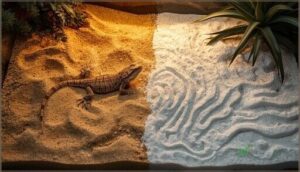
Washed play sand and quartz sand stand as foundational desert substrate choices for your reptile enclosure. These materials closely replicate natural habitats with particle sizes between 0.5–1.5 millimeters, reducing impaction risk while supporting burrowing safety. Washed varieties minimize dust and respiratory irritation, while quartz’s chemical inertness ensures long-term stability and reptile health through excellent drainage.
| Feature | Washed Play Sand | Quartz Sand |
|---|---|---|
| Particle Size | 0.5–1.5 mm | 0.5–1.5 mm |
| Moisture Retention | Low | Low |
| Dust Content | Minimal (when washed) | Very Low |
| Impaction Risk | Reduced with proper sizing | Reduced with proper sizing |
Soil-Sand Mixtures
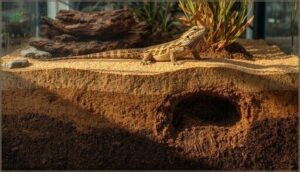
Combining sand with loam-based soil creates a stable burrowing medium that mimics desert reptiles’ native terrain. You’ll want a ratio emphasizing sand quality—target 70% washed quartz sand (0.5–2 mm particles) mixed with 30% low-organic topsoil to balance moisture control and structural integrity.
Maintain substrate depth of 3–6 inches to support digging behaviors while ensuring adequate drainage prevents bacterial growth in your enclosure.
Clay-Based Substrates
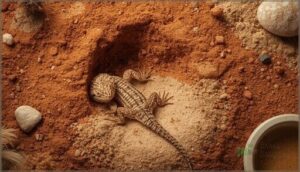
For desert-dwelling reptiles that burrow deeply, bentonite-enriched clay substrates offer excellent moisture control and structural cohesion. You’ll achieve best results with fine-to-medium particle size clay blends at 2–4 inches depth, mixing clay with inert materials to prevent compaction while supporting natural burrowing behavior.
Clay composition remains non-toxic if ingested minimally, though proper hydration reduces inhalable dust during setup.
Sintered Glass and Ceramic Substrates
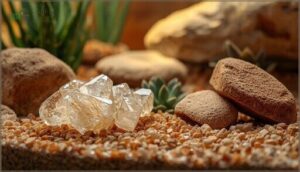
For reptile enclosures housing desert-dwelling reptiles, sintered glass substrate and ceramic types deliver outstanding moisture buffering through controlled porosity levels. You’ll benefit from their high thermal mass, which stabilizes temperature fluctuations in arid setups while maintaining low humidity.
These reptile substrates resist microbial colonization, drain efficiently, and won’t degrade over time, making them ideal for long-term desert reptile care.
Synthetic and Alternative Substrate Choices
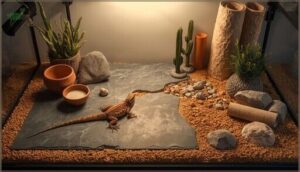
While natural substrates work well for many desert reptiles, synthetic and alternative options offer distinct advantages in certain situations. You’ll find that these materials often provide easier maintenance, reduced impaction risks, and better control over humidity levels in your enclosure.
Below, we’ll examine the most reliable synthetic choices and identify which substrates you should avoid entirely for the safety of your desert species.
Reptile Carpet and Terrarium Liners
If you’re looking for simplicity without sacrificing safety, reptile carpet and terrarium liners offer washable, durable surfaces that markedly reduce substrate ingestion risk in your desert reptiles.
These non-absorbent liner materials simplify terrarium design while supporting humidity control and temperature stability—particularly when paired with under-tank heaters.
You’ll find they outlast loose substrates in high-traffic reptile enclosures, making maintenance straightforward and hygienic.
Paper-Based Substrates
Plain, unbleached paper-based substrates offer cost-effective simplicity for desert reptiles that require minimal moisture control and straightforward hygiene protocols. When selecting paper quality, confirm you’re using uncoated, additive-free options—printer-safe or recycled paper minimizes toxic exposure and fiber safety concerns if ingested.
To support burrowing behavior and proper substrate depth, consider these maintenance priorities:
- Replace paper every 3–5 days to prevent bacterial buildup
- Monitor for dust generation affecting respiratory health
- Shred or layer paper to adjust depth for digging
- Pair with coarser media for enhanced friction and enrichment
- Spot-clean daily to manage fecal matter efficiently
Bioactive Substrate Systems
For expert keepers seeking self-regulating ecosystems, bioactive substrate systems introduce cleanup crews—isopods, springtails—that break down waste through biological filtration, supporting nutrient cycling and microbe balance. Microfauna inoculant diversity accelerates beneficial community establishment, stabilizing nitrogen and ammonia while active microbial additives improve waste management.
However, you’ll need vigilant monitoring: contamination risk rises with complexity, and enzyme-producing organisms require sterilization protocols to prevent overgrowth, toxin production, and ecosystem instability in desert enclosures.
Substrates to Avoid for Desert Species
While bioactive setups excel in complexity, certain substrates pose serious threats to desert reptiles. Avoid these materials to prevent health crises:
- Dusty Substrates like fine sand trigger respiratory irritation and impaction dangers when inhaled or ingested during burrowing.
- Calcium Risks: Calcium-enriched sands disrupt metabolic balance, causing organ stress.
- Wood Toxins: Treated lumber releases harmful phenols.
- Moisture Hazards: Water-retentive substrates breed mold in arid enclosures.
Top 6 Substrates for Desert Reptile Habitats
Selecting the right substrate for your desert reptile involves balancing safety, natural behavior support, and maintenance practicality.
The following six options represent thoroughly tested choices that meet the specific needs of arid-dwelling species, from traditional naturalistic materials to modern synthetic alternatives.
Each substrate below offers distinct advantages depending on your reptile’s species, age, and individual housing requirements.
1. Bioactive Reptile Terrarium Soil Mix
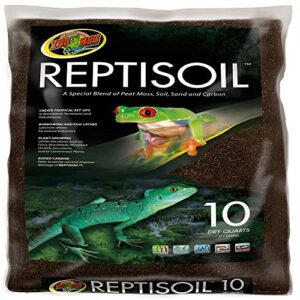
Bioactive Reptile Terrarium Soil Mix creates a living desert ecosystem within your enclosure, sustaining Desert-Dwelling Reptiles through natural waste breakdown and humidity regulation.
Zoo Med’s RSS-10 formula combines soil composition with coconut carbon to establish microbe balance, encouraging beneficial bacteria that control odors and maintain reptile health.
You’ll appreciate how bioactive substrates mirror the desert ecosystem by allowing burrowing behaviors while reducing maintenance demands.
The mix sustains Desert Reptile Care through proper drainage and aeration, though you should rinse components before use to minimize dust exposure.
This system transforms bioactive enclosures into self-sustaining environments that promote natural behaviors.
| Best For | Reptile keepers who want a self-sustaining desert terrarium that supports natural burrowing behaviors and reduces cleaning frequency through beneficial bacteria. |
|---|---|
| Primary Material | Coconut fiber substrate |
| Weight | 1.06 ounces |
| Cleaning Ease | Moderate maintenance |
| Odor Control | Reduces odors |
| Moisture Retention | Maintains moisture levels |
| Price Point | $8.99 |
| Additional Features |
|
- Creates a living ecosystem with coconut carbon that colonizes beneficial microbes to break down waste and control odors naturally
- Supports natural reptile behaviors like burrowing and egg-laying while maintaining proper moisture levels for desert species
- Works with a variety of animals including tropical lizards, amphibians, box turtles, hermit crabs, and invertebrates in bioactive setups
- Contains dusty particles that require pre-rinsing to avoid respiratory irritation and sticky residue on hands
- May include large wood chips or debris that pose ingestion risks and require inspection before use
- Priced higher than comparable substrate options at $8.99 for 1.06 ounces
2. Reptile Terrarium Liner Carpet
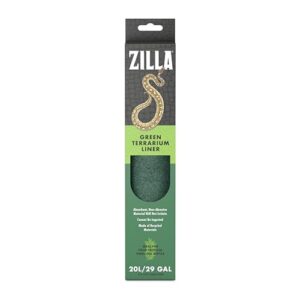
Reptile Terrarium Liner Carpet offers a practical, non-ingestible alternative when you’re worried about impaction risks in your desert reptiles. The polyethylene-polypropylene blend provides an absorbent, non-abrasive surface that’s easy to clean—just rinse or machine-wash between complete replacements.
You’ll find the enzyme-treated material reduces odors while maintaining stable desert humidity levels without trapping excessive moisture beneath hides. Though some liners may shift under active diggers, properly securing edges prevents snagging injuries.
For bearded dragons and leopard geckos prone to substrate ingestion, this carpet maintenance approach balances reptile safety with terrarium design simplicity.
| Best For | Desert reptile owners who want a low-maintenance, impaction-safe substrate for species like bearded dragons and leopard geckos that tend to ingest loose materials. |
|---|---|
| Primary Material | Polyethylene liner |
| Weight | 3.2 ounces |
| Cleaning Ease | Easy to clean |
| Odor Control | Enzyme-treated odor reduction |
| Moisture Retention | Absorbent material |
| Price Point | Budget-friendly |
| Additional Features |
|
- Easy to clean with machine-washing or rinsing, saving time on terrarium maintenance
- Non-ingestible surface reduces impaction risks for reptiles that nibble substrate
- Enzyme treatment controls odors while maintaining stable humidity for arid setups
- May shift or allow reptiles to crawl underneath if edges aren’t properly secured
- Can shrink when dried, potentially requiring replacement or trimming to fit
- Doesn’t allow natural digging behavior that some desert species enjoy
3. Zoo Med Forest Floor Bedding
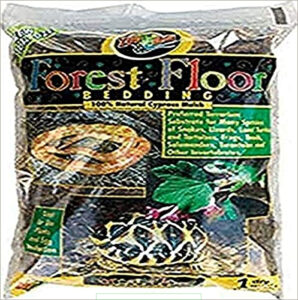
Zoo Med Forest Floor Bedding delivers Cypress Mulch-based Humidity Control for species requiring occasional moisture pockets in otherwise arid reptile enclosures. This compressed coconut fiber substrate retains enough water to support shedding cycles without creating the bacterial hazards of over-saturated environments.
You’ll need to monitor Substrate Depth—aim for 1-2 inches—since excessive layering reduces drainage in desert reptiles adapted to free-draining soils.
While marketed for tropical setups, moderate misting schedules make this Reptile Bedding viable for arid-adapted species like uromastyx during seasonal humidity fluctuations.
| Best For | Reptile and amphibian keepers who need a natural substrate that maintains humidity for tropical species like frogs, salamanders, and certain snakes during shedding cycles. |
|---|---|
| Primary Material | Cypress mulch |
| Weight | 10.6 pounds |
| Cleaning Ease | Moderate maintenance |
| Odor Control | Minimal odor control |
| Moisture Retention | Retains moisture well |
| Price Point | Mid-range |
| Additional Features |
|
- Retains moisture effectively to create humidity pockets without waterlogging the entire enclosure, helping species that need periodic dampness.
- Natural cypress mulch appearance mimics forest floor environments, making it visually appealing for naturalistic setups.
- Works for a wide range of animals including snakes, lizards, amphibians, and invertebrates, offering flexibility across different enclosures.
- May arrive with mites or other insects, requiring pre-treatment like soaking in hot water before introducing it to your enclosure.
- Can be dusty out of the bag, so rinsing before use is often necessary to avoid respiratory irritation.
- Deep layers reduce drainage, making it less suitable for true desert species that need completely dry, free-draining substrate.
4. Natural Reptile Bedding Alfalfa Meal
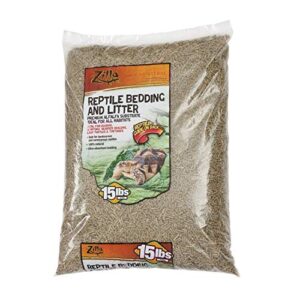
Alfalfa-based bedding introduces digestible organic matter to desert reptile habitats, offering a safety margin if ingestion occurs during feeding—particularly important for species like bearded dragons and blue-tongued skinks.
This Natural Reptile Bedding provides bacteriostatic properties that suppress odor and microbial growth, though you’ll want to mix it with sand or soil rather than use it alone.
Monitor moisture carefully; alfalfa’s absorbent fibers can harbor mold in high-humidity zones, making frequent spot cleaning essential for maintaining Desert Reptile Health and preventing respiratory complications.
| Best For | Herbivorous and omnivorous desert reptiles like bearded dragons or blue-tongued skinks whose owners want a digestible, odor-controlling substrate that’s safer if accidentally eaten during feeding. |
|---|---|
| Primary Material | Alfalfa pellets |
| Weight | 15 pounds |
| Cleaning Ease | Easy to clean |
| Odor Control | Reduces odors |
| Moisture Retention | Can get soggy |
| Price Point | Higher cost |
| Additional Features |
|
- Safe if ingested thanks to digestible alfalfa composition and bacteriostatic agents that keep germs in check
- Naturally controls odors and reduces bacterial growth without harsh chemicals
- Biodegradable and made from 100% natural materials produced in the USA
- Gets soggy and grows mold quickly when wet, requiring frequent spot cleaning and careful moisture management
- Strong farm-like smell that can be unpleasant in indoor spaces without good ventilation
- Works best as a mix with sand or soil rather than alone, since it’s harder to maintain when used as the only substrate
5. Reptile Terrarium Sphagnum Moss Bedding
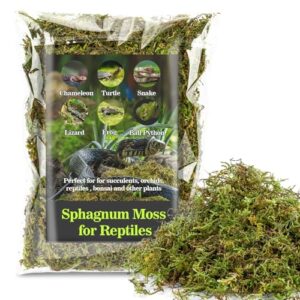
While Sphagnum Moss offers superior Humidity Control in tropical setups, you’ll find it problematic as a Desert Substrate for arid-adapted species. This moss composition retains several times its weight in moisture, creating fungal risks and respiratory complications that threaten Reptile Health in low-humidity environments.
If you’re keeping desert reptiles, limit sphagnum to humid hides rather than primary substrate selection—its fibrous structure prevents natural burrowing behaviors and requires intensive Moss Maintenance.
For species like bearded dragons, stick with well-draining reptile habitat materials that mirror their native sandy terrains.
| Best For | Tropical and high-humidity reptile keepers who need moisture retention for species like tree frogs, geckos, or snakes that thrive in damp environments—not suitable for desert reptiles. |
|---|---|
| Primary Material | Coconut coir |
| Weight | 5 ounces |
| Cleaning Ease | Regular replacement needed |
| Odor Control | May have initial smell |
| Moisture Retention | Highly absorbent |
| Price Point | $6.99 |
| Additional Features |
|
- Holds moisture exceptionally well, making it perfect for creating humid hides or maintaining proper shedding conditions in tropical setups.
- Provides a soft, natural surface that encourages burrowing and nesting behaviors for amphibians and moisture-loving reptiles.
- Affordable at $6.99 for 5 ounces and easy to rehydrate from its compact vacuum-sealed package.
- Retains too much moisture for desert species, creating fungal growth risks and respiratory issues in arid terrariums.
- Breaks down into dusty powder over time and can develop a strong smell when first hydrated, requiring frequent replacement.
- Not safe as a primary substrate for reptiles that eat greens or lick surfaces, and its fibrous texture doesn’t support natural burrowing for desert dwellers.
6. Quozuo Reptile Hideout Wooden Bridge
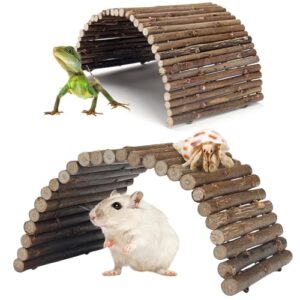
Though not a substrate, the Quozuo Reptile Hideout Wooden Bridge enhances Desert Habitat functionality through vertical enrichment. You’ll provide critical Reptile Climbing opportunities that reduce stress in captive desert reptiles.
This apple wood construction (10″W × 5″D) features bendable metal wire, allowing you to shape bridges, ramps, or tunnels across your reptile enclosure.
Verify Wooden Bridge Safety by inspecting for splinters weekly, cleaning with reptile-safe solutions after substrate contact, and confirming untreated wood composition. Proper Bridge Maintenance prevents mold accumulation while supporting natural exploration behaviors that benefit species like bearded dragons and blue-tongued skinks in their reptile habitat.
| Best For | Small desert reptile owners who want to add climbing enrichment and vertical exploration options to their terrariums without taking up floor space. |
|---|---|
| Primary Material | Apple wood |
| Weight | Not specified |
| Cleaning Ease | Requires cleaning |
| Odor Control | May have wood odor |
| Moisture Retention | Not moisture-focused |
| Price Point | Moderate |
| Additional Features |
|
- Bendable design with internal wire lets you customize the shape into bridges, tunnels, or ramps that fit your specific enclosure layout
- Natural apple wood construction provides safe climbing texture and grip for small reptiles like bearded dragons and blue-tongued skinks
- Dual-pack gives you two 8″ x 4″ pieces to create multiple climbing routes or connect different areas of the habitat
- Small size (10″W × 5″D) limits use to smaller enclosures and won’t work well for larger reptiles
- Can develop mold in humid environments if not cleaned and dried properly after substrate contact
- May have a strong wood odor when new and requires regular inspection for splinters that could injure your pet
Maintenance and Safety Tips for Substrates
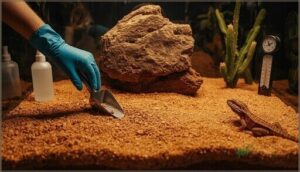
You can’t just set up a desert enclosure and walk away—proper substrate maintenance keeps your reptile healthy and prevents serious medical issues. Even the best substrate won’t do its job if you’re not monitoring moisture levels, cleaning waste promptly, and watching for warning signs.
Here’s what you need to know about keeping your desert reptile’s substrate safe and functional.
Spot Cleaning and Replacement Schedules
Your substrate maintenance rhythm depends on enclosure size and species activity. Small tanks under 20 gallons need weekly spot cleaning, while adult desert species can stretch to two weeks. Replace the top 1–2 inches monthly to reduce ammonia buildup without disrupting beneficial bacteria in bioactive systems.
Monitor humidity daily with meters; excess moisture accelerates mold growth and forces more frequent replacement cycles.
Preventing Impaction and Respiratory Risks
Particle size determines your reptile’s safety more than any other substrate trait. Choose materials with 0.5–2.0 mm grains to minimize impaction risk in desert-dwelling reptiles, and prioritize dust-free options to protect respiratory health.
Proper substrate safety practices support overall reptile wellness and prevent costly veterinary interventions.
- Feed your reptile in separate dishes to reduce accidental substrate ingestion
- Maintain substrate depth at 2–3 inches for burrowing without excess material
- Monitor shedding patterns—incomplete sheds signal respiratory distress from dust
- Watch for lethargy or reduced appetite indicating early impaction symptoms
Monitoring Humidity and Hygiene
Beyond physical safety, your substrate’s moisture and cleanliness directly influence reptile health. Check humidity levels twice daily with a calibrated digital hygrometer, targeting the low-to-moderate range desert ecosystems require. Inspect substrate for mold, odors, or condensation during evening checks—these signal inadequate hygiene protocols and poor humidity control.
| Monitoring Task | Frequency | Action Threshold |
|---|---|---|
| Humidity readings | Twice daily | Adjust ventilation if outside species range |
| Substrate inspection | Daily | Replace immediately upon detecting mold |
| Complete replacement | Every 2–4 weeks | Sooner if persistent odor develops |
Recognizing Signs of Substrate Failure
Even careful monitoring won’t prevent every problem—you’ll need to recognize when substrate has reached its functional end. Watch for these three red flags that demand immediate replacement:
- Substrate Compaction that prevents burrowing and traps waste beneath hardened layers
- Moisture Issues causing persistent substrate odor or visible mold despite proper ventilation
- Respiratory Signs like wheezing in desert-dwelling reptiles, often linked to particulate buildup
Address these failures promptly to prevent impaction and respiratory complications.
Frequently Asked Questions (FAQs)
How often should I mist desert reptile substrates?
Finding the mist-ery sweet spot? For desert species, target every 2–3 days to maintain humidity control and water balance without saturating your substrate, adjusting based on shedding cycles and ambient conditions.
Can I mix different substrate types together safely?
You can mix substrates, but substrate blending requires caution.
Safe combinations for desert species include sand-soil mixes with matched particle sizes, while mixing risks like impaction increase when drainage properties differ markedly between materials.
What substrate depth is best for burrowing species?
You should provide substrate depth of 2 to 3 times your reptile’s body length—usually 6 to 15 cm for small desert species, 20 to 40 cm for larger burrowing animals, ensuring stable, sandy loam consistency.
Do hatchlings need different substrates than adult reptiles?
Yes, hatchlings require safer substrates than adults. Hatchling substrate choices like paper-based liners prevent impaction and digestion risks.
Adults tolerate soil-sand blends better, supporting burrowing behavior while maintaining shedding support through growth stages.
How do I transition my reptile to new substrate?
Shifting sands carefully: introduce new substrate incrementally, replacing just 25% every 2–3 days while monitoring respiratory health, shed quality, and digestion.
Gradual substrate mixing ensures safe reptile acclimation, minimizes shift risks, and aids natural burrowing behavior.
Conclusion
Your terrarium’s foundation works like tectonic pressure shaping ancient landscapes—small decisions compound into permanent outcomes.
The reptile substrates for desert species you choose now determine whether your gecko burrows instinctively or develops compacted intestines, whether your dragon thermoregulates efficiently or suffers chronic respiratory inflammation. Substrate selection isn’t decorative; it’s environmental architecture.
Match particle size to feeding behavior, monitor moisture dynamics weekly, and prioritize digestibility over aesthetics. Your vigilance becomes their ecosystem.