This site is supported by our readers. We may earn a commission, at no cost to you, if you purchase through links.
Your ball python hasn’t eaten in three weeks, and you’re starting to worry. Before you panic about parasites or temperatures, check something simpler—your snake’s hide. An improperly sized hide creates chronic stress that suppresses appetite, weakens immune function, and can shave years off your snake’s life.
If the hide isn’t the culprit, it’s worth exploring how long a ball python can safely go without eating before assuming something’s seriously wrong.
The problem isn’t usually that owners skip hides altogether; it’s that they choose based on what looks good in the enclosure rather than what actually fits their snake’s body. A hide that’s too spacious offers no security, while one that’s too tight can trap your snake or cause scale damage during shed cycles.
Getting the dimensions right—snug enough to provide that reassuring contact snakes seek, but roomy enough for comfortable positioning—makes the difference between a thriving animal and one that’s perpetually on edge.
Table Of Contents
Key Takeaways
- A properly sized hide should allow roughly one finger-width (2–3 cm) of clearance around your coiled snake’s body—snug enough to provide thigmotactic contact with surrounding walls but roomy enough to prevent compression or scale damage during movement.
- Place at least two hides in your enclosure, one on the warm side (86–90°F) and one on the cool side (72–80°F), so your snake can thermoregulate without sacrificing security or experiencing chronic stress that suppresses immune function and appetite.
- Choose nonporous materials like sealed ceramic, hard plastic, or glazed resin over porous options like cork or unsealed wood, since nonporous surfaces resist bacterial buildup and allow effective sanitization between cleanings.
- Species-specific behavior matters—ball pythons need tight, cave-like burrows at ground level, while arboreal species require elevated refuges near branches, and ignoring these differences triggers feeding problems and incomplete sheds.
Why Snake Hides Are Essential
Your snake’s hide isn’t just décor—it’s a critical piece of equipment that directly affects health, behavior, and longevity. Without proper shelter, snakes experience chronic stress that weakens immune function and disrupts essential activities like digestion and shedding.
Choosing the right snake hides for ball pythons means prioritizing snug-fitting shelters that let your snake feel secure in both warm and cool zones.
Let’s examine three core reasons why hides are non-negotiable in any enclosure setup.
Understanding how many hides your snake actually needs can help you create a setup that supports their natural hiding behavior throughout the day.
Stress Reduction and Security
Security isn’t just a nice-to-have for your snake—it’s physiological. Snakes deprived of proper hides show elevated corticosterone, the stress hormone that suppresses immunity and triggers defensive postures.
That’s why providing the right hiding spots can make the difference between a chronically stressed snake and one that thrives in captivity.
A correctly sized hide that allows thigmotaxis—body contact with surrounding walls—drastically reduces snake anxiety.
When hide placement covers warm and cool zones, your snake can thermoregulate without exposure, cutting stress responses and supporting genuine enclosure security.
For full control over how heat and hides work together, exploring a custom snake enclosure design with PVC gives you a setup built around your species’ specific thermoregulation needs.
This setup works best when you’ve also dialed in optimal snake room conditions that keep ambient temperatures stable throughout the day.
Natural Behavior and Well-Being
Hides reveal natural behavior—snakes that can fully conceal themselves feed consistently, shed cleanly, and display fewer stereotypies like repetitive pacing.
In the wild, confined burrows provide thermal stability and predator avoidance; captive reptile behavior mirrors that instinct.
When your snake has access to properly sized refuges, you’re supporting snake welfare and behavioral health, not just preventing stress reduction—you’re enabling normal reptile behavior patterns that define animal welfare.
Properly sized refuges don’t just reduce stress—they unlock the natural behavior patterns that define true snake welfare
Role in Thermoregulation
Beyond reducing stress, your snake’s hide acts as a precision climate-control chamber. Snakes are ectothermic—they can’t generate internal heat—so they shuttle between microhabitats to regulate body temperature. A well-placed hide on both the warm and cool side of your thermal gradient lets your pet access the exact temperatures needed for digestion, immune function, and metabolic health without sacrificing security.
- Warm-side hides (positioned over heat sources at 86–90 °F) support digestion and immune responses
- Cool-side refuges (around 72–80 °F) prevent overheating and metabolic strain
- Temperature monitoring inside hides—not just ambient air—ensures your gradient actually works.
Providing the right environment is vital, and understanding humidity levels is essential for creating a suitable habitat.
How Hide Size Impacts Snake Health
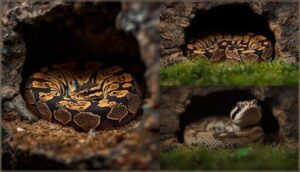
A poorly sized hide doesn’t just make your snake uncomfortable—it directly threatens their physical and mental health. When a hide is too large or too small, you’re setting up conditions for chronic stress, behavioral problems, and even physical injury.
Let’s break down the three main ways hide size affects your snake’s well-being.
Preventing Stress and Illness
Think of your snake’s hide as preventative medicine—proper sizing directly cuts stress-related illness. When stress reduction meets smart hide placement, your snake’s corticosteroid levels drop, boosting immune function and supporting reptile health.
You’ll notice improved feeding patterns, better digestion, and fewer skin or gut parasites. Environmental enrichment through correct snake hide sizing isn’t optional—it’s fundamental illness prevention and snake wellness rolled into one simple choice.
Choosing the right material is just as important—nonporous hides like ceramic or smooth plastic resist bacteria and make disinfection between cleanings much easier.
Supporting Natural Behavior
Properly sized snake hides activate natural behavioral stimulation—you’ll see refuge switching, scent trailing, and exploratory movement instead of corner huddling. Environmental enrichment through snug hides paired with naturalistic settings encourages the thigmotactic behavior your snake craves, pressing against multiple surfaces just like wild crevices.
This setup facilitates thermoregulation while reducing stress, letting natural snake behavior flourish in captivity. By incorporating elements of reptile environmental enrichment, you can create a more stimulating environment for your pet snake.
Avoiding Escape and Injury
A loose hide becomes a launching pad for escape attempts—snakes wedge under unstable shelters, lift them with surprising strength, and slip through gaps you didn’t think existed.
Secure enclosures demand hide stability—weighted ceramic hides or recessed designs prevent tipping and minimize injury risk.
Proper snake hide sizing eliminates pinch points and sharp edges, while smart enclosure design blocks the escape routes that compromise snake safety and your peace of mind.
Determining The Right Size Hide
Getting the size right isn’t guesswork—it’s a measurement-based process that accounts for your snake’s body dimensions and behavioral needs. You’ll need to measure your snake properly, understand what “snug” really means in practical terms, and recognize how thigmotaxis drives your animal’s shelter preferences.
Here’s how to determine the correct hide size for your snake.
Measuring Your Snake Correctly
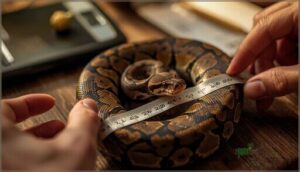
You can’t eyeball your snake’s girth and hope for the best—accurate measurements are the foundation of choosing a hide that actually fits.
Here’s what you need to measure:
- Snake length from nose to tail tip using a soft measuring tape
- Body diameter at the thickest point, usually mid-body
- Circumference if your snake is particularly heavy-bodied
- Current weight to track growth over time
- Head width for entrance sizing considerations
Ideal Hide Dimensions and Fit
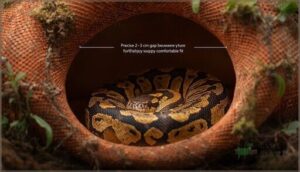
The ideal hide size gives your snake just enough room to coil comfortably without excess space.
For snake comfort levels, aim for interior dimensions that provide 2–3 cm clearance around the widest body region—enough to prevent rubbing while maintaining that snug fit most species prefer.
The inner height should allow 0.5 to 1 body diameter clearance above the snout, supporting natural posture and unimpeded breathing.
Thigmotaxis and Snugness Preferences
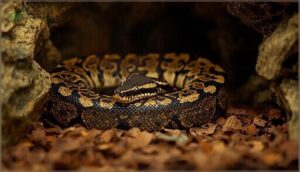
Most snakes instinctively seek body contact with surfaces—a trait called thigmotaxis—which explains why they prefer snug fits over spacious shelters. In preference tests, species consistently choose hides offering 80–100% body-length contact, maximizing tactile feedback along their sides.
That snug fit isn’t restrictive—it’s reassuring, lowering stress indicators and discouraging aimless wandering. When choosing hide size, remember your snake’s natural preference for secure, wall-to-wall contact.
Snake Species and Hide Size Needs
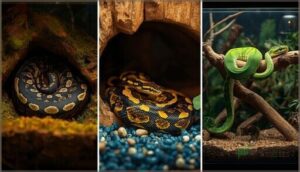
Not all snakes hide the same way—your ball python’s needs differ sharply from those of a corn snake or tree boa. Species-specific behavior dictates whether your snake wants a cave-like burrow or an elevated perch, and getting this wrong means a stressed animal that won’t eat or thermoregulate properly.
Let’s break down hide sizing by the species you’re most likely keeping.
Ball Python Hide Sizing
Ball pythons demand snug hides that cradle their coiled bodies—think burrow, not ballroom. Measure your snake’s girth at its widest point, then select a hide with interior height equal to or slightly less than that measurement. Hatchlings start around 1.25–1.5 inches; adults need proportionally tighter fits.
Nonporous hide material options simplify cleaning, while proper hide size fosters coiling behavior, thermal gradients, and humidity control within your snake enclosure.
Colubrid and Corn Snake Preferences
Corn snakes and most colubrids won’t wedge themselves quite as tightly as ball pythons, but they still prefer hides where their body contacts at least two surfaces when they coil. Aim for interior dimensions about 1.5 times your snake’s girth—roomy enough for comfortable movement, snug enough for security.
Place species-specific hides on both ends of your thermal gradient so your corn snake can self-regulate without sacrificing its need for cover.
Arboreal Vs. Terrestrial Species Considerations
Ground level hides work for most terrestrial species—ball pythons, hognose snakes—because they rest horizontally and don’t climb. Arboreal species like tree snakes need vertical hide designs that accommodate climbing behavior and limb grasping.
Place elevated refuges near branches for arboreal species, wider ground-level options for terrestrial ones. Snake hide size and placement must match your species’ natural tree snake habitats or burrowing adaptations.
Material and Design Considerations
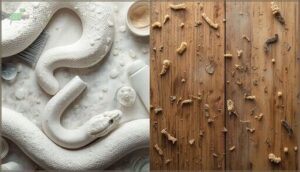
Choosing the right size is only half the battle—the material your hide is made from directly impacts your snake’s health, your cleaning schedule, and how long that hide will last. Some materials resist bacteria like a champ, while others turn into microbial hotels after a single shed cycle.
Here’s what you need to know about materials, durability, and which options make your life easier without compromising your snake’s safety.
Nonporous Vs. Porous Materials
Nonporous materials—hard plastics, sealed resin, glazed ceramic—resist water absorption and create surfaces you can actually sanitize. That’s critical for bacterial resistance and moisture control in your snake hide.
Porous options like cork or unsealed wood trap humidity, harbor microbes deep in the grain, and compromise surface sanitization no matter how hard you scrub. Choose materials that support thermoregulation without breeding bacteria.
Durability and Safety Factors
Material strength and hide stability matter just as much as surface texture. Your snake hide needs thermal resistance to withstand basking lamps without warping, plus structural integrity so it won’t collapse mid-shed.
Look for smooth interiors—no sharp seams or jagged edges—to prevent scale damage during movement. Rounded entry points and reinforced construction keep your reptile enclosure safe, protecting both thermoregulation and your animal’s physical well-being.
Easy-to-Clean Hide Options
Smooth plastic hides and solid ceramic hides top the list for sanitary materials—their nonporous surfaces resist bacterial buildup and simplify disinfection tips with quick wipe-downs. Resin options offer unified construction that eliminates hidden crevices, making hide maintenance uncomplicated.
These cleaning methods preserve humidity control while cutting cleaning time in half, keeping your nonporous materials functional between deep sanitizing sessions.
Placement and Number of Hides

Choosing the right hide size matters, but placement determines whether your snake will actually use it. Your enclosure needs hides positioned strategically within the thermal gradient—not randomly scattered.
Let’s cover where to place hides, how many you need, and how to keep them stable and accessible.
Warm and Cool Side Placement
Your snake hide placement directly impacts thermoregulation. Position one shelter on the warm side and another on the cool side so your animal can shift between zones without trekking across the entire enclosure design.
This thermal gradient strategy facilitates natural temperature control and snake behavior, particularly during shedding when humidity control matters most. Avoid placing hides near direct drafts or heat lamps that create dangerous hot spots.
Multiple Hides for Thermoregulation
Offering two or more hides creates microclimates that support your snake’s temperature control throughout the day. Each refuge option reduces prolonged heat or cold stress by giving your animal shelter alternatives when one zone becomes unsuitable.
- Thermal gradients enable consistent feeding and activity cycles.
- Hide placement on opposite sides encourages natural thermoregulation behavior.
- Distinct shapes help you monitor humidity and temperature gradient usage patterns over time.
Stability and Accessibility
A wobbling hide undermines every other careful choice you’ve made—your snake won’t use unstable shelter no matter how perfectly sized it’s. Secure each hide flat against the enclosure floor, checking that substrate digging hasn’t undermined the base or created tipping angles.
Entrance design matters too: orient openings toward open floor space so your animal slides in without collision, keeping retreat routes clear and accessible.
Common Mistakes When Choosing Hide Size

Even experienced keepers make sizing errors that compromise their snake’s health and security. The most common missteps involve choosing hides based on aesthetics rather than fit, overlooking your species’ natural habitat preferences, and underestimating how material choice affects long-term maintenance.
Let’s examine the three critical mistakes you need to avoid when selecting your snake’s hide.
Selecting Oversized or Undersized Hides
Getting hide size wrong—too big or too small—undermines your snake’s comfort and enclosure layout. An oversized hide won’t provide the snug fit preference most snakes crave, leaving them exposed on the warm side and disrupting temperature control.
Conversely, an undersized hideout restricts access, blocking thermoregulation and triggering stress.
Proper snake hide sizing directly affects snake care success and your reptile enclosure’s functionality.
Ignoring Species-Specific Needs
Ball pythons aren’t corn snakes—and treating them the same risks real problems. Species variance drives hide preferences and snake behavior; ball pythons demand tight, ground-level retreats, while arboreal species need vertical escape routes.
Ignoring species research means you’ll miss critical thermoregulation needs. A one-size-fits-all snake hide undermines reptile care, triggering feeding issues and incomplete sheds that signal compromised welfare.
Overlooking Cleaning and Maintenance
You can nail species-specific sizing and still jeopardize your snake’s health if you choose a hide that turns into a bacterial incubator after two weeks. Porous materials trap fecal matter and moisture—breeding grounds for pathogens.
Hide size matters less than hide material if your cleaning schedules can’t accommodate it. Nonporous surfaces enable quick disinfection methods and practical maintenance routines, preventing bacterial buildup that compromises reptile care in any enclosure.
Frequently Asked Questions (FAQs)
Can I use household items as snake hides?
Repurposed items like plastic containers, household bowls, and cardboard hideouts work temporarily, but choose nonporous materials carefully.
Verify proper hide size, smooth edges, and easy cleaning to maintain a safe reptile enclosure and snake habitat and environment.
How often should I replace my snakes hide?
Unlike worn-out shoes that signal replacement time, snake hides don’t expire on schedule—swap them only when cracked, discolored, or impossible to disinfect, regardless of hide size or material durability affecting maintenance costs.
Do baby snakes need smaller hides than adults?
Absolutely—juvenile hides must scale down proportionately as hatchlings need the same snug fit as adults.
Baby snake needs include tight-fitting shelters that support thigmotaxis, so invest in size-appropriate hides and upgrade as your pet snakes grow.
Should hides have one or multiple entrances?
Most snakes don’t require multiple exits—single-entrance hides offer better security and stress reduction.
However, dual-entrance designs improve hide accessibility and snake safety in larger enclosures, giving your animal flexible entrance options without sacrificing hideout quality.
What if my snake refuses to use its hide?
First, check hide size—snug beats roomy. Then verify hide placement on both warm and cool zones.
Environmental stress reduction often requires adding visual clutter, repositioning hides, or refusal analysis methods to address individual snake behavior modification needs.
Conclusion
Don’t let your snake’s security blanket become a straightjacket—or a pointless cave. Learning how to choose the right size snake hide comes down to one finger-width of clearance around your coiled snake’s body.
Measure your animal’s thickest point, select hides that encourage thigmotactic contact without compression, and place them strategically on both thermal gradients.
Your snake will respond with consistent feeding, smooth sheds, and behavior that reflects genuine comfort rather than chronic vigilance.