This site is supported by our readers. We may earn a commission, at no cost to you, if you purchase through links.

Your ball python hasn’t touched its water bowl in three days, and you’re starting to worry. Meanwhile, somewhere in the Sonoran Desert, a sidewinder rattlesnake is thriving on nothing but metabolic water from its last meal—a trick it’s been pulling off for six weeks straight.
The truth is, snake hydration isn’t a one-size-fits-all equation. A green tree python in the Amazon rainforest might sip water every 48 hours, while a desert horned viper can stretch months between drinks using adaptations that would make a camel jealous. Understanding how often your snake needs water depends on its species, age, environment, and even what it ate last Tuesday.
Table Of Contents
- Key Takeaways
- How Often Do Snakes Drink Water?
- What Factors Affect Snake Water Consumption?
- How Do Snakes Actually Drink Water?
- How Long Can Snakes Survive Without Water?
- How to Tell if Your Snake is Dehydrated
- Best Practices for Providing Water to Snakes
- Frequently Asked Questions (FAQs)
- How often do snakes need water?
- How long can snakes go without drinking water?
- How do I know if my snake is thirsty?
- Is it normal for snakes to drink a lot of water?
- Can snakes drink saltwater or only freshwater?
- Do snakes drink more after eating meals?
- How do aquatic snakes get their water?
- Can misting replace a water bowl entirely?
- Do venomous snakes have different hydration needs?
- Conclusion
Key Takeaways
- Snake hydration needs vary dramatically by species—desert snakes like sidewinders can survive weeks or months between drinks using metabolic water from prey, while tropical species may drink every 2-3 days due to higher humidity and faster metabolism.
- Baby snakes dehydrate much faster than adults because of their thinner skin and higher metabolic rate, requiring daily access to fresh water during those critical early weeks of development.
- Snakes don’t lap water like mammals—they use a sponge-like absorption method where skin folds on their lower jaw trap moisture through capillary action, which muscles then squeeze down their throat.
- Watch for dehydration warning signs like wrinkled or loose skin, sunken eyes, and reduced mobility rather than obsessing over drinking schedules, since your snake’s natural instincts and environmental factors (temperature, humidity, recent meals) determine actual water needs better than any fixed timeline.
How Often Do Snakes Drink Water?
There’s no one-size-fits-all answer here, because different snakes have wildly different hydration needs.
Paired with the right approach to how to regulate snake cage temperature, you can create an environment where hydration and warmth work together to keep your snake healthy.
A desert snake might sip water once every few weeks, while a tropical species could drink several times a week.
Let’s break down how often your snake actually needs water based on where they come from and what stage of life they’re in.
Desert-Dwelling Snakes Can Go Weeks or Months
Desert snakes are masters of arid environment survival, often going weeks or even months between drinks. How do they pull this off? Through impressive desert snake adaptations like water storage methods and strategic snake burrowing behavior.
These desert hydration strategies include extracting moisture from prey and minimizing water loss through specialized scales. Understanding reptile hydration and desert survival techniques helps you appreciate their outstanding desert animal adaptations.
Desert snakes also contribute substantially to ecosystem health and balance through their role as predators.
Tropical Snakes Drink More Frequently
While desert species conserve every drop, tropical environments flip the script. In humid rainforests, your snake friends drink far more often—sometimes every two to three days!
Arboreal species sip dew from leaves, while monsoon intake spikes during rainy seasons. High humidity and forest ecosystem moisture reduce water loss, but these reptiles still need frequent hydration.
Emerald tree boas and vine snakes showcase these distinct tropical snake drinking habits beautifully. It’s vital to pay attention to signs of snake dehydration to guarantee proper care in any environment.
Baby Snakes Need Water More Often Than Adults
Age makes all the difference in hatchling hydration. Baby snakes lose moisture rapidly through their thin skin and higher metabolism, so they need fresh water daily.
Their water intake patterns shift as they grow—neonates drink more frequently than adults per inch of body length. Proper baby snake care means monitoring these unique reptile water requirements closely, especially during those critical first weeks of snake development!
What Factors Affect Snake Water Consumption?

Not all snakes drink water on the same schedule. Your snake’s hydration needs depend on several key factors, from its size and species to the environment you’ve created in its enclosure.
Let’s look at what influences how often your snake will reach for that water bowl.
Size and Age
Ever wonder if a baby snake drinks as much as a full-grown adult? Here’s the thing: younger snakes have higher metabolic rates, so they need water more frequently to support rapid growth patterns and developmental stages.
Size variation matters too—smaller snakes dehydrate faster in hot conditions due to their higher surface-area-to-volume ratio, making consistent access to fresh water essential for your snake’s hydration needs and overall health.
Species-Specific Requirements
Not all snake species have the same hydration needs, and that’s where things get interesting! Here’s how species variations shape water quality and intake patterns:
Desert species like ball pythons need less frequent water changes than tropical snakes, so understanding your snake’s natural habitat and behavior helps you create the right hydration schedule from day one.
- Boids drink both day and night, adjusting hourly rates based on environmental factors and metabolic demands.
- Aquatic species absorb moisture from their surroundings rather than relying solely on drinking.
- Arboreal snakes prefer prey moisture over standing water for their habitat needs.
Understanding your snake’s species-specific behavior ensures proper reptile care and snake health.
Habitat and Environmental Conditions
Where your snake lives shapes its thirst dramatically! Desert adaptation means sidewinders sip rarely, while tropical hydration keeps emerald tree boas drinking often.
Alpine sources limit access seasonally, but wetland access gives water snakes constant options. Grass and open environments increase evaporative loss.
Temperature and humidity work together—hot, dry conditions spike water needs. Environment dictates everything about wildlife adaptation and hydration patterns!
Activity Level and Metabolism
Surprisingly, your snake’s activity level directly impacts its water intake through energy expenditure and metabolic spikes. Here’s how reptile physiology and animal physiology work together.
- Resting metabolism accounts for most daily energy use, but activity costs add up quickly
- Active hunters burn more energy and need extra hydration compared to ambush specialists
- Growth-related demands mean baby snakes require frequent water for snake health and wellness
- Snake hydration needs increase when movement elevates metabolic rate above baseline
Temperature and Humidity Levels
Your enclosure’s thermal gradients and humidity control shape how often your snake drinks, because reptile physiology reacts to environmental factors like a thermostat. Temperature between 75 and 90°F speeds metabolism, increasing water needs.
Humidity levels matter too—dry climate zones demand frequent drinking, while tropical environment setups retain moisture better. Water quality and snake care and maintenance depend on balancing these conditions.
How Do Snakes Actually Drink Water?
Snakes don’t lap up water like cats or slurp it down like dogs.
Their drinking method is actually more like a slow, controlled soak.
Let’s break down exactly how these fascinating creatures get hydrated.
The Sponge-Like Absorption Method
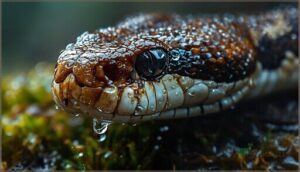
Think of it like a paper towel soaking up a spill! When your snake brushes its mouth over damp surfaces, skin folds on the lower jaw trap moisture through capillary action.
Snakes drink by brushing their mouths over water, trapping moisture in jaw folds through capillary action like a sponge
This sponge action draws water into tiny channels within the tissue, where it’s redistributed for hydration. It’s an ingenious rehydration method that works even in dry environments, boosting hydration efficiency without a single gulp.
Role of Lower Jaw Skin Creases

Ever wonder where the magic really happens? Your snake’s lower jaw anatomy holds accordion-like skin creases in the subcutaneous tissue—they’re the real heroes of hydration!
Here’s why these jaw creases matter so much for reptile hydration:
- They trap and channel moisture through capillary action during lower jaw movement
- Muscles squeeze absorbed water from the creases down the throat for efficient snake hydration and health
- This drinking mechanism prevents dehydration better than any snake tongue lapping could
Do Snakes Use Their Tongues to Drink?
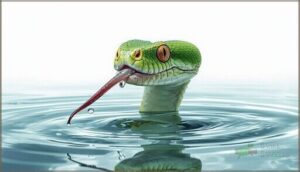
You might expect that flickering snake tongue to lap water like a dog’s, but that’s not how snake hydration and health work! The tongue function in snake drinking mechanisms is primarily for chemical detection, not water absorption.
While your snake’s tongue can collect ambient moisture and transfer it to the mouth structure where drinking water occurs, it doesn’t directly sip. Instead, snakes drink water through their specialized jaw-based drinking mechanism—the true hero of snake hydration!
How Long Can Snakes Survive Without Water?
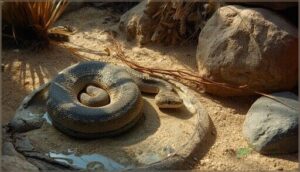
Here’s the thing about snakes and water—they’re surprisingly resilient, but there’s no one-size-fits-all answer. Some species can stretch their hydration reserves for months, while others need regular access to stay healthy.
Let’s break down what affects their survival time and how you can tell if your snake is running low.
Species Variations in Water Dependency
Water dependency changes dramatically across snake species. Your desert-dwelling rattlesnake, for instance, survives weeks—even months—without drinking, relying on prey moisture and impressive water conservation through scaly skin.
Tropical pythons, on the other hand, need daily hydration to support high metabolisms and active hunting. Environmental factors shape these species’ hydration patterns, so understanding your snake’s natural habitat guides proper reptile hydration and snake health and wellness.
Can Snakes Get Hydration From Their Food?
Yes, your snake definitely gets water from what it eats. Food moisture content in prey like rodents and amphibians delivers significant hydration—fresh prey can be 60-70% water.
Desert species especially rely on this dietary water source alongside metabolic hydration from digestion. But here’s the catch: prey water intake alone won’t meet all snake hydration methods needs, so always provide fresh drinking water for ideal snake health and wellness.
Environmental Factors That Extend or Shorten Duration
Now, here’s where things get interesting: your snake’s environment directly controls how long it can last without a drink. High humidity levels slow water loss, buying tropical species extra days between sips.
Temperature fluctuations? They spike evaporation rates fast. Desert ecosystems challenge survival through water scarcity and habitat destruction, while forest humidity extends hydration duration substantially—climate change intensifies these patterns across wildlife and ecosystems.
How to Tell if Your Snake is Dehydrated
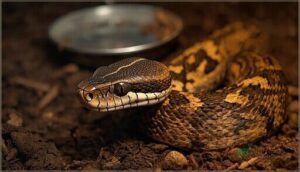
Your snake can’t tell you when it’s thirsty, so you need to watch for warning signs. Dehydration sneaks up quickly and can turn serious if you miss the early symptoms.
Here’s what to look for in your snake’s appearance and behavior.
Wrinkled or Loose Skin
One of the first clues you’ll notice during dehydration is your snake’s skin texture—it looks wrinkled, loose, or dull instead of smooth and taut. Proper hydration levels keep skin elastic, but when reptile hydration drops, elasticity loss becomes obvious.
This wrinkling often gets worse during shedding cycles if your snake can’t drink enough. Fortunately, wrinkle prevention is simple: fresh water and adequate humidity restore snake health quickly.
Sunken Eyes
When dehydration sets in, you’ll often see your snake’s eyes develop a hollow appearance—a classic warning sign that hydration has dropped dangerously low.
This sunken look happens because:
- Eye socket depth becomes more pronounced as facial anatomy loses moisture
- Skin thinning around the eyes makes the hollow effect even more visible
- Dehydration signs like reduced tissue fullness create shadows beneath the eyes
Proper reptile care and maintenance means watching for these dehydration signals closely, since snake health depends on catching problems early!
Reduced Mobility and Lethargy
When your snake moves less or seems unusually sluggish, dehydration could be draining its energy. Muscle fatigue and mobility issues often signal that hydration levels have dropped too low, affecting nerve signaling and overall snake behavior.
You’ll notice snake weakness through slower responses and reduced activity—tell-tale dehydration effects that impact animal health and wellness. Proper reptile care and maintenance means recognizing these lethargy causes before they worsen!
When to Consult a Veterinarian
If your snake won’t drink for more than 24 hours or shows persistent dehydration signs, veterinary care for reptiles becomes essential.
Emergency signs like sunken eyes combined with reduced mobility demand urgent health monitoring. Professional veterinary medicine ensures proper dehydration treatment and overall animal health and wellness.
Watch snake behavior closely—early veterinary care prevents minor issues from becoming serious threats!
Best Practices for Providing Water to Snakes

Keeping your snake properly hydrated isn’t complicated, but it does require some thoughtful planning. The right setup makes all the difference between a thriving reptile and one struggling with dehydration.
Let’s walk through the essentials that’ll keep your snake healthy and hydrated.
Choosing The Right Water Dish
Your water dish choice shapes your snake’s hydration habits more than you might think. Here’s what reptile care experts recommend:
- Bowl Material – Stainless steel resists rust and sanitizes easily, ceramic stays cool and stable, while glass lets you monitor water quality at a glance.
- Water Depth – Wide, shallow dishes prevent snout injuries and make lap-drinking easier for most species.
- Dish Size – Medium snakes thrive with 4–6 ounce bowls; larger species need 12+ ounces between refills.
- Anti-Tip Features – Rubberized bases or weighted designs keep water bowls anchored during shedding and exploration.
Snake owners who match dish specs to their pet’s size see fewer spills and better snake hydration. That’s smart reptile care and maintenance in action.
Daily Water Bowl Cleaning and Maintenance
Think of your water bowl sanitizing routine like brushing your teeth—skip it, and problems pile up fast. Daily cleaning schedules protect your snake from bacteria that thrive in stagnant water.
Rinse the dish with hot water every morning, scrub with reptile-safe soap twice weekly, and check for cracks that harbor germs. Bowl material selection matters: stainless steel sanitizes easier than porous ceramic. Smart pet owner responsibilities start here.
Maintaining Proper Humidity Levels
Beyond clean bowls, your enclosure’s moisture plays a massive role in reptile hydration. Humidity control dictates how easily your snake’s skin absorbs water and regulates temperature regulation.
Here’s how to nail it:
- Track levels with a hygrometer—aim for 40 to 60 percent depending on species
- Seal gaps to prevent rapid air circulation that dries out snake enclosures
- Add humid foliage to boost water quality and support natural snake drinking mechanisms
Special Considerations During Shedding and Brumation
When shedding or entering brumation, your snake’s drinking patterns shift dramatically. Shedding hydration needs spike—boost humidity management slightly and keep fresh water close, since skin elasticity depends on moisture.
During brumation care, drinking slows or stops entirely, but don’t remove the bowl. Snake monitoring becomes critical: sunken eyes or wrinkled skin signal dehydration prevention has failed, so consult your vet if reptile hydration concerns arise.
Frequently Asked Questions (FAQs)
How often do snakes need water?
Most snakes drink every few days when water is available, though frequency varies widely.
Desert species may wait weeks, while tropical snakes and growing juveniles often need hydration every two to four days.
How long can snakes go without drinking water?
Desert species endure drought periods for weeks to months through prey moisture and water conservation, while tropical snakes need hydration more frequently.
Baby snakes face dehydration faster than adults due to higher metabolic demands.
How do I know if my snake is thirsty?
Is your snake truly thirsty, or just curious about that water dish? Check for sunken eyes, wrinkled skin, or sticky mouth tissues—classic thirst signs that reveal dehydration before serious health issues develop.
Is it normal for snakes to drink a lot of water?
Yes, it’s normal if your snake drinks more after shedding, feeding, or during warmer weather.
However, sudden increases in water intake can signal dehydration or health issues, so monitor your pet closely.
Can snakes drink saltwater or only freshwater?
Most species can’t drink saltwater to meet their hydration needs. Even sea snakes dehydrate in seawater and rely on freshwater sources like rainfall pools, despite having salt glands for osmoregulation.
Do snakes drink more after eating meals?
Ironically, swallowing prey whole triggers thirst. Your snake’s digestion processes create metabolic demands that spike water intake patterns, especially in desert species.
Postmeal hydration aids reptile hydration, flushing the throat and aiding snake thirst cues during feeding strategies.
How do aquatic snakes get their water?
They drink directly from their surroundings—ponds, rivers, and streams—by lifting their heads to lap water.
During rain, some sip from collected dew on vegetation, ensuring fresh water intake for proper reptile hydration.
Can misting replace a water bowl entirely?
For most snakes, misting can’t fully replace a water bowl. While misting helps with humidity control and enclosure management, snakes drink water from bowls more reliably, ensuring consistent hydration and healthy reptile water intake.
Do venomous snakes have different hydration needs?
Imagine a rattlesnake baking in desert heat—its water needs mirror its non-venomous neighbors.
Venom production doesn’t substantially alter hydration requirements, but habitat, size, and age still shape each venomous snake’s drinking frequency and water intake variations.
Conclusion
The less you obsess over how often snakes drink water, the better you’ll understand their hydration needs. Your snake’s water bowl isn’t just a hydration station—it’s a humidity regulator, soaking tub, and behavioral barometer rolled into one.
Watch for wrinkled skin and sunken eyes, not the clock. Keep that bowl clean, your humidity dialed in, and trust your snake’s millions of years of desert-tested and rainforest-proven survival instincts. They’ve mastered hydration long before we started keeping them.