This site is supported by our readers. We may earn a commission, at no cost to you, if you purchase through links.
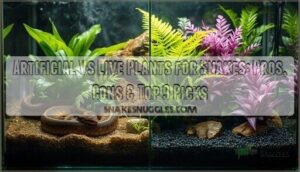
Your ball python’s enclosure doesn’t need to look like a sterile laboratory, but it doesn’t need to become a high-maintenance botanical garden either. The artificial vs live plants snakes debate splits keepers into two camps: those who swear by plastic’s convenience and those convinced nothing beats natural foliage for behavioral enrichment.
Both options create hiding spots and visual barriers that reduce stress, yet they differ dramatically in cost, upkeep, and long-term impact on your snake’s environment.
Live plants regulate humidity and provide changing growth patterns, while artificial alternatives eliminate watering schedules and potential toxicity concerns. The right choice depends on your species’ specific needs, your available time for terrarium maintenance, and whether you’re willing to troubleshoot lighting systems for plant health alongside your snake’s thermal requirements.
Table Of Contents
- Key Takeaways
- Artificial Vs Live Plants: Key Differences
- Pros and Cons of Artificial Plants for Snakes
- Pros and Cons of Live Plants in Snake Enclosures
- Top 9 Artificial and Live Plants for Snakes
- 1. Reptile Corner Branch Decor
- 2. Live Moss for Reptile Terrariums
- 3. Live Reptile Terrarium Moss Variety
- 4. Costa Farms Snake Plant
- 5. Woledoe Reptile Fake Plants
- 6. SLSON Reptile Terrarium Plant Decoration
- 7. Exo Terra Boston Fern Terrarium Plant
- 8. SLSON Hanging Silk Reptile Terrarium Plant
- 9. KERUIDENG Artificial Monstera Terrarium Plant
- Choosing The Best Plants for Your Snake
- Frequently Asked Questions (FAQs)
- Do snake plants really keep snakes away?
- Are live plants good for snakes?
- Do corn snakes like fake plants?
- Can snakes eat live plants safely?
- Do artificial plants affect enclosure temperature?
- How often should fake plants be replaced?
- Are bioactive setups suitable for all snakes?
- Can live and artificial plants be combined?
- Conclusion
Key Takeaways
- Artificial plants require minimal maintenance and eliminate toxicity concerns, but pose ingestion risks from plastic fragments and lack the humidity-regulating benefits that live plants provide through transpiration.
- Live plants stabilize moisture levels and improve air quality through natural processes, yet they introduce pest risks, require species-specific lighting systems, and demand ongoing pruning schedules that artificial options avoid entirely.
- Your snake’s natural habitat determines plant selection more than personal preference—arboreal species need sturdy climbing vines while terrestrial snakes benefit from low ground cover, with neither option inherently superior across all species.
- Initial investment differs dramatically between setups, with basic artificial arrangements costing $20-60 compared to bioactive systems reaching $500-1500, though live plants can self-propagate to reduce long-term replacement expenses.
Artificial Vs Live Plants: Key Differences
When you’re deciding between artificial plants and live plants for your snake’s enclosure, several fundamental differences should guide your choice. These distinctions affect both the visual appeal of the habitat and how your snake interacts with its environment.
Just as choosing between natural and artificial bedding impacts your snake’s health and comfort, the plants you select influence humidity levels and enrichment opportunities.
How much time you’ll spend on upkeep, and what your initial and ongoing expenses will look like, are also important considerations. Understanding these key differences will help you make an informed decision that works for both you and your snake.
Appearance and Naturalism
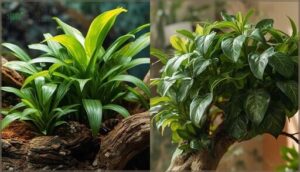
Live foliage shows natural color gradients and subtle leaf imperfections that create visual texture and depth, while artificial plants maintain uniform, fixed shades. Real plants grow and fill vertical space organically, wrapping around branches to establish a naturalistic impression. High-quality faux foliage can mimic embossed surfaces and multi-tone shading convincingly, though artificial plants lack the changing seasonal changes and moving elements that make live plant variety feel truly immersive.
When setting up a habitat, it’s important to select from to guarantee your snake’s environment is both safe and healthy.
| Feature | Live Plants | Artificial Plants |
|---|---|---|
| Visual Texture | Natural variation in leaf size, tears, and scars | Uniform molded surfaces with raised veins |
| Color Realism | Gradients from base to edge; shifts over time | Fixed shades; multi-tone painting |
| Spatial Coverage | Grows to fill vertical space and wrap branches | Pre-shaped; bent and posed manually |
Impact on Snake Behavior
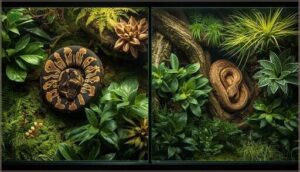
Both artificial foliage and living greenery shape how your snake interacts with its space. Visual barriers reduce snake stress by blocking direct sight lines, letting snakes feel hidden while remaining mobile. Habitat complexity encourages exploration patterns—snakes in enriched enclosures roam more zones instead of circling bare walls. Behavioral enrichment drives tongue flicking and climbing when you match plant placement to your species’ natural microhabitat. Providing environmental enrichment design not only becomes supports natural behaviors but is also a recognized standard of quality reptile care. | Plant Type | Behavioral Impact | |—————-|———————-| | Artificial foliage | Stable cover; snakes establish routine ambush posts | | Live plants | Varied microhabitats; encourages varied exploration | | Dense clusters | Reduces stress-driven retreat; promotes confident movement | | Sparse layouts | Triggers hiding, food refusal, defensive postures |
Maintenance and Longevity
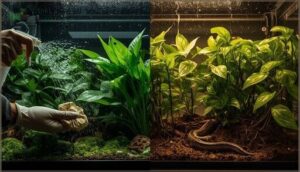
Once you’ve chosen plant types that suit your snake’s behavior patterns, ongoing upkeep becomes your next priority. Artificial plants need a quick rinse or wipe every one to four weeks, while live options demand regular pruning schedules, soil checks for mold, and stable lighting conditions.
Quality plastic decor often lasts several years before cracking, whereas hardy live species thrive indefinitely if humidity control and vivarium maintenance stay consistent.
| Maintenance Factor | Artificial Plants | Live Plants |
|---|---|---|
| Cleaning Schedules | Rinse every 1–4 weeks with reptile-safe disinfectant | Spot clean waste; prune every few weeks |
| Decoration Durability | Lasts years; no recovery from cracks or fading | Dies if conditions shift; hardy species survive years |
| Soil Management | No root zone; substrate replaced more often | Needs 7–10 cm depth; roots aerate bioactive soil |
| Humidity Control | Zero water cycling; relies on misting alone | Stabilizes moisture through transpiration and absorption |
| Plant Replacement | Predictable schedule when scratched or warped | Propagate cuttings for free; reduces future purchases |
Cost and Initial Investment
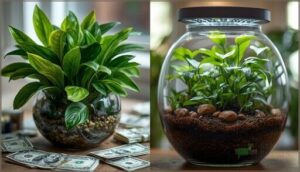
Budget planning shifts dramatically depending on which route you choose. Basic artificial foliage runs four to fifteen dollars per piece from specialty reptile brands, while live options like pothos cost five to twenty dollars per pot plus substrate layers and lighting hardware. A simple fake plant setup averages twenty to sixty dollars total, whereas bioactive enclosures with live plants, drainage media, and nontoxic materials can push initial expenses toward five hundred to fifteen hundred dollars.
| Cost Category | Artificial Plants | Live Plants |
|---|---|---|
| Per Plant Price | $1–30 depending on quality and size | $5–40 for hardy species like snake plant |
| Setup Investment | $20–60 for basic decor and cleaning tools | $50–150 simple; $500–1500 bioactive |
| Substrate Requirements | Paper or aspen; $10–20 replacement | Layered soil, drainage, barrier; $20–60 |
| Lighting Hardware | Reuse existing heat lamp; no extra cost | LED or UVB fixture; $20–50 per unit |
| Replacement Budget | Years before fading; minimal ongoing cost | Backup plants $10–50 first year |
Pros and Cons of Artificial Plants for Snakes
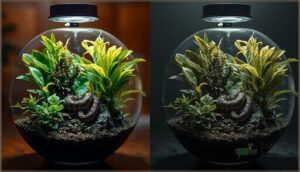
Artificial plants offer a practical solution for snake keepers who want visual appeal without the commitment of maintaining live vegetation.
However, these synthetic alternatives come with their own set of considerations that affect both your snake’s safety and your enclosure’s functionality. Understanding the specific advantages and potential drawbacks will help you make an informed decision about whether fake plants belong in your setup.
Low Maintenance and Durability
Maintenance demands drop sharply when you choose artificial foliage for your snake’s enclosure. Quality fake plants made from durable materials like polyethylene plastic usually need only a quick rinse and mild soap wash every few weeks, unlike live plants that require weekly pruning and soil checks.
High-quality reptile safe options resist warping in humid conditions and maintain their shape for three to five years, delivering outstanding plant longevity with minimal upkeep.
Risks of Ingestion and Toxicity
Your snake faces real plant toxicity dangers even with fake plants. Snakes that bite or pull at leaves can swallow plastic pieces that cause bowel obstructions requiring surgery.
Beyond plant safety, check your snake’s basking spot temperature guide to ensure a properly heated enclosure reduces stress-related chewing behaviors.
Low-quality options may off-gas harmful VOCs or leach chemicals in warm, humid conditions. Choose only reptile safe artificial foliage made from nontoxic materials, inspect regularly for damage, and watch for ingestion risks during feeding to protect your snake from fake plant hazards.
Customization and Design Options
Artificial foliage gives you complete freedom in terrarium design without worrying about light zones or soil drainage. You can arrange plants vertically on backgrounds, bend vines into custom arches, and rearrange your vivarium layout between cleanings to refresh the reptile terrarium aesthetic.
Mix jungle themes with desert accents or create layered canopy effects that live plants couldn’t survive, giving your enclosure unique decor options.
Cleaning and Safety Considerations
Regular hot-water soaks with diluted dish soap or reptile-safe disinfectant methods like F10SC remove bacteria without leaving harmful residues, but you’ll need to rinse thoroughly and air-dry completely.
Inspect for cracks or sharp edges during cleaning schedules—damaged pieces create hazard prevention issues through ingestion risk.
Unlike live plants, plant toxicity isn’t a concern, though plastics can still pose snake safety problems if your reptile nibbles fraying leaves or swallows loose decorative berries.
Pros and Cons of Live Plants in Snake Enclosures
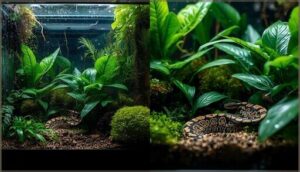
Live plants bring measurable benefits to snake enclosures, from maintaining humidity levels to improving air quality through natural processes.
However, they also introduce legitimate concerns around toxicity, pest introduction, and the ongoing care required to keep them healthy. Understanding these trade-offs will help you decide whether live plants align with your husbandry approach and your snake’s specific needs.
Humidity and Air Quality Benefits
Live plants transform your terrarium into a functional ecosystem by actively managing humidity and air quality. Through transpiration, broad-leaf species like pothos release moisture steadily, reducing your misting workload while maintaining stable levels.
Consider these air quality advantages over fake plants:
- Gas Exchange delivers fresh oxygen through photosynthesis
- Microclimate Creation produces humid pockets under foliage
- Air Purification absorbs airborne pollutants naturally
- Ventilation Management balances airflow without drying the vivarium
Plant Toxicity and Safety
Many popular houseplants contain calcium oxalate crystals or saponins that irritate your snake’s mouth and digestive tract if ingested. Store-bought plants often carry systemic pesticides and fungicides that leach into substrate, creating reptile hazards.
Consult toxic plant lists before introducing any greenery, then choose nontoxic plants like spider plants, Boston ferns, and prayer plants. Proper plant selection for vivariums protects your snake from plant poisoning while maintaining terrarium plant safety.
Pest and Disease Risks
Beyond plant toxicity, live plants introduce pests and pathogens that threaten your snake’s health. Aphids, spider mites, and fungus gnats arrive hidden on leaves or in potting soil, while moist substrate around roots harbors parasite eggs and bacterial blooms that closed enclosures magnify.
- Mite infestations spread rapidly between plants, requiring predatory mites like Hypoaspis miles for parasite control
- Fungal diseases thrive in humid vivariums, releasing spores that risk respiratory infections
- Cross contamination from outdoor materials introduces unfamiliar bacteria and nematodes
Ongoing Plant Care Requirements
While pests and pathogens present short-term challenges, the real commitment begins with daily plant care.
Watering schedules demand precision—mist every few days to maintain humidity control without waterlogging roots.
Soil maintenance includes topping decomposed sphagnum layers, while pruning techniques remove dead foliage before decay sets in.
Fertilization methods use diluted organic formulas sparingly, and plant propagation methods let you replace declining specimens from existing stock.
Top 9 Artificial and Live Plants for Snakes
Selecting the right plants for your snake’s enclosure requires understanding both artificial plants and live options that meet specific species requirements.
The following nine products represent reliable choices that balance safety, functionality, and visual appeal based on enclosure type and maintenance capacity.
Each option caters to distinct needs, from humidity regulation to low-maintenance decoration, allowing you to create an environment suited to your snake’s natural habitat preferences.
1. Reptile Corner Branch Decor
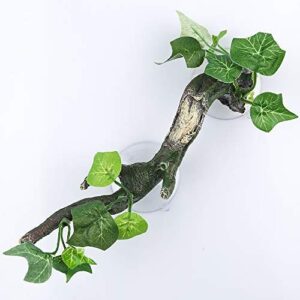
The AQUA KT Reptile Corner Branch Decor combines a textured resin base with plastic foliage, offering your snake a secure climbing route without sacrificing floor space.
You’ll find the molded bark texture gives semi-arboreal species like corn snakes solid grip points, while attached leaves create visual barriers that help shy individuals feel more secure.
The suction cup mounting system holds the branch firmly against glass walls, though you’ll need to clean the surface and moisten the cups for a reliable seal that holds climbing weight.
| Best For | Owners of small to medium-sized climbing reptiles like corn snakes, geckos, or juvenile arboreal species who want to add vertical space without crowding their tank’s floor area. |
|---|---|
| Material | Resin and glass |
| Type | Climbing branch |
| Maintenance | Easy to clean |
| Installation | Suction cups |
| Color | Climbing Branch |
| Use Case | Climbing surface |
| Additional Features |
|
- Corner design saves floor space while giving reptiles natural climbing opportunities
- Textured resin surface provides solid grip for semi-arboreal species
- Durable material withstands high temperatures and frequent use without special maintenance
- Suction cups don’t always hold reliably on glass and may need frequent adjustment
- Fabric leaves can develop mold if humidity isn’t controlled
- Size may not work for larger reptiles or very small terrariums
2. Live Moss for Reptile Terrariums
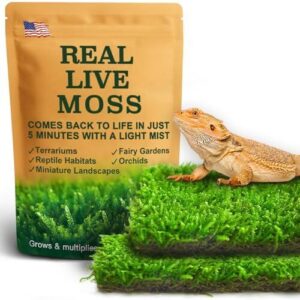
LUCKYRUNES Live Moss offers a naturally soft substrate layer that stabilizes humidity while enhancing the visual depth of your snake’s terrarium. You’ll receive a 50-square-inch sheet measuring 10.2 by 7.68 inches that arrives ready to use after deep misting.
The moss functions as both decorative ground cover and a microclimate regulator, making it particularly useful near water bowls or humid hides where your snake sheds. Regular misting prevents drying, though some keepers report browning over time if airflow remains too low.
| Best For | Snake keepers who want a natural substrate that holds humidity near hides and water bowls while adding visual appeal to the enclosure. |
|---|---|
| Material | Natural moss |
| Type | Substrate/bedding |
| Maintenance | Requires misting |
| Installation | Lay flat |
| Color | Natural green |
| Use Case | Humidity regulation |
| Additional Features |
|
- Maintains stable humidity levels without water pooling, which helps during shedding cycles
- Arrives ready to use after misting and covers 50 square inches in a single sheet
- Works as both functional bedding and decorative ground cover for a more natural-looking setup
- May brown or die off if airflow is poor or misting schedule isn’t consistent
- Some batches decline in quality over time despite regular care
- Initial earthy smell can be strong when first unpacked
3. Live Reptile Terrarium Moss Variety
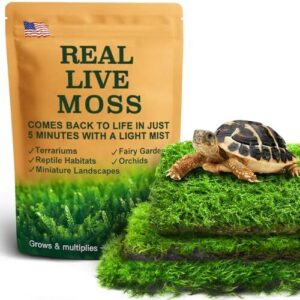
Multi-species moss packs deliver texture and functional diversity across your enclosure, usually bundling forest, mood, sphagnum, and lichen varieties in six-by-six-inch trays with four distinct sections.
You can tuck cushion moss into elevated mounds near hides, spread carpet moss as ground cover to slow evaporation, and dot fern moss along branches for fine detail.
These varieties tolerate 60 to 90 degrees Fahrenheit when misted regularly with dechlorinated water, though they perform best under indirect LED lighting around 6500 Kelvin for twelve hours daily.
| Best For | Reptile owners who want a natural, living substrate that keeps humidity stable and gives tropical species like geckos, frogs, and snakes a more authentic environment. |
|---|---|
| Material | Live moss |
| Type | Substrate/accent |
| Maintenance | Requires watering |
| Installation | Lay flat |
| Color | Natural green |
| Use Case | Substrate accent |
| Additional Features |
|
- Real live moss that springs back to life after watering and actually grows over time
- Three different moss types in one pack give you texture variety for different zones in your terrarium
- Holds moisture really well, which is perfect for species that need higher humidity or a moist hide during shedding
- Some customers get moss that arrives dry or brittle instead of fresh and healthy
- Won’t hold up if you have a reptile that likes to dig aggressively or tear up plants
- Needs regular misting and care to stay alive, so it’s more maintenance than fake décor
4. Costa Farms Snake Plant
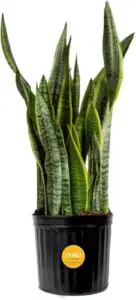
Dracaena trifasciata ships in a ten-inch nursery pot at twenty-eight inches tall and tolerates the low light that hinders most vivarium plants, making it viable for dimly lit reptile rooms or basement setups.
You’ll water only when the soil dries completely—every two to three weeks under typical conditions—because overwatering triggers root rot faster than neglect kills the plant.
The upright, sword-shaped leaves with yellow margins provide vertical structure for arboreal species, though saponins render all parts mildly toxic if your snake investigates by mouth.
| Best For | Reptile owners with low-light rooms or busy plant parents who want air-purifying décor without constant maintenance. |
|---|---|
| Material | Live plant |
| Type | Live snake plant |
| Maintenance | Low maintenance |
| Installation | In pot |
| Color | Assorted |
| Use Case | Air purification |
| Additional Features |
|
- Thrives in low light and only needs watering every 2-3 weeks, perfect for forgetful care routines
- Tall sword-shaped leaves add vertical interest and modern style to any room or vivarium setup
- Naturally purifies air and arrives ready to display in a 10-inch nursery pot
- Contains saponins that are toxic to pets and children if chewed or ingested
- Prone to root rot if overwatered, so you need to let soil dry completely between waterings
- May arrive damaged in cold weather, and shipping restrictions apply in some states
5. Woledoe Reptile Fake Plants
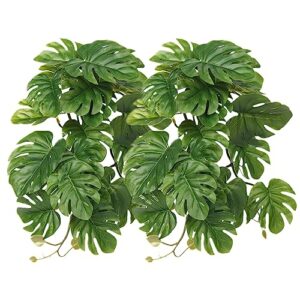
Two suction-mounted vines in each Woledoe pack create draping foliage along glass walls, delivering vertical cover for arboreal snakes without the lighting demands or pest risks of living plants.
You’ll arrange the lightweight plastic leaves around branches and hides within minutes, then spot-clean with warm water or diluted chlorhexidine when shed skin accumulates.
The non-porous construction resists mold in humid setups, though you should inspect suction cups monthly for wear and monitor curious individuals that might chew on the synthetic material.
| Best For | Reptile owners seeking low-maintenance vertical decor that adds climbing space and visual interest to terrariums housing arboreal species like crested geckos or tree pythons. |
|---|---|
| Material | Live plant |
| Type | Live snake plant |
| Maintenance | Low maintenance |
| Installation | In pot |
| Color | Assorted |
| Use Case | Air purification |
| Additional Features |
|
- Two suction-mounted vines install quickly on glass and create natural-looking draping foliage without needing grow lights or substrate
- Non-porous plastic resists mold in high-humidity enclosures and cleans easily with warm water when shed skin or waste builds up
- Adjustable leaves let you customize coverage around branches and hides to match your pet’s climbing preferences
- Leaves can detach under force if larger reptiles climb aggressively or pull at the vines
- Strong plastic odor when first unpacked may require airing out before adding to the enclosure
- Suction cups may lose grip on textured surfaces or need monthly checks to prevent the vines from falling
6. SLSON Reptile Terrarium Plant Decoration
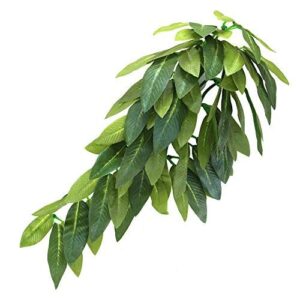
A twelve-inch silk-and-plastic vine mounted by suction cup gives corner snakes immediate vertical cover without the watering schedules or fertilizer guesswork of pothos.
You’ll bend the flexible wire core around branches or position the foliage near basking spots to create shaded pockets, then pull the decoration for warm-water rinses when waste or shed skin collects on the leaves.
The non-toxic polyethylene construction suits corn snakes and king snakes that seldom chew décor, though you should watch climbing pythons for persistent biting that frays the silk.
| Best For | Snake keepers who want quick vertical coverage without the hassle of live plants or watering routines. |
|---|---|
| Material | Plastic |
| Type | Hanging plant |
| Maintenance | Easy to clean |
| Installation | Suction cups |
| Color | Green |
| Use Case | Habitat decoration |
| Additional Features |
|
- Twelve-inch flexible vine bends around branches to create instant shaded hiding spots near basking areas
- Non-toxic plastic and silk construction is safe for corn snakes and king snakes that don’t chew décor
- Suction cup mount makes installation and removal simple for regular warm-water cleanings
- Suction cup can lose grip over time and need replacement or repositioning
- Silk leaves may fray or fade if climbing pythons or aggressive chewers bite the material repeatedly
- Quality inconsistencies mean some units feel flimsy or poorly assembled for the price
7. Exo Terra Boston Fern Terrarium Plant
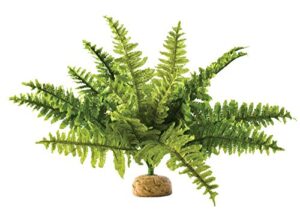
A weighted plastic fern brings bushy ground cover to tropical setups where ballpythons and boas push through foliage on their nightly patrols. You’ll position the broad, multi-layered fronds near cool ends to form shade pockets and visual barriers that cut stress.
The water-resistant construction tolerates misting schedules, though you must inspect fronds regularly for green particles that shed over time and pose ingestion risk if your snake investigates loose debris. Then, lift the entire plant for soap-and-rinse sessions when urates settle between leaves.
| Best For | Keepers who want realistic ground cover in tropical terrariums for ball pythons, boas, and other snakes that need visual barriers without the maintenance of live plants. |
|---|---|
| Material | Plastic and silk |
| Type | Terrarium plant |
| Maintenance | No maintenance |
| Installation | Suction cup |
| Color | Green |
| Use Case | Hiding spots |
| Additional Features |
|
- Weighted base keeps it stable when heavy snakes push through the dense, multi-layered fronds
- Water-resistant material handles regular misting without rotting or molding
- Easy to pull out and rinse clean when waste builds up between the leaves
- Sheds green particles over time that could be a choking hazard if your snake eats them
- Plastic and fabric construction can break down, especially in high-humidity setups
- Holds moisture in the fronds, so you’ll need to check for trapped water that can grow bacteria
8. SLSON Hanging Silk Reptile Terrarium Plant
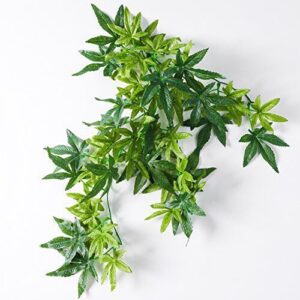
Silk leaves draped from a suction mount mimic jungle canopy for corn snakes and young ball pythons that press through layered foliage while hunting. You’ll hang this twelve-inch strand near the top glass to create overhead refuge zones without claiming floor space.
The non-toxic polyethylene stem and waterproof fabric withstand misting cycles, though you must check that the suction cup holds when climbing weight shifts the plant. Pull it monthly for a warm-water scrub, brushing dust and shed skin from clustered leaves before reattachment.
| Best For | Reptile owners who want to add vertical coverage and climbing enrichment to their terrarium without using live plants. |
|---|---|
| Material | Plastic |
| Type | Faux fern |
| Maintenance | Easy to clean |
| Installation | Weighted base |
| Color | Multi |
| Use Case | Hiding spots |
| Additional Features |
|
- Non-toxic materials and silk leaves hold up well through regular misting and humidity cycles
- Suction cup mount saves floor space while creating overhead hiding spots for arboreal species
- No maintenance needed—just pull it down monthly for a quick rinse and you’re done
- Suction cup can lose grip when heavier reptiles climb on it, so you might need to hot glue it in place
- Individual leaves sometimes detach easily during handling or cleaning
- Must be positioned away from heat lamps since the plastic and silk materials can’t handle direct heat exposure
9. KERUIDENG Artificial Monstera Terrarium Plant
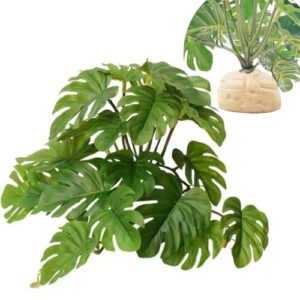
For snakes that burrow or press beneath ground foliage, the KERUIDENG Artificial Monstera Terrarium Plant creates a stable refuge along substrate edges. Its dense Monstera leaves mimic the cover and texture of a tropical understory and maintain integrity under regular misting or brushing contact.
The weighted resin base resists tipping, suiting active snakes that rearrange decor. While you’ll appreciate the plant’s realism and low upkeep, remember it’s strictly decorative—humidity and air quality still depend on your broader enclosure practices.
| Best For | Snake keepers looking for a durable, low-maintenance hiding spot that adds tropical realism to their enclosure without requiring live plant care. |
|---|---|
| Material | Plastic and silk |
| Type | Terrarium plant |
| Maintenance | No maintenance |
| Installation | Suction cup |
| Color | Green |
| Use Case | Hiding spots |
| Additional Features |
|
- Weighted base keeps it stable even when active snakes push against or climb through the foliage
- Dense Monstera leaves provide realistic cover that holds up to regular misting and handling
- No maintenance required—just rinse occasionally to keep it looking fresh
- Some users report the plant is smaller than expected based on product images
- Leaves can detach with rough handling or aggressive snakes
- May have a chemical odor when new that requires washing and airing out before use
Choosing The Best Plants for Your Snake
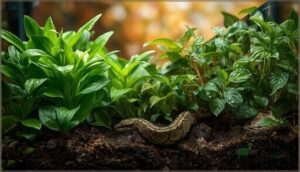
Selecting the right plants for your snake’s enclosure isn’t a one-size-fits-all decision. Your choice depends on your snake’s natural habitat, the environmental conditions you can realistically maintain, and safety considerations that can’t be overlooked.
The following factors will help you make informed decisions that benefit both your snake’s health and your maintenance routine.
Matching Plant Types to Snake Species
Your snake’s lifestyle shapes plant selection for snakes more than any other factor. Arboreal species like green tree pythons demand sturdy climbers such as pothos along branches, while terrestrial landscaping for corn snakes centers on low grasses and compact ground cover.
Burrowing environments require rooted plants with strong stabilizing systems, and larger snakes need durable options—both live plants and fake plants—that withstand their weight during movement.
Evaluating Humidity and Lighting Needs
Live plants increase humidity through transpiration, releasing water vapor that stabilizes moisture between misting sessions—tropical pothos outperforms succulents in this role.
Your terrarium demands full-spectrum LED plant lights for 8 to 12 hours daily, separate from any UVB fixture. Strategic plant placement creates microclimates: cluster humidity-loving species on the moist side while positioning heat-tolerant artificial options near basking zones, achieving environmental balance across your vivarium.
For a deeper look at timing, how long terrarium lights should stay on covers why that consistent dark period matters just as much as the light itself.
Ensuring Safety and Non-Toxicity
Your plant choices directly affect snake welfare through toxicity testing and hazard prevention. Verify non-toxic materials in fake plants by soaking them in hot water—if dyes leach, discard immediately.
For live plants, source organically propagated ferns and moss from bioactive suppliers to avoid pesticide residues. Quarantine nursery specimens for two weeks, rinsing foliage thoroughly.
Never introduce philodendron or oleander—calcium oxalates and cardiac glycosides prove fatal.
Balancing Aesthetics and Functionality
Visual Balance transforms your terrarium plants into functional decor through strategic Plant Placement that enhances Snake Enrichment while maintaining Habitat Realism.
Layer fake plants where high traffic demands Decor Sustainability:
- Position artificial vines near hides to prevent crushing live foliage
- Combine fast-growing live moss with durable artificial ferns for consistent coverage
- Use broad-leaf fake plants on frequently used perches
- Reserve delicate live plants for protected corners in snake enclosures
Frequently Asked Questions (FAQs)
Do snake plants really keep snakes away?
Despite their name, snake plants don’t repel snakes. Herpetology experts confirm no ornamental plant reliably deters reptiles through scent or chemistry.
Physical barriers like mesh fencing prove far more effective than relying on vegetation alone.
Are live plants good for snakes?
Yes, when properly selected. Live plants improve snake well-being by stabilizing humidity, enriching naturalistic habitats, and reducing stress in bioactive systems.
However, plant toxicity remains a critical concern, requiring careful vivarium plant suitability checks for reptile welfare.
Do corn snakes like fake plants?
Corn snakes readily use fake plants as cover and climbing routes, treating artificial foliage like natural brush.
They respond to the security dense plants provide rather than distinguishing real from synthetic vegetation in their snake habitat.
Can snakes eat live plants safely?
Snakes can’t digest live plants because their carnivorous digestive systems lack the enzymes to break down cellulose.
While incidental ingestion rarely causes harm, fibrous material can contribute to impaction, making intentional plant consumption unsafe for snake digestion.
Do artificial plants affect enclosure temperature?
Artificial plants generally have minimal impact on enclosure temperature, though dense fake plants positioned directly under basking bulbs can trap warm air and slightly raise local temperatures by reducing ventilation effects and limiting thermal gradients throughout the terrarium.
How often should fake plants be replaced?
Most keepers replace fake plants every 12 to 24 months, or sooner if cracking, fading, or fraying occurs. Heavy-bodied climbing snakes and high-humidity enclosures accelerate wear, requiring more frequent replacement schedules.
Are bioactive setups suitable for all snakes?
Bioactive enclosures thrive on natural balance, yet too much of a good thing creates problems.
Not every snake species copes with these complex systems well—desert dwellers struggle with constant moisture while large, powerful snakes destroy planted vivariums quickly.
Can live and artificial plants be combined?
Yes, you can combine live and fake plants successfully. Mixed planting works well in bioactive setups, giving your snake enrichment through varied textures and hiding spots while simplifying enclosure design and maintenance across different humidity zones.
Conclusion
Which setup will you actually maintain six months from now? The artificial vs live plants snakes debate ultimately hinges on your commitment level and species-specific requirements.
Artificial options deliver consistency without watering schedules, while live plants transform static enclosures into vibrant ecosystems that demand ongoing attention.
Match your choice to your snake’s humidity needs, your available maintenance time, and your willingness to troubleshoot both herpetological and horticultural challenges simultaneously.