This site is supported by our readers. We may earn a commission, at no cost to you, if you purchase through links.

Most snake owners don’t lose their pet to a predator or escape—they lose it to a substrate choice made at the pet store checkout on impulse. The wrong bedding traps moisture against skin, harbors bacterial colonies invisible to the naked eye, and turns a five-minute weekly clean into an hour-long disinfection project.
Substrate isn’t just flooring; it’s the single material your snake breathes, burrows through, and presses its body against every hour of every day.
Getting it right means understanding what each substrate option for easy cleaning actually delivers—beyond the marketing language on the bag—and matching those properties to your snake’s specific humidity range, burrowing instincts, and respiratory sensitivity.
Table Of Contents
- Key Takeaways
- Snake-Safe Easy-Clean Substrate Options
- Top 10 Easy-Clean Substrate Products
- 1. Aqueon Clay Aquarium Plant Substrate
- 2. Fluval Aquarium Substrate for Plants and Shrimp
- 3. Aqua Natural White Aquarium Sand
- 4. Aqua Natural Black Quartz Gravel
- 5. Hygger Aquarium Substrate Soil
- 6. Aqua Natural Aquarium Gravel Substrate
- 7. Chatelet Aquarium Substrate Cliffs
- 8. Aqua Natural Iwagumi Garnet Substrate
- 9. Hygger Telescopic Aquarium Cleaning Kit
- 10. CPLike Aquarium Shrimp Cave Decor
- Choosing Low-Maintenance Snake Substrate
- Cleaning Tools and Maintenance Tips
- Substrates to Avoid for Snakes
- Frequently Asked Questions (FAQs)
- What is the easiest aquarium substrate to keep clean?
- What is the best substrate for beginners?
- Is sand substrate easy to clean?
- How often should substrate be completely replaced?
- Can different substrates be safely mixed together?
- Does substrate color affect fish stress levels?
- How deep should substrate be for bottom-dwellers?
- What tools work best for deep substrate cleaning?
- How often should substrate be fully replaced?
- Can substrate affect a snakes shedding process?
- Conclusion
Key Takeaways
- Your substrate choice is the single most consequential decision in snake keeping — it governs respiratory health, humidity balance, and how much time you’ll spend on cleanup every single week.
- Cypress mulch and bioactive soil mixes handle moisture retention and waste breakdown naturally, making them the smartest long-term picks for humidity-dependent species that need a stable microenvironment without constant misting or manual intervention.
- Cedar, pine, fine sand, clumping cat litter, and treated wood chips aren’t just inconvenient — they’re genuinely hazardous, introducing toxic compounds, respiratory irritants, and impaction risks that no cleaning routine can fix after the fact.
- Spot-clean daily, refresh surfaces weekly, and do a full substrate swap every 6–12 months — that rhythm, paired with the right material, is what keeps an enclosure genuinely clean rather than just visually tidy.
Snake-Safe Easy-Clean Substrate Options
Picking the right substrate is one of those decisions that affects everything—your snake’s comfort, your cleanup time, and the overall health of the enclosure. Not every option works for every keeper, so knowing what’s out there gives you a real advantage.
A quick look at snake cage substrate replacement tips can help you figure out how often to swap things out and avoid common mistakes keepers make.
Here are five substrates worth considering if easy cleaning and snake safety are your top priorities.
Paper Towels
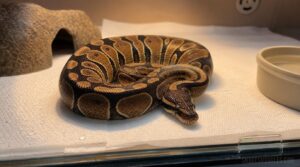
Paper towels are the ideal no‑fuss baseline for reptile enclosure cleaning — cheap, disposable, and genuinely easy to clean up after your snake. Their cellulose‑based production process and recycled fibers create real absorption tech through capillary action, while wet strength additives keep them intact during spot removal.
Low maintenance, solid hygiene, and some carry eco certifications. Simple wins.
Selecting paper towels with an eco‑friendly label designation promotes sustainable practices.
Reptile Carpet Liners
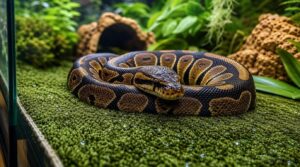
When disposables aren’t your style, reptile carpet liners offer a reusable, washable alternative worth considering. Their Customizable Sizes fit most enclosures, and Aesthetic Options range from natural terrain textures to clean neutrals.
Moisture Control is solid — liners resist liquid seepage and dry quickly.
Antimicrobial Benefits limit bacterial buildup between cleanings.
- Machine-washable with safe cleaning agents for reptiles
- Reusable Designs cut long-term substrate costs
- Assists reptile enclosure cleaning routines efficiently
- Reduces substrate sanitation frequency compared to loose media
- A practical reptile carpet alternative for humidity-sensitive species
Aspen Shavings
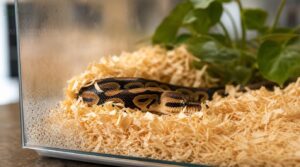
If reusable liners feel like too much upkeep, Aspen Shavings offer a refreshingly low‑effort alternative.
The Kiln Drying Process removes excess moisture and dust, directly supporting Respiratory Health Support for sensitive species. Moisture Localization keeps wet spots contained, making spot cleaning fast.
Sourced through Renewable Sourcing and fully biodegradable, Biodegradable Disposal is guilt‑free — a practical win for reptile habitat maintenance and substrate sanitation without harsh, safe cleaning agents for reptiles.
Cypress Mulch
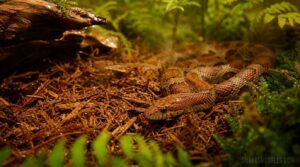
Aspen works well for dry‑climate snakes, but if your species craves humidity, Cypress Mulch is worth a serious look.
Its natural oils deliver real Pest Repellent Properties, while its Moisture Retention Effects keep enclosures consistently damp without constant misting.
Apply 2–3 inches deep — Application Best Practices that also support Temperature Moderation.
Just watch for mold in poorly ventilated setups; these porous materials need airflow to stay clean.
Bioactive Soil Mixes
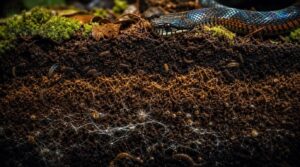
Bioactive soil mixes take reptile waste management to another level entirely.
Built around coconut fiber, worm castings, and live microbial communities, these bioactive substrates handle Nutrient Cycling and Natural Pest Control through Microfauna Role — nematodes and microarthropods that outcompete harmful organisms naturally.
Their Soil Composition promotes Microbial Benefits that reduce cleaning frequency greatly.
Skip soil sterilization techniques here; that microbial network is exactly the point.
Top 10 Easy-Clean Substrate Products
Finding the right substrate doesn’t have to mean endless trial and error. The products below cover a solid range of materials, price points, and maintenance styles — so there’s something here whether you’re keeping things simple or building out a more involved setup.
Here’s what made the list.
1. Aqueon Clay Aquarium Plant Substrate
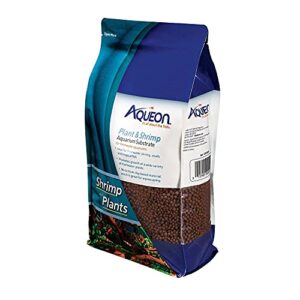
The Aqueon Clay Aquarium Plant Substrate earns its spot here for one simple reason: those spherical clay granules hold their shape under pressure, meaning your substrate won’t collapse into a compacted mess that traps waste. At 5 lbs per bag, it’s a practical size for smaller freshwater setups, supporting plants, shrimp, and tropical fish without fuss.
Vacuum it carefully along the surface and you’re done — though plan on add root tabs, since its nutrient content runs low.
| Best For | Freshwater plant enthusiasts and shrimp keepers who want a clean, dark substrate that holds its shape and looks great in smaller aquascapes. |
|---|---|
| Material Type | Clay-based granules |
| Weight | 5 lb (2.3 kg) |
| Safe For | Fish, shrimp, snails, plants |
| Primary Use | Aquarium substrate |
| Pre-Use Prep | Rinse recommended |
| Price (USD) | Not listed |
| Additional Features |
|
- Spherical clay granules stay firm over time, so your aquascape keeps its shape without collapsing or compacting
- Dark, uniform color makes plants and livestock pop — great for a natural, polished look
- Easy to vacuum and works well as a base layer in mixed-substrate setups
- Low nutrient content means you’ll likely need root tabs or fertilizers to keep plants thriving
- Small round granules tend to roll around, which makes placing rocks or driftwood tricky
- The volume per bag is misleading — you’re getting roughly 1.5 L, not the 4.5 L some listings suggest
2. Fluval Aquarium Substrate for Plants and Shrimp
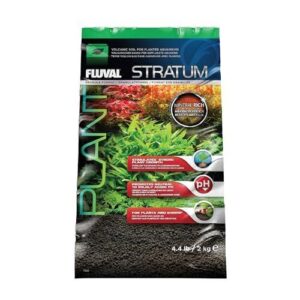
Sourced from volcanic soil near Mount Aso, Japan, the Fluval Plant and Shrimp Stratum (4.4 lb, ~$15.97) brings something genuinely different to a freshwater setup. Its highly porous granules colonize with beneficial bacteria fast — accelerating your nitrogen cycle — while the lightweight, non‑compacting texture lets plant roots spread freely.
The neutral-to-slightly-acidic pH (6.5–7.5) suits shrimp and tropical species comfortably.
Skip rinsing; just fill slowly and give filtration 6–48 hours to clear any initial cloudiness before adding livestock.
| Best For | Hobbyists setting up freshwater planted tanks with shrimp, tropical fish, or both — especially anyone who wants a faster nitrogen cycle and a safe environment for baby shrimp. |
|---|---|
| Material Type | Porous granular substrate |
| Weight | 4.4 lb (2 kg) |
| Safe For | Fish, shrimp, plants |
| Primary Use | Aquarium substrate |
| Pre-Use Prep | No rinsing recommended |
| Price (USD) | $15.97 |
| Additional Features |
|
- Gets your nitrogen cycle going quickly thanks to the porous granules that beneficial bacteria love to colonize.
- The slightly acidic pH (6.5–7.5) hits the sweet spot for most shrimp and tropical fish without much fussing.
- Tiny gaps between granules give newborn shrimp a safe place to hide while they’re still vulnerable.
- Expect cloudy water for up to 48 hours after setup — patience is required before adding any livestock.
- The granules are so light that plants can shift or float if you don’t use anchors or add at least 3 inches of depth.
- In hard water, pH can still creep up, so you may need extra buffering before the tank is fish-ready.
3. Aqua Natural White Aquarium Sand
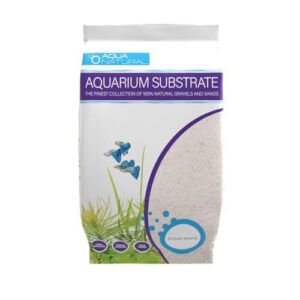
Triple-washed and kiln-dried, Aqua Natural Sugar White Sand delivers a clean, visually striking base that makes your fish and plants genuinely pop. Its 0.5–1 mm grain size is fine enough to stay gentle on corydoras and shrimp while resisting the kind of compaction that traps ammonia-producing debris.
Sustainably sourced in New Zealand under license, this 10 lb bag produces minimal clouding during setup — just a quick rinse and you’re ready.
One caveat: not nutrient-rich enough for heavy root feeders.
| Best For | Aquarists keeping shrimp, corydoras, guppies, or other bottom-dwellers who want a clean, natural-looking substrate without hours of rinsing prep. |
|---|---|
| Material Type | Natural quartz sand |
| Weight | 9.92 lb (4.5 kg) |
| Safe For | Fish, shrimp, snails |
| Primary Use | Aquarium/vivarium substrate |
| Pre-Use Prep | Rinse recommended |
| Price (USD) | Not listed |
| Additional Features |
|
- Triple-washed and kiln-dried, so setup is quick and water stays clear almost immediately after rinsing.
- The fine 0.5–1 mm grain is soft on delicate fins and won’t trap debris as easily as coarser substrates.
- That off-white "sugar" color makes fish and plants stand out — your tank just looks better.
- One 10 lb bag only gets you about 1.5 inches of depth, which isn’t enough for plants with serious root systems.
- It’s not nutrient-rich, so heavy root feeders will need root tabs or a separate substrate layer underneath.
- Some buyers get bags with a slight beige tint rather than true white, which can be a letdown if you’re going for a bright, clean look.
4. Aqua Natural Black Quartz Gravel
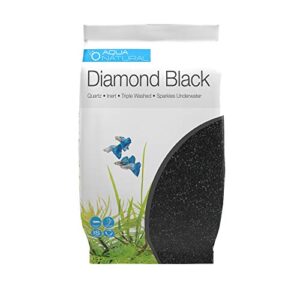
Aqua Natural Black Quartz Gravel earns its place in planted tanks that prioritize both aesthetics and water quality.
Its 1–2 mm natural quartz grains create enough surface texture to support beneficial bacterial colonies, boosting your biological filtration without any chemical additives.
The deep black tone makes greens like Anubias and Amazon swords genuinely vibrant.
One honest heads‑up: rinse it three to four times before use, or you’ll be fighting cloudiness for days.
| Best For | Hobbyists running planted tanks with shrimp, bettas, or small fish who want a dark substrate that makes their greenery pop and supports healthy biological filtration. |
|---|---|
| Material Type | Natural quartz gravel |
| Weight | 10 lb (4.5 kg) |
| Safe For | Fish, shrimp, bettas |
| Primary Use | Aquarium substrate |
| Pre-Use Prep | Multiple rinses required |
| Price (USD) | Not listed |
| Additional Features |
|
- High surface area helps beneficial bacteria thrive, giving your tank’s filtration a natural boost
- Deep black color makes green plants like Anubias and Amazon swords look genuinely stunning
- Fine, smooth texture is gentle on small fish, shrimp, and bottom dwellers
- Needs three to four thorough rinses before use — skip this and you’ll have cloudy water for days
- Very fine particles can get sucked into bottom-mounted foam filters and cause clogs over time
- Color isn’t a true jet-black — you’ll notice brownish and greenish grains mixed in, which may not suit everyone’s aesthetic
5. Hygger Aquarium Substrate Soil
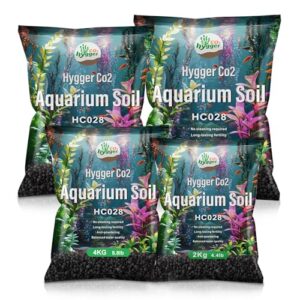
Hygger Aquarium Substrate Soil does something most substrates don’t — it works before you even add water. Pre-loaded with nitrogen, phosphorus, potassium, calcium, and magnesium at 15–20 ppm, it feeds roots from day one without liquid fertilizers.
The porous sintered structure colonizes beneficial bacteria fast, keeping water clear after that initial 24–48 hour cloudiness settles.
It buffers pH to 6.5–7.5 and softens hardness to 5–8 °dKH — a stable foundation for shrimp, bettas, and planted scapes alike.
| Best For | Planted tank hobbyists and shrimp keepers who want a ready-to-go substrate that handles water chemistry and plant nutrition from the start. |
|---|---|
| Material Type | Sintered porous substrate |
| Weight | 9.02 lb (4.1 kg) |
| Safe For | Fish, shrimp, plants |
| Primary Use | Planted tank substrate |
| Pre-Use Prep | No rinsing needed |
| Price (USD) | $30.99 |
| Additional Features |
|
- Comes pre-loaded with nutrients (N, P, K, Ca, Mg) so your plants have food from day one — no liquid ferts needed right away.
- Keeps pH between 6.5–7.5 and hardness at 5–8 °dKH, which is a sweet spot for shrimp, bettas, and most aquatic plants.
- Porous structure speeds up beneficial bacteria colonization, helping your tank cycle faster and stay clear.
- Expect cloudy water and possibly a white film on the glass for the first day or two — it’s normal, but it can look rough.
- Not a good fit for established tanks with fish already in them; you’ll need several water changes before adding any livestock.
- Some users notice crusty, calcium-like deposits on the glass over time, and the texture feels more rock-solid than soft and natural.
6. Aqua Natural Aquarium Gravel Substrate
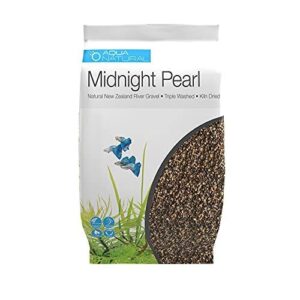
Aqua Natural Gravel keeps things refreshingly simple. Triple-washed, kiln-dried natural stone with a 2–4 mm grain size — that’s the whole story.
The uniform particle range sits right in the sweet spot for water flow and debris removal, so spot-cleaning stays quick and frustration‑free.
It won’t shift your pH or hardness, making it genuinely inert for freshwater setups.
The Midnight Pearl coloring adds depth, though it can hide uneaten food from bottom‑dwellers.
| Best For | Freshwater fish keepers — especially those with bettas, corydoras, or tetras — who want a clean, natural-looking substrate that won’t mess with their water chemistry. |
|---|---|
| Material Type | Natural stone pebble |
| Weight | 9.9 lb (4.5 kg) |
| Safe For | Fish, reptiles, plants |
| Primary Use | Aquarium/terrarium substrate |
| Pre-Use Prep | Multiple rinses recommended |
| Price (USD) | Not listed |
| Additional Features |
|
- Triple-washed and kiln-dried, so it’s low on toxins and safe for sensitive fish right out of the bag (after a good rinse).
- The 2–4 mm grain size is gentle enough for bottom-dwellers to forage through without getting hurt.
- Completely inert — won’t nudge your pH or hardness, which makes it a solid pick for planted tanks too.
- Expect some dust. Most users rinse it several times before it runs clear, "triple-washed" label aside.
- The dark color looks great, but it makes it tough to spot uneaten food sitting on the bottom.
- Fine grains can get sucked into filters, so keep an eye on your intake if you’re running a sensitive filtration setup.
7. Chatelet Aquarium Substrate Cliffs
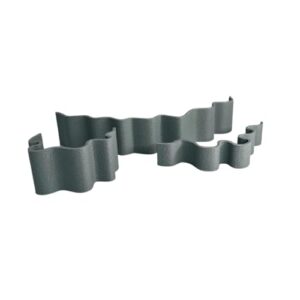
Where Aqua Natural keeps things flat and functional, Chatelet takes substrate design vertical. The Substrate Cliffs system gives you three interchangeable plastic pieces — long, medium, and short — that stack into tiered ledges, your shrimp and small fish will actually use as habitat.
Installation requires zero adhesives; you simply place and arrange. At $19.95, it’s a creative way to add visual depth without complicated hardscaping.
Just note that the lightweight plastic can shift in stronger currents, so anchor placement matters.
| Best For | Hobbyists with nano tanks, shrimp setups, or terrariums who want to add some visual height and natural-looking layers without any complicated hardscaping work. |
|---|---|
| Material Type | Non-toxic plastic |
| Weight | Not specified |
| Safe For | Fish, shrimp, reptiles |
| Primary Use | Tank decoration/divider |
| Pre-Use Prep | No prep required |
| Price (USD) | $19.95 |
| Additional Features |
|
- Three interchangeable pieces let you mix and match layouts to build the tiered look you want
- Zero tools or adhesives needed — just place them and you’re done
- Pet-safe, USA-made plastic that holds up in both aquatic and reptile environments
- Lightweight design means the pieces can shift or float in tanks with stronger water flow
- Pretty small overall, so they won’t make much of an impact in larger displays
- Rigid pieces can’t be bent or shaped, which limits how creative you can get without buying multiple sets
8. Aqua Natural Iwagumi Garnet Substrate
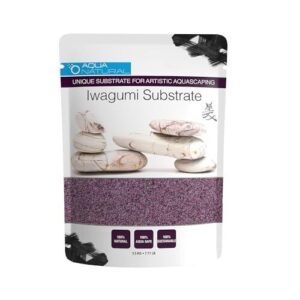
If Chatelet goes vertical, this one goes deep — visually speaking. The Aqua Natural Iwagumi Garnet Substrate ($18.40 for 7.69 lb) brings a muted purple-red tone that makes greens and pale stones pop with genuine contrast.
Triple-washed and kiln-dried, it won’t cloud your water badly on the initial fill. At 0.5–1.0 mm, the grain size stays dense enough to resist blowing around, facilitates plant rooting, and lets fine debris siphon out cleanly without much disruption.
| Best For | Aquascaping hobbyists who want a natural, visually striking substrate for Iwagumi-style tanks, nano setups, or bonsai and terrarium displays. |
|---|---|
| Material Type | Natural garnet sand |
| Weight | 7.69 lb (3.5 kg) |
| Safe For | Fish, shrimp, plants |
| Primary Use | Aquarium/terrarium substrate |
| Pre-Use Prep | Rinse recommended |
| Price (USD) | $18.40 |
| Additional Features |
|
- The muted purple-red tone creates that classic dark-to-light contrast Iwagumi layouts are known for — no artificial dyes, just natural garnet color.
- Triple-washed and kiln-dried, so initial cloudiness is minimal and it rinses down fast without overworking your filter.
- Dense 0.5–1.0 mm grain holds firm under diggers like Corydoras and supports plant roots without shifting around.
- Any disturbance during maintenance can kick up cloudiness again, and some users report it lingering for a few days.
- At $18.40 for under 8 lbs, costs add up quickly if you’re covering a larger tank.
- The bag is heavy and a bit awkward — you’ll probably want two hands or a cart when moving it around.
9. Hygger Telescopic Aquarium Cleaning Kit
Once your substrate is dialed in, keeping it clean is where this kit earns its place.
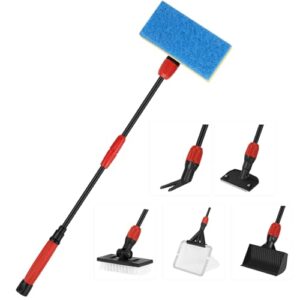
The Hygger Telescopic Aquarium Cleaning Kit ($23.99) extends from 17.5 to 28.7 inches, so you’re reaching the bottom of deep tanks without getting your hands wet.
Six interchangeable heads — gravel rake, algae scraper, sponge pad, fish net, plant fork, bristle brush — cover nearly every maintenance task.
The dual-layer sponge won’t scratch glass or acrylic, and the whole set stores back in its original box.
| Best For | Hobbyists with medium-to-large tanks (20–160 gal) who want one tool that handles most cleaning jobs without getting their hands wet. |
|---|---|
| Material Type | Polymer fiber composite |
| Weight | 1.21 lb (0.55 kg) |
| Safe For | Freshwater fish, plants |
| Primary Use | Tank cleaning tool |
| Pre-Use Prep | No prep required |
| Price (USD) | $23.99 |
| Additional Features |
|
- Six heads in one kit means fewer separate accessories cluttering your shelf
- The telescoping handle reaches up to 27.5 inches deep, so tall and column tanks aren’t a problem
- The dual-layer sponge cleans aggressively without scratching glass or acrylic
- The razor scraper has no swivel, so a bad angle can still leave scratches if you’re not careful
- Some users report the handle loosening over time, which can cause attachment slippage
- Replacement razor blades aren’t easy to find in stores and may need to be special ordered
10. CPLike Aquarium Shrimp Cave Decor
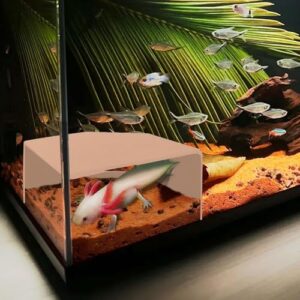
Hidden in plain sight, the CPLike Aquarium Shrimp Cave Decor ($varies) pulls double duty as both shelter and design element — measuring 5.9 × 5.9 × 3.54 inches, it fits comfortably in most mid-size tanks without monopolizing floor space.
The non-toxic plastic resists cracking; edges stay smooth enough for delicate invertebrates; and the open-back design lets you monitor occupants without disturbing them.
You can bury it partially in substrate or dress it with moss for a naturalistic finish that actually looks intentional.
| Best For | Shrimp keepers, betta owners, and anyone with nano fish or axolotls who wants a hide they can actually see into. |
|---|---|
| Material Type | Non-toxic plastic |
| Weight | 4.66 oz (132 g) |
| Safe For | Shrimp, fish, axolotls |
| Primary Use | Aquarium hide/decor |
| Pre-Use Prep | No prep required |
| Price (USD) | Not listed |
| Additional Features |
|
- Open-back design lets you check on occupants without poking around and stressing them out
- Smooth, non-toxic plastic is safe for delicate shrimp and invertebrates
- Easy to customize with moss or plants so it blends right into a planted tank
- Footprint is a bit chunky for tanks under 20 gallons
- Plain sand color looks pretty bare until you add some décor
- No anchor, and very shy species might not feel fully hidden with the open back
Choosing Low-Maintenance Snake Substrate
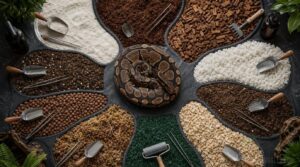
Not all substrates pull their weight the same way, and the right pick for your snake comes down to more than just looks.
Before you commit to anything, there are a few key factors worth thinking through — things that’ll make your life easier and keep your snake safer long-term.
Here’s what to keep in mind as you work through your options.
Species Humidity Needs
Your snake’s species dictates everything. Baseline Humidity Levels range from 30–40% for desert dwellers to 50–60% for ball pythons and corn snakes — and getting this wrong undermines both Shedding Cycle Support and substrate moisture balance.
Species-Specific Targets guide your substrate choice directly: bioactive substrates retain moisture naturally, while Safe Adjustment Practices, like weekly Humidity Monitoring Methods, keep conditions dialed in without overcompensating.
Spot-Cleaning Ease
Spot-cleaning efficiency comes down to your substrate’s surface responsiveness. Reptile carpet lifts solids cleanly, while nonporous materials wipe clear within seconds.
Pair Enzyme Pre-Treatment with Microfiber Efficiency to lift organic residue without grinding it deeper — Stain Agitation Tools handle stubborn spots precisely.
Quick-Dry Formulas cut moisture dwell time substantially, while Odor Neutralizers break down proteins before smells develop, keeping both cleaning efficiency and reptile health squarely protected.
Odor Control
Odor control isn’t just about masking smells — it’s about stopping them at the source.
Activated Carbon layers and Biofilter Systems break down volatile compounds before they reach your living space, while Enzyme Treatments accelerate reptile waste management by converting organic matter into harmless byproducts.
Bioactive substrates with a cleanup crew do continuous biological work, and Ozone Generators with Negative Pressure enclosures handle peak odor mitigation efficiently.
Dust and Particle Safety
Dust isn’t just a nuisance — it’s a respiratory hazard hiding in plain sight. Respirable dust risks are real: particles smaller than 10 micrometers reach deep lung tissue, and silica exposure prevention matters especially when cutting or disturbing hard substrates.
Dust is a respiratory hazard — particles under 10 micrometers silently reach deep lung tissue
Prioritize particle size standards and biological dust control with these substrate cleaning techniques:
- Coconut fiber stays moist, suppressing airborne particles naturally
- Reptile carpet eliminates loose particle scatter entirely
- Choose substrates with 2–5 mm particle size to minimize fine dust
- Always apply reptile-safe disinfectant after full replacements, using proper dust reduction methods
Burrowing Compatibility
Burrowing species rewrite the rules entirely.
Loose substrate with the right particle size — usually medium-grain — facilitates natural digging behavior while maintaining tunnel stability without collapse. Coconut fiber excels here: its moisture balance promotes microclimate control inside burrow chambers, and its substrate compaction resistance keeps tunnels intact through repeated digging.
Avoid fine particles that clog nasal passages, and always treat enclosure surfaces with reptile-safe disinfectant during full replacements.
Cleaning Tools and Maintenance Tips
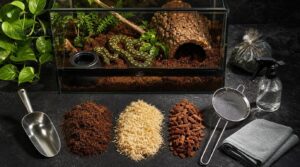
Even the best substrate won’t do much if your cleaning routine isn’t keeping pace with it. Staying consistent with maintenance is what separates a thriving enclosure from one that slowly works against your snake.
Here’s what a solid routine actually looks like, broken down into five practical steps.
Daily Spot Cleaning
Every keeper benefits from treating daily maintenance like Spill Response Drills — act fast, stay methodical. Use Microfiber Cloth Techniques to blot spills from the outer edge inward, preventing spread across loose substrate.
Pre-Cleaning Snake Handling keeps your animal safely removed while you apply a reptile-safe disinfectant with a gentle brush. Enclosure Zone Mapping helps you regularly remove debris systematically, while Cleaner Rotation Schedules prevent residue buildup over time.
Weekly Surface Refreshing
Beyond daily spot work, Weekly Wipe Downs let you reset the enclosure before buildup sneaks up on you.
Use a reptile-safe disinfectant on walls and hides, apply Moisture Control Tips to prevent condensation under decor, and regularly remove debris from corners.
Consistent cleaning schedules for terrariums and smart Revitalizing Techniques keep Odor Management seamless — your snake’s environment stays genuinely clean, not just surface-level tidy.
Full Substrate Replacement
Sometimes spot cleaning just isn’t enough — that’s your signal for a full Enclosure Reset.
Replacement Timing matters: schedule complete substrate swaps every 6–12 months, or immediately when mold, mites, or persistent odors appear.
Remove your snake first, then apply Deep Clean Techniques — sterilize every surface with reptile-safe disinfectant, focus on Contaminant Removal in corners, and replace substrates entirely for genuine hygiene.
Stress Reduction starts with efficiency.
Disinfecting Enclosure Surfaces
After a full substrate swap, sterilize every non-porous surface using a reptile-safe disinfectant — and don’t rush it. Disinfectant Contact Time matters: most veterinary‑grade products need 5–10 minutes wet contact to work. Your Non-Porous Surface Prep checklist:
- Run a Substrate Compatibility Check before applying anything
- Suit up — Safety Gear Essentials mean gloves and eye protection
- Rinse thoroughly, then air-dry completely
Terrarium hygiene and sanitizing reptile accessories on consistent cleaning schedules for terrariums keep your snake genuinely safe.
Preventing Mold Growth
Mold thrives when humidity lingers above 60% — so maintaining Ideal Humidity Targets between 40–50% is your first line of defense. Pair Moisture Barrier Methods with a solid Ventilation System Design to keep airflow moving through the enclosure consistently.
| Factor | Risk Level | Solution |
|---|---|---|
| Stagnant air | High | Ventilation System Design |
| Substrate dampness | High | Moisture Barrier Methods |
| Hidden leaks | Medium | Leak Prevention Strategies |
Wipe nonporous surfaces with vinegar and water, then sterilize using a reptile-safe disinfectant with Antimicrobial Surface Treatments for lasting moisture resistance.
Substrates to Avoid for Snakes
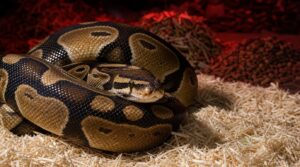
Not every substrate that looks clean or feels convenient is actually safe for your snake. Some popular options can cause serious harm — from respiratory irritation to ingestion risks — and they’re easier to stumble into than you’d think.
Here are the substrates you’ll want to keep off your shopping list entirely.
Aquarium Gravel
Aquarium gravel might look natural, but it’s genuinely wrong for snakes. Gravel particle sizes — commonly 2 mm to 5 mm — create gaps where waste hides, making spot‑cleaning and even a gravel vacuum useless in a reptile context.
Unlike biological filtration media designed for siphon cleaning in water tanks, nonporous gravel substrate offers no humidity regulation, and its pH stability effects and plant growth support properties are entirely irrelevant — even potentially harmful — inside a snake enclosure.
Fine Sand
Fine sand substrate might seem like a clean, low‑maintenance option — but its grain size effects tell a different story. Particles ranging from 0.075 mm to 0.425 mm compact tightly, trapping detritus and blocking drainage without supporting biological filtration, the way purpose‑built media does.
Surface smoothness makes spot‑cleaning deceptive; waste disappears into compressed layers. For herpetology care, its mineral composition and poor water clarity during disturbance make fine sand substrate a substrate to skip entirely.
Cedar or Pine
Cedar and pine might seem like natural, cozy choices for your terrarium setup — but both are genuinely dangerous for snakes. Cedar’s natural decay resistance comes from aromatic oils that trigger serious aroma allergy concerns and respiratory distress. Pine carries similar risks.
- Cedar oils cause liver toxicity
- Aroma compounds irritate lung tissue
- Cost availability doesn’t offset health risks
- Texture safety profiles are poor — splinters occur
- Environmental impact favors safer reptile carpet alternatives
Treated Wood Chips
Treated wood chips might look harmless, but they carry serious ACQ Chemical Risks that threaten reptile health. Copper Leaching Impact worsens with humidity — exactly what many snakes need.
| Risk Factor | Why It Matters |
|---|---|
| Copper leaching | Damages liver tissue |
| Compacting fines | Cleaning Challenges worsen |
| No Certification Standards | Reptile Health Hazards persist |
Skip these entirely — reptile-safe disinfectant can’t undo chemical damage.
Clumping Cat Litter
Clumping cat litter seems like a clever hack — odor absorption built right in, affordable, widely available.
But the Clumping Science behind it is exactly what makes it dangerous for snakes.
- Sodium bentonite expands aggressively, risking internal blockages if ingested.
- Dust-Free Options don’t exist here — fine particles irritate respiratory tracts.
- Litter Longevity means nothing when clumps trap shed skin.
- Green Alternatives lack reptile-safe disinfectant compatibility.
- Loose substrate clumping prevents proper substrate cleaning methods and reptile odor mitigation.
Frequently Asked Questions (FAQs)
What is the easiest aquarium substrate to keep clean?
Coarse gravel substrate — ideally 2–5 mm grain size — stays cleanest, longest.
Grain Size Effects allow a siphon to lift debris efficiently, while Non-Porous Surfaces and Bacterial Filtration keep pH Stability intact with low maintenance effort.
What is the best substrate for beginners?
For beginners, reptile carpet and paper towels win every time — low maintenance, setup simplicity is instant, and longevity factors are manageable.
Both options sidestep common beginner mistakes while keeping your snake safe.
Is sand substrate easy to clean?
Sand isn’t the easiest substrate to clean — debris sits visibly on top, so surface cleaning frequency is high.
sand vacuum methods and proper pre‑rinse techniques help minimize cloudiness prevention issues.
How often should substrate be completely replaced?
Replace substrate every 2–4 months for loose bedding like aspen, and every 12–18 months for planted or bioactive setups — waste accumulation rates, health risk thresholds, and odor spikes are your clearest signals.
Can different substrates be safely mixed together?
Yes, but cautiously.
Think of it like layering a recipe — compatible textures, pH levels, and moisture retention must align. Mixing incompatible substrates risks compaction, mold, and anaerobic pockets that harm your snake.
Does substrate color affect fish stress levels?
Substrate color genuinely affects fish stress levels. Red and warm tones reduce cortisol and support immunity, while blue environments increase stress hormones — Color-Stress Hormone Link worth considering in any aquascaping design.
How deep should substrate be for bottom-dwellers?
Oddly enough, the right substrate depth often depends on who’s living at the bottom. Aim for 2–3 inches for most bottom-dwellers, scaling to 4–6 for burrowing species needing full excavation room.
What tools work best for deep substrate cleaning?
A substrate vacuum excels at deep debris removal best — pair it with siphon depth control for targeted waste extraction.
A turkey baster works surprisingly well for spot detritus removal without full substrate agitation.
How often should substrate be fully replaced?
For most snakes, full substrate replacement falls every 6–12 months, though paper towels and terrarium liners need swapping every 2–4 months. Species activity levels, enclosure size, and odor are your clearest signals.
Can substrate affect a snakes shedding process?
Yes — think of shedding like peeling a sticker: the right moisture balance and surface texture make it smooth, while the wrong substrate turns it into a struggle that stresses your snake’s skin health.
Conclusion
What separates a thriving snake from a struggling one often comes down to what’s beneath it—literally.
Every substrate options for the easy cleaning decision you make shape your snake’s respiratory health, behavioral instincts, and your own maintenance reality week after week.
Choose material that works with your species’ humidity needs, resists bacterial buildup, and lets you spot-clean without dreading the process.
The right substrate doesn’t just simplify your routine—it quietly protects everything you’re working to give your snake.