This site is supported by our readers. We may earn a commission, at no cost to you, if you purchase through links.
A snake doesn’t scream, whimper, or pace the floor. Its stress signals are quieter—a slight wrinkling of scales, a jaw held open a beat too long, eyes that look duller than usual. Most people miss these cues entirely, which is exactly when a calm-looking snake suddenly strikes.
Understanding how snakes communicate stress isn’t just useful knowledge for keepers; it’s the difference between a snake that thrives and one that suffers in silence. The signals are consistent, readable, and grounded in biology—once you know what to look for, you won’t unsee them.
Table Of Contents
- Key Takeaways
- How Snakes Show Signs of Stress
- Body Language Used by Stressed Snakes
- Environmental Triggers That Cause Snake Stress
- Social Buffering and Stress in Snakes
- Implications for Snake Care and Welfare
- Frequently Asked Questions (FAQs)
- How do snakes react to stress?
- How do snakes express sadness?
- Can snakes sense when you’re scared?
- What signs of stress would a snake show?
- How do snakes communicate?
- Do snakes experience emotions like fear or anxiety?
- Can stress affect a snakes immune system?
- How long does it take snakes to recover?
- Are certain snake species more stress-prone than others?
- What role does lighting play in snake stress?
- Conclusion
Key Takeaways
- A snake’s stress shows up in its body long before it strikes — tight coiling, open-mouth breathing, skin that won’t smooth out, and dull eyes are all early warnings worth catching.
- Most captive stress traces back to the environment: unstable temperatures, cramped enclosures, and rough or too-frequent handling are the biggest triggers you can actually control.
- Research on rattlesnakes found that a companion snake measurably lowers heart rate spikes during stress, which means social contact isn’t just tolerated — it actively calms them down.
- Catching stress early matters because chronic stress raises corticosterone levels, weakening the immune system and making your snake far more vulnerable to illness over time.
How Snakes Show Signs of Stress
Snakes can’t tell you when something’s wrong, but their bodies do. Stress shows up in very clear ways — if you know what to look for.
Learning to read those signals gets a lot easier once you understand what a healthy environment looks like — this snake habitat maintenance guide breaks down exactly what conditions to watch for.
Here are the most common signs your snake might be feeling threatened or overwhelmed.
Common Physical Stress Signals
A snake’s body tells you a lot before it ever makes a sound. Spotting these physical signs early can protect both your welfare and the animal’s.
- Rapid, visible breathing after handling
- Skin that wrinkles and doesn’t smooth out quickly
- Sudden food refusal or regurgitation
- Sunken eyes or retained eye caps
These health indicators reflect real stress response in animals — and they’re worth taking seriously.
Defensive Postures and Behaviors
Beyond those physical cues, a snake’s threat response often shows up in posture first. Defensive coiling — that tight S-curve with the head pulled back — is one of the clearest attack postures you’ll see.
Rattlesnake behavior adds another layer: rattle vibrations kick in when escape feels impossible. These stress signals are part of a broader snake behavior and communication system built around one goal — survival.
Changes in Movement Patterns
Movement patterns reveal stress signals just as clearly as posture does. A stressed snake often paces the same route repeatedly — corner to water bowl and back — or glass surfs, climbing the enclosure walls over and over.
You might also notice activity shifts, where a normally nocturnal snake starts moving at odd hours. These escape behavior patterns are reliable reptile behavior clues worth watching.
Body Language Used by Stressed Snakes
Snakes can’t speak, but their bodies tell you everything. When stress hits, they shift into a set of recognizable postures — each one a clear signal worth learning.
Here’s what to watch for.
Coiling, S-Curves, and Striking Readiness
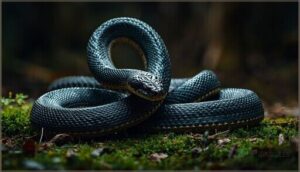
A tight coil isn’t just resting — it’s a warning. Defensive posturing in snake body language follows a clear pattern you can learn to read. Coiling patterns shift from loose to rigid as strike readiness builds, with the head centered and elevated.
Knowing the difference could save you a bite — reading pet snake body language breaks down exactly what tight coiling looks like versus a snake that’s simply settled in.
Watch for these reptile behavior cues:
- Deep S-curve in the neck stores striking power
- Head tracks your movement without the body shifting
- Coil edges become sharply defined, not relaxed
- Posture locks completely still before any lunge
Hissing, Puffing, and Gaping

Sound is one of a snake’s loudest warning signs. When threatened, it forces air through a narrow throat opening, creating that sharp, rasping hiss — a clear stress signal you shouldn’t ignore. Puffing inflates the body to look more imposing, while gaping exposes bright mouth tissue as a final defensive display.
| Behavior | What It Signals |
|---|---|
| Hissing | Immediate threat warning |
| Puffing | Size intimidation display |
| Gaping | Last-chance deterrent |
| Combined display | Extreme stress response |
Head Elevation and Rigid Postures
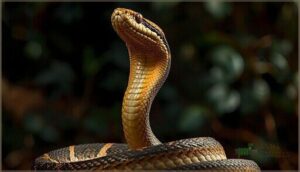
When a snake feels cornered, its body becomes a warning sign. Defensive Head Elevation and Rigid Neck Tension are two of the clearest distress head cues in reptile behavior. Watch for these:
- Head lifts to one-third body height and freezes
- Neck forms sharp bends, not gentle curves
- Strike-Range Alignment places the mouth toward any threat
- Threat-Focused Orientation locks eyes on you specifically
- Full-body stiffness replaces relaxed, flowing movement
That rigid posture is snake communication at its most direct. By contrast, relaxed snake body language features loose posture, fluid movement, and consistent tongue flicking, helping you distinguish normal behavior from true distress.
Environmental Triggers That Cause Snake Stress

A snake’s environment does a lot of the talking before stress ever shows up in its body language. Small shifts in temperature, a cramped enclosure, or an unexpected change in routine can all quietly push a snake past its comfort zone.
Here are the main environmental triggers worth knowing.
Temperature and Humidity Fluctuations
Temperature is one of the biggest drivers of reptile stress response in captive snakes. Wild fluctuations — especially when thermal gradient stability breaks down — push snakes into constant searching behavior. Keep your warm side steady and your day–night temperature cycles predictable.
| Condition | Stress Signal | Fix |
|---|---|---|
| Heat spike above 34°C | Open-mouth breathing | Check thermostat |
| Humidity below 40% | Incomplete shed | Add moist hide |
| Cold nights below 22°C | Tight coiling, food refusal | Adjust night temps |
Stabilizing ambient moisture and preventing heat spikes are straightforward wins for snake communication and welfare.
Enclosure Size and Enrichment
Space matters more than most keepers realize. Minimum Space Standards exist for good reason — a cramped enclosure triggers a measurable reptile stress response, leading to nose rubbing, pacing, and escape attempts.
Vertical Habitat Design, proper Hide Quality Guidelines, and Climbing Structure Benefits all reduce biological responses to stress markedly.
Add Sensory Enrichment Strategies like scent trails and varied textures, and your snake’s animal communication shifts from distress signals to calm, exploratory behavior.
Handling and Sudden Habitat Changes
How you pick up your snake matters just as much as how often you do it. Rough grabs or sudden lifts spike the stress response fast. Follow these Handling Frequency Guidelines to keep Body Language calm:
- Limit sessions to 10–15 minutes using Gentle Support Techniques
- Space handling 2–3 times weekly for Session Duration Planning
- Apply Gradual Habitat Transitions, swapping one item at a time
- Reduce Biological Responses to Stress during Transport and Relocation with dark, secure containers
Animal Communication and Animal Senses and Perception both confirm: consistency wins.
Social Buffering and Stress in Snakes
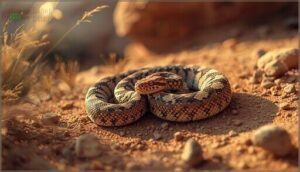
Most people picture snakes as solitary creatures, and that’s not entirely wrong — but it’s not the whole story either. A growing body of research suggests snakes may actually benefit from each other’s presence, especially when things get stressful.
Here’s what the science says about companionship, kin recognition, and how rattlesnakes surprised researchers in the field.
Effects of Companionship on Stress Response
It turns out companionship genuinely calms snakes down. Research on rattlesnakes shows clear companion heart-rate modulation — snakes disturbed alongside another snake had smaller heart rate spikes than those disturbed alone. Shared refuge calming and tactile contact effects both play a role, with direct body contact producing the strongest results.
Rattlesnake companions measurably calm each other down, with direct body contact producing the strongest stress-reducing results
Captive pair bonding can reduce chronic stress too, though overcrowding stress tradeoffs are real — too many snakes together backfires. This phenomenon mirrors rattlesnake social buffering, where companion snakes measurably dampen each other’s stress responses and heart-rate spikes.
Kin Recognition and Social Interactions
Snakes aren’t as solitary as you might think. Kin bonds run deeper than most people expect, with snake families recognizing relatives through scent cues processed in the vomeronasal organ. This reptile communication shapes group dynamics meaningfully:
- Siblings stay clustered near birth sites, sharing calmer body postures
- Familiar neighbors tolerate body contact without stress signals
- Kin-based social interactions reduce defensive behaviors noticeably
Animal sociality clearly extends into reptile social interactions.
Study Findings on Rattlesnake Behavior
A notable study in Frontiers in Ethology revealed something quietly extraordinary about rattlesnake sociality — these reptiles actually calm each other down. Researchers measured snake heart rates during stress events, finding measurably lower spikes when companions were present.
| Condition | Stress Response |
|---|---|
| Snake alone | Higher heart rate increase |
| Snake with companion | Reduced heart rate change |
| Snake with rope | No buffering effect |
| Paired snakes | Less rattling, less striking |
Animal companionship, it turns out, shapes reptile stress in ways science is only beginning to map.
Implications for Snake Care and Welfare

Understanding snake stress isn’t just fascinating science — it has real consequences for how you keep and care for them. Whether you own a snake or work with them professionally, knowing the signs early can make a big difference in their health.
Here’s what that looks like in practice.
Recognizing Early Stress Indicators
Early stress signal detection starts with the small things you might overlook. A sudden pause in tongue flicking, restless switching between hides, or shallow S-curve posturing are all worth noting during snake behavior analysis.
These subtle cues often surface before full defensive displays appear. Environmental stressors trigger these responses, so watching for pattern shifts — not single moments — gives you a clearer, more reliable picture of your snake’s emotional state.
Reducing Stress in Captive Snakes
Once you spot those early signs, the next step is doing something about them. Good Snake Habitat Design matters more than most people realize — two snug hides, a proper thermal gradient, and Environmental Enrichment Strategies like branches and cork bark can shift your snake’s whole demeanor.
Stress Reduction Techniques don’t need to be complicated: consistent routines, limited handling, and stable humidity go a long way.
Future Directions for Research and Care
Reptile Welfare research’s outlook appears genuinely promising. Ethological Research into Animal Social Behavior — like the rattlesnake companionship studies — is opening doors for smarter Snake Conservation and captive care.
Advances in noninvasive Stress Monitoring, automated behavior tracking, and species-specific stress profiles will sharpen how you reduce harm.
With stronger Research Funding and Conservation Efforts, Wildlife Research can finally give snakes the nuanced, evidence-based welfare standards they deserve.
Frequently Asked Questions (FAQs)
How do snakes react to stress?
Still waters run deep." When snakes face stress, their bodies react fast — heart rates spike, muscles tense, and defensive postures lock in before you even notice something’s wrong.
How do snakes express sadness?
Snakes don’t feel sadness the way you do, but they show stress signals through reduced activity, food refusal, and tight coiling — quiet signs that something’s off with their animal welfare.
Can snakes sense when you’re scared?
Not exactly — but don’t underestimate them. Through sensory perception of your movement, heat, and scent, they react to what your body does, not the fear itself driving it.
What signs of stress would a snake show?
A stressed snake won’t hide it well. Watch for tight, rigid muscles, repeated striking, loud hissing, or refusing food. These stress signals in snake behavior often appear together.
How do snakes communicate?
Unlike us, they don’t text or talk. Snakes rely on body language, chemical signals, pheromones, scent language, vibration, and stress cues — a silent but surprisingly rich system of social interactions and vocalization patterns.
Do snakes experience emotions like fear or anxiety?
Yes — in a functional sense. Snakes show coordinated fear responses: rising heart rates, hormone surges, and lasting behavioral shifts. That’s not emotion as you feel it, but it’s close enough to matter.
Can stress affect a snakes immune system?
Absolutely. When snakes experience stress, their bodies release corticosterone, a hormone that weakens immune defenses over time.
Chronic elevation raises infection risk, slows healing, and leaves your snake far more vulnerable to illness.
How long does it take snakes to recover?
Recovery timeframes vary by stressor. Minor stress fades within hours, while appetite and post-stress behavior may take one to four weeks to normalize — especially after moves or handling disruptions.
Are certain snake species more stress-prone than others?
Not all snakes handle stress equally. Ball pythons curl up and stop eating for weeks after minor changes, while corn snakes shake off the same disruption in days.
What role does lighting play in snake stress?
Lighting matters more than most people think. Wrong light intensity, off photoperiod effects, or missing UVB spectrum exposure can quietly stress reptiles — disrupting sleep, appetite, and behavior before you notice anything obvious.
Conclusion
Snakes don’t complain—they simply adjust, withdraw, or warn the only way they can. Learning how snakes communicate stress means learning to read a language built on survival, not drama.
When your snake gapes without cause, refuses food, or coils tighter than usual, those aren’t quirks—they’re requests. Meet them with the right temperature, space, and stillness.
A snake that feels safe rarely has reason to speak at all.