This site is supported by our readers. We may earn a commission, at no cost to you, if you purchase through links.
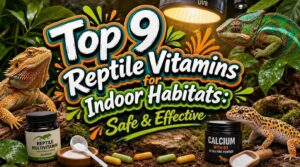
Most indoor reptiles don’t die from poor husbandry—they decline slowly, over months, from nutrient gaps their owners never see coming. A bearded dragon basking under a low-output UVB bulb synthesizes far less vitamin D₃ than one living under open sky, which means the calcium you’re offering may never be fully absorbed.
That single imbalance, left uncorrected, quietly dismantles bone density before any visible symptoms appear.
Choosing the right reptile vitamins for indoor habitats isn’t about buying the most expensive powder on the shelf—it’s about matching the supplement to your animal’s actual light exposure, diet, and species-specific demands.
Table Of Contents
- Key Takeaways
- Top 9 Reptile Vitamins for Indoor Habitats
- 1. Fluker Calcium Reptile Supplement
- 2. Zilla Reptile Vitamin Supplement Spray
- 3. Exo Terra Calcium Powder Supplement
- 4. Exo Terra Reptile Vitamin Powder
- 5. Nature Zone Herp Pro Supplement
- 6. Nutribac Probiotic Supplement for Reptiles
- 7. Nekton Reptile Immune Support Powder
- 8. Gargeer Reptile Probiotic Digestive Supplement
- 9. Nature Zone Turtle Eye Vitamin
- Key Nutrients for Indoor Reptiles
- Indoor Habitat Supplement Challenges
- Safe Supplementing and Feeding Methods
- Species-Specific Reptile Vitamin Schedules
- Frequently Asked Questions (FAQs)
- What do reptile vitamins do?
- What nutrients do reptiles need?
- Can reptiles overdose on calcium powder supplements?
- Do all UVB bulbs provide adequate vitamin D3?
- How often should indoor reptiles receive multivitamin supplements?
- Are natural sunlight exposure alternatives to UVB lighting?
- What signs indicate vitamin deficiency in indoor reptiles?
- Can reptiles overdose on water-soluble vitamins?
- How does stress affect reptile nutrient absorption?
- Do female reptiles need extra calcium when gravid?
- Conclusion
Key Takeaways
- Indoor reptiles can’t synthesize vitamin D3 from artificial light, the way they would from the sun, so calcium supplements without D3 are essentially useless if your UVB setup is weak.
- Stacking multiple D3-containing products is one of the fastest ways to poison your reptile—fat‑soluble vitamins accumulate silently until organ damage is already underway.
- Gut-loading feeder insects for 24 hours before dusting isn’t optional; it’s what separates nutrients that actually reach your reptile from powder that just hits the enclosure floor.
- Juvenile reptiles need calcium dusted at every feeding and multivitamins twice weekly, while adults can scale back to three or four times weekly—matching the schedule to life stage is what prevents both deficiency and toxicity.
Top 9 Reptile Vitamins for Indoor Habitats
Indoor reptiles can’t rely on the sun, so what you put in their food bowl matters more than most keepers realize. Getting supplementation right starts with knowing which products actually deliver. Here are nine vitamins worth keeping on your shelf.
Whether you’re filling nutritional gaps or building a solid baseline, this roundup of top-rated reptile vitamin supplements breaks down exactly what each product does and who it’s best for.
1. Fluker Calcium Reptile Supplement
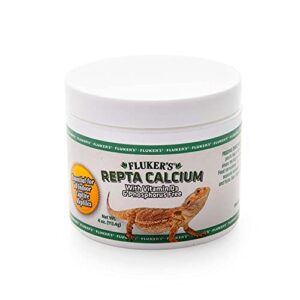
If your reptile lives entirely indoors, Fluker’s Calcium with D₃ deserves a spot in your supplement rotation.
It uses calcium carbonate as its base, delivers added Vitamin D₃ to support absorption, and comes in an easy‑to‑use powder form — ideal for dusting crickets or sprinkling over greens.
At 4 oz, it’s a practical size for regular use.
Just don’t double up on D₃ sources; if your UVB lighting is already strong, monitor dosing carefully to avoid toxicity.
| Best For | Indoor reptile owners — especially those keeping bearded dragons, leopard geckos, or tortoises — who need a reliable calcium boost without relying solely on UVB lighting. |
|---|---|
| Form | Powder |
| Target Species | Reptiles & amphibians |
| Key Nutrient | Calcium + Vitamin D3 |
| Application Method | Dust on feeders |
| Life Stages | All stages |
| Flavor | Unflavored |
| Additional Features |
|
- Vitamin D₃ is already built in, so indoor reptiles can absorb calcium even with limited UVB exposure.
- Super easy to use — just dust it on crickets, mealworms, or leafy greens and you’re done.
- All-natural, abalone-free formula in a convenient 4 oz size that holds up well for regular use.
- It’s not a complete supplement on its own, so you may need to pair it with a multivitamin for a balanced diet.
- If your UVB setup is already strong, the added D₃ can push into toxic territory — dosing needs some attention.
- The 4 oz D₃ version can be tricky to find in stock, and the powder gets messy if you’re not careful during application.
2. Zilla Reptile Vitamin Supplement Spray
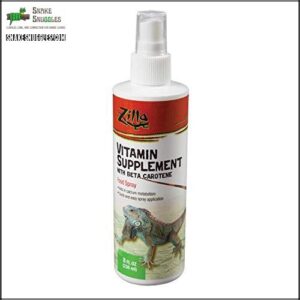
Powders aren’t always practical — that’s where the Zilla Vitamin Supplement Spray steps in. A quick 15-second application directly onto insects, greens, or prepared food means less mess and less stress for your animal.
The vitamin blend covers D₃, beta-carotene, and a full B-complex. One real limitation: beta-carotene isn’t pre-formed vitamin A, so insectivores with poor conversion ability may still develop deficiency signs. Pair it with Zilla’s calcium spray, and never rely on it as a standalone solution.
| Best For | Reptile and amphibian owners who want a quick, low-stress way to cover vitamin gaps without wrestling their pet into a powder-dusting routine. |
|---|---|
| Form | Spray |
| Target Species | Reptiles & amphibians |
| Key Nutrient | Multivitamin blend |
| Application Method | Spray on food |
| Life Stages | All stages |
| Flavor | Unflavored |
| Additional Features |
|
- Spray-on application is fast and easy — works on insects, greens, or prepared food with just a 15-second wait
- Covers a solid range of vitamins including D3, full B-complex, and beta-carotene
- Unflavored and allergen-free, so most animals take it without a fuss
- No protective cap, and the nozzle has been known to break after just a handful of uses
- Beta-carotene isn’t pre-formed vitamin A, which can be a real problem for insectivores that can’t convert it well
- Doesn’t cover calcium on its own — you’ll need to run it alongside Zilla’s calcium spray to get the full benefit
3. Exo Terra Calcium Powder Supplement
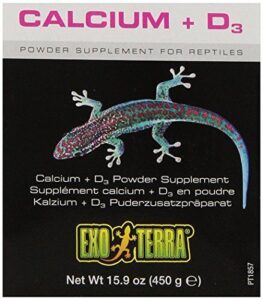
When sprays don’t quite cut it for thorough coating, a reliable powder steps up. The Exo Terra Calcium Powder Supplement (PT1857) delivers 35–37% calcium from calcium carbonate and oyster shell flour — a combination that maximizes bioavailability.
At 14,740 IU of D₃ per pound, it hits the functional range for indoor-kept animals without pushing into toxic territory. The ultrafine texture coats feeder insects evenly, and the included measuring spoon keeps your dosing consistent every time.
| Best For | Indoor reptile owners — especially those keeping bearded dragons or geckos — who want a reliable, easy-to-use calcium supplement to support bone health and prevent metabolic issues. |
|---|---|
| Form | Powder |
| Target Species | Reptiles & amphibians |
| Key Nutrient | Calcium + Vitamin D3 |
| Application Method | Dust on feeders |
| Life Stages | All stages |
| Flavor | Unflavored |
| Additional Features |
|
- Fine powder coats feeder insects and greens evenly, so your reptile actually gets the nutrients with every meal.
- Combines calcium carbonate, oyster shell flour, and Vitamin D₃ for a well-rounded supplement in one product.
- Comes with a measuring spoon, making it easy to dose consistently without guessing.
- Not ideal for reptiles kept outdoors or in UVB-rich setups, where extra D₃ could throw off their balance.
- Can clump in humid environments, so you’ll need to keep the lid sealed tight.
- May not suit every species — reptiles with specific calcium-to-phosphorus needs might require a different formula.
4. Exo Terra Reptile Vitamin Powder
Calcium alone won’t carry your reptile’s health — vitamins fill the gaps.
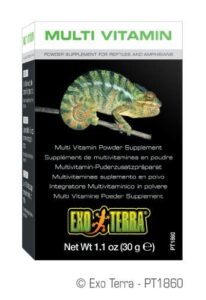
The Exo Terra Reptile Vitamin Powder (PT1860) delivers a broad spectrum of vitamins and trace minerals, including beta‑carotene, D₃, vitamin E, zinc, copper, and manganese.
It’s vegetable‑flavored, fine‑textured, and mixes cleanly with calcium powder at a 1:1 ratio for insect dusting.
The included measuring spoon keeps dosing consistent.
At 30 g, it fits most feeding routines without waste.
| Best For | Reptile and amphibian owners who want an easy, all-in-one vitamin boost to round out a calcium-based supplement routine. |
|---|---|
| Form | Powder |
| Target Species | Reptiles & amphibians |
| Key Nutrient | Multivitamin blend |
| Application Method | Sprinkle on feeders |
| Life Stages | All stages |
| Flavor | Vegetable flavored |
| Additional Features |
|
- Covers a wide range of vitamins and trace minerals in one simple powder — no juggling multiple supplements
- Vegetable flavor and fine texture make it easy to dust on crickets, mealworms, or greens
- Pairs cleanly with calcium powder, so you can combine both in a single dusting step
- Some reptiles, especially certain tortoises, may reject the taste and need it hidden in food
- The powder can get a little messy with repeated scooping — easy to waste if you’re not careful
- Hard to know if it’s actually working since results like better coloration or growth take time to notice
5. Nature Zone Herp Pro Supplement
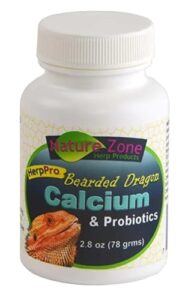
Most calcium supplements stop at bone support — the Nature Zone Herp Pro adds probiotic cultures to the equation. This powder combines calcium carbonate with Lactobacillus and Bifidobacterium strains, addressing both skeletal development and gut health in one product.
For snakes on stricter feeding schedules, pairing this supplement with the right prey timing can make a real difference — check out this detailed corn snake care guide to see how gut health supports overall growth between meals.
Dust it onto superworms or other feeder insects before each feeding. The two‑container pack suits routine use.
One caution: no dosage guidelines are included, so you’ll need to apply conservative amounts and monitor your dragon’s response carefully.
| Best For | Bearded dragon owners who want to cover calcium and gut health in a single supplement rather than juggling multiple products. |
|---|---|
| Form | Powder |
| Target Species | Bearded dragons |
| Key Nutrient | Calcium + Probiotics |
| Application Method | Mix with food |
| Life Stages | All stages |
| Flavor | Unflavored |
| Additional Features |
|
- Two-in-one formula tackles both bone support and digestion, so you’re not buying separate supplements
- Probiotic strains (Lactobacillus and Bifidobacterium) actively help your dragon absorb nutrients better
- Two-container pack gives you plenty of supply for consistent, routine use
- No dosage guidelines means you’re guessing at amounts, which takes extra trial and error
- Only confirmed for bearded dragons, so it’s not a safe pick if you keep other reptile species
- Dusting powder onto feeders every meal adds a small but real step to your feeding routine
6. Nutribac Probiotic Supplement for Reptiles
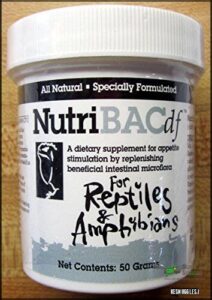
Most gut health products for reptiles are built for mammals first and adapted as an afterthought. Nutribac df takes a different approach — it’s a patented probiotic formula developed specifically for reptiles and amphibians, combining six microbial strains including Lactobacillus acidophilus, Bacillus subtilis, and Enterococcus faecium to restore intestinal microflora after stress, illness, or antibiotic treatment.
Dust the powder onto feeder insects before offering them. Don’t use it as a standalone treatment if your reptile has an active infection — veterinary care comes first.
| Best For | Reptile and amphibian owners whose pets are recovering from antibiotics, dewormers, or illness-related appetite loss. |
|---|---|
| Form | Powder |
| Target Species | Reptiles & amphibians |
| Key Nutrient | Probiotics |
| Application Method | Dust on feeders |
| Life Stages | All stages |
| Flavor | Unflavored |
| Additional Features |
|
- Six-strain probiotic formula made specifically for reptiles and amphibians — not just a mammal product with a new label.
- Easy to use: just dust it on feeder insects before feeding.
- Owners report better appetite, weight gain, and more regular digestion in animals that were struggling.
- No clinical trials back it up — the evidence is mostly anecdotal from user reviews.
- Gets sticky when wet, which can be a choking risk if food gets misted after dusting.
- Won’t treat underlying infections on its own — it’s a supplement, not a substitute for vet care.
7. Nekton Reptile Immune Support Powder
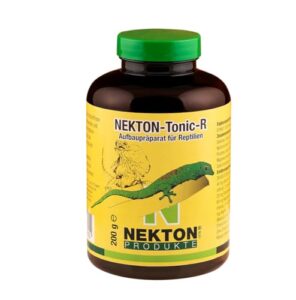
Nekton Reptile Immune Support Powder stands out for its 60 trace elements in bioavailable form, paired with L-form amino acids that reduce digestive load — a thoughtful detail for reptiles with sensitive gut function. At 1,998 IU D₃ per 100 g, it sits on the conservative end, so pair it with a dedicated calcium supplement if your reptile has limited UVB access.
Dose 1 g mixed with soft food or water 2–3 times weekly, increasing to daily during illness or transport stress.
| Best For | Reptile and amphibian owners looking for a comprehensive vitamin and trace element supplement to support recovery, stress periods, or boosting feeder insect nutrition. |
|---|---|
| Form | Powder |
| Target Species | Reptiles & amphibians |
| Key Nutrient | Vitamins & trace elements |
| Application Method | Mix with water or food |
| Life Stages | All stages |
| Flavor | Unflavored |
| Additional Features |
|
- All 60 trace elements come in bioavailable form, so your reptile actually absorbs what it’s getting — not just passing it through.
- L-form amino acids are easier on sensitive reptile digestive systems, which is a genuinely thoughtful touch.
- GMO-free, made in Germany, and comes with a measuring spoon — easy to dose and feel good about.
- D₃ levels are on the low side, so animals without solid UVB access will likely need a separate calcium/D₃ supplement alongside this one.
- Contains soy protein isolate, which could be a problem for reptiles with sensitivities — worth a vet check before starting.
- Requires careful storage (cool, dry, out of sunlight) to stay potent, so it’s not the most forgiving supplement to keep on hand.
8. Gargeer Reptile Probiotic Digestive Supplement
Probiotics aren’t vitamins — but they determine how well vitamins actually work.
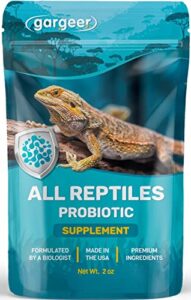
Gargeer Reptile Probiotic Digestive Supplement delivers four live strains, including Lactobacillus acidophilus and Enterococcus faecium, that stabilize gut flora and improve nutrient absorption across feeder-dependent species.
Dose is straightforward: one teaspoon per pound of food, once weekly, dusted onto insects or mixed into salads. Refrigerate after opening to maintain bacterial viability.
Use it alongside your primary supplement stack, not as a replacement.
| Best For | Reptile and amphibian owners who want to support gut health after antibiotic treatment, deworming, or periods of stress. |
|---|---|
| Form | Powder |
| Target Species | Reptiles & amphibians |
| Key Nutrient | Probiotics |
| Application Method | Dust on feeders |
| Life Stages | All stages |
| Flavor | Unflavored |
| Additional Features |
|
- Four live probiotic strains that actually support digestion and nutrient absorption, not just filler
- Easy to use — just dust it on feeder insects or mix into salads once a week
- Works across a wide range of species, from bearded dragons to tortoises
- Maltodextrin as the main carrier adds carbs some owners would rather skip
- Needs refrigeration after opening, which is easy to forget
- The 1 tsp per pound dosing gets tricky with small or picky eaters
9. Nature Zone Turtle Eye Vitamin
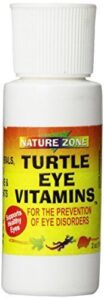
Eye problems in turtles are almost always a vitamin A deficiency in disguise.
Nature Zone Turtle Eye Vitamin targets this directly — a liquid drop formula combining vitamin A, E, beta-carotene, zinc, and phytonutrients in an unflavored solution you can add to food or administer orally. Just 2–4 drops per dose, suitable for all life stages.
Results vary. Some owners report visible improvement within a week; others see nothing after two weeks. Pair it with UVB lighting for best outcomes.
| Best For | Turtle and tortoise owners dealing with early-stage vitamin A deficiency symptoms like swollen or puffy eyes. |
|---|---|
| Form | Liquid drops |
| Target Species | Turtles & tortoises |
| Key Nutrient | Vitamins & antioxidants |
| Application Method | Mix into food or mouth |
| Life Stages | All stages |
| Flavor | Unflavored |
| Additional Features |
|
- Easy to give — just 2–4 drops mixed into food or dropped straight into the mouth
- Covers multiple nutrients at once (vitamin A, E, beta-carotene, zinc, phytonutrients)
- Some owners saw noticeable eye improvement within a week
- Results aren’t guaranteed — no improvement reported by some users after two weeks
- No weight-based dosing guidance, so accuracy can be tricky for larger turtles
- Packaging has been known to leak during shipping, meaning you might get less than you paid for
Key Nutrients for Indoor Reptiles
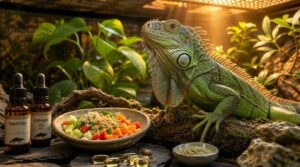
Indoor reptiles can’t rely on sunlight to fill their nutritional gaps, so what you put in their food bowl carries real weight. Getting the right nutrients in the right amounts is the difference between a thriving animal and one quietly declining. Here’s what actually matters for your indoor reptile’s health.
Calcium and D3 Balance
Calcium doesn’t work alone. Without adequate Vitamin D3, your reptile’s gut simply can’t pull calcium from food or supplements into the bloodstream — no matter how much you provide.
Calcium without Vitamin D3 is just powder — your reptile’s gut won’t absorb a single milligram of it
That’s why calcium D3 balance is the foundation of bone health support for any indoor keeper. Without UVB lighting to trigger natural D3 synthesis, supplementation fills that gap directly. Research shows that Vitamin D3 boosts calcium absorption by up to fourfold.
Vitamin a for Shedding
Bone health depends on calcium, but skin shedding support runs on Vitamin A. Without adequate Vitamin A, epithelial health breaks down — the outer skin layer struggles to renew properly, and shedding becomes incomplete or retained.
Vitamin A drives skin renewal through retinoic acid, its active metabolite. In an indoor artificial environment, many reptiles don’t get enough through diet alone. Both deficiency and excess cause problems — beta carotene is safer for some species, but insectivores often can’t convert it efficiently and need preformed retinol instead.
Vitamin E and Immunity
Vitamin A keeps skin cycling properly — Vitamin E works a different angle entirely. It’s your reptile’s frontline antioxidant membrane defense, protecting cell membranes from the oxidative damage that an indoor artificial environment quietly accelerates.
Here’s what low Vitamin E actually costs your animal:
- T cell function drops, weakening the adaptive immune response
- Humoral immunity declines, reducing antibody production
- Cytokine signaling shifts toward unchecked inflammation
- Lymphocyte proliferation slows, blunting recovery from infection
Immune deficiency prevention depends on consistent vitamin supplementation — not heroic doses. Excess fat-soluble vitamins accumulate, so follow dosage guidelines strictly to avoid vitamin toxicity while still securing proper nutrient absorption.
Trace Minerals for Metabolism
Vitamins handle the headline work, but trace minerals for metabolism run the engine underneath.
Zinc acts as a cofactor for enzymes supporting protein synthesis, carbohydrate processing, and tissue repair. Selenium protects metabolic cells from oxidative damage. Iron allows oxygen transport, without which cellular energy stalls entirely. Manganese assists lipid and amino acid metabolism.
MinerAll Indoor Formula delivers this mineral balance in reptiles reliably.
Probiotics for Digestion
Trace minerals keep metabolism running — but gut microbiome balance determines whether your reptile actually absorbs what you’re offering.
- Probiotic strains shift gut bacteria toward beneficial populations, reducing harmful microbial overgrowth
- Enzyme production improves amino acid digestion from gutloaded prey
- Stool consistency stabilizes with continuous probiotic use
- Barrier function strengthens intestinal lining integrity, reducing inflammation
Pair probiotics with gut loading insects for compounded digestive benefit.
Indoor Habitat Supplement Challenges
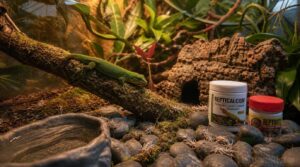
Indoor reptiles face a unique set of supplementation hurdles that outdoor or free-ranging animals simply don’t encounter. Without natural sunlight and unrestricted foraging, your enclosure setup can quietly work against your reptile’s nutritional needs. Here’s what you need to understand before choosing a supplement routine.
Limited UVB Exposure
Indoor light simply can’t replicate what the sun delivers.
Glass blocks most UVB wavelengths, bulbs lose output long before they burn out, and poor basking placement can mean your reptile never reaches an effective UVB zone.
Without adequate synthesis, D3 supplementation via RepCal Calcium becomes non-negotiable — but match the dose carefully to avoid toxicity from over-correction.
Small Enclosure Feeding Issues
Small enclosures create real feeding obstacles that can quietly undermine your supplement routine. Substrate contamination is a persistent problem — when prey lands on loose bedding, your reptile ingests particles alongside its meal, raising impaction risk. Use tongs and feed over a flat slate to keep prey clean.
Uneven feeding access compounds this. In tight spaces, every missed strike or stress response means nutrients don’t land where they should.
Artificial Lighting Limitations
Most indoor lighting simply can’t replicate what sunlight does for your reptile. Standard LEDs and fluorescents emit negligible UVB below 350 nm — the range your reptile needs for vitamin D3 synthesis. Without it, even a well-dusted diet struggles to prevent calcium deficiency in light-limited enclosures.
Watch for these lighting gaps in indoor setups:
- UVB bulb replacement every 6–12 months — output declines invisibly before the bulb burns out
- Spectral balance matters: cool daylight bulbs outperform warm whites but still lack meaningful UVB
- Light distribution drops sharply with distance, so basking spot placement directly affects D3 production
Preventing Metabolic Bone Disease
Metabolic bone disease is one of the most preventable conditions in captive reptiles — and one of the most commonly missed until real damage is done.
| Factor | Warning Sign | Corrective Action |
|---|---|---|
| Calcium Phosphorus Ratio | Soft jaw or long bones | Adjust diet to 2:1 Ca:P ratio |
| Vitamin D3 | Tremors, lethargy | Add D3 supplement or improve UVB lighting |
| UVB Light Maintenance | Dull coloration, poor shedding | Replace UVB bulb every 6–12 months |
| Supplement Dosage Timing | Stunted growth in juveniles | Follow age-specific dusting schedule |
| Growth Monitoring | Slowed weight or length gain | Weekly weigh-ins; adjust calcium absorption support |
Bone health checks during routine handling — gently pressing along the jaw and limbs — catch early softening before fractures occur. Pair that with consistent calcium to phosphorus balance in the diet, and you close most of the nutritional gaps that drive metabolic bone disease forward.
Avoiding Vitamin Overdose
More supplements don’t mean a healthier reptile — they mean a higher risk of hypervitaminosis. Fat-soluble vitamins like A, D₃, and E accumulate in tissue and don’t flush out easily.
For indoor reptiles without reliable UVB access, a targeted product like the best calcium and D₃ supplements for snakes helps you dose precisely without inadvertently stacking fat-soluble vitamins.
- Vitamin A excess causes liver damage and skin changes
- Vitamin D₃ toxicity raises blood calcium, leading to kidney failure
- Stacking multiple D₃-containing products multiplies overdose risk
- Label reading reveals whether D₃ levels fall within the 20,000–22,907 IU/kg safe range
- Vitamin blood tests catch silent toxicity before irreversible damage occurs
Safe Supplementing and Feeding Methods
Getting supplements into your reptile actually matters as much as choosing the right ones. A perfectly formulated calcium powder does nothing if it falls off the cricket before your lizard takes a bite. Here’s how to apply each supplement so it reaches your animal, not the enclosure floor.
Dusting Insects Correctly
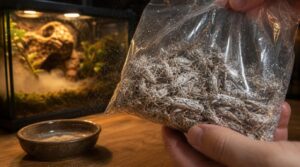
Think of dusting as coating, not caking.
Place feeders in a bag, add a light powder coating of calcium supplement or multivitamin, and shake gently until each insect looks lightly frosted.
Timing before feeding matters — dust and feed immediately, because powder falls off within minutes.
Handle dusted insects minimally, use a clean transfer cup, and keep them away from water bowls.
Gut-loading Feeder Insects
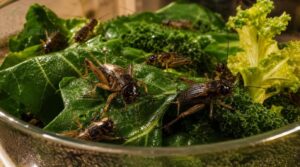
Dusting gets nutrients on the insect — gut-loading gets them inside it.
Pairing both techniques with a well-built reptile diet plan helps you match feeder prey to your animal’s size, heat, UVB, and weight.
Feed your feeder insects nutrient-rich greens like collard greens, kale, or mustard greens for at least 24 hours before feeding time. Vary the diet; a single food source won’t cut it.
Avoid bran — its phytic acid blocks calcium absorption, undermining everything your Exo Terra Multi Vitamin Powder delivers.
Spraying Greens Safely
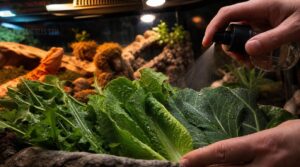
Gut-loading puts nutrients inside the insect — but for herbivorous reptiles, greens are the delivery vehicle. When using liquid vitamin supplementation, technique matters.
Apply an even spray coverage across the leaf surface, wet enough to carry the supplement without heavy dripping. Avoid runoff onto enclosure surfaces, and allow drying briefly before feeding.
Supplementing Frozen-thawed Prey
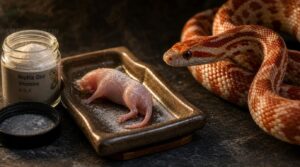
Frozen-thawed prey presents a different challenge than live or fresh food. Vitamins — especially A, D₃, and E — can degrade during extended frozen storage, making supplement dusting at feeding time non‑negotiable.
Thaw prey fully first, then warm to 100–105°F surface temperature before dusting lightly with Zoo Med ReptiVite. Apply powder immediately before offering; don’t dust early.
Removing Uneaten Dusted Food
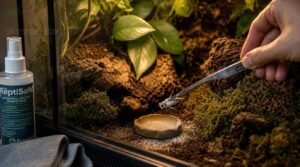
Once your reptile walks away, the clock starts. Remove uneaten dusted prey within 15 minutes — powder falls off as insects move, turning leftover feeders into nutrient‑free debris that breeds bacteria.
Use tongs, drop waste into a sealed container, then wipe the feeding dish with a reptile‑safe disinfectant. Rinse thoroughly and let it dry before the next session.
Species-Specific Reptile Vitamin Schedules
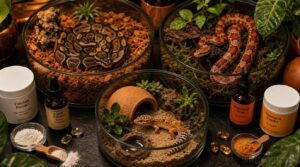
Not every reptile runs on the same schedule, and that’s exactly where most indoor keepers go wrong. Your ball python, corn snake, or juvenile gecko each has different demands — and matching supplements to those needs makes a real difference in long-term health. Here’s what each type actually requires.
Ball Python Supplement Needs
Ball pythons get most of their nutrition from whole prey, so your supplement rotation schedule stays minimal.
Without UVB lighting, use a calcium supplement with Vitamin D3 occasionally — light dusting every few feedings is enough.
Rotate in a multivitamin like Zoo Med ReptiVite or RepCal Herptivite once weekly at most to avoid fat-soluble vitamin buildup.
Corn Snake Feeding Support
Corn snakes are forgiving feeders, but that doesn’t mean supplementation is optional. Hatchlings eat every 5–7 days; adults stretch to every 10–14 days. At each feeding, offer frozen-thawed prey matched to the snake’s mid-body width, fully thawed in warm water before presentation.
Key practices that keep corn snakes thriving:
- Dust prey lightly with calcium + D3 every 2–3 feedings
- Rotate Zoo Med ReptiVite weekly for trace minerals and vitamins
- Gut-load feeder insects 24 hours before dusting
- Use feeding tongs to trigger a natural strike response
- Wait 48–72 hours post-feeding before handling
Boa Constrictor Nutrition Basics
Boas are slow metabolizers, so their supplement needs are straightforward—but getting them right still matters. Dust prey with calcium + D3 powder every 3–4 feedings. Use one D3 source only to avoid overdose. Feed adults every 10–14 days, keeping prey at 10% of body weight or less.
| Factor | Guideline | Why It Matters |
|---|---|---|
| Feeding frequency | Every 10–14 days | Prevents regurgitation |
| Prey size | ≤ mid-body width | Reduces digestive stress |
| Calcium dusting | Every 3–4 feedings | Promotes bone mineralization |
| Post-meal handling | Wait 48–72 hours | Protects digestion |
| Body condition check | Monthly weigh-ins | Catches over/underfeeding early |
Skip handling after meals. Monitor body condition monthly to adjust prey size or frequency before problems develop.
Juvenile Reptile Growth Support
[ORIGINAL TEXT]
Hatchling growth is relentless — bone tissue mineralizes daily, demanding consistent Calcium D3 Supplementation at every feeding. Without adequate vitamin D3, calcium simply won’t reach developing growth plates, leaving bones soft and vulnerable.
- Dust feeders with calcium to phosphorus balance powder each meal
- Offer multivitamins 1–2 times weekly for Vitamin A Metabolism support
- Increase UVB exposure to reinforce Bone Density Support
- Prioritize Protein for Growth through gut-loaded insects
[/ORIGINAL TEXT]
Adult Reptile Maintenance Dosing
Once a reptile reaches adulthood, the urgency of daily dusting shifts — but the precision required doesn’t.
Adult Calcium Frequency Adjustments call for dusting feeders 3–4 times weekly rather than every meal. Vitamin D3 Intervals should be spaced to avoid accumulation, especially when functional UVB is present.
| Species | Calcium Frequency | Multivitamin Schedule |
|---|---|---|
| Bearded Dragon | 3–4x weekly | Once weekly |
| Leopard Gecko | 3x weekly | Every 2 weeks |
| Blue-tongue Skink | 2–3x weekly | Every 2 weeks |
Supplement Rotation Schedule matters because fat-soluble vitamins build up silently. In indoor setups with limited UVB exposure, keep one D3 source only — never stack multivitamins and D3 calcium together. Metabolic Bone Prevention depends on consistency, not excess.
Frequently Asked Questions (FAQs)
What do reptile vitamins do?
Think of reptile vitamins as the safety net your animal’s diet can’t build alone. They cover calcium absorption, vitamin D3, and immune support — filling every gap between captivity and nature.
What nutrients do reptiles need?
Captive reptiles depend on dietary calcium, D3, Vitamin A, and trace minerals to function. Without this balance, bones weaken, shedding fails, and metabolism stalls.
Can reptiles overdose on calcium powder supplements?
Yes, they can. Calcium powder overdose causes hypercalcemia, leading to kidney damage, soft tissue calcification, and lethargy. Always follow dosage guidelines — excess D₃ amplifies the risk greatly.
Do all UVB bulbs provide adequate vitamin D3?
No — a glowing bulb doesn’t mean effective UVB. Output declines before visible failure, and distance plus barriers further reduce what your reptile actually receives for vitamin D3 synthesis.
How often should indoor reptiles receive multivitamin supplements?
Adults need multivitamin once weekly; juveniles twice weekly. Fat-soluble vitamins accumulate, so more isn’t better. Well gut-loaded feeders let you stick to that schedule without risking overdose.
Are natural sunlight exposure alternatives to UVB lighting?
Sunlight is nature’s gift, but window glass blocks most UVB, leaving indoor reptiles without adequate vitamin D₃ synthesis. Direct outdoor supervised basking delivers genuine UVB, though seasonal sun angles and heat management make it inconsistent.
What signs indicate vitamin deficiency in indoor reptiles?
Watch for soft or rubbery jaws, eye inflammation, poor shedding, and reduced appetite. These are the clearest early signs of vitamin deficiency — don’t wait for skeletal deformities to appear.
Can reptiles overdose on water-soluble vitamins?
Yes, but the risk is lower than with fat-soluble vitamins. Kidneys clear excess water-soluble vitamins efficiently—yet repeated over-supplementation can still push levels high enough to cause harm. Follow dosage labels precisely.
How does stress affect reptile nutrient absorption?
Stress floods a reptile’s system with elevated corticosterone, quietly shutting down appetite, slowing gut motility, and rerouting blood away from digestive organs — making even a perfectly dusted meal far less effective.
Do female reptiles need extra calcium when gravid?
Gravid females have considerably higher eggshell calcium demand, pulling from both diet and skeletal reserves. Without a proper calcium-to-phosphorus balance and adequate Vitamin D3 support, shells weaken and maternal bone health deteriorates fast.
Conclusion
A bearded dragon presenting with tremors and soft jaw bones—classic metabolic bone disease—often has one thing in common: a well-meaning owner who supplemented inconsistently under inadequate UVB.
Choosing the right reptile vitamins for indoor habitats isn’t guesswork; it’s a calculated response to what artificial environments can’t provide.
Match the supplement to the light source, the species, and the feeding method.
Do that consistently, and deficiency becomes a problem you simply won’t have.