This site is supported by our readers. We may earn a commission, at no cost to you, if you purchase through links.
Every week, I see the same case: a bearded dragon with soft, bowed legs, owners baffled because they "fed greens every day." The culprit usually isn’t neglect, it’s imbalance—wrong ratios, wrong form, or wrong species-match on the bottle.
Reptile vitamin supplements aren’t optional extras; they’re the bridge between captivity and what a wild diet naturally provides. Get the calcium-to-phosphorus ratio or vitamin D3 dosing wrong, and you risk metabolic bone disease or worse, organ damage from overdoing it.
Choosing well means knowing your species, your feeding method, and what’s actually inside that jar. Here’s what separates a genuinely safe formula from one that’s quietly setting your reptile up for trouble.
Table Of Contents
- Key Takeaways
- Top 9 Best Reptile Vitamin Supplements
- 1. reptile vitamins and mineral supplement
- 2. reptile and amphibian multivitamin supplement
- 3. Reptile multivitamin food spray supplement
- 4. Reptile and Amphibian Vitamin Supplement
- 5. Reptile vitamin supplement with beta carotene
- 6. Reptile vitamin liquid supplement drops
- 7. Reptile calcium supplement with vitamin
- 8. Reptile vitamin powder supplement blend
- 9. Reptile probiotic supplement for digestion
- Key Nutrients Reptiles Need
- How to Choose Safe Reptile Supplements
- Best Ways to Give Supplements
- Buying Reptile Vitamins With Confidence
- Frequently Asked Questions (FAQs)
- What is the best reptile multivitamin?
- What supplements do reptiles need?
- What does D3 do to reptiles?
- What is the best source of vitamin A for bearded dragons?
- Can reptiles eat calcium supplements?
- Are reptile vitamins FDA regulated?
- How much vitamin D3 should a reptile eat?
- How much vitamin D3 should I give my reptifiles?
- How much calcium does a reptile need?
- Is nature zone reptile salad dressing a multivitamin?
- Conclusion
Key Takeaways
- Maintaining a roughly 2:1 calcium-to-phosphorus ratio, using phosphorus-free calcium sources, is the single most important factor in preventing metabolic bone disease.
- Vitamin D3 and preformed vitamin A both accumulate in the body, so overdosing rather than deficiency is the greater risk once basic supplementation is in place.
- Matching supplement type, dosing method, and ingredient ratios to your reptile’s specific species and feeding habits matters more than simply buying a popular brand.
- Never dose vitamins through water, and instead apply calcium and multivitamins separately (not simultaneously) directly to food for reliable, trackable absorption.
Top 9 Best Reptile Vitamin Supplements
Walking into a pet store’s supplement aisle, you’ll find dozens of jars promising the same thing. Not every formula fits every species, and picking the wrong one can do more harm than good. Here are nine standouts worth stocking in your reptile care kit.
Before stocking up, it helps to match each product to your reptile’s specific needs with this detailed guide to reptile health supplements.
1. reptile vitamins and mineral supplement
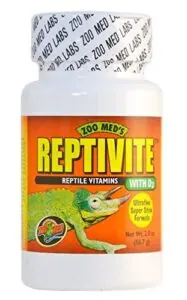
Look for a supplement that does more than dust your feeders, and Zoo Med’s ReptiVite with D3 earns its reputation. Formulated with a precise 2:1 calcium-to-phosphorus ratio, it packs a full amino acid complex plus trace minerals into an ultra-fine powder.
Zoo Med originally built this formula to correct soft-shell problems in turtles, a fix so effective that zoos still rely on it today. You’ll find no soy, yeast, or artificial fillers here, just clean nutrition suited to any life stage.
Skimping on minerals invites metabolic bone disease, a condition that’s far easier to prevent than treat. That’s why a complete, balanced formula belongs in every reptile keeper’s supply cabinet.
| Best For | Reptile owners looking for a complete, high-quality vitamin and mineral supplement to support healthy bone growth and prevent metabolic bone disease. |
|---|---|
| Form | Powder |
| Vitamin D3 | Yes |
| Application Method | Dusting |
| Species Coverage | All reptiles |
| Life Stage | All stages |
| Indoor Use Focus | Yes |
| Additional Features |
|
- Precise 2:1 calcium-to-phosphorus ratio supports strong bones and helps correct soft-shell issues in turtles
- Ultra-fine powder formula makes it easy to dust feeders or apply to food
- Free from soy, yeast, and artificial additives for clean, trusted nutrition
- Small container size means frequent reordering for keepers with multiple reptiles
- Requires manual application to food each time, adding an extra step to feeding
- Formulated specifically for reptiles, so it isn’t suitable for other pet types
2. reptile and amphibian multivitamin supplement
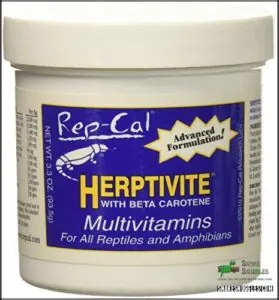
Once your calcium base is covered, a true multivitamin fills the remaining gaps. Rep-Cal Herptivite draws from a sea vegetation base, supplying bioavailable trace minerals many captive diets simply miss.
Its beta carotene formulation lets your reptile’s body convert only what it needs, sidestepping vitamin A toxicity while still fueling growth and reproductive health. The powder’s tacky texture clings readily to crickets and greens, so dusting stays mess-free.
For finicky reptiles, vitamin tips for picky reptile eaters can help maintain balanced calcium, D3, and vitamin A intake.
It costs more than bargain brands, sure. But keepers running dart frogs through bearded dragons report steady, reliable results, and that consistency is worth the extra dollar.
| Best For | Reptile and amphibian keepers who already have a calcium supplement in rotation and need a well-rounded multivitamin to round out their pet’s diet. |
|---|---|
| Form | Powder |
| Vitamin D3 | Limited |
| Application Method | Dusting |
| Species Coverage | Reptiles/amphibians |
| Life Stage | All stages |
| Indoor Use Focus | Yes |
| Additional Features |
|
- Sea vegetation base delivers bioavailable trace minerals often missing from captive diets
- Beta carotene formulation supports growth and reproductive health without risking vitamin A toxicity
- Tacky powder texture adheres well to crickets and greens for mess-free dusting
- Pricier than bargain-brand alternatives
- Flavorless profile may reduce palatability for some species
- Requires precise dosing to maintain correct nutritional balance
3. Reptile multivitamin food spray supplement
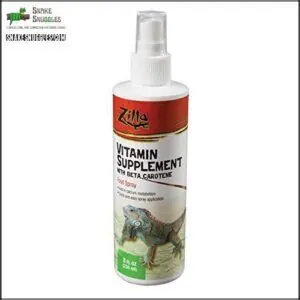
Tired of dusting powder that clumps on damp greens? A spray-on multivitamin, like Zilla’s formula, skips that mess entirely. Mist your reptile’s food, wait 15 seconds, and serve, no shaking clouds of powder into the enclosure air.
These sprays deliver Vitamins A, B-complex, C, D3, and niacin to support calcium metabolism without added phosphorus. They work well across bearded dragons, geckos, and turtles alike.
One caveat: sprays run lighter on concentration than powders. Treat them as daily maintenance, not a fix for an existing deficiency your vet needs to address directly.
| Best For | Reptile owners who want a quick, mess-free way to fill nutritional gaps in the diets of bearded dragons, geckos, snakes, turtles, and amphibians. |
|---|---|
| Form | Spray |
| Vitamin D3 | Yes |
| Application Method | Misting |
| Species Coverage | Reptiles/amphibians |
| Life Stage | All stages |
| Indoor Use Focus | Yes |
| Additional Features |
|
- Easy liquid spray application that coats food quickly and evenly
- Packed with Vitamins A, B complex, C, D3, and Niacin to support calcium metabolism
- Allergen-free and suitable for all life stages, with just 15 seconds needed before serving
- Must be shaken well before each use to keep the formula properly mixed
- Works best paired with a separate calcium spray rather than as a standalone supplement
- Unflavored formula may not be appealing to every reptile’s taste preferences
4. Reptile and Amphibian Vitamin Supplement
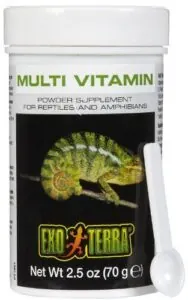
Owning both a bearded dragon and a fire-bellied toad? One product won’t cut it for a mixed collection unless it’s built for both. That’s the appeal of cross-species formulas: vitamins A, D3, E, and B12 plus trace minerals in one jar, covering bone growth and immune function for reptiles and amphibians alike.
Here’s the catch: amphibians process beta-carotene differently than reptiles do, so dosing needs adjusting by species, not guesswork.
Zoo Med Reptivite and Repashy Supercal stand out for consistent potency and accurate labeling, giving you real confidence in every scoop rather than a shot in the dark.
| Best For | Reptile and amphibian owners who want a single, science-backed multivitamin to support bone growth, immune health, and overall vitality in their pets. |
|---|---|
| Form | Powder |
| Vitamin D3 | Yes |
| Application Method | Dusting |
| Species Coverage | Reptiles/amphibians |
| Life Stage | All stages |
| Indoor Use Focus | Yes |
| Additional Features |
|
- Comprehensive formula with beta-carotene, amino acids, and trace minerals for well-rounded nutritional support
- Powder form makes it easy to coat insects or mix into food for picky eaters
- Supports healthy growth, reproduction, and muscle development when paired with calcium and D3
- Intended for indoor use only, so it may not suit all setups
- Must be paired with a separate calcium supplement for complete nutrition
- Amphibians process beta-carotene differently than reptiles, so dosing needs species-specific adjustment
5. Reptile vitamin supplement with beta carotene
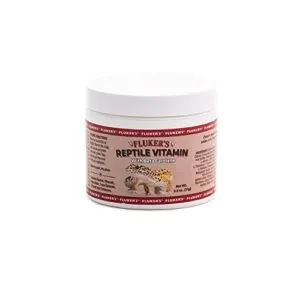
Why risk vitamin A toxicity when your reptile’s own body can regulate the dose? Beta carotene converts to vitamin A only as needed, making it a safer precursor than retinol acetate for color-focused feeding routines.
Just as beta carotene lets your reptile self-regulate vitamin A, maintaining the right calcium-to-phosphorus ratio is equally crucial, as explained in this guide to essential reptile vitamins and mineral balance.
It boosts pigment production, helps maintain epithelial tissue, and works as a mild antioxidant against cellular stress.
Conversion efficiency varies by species, so herbivores and omnivorous tortoises benefit more than strict carnivores. Rotate it with a preformed vitamin A source occasionally, and watch for shedding troubles or dull coloring as your early warning signs.
| Best For | Reptile owners feeding herbivorous or omnivorous species, like tortoises, who want to enhance natural coloring while supporting long-term health through a gut-loading or dusting routine. |
|---|---|
| Form | Powder |
| Vitamin D3 | No |
| Application Method | Dusting |
| Species Coverage | Herbivores/omnivores |
| Life Stage | All stages |
| Indoor Use Focus | Yes |
| Additional Features |
|
- Beta carotene offers a safer path to vitamin A since the body converts it only as needed, lowering toxicity risk
- Supports pigment production, epithelial tissue health, and provides mild antioxidant benefits
- Versatile powder works on crickets, rodents, fruits, or vegetables for easy dusting
- Conversion efficiency varies by species, so strict carnivores may see less benefit
- Powder form requires manual application rather than a ready-to-use format
- Formulated for indoor use only, with occasional need to rotate in a preformed vitamin A source
6. Reptile vitamin liquid supplement drops
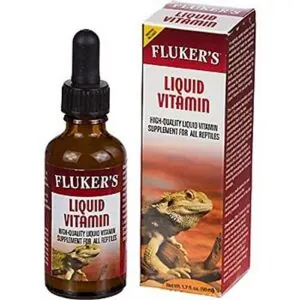
Watch that dropper closely, because liquid vitamins pack a concentrated punch in a small volume. Most formulas combine vitamins A, D3, and E with B-complex, ideal for picky feeders who ignore dusted insects.
Shake well before each use; suspensions separate, and uneven dosing invites trouble. Apply drops directly to food rather than water, since inconsistent drinking habits make water-dosing unreliable.
Base your amount on body weight, roughly a few drops per 10 grams weekly. Store bottles away from sunlight, and don’t skip the label’s expiration date.
| Best For | Reptile owners who want an easy, food-based way to fill nutritional gaps for picky eaters that ignore dusted insects. |
|---|---|
| Form | Liquid |
| Vitamin D3 | Yes |
| Application Method | Dropper |
| Species Coverage | All reptiles |
| Life Stage | All stages |
| Indoor Use Focus | Yes |
| Additional Features |
|
- Combines A, D3, E, and B-complex vitamins in one concentrated liquid formula
- Dropper allows precise, direct application to food for easy, mess-free dosing
- Supports immune function, skin/tract health, and calcium absorption to reduce deficiency-related illness
- Requires manual shaking and careful dosing based on body weight, adding a bit of daily effort
- Not effective when added to water, since inconsistent drinking makes dosing unreliable
- Must be stored away from sunlight and tracked for expiration, or potency can degrade
7. Reptile calcium supplement with vitamin
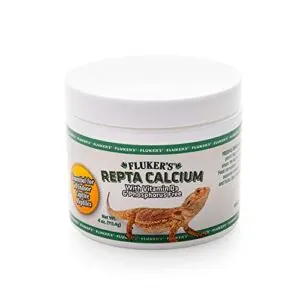
For calcium supplements, one product stands out for its simplicity: Fluker’s Calcium with Vitamin D3, a 4-ounce powder built for daily dusting duty.
Oyster shell-derived calcium carbonate forms the base, paired with D3 to boost intestinal absorption when your reptile’s UVB exposure falls short. That’s a smart combo for indoor setups without strong artificial lighting.
Here’s the detail that matters most: it’s phosphorus-free. Excess phosphorus binds calcium and blocks absorption, setting the stage for metabolic bone disease down the road. This formula sidesteps that risk entirely.
Suitable across lizards, snakes, turtles, and tortoises, it works for all life stages. Dust feeders lightly or mix it into softer meals—consistency beats quantity every time.
| Best For | Owners of indoor reptiles—lizards, snakes, turtles, frogs, and tortoises—who need a reliable daily calcium source to make up for limited natural UVB exposure. |
|---|---|
| Form | Powder |
| Vitamin D3 | Yes |
| Application Method | Dusting |
| Species Coverage | Reptiles/amphibians |
| Life Stage | All stages |
| Indoor Use Focus | Yes |
| Additional Features |
|
- Contains added Vitamin D3 to improve calcium absorption
- Fine powder texture makes dusting feeder insects or food simple
- Works for reptiles at any life stage, from juveniles to adults
- Only suitable for indoor pets, not a substitute for natural sunlight
- Must be applied to food or feeders rather than given on its own
- Small 4-ounce size may need frequent repurchasing for multiple reptiles
8. Reptile vitamin powder supplement blend
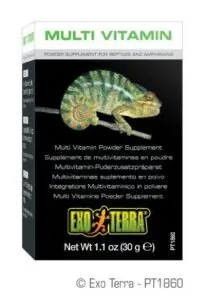
Think of a powder mix as your reptile’s daily multivitamin, covering the nutritional gaps a single-ingredient supplement can’t touch.
These formulations combine chelated minerals, trace elements like zinc and selenium, and both fat- and water-soluble vitamins into one microencapsulated dose. That encapsulation matters, it protects potency from humidity and light during storage.
Dust feeders or greens 1-2 times weekly, alternating with calcium-only products the other days. Why alternate? Overlapping D3 sources risks hypervitaminosis and organ calcification, something no keeper wants to troubleshoot.
Check the label for D3 concentration, matching it to your UVB setup. Replace the container annually. Even unopened, vitamin potency degrades, leaving you with an expensive jar of guesswork.
| Best For | reptile keepers who want an easy, all-in-one way to fill nutritional gaps between feedings, especially for indoor pets that don’t get natural sun exposure. |
|---|---|
| Form | Powder |
| Vitamin D3 | Yes |
| Application Method | Dusting |
| Species Coverage | All reptiles |
| Life Stage | All stages |
| Indoor Use Focus | Yes |
| Additional Features |
|
- Combines chelated minerals, trace elements, and vitamins into one convenient microencapsulated dose
- Vegetable-flavored formula makes dusting feeders or greens easy for picky eaters
- Safety and health tested to support overall reptile wellness
- Small 30-gram container means frequent repurchasing
- Requires careful alternation with calcium-only products to avoid overdoing vitamin D3
- Potency degrades over time, so it needs to be replaced yearly even if unopened
9. Reptile probiotic supplement for digestion
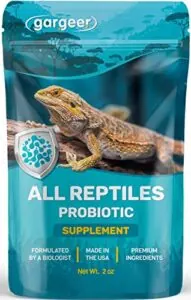
Gut health rarely gets the spotlight, but it drives everything from appetite to immune strength. Gargeer’s probiotic mix pairs Bacillus subtilis with Lactobacillus acidophilus and casei, plus Enterococcus faecium, strains selected to survive gastric acid and colonize the intestine.
Mix one teaspoon per pound of food, feeding immediately so bacteria reach the gut viable. That’s the whole trick with probiotics, timing matters as much as dosage.
Suitable for bearded dragons, snakes, and most reptile or amphibian species, this powder aids digestion, nutrient absorption, and appetite recovery after illness. A 2-ounce jar lasts months for smaller collections. Pair it with a solid multivitamin schedule, and you’ve built a genuinely complete nutritional foundation.
| Best For | Reptile and amphibian owners—especially bearded dragon and snake keepers—who want to support their pet’s digestion, immunity, and appetite with a simple, food-mixed probiotic. |
|---|---|
| Form | Powder |
| Vitamin D3 | No |
| Application Method | Mixing |
| Species Coverage | All reptiles/amphibians |
| Life Stage | All stages |
| Indoor Use Focus | Yes |
| Additional Features |
|
- Premium blend of live beneficial bacteria supports digestive health, nutrient absorption, and immune function
- Ultrafine powder adheres easily to feeder insects and salads for simple, mess-free administration
- Made in the USA and suitable for a wide range of reptile and amphibian species
- Requires precise dosing (one teaspoon per pound of food), which can be tricky to measure consistently
- Only effective when mixed thoroughly with food, adding an extra step to feeding routines
- The 2-ounce container may not last long for larger animals or multi-pet collections
Key Nutrients Reptiles Need
Before you buy anything, you need to understand what your reptile’s body actually runs on. Get the essential nutrients wrong, and even the fanciest supplement won’t save you from deficiencies down the road. Here are the five building blocks worth knowing before you shop.
Calcium-to-phosphorus Balance
Get this ratio wrong, and you’re looking at metabolic bone disease, not just a minor deficiency.
Aim for roughly 2:1 calcium-to-phosphorus. Excess phosphorus binds calcium in the gut, causing:
- Mineral absorption interference
- Bone remodeling issues
- Hormonal regulation effects (elevated FGF23)
That’s why calcium supplementation, using phosphorus-free formulas, corrects the dietary ratio directly, supporting proper calcium absorption in reptile nutrition. This balance is critical because parathyroid hormone characteristics influence how the body regulates these essential minerals.
Vitamin D3 and UVB
Getting the ratio right means nothing if your reptile can’t produce D3 in the first place.
UVB wavelengths between 290-315nm trigger D3 synthesis in skin, but bulbs degrade every six months. Melanin blocks penetration, so darker species need stronger exposure.
| Factor | Impact | Action |
|---|---|---|
| Bulb age | UVB output drops | Replace biannually |
| Skin melanin | Reduces synthesis | Increase UVB access |
| Blood marker | 25(OH)D3 levels | Vet bloodwork |
Preformed Vitamin A
Preformed vitamin A—retinol acetate or palmitate—skips the conversion step many reptiles can’t perform with beta carotene.
It’s absorbed at 70-90% bioavailability, then stored in liver and fatty tissue. That storage cuts both ways: convenient reserve, but risky if you overdo it.
Watch for vitamin A toxicity—lethargy, skin shedding issues, swelling—since excess doesn’t clear quickly from exotic pet nutrition programs.
Trace Minerals and Amino Acids
Beyond vitamin A, your reptile’s wellness depends on trace minerals like zinc, manganese, and selenium—often bound to amino acids for better bioavailability than plain mineral salts.
This chelation process improves absorption while reducing gut reactivity. Essential amino acids build proteins for tissue repair, so pairing them with trace elements makes nutritional sense. Watch for overlapping products, though; stacking supplements risks trace mineral toxicity from unintentional double-dosing.
Probiotics for Digestion
Trace minerals repair tissue; probiotics keep the gut running that repair crew depends on.
Look for microbial strain specificity—named organisms, not vague genus labels—plus accurate CFU potency claims.
Enteric coating helps strains survive stomach acid, supporting gut pathogen competition and prebiotic teamwork.
Reptile digestive care needs restraint, though: overdosing sensitive GI tracts causes more harm than good.
How to Choose Safe Reptile Supplements
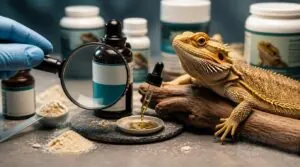
Not every supplement on the shelf deserves a spot in your cabinet, and knowing the difference matters more than you’d think. Between mislabeled ratios, hidden phosphorus, and D3 doses that can do real harm, safety comes down to reading past the marketing. Here’s what to check before you commit to a product.
Species-specific Formulas
One label rarely fits all reptiles. A speciesspecific dosing approach targets herbivore nutrient ratios, targeted amino acids, and microbiome alignment for that animal’s gut. Consider what matters most:
- Calcium-to-phosphorus balance
- D3 levels matched to UV exposure
- Species-specific probiotics
- Amino acid profiles
- Life-stage feeding guidance
That’s herpetological nutrition done right, matching reptile dietary requirements to metabolic dietary needs, not guesswork.
Carnivore Versus Herbivore Needs
Because a bearded dragon and a ball python eat worlds apart, their vitamin needs diverge sharply.
Carnivores get retinol straight from prey tissue, while herbivores rely on beta carotene conversion, and plant oxalates can block calcium absorption.
Bone-in prey shifts dietary phosphorus higher than leafy greens do.
Gut microbes adapt to each diet type, too.
Match dietary supplementation to species biology, not habit.
Phosphorus-free Calcium
Oyster shell-derived calcium carbonate gives you a phosphorus-free calcium source without competing minerals.
This matters for bone metabolism: excess phosphorus binds calcium and blocks absorption, raising metabolic bone disease risk.
Fine particle size boosts calcium bioavailability during dusting, supporting healthier reptile bone development.
Pick phosphorus-free formulas whenever your feeder insects already run phosphorus-heavy—your gecko’s skeleton will thank you.
D3 Overdose Risks
Too much of a good thing can poison your reptile from the inside out. Because vitamin D3 is fat-soluble, it accumulates rather than flushing out, building toward hypercalcemia—elevated blood calcium that drives soft tissue calcification and kidney damage.
Watch for lethargy, appetite loss, or muscle weakness.
Prevent dosing errors by using only one D3-containing product, checking IU/kg levels, and never stacking supplements blindly.
Manufacturing Quality Standards
Trust the label, but verify the factory. GMP certification and ISO 9001 signal validated processes, raw material testing, and batch traceability protocols behind every scoop.
- Certificate of analysis per lot
- Documented supplier audits
- Calibrated equipment records
- Nutrient bioavailability testing
- Pass/fail QC documentation
These safeguards support vitamin toxicity mitigation, ensuring bioavailable nutrients reach your reptile without contamination or dosing surprises.
Best Ways to Give Supplements
Buying the right supplement is only half the job, application matters just as much. Get the timing or method wrong, and even a great product won’t do your reptile much good. Here’s what you need to know before that powder or bottle ever touches your pet’s food.
Dusting Insects and Greens
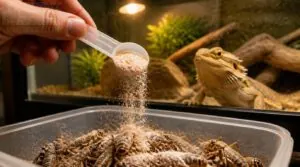
Dusting insects and greens puts calcium and vitamins right where your reptile eats them, which beats guessing.
Coat crickets or greens lightly, right before feeding, since fine particles stick evenly and prevent clumping.
Heavy dusting backfires, insects shed powder or refuse to move, so uniform coating maximizes nutrient transfer and helps prevent metabolic bone disease over time.
Using Liquid Vitamin Drops
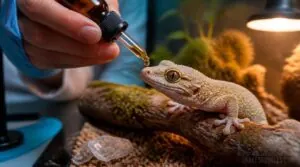
For picky eaters or shedding reptiles, liquid drops solve what powder can’t. Absorption speed beats dusting since drops skip digestion delays, entering the bloodstream within minutes.
Precise dosing matters most, count drops per body weight rather than eyeballing. Bases containing glycerin affect uptake, so check labels.
Store bottles capped, cool, and dark, potency fades fast otherwise, undermining every microfine vitamin supplement’s promise.
Food Spray Application
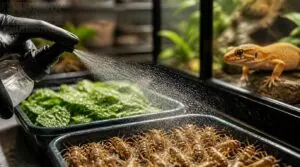
When liquid drops aren’t practical, food spray application gives you a great safety net. Sprays deliver a fine mist uniformity—droplets as small as 5 micrometers—across feeder insects or greens. Adjust nozzle pressure (1–4 bar) for proper coating thickness and even coverage. Sprayed dietary additives dry in under three minutes, locking microfine vitamin supplement potency exactly where you need it.
Calcium Versus Multivitamin Schedules

For reliable results, you need to split calcium doses across meals, since absorption drops with large single doses. Pairing calcium with food improves uptake—especially calcium carbonate. Multivitamins work best with fat, but don’t overlap them with calcium; iron and zinc compete in the gut. Schedule these:
- Calcium at breakfast and dinner
- Multivitamin midday
- Always check total daily intake
Avoiding Water Dosing
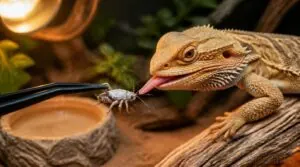
Once your schedule’s set, watch how you deliver each dose. Skip the water bowl entirely, since inconsistent liquid intake makes accurate dosing impossible.
Instead, focus on dusting feeder insects or using precise liquid dosing straight onto prey. This insect coating method boosts dusting efficacy while minimizing enclosure residue—a genuinely great safety net for your reptile husbandry routine.
Buying Reptile Vitamins With Confidence

Faced with a shelf full of tubs and bottles, picking the right one can feel overwhelming. You don’t need to memorize every label, but a few smart checks will keep your reptile safe and your wallet happy. Here’s what to look for before you buy.
Powder, Liquid, or Spray
Format matters more than most keepers realize. Powder dusting suits daily calcium routines, coating feeder insects right before feeding for maximum uptake. Liquids offer dosing precision, ideal when body-weight-based amounts matter most.
Sprays shine with batch treatments, but nozzle efficiency determines whether nutrients land evenly or clump. Ask yourself: how often do you feed, and how many prey items at once? That answer decides your format.
Checking Expiration Dates
Why do so many keepers overlook the fine print on a bottle? Expiration dates aren’t decorative, they’re safety versus quality signals.
- Julian date codes need decoding, not guessing
- Storage impact factors (heat, humidity) shorten potency faster than labels suggest
- Clumping or off odors signal degradation regardless of date
Apply FIFO inventory methods at home: use older dietary supplements first, protecting your exotic pet’s nutritional health.
Choosing Trusted Retailers
Where you buy matters as much as what you buy. Look for retailer transparency: clear "about us" pages, verified sourcing, and named suppliers behind every bottle.
For multi-gene purchases, compare ball python morph prices across reputable breeders to spot transparent, fairly priced listings.
If you’re weighing whether a docile aquatic species suits your space, this guide on keeping water snakes as pets breaks down the care realities before you commit to a captive-bred specimen.
Check independent customer reviews, not just site testimonials. Veterinary affiliations or reptile club endorsements add credibility.
Trusted sellers of reptile vitamins and supplements stock officially licensed brands with visible batch numbers, proving they respect exotic pet care standards, not just shelf space.
When to Ask a Vet
No supplement fixes a sick reptile. If you notice appetite changes, abnormal stool, or respiratory distress, stop guessing and call your vet.
No supplement fixes a sick reptile—unusual symptoms mean it’s time to call the vet, not reach for another bottle
Neurological symptoms, weakness, or tremors often point to metabolic bone disease or supplement toxicity, not a missed dose. Misjudged vitamin D3 or vitamin A toxicity can mimic deficiency symptoms. When in doubt about reptilian metabolic health, professional diagnosis protects your exotic pet far better than another bottle off the shelf.
Frequently Asked Questions (FAQs)
What is the best reptile multivitamin?
Ever wonder why your gecko’s bones seem fragile despite a "good" diet? The best formula balances calcium-to-phosphorus ratios, includes preformed Vitamin A, and lists transparent, nutrient-rich ingredients supporting metabolic bone disease prevention and true bioavailability.
What supplements do reptiles need?
At minimum, your pet needs calcium with proper D3 balance, preformed vitamin A, and trace minerals. These prevent metabolic bone disease and support calcium metabolism. Watch for lethargy or soft jaws, early dietary deficiency signs worth catching fast.
What does D3 do to reptiles?
Driving deep calcium absorption and bone mineralization, vitamin D3 activates hormone pathways that regulate phosphorus, too. Without it, calcium metabolism stalls, skeletal development suffers, and metabolic bone disease creeps in—yet too much invites hypervitaminosis risks.
What is the best source of vitamin A for bearded dragons?
Beta-carotene-rich vegetables like carrots, collard greens, and butternut squash offer the safest source, since bearded dragons convert what they need and avoid vitamin A toxicity. Rotate these regularly rather than relying on preformed sources for daily intake.
Can reptiles eat calcium supplements?
Yes, dust feeder insects with calcium carbonate at each feeding to correct insect calcium deficiencies, since crickets and mealworms run low naturally.
Proper calcium absorption depends on balanced D3 and phosphorus, preventing metabolic bone disease while supporting healthy reptile bone development long-term.
Are reptile vitamins FDA regulated?
Under FDA rules, these products fall under animal food, not drug classification, so premarket approval isn’t required. Oversight instead relies on labeling honesty, misbranding enforcement, and post-market safety recalls—so read labels carefully before trusting any exotic pet health claim.
How much vitamin D3 should a reptile eat?
There’s no single dose, it depends on species, UVB strength, and life stage.
Juveniles and gravid females need more frequent supplementation; reptiles under proper UVB need less oral D
Follow label guidance, then let your vet fine-tune it to prevent toxicity or metabolic bone disease.
How much vitamin D3 should I give my reptifiles?
Picture a basking gecko soaking up sun that’s slowly fading from an aging bulb—that’s when vitamin D3 supplementation matters most. Dust food 1-2 times weekly, adjusting for UVB intensity, growth stage, and reproductive demands, since overdoing it risks metabolic bone disease.
How much calcium does a reptile need?
Aim for roughly 1-2% dietary calcium, though growth stage and reproduction raise that demand.
Young reptiles need extra calcium for bone development; egg-laying females need more too.
Keep that 2:1 calcium-to-phosphorus ratio steady, since imbalances force bones to surrender their own stores.
Is nature zone reptile salad dressing a multivitamin?
Delicious as it sounds, this dressing vs multivitamin debate has a clear answer: no. It’s calcium and D3 with flavoring agents for palatability, not true nutritional completeness—think tasty topper, not a standalone multivitamin supplement.
Conclusion
Picture a leopard gecko owner who dusted crickets nightly, yet skipped D3, and watched her pet’s jaw soften within months. That’s what happens when good intentions meet the wrong bottle.
Reptile vitamin supplements only work when matched to species, feeding method, and dosage precision. Read labels like a prescription, not a suggestion. Your dragon, gecko, or tortoise can’t tell you what’s missing, so know before deficiency speaks for itself.
Choose wisely, dose carefully, and watch them thrive.