This site is supported by our readers. We may earn a commission, at no cost to you, if you purchase through links.

You reach into the garden mulch and feel something slide across your fingers. Your heart jumps, but that garter snake wants nothing to do with you. It’s already bolting for cover.
That instinct tells you most of what you need to know. So do garter snakes bite often? Rarely, and almost never without warning first.
You’ll find these snakes rely on speed and hissing displays before teeth ever enter the picture. Understanding what pushes them past that point, and what happens if you’re on the receiving end, gives you the confidence to coexist calmly.
Table Of Contents
- Key Takeaways
- Garter Snake Temperament Around People
- Do Garter Snakes Bite Often? Usually No
- Why Garter Snakes Bite and Warning Signs
- Are Garter Snake Bites Dangerous or Painful?
- How to Prevent and Handle Garter Snake Bites
- Frequently Asked Questions (FAQs)
- Are garter snakes aggressive?
- Do garter snakes bite?
- Are garter snakes venomous?
- How do I know if I’m bitten by a garter snake?
- Why should you never pick up a garter snake?
- Is it bad to have garter snakes in your yard?
- What do garter snakes hate the most?
- Why do garter snakes bite do the teeth never hit you?
- Are garter snakes dangerous?
- How do I avoid being bitten by a garter snake?
- Conclusion
Key Takeaways
- Garter snakes rarely bite, relying instead on fleeing, hissing, coiling, and musk release to avoid confrontation.
- Bites become far more likely when a snake is handled improperly, cornered, or restrained, since these situations block its usual escape response.
- Though technically venomous, garter snake bites deliver only mild, prey-focused toxins that cause minor redness and swelling in humans, not serious harm.
- Preventing bites mostly comes down to yard maintenance and calm handling, while basic first aid—cleaning the wound and watching for infection—handles the rest.
Garter Snake Temperament Around People
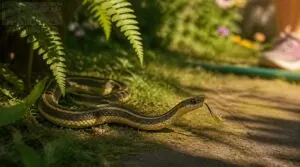
You’re probably picturing a snake ready to strike, but that’s not who garter snakes really are. Their whole personality leans toward caution, not confrontation. Here’s what shapes how they act when you cross paths.
If a garter snake keeps showing up near your porch, it’s usually chasing food or shelter, and this guide on how to get rid of a garter snake walks through removing those attractions safely.
Shy, Avoidant Behavior
Most garter snakes would rather disappear than deal with you. This is a nonaggressive species by nature, prioritizing flight over fight in almost every encounter.
You’ll notice smaller individuals show more caution than adults, and sudden movement often triggers a quick startle response. Calm, repeated exposure helps with gradual habituation, but that shy, avoidant streak rarely fades completely.
Flight Before Fight
That instinct to flee isn’t just personality, it’s biology. When a threat appears, the amygdala triggers a sympathetic nervous system response, flooding the body with adrenaline. This rapid assessment happens in milliseconds, scanning for the nearest evasion strategy.
You’re witnessing flight over fight in real time. Nonvenomous snakes like these have little reason to risk a defensive reaction when running works better.
Common Defensive Displays
Running is plan A, but cornered garter snakes have a backup toolkit. You’ll notice body coiling into a tight S-shape first, paired with hissing and rapid tongue flicks.
Other warning signs include:
- Flattened head to look larger
- Sudden lunges without contact
- Tail thrashing while head hides
- Musk release from the cloaca
- Occasional urination under stress
These behaviors are examples of animal defensive displays used to avoid conflict. These bluffs almost always work.
Human and Pet Encounters
Most yards see garter snakes long before people notice. They’ll slip past a dog sniffing the fence line or a cat lounging near the hostas, rarely stopping to interact.
Pet curiosity can spark a nudge or bark, but bites toward pets stay rare. Watching your pet’s body language helps you step in before startling either animal—simple backyard safety that keeps both sides calm.
Do Garter Snakes Bite Often? Usually No

So, do garter snakes bite often? Not really, and the "why" comes down to a handful of predictable situations. Here’s what actually raises the odds.
Rare in Natural Settings
Picture a snake sliding away before you even notice it—that’s the norm, not the exception. Garter snake behavior in the wild leans heavily toward avoidance.
Bites stay rare because:
- Prey drives their attention, not people
- Nonvenomous temperament favors retreat
- Open habitat allows easy escape
- Confrontation rarely helps survival
This defensive mechanism only kicks in when fleeing isn’t an option.
Understanding why corn snakes bite and how their teeth work can help owners recognize warning signs before this last-resort response happens.
More Likely When Handled
Everything changes the moment your hand enters the picture. Restraint stress levels climb fast, and improper grip risks turn a calm snake defensive. Grabbing near the head or tail, or pinching too tight, triggers handling-induced agitation almost instantly.
Repeated struggles can even build defensive reflex conditioning over time. So when people ask "do garter snakes bite often?"—handling, not encounters, is usually the answer.
Cornered or Restrained Snakes
Blocked escape routes change everything. When a garter snake feels cornered, its go-to flight response disappears, and defensive bluffing tactics kick in fast.
You’ll notice cornered behavior shifts quickly:
- Body stiffens and coils tight
- Head tracks your every move
- Tension builds toward a lunge
- Musk release signals real distress
Handling induced aggression stems from entrapment stress, not aggression itself.
Accidental Yard Encounters
Most yard bites happen by accident, not aggression. You’re reaching into a flower bed, moving a garden hose, or clearing yard debris, and your hand meets a snake before you see it. Unintentional snake contact like this startles both parties.
Tall grass and cluttered garden beds increase this risk, so tidy garden habitat management keeps suburban gardens safer for everyone during routine wildlife encounters.
Pet Snake Bite Frequency
Pet garter snakes rarely bite when handled calmly. Most bites trace back to improper handling or rushed movements, not aggression.
Curious how other snakes compare? boa constrictor bite force facts put the numbers in perspective for any snake owner.
Common triggers include:
- Sudden, jerky handling
- New pet adjustment stress
- Feeding time mistakes
- Poor enclosure maintenance safety
- Startling the snake awake
Handling stress triggers ease with time. Mishandling during those first weeks explains most bites—patience prevents them.
Why Garter Snakes Bite and Warning Signs
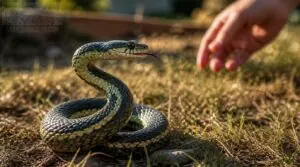
So when does a garter snake actually bite? It usually comes down to fear, not aggression. Here’s what triggers a bite, and the warning signs you’ll spot right before one happens.
Fear-Based Defensive Bites
Think of it as a last resort, not an attack. When a garter snake feels trapped with no way out, it may bite simply to buy itself an escape route.
A garter snake bites only as a last resort, buying itself an escape when it feels truly trapped
You’ll notice flight-first behavior before any strike — retreating, coiling, or gaping. The bite itself is quick, defensive, and driven by panic, not aggression. It’s a threat-perception signal, not a hunting instinct, and it’s over almost as fast as it starts.
Mistaken Food Response
Not every bite means fear. Garter snakes rely on tongue-flicks to sample chemical cues, and quick hand movements near their mouth can trigger Chemical Cue Confusion or a reflexive snap.
Common triggers include:
- Sensory Trigger Misinterpretation
- Movement Induced Bites
- Temperature Sensitivity Errors
- Prior handling stress
- Scent of food nearby
It’s mishandling, not aggression — a defensive mechanism misfiring.
Hissing and S-Curves
Once startled, a garter snake often puts on a show before ever considering a bite. You’ll hear a sharp hiss from glottal air constriction, paired with defensive neck flattening for a mild cobra-like silhouette.
The body coils into an S-curve, keeping essential organs protected while staying in rapid strike readiness. Add tail flicking warnings, and the message is clear: back off.
Lunging Without Contact
That hiss and S-curve don’t always end the standoff. You’ll often see a quick forward lunge next, jaws snapping shut on empty air.
It’s pure self-defense, a bluff meant to startle you back. No contact intended, just a warning strike testing whether you’ll retreat before things escalate further.
Musk, Urine, Tail Flailing
A lunge doesn’t always end things, so garter snakes bring out a smellier backup plan. Defensive musk release comes from the cloacal gland, often paired with stress-induced urination.
Expect:
- Foul-smelling musk
- Sudden urination
- Frantic tail flailing
- Body flopping or flailing
That combo of scent-based defense and motion works as a last-resort deterrent, no bite required.
Are Garter Snake Bites Dangerous or Painful?
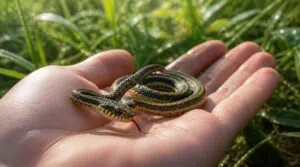
So a garter snake bit you, and now you’re wondering how worried to be. The short answer is: not very, but a few facts will help you understand why. Here’s what actually happens to your skin, and what to watch for afterward.
Mild Venom Explained
Yes, garter snakes are venomous, but don’t let that word alarm you. Their mild neurotoxic secretion comes from the Duvernoy’s gland, built for prey immobilization, not defense.
| Component | Function | Effect on You |
|---|---|---|
| Enzymes | Break cell membranes | Mild swelling |
| Cytotoxic peptides | Local diffusion | Redness, no tissue damage |
| Neurotoxins | Weak, prey-focused | Rarely noticeable |
Venom toxicity stays low for humans.
Small Teeth, Shallow Marks
Picture a row of tiny needles, not fangs, and you’ve got the bite mechanics right. Garter snakes rely on recurved tooth structure to grip prey, leaving a curved puncture pattern rather than deep holes.
Skin penetration depth stays shallow. Bite mark identification is easy: small sharp teeth, superficial wound characteristics, and scattered puncture wounds. Nonvenomous in practical effect, these bites look worse than they feel.
Redness and Minor Swelling
Your skin will likely flush pink to red within minutes, a normal inflammation response as blood flow increases near the puncture marks.
Localized temporary swelling peaks within 24 hours, then fades over 1–3 days. Expect:
- Mild warmth at the site
- Tenderness for 24–48 hours
- Puffiness in fingers or hands
- Redness fading gradually
Elevating the area eases swelling. This is normal wound care, not cause for alarm.
Infection Risk After Bites
Here’s the truth: secondary bacterial infection, not venom, is the real concern after a garter snake bite.
Puncture wounds trap bacteria from saliva or skin, so clean the site immediately with soap and water.
| Risk Factor | Effect |
|---|---|
| Deep puncture | Traps bacteria |
| Delayed cleaning | Raises infection odds |
| Weak immunity | Slower healing |
| Diabetes | Higher severity |
| Hand/foot bites | More complications |
Watch for spreading redness or pus.
Pets and Sensitive People
Your family pet faces the same low risk you do—garter snake bites rarely cause more than mild irritation.
For highly sensitive people, calming pet behaviors like steady purring or quiet companionship offer real sensory regulation after any startling encounter. Predictable routines and voluntary interaction with animals help restore a sense of safety.
Basic reptile safety and snake identification skills protect both pets and owners from unnecessary stress or accidental contact.
How to Prevent and Handle Garter Snake Bites
Most garter snake bites are easy to avoid once you know what triggers them. A few simple habits at home, in the yard, and during handling cut your risk even further. Here’s what actually works, from prevention to first aid.
Safe Handling Basics
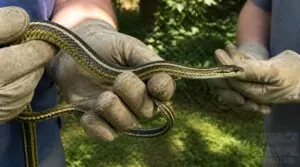
Good handling starts before you even touch the snake. Check your gloves for tears, and assess the garter snake’s size and mood first.
Keep movements slow and steady, holding it close to your body without gripping near the head. Wash your hands afterward to prevent cross-contamination, and never handle solo—a buddy system adds safety if the snake reacts unexpectedly.
If your snake begins to tighten around your arm, stay calm and check out this guide on how to get a snake to stop constricting before trying to unwind it.
Yard and Garden Prevention

Handling technique keeps you safe once contact happens, but most bites never need to occur.
Barrier installation methods work best: bury hardware cloth six inches deep, fence garden beds. Mow grass under three inches—landscape hygiene habits that remove hiding cover. Cut standing water and secure trash for attractant management. Suburban gardens attract snakes through natural pest control opportunities, so yard monitoring procedures matter monthly.
Children and Snake Safety

Kids and garter snakes usually mix fine, as long as a few ground rules stick.
Teach safe distance viewing: look, don’t grab. Most bites trace back to a child restraining a snake, not a random encounter.
Supervise outdoor play near woodpiles or tall grass, common snake habitats. If one appears, back away calmly and let it retreat—no chasing, no cornering, no drama.
First Aid After Bites

Wash the puncture wounds with soap and water right away, then pat dry and cover with a clean bandage.
Ice helps with swelling; ibuprofen eases discomfort.
If bleeding won’t stop, apply direct pressure with a cloth.
Watch for spreading redness or discharge over the next few days—early signs of infection worth tracking closely.
When to Call a Vet
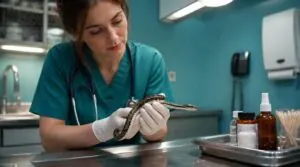
Most garter snake nips heal fine with basic wound care at home. Still, call your vet the same day if swelling spreads, redness worsens, or discharge appears—signs of infection, not venom.
Seek emergency care immediately for pale gums, breathing trouble, collapse, or repeated vomiting. Bite incident rates are low, but allergic reactions happen occasionally. When you’re unsure, a quick call beats guessing.
Frequently Asked Questions (FAQs)
Are garter snakes aggressive?
Like a knight drawing steel only when cornered, garter snakes rely on instinctive survival drives, not aggression. Their natural temperament favors avoidance over confrontation. What looks threatening is usually a misinterpreted threat cue—a defensive reflex, not true hostility toward you.
Do garter snakes bite?
Yes, they’ll bite if threatened or restrained, but it’s a last-resort defensive mechanism, not typical behavior. Flight instincts kick in first—fleeing, hissing, musk release. Bites from these nonvenomous snakes feel like a quick pinch, rarely more.
Are garter snakes venomous?
Funny enough, calling garter snakes "venomous" isn’t entirely wrong—it’s just misleading. They produce mild neurotoxic saliva via the Duvernoy’s gland, meant to immobilize small prey, not harm you. Technically toxic, practically harmless: they’re nonvenomous to humans.
How do I know if I’m bitten by a garter snake?
You’ll notice shallow puncture marks arranged in a U-shaped pattern, not two isolated holes. Expect localized redness and mild swelling, similar to a bee sting. Clean the wound with soap and water, then watch for irritation or discharge.
Why should you never pick up a garter snake?
Picking one up isn’t forbidden, just riskier: handling triggers defensive bites, stress-induced musk, and tail thrashing. You risk skin irritation, unintentional injury, or salmonella exposure.
Safe handling techniques minimize harm—observe garter snake behavior calmly instead of grabbing.
Is it bad to have garter snakes in your yard?
Not at all — garter snakes are beneficial garden residents. They provide natural pest control, eating slugs and insects, and support backyard biodiversity. Coexisting peacefully keeps your garden environment balanced, with minimal risk since bites are rare and mild.
If you’re curious how other small backyard species compare, this guide on whether ringneck snakes are venomous offers helpful insight for nervous gardeners.
What do garter snakes hate the most?
Strong scents like mint, citrus, and garlic top the list. Owl decoys and other natural predator deterrents help too. Combine these with physical barriers, like stone edging, and habitat modification, and you’ll discourage snakes without harming them.
Why do garter snakes bite do the teeth never hit you?
Like a telegraph operator tapping out warnings, garter snakes bite for self-defense, not attack. Their backward-facing teeth grip prey through skin penetration, but against you, they mostly deliver harmless scratches with mild toxins—rarely breaking skin.
Are garter snakes dangerous?
Not really. Garter snakes rank among the least dangerous snakes you’ll meet, technically venomous but harmless to people. They’d rather flee than fight, relying on musk and camouflage over biting, which stays a last resort.
How do I avoid being bitten by a garter snake?
You’re not powerless here, self-defense against a bite just means respecting boundaries. Give them space, move slowly, and skip the rock piles. Handling one? Support the body gently, avoid sudden movements, or use a snake hook.
Conclusion
A garter snake’s bite is less a weapon and more a last resort, like a whispered warning nobody wants to ignore. So do garter snakes bite often? Not really—retreat is their first language, teeth their last.
You’ll rarely feel those small teeth unless you corner or grab one. Respect its space, move slowly, and let it vanish into the grass. That quiet coexistence is the real takeaway here.