This site is supported by our readers. We may earn a commission, at no cost to you, if you purchase through links.
That flash of yellow stripe slithering across your patio isn’t a rattlesnake plotting an ambush. It’s a garter snake, and it’s more scared of you than you are of it. Still, finding one coiled by the back door often sends homeowners straight to panic mode.
Here’s the thing: garter snakes are harmless but persistent, and they’ll keep showing up if your yard offers food, shelter, and moisture. Knowing how to get rid of a garter snake means understanding what draws it in, not just chasing it off with a broom.
From safe removal steps to sealing the gaps it’s using to sneak inside, you’re about to get a practical game plan for reclaiming your yard.
Table Of Contents
- Key Takeaways
- How to Identify a Garter Snake Safely
- How to Remove a Garter Snake
- How to Keep Garter Snakes Away
- Top 5 Products for Garter Snake Control
- Frequently Asked Questions (FAQs)
- What should I do if I see a garter snake?
- How to get a garter snake out of hiding?
- What smell do garter snakes hate?
- What are garter snakes afraid of?
- How to get rid of garter snakes around the House?
- Can garter snakes be removed?
- Do garter snakes need to be killed?
- Can herbs prevent garter snakes?
- Do garter snakes come back?
- How do you catch garter snakes?
- Conclusion
Key Takeaways
- Garter snakes are harmless to people—round pupils, no fangs, and weak venom set them apart from dangerous lookalikes.
- Safe removal means clearing the area, guiding the snake toward an open exit with gentle nudges, and never grabbing it bare-handed.
- Since they squeeze through gaps as small as six millimeters, sealing foundation cracks, doors, and vents is key to keeping them out for good.
- Snakes stick around when yards offer food and shelter, so mowing regularly, clearing debris, and controlling rodents and insects removes their reason to stay.
How to Identify a Garter Snake Safely
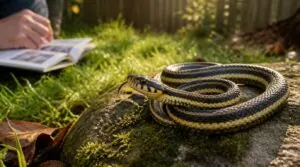
Before you can deal with a garter snake, you need to know you’re actually looking at one. Mistaking it for something dangerous, or vice versa, is where trouble starts. Here’s what to check first.
If a snake’s dramatic ridges or spiky scales have you second-guessing, this guide to snakes that look like dragons can help you tell fearsome looks from real risk.
Stripes, Scales, and Body Shape
Three stripes running head to tail are your first clue: yellow, white, blue, or greenish, or blue, or greenish, sometimes with red spots between them. Scales feel keeled and granular, not smooth. Bodies run slender, 18 to 51 inches, with a narrow head barely wider than the neck. Juveniles show bolder patterns. Those stripes aren’t decoration, they’re camouflage that breaks up their silhouette in grass.
A garter snake’s three stripes aren’t decoration, they’re camouflage that breaks up its silhouette in the grass
Garter Snakes Versus Venomous Snakes
Once you’ve clocked the stripes, check the eyes: garter snakes have round pupils, venomous species show vertical slits. Garters lack real fangs, so venom stays harmless to you.
Garters do have tiny, rounded teeth that can leave faint scratches, and how garter snake teeth differ in shape and size from fangs shows why a bite is harmless.
- Round pupils vs. slit pupils
- No fangs for delivery
- Weaker venom, prey-sized doses
- Both bask in sunny, damp habitat
Instead of injecting venom through fangs, garter snakes rely on grooved rear teeth and capillary action envenomation to slowly deliver toxins during prolonged bites.
Nonvenomous doesn’t mean harmless-looking, just low-risk.
Signs a Garter Snake is Nearby
Eyes and fangs aside, your yard often tells you first. Watch for snake tracks in mud, a musky odor near rock piles, or rustling grass with no wind. A quick tail flick or low coil in leaf litter, plus rare shed skin or droppings with insect bits, all point to garter snake activity nearby.
Common Yard and Home Hiding Spots
Once you spot the signs, check the likely hideouts. Garter snakes love stacked rocks, firewood piles, and dense ivy or mulch. Look under decks, sheds, and foundation gaps too.
Basements, compost bins, and bird baths draw them indoors and out, since moisture and cover mean easy hunting grounds close to home.
When Not to Handle Snakes
Stop if you can’t confirm the pattern: three stripes, round pupils, keeled scales. When in doubt, walk away.
Never touch a suspected venomous snake, full stop. Skip attic or wall removals without a pro, and don’t grab one bare-handed. Secure the area first if kids or pets are nearby, then call for help.
How to Remove a Garter Snake
Spotting a garter snake in your yard doesn’t mean you’re stuck with it. Removal is straightforward once you know the right order of steps, and most encounters resolve in minutes without any drama. Here’s exactly how to handle it, from the first move to the last resort.
Keep Children and Pets Away
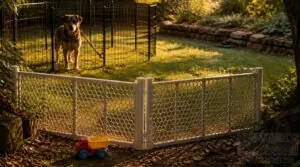
Before you even think about removal, clear the area. Kids and curious pets can spook a snake into striking or hiding somewhere harder to reach.
Once everyone’s safely inside, take a moment to check common rattlesnake habitats and hiding spots so you know where to look before approaching.
Use child safety gates to block the yard, and keep pets in a secure pet area until the snake’s gone. Supervise play zones near grass or leaf litter, and separate pet zones for good measure.
Guide It Toward an Exit
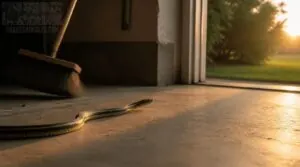
Once the area’s clear, open exterior doors near the snake and turn off lights inside to reduce glare it might dart toward. Create a clear path, then use a broom gently to nudge it forward, tapping the wall lightly to guide direction without contact.
- Open all nearby exits first
- Dim or turn off lights
- Tap walls, don’t touch the snake
- Move slowly, avoid sudden motion
- Let it choose its own pace
Use Humane Catch-and-Release Methods
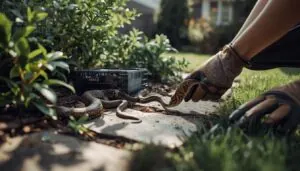
Sometimes a broom nudge isn’t enough, and manual removal calls for a humane bait trap or towel capture instead.
| Method | Best For | Key Tip |
|---|---|---|
| Towel capture | Calm snakes | Drape, don’t grab |
| Bait trap | Hidden spots | Check hourly |
| Gloved hands | Quick moves | Support the body |
Keep handling under two minutes, use gloves and eye protection, and release nearby for stress-free relocation.
Follow Local Wildlife Relocation Laws
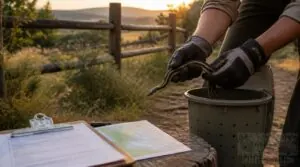
Before you release that snake, know the rules. Many states classify moving wildlife as illegal without proper permits.
Check with your state wildlife agency first. Common requirements include:
- Written landowner permission
- Minimum acreage for release sites
- Same-county relocation only
- No active rabies quarantines
Nuisance wildlife rules vary locally, and skipping them risks fines or harming the snake.
Call a Wildlife Removal Professional
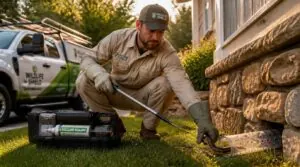
Stumped or squeamish? Call a licensed wildlife removal professional. Verify their credentials with your state wildlife authority, confirm liability insurance, and ask about humane relocation methods and distance limits.
Most offer free estimates and 24 hour emergency response. Expect fair pricing and full exclusion work, sealing entry points so the problem doesn’t return.
How to Keep Garter Snakes Away
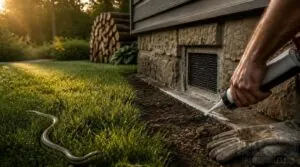
Getting a garter snake out of your house is only half the job. The real fix is making sure it can’t get back in, or want to in the first place. Here are five steps that’ll close the gaps and clear out what’s drawing it to your yard.
Seal Foundation Gaps and Openings
Since garter snakes squeeze through gaps as small as six millimeters, foundation sealing is your first line of defense. Walk the perimeter checking for cracks wider than 1/8 inch. Fill them with epoxy concrete patches.
Tackle pipe entries using backer rod application and silicone sealant use. Finish with weatherproof joint sealing where foundation meets siding.
Install Door Sweeps and Vent Mesh
Foundations aren’t the only weak spot. Doors and vents need attention too.
Fit door sweeps with vinyl inserts to seal gaps up to 3/4 inch. Cover vents with 1/4 inch galvanized hardware cloth, screwed flush against the frame. Measure twice, trim once, and check both every six months for wear.
Mow Grass and Remove Debris
Vents and doors handle the entry points, but your yard is the invitation. Mow to two to three inches weekly, and clear leaf piles, woodpiles, and brush piles where snakes hide.
- Short grass removes cover
- Cleared debris removes shelter
- Tidy woodpiles remove denning spots
Relocate stacked wood onto racks, off the ground entirely.
Control Rodents, Slugs, and Insects
A tidy yard still feeds snakes if their prey stays put. Garter snakes hunt slugs, insects, and rodents, so cutting off that food source matters as much as mowing.
Manage slugs with bait or handpicking, treat insect populations around foundations, and keep rodent activity down with traps or sealed compost. Less prey means fewer reasons for snakes to stick around.
Eliminate Standing Water and Moisture
Where water pools, snakes and their prey follow. Grade soil away from your foundation, six inches over the first ten feet, and clean gutters so runoff doesn’t seep toward walls.
Fix leaky faucets, empty birdbaths, and route sump pump discharge lines well away from the house. Good drainage habitat modification removes both moisture and the amphibians garters love hunting.
Top 5 Products for Garter Snake Control
Sealing gaps and mowing grass will handle most of the work, but the right gear speeds things up. You don’t need a truckload of supplies, just a handful of tools built for the job. Here are five products worth adding to your snake control kit.
1. Reusable Snake Catch Trap System
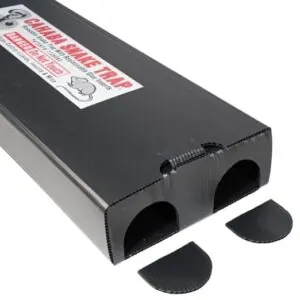
Why touch a snake when you can trap it instead? A reusable catch trap gives you contact-free control, folding flat between uses and unfolding into a durable corrugated plastic box measuring roughly 32 by 10 by 3 inches.
The real workhorse is the replaceable glue insert, offering about 180 square inches of catching surface. Once it’s used, swap in a fresh one rather than buying a whole new trap.
Place it along foundation edges or crawl space entrances, then secure it with rope or a weight so wind or curious animals can’t knock it out of position. It’s simple, budget-friendly, and built for repeat use season after season.
| Best For | homeowners who want a contact-free, reusable way to catch snakes near entry points, crawl spaces, or yards without harming the animal. |
|---|---|
| Product Type | Glue Trap |
| Target Pest | Snakes |
| Material | Corrugated Plastic |
| Application Area | Foundation/Crawl Space |
| Reusability | Reusable Body |
| Weather Resistance | Moderate |
| Additional Features |
|
- Durable corrugated plastic body folds flat for storage and unfolds for repeat use
- Replaceable glue insert (180 sq in) means you don’t have to buy a new trap each time
- Can be anchored with rope or weights to stay put outdoors
- Trap box can crack or warp over time with extended outdoor exposure
- Glue insert may accidentally stick to the trap body if not placed carefully
- Results aren’t guaranteed—some users report little to no success
2. Large Glue Mouse And Rat Traps
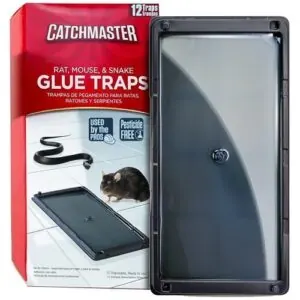
Since garter snakes are built long and slender, not bulky like rats, those red plastic glue boards made for rodents rarely hold them. Nearly half wriggle free before you even notice the trap.
Coverage is the fix: line traps edge-to-edge along baseboards or foundation walls rather than spacing them out. A single board covers maybe a foot of ground, not nearly enough for a snake that can stretch several feet.
Watch for unintended catches, too. Birds, lizards, even pets can end up stuck. If you do snag a snake, pour vegetable oil over the glue outdoors, let it loosen, then release the snake well away from your home.
| Best For | Homeowners and business owners dealing with mice, rats, or insect problems in residential, commercial, or industrial spaces. |
|---|---|
| Product Type | Glue Board |
| Target Pest | Rodents/Insects |
| Material | Plastic/Adhesive |
| Application Area | Baseboards/Foundation |
| Reusability | Single Use |
| Weather Resistance | Waterproof |
| Additional Features |
|
- Ready to use right out of the box, with no extra bait needed
- Waterproof design holds up well in damp or humid areas
- Long-lasting, odorless adhesive that stays effective for up to a year
- Non-humane method that can cause trapped animals to suffer before dying
- Pets, children, or non-target wildlife (like snakes, birds, or lizards) can get caught if traps aren’t placed carefully
- Adhesive strength can drop if exposed to debris, extreme moisture, or long storage without use
3. Natural Snake Repellent Granules
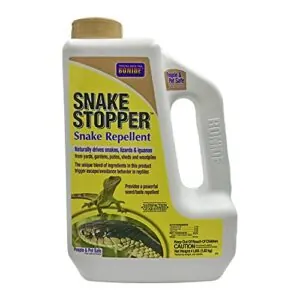
Cinnamon, clove, and cedar oils make up most repellent granules, and the scent plume they create forms a barrier roughly 3 to 6 feet wide around treated zones. One pound covers 500 to 800 square feet, releasing scent for up to 30 days.
Rain and irrigation break that barrier down fast, though. Reapplication becomes necessary sooner than the label suggests, and snakes with an open access point will simply route around treated ground.
Think of granules as one layer, not a fortress. They work best paired with habitat cleanup, not as a standalone fix for a persistent garter snake problem.
| Best For | Homeowners dealing with occasional garter or non-venomous snake sightings in yards, gardens, or sheds who want a natural, low-toxicity first line of defense alongside broader habitat cleanup. |
|---|---|
| Product Type | Repellent Granules |
| Target Pest | Snakes |
| Material | Natural Oils |
| Application Area | Yard/Garden |
| Reusability | Single Application |
| Weather Resistance | Low |
| Additional Features |
|
- Made with natural ingredients like cinnamon that repel snakes without harsh chemicals
- Easy outdoor application that covers a solid area per pound of product
- Reported to work on both venomous and non-venomous species, with a scent many users find pleasant
- Powder can clump and spread unevenly, making consistent coverage tricky
- Rain and watering wash away the scent barrier quickly, requiring frequent reapplication
- Application requires protective gear like a mask and eye protection due to airborne particles
4. Hog Ring Pliers Tool Kit
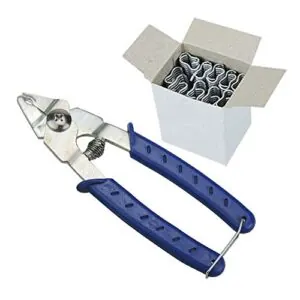
Fencing only works if the mesh stays put, and hand-tying wire seams is slow, uneven work. Hog ring pliers close each galvanized ring in under two seconds, giving you a tighter, more consistent seal than twisted wire ever does.
This kit ships with 600 rings, insulated grips for less hand fatigue, and a crimping anvil that keeps closure force steady from the first ring to the last. Space rings every 12 inches along mesh seams, and you’ll build a barrier garter snakes can’t squeeze through.
Galvanized coating resists rust in damp soil, which matters most right where snakes actually travel.
| Best For | homeowners and small-scale farmers who need a fast, reliable way to secure hardware cloth, poultry netting, and fencing when building or repairing animal enclosures like chicken coops, rabbit cages, and bird pens. |
|---|---|
| Product Type | Fencing Tool |
| Target Pest | Small Animals |
| Material | Galvanized Steel |
| Application Area | Fencing/Enclosures |
| Reusability | Reusable Tool |
| Weather Resistance | High |
| Additional Features |
|
- Closes 600 included galvanized rings in under two seconds each, creating a tighter, more consistent seal than hand-tying wire
- Non-slip, lightweight grip design allows for comfortable one-handed use and less hand fatigue
- Galvanized steel construction resists rust, holding up well even in damp soil conditions
- Multiple users report the plastic components breaking after just one use
- The spring mechanism can dislodge or fail with repeated use over time
- Reloading rings can be fiddly, especially for anyone with arthritis or long fingernails
5. Hot Dip Galvanized Wire Mesh
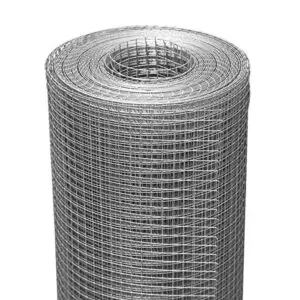
A quarter-inch gap doesn’t sound like much, but it’s plenty of room for a young garter snake to slip through. That’s why fine mesh matters more than most homeowners realize.
This 48-inch hardware cloth uses 48×25 mesh, welded first and hot dip galvanized after, so every joint gets sealed against rust. Bury it three to four inches deep along foundations and garden borders, angling the top outward to stop climbers.
At 13.71 pounds per roll, it’s manageable for solo installation, and the zinc coating holds up for years without repainting. Pair it with hog ring pliers for seams that actually stay closed.
| Best For | Homeowners tackling rodent and snake exclusion around porches, foundations, and garden borders who want a rust-resistant barrier without breaking the budget. |
|---|---|
| Product Type | Mesh Screen |
| Target Pest | Rodents |
| Material | Galvanized Steel |
| Application Area | Porches/Enclosures |
| Reusability | Leftover Reusable |
| Weather Resistance | High |
| Additional Features |
|
- Hot dip galvanized coating resists rust and corrosion for long-term outdoor use
- Fine 48×25 mesh blocks small pests, including young snakes, from squeezing through
- Lightweight at 13.71 pounds, making solo installation manageable
- Thin gauge construction may need doubling or tripling for added strength
- Can snag or tear if cut with dull tin snips
- Not as thick or durable as older aluminum screen wire
Frequently Asked Questions (FAQs)
What should I do if I see a garter snake?
Freeze first, panic later. Garter snakes look startling but rarely mean harm. Keep your distance, let it move freely, and resist grabbing anything nearby. Watch pets and kids, then give the snake a clear, unblocked path away from you.
How to get a garter snake out of hiding?
Coax it, don’t grab it. Clear clutter near its hiding spot, then use a long stick or broom to gently nudge it toward an open door. Patience beats force, snakes retreat faster when they feel a clear path, not cornered.
What smell do garter snakes hate?
Mint, citrus, garlic, and vinegar top most casual lists, but lab evidence is thin. Naphthalene and sulfur products show little real avoidance in testing, so don’t count on smell alone for reliable repellence.
What are garter snakes afraid of?
Diving predators like herons top the list, along with sudden movement and loud noise. They also flee predator scents, bright open spaces, and stalking dogs, retreating fast to dense grass, rock piles, or leaf litter for cover.
How to get rid of garter snakes around the House?
Tackle it in three moves: seal foundation gaps with caulk or steel wool, clear woodpiles and thick brush, then bury hardware cloth at least twelve inches down. Together, these steps close entry points and strip away shelter garters depend on.
Can garter snakes be removed?
Yes. Trained professionals use humane catch-and-release methods to release methods** to safely capture garter snakes, then relocate them nearby. Short-distance moves work best, since snakes released too far from home often struggle to find food, shelter, or their way back.
Do garter snakes need to be killed?
No, killing isn’t necessary. Garter snakes are non venomous to humans and act as natural pest control, eating rodents and insects. Nonlethal relocation keeps you, your pets, and local wildlife laws safe and satisfied.
Can herbs prevent garter snakes?
Spray sage water around your porch daily, and the snake still slides through by evening. Herbs offer weak, short-lived deterrence at best, no consistent evidence backs them, so pair any scent trick with real habitat and access control.
Do garter snakes come back?
Garter snakes show strong den fidelity, returning to the same hibernation sites and home range annually. Short-distance relocation rarely works, since snakes navigate back unless moved several miles away, permanently, from familiar territory.
How do you catch garter snakes?
Funny how the "scary snake" never wants to be caught, it just wants to hide. Use live traps near foundations or snake hooks and tongs for hands-on removal, keeping the process humane, controlled, and injury-free.
Conclusion
A garter snake in your yard is a mirror, reflecting every gap, puddle, and rodent trail left unattended. Close those invitations and the snake stops calling.
Knowing how to get rid of a garter snake isn’t about one dramatic capture. It comes down to sealed foundations, trimmed grass, and dry drainage, repeated until the habit sticks.
Handle it calmly, patch the gaps, and your yard becomes a place snakes pass by, never settle into.