This site is supported by our readers. We may earn a commission, at no cost to you, if you purchase through links.

Most snakes won’t touch a vegetable. That’s not pickiness—it’s biology. Snakes are obligate carnivores, which means their bodies run entirely on animal protein. They can’t extract the nutrients they need from plants, no matter how fresh or carefully prepared those plants are.
So where does the question of safe vegetables for pet snakes even come from? Usually from a snake that accidentally swallowed something it shouldn’t have, or an owner who read conflicting advice online. Either way, the concern is real and worth addressing clearly.
Knowing which vegetables cause the least harm—and which ones spell trouble—gives you a solid foundation for keeping your snake safe.
Table Of Contents
- Key Takeaways
- Can Snakes Eat Vegetables Safely?
- Which Vegetables Are Least Risky?
- Which Vegetables Should Snakes Avoid?
- How Should Vegetables Be Prepared?
- What if My Snake Ate Vegetables?
- Frequently Asked Questions (FAQs)
- Can snakes eat fruits and vegetables?
- What to feed a pet snake?
- Can snakes eat alternative food?
- What plants are safe for reptiles?
- Are commercially available snake diets a good option?
- Is it safe to feed a pet snake?
- What vegetables can snakes eat?
- What foods are toxic to snakes?
- What is the healthiest food for snakes?
- Can snakes eat cooked vegetables instead of raw?
- Conclusion
Key Takeaways
- Snakes are obligate carnivores, so whole prey like mice or rats are the only diet that truly meets their nutritional needs.
- A small handful of vegetables — like bell pepper, zucchini, and carrot slivers — are low-risk in tiny amounts, but they’re never a substitute for prey.
- Some vegetables, especially spinach, kale, broccoli, and iceberg lettuce, can cause real harm through calcium-blocking oxalates, gut irritation, or no nutritional value.
- If your snake accidentally eats a vegetable, watch closely for appetite changes, bloating, or regurgitation, and call a reptile vet if symptoms don’t clear up quickly.
Can Snakes Eat Vegetables Safely?
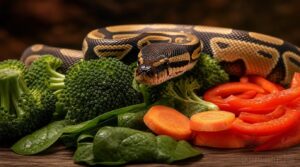
Snakes are obligate carnivores, which means their bodies are built to live on prey — not plants. Whole prey like rodents give them everything they need, and vegetables simply can’t fill that gap.
From rodents to birds and fish, the full range of what snakes can eat makes it easier to keep their diet varied and nutritionally complete.
Before you consider adding any plant matter to your snake’s diet, here’s what you need to know.
Obligate Carnivore Basics
Pet snakes are obligate carnivores—their bodies are literally built around eating meat. Their digestive tract length is short by design, built to process animal protein quickly. They cannot convert plant carotene into preformed vitamin A and require taurine directly from animal tissue.
Because they also lack the gut bacteria needed to ferment fibrous plant matter, a fully vegetarian diet simply isn’t viable for any snake species.
Their teeth morphology is adapted for tearing flesh, not grinding greens. Plants simply don’t fit the blueprint.
Whole Prey Nutrition
Whole prey — whether live, fresh, or frozen — is the ideal choice for snakes. A properly sized mouse or rat delivers muscle, bone, and organ tissue all at once.
This provides your snake with calcium balance, organ vitamin content, and a healthy fatty acid profile in one meal.
Frozen prey works just as well, though mineral variability between prey types is worth keeping in mind.
Why Plants Fall Short
That whole-prey balance is hard to beat — and plants simply can’t replicate it. Your snake’s gut isn’t built to break down fiber or extract nutrients from vegetables efficiently.
Here’s where a plant-based meal falls short:
- Nutrient Deficiency from missing amino acids found only in prey
- Fiber Overload slows digestion and causes digestive irritation
- Calcium Imbalance disrupts bone maintenance, raising metabolic bone risk
- Protein Imbalance weakens muscle condition over time
- Digestive Inefficiency means nutrients pass through unused
Skipping the carnivorous diet — even occasionally — opens the door to real nutrient deficiencies, including oxalate toxicity from certain greens.
Species Diet Differences
Not every snake is the same. A ball python’s evolutionary feeding strategy differs from a corn snake’s or a green tree python‘s. Each species has its own digestive enzyme profile, metabolic rate variation, and prey size preference shaped by its habitat nutritional needs.
A species-appropriate, healthy snake diet honors those differences — and vegetables simply don’t fit that picture for most species. Understanding these species-specific digestive adaptations helps explain why vegetables are generally unsuitable for most snakes.
Vet Guidance First
Before you change anything about your snake’s diet, consult an exotic vet first. A reptile nutrition expert can run a Species Specific Assessment and Medical History Review to guide your decisions.
This Initial Vet Consultation helps flag toxic foods for reptiles and establishes Emergency Response Guidelines if something goes wrong.
Food safety for reptiles isn’t guesswork — a veterinary Risk Evaluation Protocol keeps your snake safe.
Which Vegetables Are Least Risky?
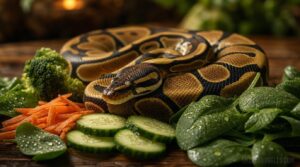
Most vegetables aren’t a good fit for snakes, but a small handful are considered lower risk in very tiny amounts. These aren’t staples — think of them as occasional extras at most.
Here are the ones that tend to cause the fewest problems.
Bell Pepper Pieces
Bell peppers are one of the friendliest vegetables you can offer snakes — occasionally. Their mild flavor, high moisture content, and Vitamin C Boost make them a low-risk choice. Just keep portions tiny; the Moisture Dilution Effect and Calorie Density Impact can disrupt dietary balance fast.
- Pick any color for Color Nutrient Variation
- Cut pieces to ¼ inch
- Follow Storage Safety Guidelines — Refrigerate within 2 hours
- Offer once weekly maximum
Zucchini in Tiny Amounts
Zucchini is a safe occasional treat for snakes — but only in truly tiny amounts. Its Hydration Boost and Texture Softness make it easy to offer, and Fiber Benefits keep things moving without upsetting dietary balance. The Calorie Minimal profile and Micronutrient Trace content mean it won’t cause nutritional deficiencies when feeding guidelines are followed.
| Feature | Benefit | Limit |
|---|---|---|
| High water content | Hydration Boost | Small pieces only |
| Soft texture | Easy ingestion | ¼ inch cuts |
| Low calories | Calorie Minimal impact | Once or twice weekly |
| Trace nutrients | Micronutrient Trace value | Never replaces prey |
Adhering to limits is crucial: serve only small pieces (¼ inch cuts), and offer zucchini once or twice weekly. Crucially, it should never replace prey to maintain proper nutrition.
Carrot Slivers
Carrots offer a Vitamin A Boost and fit neatly into a snake’s occasional treat rotation. Cut thin slivers — those Bite‑Size Benefits really matter here — to support easy swallowing and reduce digestive upset.
Keep the Sugar Calorie Limit in mind: carrots contain natural sugars, so tiny amounts maintain nutritional balance.
Use a Trial Introduction first, then run a quick Observation Checklist after.
Squash Options
Squash is one of the friendlier options when considering safe fruits and vegetables for pet reptiles. Summer squash softness—particularly zucchini—makes it easier to swallow than winter squash varieties like butternut, which have denser flesh.
Always remove seeds, as seed inclusion risks pose a threat to smaller snakes. The fiber content effects can disrupt nutritional balance, so limit portions and follow careful preparation methods.
Store cut pieces within 24 hours of cutting to avoid digestive issues.
Green Peas Sparingly
Green peas sit at the very edge of the safe list. They carry fiber, vitamin C, and folate — real nutrients — but the fiber’s impact on snake digestion can mean bloating if portion sizes are misjudged.
Species tolerance varies, and younger snakes are particularly sensitive to dietary deviations. Even minor missteps in portion size can lead to digestive discomfort.
Think of peas as an occasional footnote to reptile nutrition, never a chapter. Their role should remain limited and infrequent.
Which Vegetables Should Snakes Avoid?
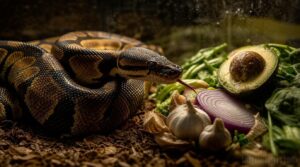
Some vegetables are flat-out bad news for snakes, and it’s worth knowing exactly which ones to keep out of the enclosure.
A few common picks that seem harmless can actually cause real damage over time. Here’s what you’ll want to avoid.
Spinach and Oxalates
Spinach looks harmless, but its oxalate content makes it one of the worst choices for snakes. These oxalates — both soluble and insoluble — bind to dietary calcium in the gut, blocking absorption and raising kidney stone risk over time.
Spinach’s oxalates silently bind calcium in a snake’s gut, turning a harmless-looking green into a kidney stone risk
This calcium-binding effect can trigger calcium deficiency and eventually, metabolic bone disease. Even cooking reduction helps only partially, so just skip spinach entirely.
Kale and Swiss Chard
Kale and Swiss chard share the same problem as spinach — oxalates that bind calcium and raises the risk of calcium deficiency and metabolic bone disease over time. Kale’s leaf toughness also makes digestion harder for snakes. Nutrient trace levels in these greens simply don’t offset the risks.
Keep these concerns in mind:
- Both contain oxalates that block mineral absorption
- Low-frequency feeding is the only safer approach if you try them at all
- Gut-loading potential exists, but thyroid goitrogen risk makes leafy greens like kale a poor regular choice
Broccoli and Cabbage
Broccoli and cabbage are cruciferous veggies that bring real trouble for snakes. Their sulfur irritants can stress a snake’s gut, while the fiber load and high water content disrupt digestion meant for whole prey.
Floret maturation adds tougher plant compounds over time, further complicating digestion. Like kale, both contain oxalates that worsen calcium deficiency and contribute to metabolic bone disease.
Skip them entirely.
Iceberg Lettuce
Iceberg lettuce might look harmless — it’s just water, right? That’s exactly the problem. Its high water content and near-zero nutrition make it empty filler. Despite small amounts of Vitamin K, it cannot meet a snake’s needs.
Never feed iceberg lettuce to snakes. Avoid it for these reasons:
- Causes digestive irritation and loose stools
- Nitrate variability across growing conditions adds unpredictable risk
- Fails reptile health requirements despite common salad applications
- Offers no benefit over proper whole-prey feeding
Stick to nutritionally complete diets tailored for reptiles. Iceberg lettuce provides no meaningful value and poses hidden dangers.
Seasoned Human Foods
Seasoned human foods are a hard no for snakes.
Excess sodium stresses their system, spice irritants upset digestion, and dairy fats slow gut function. Sauce additives and seasoning chemicals add real risk with zero benefit.
| Ingredient | Risk |
|---|---|
| Salt/sodium | Dehydration |
| Spices/oils | Gut irritation |
Never feed processed foods or anything with seasonings. Food safety starts with plain, whole prey only.
How Should Vegetables Be Prepared?
If you’re going to offer your snake a vegetable, how you prep it matters just as much as what you pick. A few simple steps can make a real difference in keeping things safe.
Here’s what to do before anything goes into the enclosure.
Wash Produce Thoroughly

Before any vegetable touches your snake’s enclosure, it needs a proper wash. Start with sink sanitation and hand washing — clean hands, clean surface.
Then rinse under running water, using a produce brush for scrubbing firm pieces like carrots.
Drying techniques matter too: pat everything dry after washing produce to remove lingering pesticide residues. Simple food safety steps protect your snake.
Choose Organic When Possible
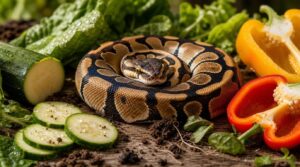
When you can, go organic. Organic produce offers real benefits: Pesticide Residue Reduction, higher levels of antioxidants, and Non-GMO Assurance backed by eco-friendly farming and soil health benefits.
Conventional vegetables carry pesticide residues and pesticide contamination that even careful vegetable preparation can’t fully remove — wash with running tap water as a baseline, but starting clean is always better.
Your snake’s tiny exposure adds up.
Cut Quarter-Inch Pieces
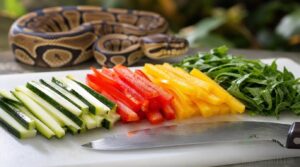
Size matters more than you’d think. Cut vegetables into bite-sized pieces — roughly a quarter inch — for uniform strip sizing and reduced choking risk.
Here’s why it works:
- Enhanced swallow ease for species-appropriate feeding
- Heat-softened pieces go down smoother
- Accurate portioning keeps amounts tiny
- Safe fruits and vegetables for pet reptiles stay manageable
- Snakes handle consistent strips without struggling
Avoid Salt and Oil
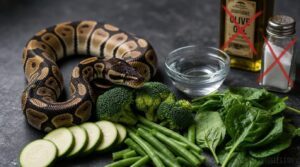
Plain veggies only — no seasonings, no oil, no exceptions. Even a light drizzle of oil leaves residue that aren’t part of your snake’s natural diet.
Never feed canned or packaged vegetables without doing label checks first; hidden sodium and extra sodium loads sneak in quietly.
Stick to fresh, unseasoned produce to keep things safe.
Remove Uneaten Pieces
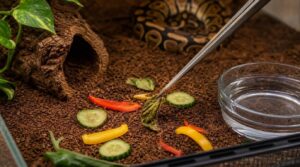
Prompt removal of uneaten vegetables keeps your enclosure clean and your snake stress-free. Use dedicated tools — a small scoop or tongs — to lift pieces out without disturbing the bedding.
Practice water bowl separation to prevent scraps from fouling the water. Perform a quick spot-cleaning sweep to maintain hygiene.
What if My Snake Ate Vegetables?

It happens — snakes can accidentally swallow a vegetable piece hiding on their prey or in their enclosure.
The good news is that one small incident usually isn’t cause for panic.
Here’s what to watch for in the days that follow.
Monitor Appetite Changes
After your snake eats something unexpected, watch its feeding schedule logs closely. Compare each meal to its usual prey consumption speed and appetite cues.
Key signs worth tracking:
- Refusal to eat at scheduled mealtimes
- Slower approach or less tongue-flicking before meals
- Weight trend analysis showing gradual loss
Temperature fluctuations and shedding cycles can influence appetite, so rule these factors out before assuming dietary issues. When in doubt, seek veterinary guidance.
Watch for Regurgitation
Beyond regurgitation is one of the clearest warning signs, alongside appetite changes. Feeding stress, meal size, and temperature drops can all trigger it — even without vegetables involved. If your snake brings up food shortly after eating, note whether it appears partially digested.
Repeated episodes, open-mouth breathing, or mucus around the mouth signal esophageal irritation and reptile gastrointestinal issues that demand urgent vet attention.
Check for Bloating
Bloating is another sign to watch closely after any vegetable exposure. Post-meal swelling that doesn’t settle within a few hours is a red flag.
Gently run your fingers along your snake’s belly—abdominal firmness or noticeable belly changes can reveal gas buildup indicators tied to reptile gastrointestinal issues.
If breathing distress appears alongside swelling, contact your vet immediately.
Note Constipation or Lethargy
Constipation and weakness can quietly follow vegetable exposure too. Poor thermal regulation, substrate stress, or an off feeding schedule can all slow gut movement.
Hydration management matters here — a dehydrated snake passes waste less easily. Watch for skipped meals, sluggish movement, or no bowel output after several days.
Medication side-effects can mimic these signs, so track changes carefully for your snake’s overall digestive health and gut health in reptiles.
Call a Reptile Vet
If your snake shows repeated regurgitation, labored breathing, or rapid decline, treat that as your emergency call criteria — don’t wait. Finding an exotic vet ahead of time makes phone triage steps faster and less stressful.
Have your urgent symptom checklist ready along with essential intake details: species, temperature range, and recent diet.
Health monitoring between reptile vet visits keeps small problems from becoming big ones.
Frequently Asked Questions (FAQs)
Can snakes eat fruits and vegetables?
Most snakes can’t safely eat fruits and vegetables. They’re obligate carnivores, and nutrient deficiencies from plant-based feeding are real. Digestive enzyme limits mean their bodies simply aren’t built for produce.
What to feed a pet snake?
Most pet snakes thrive on whole prey — mice or rats, frozen-thawed for safety.
Specialist feeders like egg-eaters or fish snakes are exceptions, though — their diets follow species-specific feeding requirements that no rodent can replicate.
Match prey size to your snake’s body width, and always consult your vet about feeding frequency and calcium supplementation.
Can snakes eat alternative food?
Most snakes thrive on whole prey alone.
Insect gut-loading, prey size matching, and enrichment feeding techniques offer smarter alternative protein options than vegetables — keeping nutrition on track without the risks of dietary fiber imbalance.
What plants are safe for reptiles?
Air plants, spider plants, Boston fern, sphagnum moss, and peperomia varieties are generally safe for reptile enclosures.
They won’t cause nutritional deficiencies if accidentally nibbled, unlike leafy greens like kale or cruciferous veggies.
Are commercially available snake diets a good option?
Yes, they can be — but only when species-appropriate. Frozen-thawed mice meet nutritional requirements for most captive feeding needs. Always verify vet recommendations and product safety before switching diets.
Is it safe to feed a pet snake?
Feeding snakes as pets is safe when you match prey size to the snake’s girth and maintain proper feeding frequency.
Never feed vegetables as staples — doing so triggers calcium imbalance and metabolic bone disease risk.
What vegetables can snakes eat?
A few vegetables will not cause immediate harm, but they do not meet your snake’s dietary needs for their species.
Think of them as rare enrichment methods, not meals — whole prey always comes first.
What foods are toxic to snakes?
Some foods are genuinely dangerous. Toxic insects, venomous reptiles as prey, pesticide-laden prey from roadsides, and heavy metal risk from contaminated sources can all harm your snake.
Oleander poisoning, avocados, and chocolate toxicity are serious threats too.
What is the healthiest food for snakes?
Like a fitted suit, whole prey fits your snake perfectly. Species-appropriate prey delivers ideal nutrient ratios, calcium balance, and moisture levels —
Matching your snake’s dietary needs by species far better than vegetables ever could.
Can snakes eat cooked vegetables instead of raw?
Cooking doesn’t make vegetables safer or more nutritious for snakes. They’re still missing the protein, bone, and organ content your snake’s species-appropriate diet actually needs. Stick to whole prey.
Conclusion
Your snake can survive a stray bite of bell pepper. It can’t survive a diet built around the wrong foods. That’s the line worth remembering. Safe vegetables for pet snakes are never a nutrition strategy — they’re just a low-risk accidental encounter at best. Whole prey keeps your snake healthy. Plants don’t.
When in doubt, skip the vegetable entirely and call your reptile vet. Simple feeding choices made consistently are what protect your snake long-term.