This site is supported by our readers. We may earn a commission, at no cost to you, if you purchase through links.
A corn snake bite feels less like a bite and more like a quick scratch from a rose bush. That surprises most new owners, who brace for pain that never really comes. Corn snake teeth are small, curved, and built for one job: gripping prey, not causing damage.
These snakes carry six rows of tiny hook-shaped teeth, arranged to guide food backward and never let go until the swallow is complete. They hold no venom, no fangs, and no reason for alarm.
Understanding how these teeth work, and what a bite actually means, helps you handle your snake with confidence and care.
Table Of Contents
- Key Takeaways
- What Corn Snake Teeth Look Like
- How Many Teeth Corn Snakes Have
- How Corn Snake Teeth Work
- Corn Snake Teeth Vs Fangs
- Corn Snake Bites and Tooth Care
- Frequently Asked Questions (FAQs)
- Is it rare for corn snakes to bite?
- Is it rare for a corn snake to bite?
- What snake bite hurts the least?
- How to tell if a corn snake is going to bite you?
- Do corn snakes have teeth?
- Are corn snakes likely to bite?
- Does a pet corn snake bite hurt?
- Are corn snakes aggressive?
- Can corn snake bites transmit bacteria?
- How to prevent corn snake bites?
- Conclusion
Key Takeaways
- Corn snakes have six rows of small, backward-curved teeth designed to grip and guide prey, not to cut or tear.
- These snakes have no fangs or venom glands, so they rely entirely on constriction to subdue prey instead of toxins.
- A corn snake bite typically feels like a minor pinch or scratch, causing brief stinging and mild swelling that fades within a few days.
- Most bites result from identifiable triggers like sudden movements, feeding time confusion, or stress, so calm and gentle handling greatly reduces the risk.
Since they hunt fast-moving prey by sight rather than smell, their speed and sharp vision matter more than any bite—traits you’ll notice across many non-venomous snake breeds built for active daytime hunting.
What Corn Snake Teeth Look Like

If you’ve ever peeked inside a corn snake’s mouth, you might be surprised by what you find. Their teeth aren’t scary at all once you know what you’re looking at. Here’s a closer look at four key traits that define their smile.
If you notice anything unusual while checking their teeth, understanding common corn snake health issues can help you keep your pet in top shape.
Small Curved Teeth
A tiny hook does most of the work here. Corn snake teeth curve gently backward, and size shifts with age: juveniles carry teeth around 1.5–2.0mm, while adults reach 2.5–3.5mm.
- Oval cross section for better grip
- Smooth, glossy enamel with no grooves
- Blunt tip to avoid tearing soft prey
A stable root canal keeps each tooth firmly anchored.
Thin Delicate Structure
That hook shape only works because the tooth itself stays thin. Each one is built from layered dentin and enamel, giving strength without bulk—similar to how microscale material layering adds stiffness to tiny structures elsewhere in nature.
This slim design keeps the load bearing capacity just enough to grip prey, without added weight that could weaken the jaw’s structure.
Backward-facing Shape
Every tooth in that thin frame points backward, toward the throat. This curved tooth geometry creates a concave surface against prey, adding grip while lowering slip risk.
The angle blocks prey escape, forming a one-way swallowing path. A faint micro-texture along the surface boosts hold further, so prey moves only one direction: down.
Solid Non-grooved Teeth
Run your finger along a corn snake’s tooth and you won’t find a single groove. That’s the point. Solid, non-grooved teeth keep the surface smooth, which cuts down on bacteria lodging between meals.
This design offers real benefits:
- Continuous dentin-pulp connection
- Predictable wear patterns
- Stable occlusion
- Easier cleaning
No venom channels here, just simple gripping tools built for safety.
How Many Teeth Corn Snakes Have

You might expect a snake’s mouth to hold just a handful of teeth, but corn snakes carry more than you’d think. Their teeth aren’t scattered at random either, they follow a clear pattern across the jaw. Here’s how that setup breaks down, row by row.
If you’re curious about the exact arrangement, this guide on corn snake bite anatomy breaks down each row and what it means for handling.
Six Tooth Rows
Count the rows in a corn snake’s mouth and you’ll find six, split evenly with two rows lining each side of the upper jaw and one row on each lower jaw. This layout, built on the palatomaxillary arch, spaces teeth to improve grip. Mandibular teeth assist less actively.
Each row anchors firmly in alveolar bone, supporting jaw occlusion as the mouth closes around prey. Variations in the maxillary tooth row can influence how these structures are positioned.
Upper Jaw Arrangement
Your corn snake’s upper jaw carries two rows of teeth on each side, sitting along the palatomaxillary arch. This curved structure follows the natural maxillary arch curvature, giving each tooth a slightly different angle.
Every tooth anchors into its own dental socket, held by the alveolar process. The upper jaw has limited mobility, letting it flex just enough to grip prey securely.
Lower Jaw Arrangement
Below the upper arch, your snake carries just one row of teeth on each side of the mandible, the curved bone forming the lower jaw. Mandibular teeth play a smaller role in gripping than their upper counterparts.
The mandible connects to the skull through jaw joints that let it flex outward, spreading the lower dental rows to accommodate wide prey during feeding.
Gripping Surface Design
Six rows working together create more than just a mouthful of teeth, they form a coordinated gripping system. Each row angles backward and slightly inward, so contact points multiply across the prey’s body.
- Micro-rough coatings keep grip steady even when saliva makes things slippery
- Curved edges spread pressure instead of concentrating it at one spot
- Tooth tip compliance helps guide prey smoothly toward the throat
How Corn Snake Teeth Work

Now that you know how many teeth your corn snake has, it helps to understand what those teeth actually do. Each tooth plays a specific role in catching, holding, and swallowing prey. Here’s how they work together, step by step.
Holding Prey Securely
A single bite from a corn snake works like a set of tiny hooks, not blades. Each tooth acts as an anchor point, resisting the outward pull of struggling prey.
This grip works well for slippery prey, too. Backward-curved teeth create friction through alignment, so the catch holds firm while body coils move in to finish the job.
Guiding Food Backward
Ever wonder how prey moves in only one direction once it’s caught? The answer lies in prey orientation. Backward-angled teeth guide the head first, letting the flexible quadrate bone widen the gape as needed.
Saliva lubrication eases the slide, while the esophagus takes over. There, esophageal peristaltic waves push prey along, protected by a tough mucosal lining the entire way.
Supporting Constriction
Once prey is caught, teeth don’t do the squeezing, but they make it possible. Mechanical capture happens first: teeth anchor the prey so coils can wrap without losing grip.
This is constriction coordination in action. Teeth hold each point steady while muscle force takes over. Without that firm prey anchoring, the snake would lose its hold before the coils finish the job.
Swallowing Prey Whole
Once the coils hold prey secure, the real work begins. Jaw flexibility lets the mouth stretch wide, walking around the meal bit by bit.
Prey alignment keeps everything head-first, while peristaltic movement and mucus lubrication ease it through the stretching, esophageal distension-ready throat. No chewing, no cutting. Just steady, patient swallowing until the meal reaches the stomach.
Corn Snake Teeth Vs Fangs
Your corn snake’s mouth might look intimidating, but it works nothing like a venomous snake’s. Fangs and teeth are built for different jobs, and the difference matters for your safety. Here’s what sets them apart.
Corn snakes have rows of these tiny recurved teeth for gripping prey, a setup quite different from the specialized fangs discussed in how pythons use their teeth to catch and hold food.
Teeth, Not Fangs
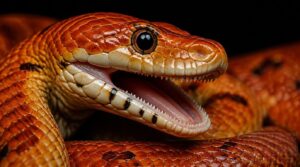
A snake’s mouth can look intimidating, but corn snakes have teeth, not fangs. Every tooth shares the same basic shape, an example of aglyphous dentition found across many harmless species.
| Feature | Corn Snake |
|---|---|
| Tooth type | Solid, uniform |
| Fangs present | None |
This solid anatomy reflects a simple evolutionary path: rely on constriction, not venom, to catch a meal.
No Venom Channels
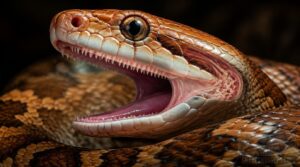
That uniform tooth shape isn’t just for show, it also explains why venom never enters the picture. Corn snakes have no ducts or hollow canals linking teeth to glands. Nothing to store venom, nothing to deliver it.
Even a baby corn snake’s bite is mild, usually feeling like a light pinch, and you can read more about what to expect when baby corn snakes bite.
| Structure | Venomous Snake | Corn Snake |
|---|---|---|
| Fangs | Grooved/hollow | Absent |
| Venom ducts | Present | None |
| Prey method | Chemical | Mechanical |
Constriction does the work venom would otherwise handle.
Non-venomous Bite Safety
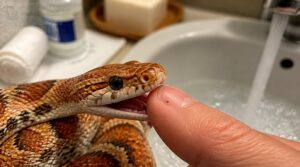
Why worry about a corn snake bite? You shouldn’t, at least not much. No venom means no toxin to manage, only a small puncture wound.
That said, bite force still differs a lot by species and size, so it’s worth reading about how much pressure a squeezing snake can actually exert for a broader sense of what different snakes are capable of.
| Step | Action | Timing |
|---|---|---|
| 1 | Wash with soap and water | Immediately |
| 2 | Watch for redness or swelling | 24 hours |
| 3 | Confirm tetanus status | Same day |
Report spreading redness or pus to a vet promptly.
Constriction Over Venom
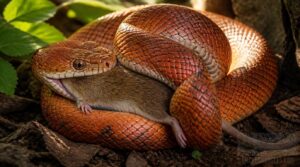
Why rely on muscle instead of toxin? Corn snakes use pure muscular energy, coiling tighter to compress arteries and cut blood flow.
| Method | Mechanism | Effect |
|---|---|---|
| Constriction | Arterial compression | Hypoxia, low brain perfusion |
| Venom | Toxin injection | Chemical breakdown |
This causes hypoxia, not suffocation. Larger prey need longer holds, making constriction efficient without venom’s costs or risks.
Corn Snake Bites and Tooth Care
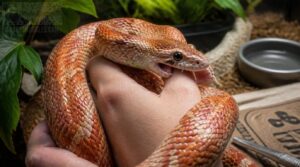
Knowing how corn snake teeth work is one thing, but knowing what to do if you get bitten is just as useful. A bite can happen even with a calm, well-handled snake, so it helps to know why and what to expect. Here’s what you should know about bites, handling, and keeping your snake’s mouth healthy.
Why Bites Happen
A bite rarely comes out of nowhere. Most cases trace back to a clear trigger.
Most corn snake bites have an obvious trigger and rarely happen without a clear cause
- Rough or sudden handling
- Poor prey positioning during feeding
- Territorial defense of shelter
- Environmental stress like noise or heat
- Hidden health issues
Feeding mistakes and handling triggers cause most bites. Shedding, unfamiliar smells, or a cramped enclosure can push things further.
Typical Bite Feeling
A quick pinch is usually all you feel, since corn snake teeth are small and shallow. Expect a brief sting, mild redness, and light swelling within hours.
| Sensation | Onset | Duration |
|---|---|---|
| Sting | Seconds | Minutes |
| Swelling | 1-6 hrs | 1-3 days |
| Itching | 24-72 hrs | Several days |
Itching often peaks after a day or two, but cool compresses ease it well.
Safe Handling Tips
Good handling habits prevent most bites before they start. Approach calmly, support the snake’s full body, and never grab suddenly.
- Limit sessions to 10-15 minutes
- Wait 24 hours after feeding
- Wash hands before and after
- Watch for stress signs, then retreat to hide
Keep a clutter-free surface nearby, and use a secure container for transport. Monitor behavior afterward for anything unusual.
Signs of Mouth Problems
Your snake’s mouth can reveal a lot about its health. Watch for bleeding gums that happen repeatedly, not just once. Persistent sores or ulcers lasting more than a week need attention.
Chronic dry mouth, tooth sensitivity when eating, or jaw clicking sounds during feeding all point to trouble. These signs mean something’s off internally, even if your snake seems otherwise fine.
When to Call a Vet
Not every mouth issue needs an emergency visit, but some signs do. Call a vet right away if you notice respiratory distress, uncontrolled bleeding, or signs of toxic ingestion.
Also seek help for:
- Urinary or stool blockage
- Heatstroke or collapse
- Persistent mouth bleeding
Trust your gut. When something feels wrong beyond mild irritation, professional care keeps your snake safe.
Frequently Asked Questions (FAQs)
Is it rare for corn snakes to bite?
You’ll find corn snake bites are rare with gentle, regular handling. Most bites happen when a snake feels startled, stressed, or mishandled. Young snakes or new pets may nip more often, but calm interactions lower risk.
Is it rare for a corn snake to bite?
Like a closed door rarely swung open, corn snake bites are uncommon. Most bites happen when you make sudden moves, handle during feeding, or miss signs of stress. Mistaken identity or defensive reactions often trigger these quick, harmless bites.
What snake bite hurts the least?
Bites from non-venomous colubrid snakes like garter or rat snakes usually cause the least pain. A dry bite—where no venom enters—feels brief and mild. Shallow teeth limit tissue trauma, but your pain tolerance matters.
How to tell if a corn snake is going to bite you?
Watch for raised head and neck, stiff body, hissing, or rapid tail vibrations. A snake may also track your hand like prey, especially after feeding. Environmental stress or abrupt movements raise the odds of a defensive bite.
If you spot these warning signs, move children and pets away first, then check out safe snake removal methods for handling the situation without provoking a strike.
Do corn snakes have teeth?
Like tiny anchors, corn snakes have small, backward-curved teeth made of enamel, dentin, cementum, and pulp. Their aglyphous dentition means every tooth is solid, non-grooved, and replaced throughout life—no fangs or venom channels.
Are corn snakes likely to bite?
Corn snakes rarely bite unless they’re stressed, handled right after feeding, or mistake your hand for food. Calm, gentle handling and avoiding sudden movements help. If bitten, clean the wound with soap and water and monitor for infection.
Does a pet corn snake bite hurt?
A pet snake bite feels like a pinprick or scratch, often less painful than a paper cut. Most wounds heal quickly, with only minor redness. Staying calm and reading your snake’s stress signals helps prevent accidental nips.
Are corn snakes aggressive?
You won’t find aggression in their nature. Most will try to escape, hiss, or vibrate their tails if stressed. Bites often happen during shedding, feeding, or with young snakes learning boundaries, not from hostility.
Can corn snake bites transmit bacteria?
A bite is a welcome mat for bacteria, including Salmonella from reptile mouths. Infection signs like redness, swelling, or pus mean bacteria have settled in. Wash and cover the wound, and monitor for worsening symptoms.
How to prevent corn snake bites?
Prevention starts with reading body language, using feeding tongs instead of fingers, waiting after meals, keeping scent off your hands, and maintaining stable enclosure temperatures—all reduce defensive strikes and keep handling calm for both of you.
Conclusion
No fangs, no venom, no need for fear. That’s the quiet truth behind corn snake teeth. They exist to grip, not to wound, and a bite feels more like a pinch than an injury.
Your snake isn’t attacking you; it’s reacting to smell, stress, or hunger. Watch its body language, move slowly, and handling stays safe for you both. Respect these small, curved teeth, and trust follows naturally.