
This site is supported by our readers. We may earn a commission, at no cost to you, if you purchase through links.

A defensive rat can turn feeding time into an emergency vet visit. Live prey fights back, and even docile-looking rodents can deliver bites that leave your snake with deep wounds, infections, or worse. For decades, reptile keepers accepted this risk as part of responsible ownership, but the rise of frozen prey has changed the equation entirely.
Pre-killed and flash-frozen rodents eliminate the threat of injury while also cutting off common routes for parasite transmission. You get predictable portions, safer handling, and a feeding routine that doesn’t require maintaining a separate colony of live animals.
The benefits of frozen prey feeding extend beyond convenience—they reshape how you approach your snake’s health, your own peace of mind, and the ethical dimensions of reptile care.
Table Of Contents
Key Takeaways
- Frozen prey eliminates injury risk from defensive rodents while cutting parasite transmission routes, making feeding sessions safer for both you and your snake.
- Pre-killed rodents remove the ethical burden of live predation by sparing prey animals from terror and suffering during their final moments.
- Bulk purchasing and long-term freezer storage (3-6 months at -18°C) slash per-unit costs by 20-40% while simplifying your feeding routine with pre-portioned meals.
- Proper thawing at 4-10°C followed by warming to 29-32°C in a water bath ensures your snake gets maximum nutrition without dangerous hot spots or bacterial growth.
What is Frozen Prey Feeding?
Frozen prey feeding means offering your snake pre-killed rodents or other prey animals that have been humanely euthanized and then frozen for storage. This method has become the standard practice among experienced reptile keepers, replacing the older tradition of live feeding in most situations.
Many keepers switched from live prey snake feeding because frozen options reduce injury risk and are easier to store long-term.
Understanding what frozen prey actually involves—from how it’s prepared to what types you can choose—helps you make informed decisions about your snake’s diet.
A detailed pet snake feeding guide can walk you through proper portion sizes, thawing methods, and feeding schedules for your specific species.
Definition and Overview
Frozen prey feeding means offering your snake prekilled food that’s been stored in frozen conditions rather than live animals. This feeding method has transformed reptile nutrition by providing a safer, more controlled approach to prey selection. Here’s what defines this practice:
Most captive snakes adapt well to frozen-thawed meals, which you can learn more about through resources on what snakes eat in captivity and proper feeding schedules.
- Prekilled rodents are humanely euthanized before freezing
- Frozen storage preserves nutritional value for months
- Prey preparation involves proper thawing and warming techniques
- Snake feeding becomes predictable with consistent portion sizes
How Frozen Prey is Prepared
When you buy frozen prey, you’re getting rodents processed under strict quality controls. Vendors sort prekilled food by species, size, and weight to match your snake’s needs.
Most suppliers also include sizing guides that explain how big your snake’s prey should be based on the widest part of its body.
Each piece undergoes calibration to guarantee consistent portions for reptile nutrition. They’re stored in monitored freezers with food-grade packaging standards, then shipped with thawing protocols that preserve tissue quality during freezer management.
Common Types of Frozen Prey
You’ll find four main prey categories in most supplier catalogues, each customized to specific reptile diets. Rodent prey dominates the market—frozen mice range from 1.5 g pinkies to 45 g adults, while frozen rodents like rats scale up to 175 g for larger constrictors. Beyond mammals, you can choose avian prey such as day-old chicks and quail, fish options including smelt and silversides for aquatic snakes, or mammal alternatives like rabbits and guinea pigs.
Here’s what reptile nutrition experts recommend:
- Rodent prey: Mice and rats in graduated sizes match your snake’s growth stages and feeding response
- Avian prey: Chicks and quail suit picky eaters and species preferring bird-based prekilled prey
- Fish options: Low-thiaminase species prevent vitamin deficiency in garter snakes and water snakes.
Reptile owners often prefer frozen mice food for its convenience and nutritional value.
Health and Safety Advantages

Switching to frozen prey isn’t just about convenience—it’s one of the smartest decisions you can make for your snake’s long-term health. Live rodents pose real risks, from defensive bites that leave lasting wounds to parasites and bacteria that can compromise your snake’s immune system.
Let’s break down the three major health and safety advantages that make frozen prey the safer choice.
Reduced Risk of Snake Injury
When you feed frozen prey, you’re removing a major threat to your snake’s wellbeing. Live rodents can bite and scratch, leaving painful wounds that may become infected. Frozen prey eliminates this defensive aggression entirely.
If you’re currently feeding live, transitioning to frozen prey is easier than most keepers expect and protects both you and your snake.
Proper prey handling with tongs during feeding techniques also protects you from accidental strikes, making snake feeding safer for everyone involved while supporting better reptile care and injury prevention.
Lower Disease and Parasite Transmission
Disease prevention starts with what you put in your snake’s enclosure. Freezing kills many parasites that live rodents carry, reducing infection risk markedly. Cold storage also slows bacterial growth, protecting reptile health when you maintain proper frozen storage.
This hygiene practice lowers exposure to zoonotic diseases, safeguarding both your snake and you. Parasite control becomes simpler, and animal welfare improves when frozen prey replaces live feeding.
Importance of Proper Handling and Thawing
Thawing protocols make the difference between safe snake feeding and avoidable risks. You should thaw frozen rodents at 4°C in the refrigerator, never at room temperature where bacteria multiply fast.
Small frozen prey needs 12–24 hours for complete defrosting methods. Warm prey to body temperature just before feeding, then discard anything unused after 24 hours—handling safety and temperature control protect your reptile’s nutrition.
Ethical and Welfare Benefits

Choosing frozen prey isn’t just about safety—it’s about doing right by the animals in your care. When you feed frozen rodents, you eliminate the fear and suffering that live prey experience during their final moments, and you create a calmer feeding environment for your snake.
The ethical case for frozen prey rests on three principles that every responsible reptile keeper should understand.
Humane Treatment of Prey Animals
When you choose frozen prey, you’re making an ethical choice that honors animal welfare. Humane sourcing matters because ethical considerations extend beyond your snake to every creature in the feeding chain. Here’s why frozen prey aligns with animal rights principles:
Choosing frozen prey is an ethical decision that extends compassion beyond your snake to every animal in the feeding chain
- Pre-killed prey eliminates the terror prey animals experience during live predation
- Reputable suppliers use humane euthanasia methods like CO2 chambers
- Prey stress reduction occurs through quick, painless killing procedures
- Animal ethics standards increasingly guide modern reptile care practices
- Humane treatment protocols guarantee minimal suffering throughout the process
Reduced Stress for Snakes During Feeding
Your snake’s feeding time shouldn’t feel like a battleground. Frozen prey eliminates the chaos of live feeding—no defensive bites, no frantic chases, no elevated stress biomarkers.
Research shows snakes fed thawed prey display calmer feeding behavior and lower cortisol levels. Proper prey presentation and consistent feeding techniques support snake welfare, creating predictable routines that keep your reptile relaxed and healthy.
Ethical Standards in Reptile Care
Ethical reptile care isn’t just a philosophy—it’s your responsibility as a keeper. Responsible ownership means following established animal welfare standards and respecting reptile rights in every aspect of husbandry.
Your ethical breeding and snake care practices should include:
- Species-appropriate housing that meets environmental and social needs
- Humane treatment during handling, feeding, and enrichment
- Compliance with legal welfare regulations and licensing requirements
- Transparent reporting aligned with professional codes of conduct
- Ongoing education in welfare science to support conservation efforts
Practical Benefits for Snake Owners

Beyond the health and ethical advantages, frozen prey makes your life as a snake keeper much easier. You’ll save time, money, and mental energy when you switch from managing live rodents to storing frozen ones.
Let’s look at the practical reasons why frozen feeding is the smarter choice for most snake owners.
Convenience of Storage and Bulk Purchasing
Bulk purchasing frozen prey turns your reptile care routine into an efficient operation. You’ll reduce shopping trips and lower per-unit costs when ordering from wholesale options. Frozen inventory takes up minimal freezer space compared to live rodent housing, and standardized portions simplify meal planning.
Here’s how storage solutions and bulk discounts compare:
| Purchase Method | Key Advantages |
|---|---|
| Wholesale bulk orders | Tiered pricing, recurring discounts, cost efficiency |
| Retail small quantities | Immediate availability, no storage commitment |
| Recurring subscriptions | Predictable costs, automatic delivery schedules |
Frozen rodents offer peerless convenience for serious keepers managing multiple animals or frequent feeding schedules.
Cost Savings and Availability
Beyond the convenience factor, you’ll see real money saved with frozen prey. Bulk discounts from specialized reptile supply chains drop per-unit costs by 20–40%, and wholesale orders of 50+ items monthly access additional savings. Frozen storage means you can stockpile during sales, slashing expenses by 10–25% per batch while maintaining year-round availability.
- Wholesale suppliers offer stable pricing through 6–12 month contracts
- Volume-based shipping rates decrease with larger frozen rodents orders
- Predictable budgeting becomes possible with cost-effective bulk purchasing
Easier Feeding Schedules and Portion Control
Once you’ve locked in bulk savings, pre-portioned frozen prey transforms your feeding routine into a precision operation. You’ll measure exact portions for each snake’s age and size, then align thawing with fixed feeding windows—whether that’s weekly for adults or every five days for juveniles.
Scheduled feedings support circadian rhythms, and meal planning ensures reptile nutrition stays dialed in without guesswork.
| Feeding Frequency | Portion Management Strategy |
|---|---|
| Hatchlings (weekly) | Single pinky mouse, pre-measured |
| Juveniles (5–7 days) | Fuzzy or hopper rat, standardized weight |
| Adults (10–14 days) | Large mouse or small rat, consistent grams |
| Breeding females | Increased portion, nutrient-controlled meals |
| Senior snakes | Reduced portion, adapted to metabolism |
Best Practices for Feeding Frozen Prey
You’ve made the smart choice to feed frozen prey, but doing it right makes all the difference. The way you thaw, warm, and present the food directly impacts your snake’s health and feeding response.
Let’s walk through the proven techniques that keep your snake safe and eating consistently.
Safe Thawing and Warming Techniques
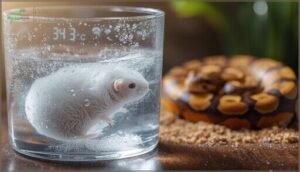
Proper thawing methods protect your snake’s health and guarantee safe frozen prey preparation. Start by thawing frozen rodents at 4–10°C to prevent temperature shock, then warm them to 29–32°C using a water bath—never a microwave, which creates dangerous hot spots. Check that no ice crystals remain before feeding.
This temperature control approach aids ideal reptile nutrition while maintaining handling safety during snake feeding with frozen thawed prey.
Tools and Methods for Successful Feeding

You’ll need feeding tools like tongs or forceps to handle frozen prey safely and reduce stress during snake feeding. Set up a feeding protocol that specifies prey type, quantity, and thawing methods for your species.
Watch for visual cues—head position and swallow rate—to gauge safety. Document each session to track intake, weight changes, and snake health responses, supporting better reptile nutrition over time.
Transitioning Snakes From Live to Frozen Prey

Gradual conversion reduces feeding stress and boosts prey acceptance in most species. Introduce frozen prey alongside familiar scent cues, then phase out live snake feeding over two to six weeks.
Match prey size to your snake’s girth for better snake nutrition and lower regurgitation risk.
Temperature matters—warm thawed rodents trigger feeding responses tied to snake behavior and improve shift techniques in reptile husbandry.
Frequently Asked Questions (FAQs)
Can frozen prey lose nutritional value over time?
Yes, frozen prey can lose some nutritional value over time. Vitamin content may decline after six to twelve months in freezer storage, especially if you thaw and refreeze rodents repeatedly.
How long can frozen prey be safely stored?
Your freezer becomes a preservation vault when you maintain -18°C. Frozen rodents stay safe for three to six months in tight wrapping, supporting reptile nutrition and health.
Proper storage duration protects your snake feeding methods.
Do all snake species accept frozen prey readily?
Not every snake takes to frozen prey right away. Species adaptation varies—pythons and colubrids usually accept frozen rodents after feeding trials, but some species with specialized prey preferences need patience and behavioral adjustments.
What if my snake refuses frozen prey completely?
Some snakes won’t accept frozen prey despite your best efforts. Consult a herpetologist for refusal analysis techniques and alternative food options.
Monitor closely, document feeding behavior, and prioritize your snake’s health over forcing frozen prey acceptance.
Are there situations where live feeding is necessary?
Like a wrench kept for stubborn bolts, live prey exceptions exist for specialized cases.
Snake rehabilitation, medical necessities, and conservation research requirements may justify live feeding when frozen rodents can’t trigger essential feeding responses.
Conclusion
Think of frozen prey feeding as swapping stormy seas for a well-lit harbor—your snake’s health, your peace of mind, and ethical standards all find safer ground. The benefits frozen prey feeding brings aren’t just about avoiding bites or infections; they’re about building a routine anchored in safety, compassion, and control.
When you choose this method, you’re not simply feeding your reptile; you’re setting a new standard for responsible care—one that endures with every meal.