This site is supported by our readers. We may earn a commission, at no cost to you, if you purchase through links.

Most captive snakes spend their lives on flat ground, yet their wild counterparts routinely climb, bridge gaps, and navigate three-dimensional terrain. This mismatch doesn’t just limit exercise—it deprives snakes of mental stimulation and natural thermoregulation behaviors.
Arboreal species like green tree pythons suffer most, but even terrestrial corn snakes and ball pythons will utilize vertical space when given the opportunity. The right climbing structures for pet snakes transform a basic enclosure into a functional habitat that promotes muscle development, neurological health, and species-appropriate behaviors.
You’ll need structures that balance safety with function: branches thick enough to hold your snake’s weight, materials that won’t splinter or leach toxins, and configurations that create stable temperature gradients from substrate to canopy.
Table Of Contents
- Key Takeaways
- Best Climbing Structures for Pet Snakes
- 1. Exo Terra Forest Branch Decor
- 2. Flexible Reptile Habitat Vines Decor
- 3. Sequoia Flexible Jungle Vines Decor
- 4. Eonmir Reptile Habitat Vines Decor
- 5. Pranovo Flexible Reptile Climbing Vine
- 6. Natural Driftwood Aquarium Decor
- 7. Zoo Med Mopani Driftwood Decor
- 8. Malaysian Driftwood Reptile Decor
- 9. Zoo Med Grapevine Decor
- 10. Exo Terra Jungle Vine Decor
- Safe Materials for Snake Climbing Structures
- Designing Snake Enclosures With Climbing Features
- Enhancing Snake Enrichment Through Climbing
- Maintenance Tips for Climbing Structures
- Frequently Asked Questions (FAQs)
- Conclusion
Key Takeaways
- Most captive snakes lack vertical climbing opportunities despite their wild counterparts routinely navigating three-dimensional terrain, depriving them of mental stimulation, thermoregulation behaviors, and species-appropriate muscle development that even terrestrial species like corn snakes will utilize when available.
- Safe climbing structures require hardwoods like oak and maple or reptile-safe artificial alternatives, while toxic woods (cedar, pine, yew) release oils causing respiratory distress and certain materials need proper preparation through boiling, soaking, and anchoring to prevent pathogen exposure and structural failure.
- Effective enclosure design demands strategic branch placement at 20-45 degree angles with 6-inch vertical spacing, positioned near heat sources to create temperature gradients of 85-90°F, while substrate depth of 2-4 inches supports burrowing without obstructing climbing opportunities.
- Regular maintenance including bi-weekly sanitization with 5% bleach solution or 200°F baking, weekly structural inspections for cracks or rot, and humidity control between 30-50% prevents bacterial buildup and mold growth that threatens your snake’s respiratory health.
Best Climbing Structures for Pet Snakes
You’ll find climbing structures for snakes split into two main categories: flexible artificial vines and natural hardwood pieces.
Both options work well, though many keepers find inspiration for custom setups in these DIY snake habitat ideas.
Each option meets different species needs and enclosure designs, with factors like grip texture, weight capacity, and installation flexibility determining what works best for your setup.
The following ten structures represent the most reliable choices for creating safe, species-appropriate vertical space in your snake’s habitat.
1. Exo Terra Forest Branch Decor
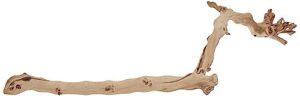
You’ll find Exo Terra Forest Branch in small, medium, and large sizes—roughly 30 cm, 45 cm, and 60 cm respectively—giving you flexibility for any enclosure height.
This natural grapevine decor is heat treated to eliminate pathogens and splinters, then sandblasted for a smooth finish.
The three-dimensional structure mimics hardwood forest branches with varying diameters and natural curves, creating authentic climbing pathways for arboreal species.
Position it at angles to form overhangs and multi-level routes that encourage realistic exploration and thermoregulation across temperature zones.
| Best For | Reptile owners with medium to large terrariums who want to create natural climbing structures for arboreal species like tree frogs, geckos, and chameleons. |
|---|---|
| Material | Natural Wood |
| Primary Use | Climbing/Basking |
| Habitat Type | Terrarium |
| Flexibility | Fixed |
| Weight | 1.5 lbs |
| Cleaning | Easy |
| Additional Features |
|
- Heat-treated and sandblasted for safety, removing pathogens and rough edges that could harm your pet
- Three-dimensional branching structure with varied diameters creates realistic climbing routes and multiple perching levels
- Works in both rainforest and desert setups, giving you flexibility across different reptile habitats
- Branch shapes and colors vary between pieces, so you won’t get the exact item shown in photos
- Some pieces arrive with rough spots or sharp edges that need filing before they’re safe to use
- Larger sizes may not fit well in smaller enclosures without cutting or repositioning
2. Flexible Reptile Habitat Vines Decor
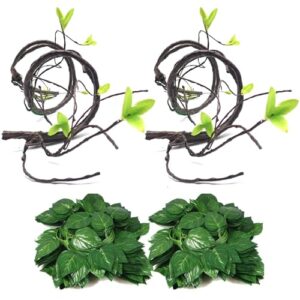
Flexible vines offer bendable freedom that rigid wood can’t match. You’ll customize pathways by twisting these BPA-free plastic or rattan pieces into spirals, waves, or straight ladders spanning 1 to 2 meters.
The textured surfaces prevent slipping while your snake navigates vertical glass walls using suction cup attachments. Most vines feature metal or fiber cores that resist sagging under weight, and UV-stable coatings prevent degradation in bright enclosures.
Wash them monthly with mild soap to stop mold buildup, and replace every 6 to 12 months when you notice fraying edges.
| Best For | Reptile and amphibian owners looking for adjustable, realistic décor that creates climbing paths and visual interest in terrariums without taking up floor space. |
|---|---|
| Material | Plastic/Silk |
| Primary Use | Climbing/Decoration |
| Habitat Type | Terrarium/Tank |
| Flexibility | Bendable |
| Weight | 8.2 oz |
| Cleaning | Easy to clean |
| Additional Features |
|
- Bendable design lets you shape custom climbing routes that fit any tank layout or pet preference
- Textured PU material provides grip for arboreal species while staying easy to wipe down during routine cleaning
- Lightweight construction won’t stress suction mounts or damage delicate backgrounds when repositioned
- Green dye may bleed into water features initially, requiring thorough pre-soaking and rinsing before first use
- Leaves can arrive wrinkled from packaging and may need manual fluffing to look natural
- 8-inch height limits use in tall enclosures or for larger climbing species that need longer vertical runs
3. Sequoia Flexible Jungle Vines Decor
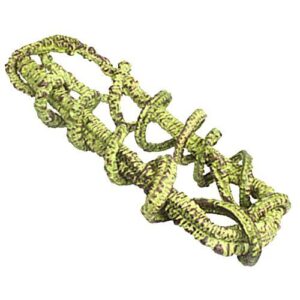
Sequoia’s jungle vines use PU composite strands that bend into custom climbing routes without tools. You’ll shape lengths from 1.5 to 3 meters around existing branches or glass fixtures, creating multi-level pathways that mimic jungle canopy complexity.
The textured bark-like surface gives snakes secure grip during vertical climbs. These vines resist warping in high humidity and clean easily with reptile-safe disinfectants.
Check weekly for loose anchors during routine maintenance, and expect UV-stable colors to last through months of standard reptile lighting exposure.
| Best For | Reptile and amphibian owners who want to create a realistic jungle environment with flexible climbing structures that adapt to any habitat layout. |
|---|---|
| Material | Plastic/Vine |
| Primary Use | Habitat Decoration |
| Habitat Type | Terrarium/Habitat |
| Flexibility | Flexible |
| Weight | Not specified |
| Cleaning | Requires maintenance |
| Additional Features |
|
- Bendable PU composite material shapes into custom climbing routes without any tools needed
- Textured bark-like surface provides secure grip for snakes and lizards during vertical climbs
- UV-stable colors and humidity-resistant design hold up well under standard reptile lighting and high-moisture conditions
- Requires weekly checks to ensure anchors stay secure and don’t come loose
- Needs regular cleaning with reptile-safe disinfectants to prevent bacteria or mold buildup
- Works best when combined with other habitat decor rather than as a standalone piece
4. Eonmir Reptile Habitat Vines Decor
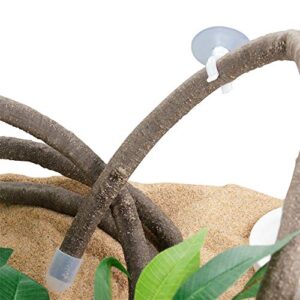
Eonmir’s 8-foot vines combine BPA-free polymer with iron reinforcement to handle 2.5 pounds per attachment point without sagging. You’ll twist these into three-dimensional pathways that stay flexible in humid conditions without cracking—essential for tropical species requiring 70-80% humidity.
The slightly gritty texture provides grip during rapid climbs while remaining soft enough to prevent ventral scale irritation during rest periods.
Each vine maintains UV-stable coloring under standard reptile lighting and cleans with mild soap, air-drying within 30 minutes to prevent mold establishment.
| Best For | Reptile owners setting up climbing environments for arboreal species like chameleons, tree frogs, and geckos that need flexible, textured pathways in humid habitats. |
|---|---|
| Material | PU/Metal |
| Primary Use | Climbing/Exploration |
| Habitat Type | Terrarium/Tank |
| Flexibility | Bendable |
| Weight | Not specified |
| Cleaning | Easy to clean |
| Additional Features |
|
- Bendable metal core lets you create custom 3D climbing routes that hold their shape in high-humidity tanks
- Textured surface gives lizards and frogs solid grip without scratching their skin during movement or rest
- Cleans quickly with soap and water, drying fast enough to prevent mold in tropical setups
- Won’t support heavier reptiles—the 2.5-pound weight limit rules out larger snakes or adult iguanas
- Suction cups struggle on mesh or screened enclosures, limiting where you can mount them
- Sharp bends can snap the vines or tear the outer coating over time
5. Pranovo Flexible Reptile Climbing Vine
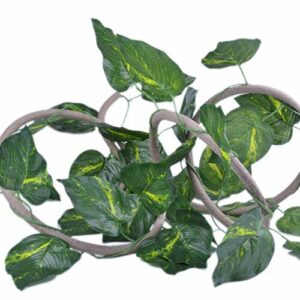
You’ll shape Pranovo’s bendable vine into custom climbing configurations that hold position without anchors. At 12 inches long and 6.4 ounces, it’s lightweight enough for small arboreal species like rough green snakes while providing secure grip through its textured vine-leaf exterior.
The internal wire core maintains curves and loops, but some users report it resisting reshaping after initial bending. Suction cups enable quick repositioning, though attachment reliability varies with enclosure surface texture.
The non-toxic construction withstands routine cleaning without degradation.
| Best For | Small arboreal reptiles like geckos, rough green snakes, and young lizards that need lightweight climbing structures in terrariums up to 12 inches. |
|---|---|
| Material | Plastic/Wire |
| Primary Use | Climbing/Hiding |
| Habitat Type | Terrarium/Enclosure |
| Flexibility | Bendable |
| Weight | 6.4 oz |
| Cleaning | Easy to clean |
| Additional Features |
|
- Bendable wire core lets you shape custom climbing paths and holds its form once positioned
- Textured vine-leaf design provides secure grip for small reptiles while adding natural-looking decor
- Lightweight and easy to clean without material breakdown
- Suction cups often fall off or may not be included, making attachment unreliable
- Wire frame can become difficult to reshape after initial bending and may pose safety risks
- Not sturdy enough for larger or heavier reptiles, with durability concerns reported
6. Natural Driftwood Aquarium Decor
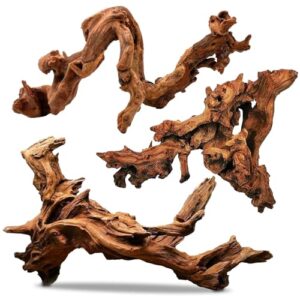
Driftwood pieces offer organic climbing routes with natural texture variations that support grip across their 7-11 inch lengths. Mopani wood usually sinks within 48 hours once fully waterlogged, while Malaysian driftwood’s dense structure settles faster after initial soaking.
Prepare pieces by boiling 1-2 hours to eliminate surface contaminants and reduce tannin release, then soak 7-14 days in dechlorinated water. Anchor larger sections to prevent movement during climbing activity, and inspect monthly for cracks or softening that could compromise safety.
| Best For | Aquarium and reptile enthusiasts looking for natural, textured climbing structures that create an organic environment for their pets. |
|---|---|
| Material | Natural Wood |
| Primary Use | Decoration/Shelter |
| Habitat Type | Aquarium/Terrarium |
| Flexibility | Fixed |
| Weight | Not specified |
| Cleaning | Requires pretreatment |
| Additional Features |
|
- Natural Mopani wood provides authentic texture and grip for climbing animals while creating visual interest in tanks
- Affordable 3-piece set at $19.79 gives you multiple decorative options for different tank setups
- Versatile sizing (7-11 inches) works well in various tank sizes and can be arranged creatively
- Requires significant prep work including 1-2 hours of boiling and up to 14 days of soaking before use
- May release tannins that discolor water even after treatment
- Pieces can vary in size and shape, and some may need extra anchoring to prevent floating
7. Zoo Med Mopani Driftwood Decor
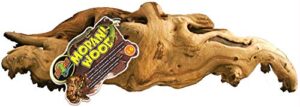
Zoo Med’s Mopani wood delivers dense African hardwood that sinks immediately in enclosures, eliminating the floating hassles lighter woods cause. Its two-toned brown coloration—from light tan to deep chocolate—adds visual depth, while the naturally textured surface provides secure grip points your snake needs.
Each piece measures roughly 2x2x1 inches and weighs 3.8 pounds, offering sturdy climbing support that resists rot better than softer alternatives.
Boil new pieces 60-90 minutes to remove dust and reduce tannin leaching, then position at 45-degree angles for ideal climbing engagement.
| Best For | Snake owners who want sturdy, natural climbing structures that sink immediately and resist rot in humid environments. |
|---|---|
| Material | Natural Wood |
| Primary Use | Shelter/Decoration |
| Habitat Type | Aquarium |
| Flexibility | Fixed |
| Weight | 3.8 lbs |
| Cleaning | Requires cleaning |
| Additional Features |
|
- Dense African hardwood sinks right away, so no waiting for it to waterlog or dealing with floating pieces
- Two-toned brown coloring adds visual interest while the textured surface gives snakes secure grip for climbing
- Heavier and more rot-resistant than softer woods, making it a longer-lasting option for humid enclosures
- Requires 60-90 minutes of boiling before use to clean off dust and reduce tannin release
- Can still leach tannins into water over time, causing yellowing or staining that needs monitoring
- Natural sizing means dimensions vary between pieces, so you might not get exactly what you expect
8. Malaysian Driftwood Reptile Decor
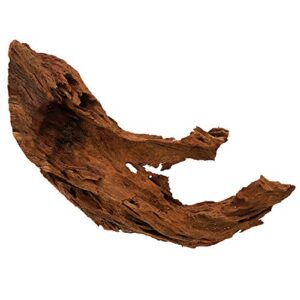
Zilla’s Malaysian driftwood brings deep brown Malaysian hardwood into your setup—it sinks instantly without scratching tank glass, measures 14×4.8×5 inches, and weighs just 0.5 pounds.
You’ll appreciate the rough texture that gives snakes a secure grip while they climb and bask. The wood functions as a natural bridge from water to land, depositing healthy tannins into terrarium water.
Soak pieces 24 hours before installation to minimize dust and debris, then position at varied angles to encourage exploration and exercise across different temperature zones.
| Best For | Reptile owners looking for natural décor that works in both aquatic and terrestrial setups while giving climbing species a textured surface to grip. |
|---|---|
| Material | Natural Wood |
| Primary Use | Climbing/Basking |
| Habitat Type | Aquarium/Terrarium |
| Flexibility | Fixed |
| Weight | 0.5 lbs |
| Cleaning | Requires soaking |
| Additional Features |
|
- Sinks immediately without prep and won’t scratch your tank glass
- Rough texture gives snakes and lizards secure footing for climbing and basking
- Releases beneficial tannins into the water naturally
- Produces dust and debris that requires soaking for 24 hours before use
- Size varies between 10-12 inches, so you might not get exactly what’s pictured
- Needs regular vacuuming to keep loose particles from making a mess
9. Zoo Med Grapevine Decor
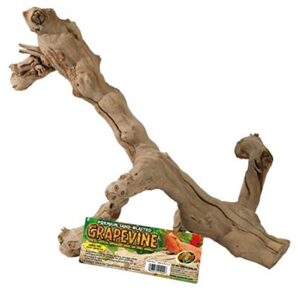
You’ll get a sandblasted grapevine structure measuring 24x8x12 inches that weighs 3.6 pounds—strong enough for arboreal species yet manageable during installation. The sandblasted finish removes surface debris while creating a textured grip surface that promotes natural climbing behavior.
Position it near your heat source to create basking opportunities along the vine’s length, letting your snake thermoregulate across different zones. Anchor sections securely against enclosure walls to prevent shifting when your snake climbs or rubs during shed cycles.
Clean with reptile-safe disinfectant monthly to prevent mold accumulation.
| Best For | Snake owners with tanks 40+ gallons who want a natural climbing structure that doubles as a basking spot near heat sources. |
|---|---|
| Material | Natural Wood |
| Primary Use | Climbing/Basking |
| Habitat Type | Terrarium/Aviary |
| Flexibility | Fixed |
| Weight | 3.6 lbs |
| Cleaning | Sandblasted clean |
| Additional Features |
|
- Sandblasted texture gives snakes solid grip while climbing and helps with shedding
- Large 24-inch size creates multiple basking zones at different temperatures
- Works for various arboreal species beyond just snakes (birds, rodents too)
- Packaging issues mean some pieces arrive broken or with sharp edges
- Quality varies—you might get a smaller or less attractive piece than expected
- Takes up significant space, so it’s not practical for smaller enclosures
10. Exo Terra Jungle Vine Decor
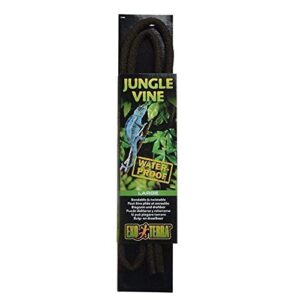
This bendable plastic vine offers 20 inches of waterproof, twistable climbing surface you can route into custom pathways across multiple enclosure levels. You’ll create three-dimensional habitats by combining different sized vines together, mimicking natural canopy structures that encourage exploratory movement in arboreal species.
The synthetic coating can flake when bent repeatedly in one spot, and droppings stick to the textured surface more readily than smooth branches. Clean weekly with reptile-safe disinfectant to prevent bacterial buildup, and replace sections showing visible cracking or fraying.
| Best For | Owners of small to medium arboreal reptiles like geckos, tree frogs, and juvenile snakes who want affordable, customizable climbing structures. |
|---|---|
| Material | Plastic |
| Primary Use | Climbing/Decoration |
| Habitat Type | Terrarium |
| Flexibility | Bendable |
| Weight | 0.27 kg |
| Cleaning | Requires frequent cleaning |
| Additional Features |
|
- Bendable design lets you shape custom pathways and connect multiple vines for three-dimensional climbing routes
- Waterproof plastic holds up in humid terrariums without rotting like natural wood
- Twenty inches of length gives enough material to create interesting vertical and horizontal routes
- Coating flakes off with repeated bending and needs replacement when cracks appear
- Textured surface traps droppings and requires weekly scrubbing with reptile-safe cleaner
- Not strong enough for heavy or full-grown reptiles that might snap the vine
Safe Materials for Snake Climbing Structures
Not every branch belongs in your snake’s enclosure—some materials pose serious health risks while others provide the safe, functional climbing surfaces your pet needs. Hardwoods like oak and maple offer durability and grip, but certain species contain toxic compounds that can harm reptiles over time.
Here’s what works, what doesn’t, and why texture and diameter matter as much as the wood itself.
Recommended Hardwood Branches
You’ll need wood that won’t fail when your snake tests its limits. Oak branches provide the benchmark—dense grain resists bending under weight, ensuring climbing safety through hardwood durability.
Maple delivers smooth wood texture that won’t snag scales during movement. Beech offers uniform snake grip with tight grain patterns.
Walnut and hickory add attractive options, combining manageable weight with excellent bite resistance for branch selection that prioritizes both function and longevity.
Toxic Woods to Avoid
While oak and maple serve you well, cedar and pine release toxic oils that cause respiratory distress and skin irritation in snakes. Yew and oleander contain cardiac toxins that can prove fatal if ingested.
Skip redwood and certain exotic hardwoods—their dust triggers allergic reactions in both reptiles and handlers.
Stick with proven safe materials to protect your snake’s health.
Artificial Reptile-Safe Alternatives
When natural wood isn’t an option, you’ll find several reptile-safe artificial branches and snake climbing structures that work well. Consider these modular climbing options:
- EVA Foam Panels sealed with non-toxic coatings create lightweight, moisture-resistant surfaces
- 3D Resin Walls finished with zero-VOC sealants offer customizable reptile climbing branches
- Silicone Vines provide flexible grip without splinter risk
Kinetic Sand Textures add tactile variation when used sparingly.
Importance of Branch Texture and Diameter
Beyond material selection, you’ll need to match branch grip and texture variance to your snake’s size. Rough bark provides enhanced climbing stability compared to smooth surfaces—it’s the difference between confident movement and constant slipping.
Diameter selection determines snake comfort: branches around 1 to 3 cm allow secure wrapping for smaller snakes, while larger individuals require 3.5 to 5 cm for stable coiling. Safe climbing branches with slight flex improve proprioception without compromising branch stability during rapid movement.
| Snake Size | Ideal Diameter | Texture Type |
|---|---|---|
| Small species | 1–2 cm | Rough bark |
| Medium species | 2–3.5 cm | Irregular bark |
| Large species | 3.5–5 cm | Deep grooves |
| Juveniles | 1–2 cm | Natural branches |
| All sizes | Tapered tips | Non-abrasive |
Designing Snake Enclosures With Climbing Features
Placing climbing structures in your snake’s enclosure isn’t just about adding branches—it’s about creating a functional vertical environment that facilitates thermoregulation and natural movement patterns.
You’ll need to examine branch angles, spacing requirements, and how your heating elements interact with elevated perches.
The following sections break down the specific design principles that transform a basic setup into a habitat your snake will actually use.
Vertical and Angled Branch Placement
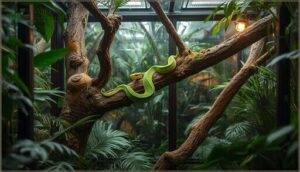
Strategic branch placement transforms flat enclosures into thriving vertical habitats for arboreal species. You’ll want to create climbing opportunities that align with your snake’s natural movement patterns while ensuring branch stability throughout.
- Position vertical branches at 1.5 times the branch diameter from walls to prevent rubbing injuries and allow proper coiling
- Anchor angled branch support at 20-45 degree inclines for ambush-style movement and muscle engagement
- Stagger safe climbing branches at 6-inch vertical intervals for proper reach without crowding
- Integrate reptile climbing trees near heat sources to encourage thermoregulatory basking behavior
Minimum Space Requirements
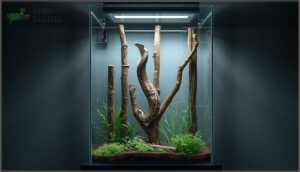
Your snake’s enclosure depth and vertical space must accommodate its full body length stretched upright—at least 1.5 times from snout to tail.
Climbing heights depend on branch density: you’ll need 2 to 3 separate climbing structures per 18 inches of height, spaced 6 inches apart. This climbing dimension creates adequate climbing opportunities without overcrowding your reptile enclosure design.
Integrating Climbing Structures With Heating and Lighting
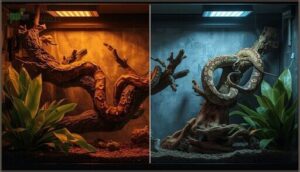
Position heating elements under or beside climbing structures to create temperature gradients of 85 to 90°F for warm-side thermoregulation without direct contact. Infrared ceramic heat emitters warm perches up to 12 inches above substrate, creating functional microhabitat zones.
You’ll maintain a 12-hour light-dark cycle using broad-spectrum daytime bulbs. Protect all electrical components with enclosed fixtures to guarantee reptile health and safety.
Substrate Selection for Active Species
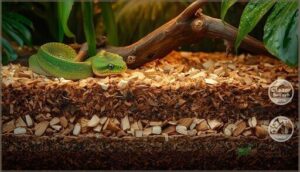
Active climbers demand substrates that support natural habitat creation while managing moisture levels. Coconut fiber retains humidity control for species-specific habitat needs, while reptile-safe hardwood chips provide excellent surface texture.
You’ll need 2–4 inches of substrate depth for burrowing options without obstructing climbing opportunities. Fine particle bedding prevents bacterial accumulation on climbing substrate surfaces, maintaining ideal conditions during active exploration periods.
Enhancing Snake Enrichment Through Climbing
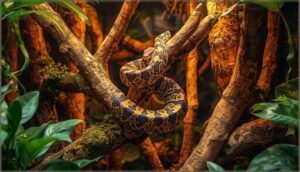
Climbing structures don’t just fill space—they transform your snake’s enclosure into a vibrant environment that fosters natural behaviors and physical health.
When you position branches strategically, you’ll create enrichment zones that encourage exploration, muscle development, and mental stimulation across different life stages.
The key is understanding how climbing activity varies by species and age, then tailoring your setup to match those specific needs.
Benefits of Climbing for Snake Health
You’ll notice real physical gains when your snake navigates vertical terrain regularly. Climbing exercise builds muscular strength in the neck, core, and tail—boosting grip on varied textures. It elevates heart rate, supporting circulatory fitness and respiratory health while engaging balance systems.
Climbing builds muscular strength in your snake’s neck, core, and tail while elevating heart rate for better circulatory and respiratory fitness
Beyond the body, climbing behavior offers neurological benefits: problem-solving routes, spatial awareness, and sensory stimulation that keep your snake mentally sharp in its reptile-safe habitat with ample climbing opportunities and environmental enrichment. For more insight into, consider how climbing is essential for their physical and mental well-being.
Creating Enrichment Zones With Branches
Think of your enclosure as a three-dimensional canvas where branch placement at staggered heights mirrors natural habitats.
You’ll create vertical enrichment by installing safe climbing branches in ladder-like sequences—mixing horizontal perches with angled routes that offer varied climbing textures.
This layout encourages snake exercise across multiple zones, especially essential for arboreal species whose climbing behavior depends on diverse natural structure and grip diversity.
Scent and Feeding Enrichment on Structures
Your enrichment techniques level up when you introduce olfactory stimulation and feeding cues onto climbing structures. Scented branches with plant-derived aromas like alfalfa boost enclosure use by 30 percent, while food rewards securely attached to vines encourage natural hunting behaviors.
To enhance scent enrichment and feeding enrichment effectiveness:
- Place aromatic patches at multiple heights along branches
- Rotate novel scents every 1-2 weeks to prevent desensitization
- Position feeding cues near preferred resting spots
- Remove uneaten prey within 4 hours to prevent bacterial buildup
- Monitor for stress signals and adjust intensity accordingly
This approach transforms static decor into interactive environmental enrichment zones customized to species-specific habitat needs.
Age and Species Considerations
Hatchlings, juveniles, and adults each demand distinct climbing setups aligned with species traits and snake development. Ground-dwelling pythons rarely use vertical branches, while arboreal species with prehensile tails favor vertical vines over horizontal perches—your habitat adaptation strategy hinges on these climbing needs.
| Life Stage | Preferred Texture | Height Requirement |
|---|---|---|
| Hatchling | Smooth, sanded | Low (6-10 inches) |
| Juvenile | Mixed rough/smooth | Medium (12-18 inches) |
| Adult | Rough bark | High (20+ inches) |
| Senior | Wide, non-slip | Low-medium (8-14 inches) |
| All Ages | Species-specific | Gradient zones |
Younger snakes benefit from smoother branches to prevent skin abrasion during development. Adults peak with diagonal structures that build strength, while seniors need accessible, wide perches to accommodate reduced mobility and joint stiffness.
Maintenance Tips for Climbing Structures
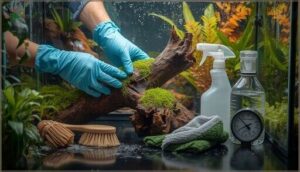
You can’t just set up climbing structures and forget about them—regular maintenance keeps your snake safe and healthy.
Branches accumulate bacteria, develop weak spots, and can harbor mold if humidity isn’t managed properly. Here’s what you’ll need to do to keep those structures in working order.
Cleaning and Disinfecting Branches
You’ll need to sanitize branches every two to four weeks to prevent bacterial buildup and protect your snake’s health. Branch sanitizing begins with scrubbing off debris under running water, followed by proper wood disinfection using safe cleaning methods.
- Soak sterilized branches in 5 percent bleach solution for 10 to 15 minutes
- Bake small to medium branches at 200 degrees Fahrenheit for 60 minutes
- Rinse thoroughly after disinfectant safety protocols to remove chemical residue
- Air dry for 24 to 48 hours before reinstalling in your reptile care habitat
Inspecting for Damage and Safety
Once your wood is dry and back in service, you’ll need to conduct visual inspection every week for structural integrity and reptile safety. Press down on safe climbing branches to test for wobbling joints or loose mounts—these failures create hazard prevention priorities.
Check for splinters, chipped coatings, or worn bark that compromise wood safety for snakes. Address damage assessment findings immediately to maintain climbing structures that support confident, injury-free movement.
Managing Humidity and Preventing Mold
Beyond preventing structural damage, controlling humidity levels between 30 and 50 percent safeguards both your terrarium setup and reptile health and safety. High moisture paired with poor air circulation creates mold hotspots on natural environment décor, threatening your snake’s respiratory system.
- Install exhaust pathways that maintain consistent airflow across your temperature gradient
- Wipe down branches weekly during surface cleaning to eliminate condensation before spores establish
- Position climbing structures away from water dishes to improve moisture management
- Monitor humidity twice daily with a hygrometer for proactive mold prevention
Replacing Worn or Unsafe Decor
Vigilance protects your snake from preventable injury when you routinely perform decor inspection and safety checks. You’ll spot cracks, rot, or chipping finishes before they compromise your reptile climbing decor, then swap compromised pieces for fresh hardwood or durable reptile accessories that meet replacement guidelines.
| Issue | Detection Method | Action |
|---|---|---|
| Cracks or splits in snake branches | Visual inspection under good lighting | Replace immediately with fresh hardwood |
| Rot or soft spots on climbing structures | Press test for firmness | Discard and source non-toxic alternatives |
| Chipping paint or sealant | Check for flakes or fumes | Remove and apply reptile-safe finishes |
| Frayed rope or fabric habitat decor | Feel for loose fibers | Swap for smooth, non-absorbent surfaces |
| Insufficient diameter (under 1.5 inches) | Measure with calipers | Upgrade to thicker branches for better grip |
This hazard prevention approach keeps enrichment zones safe while your refurbishment tips guarantee climbing structures remain functional and supportive of natural behaviors.
Frequently Asked Questions (FAQs)
What can I use for my snake to climb on?
You’ll want hardwood branches like oak or maple, flexible jungle vines, or natural driftwood. Artificial branches work too—just make sure they’re reptile-safe, textured for grip, and sturdy enough for your snake’s weight.
Research suggests that snakes use to maintain safety on branches.
What surfaces can snakes climb?
Picture your snake’s belly scales catching on a rough oak branch—that’s grip mechanics in action. Roughness impact matters: textured hardwood branches, logs, cork, and artificial branches with surface detail trump smooth glass.
Flexible jungle vines work when properly textured.
What pet snakes like to climb?
Arboreal species like green tree pythons, emerald tree boas, and rough green snakes spend most of their time off the ground.
Semi-arboreal needs apply to corn snakes and rat snakes, which climb regularly but also explore substrate.
Can snakes climb staircases?
Yes, snakes climb staircases using ventral scales and concertina movement when step texture provides adequate friction.
Larger species with longer reach ascend more easily than juveniles on rough concrete or carpeted surfaces.
Do snakes prefer natural or artificial climbing structures?
Most snakes show no strong universal preference. Individual choice depends on grip factors, species traits, and past experience.
Arboreal species often explore natural textures first, while some prefer consistent artificial surfaces for secure climbing.
How many climbing branches should one enclosure have?
Most medium-sized snakes thrive with five to seven climbing branches arranged at varying heights and angles.
Larger enclosures accommodate eight or more, while beginners can start with three to four and expand based on your snake’s activity patterns.
Should climbing branches be sterilized before first use?
You’ll want to sterilize branches using disinfection techniques like a 1:10 bleach soak, then bake at 200°F for microbe control.
Wood safety for snakes demands removing pathogens before introducing habitat maintenance elements.
Conclusion
A ball python that spent six months in a bare tank refused food for three weeks. Within 48 hours of adding climbing structures for pet snakes, it resumed eating—the vertical pathways had restored its sense of security.
Your enclosure isn’t just decoration; it’s functional architecture that determines whether your snake thrives or merely survives. Choose materials wisely, secure them properly, and watch behaviors emerge that you didn’t know your snake possessed.