This site is supported by our readers. We may earn a commission, at no cost to you, if you purchase through links.

Your snake’s survival hinges on a detail most new keepers overlook: these animals can’t generate their own body heat. Unlike mammals that burn calories to stay warm, snakes depend entirely on their environment to reach the temperatures needed for digestion, immune function, and basic movement.
Get the heating wrong, and your snake won’t just be uncomfortable—it may refuse food, develop respiratory infections, or fail to digest meals that then rot inside its body.
Setting up proper heating and lighting in their tank isn’t about luxury or aesthetics. It’s about replicating the thermal landscape wild snakes navigate daily, giving your captive animal the tools to regulate its body temperature and thrive.
Table Of Contents
Key Takeaways
- Snakes are ectothermic and can’t generate their own body heat, so they depend entirely on external heating to regulate metabolism, digestion, and immune function—without proper temperature control, they risk respiratory infections, food rot, and death.
- You need to create a thermal gradient in the enclosure with a warm basking zone and a cooler retreat area 10–20°C lower, using heat lamps or under-tank heaters paired with thermostats to prevent dangerous temperature spikes.
- Most snakes don’t require UVB lighting, but maintaining a consistent 10–12 hour day-night cycle supports their circadian rhythms and natural behaviors, while excessive or improper lighting can cause stress.
- Different species have vastly different needs—tropical snakes require higher consistent temperatures and humidity, while temperate species need seasonal thermal cycles and cooler zones, so you must match your setup to your snake’s natural habitat.
Do Snakes Need Heating and Lighting?
Snakes rely on their environment to keep their bodies at the right temperature, so heating and lighting play a key role in their care. Captive setups need to mimic nature as closely as possible to support your snake’s health.
Here’s what you should consider when choosing the best options for your enclosure.
Ectothermy and Temperature Regulation in Snakes
Thermal Ecology shapes every aspect of snake care. As ectothermic creatures, snakes rely on external Heat Sources for Thermoregulation. Without a proper temperature gradient, digestion and activity suffer. Ectothermic Adaptations demand precise temperature control. Use heat lamps to create a thermal gradient, allowing snakes to self-regulate.
- Ectothermy
- Thermoregulation
- Heat Sources
- Temperature Gradients
- Temperature Control
Differences Between Wild and Captive Environments
When you set up a snake habitat, remember wild snakes roam terrain with shifting temperatures, light, and humidity. In captivity, you must replicate these conditions—think thermal gradient, microhabitat diversity, and species adaptation. Controlled reptile lighting and temperature regulation replace natural environmental cues.
Here’s a quick comparison:
| Wild Habitat | Captive Enclosure |
|---|---|
| Variable sunlight | Fixed lighting schedule |
| Uneven terrain | Planned substrate |
| Natural humidity | Monitored humidity |
| Diverse refuges | Artificial hides |
| Unpredictable temps | Controlled gradients |
To ensure the well-being of your snake, it’s vital to understand the importance of clear science writing research papers when studying species adaptation.
Why Heating is Essential for Snake Health
Without proper heat sources, your snake can’t regulate its body temperature—and that spells trouble. Snakes are ectothermic, meaning they depend entirely on external warmth to fuel their metabolism, digest food, and maintain immune function. Heat lights and thermal gradients aren’t optional extras; they’re the foundation of reptile heating.
Snakes are ectothermic, so proper heat sources aren’t optional—they’re essential for metabolism, digestion, and survival
Poor temperature control leads to respiratory infections, sluggish digestion, and chronic stress. Understanding the importance of temperature control is vital for maintaining a healthy environment, which involves analyzing research methodology to verify the best practices.
Choosing The Right Heating Methods
Selecting the right heating method for your snake’s enclosure directly impacts its ability to thermoregulate, digest food, and maintain overall health. Heat lamps and under-tank heaters each offer distinct advantages and limitations, and understanding these differences helps you create a setup that matches your species’ specific needs.
The following sections compare these heating options, explain how to establish proper temperature gradients, and outline effective monitoring techniques to keep your snake’s environment stable and safe.
Heat Lamps Vs. Under-Tank Heaters
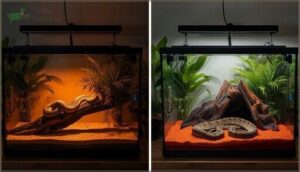
You have two primary heat sources to choose from: heat lamps and under-tank heaters. Heat lamps radiate warmth from above, creating vertical thermal gradients with distinct basking spots, while a heat mat or under-tank heating element warms the substrate from below, establishing horizontal temperature control.
Each heating method offers unique advantages for generating temperature gradients, and proper tank insulation helps maintain stable conditions.
Creating a Safe Temperature Gradient
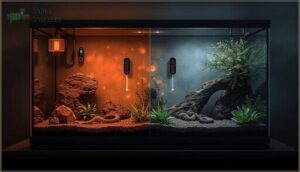
A stable gradient gives your snake the freedom to regulate body temperature by moving between zones. Proper gradient design requires attention to heat distribution and microclimates within the enclosure. Here’s how to establish effective thermal mapping:
- Position your heat source (heat lamp or ceramic heat emitters) to create a basking zone at the species-appropriate high temperature, with a cooler retreat 10–20°C lower.
- Avoid obstructions that block heat distribution or create isolated cold pockets, which can cause temperature fluctuation.
- Maintain consistent temperature control by checking multiple points across the enclosure to verify the gradient remains stable.
Monitoring and Controlling Enclosure Temperatures
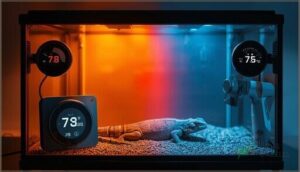
Accurate thermal monitoring separates guesswork from precision. You’ll need thermometers or digital loggers at both the basking site and cool side to verify your temperature gradient remains stable.
A quality thermostat paired with your heat source prevents dangerous spikes and maintains consistent tank temperatures.
Cross-check readings with an infrared thermometer periodically, ensuring your temperature control system delivers the gradient stability your snake requires for proper thermoregulation.
Snake Lighting Requirements Explained
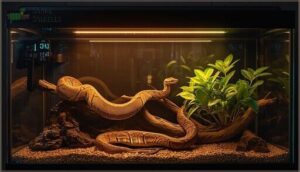
Lighting your snake’s enclosure isn’t as complicated as it might seem, but it does require understanding a few key principles that affect your snake’s daily rhythms and overall health.
Unlike some reptiles, most snakes don’t have strict lighting requirements, though the choices you make can still influence their behavior, stress levels, and activity patterns.
Let’s break down what you actually need to know about UVB exposure, day and night cycles, and how lighting impacts your snake’s well-being.
Do Snakes Need UVB Lighting?
Did you know most snakes don’t need UVB lighting to thrive? For effective snake care, focus on these UVB Lighting essentials:
- UVB Benefits are species-specific.
- Snake Vision isn’t dependent on UVB.
- Lighting Gradients help prevent Thermal Stress.
- Dietary Vitamin D3 is usually sufficient.
- Excess UVB can cause irritation—always follow reptile lighting requirements for your species.
Day/Night Cycles and Light Duration
Ever wondered why your snake’s clock matters as much as its heat? Maintaining a consistent day-night cycle—10–12 hours of light, then darkness—keeps Circadian Rhythms steady, promotes healthy Diel Patterns, and aligns with reptile lighting requirements.
Adjust Light Duration seasonally for ideal Photoperiod Effects, ensuring your lighting systems don’t overheat and disrupt natural Thermal Cycles.
Effects of Lighting on Snake Behavior and Health
Lighting isn’t just about visibility—it’s the backbone of your snake’s Circadian Rhythms and behavioral cues. The right reptile lighting system promotes healthy Snake Vision, feeding, and shedding cycles.
Excessive brightness triggers Lighting Stress, while proper UVB lighting can boost Health Outcomes. Watch for changes in snake behavior; these reflect how well your reptile care matches their natural needs.
Species-Specific Heating and Lighting Needs

Every snake species comes with its own set of heating and lighting needs. Your setup should reflect where your snake comes from and how it lives in the wild.
Let’s look at the main options to help you match your enclosure to your snake’s natural habits.
Tropical Vs. Temperate Snake Requirements
Think of tropical and temperate snakes as living in entirely different climate zones—each with distinct temperature gradients and humidity levels. Tropical species thrive with higher tank temperatures, consistent heat sources, and UVB lighting supporting metabolism. Temperate snakes require seasonal thermal cycles, cooler refuges, and lower humidity.
Observing snake behavior helps you fine-tune your reptile care routine for their specific needs.
Special Considerations for Arboreal and Aquatic Species
If your snake spends its life climbing or swimming, your enclosure must reflect those instincts. Arboreal Heating means adding tall branches and vertical thermoregulation zones, while Aquatic Snake Care demands water quality management and humidity control systems.
Use a temperature gradient and photoperiod to support natural behaviors, and always match your reptile lighting requirements to the species’ snake enclosure design.
Adjusting Setup for Individual Snake Preferences
Just as aquatic and arboreal species need customized environments, individual pet snake behavior often signals unique preferences. Some favor cooler spots, others bask near heat lamps. You’ll improve snake care by observing these patterns and adjusting:
- Monitor temperature gradients
- Adjust heat sources
- Vary lighting cues
- Offer environmental enrichment
- Track seasonal changes in activity
Best Practices for a Healthy Snake Environment
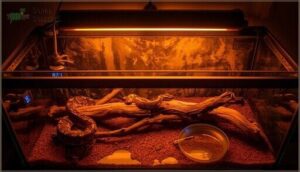
Keeping your snake healthy starts with a well-managed environment. There are a few key steps you’ll want to follow to keep things safe and comfortable. Here’s what you should focus on as you set up and maintain your enclosure.
Using Thermometers and Temperature Guns
Precision matters when you’re managing temperature control for your snake’s enclosure. Use thermometer probes and infrared temperature guns for thermal monitoring and heat mapping, placing sensors at both the basking spot and cool zone.
Regular accuracy checks and temperature calibration guarantee your readings reflect true conditions, supporting reliable thermal regulation and a consistent temperature gradient across all heat source placements.
Preventing Burns and Overheating
Once you’ve confirmed temperatures, Thermal Safety becomes your next concern. Position your heat lamp or ceramic heat emitters securely, using a thermostat to maintain Safe Temperatures.
Never rely on a heat mat alone—direct contact increases Burn Prevention challenges and Overheating Risks. Inspect each heat source regularly for wear, and always control temperature to protect your snake’s delicate skin.
Regular Maintenance and Observation
Daily checks form the backbone of effective snake care. Use Temperature Logging to track basking and ambient readings, then adjust your thermostat or heat source if deviations appear. Monitor Humidity Control with a hygrometer, observe Snake Behavior during feeding and shedding, and schedule Enclosure Cleaning weekly.
Health Monitoring through routine observation catches issues early, ensuring your reptile lighting and temperature control remain ideal.
When to Consult Reptile Experts or Vets
When should you seek Expert Guidance instead of troubleshooting alone? Persistent lethargy, appetite loss, abnormal shedding, or respiratory distress—wheezing, mucus near the mouth—demand prompt Vet Consultations.
- Sudden weight loss despite normal feeding
- Suspected Snake Poisoning or severe trauma
- Neurological signs like tremors or uncoordinated movement
- Visible wounds requiring professional Emergency Care
- Questions about Reptile Lighting Requirements affecting Pet Snake Health and Wellness
Contact a reptile veterinarian experienced in Veterinary Medicine and Advice for Snake Care and Maintenance guidance.
Frequently Asked Questions (FAQs)
Can snakes survive without any heat source?
Some snakes tolerate brief heat absence if ambient temperatures stay within their survival range, but prolonged cold stress impairs digestion, weakens immune function, and can prove fatal for most ectothermic creatures.
What humidity levels do different snake species need?
Humidity levels for your pet snake depend on species-specific care requirements. Desert species thrive at 20–40%, while tropical rain dwellers need 60–80%.
Arboreal needs and proper snake hydration fall between these humidity ranges for ideal reptile care.
How often should enclosure temperatures be checked?
A keeper once lost a juvenile ball python to pneumonia after missing a thermostat failure for three days.
Check your enclosure temperatures at least twice daily—morning and evening—to catch thermal gradient drift before it compromises snake health and temperature regulation.
Do baby snakes need different heating than adults?
Yes, hatchlings need warmer basking zones—around 85–90°F—to support faster metabolism and digestion. Their smaller size makes them more sensitive to temperature fluctuations, so precise temperature control and daily monitoring are essential.
What are signs of temperature-related health problems?
Respiratory issues, lethargy, regurgitation, and thermal burns signal temperature stress in your snake.
Watch for excessive basking, incomplete shedding, poor appetite, or slow growth—these metabolic problems indicate your reptile lighting and heating setup needs immediate adjustment.
Conclusion
Wild snakes seek refuge under sun-warmed rocks or retreat to cool burrows—your captive snake can’t make those choices. That’s why heating and lighting in their tank isn’t optional; it’s the foundation of responsible ownership.
You control the thermal landscape now, and with accurate temperature monitoring, proper gradient zones, and species-appropriate lighting, you’re giving your snake what evolution designed it to need.
Get these fundamentals right, and everything else—feeding, shedding, longevity—follows naturally.