
This site is supported by our readers. We may earn a commission, at no cost to you, if you purchase through links.

Your aquarium’s substrate holds five times more surface area for beneficial bacteria than your filter media—yet most aquarists overlook it until algae blooms or cloudy water force their hand.
Old substrate becomes a nutrient trap, releasing ammonia spikes and suffocating the bacterial colonies that keep your tank stable. Learning how to change substrate correctly protects your fish from toxic buildup while resetting your tank’s biological foundation.
The process demands careful planning and precise technique, but you’ll restore crystal-clear water and create ideal conditions for both fish and plants to flourish.
Table Of Contents
- Key Takeaways
- Why Change Aquarium Substrate Matters
- What Tools and Supplies Do You Need?
- How to Prepare for Substrate Change
- Step-by-Step Guide to Changing Substrate
- Post-Change Monitoring and Tank Care
- Types of Aquarium Substrate and Maintenance Tips
- Frequently Asked Questions (FAQs)
- How often should I change the aquarium substrate?
- How often does substrate need to be changed?
- How to remove sand substrate from an aquarium?
- Can I put gravel on top of substrate?
- Can I change substrate with fish still inside?
- How long does a substrate change typically take?
- What causes cloudiness after adding new substrate?
- Should I cycle the tank after changing substrate?
- Can I mix different substrate types together safely?
- Conclusion
Key Takeaways
- Your substrate hosts five times more beneficial bacteria than filter media and directly impacts water clarity, fish health, and plant growth by controlling nutrient cycling and preventing toxic ammonia buildup.
- Changing substrate every 12 to 18 months removes trapped waste that clouds water and stresses fish, while proper technique preserves beneficial bacteria colonies that keep your tank biologically stable.
- Success depends on matching substrate type to your tank’s needs—gravel promotes water flow and easy cleaning, sand suits bottom-feeders, and active substrates deliver nutrients for planted systems.
- Post-change monitoring requires testing pH, ammonia, nitrite, and nitrate within 24 hours, then performing 20 to 25 percent water changes weekly for two weeks while watching fish behavior for stress signals.
Why Change Aquarium Substrate Matters
Your aquarium’s substrate does more than just look good—it plays a critical role in the overall health of your tank.
Understanding the difference between reptile substrate types can help you create a healthier environment, whether you’re setting up for fish or reptiles.
Over time, old substrate can trap waste and debris, releasing harmful toxins that compromise water quality and stress your fish. Let’s look at three key reasons why changing your substrate isn’t just maintenance, it’s essential care.
Benefits for Water Quality and Clarity
Clear water doesn’t just look better—it signals a healthier tank. When you perform a substrate change, you reduce trapped nutrients and sediment that cloud your aquarium.
Fresh substrate fosters beneficial bacteria and nutrient cycling, which lowers nitrate buildup and prevents algae growth. This boost in aquatic transparency and water quality management creates stable conditions your fish and plants need to thrive.
Impact on Fish and Plant Health
The substrate you choose directly affects your fish and plants. Fine sand reduces gill irritation compared to coarse gravel, lowering fish stress and protecting sensitive mucous membranes.
Meanwhile, nutrient-rich substrates supply iron and manganese that boost plant nutrient uptake and oxygen production. This improvement in water quality and aquarium ecosystem balance promotes healthier fish, stronger plant growth, and stable beneficial bacteria colonies throughout your tank.
Role in Beneficial Bacteria Growth
Beyond supporting plants, your substrate is where beneficial bacteria colonies do their heavy lifting. Porous particles boost bacterial colonization by offering more surface area per square centimeter, speeding up biofilm formation. This microbial balance drives nutrient cycling and houses nitrifying bacteria that convert toxic ammonia. A substrate change resets these colonies, giving your tank a fresh start for ideal biological balance.
Your substrate hosts beneficial bacteria that convert ammonia, and changing it resets these colonies for a fresh biological balance
- Substrate porosity creates oxygen-rich spaces where aerobic nitrifiers thrive in upper layers.
- Fine grains retain higher surface area, multiplying sites for bacterial growth and management.
- Carbon-rich materials fuel heterotrophic bacteria essential for strong biofilm establishment.
- Regular cleaning prevents detritus from smothering colonies, maintaining steady bacterial activity long-term.
What Tools and Supplies Do You Need?
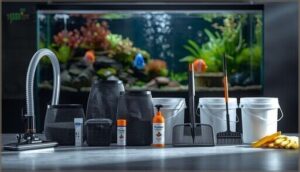
You can’t change your aquarium substrate without the right tools on hand. Having everything ready before you start will save you time and reduce stress on your fish.
Here’s what you need to gather before you begin the process.
Essential Equipment Checklist
You’ll need the right aquarium equipment before starting substrate replacement. Gather a reliable gravel vacuum for removing old material, aquarium nets to safely relocate fish, and clean buckets dedicated solely to tank use.
Once everything’s clean, consider whether reptile substrates for humid environments might work better if you’re dealing with moisture issues in your setup.
Include water conditioners to neutralize chlorine, algae scrapers for wall cleaning, and your test kit for monitoring parameters. Having quality filter media on hand protects beneficial bacteria during this process.
Choosing The Right Replacement Substrate
Your aquarium’s long-term success depends on smart substrate selection. Match material types to your tank inhabitants and maintenance preferences:
- Gravel (0.5–2 mm grain size) fosters healthy plants and allows easy cleaning while promoting pH balance in community tanks.
- Sand creates tight packing ideal for bottom feeders but requires more frequent sifting.
- Active substrates deliver nutrient delivery for planted setups through controlled mineral release.
Preparing Temporary Holding for Aquatic Life
Your aquatic animals need a safe refuge during this process. A holding tank setup protects fish and invertebrates for at least 24 hours while you work. Match your display tank’s temperature within 2 to 3 degrees and maintain zero ammonia and nitrite levels throughout fish acclimation.
| Holding Tank Element | Target Range |
|---|---|
| Temperature variance | 2–3°C maximum |
| Ammonia concentration | 0 ppm |
| Nitrite concentration | 0 ppm |
| Nitrate concentration | Below 40 ppm |
Install gentle temporary filtration with a sponge filter or transfer media from your main system. Water parameter testing every 12 hours prevents toxic buildup. Cover the container to reduce stress and add an air stone for dissolved oxygen. Aquatic life monitoring reveals fin clamping or rapid breathing—signs you need immediate water quality adjustments during aquarium maintenance.
How to Prepare for Substrate Change

Before you start pulling out old substrate, you need to set yourself up for success. Proper preparation protects your fish from stress and keeps your tank’s ecosystem stable during the switch.
Here’s how to get your aquarium ready for a smooth substrate change.
Planning Partial Water Changes
Think of partial water changes as your safety net during substrate replacement. Perform a 25 to 30 percent water change before you begin to stabilize water parameters and reduce tank stress.
Test ammonia, nitrite, and nitrate levels first—this water testing confirms baseline water quality. Schedule another change within 24 hours post-replacement to maintain aquarium maintenance consistency and support fish stress management throughout the process.
Steps to Minimize Fish Stress
Your fish won’t panic if you protect their slime coating—wet your hands before any Fish Handling to prevent epidermal damage during Substrate Change.
Support their entire body horizontally for Gentle Transfers, keeping contact under 20 seconds to achieve Stress Reduction.
Stop feeding one day before Aquarium Substrate Replacement to minimize waste during Tank Stabilization.
Complete Water Acclimation gradually, observing normal swimming behavior to confirm Fish Health and successful Reducing Fish Stress efforts.
Step-by-Step Guide to Changing Substrate
Now that you’ve prepared your tank and gathered your supplies, it’s time to start the actual substrate replacement. This process requires careful attention to detail, but you can complete it successfully by following each step in order.
Below, you’ll find the three critical phases that will guide you from removing old substrate to filling your tank with fresh water.
Safely Removing Old Substrate
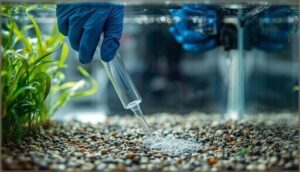
Before you begin substrate removal, drain about 25% to 50% of your tank water and relocate your fish to a temporary holding container with matching temperature and pH.
Use a siphon or soft scoop to gently vacuum debris while working in small sections—this protects beneficial bacteria in your filter. Wear nitrile gloves and avoid aggressive stirring to maintain water stability throughout the gravel change process.
Cleaning and Adding New Substrate
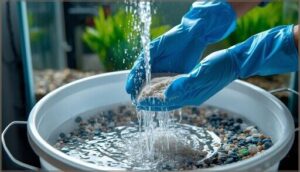
Rinsing new substrate thoroughly removes dust particles that cause water clouding and harm your filter during tank cycling. You’ll prevent hours of frustration by preparing your gravel or sand correctly before substrate replacement.
Follow these substrate replacement techniques for clean aquarium substrate:
- Rinse in a bucket until water runs completely clear, agitating gently
- Remove debris with a soft brush from crevices
- Layer substrate evenly across the tank bottom for drainage
- Cap nutrient-rich soil with decorative gravel to minimize clouding
Gradual Water Refilling Techniques
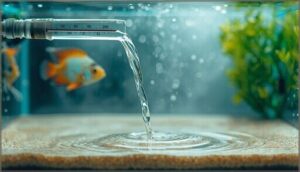
After you’ve added clean substrate, refilling your tank requires patience and precision. Start with water prepped to match your target temperature within 1 to 2 degrees.
Flow rate control prevents cloudiness—begin at 20 percent pump capacity and pause every 10 minutes. This gradual refill strategy promotes tank stabilization while protecting water quality and chemical balancing throughout each increment.
Post-Change Monitoring and Tank Care
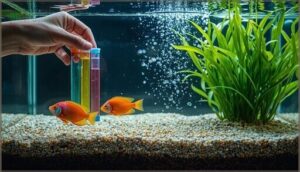
The real work begins after you’ve added your new substrate. Your tank’s ecosystem has been disrupted, and you’ll need to watch things closely for the next few weeks to catch any problems early.
Here’s what you need to monitor to keep your fish healthy and your water crystal clear.
Checking Water Parameters After Change
Monitor water chemistry closely after you’ve settled new substrate into place. Test pH, ammonia, nitrite, and nitrate within 24 hours using a reliable kit. You want pH between 6.5 and 7.5, ammonia at 0 mg/L, and nitrite also at zero.
Keep nitrate below 20 mg/L for most freshwater setups. Water clarity usually returns in 24 to 48 hours if biological balance remains stable.
Observing Fish and Invertebrate Behavior
Once chemistry looks stable, watch how your aquatic life behaves. Healthy fish swim at normal speeds and graze without hesitation, showing natural schooling behavior and respecting their social hierarchy.
Gasping at the surface or hiding signals aquatic stress. Invertebrates should move freely across substrate. Reduced appetite or erratic movements indicate discomfort, so act quickly to support fish health management and tank mate compatibility.
Maintaining Water Quality and Cleanliness
Beyond behavior, routine aquarium hygiene keeps water purification working and bacterial control steady. Perform a 20 to 25 percent water change weekly to dilute nitrates and support beneficial bacteria.
Test water quality every three days for the first two weeks, confirming chemical balance and filtration systems function normally. Clean substrate gently with a vacuum to remove detritus without disturbing new layers.
Types of Aquarium Substrate and Maintenance Tips
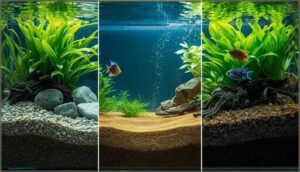
Not all substrates are created equal, and choosing the right substrate depends on your tank’s ecosystem and your maintenance routine. Understanding the differences between gravel, sand, and active substrates helps you make smarter decisions for your aquarium’s long-term health.
Let’s break down your options and how to keep your substrate in top condition.
Comparing Gravel, Sand, and Active Substrates
Choosing the right aquarium substrate shapes your tank’s entire ecosystem. Gravel offers excellent water flow and easy vacuuming, making substrate change simpler over time.
Sand creates a natural look for bottom-dwellers but requires gentle cleaning to prevent compaction. Active substrate releases nutrients that boost plant growth and influence water chemistry. Each substrate type brings distinct benefits for aquarium aesthetics and maintenance routines.
Tips for Long-Term Substrate Health
Regularly, you can keep your substrate healthy by maintaining gentle water flow that prevents anaerobic pockets and promotes microbe balance. Here’s how to protect nutrient cycling and root health:
- Stir the top layer lightly during water changes to avoid compaction and promote substrate aeration.
- Test pH monthly to track how your substrate types influence water chemistry.
- Avoid overfeeding to minimize waste buildup that fouls your aquarium substrate.
How Often to Change Aquarium Substrate
Generally, you’ll replace substrate every 12 to 18 months in freshwater and saltwater tanks to maintain water quality during aquarium maintenance.
Heavily planted systems benefit from partial substrate replacement every 4 to 9 months. Aquasoils last 18 to 36 months before needing renewal.
Change frequency depends on substrate types, waste buildup, and plant load. Monitor for persistent cloudiness or foul odors as gravel change indicators.
Frequently Asked Questions (FAQs)
How often should I change the aquarium substrate?
Substrate Change isn’t a one-size-fits-all timeline—Frequency Factors like Tank Type and Waste Buildup determine your schedule.
Freshwater tanks usually need changes every 12 to 18 months, while heavily stocked systems require attention every 3 to 6 months.
How often does substrate need to be changed?
Your tank type dictates the schedule. Planted tanks with nutrient-rich substrate renewal usually happens every 12 to 18 months, while heavily stocked systems may need partial gravel change every 6 to 12 months.
How to remove sand substrate from an aquarium?
You’ve probably watched sand billow up like a dust storm during routine cleaning—that’s why you’ll want to remove most of the water first through partial water changes before starting substrate replacement.
Can I put gravel on top of substrate?
Yes, you can place gravel cap on top of substrate as a decorative cap.
Keep the gravel layer thin—one to two centimeters—to prevent blocking nutrient flow to rooted plants while maintaining aesthetic appeal.
Can I change substrate with fish still inside?
While removing every last bit requires draining the tank, you can change substrate with fish inside by working in sections and monitoring water parameter levels closely to prevent ammonia spikes and minimize fish stress.
How long does a substrate change typically take?
A full substrate change usually requires 2 to 4 hours for most tanks, though heavily planted setups or larger aquariums may extend that window to 6 hours with careful handling.
For those interested in sophisticated layering techniques, learning about the substrate manufacturing process steps can offer valuable insights into material preparation and quality control.
What causes cloudiness after adding new substrate?
Cloudiness factors stem from substrate dust and particle suspension during installation. Fine particles scatter light, causing water turbidity.
Bacterial bloom can also develop as beneficial microbes colonize new surfaces, temporarily affecting aquarium substrate clarity.
To further guarantee clarity, it’s helpful to apply best practices for preventing substrate from clouding the tank water.
Should I cycle the tank after changing substrate?
You usually won’t need a full nitrogen cycle after substrate change if your filter media stays intact.
Test water parameters daily for a week to confirm bacteria preservation and tank recovery remain stable.
Can I mix different substrate types together safely?
Yes, you can mix different substrate types safely when you match grain sizes and pH profiles.
Layer coarse material beneath fine substrate, monitor water chemistry closely, and test small portions before committing to a full aquarium substrate change.
Conclusion
Your substrate change sets the stage for months of stable water chemistry and thriving aquatic life. The bacterial colonies you’ve preserved will rebuild within days, filtering waste before it compromises your tank’s balance.
You’ve removed the nutrient traps that fueled algae and cloudy water. Monitor ammonia and nitrite levels for two weeks, then watch your fish display brighter colors and more active behavior. Mastering how to change substrate transforms maintenance into true aquarium stewardship.