
This site is supported by our readers. We may earn a commission, at no cost to you, if you purchase through links.
Most reptile owners don’t realize that the same commercial cleaners they use to keep tanks sparkling can slowly poison their pets. Residue from bleach-based products, ammonia sprays, and antibacterial soaps doesn’t just disappear after rinsing—it lingers on surfaces where your reptile breathes, climbs, and absorbs compounds through its skin.
Over time, this chemical exposure weakens immune systems, triggers respiratory distress, and creates conditions for skin infections that seem to appear out of nowhere. The solution isn’t stronger cleaners or more frequent scrubbing.
Natural cleaning methods for reptile tanks use simple household ingredients like white vinegar and baking soda to eliminate bacteria and waste without the toxic aftermath, protecting your reptile’s health while maintaining the spotless environment they need to thrive.
Table Of Contents
- Key Takeaways
- Why Use Natural Cleaning Methods for Reptile Tanks
- Essential Supplies for Natural Tank Cleaning
- Step-by-Step Natural Cleaning Process
- Incorporating Bioactive and Natural Solutions
- Safety Tips and Common Mistakes to Avoid
- Frequently Asked Questions (FAQs)
- What can I use to clean my reptile enclosure?
- How to keep a reptile tank from smelling?
- How often should I replace bioactive substrate completely?
- Can I use essential oils around reptile tanks?
- What removes stubborn calcium deposits from glass naturally?
- Are steam cleaners safe for disinfecting reptile enclosures?
- How do I clean mesh or screen tank tops?
- Conclusion
Key Takeaways
- Commercial cleaners leave chemical residues that weaken reptile immune systems and cause respiratory distress, while natural alternatives like white vinegar and baking soda disinfect safely without toxic aftermath.
- Bioactive cleanup crews using springtails and isopods break down waste within 24 to 72 hours, creating self-sustaining ecosystems that reduce cleaning workload while improving tank hygiene.
- Deep cleaning every four to eight weeks requires complete substrate removal and surface disinfection, while daily spot cleaning of feces and uneaten food prevents bacterial buildup between major cleanings.
- Proper rinsing with dechlorinated water for 15 to 30 seconds and complete drying before returning your reptile prevents chemical residue exposure and mold growth that compromise health.
Why Use Natural Cleaning Methods for Reptile Tanks
Switching to natural cleaning methods isn’t just a trend—it’s a choice that directly impacts your reptile’s long-term health and well-being. Chemical residues from harsh cleaners can linger on surfaces, affecting respiratory function and skin health in ways that aren’t always immediately obvious.
Choosing safer substrate options for sensitive reptiles goes hand-in-hand with avoiding harsh chemicals throughout your cleaning routine.
Natural cleaning protects reptiles from chemical residues that compromise respiratory health and skin integrity in ways owners don’t always see
Let’s look at three compelling reasons why natural solutions make sense for both your pet and the environment.
If your snake is refusing food, understanding the underlying symptoms and behavioral signs can help you choose the right natural approach.
Benefits for Reptile Health
Cleanliness is the foundation of reptile wellness, directly impacting your animal’s ability to thrive in captivity. Natural cleaning methods support reptile health through three critical pathways:
Regular sanitation of feeding tools and habitat accessories, like those covered in this snake feeding equipment guide, prevents bacterial buildup that can compromise your reptile’s immune system.
- Respiratory Health: Proper ventilation and non-toxic cleaners reduce airborne pathogens that cause respiratory infections
- Skin Infections: Clean substrates prevent bacterial and fungal dermatitis
- Digestive Issues: Toxin-free surfaces minimize gastrointestinal upset from contaminated water
These practices strengthen immune systems and support disease prevention. For a deeper understanding of ideal reptile care, see this resource on.
You can explore safe disinfection methods for reptile habitats to learn which cleaning solutions protect your pet’s health without compromising their environment.
Environmental Impact
Your reptile tank cleaning choices ripple far beyond the glass enclosure. Water conservation starts when you capture rinse water for plants instead of sending gallons down the drain, while eco-friendly natural cleaners prevent chemical runoff that threatens local waterways and wildlife conservation efforts.
Sustainable practices like reusing towels instead of disposables support waste reduction, protecting ecosystem balance and demonstrating genuine animal welfare through green cleaning methods.
Reducing Chemical Exposure
Beyond protecting waterways, Chemical Free cleaning shields your household from indoor air toxins. Fragrance-free products reduce contaminants by about 40 percent, while proper ventilation during reptile tank cleaning cuts volatile compounds by half. To disinfect safely, pair vinegar solutions with Air Purification through open windows and HEPA filters, creating a Non Toxic environment that promotes both Sustainable Living and expert reptile care.
For even more ways to protect your household, review these.
- Choose Eco Friendly, unscented cleaners for healthier indoor air
- Ventilate for 15 minutes during and after cleaning sessions
- Use HEPA filters to reduce airborne dust by 60 percent
- Switch to natural disinfectants like diluted vinegar for routine maintenance
Essential Supplies for Natural Tank Cleaning

Getting started with natural tank cleaning doesn’t require a complicated shopping list, but you do need the right tools and ingredients to protect your reptile’s health.
The supplies you choose will determine how safely and effectively you can remove waste, disinfect surfaces, and prepare the enclosure for your pet’s return. Here’s what you’ll need to gather before you begin the cleaning process.
For a complete walkthrough of safe cleaning products and step-by-step techniques, including how to balance daily maintenance with deeper monthly disinfection, consult a detailed care guide.
Safe Cleaning Tools and Equipment
Before you disinfect your reptile tank, gather the right cleaning supplies. Use a dedicated tank brush with soft bristles to scrub surfaces without scratching glass. Microfiber cloths pick up grime without leaving residue.
Wear protective eyewear and chemical-resistant nitrile gloves during ReptileSafe Habitat Cleaning, especially when handling vinegar solutions. Keep color-coded tools separate to prevent cross-contamination between enclosures.
Reptile-Safe Cleaners and Ingredients
Choose gentle ingredients that won’t irritate your reptile’s delicate respiratory system or skin. Distilled white vinegar diluted 1:1 with water creates effective vinegar solutions for spot cleaning and disinfecting without harsh fumes. Natural soaps like fragrance-free castile work well on décor when rinsed thoroughly.
- Enzyme cleaners break down organic waste proteins safely
- Bioactive agents introduce beneficial bacteria for ongoing odor control
- Gentle disinfectants like 3% hydrogen peroxide kill germs without leaving toxic residues
Preparing The Tank and Removing Your Reptile
Before you begin cleaning, you’ll need a safe space to keep your pet comfortable. Set up a secure temporary housing container with ventilation, a simple hide, and paper towel flooring—critter keepers or plastic tubs with locking lids work perfectly for preventing escapes during tank maintenance.
| Setup Component | Purpose | Quick Tip |
|---|---|---|
| Ventilated container | Maintains airflow | Use mesh or drilled holes |
| Hide or cover | Reduces stress | Try cardboard tubes |
| Paper substrate | Easy monitoring | Replace if soiled |
Power down all heat lamps and equipment for 15 to 20 minutes before handling, then unplug everything to avoid electric shock while scrubbing. Support your reptile’s full body during gentle removal—never grab tails or limbs—and move them directly into their temporary enclosure using calm, deliberate motions. For defensive species, thick gloves or a soft hook reduces bite risk during reptile handling.
Strip the reptile tank completely by removing all décor, water bowls, and substrate so hidden waste becomes accessible. Moving the empty enclosure near a sink makes rinsing easier and keeps your cleaning area tidy throughout the deep-cleaning process.
Step-by-Step Natural Cleaning Process
Cleaning your reptile’s tank with natural methods doesn’t have to be complicated, but knowing when to do a quick cleanup versus a full scrub makes all the difference.
The process you choose depends on how dirty the tank is and what you’re trying to accomplish. Let’s walk through the techniques that keep your reptile safe while getting the job done right.
Spot Cleaning Vs. Deep Cleaning
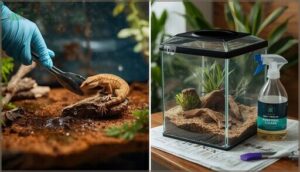
Knowing when to spot clean versus deep clean your reptile tank makes all the difference in keeping your pet healthy without causing unnecessary stress. Spot cleaning happens daily or every few days—you’re just scooping out fresh feces, urates, and uneaten food with simple cleaning tools.
Deep cleaning means a full reset every four to eight weeks, where you remove your reptile, discard all substrate, and disinfect every surface for complete tank maintenance.
Using Vinegar Solutions Safely
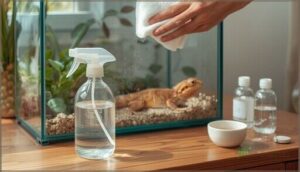
White vinegar cuts through mineral deposits like a charm, but you need the right dilution and surface compatibility to keep your reptile tank safe. A simple 50/50 mix of white vinegar and water in a spray bottle effectively removes hard water spots without harsh chemicals, though fume control matters—always remove your reptile first and air out the enclosure for 15 to 30 minutes before they return.
- Check your vinegar strength: Standard 5% acetic acid white vinegar works well; avoid cleaning vinegars above 7% without extra dilution
- Test surface compatibility: Glass and plastic handle vinegar fine, but natural stone, unsealed wood, and metal hardware can degrade over time
- Never mix vinegar with bleach: This creates toxic chlorine gas; stick to vinegar alone or switch to reptile-safe disinfect products for serious pathogens
Baking Soda and Peroxide Methods
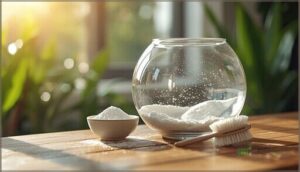
Stubborn grime on your reptile tank calls for baking soda and peroxide—two gentle cleaning powerhouses that disinfect without toxic residue.
Mix baking soda with a small amount of 3% hydrogen peroxide to form a paste, apply it to dried feces or mineral deposits, let it sit briefly, then scrub and rinse thoroughly.
This natural disinfectant combo breaks down organic matter while leaving surfaces safe for your reptile’s return.
Cleaning Tank Accessories Naturally
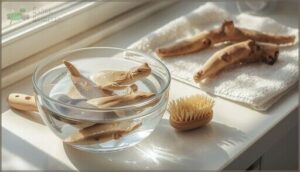
Your tank’s water bowls, hides, and decorations need regular attention to prevent bacterial buildup without harsh chemicals.
Remove accessories monthly and soak them in a 50/50 white vinegar cleaning solution for 15 to 30 minutes to dissolve mineral deposits and algae. Scrub gently with a soft brush, rinse thoroughly under running water, then air dry completely before returning them to your reptile tank.
Incorporating Bioactive and Natural Solutions
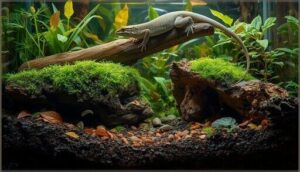
A bioactive setup transforms your reptile tank into a self-sustaining ecosystem that reduces your cleaning workload while improving your pet’s health.
Tiny organisms called cleanup crews work alongside natural bacteria to break down waste before it becomes a hygiene problem. Let’s look at how these living systems function and what you need to establish one successfully.
Benefits of Bioactive Cleanup Crews
The beauty of cleanup crews lies in their tireless work maintaining your reptile tank naturally. These invertebrates handle waste reduction by consuming feces, uneaten food, and shed skin within 24 to 72 hours—keeping surfaces cleaner between deep cleanings.
They improve soil health through nutrient cycling, provide vital odor control, and support ecosystem balance that mirrors your reptile’s natural habitat while drastically cutting your terrarium maintenance workload.
Using Springtails and Isopods
Once you’ve decided on cleanup crews, you’ll need to select the right organisms for your reptile habitat. Here’s what works best in bioactive tanks:
- Tropical springtail species like Folsomia candida thrive in moist terrarium substrates under 3 millimeters
- Dwarf white isopod species such as Trichorhina tomentosa stay hidden while breaking down waste
- Most isopods tolerate 68–79°F, matching typical reptile care temperature ranges
- Introduce springtails first for mold control, then add isopods after two weeks
- Maintain 70–90% humidity for successful cleaning crews establishment
Maintaining a Healthy Bioactive Environment
After your cleanup crew settles in, you’ll need to keep their bioactive environment balanced. Substrate management means topping up leaf litter every few months as it breaks down, and siphoning the drainage layer when standing water appears.
Humidity control through proper ventilation systems prevents mold while protecting microfauna balance. Plant selection matters too—choose non-toxic species that match your reptile’s biome for stable, low-maintenance reptile care.
Safety Tips and Common Mistakes to Avoid
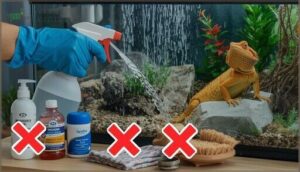
Even with the best natural cleaning methods, you can still make mistakes that put your reptile at risk. Some ingredients that seem safe for humans are actually toxic to reptiles, and skipping certain steps—like proper rinsing or drying—can lead to serious health problems.
Here’s what you need to avoid and the essential safety practices that protect your pet during and after every cleaning.
Ingredients and Products to Never Use
You won’t believe how many toxic chemicals lurk in everyday cleaners that can seriously harm your reptile. Bleach and ammonia-based cleaners top the list of harmful substances—their fumes attack respiratory systems and leave dangerous residues.
Skip anything with fragrance, as these pose fragrance risks through skin absorption. Even antibacterial soaps carry soap dangers.
Stick to bleach alternatives like properly diluted chlorhexidine for reptile tank cleaning and disinfection that prevents zoonotic diseases without risking your pet’s health.
Rinsing and Drying Best Practices
After tank sanitizing and disinfection methods remove contaminants, your final rinse makes the difference between safe reptile habitat maintenance and lingering chemical residue. Use filtered or dechlorinated water for water quality, rinsing each surface for 15 to 30 seconds during tank cleaning and disinfection to eliminate soap traces.
- Towel-dry non-porous surfaces with clean microfiber cloths using effective drying techniques
- Air-dry porous substrates while maintaining humidity control to prevent mold
- Inspect for residue removal by checking for slickness or water beads
- Verify complete dryness before returning your reptile to its clean reptile tank
Monitoring Tank and Reptile Health After Cleaning
Within 24 hours of your deep clean, perform post-cleaning checks to confirm your reptile’s behavior and tank monitoring parameters remain stable. Health inspections should include appetite, movement patterns, and environmental readings to catch early signs of stress reduction needs or zoonotic diseases exposure. Animal health depends on tracking these subtle shifts in reptile care that signal whether your cleaning methods support reptile health.
| Parameter | What to Check |
|---|---|
| Behavior | Hiding duration, basking activity, glass pacing |
| Environment | Temperature zones, humidity levels, lighting function |
| Appetite | First post-clean feeding response, meal refusals |
| Physical Signs | Eye clarity, skin condition, breathing sounds |
| Waste | Stool consistency, odor, bowel movement timing |
Frequently Asked Questions (FAQs)
What can I use to clean my reptile enclosure?
Picture a bearded dragon sitting in a water bowl clouded by yesterday’s droppings—that’s when you need the right reptile safe cleaner.
Vinegar solutions, gentle disinfectants like chlorhexidine, natural soaps, or bioactive cleaners work safely.
How to keep a reptile tank from smelling?
You can control odors through daily waste removal, proper tank ventilation, regular cleaning schedules, and appropriate substrate depth.
Good reptile health depends on consistent waste management and effective odor control methods that prevent ammonia buildup.
How often should I replace bioactive substrate completely?
Healthy bioactive substrate rarely needs full replacement—most setups run five to ten years without a complete reset.
You’ll only replace everything if crashes, foul odors, or persistent standing water signal total system failure.
Can I use essential oils around reptile tanks?
No, you shouldn’t use essential oil diffusers near reptile tanks because reptiles have sensitive respiratory systems that react poorly to airborne oil droplets, potentially causing breathing problems or toxicity symptoms requiring veterinary care.
What removes stubborn calcium deposits from glass naturally?
White vinegar descaling softens those pesky mineral spots when left on glass for ten to twenty minutes, while baking soda paste gently scrubs away remaining film without scratching your reptile tank.
Are steam cleaners safe for disinfecting reptile enclosures?
Steam cleaners are safe and highly effective for reptile tank disinfection when used correctly. They eliminate bacteria and viruses through high temperatures without chemical residues.
Though you must make certain of complete cooling before reintroducing your reptile.
How do I clean mesh or screen tank tops?
Remove your reptile first, then spray both sides of the mesh with diluted vinegar solution and let it sit for 5 to 10 minutes before wiping clean with a soft cloth.
Conclusion
Your reptile’s life literally depends on what you use to clean its home. Chemical residue doesn’t give second chances—it accumulates silently until health problems emerge.
Natural cleaning methods for reptile tanks eliminate that risk entirely, using vinegar and baking soda to destroy bacteria without leaving toxic traces behind. You’ve learned the techniques, gathered the supplies, and understand the science.
Now your tank stays clean, your reptile stays healthy, and those hidden dangers disappear completely.
- https://www.wisconsinherps.org/educational-articles/blog-post-title-three-8ajd3
- https://www.thebiodude.com/blogs/isopod-and-springtail-clean-up-crew-guides-culturing-care-and-breeding/springtails-the-essential-cleanup-crew-for-bioactive-habitats
- https://www.stumpscustomwood.com/keeping-up/how-to-clean-pvc-reptile-enclosure
- https://reptilenetworks.co.uk/2020/04/02/setup-cleaning-lemon-vinegar/
- https://www.aosom.com/blog-how-to-clean-a-reptile-cage-and-disinfect-for-a-healthy-habitat.html