This site is supported by our readers. We may earn a commission, at no cost to you, if you purchase through links.
Your ball python finally goes, and the result is a dark log with a chalky white cap. That’s exactly what you want to see. Now picture the same pile streaked with red, or a runny green puddle with no white at all.
Snakes absorb about 91% of what they eat, so what’s left behind tells you more than any behavior ever will. Abnormal snake feces health signs often show up days before a snake stops eating or starts losing weight, and catching them early can mean the difference between a husbandry fix and an emergency vet visit.
Here’s how to read the evidence, find the cause, and know when to call your vet.
Table Of Contents
- Key Takeaways
- What Healthy Snake Poop Looks Like
- Signs Your Snake’s Feces Are Abnormal
- Common Causes of Abnormal Snake Feces
- When Abnormal Snake Poop Needs Veterinary Care
- Monitoring Snake Poop and Preventing Digestive Problems
- Frequently Asked Questions (FAQs)
- What does healthy snake poop look like?
- What diseases can snakes give humans?
- Is snake-like stool healthy?
- What are the signs that a snake is unhealthy?
- What diseases can snakes give to humans?
- Can antibiotics cause temporary changes in snake feces?
- How does shedding cycle impact digestive patterns?
- Are fecal abnormalities common after substrate changes?
- Can vitamin supplements alter stool color or consistency?
- Can snake feces be used to determine sex?
- Conclusion
Key Takeaways
- Healthy snake poop has a firm, dark brown to black log paired with a white, chalky urate portion, so anything runny, bone dry, bloody, or green with no white deserves a closer look.
- Most abnormal stool traces back to husbandry problems you can fix, like oversized prey, a poor temperature gradient, low humidity, dehydration, or stress.
- Blood or black tarry stool, straining with no output, open-mouth breathing, or abnormal poop lasting more than a day or two means you should call an exotic vet right away.
- You’ll catch problems early by logging every dropping, bagging a fresh sample for your vet within minutes, and scheduling a fecal exam at least once a year and for every new snake.
What Healthy Snake Poop Looks Like
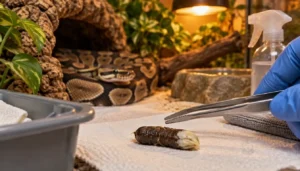
A healthy snake’s poop has two parts, and you should know both. The first is the dark brown to black feces, which come from the intestine. The second is the urates, a white, chalky portion from the kidneys that can also look yellow, orange, or green.
If your snake’s droppings look different from this, a visual guide to healthy snake poop appearance can help you tell normal variation from a possible health problem.
Good stool consistency is firm, well-formed, and log-shaped, never runny or bone dry. You’ll often spot fur, feathers, bones, or scales from the last meal, and that’s normal. A small amount of mucus is fine too, as long as it isn’t excessive.
Expect little waste. Snakes absorb about 91% of what they eat, so with a proper diet, snake poop appears only after a meal is digested. Ball pythons usually go a week later. Because snake waste can carry Salmonella, it’s worth reading about python feces health risks and wearing gloves whenever you clean the enclosure.
Signs Your Snake’s Feces Are Abnormal
Once you know what normal looks like, changes stand out fast. Start with abnormal color. Red or black streaks can point to bleeding, while green or yellow stool may suggest infection or a feeding issue.
Check consistency next. Watery or mushy stool can mean diarrhea, and it often shows up with parasites. Very dry, hard feces can signal dehydration. Excess mucus, a missing white urate portion, or a sudden foul smell also deserves attention.
Frequency matters too. Passing stool several times between meals can indicate digestive upset. If you see bloody stool, call your vet right away. Abnormal poop that lasts more than a day or two, especially with lethargy, needs a professional exam. Please don’t just wait it out.
Common Causes of Abnormal Snake Feces
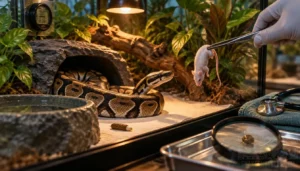
Most abnormal stool traces back to a handful of causes, and knowing them helps you act before a small issue grows.
The sections below cover six common causes, from feeding and enclosure setup to parasites and organ disease.
If you spot swelling, discharge, or cheesy buildup around your snake’s mouth, this guide to identifying and treating snake mouth rot shows how early signs differ from advanced infection.
Read each one with your own snake’s habits in mind, and consult your reptile vet if anything doesn’t fit.
Dietary And Feeding Problems
Say your corn snake passed a loose, yellowish stool a day after eating a rat twice as wide as its head. That’s a classic feeding error.
Oversized prey, overfeeding, and underfeeding can upset digestion. A dietary imbalance often appears as watery or undigested waste. Offer a proper diet with prey no wider than the head. Call your vet if unsure.
Improper Temperature And Humidity
Even perfect meals fail when your enclosure is wrong. Poor temperature regulation slows digestion, and humidity levels outside your species’ range can dry stools or trigger regurgitation. Check these:
- Use a thermal gradient so your snake can find its best temperature.
- Measure with digital probes, not stick-on dials.
- Keep humidity above 50 percent for tropical species.
- Avoid damp desert enclosures.
Dehydration And Constipation
Why does your snake’s stool turn dry and hard? Dehydration is often the cause. When your snake lacks water, the colon pulls extra moisture from waste, and dry hard stool follows. Hard, chalky urates can also block the intestine, leading to constipation and possible impaction.
Offer adequate hydration through a clean water bowl, proper humidity, and warm soaks. Consult your vet if straining persists.
Parasites And Intestinal Infections
Several parasites can upset your snake’s digestion, and a parasitic infection often shows up first in the feces. Nematodes like hookworms and ascarids can cause watery stool, mucus, or blood, along with regurgitation and weight loss.
Don’t deworm blindly. A fecal examination, including fecal flotation, tells your vet exactly what you’re treating. Ask for one annually and for every new snake.
Stress-Related Digestive Changes
Think of stress as a traffic jam on your snake’s digestive highway. Everything slows, backs up, or lurches forward at once.
Stress is a traffic jam on your snake’s digestive highway, where everything slows, backs up, or suddenly lurches forward
Stress hormones like cortisol can alter motility, causing constipation or loose stool, and they can upset gut flora balance. Try these steps for stress reduction:
- Offer snug hides and stable temperatures.
- Limit handling after meals.
- Keep routines consistent for better digestive health.
Consult your vet if changes persist.
Underlying Organ Disease
Picture a ball python that’s lost weight, turned lethargic, and now passes chalky yellow urates alongside runny stool. That pattern can point to hidden organ disease, not diet.
Liver trouble, kidney disease, a urinary tract infection, or gastrointestinal inflammation often changes how waste looks. Gallbladder or bile problems may tint feces green. Don’t wait, since a reptile vet can run bloodwork.
When Abnormal Snake Poop Needs Veterinary Care
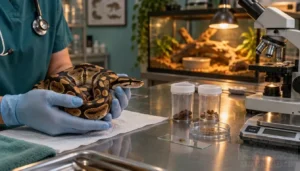
Not every odd dropping means a trip to the clinic, but some changes can’t wait. Below, you’ll find the warning signs requiring urgent care so you know when to act fast. You’ll also see which fecal samples and diagnostic tests your vet may use to find the cause.
Warning Signs Requiring Urgent Care
Some poop problems can wait, but these can’t. Watch for:
- Blood in stool, especially black, tarry stool, which often points to internal bleeding.
- Open-mouth breathing, collapse, or tremors alongside discolored stool.
- Straining with no output, vent swelling, or impaction.
If you spot any of these, call an exotic vet today.
Fecal Samples and Diagnostic Tests
Your vet can’t diagnose parasites from a guess, but a fresh stool sample gets them close. Bag it within minutes of defecation, since motile parasites die quickly once feces cool. Keep it sealed, unrefrigerated, and bring it in the same morning.
Fecal exams often include flotation, direct smear, and PCR. Ask which diagnostic your vet recommends.
Monitoring Snake Poop and Preventing Digestive Problems
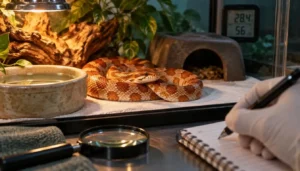
Once your vet has ruled out a serious problem, the best way to stay ahead of the next one is to watch your snake poop. Check feces after every defecation, and keep a simple log of timing, color, consistency, and urates. That baseline shows you what’s normal, so diarrhea or constipation stands out fast. Schedule a fecal exam at least yearly, and more often for wild-caught snakes.
Prevention comes down to husbandry. Keep the warm side above 88°F, since cooler temperatures can halt digestion. Offer prey 1 to 1.5 times your snake’s body width, and skip handling for 48 to 72 hours afterward. Use paper towels or reptile carpet, and provide a soaking bowl to support hydration. Quarantine new snakes.
Frequently Asked Questions (FAQs)
What does healthy snake poop look like?
Some keepers think healthy snake poop should be uniformly brown. Mostly true.
Healthy feces are firm, dark brown to black, paired with white, chalky urates. Green or yellow tones aren’t typical. Fur fragments are fine.
What diseases can snakes give humans?
Wondering what your snake can pass to you? Salmonella is the main bacterial infection, while parasites like cestodes and protozoans can cause a parasitic infection. Wash your hands after handling. See a doctor if sick.
Is snake-like stool healthy?
Yes, healthy snake poop looks like a firm, dark, formed stool paired with a white or cream-colored urate. If your snake’s feces turn watery, you’re seeing diarrhea, and that’s worth raising at your veterinary checkups.
What are the signs that a snake is unhealthy?
Watch for weight loss, lethargy, and refusing meals. Wheezing or open-mouth breathing is urgent. Diarrhea, constipation, off-color urates, or signs of parasitic infection and dehydration, like sunken eyes, deserve a vet visit.
What diseases can snakes give to humans?
Even healthy snakes often carry hidden bacteria. Your snake’s fecal matter can pass Salmonella, Campylobacter, and parasites like coccidia or amoeba to you, causing diarrhea or a parasitic infection. Wash your hands, call your doctor.
Can antibiotics cause temporary changes in snake feces?
Yes, antibiotics can temporarily change feces in your snake. You might see diarrhea, darker or lighter color, extra mucus, or a foul odor. These changes often fade after treatment ends. Persistent problems warrant veterinary care.
How does shedding cycle impact digestive patterns?
Your snake stops eating just when its digestive system needs the least help. During shedding, digestion slows, so defecation frequency drops and feces turn drier. Keep hydration up, and expect small delays.
Are fecal abnormalities common after substrate changes?
Yes, they’re fairly common.
Substrate changes raise stress, and that can shift your snake poop for several days. Check hydration status, watch for straining, and keep veterinary checkups on your calendar if feces stay abnormal.
Can vitamin supplements alter stool color or consistency?
Vitamins aren’t a paintbrush for your snake’s feces. Changes after supplements often reflect diet, hydration, or illness, not nutrient absorption alone.
Track nutritional status, and ask your reptile vet about fecal analysis if changes persist.
Can snake feces be used to determine sex?
Wouldn’t it be convenient if snake poop told you who’s male or female? It doesn’t. Feces and urates look the same in both sexes, so for reliable sexing, see a reptile vet for probing or DNA testing.
Conclusion
Because your snake absorbs roughly 91% of what it eats, every dropping carries information. Learn what normal looks like, and abnormal snake feces health changes become easy to spot.
Check each deposit, log the color, texture, and timing, and fix husbandry gaps early. Persistent blood, mucus, or undigested food means it’s time to call your vet. Bring a fresh sample. You’re not guessing, you’re reading the evidence, and that’s how you keep your snake healthy.