
This site is supported by our readers. We may earn a commission, at no cost to you, if you purchase through links.
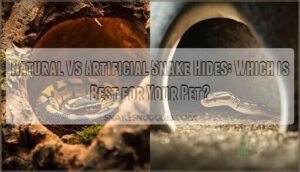
Your ball python refuses to leave that chipped ceramic cave, while your friend’s corn snake practically lives in a hollowed cork bark hide. The natural vs artificial hides for snakes debate isn’t just about aesthetics—it’s about understanding what makes your snake feel secure enough to eat, shed, and thrive.
Natural materials like cork and wood offer texture and humidity benefits that mimic wild environments, but they can harbor mold and break down over time. Artificial options—plastic, resin, ceramic—give you easy cleaning and durability, yet some snakes ignore them completely.
The right choice depends on your species, your setup, and what your snake’s behavior is telling you.
Table Of Contents
Key Takeaways
- Natural hides like cork and wood offer humidity control and behavioral enrichment through authentic textures but require vigilant inspection for mold, pests, and decomposition—especially in setups above 70% humidity.
- Artificial hides made from plastic, resin, or ceramic provide predictable sizing, effortless cleaning with reptile-safe disinfectants, and durability that withstands weekly sanitizing without the structural breakdown you’ll see in porous materials.
- Your snake needs at minimum two hides positioned at opposite ends of the thermal gradient so it can choose security without sacrificing thermoregulation, with species like ball pythons preferring tight enclosures while corn snakes favor spacious retreats.
- The right hide depends on watching your individual snake’s behavior over weeks—track which shelters it uses most, monitor stress indicators like feeding patterns, and match materials to your substrate type rather than defaulting to aesthetic preferences.
Natural Snake Hides: Features and Benefits
Natural hides bring a slice of the wild into your snake’s enclosure, and they’re more than just pretty decorations. Materials like cork bark, hollow logs, and chunks of wood offer textures and porosity that work with your terrarium’s environment in ways artificial options can’t quite match.
If you’re looking for that natural aesthetic with easier maintenance, high-quality resin hides designed for naturalistic terrariums bridge the gap beautifully.
Let’s look at what each natural material brings to the table, how they affect your setup’s humidity and airflow, and what risks you’ll need to watch for.
Common Natural Hide Materials (Cork, Wood, Logs)
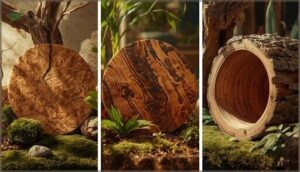
When you’re shopping for a natural snake hide, you’ll encounter three main materials that each bring something unique to your slithery friend’s terrarium:
Each material works differently depending on your snake terrarium setup, so think about humidity needs and cleaning habits before you choose.
- Cork bark hides – Lightweight, rot-resistant, and naturally insulating for temperature control
- Wooden hides – Offer varied wood textures and natural aesthetics your snake will appreciate
- Log hides – Provide authentic log designs with hollow centers for natural cover
- Material durability – Cork and hardwood resist decay better than softwoods
- Surface grip – Rough bark textures help prevent slipping during movement
Impact on Humidity and Ventilation
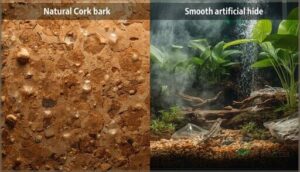
Natural hides can seriously affect your terrarium’s humidity and airflow. Porous materials like cork and wood absorb moisture from the air, creating damper pockets inside the hide—great for humidity-loving species, but risky if you’re not watching substrate wetness.
For species like the Children’s Python, pairing natural cork with a moist hide helps maintain the right balance during their shedding cycles.
Their irregular shapes can also block ventilation paths, so place them away from intake vents to keep air moving freely through your reptile habitat.
Natural Aesthetics and Behavioral Enrichment
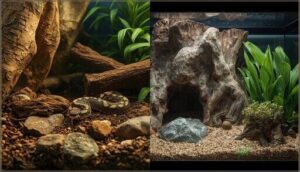
Beyond moisture control, real wood and cork bring your snake habitat to life with sensory cues that spark natural behavior. Texture variety and scent marking opportunities encourage species-typical exploration, while irregular shapes create microhabitat zones for thermal exploration—proven enrichment strategies that reduce stress more than bare setups.
Here’s what natural cover adds to your slithery friend’s world:
- Authentic textures stimulate foraging instincts and exploratory activity
- Scent cues from organic materials support instinctive shelter use
- Complex structures promote thermal exploration across temperature gradients
- Irregular entryways enable natural concealment behaviors
- Environmental enrichment mimics vegetation planting patterns from wild habitats, improving reptile behavior
Potential Risks (Decomposition, Pests, Splinters)
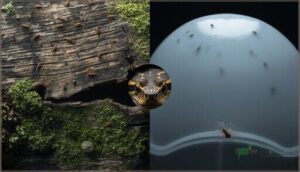
That natural cover carries hidden trade-offs. Untreated wood can sprout mold within days when humidity creeps above 70 percent, creating bacterial hotspots that fuel skin infections. Hide sanitation becomes trickier with porous materials, and material toxicity lurks if you’ve grabbed pesticide-treated bark.
Wild-collected branches sometimes harbor mites or ticks—decomposition risks that escalate without proper pest control. Sharp edges mean splinter prevention matters, because rough surfaces snag retained shed and open wounds.
Your reptile hide demands vigilant inspection to protect animal welfare.
Artificial Snake Hides: Features and Benefits
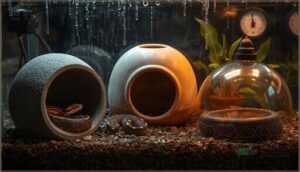
Artificial hides bring precision and practicality to your snake’s habitat. They’re made from materials like plastic, resin, and ceramic—each with its own perks for safety, cleaning, and temperature control.
Let’s look at what makes these manufactured options stand out.
Well-designed hides help minimize signs of snake stress and anxiety by giving your pet secure retreat options throughout their enclosure.
Popular Artificial Hide Materials (Plastic, Resin, Ceramic)
When weighing artificial options, three materials stand out. Plastic hides are lightweight, affordable, and come in countless varieties—from simple half-logs to elaborate caves.
Resin durability shines with long-lasting, molded designs that resist cracks.
Ceramic hides offer serious benefits: they retain heat like a champ, clean easily thanks to non-porous glazes, and bring aesthetic appeal that rivals wooden hides while outlasting most reptile hides.
Uniformity and Placement Flexibility
One of artificial hides’ unsung superpowers is their predictable sizing—you can arrange them with pinpoint precision to nail your temperature gradient every single time. When selecting a hide, consider the benefits of a reptile hide box for your pet’s comfort and security.
Modular hide systems let you reconfigure your setup as your snake grows, and uniform hide sizes mean you can swap them between zones without disrupting your slithery friend’s routine.
Adaptive hide configurations support flexible enclosure design, whether you’re working with a 20-gallon starter tank or a custom vivarium that rivals a studio apartment.
Cleaning and Maintenance Advantages
Most reptile care guides will tell you the same thing: artificial hides practically clean themselves—well, almost. Smooth plastic and resin surfaces let you wipe away biofilm and dried waste in minutes, then disinfect with chlorhexidine or F10 SC without worrying about moisture soaking into porous material.
Your cleaning schedules stay simple, your substrate stays drier, and material durability means these hides withstand weekly sanitizing without cracking or warping.
Proper reptile aquarium accessories, such as reptile habitat, are essential for creating a natural environment.
Integrated Ventilation and Safety Features
Many commercial plastic and resin snake hides lack dedicated ventilation holes, relying only on door openings for airflow—which can trap heat and humidity inside your reptile enclosure.
Look for hides with integrated mesh panels or perforated walls that promote airflow management and thermal regulation across your terrarium design.
Cross-ventilation prevents localized hot spots, aids respiratory health, and keeps your reptile habitat safer for every species.
Comparing Comfort and Security for Snakes
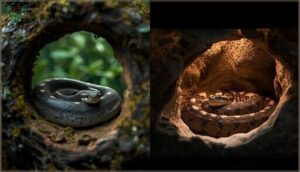
Ultimately, your snake doesn’t care whether its hide came from a forest or a factory—it just wants to feel safe. Both natural and artificial hides can deliver that peace of mind, but they do it in slightly different ways that matter for stress levels, temperature control, and species-specific needs.
Your snake doesn’t care if its hide is natural or artificial—it just wants to feel safe
Let’s break down how each type stacks up when it comes to keeping your slithery friend comfortable and secure.
Stress Reduction and Hiding Behaviors
When your snake tucks itself away, it’s not just resting—it’s coping with perceived threats and managing anxiety by exercising control over its environment. Research shows that snakes with access to quality hide boxes display up to 25% fewer stress responses compared to those without proper refuges. Here’s how hiding behavior supports your slithery friend’s mental health:
- Behavioral coping kicks in fast – When snakes sense unfamiliar motion or handling, anti-predator brain circuits fire up, and retreating into a secure refuge helps them modulate exposure and gradually habituate to novelty.
- Stress hormones drop with environmental enrichment – Studies on Kenyan sand boas found that multiple hides lowered plasma corticosterone levels, indicating real physiological stress reduction.
- Chronic stress without refuges leads to shutdown – Snakes denied adequate hiding places may refuse food, stay motionless for extended periods, or engage in repeated escape attempts—all signs of snake anxiety.
- Close-contact hides increase refuge security – Your snake prefers shelters that provide contact on multiple sides, which decreases perceived exposure and bolsters its natural tendency toward thigmotaxis (touching surfaces for comfort).
- Proper reptile care and maintenance means matching hide type to species – Ground-dwellers like royal pythons need fully enclosed ground-level options, while arboreal species seek elevated cavities with overhead cover.
Without the right hide, your pet can’t express natural snake behavior, and that inability fuels generalized anxiety over time.
Privacy, Insulation, and Thermoregulation
Your snake hide functions as a privacy screen, insulation layer, and thermoregulation hub all at once. Visual barriers inside reptile hide enclosures block sight lines and reduce vigilance, while the enclosed space creates microclimate management—temperature buffering up to 5 °C cooler than ambient during peak heat.
Positioning hides along thermal gradients lets your pet choose warmer or cooler zones for humidity control without sacrificing security, supporting ideal snake habitat design.
Suitability for Specific Snake Species
Not every snake uses a hide the same way—ball pythons crave tight, dark retreats like a security blanket, while corn snakes often prefer spacious shelters with multiple exits. Ground-dwelling snakes benefit from low-profile reptile hides that mimic burrows, while arboreal species need elevated options.
Matching your snake hide to species needs and snake behavior ensures environmental enrichment and proper thermal gradients throughout your snake habitat.
Health, Safety, and Maintenance Considerations
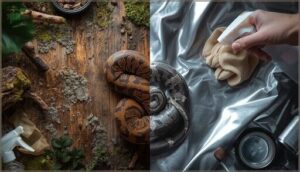
Keeping your slithery friend safe means staying ahead of hazards like mold, bacteria, and sharp edges that can turn a cozy hide into a health risk. You also need to know which materials are safe and which could leach toxins into your snake’s space.
Let’s walk through the key safety checks, material concerns, and maintenance routines that keep both natural and artificial hides in top shape.
Preventing Mold, Bacteria, and Injury
Vigilance makes the difference between a safe snake hide and a health hazard. Daily spot cleaning of substrate around your reptile hide is essential, paired with weekly wipes using reptile-safe disinfecting solutions.
Proper ventilation systems prevent mold prevention failures that trigger respiratory trouble. Smooth surfaces reduce injury risk during shedding, while monthly deep sanitation methods control bacterial growth—especially on porous natural hides that trap moisture and microbes.
Toxicity and Material Safety
Beyond keeping your snake hide clean, you’ll need to watch what it’s made of. Chemical contamination from untreated wood or cheap plastics poses real risks—volatile compounds off-gas under heat, and toxic residues from pesticides or hazardous coatings can leach into your enclosure.
Safe plastics and ceramic hides tested for animal welfare should be your baseline:
- Choose food-grade polypropylene or verified PVC reptile hide products
- Avoid unsealed paints, uncured silicones, or unknown resin formulations
- Rinse natural cork monthly to remove pesticide traces
- Skip adhesives and aromatic wood oils entirely
Routine Inspection and Replacement Guidelines
Once you’ve eliminated toxic materials, your snake hide cleaning schedules and inspection frequency become your safety net. Daily spot checks catch waste and mold early, while weekly lifts reveal hidden damp spots beneath. Deep clean every 2–4 weeks with reptile-safe disinfectant, and apply replacement criteria without hesitation when cracks, persistent stains, or structural wobble appear.
| Inspection Type | Frequency | What to Check |
|---|---|---|
| Visual scan | Daily | Waste, spills, surface damage |
| Lift and assess | Weekly | Hidden debris, stability, pests |
| Deep clean and replace as needed | Every 2–4 weeks | Cracks, mold, worn edges |
Safety checks protect your slithery friend—maintenance protocols aren’t optional, they’re non-negotiable.
Choosing The Best Hide for Your Snake
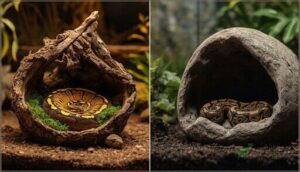
You’ve learned how natural and artificial hides compare regarding safety, maintenance, and comfort. Now it’s time to match those insights to your snake’s specific needs.
The right hide depends on your species, your setup, and what works within your budget and lifestyle.
Assessing Species and Individual Preferences
Your snake’s personality matters just as much as its species when you’re picking the right hide. Ground-dwelling snakes like western hognoses spend most of their time burrowed under natural cover, while arboreal species want elevated refuges. Watch your snake’s behavior over several weeks to see which hide preferences emerge—some individuals are bold explorers, others stay hidden even when their cousins venture out.
Key factors to observe in your snake habitat:
- Time spent in hides — Track whether your slithery friend uses tight, opaque shelters or partially open refuges most often
- Microclimate choices — Notice if they prefer the warm-side hide, cool-side retreat, or humid spots during shedding
- Stress indicators — Look for reduced feeding, excessive hiding, or changes from baseline animal welfare patterns
- Species research — Compare your observations with documented hide preferences for your snake’s wild counterparts
- Environmental enrichment response — Test multiple hide types simultaneously and let repeated voluntary selection guide your choice
Individual differences can be as strong as species trends. Reactive snakes often need snugger, darker reptile hide options, while exploratory types may thrive with diverse structural features. Treat your snake’s consistent choices as evidence of true preference—that’s applied animal welfare in action.
Enclosure Design and Substrate Compatibility
Your terrarium’s substrate and hide placement work together like dance partners—when they’re in sync, your snake thrives. Match substrate depth and moisture retention to your hide type, then position hides at opposite ends of your thermal gradients.
Here’s how different substrates pair with hide materials:
| Substrate Type | Best Hide Match |
|---|---|
| Cypress mulch, coconut fiber | Natural cork or wood hides that buffer humidity |
| Paper-based bedding | Artificial plastic or resin hides for easy cleaning |
| Bioactive soil mixes | Partially buried natural logs that allow digging |
| Sand or dry pellets | Low-profile ceramic hides that retain warmth |
| Layered drainage systems | Elevated or sloped hides preventing moisture pooling |
In bioactive systems, natural hides integrate beautifully with microfauna-rich substrates, while artificial reptile hide options shine in clinical setups. Secure heavy hides directly on your enclosure floor before adding loose substrate—this prevents dangerous shifting when your snake burrows. Position one snake hide over moist substrate on the warm side and another over drier material in the cool zone, giving your pet full control over its microclimate. That’s enclosure layout done right.
Budget, Availability, and Longevity
Your wallet and your snake’s wellbeing don’t have to fight. Plastic hides run $5–$20 and last decades, while natural cork bark starts around $7 but may need replacement every 2–4 years in humid setups. Ceramic hides split the difference—durable, easy to clean, and available through reptile suppliers online.
Budget strategies like buying unbranded options or sourcing secondhand reptile hide pieces stretch your dollar without compromising snake housing hides quality or hide durability.
Frequently Asked Questions (FAQs)
Can I combine natural and artificial hides together?
You absolutely can pair different hide types in one enclosure. Environmental enrichment thrives on variety, and combining natural cover with reptile hide options gives your snake preference more thermal gradient zones and choices.
How many hides does one snake actually need?
Picture your slithery friend at a crossroads: security or warmth? At minimum, you’ll need two hides—one on the warm side, one on the cool—so your snake doesn’t sacrifice comfort for thermoregulation.
Do baby snakes need smaller or different hides?
Yes, your slithery friend needs a snug hide—think tight as skinny jeans. Hatchling hides should match their body width, offering neonate security.
As juvenile enrichment needs grow, you’ll resize hides during snake ontogeny for grounddwelling snakes’ comfort.
Will changing hides stress out my snake significantly?
Changing hides can cause temporary stress, but most snakes adapt within days. Move slowly, maintain familiar scents, and monitor behavior.
Gradual hide shift paired with consistent routines minimizes environmental impact on snake behavior and aids stress reduction.
Are there eco-friendly alternatives to plastic artificial hides?
Yes—cork bark, hardwoods, bamboo, and ceramic shelters are all eco-friendly alternatives. These sustainable materials offer renewable resources and biodegradable hides that support reptile conservation while creating natural cover your snake will love.
Conclusion
Think of natural vs artificial hides for snakes like choosing between a wool sweater and a fleece jacket—both keep you warm, but one breathes differently and feels more familiar. Your snake doesn’t care about trends.
Watch how it moves, where it settles, and whether it’s eating consistently. That behavior tells you everything. Mix materials if needed, inspect regularly, and prioritize what makes your specific animal feel secure enough to thrive.
- https://mcluhan.unk.edu/lawson/?page_id=187
- https://elsevier.blog/sub-points-outlining-organization/
- https://github.com/vinhphunguyen/how-to-write-a-paper/blob/master/how-to-write-paper.out
- https://www.sciencedirect.com/science/article/pii/S2949916X23000464
- https://libraryguides.ccbcmd.edu/c.php?g=1408884&p=10790074