This site is supported by our readers. We may earn a commission, at no cost to you, if you purchase through links.

Most people picture a tank with a single sad ball python when they think of pet snakes—but there are thousands of recognized color morphs for that one species alone, and dozens of other breeds worth knowing. Snakes have quietly become one of the most popular reptile pets in the U.S., and for good reason. They don’t need walks, they rarely make noise, and a well-chosen species can thrive on minimal interaction.
The catch is that “low-maintenance” means something different for a corn snake than it does for a boa constrictor. Getting familiar with pet snake breed information before you buy saves you from mismatched expectations and a stressed-out animal.
Table Of Contents
- Key Takeaways
- Popular Pet Snake Species
- Beginner-Friendly Snake Breeds
- Snake Breed Identification
- Snake Behavior and Temperament
- Unique Characteristics of Snake Breeds
- Habitat and Enclosure Needs by Breed
- Diet and Feeding Habits
- Health Considerations for Snake Breeds
- Venomous Vs. Non-Venomous Pet Snakes
- Choosing The Right Snake for You
- Frequently Asked Questions (FAQs)
- What is the best breed of snake for a pet?
- Can a snake know its owner?
- How do I identify my pet snake?
- What to know before getting a pet snake?
- Do pet snakes recognize their owners?
- What are some popular pet snake breeds?
- What are the different types of pet snakes?
- Should you get a pet snake?
- What are the best pet snakes for beginners?
- Which snake species should you keep as a pet?
- Conclusion
Key Takeaways
- Ball pythons (Python regius) and corn snakes (Pantherophis guttatus) are the most forgiving starting points for new keepers — calm by nature, easy to house, and available in hundreds of color morphs.
- Matching a snake to your actual space, schedule, and experience level matters more than picking the most visually striking species, since some animals like boa constrictors need serious room and a 20-year commitment.
- Getting temperature gradients, humidity levels, and at least two hides right isn’t optional — snakes are ectotherms, so a poorly set-up enclosure leads directly to health problems, refused meals, and stressed behavior.
- Safe feeding comes down to three non-negotiables: always use frozen-thawed prey, match prey size to the snake’s girth, and wait 48 hours after feeding before handling to prevent regurgitation.
Popular Pet Snake Species
Not all snakes are built the same, and that’s actually what makes choosing one so interesting. Each species has its own personality, look, and care needs — so the right fit really depends on what you’re looking for.
If you’re drawn to something a little more unique, the banana ball python care guide is a great place to see how one popular morph’s coloring and temperament sets it apart from the rest.
Here are six of the most popular pet snakes worth knowing about.
Ball Python
If you’re after a snake that’s genuinely hard to rattle, the ball python (Python regius) might be exactly what you’re looking for. Known for its calm temperament, this beginner-friendly species curls into a tight ball when stressed — hence the name. Python morphs mean you’ll find hundreds of color morphs to choose from.
Key needs include:
- A thermal gradient with a warm side near 95°F
- Proper enclosure sizing so it can stretch and explore
- A steady snake diet and feeding schedule using frozen-thawed prey
Corn Snake
Corn snakes (Pantherophis guttatus) give you that same easy-going temperament as the ball python, but in a slimmer, more active package that a lot of keepers find just as hard to resist. Their belly scales show a distinctive maize pattern, and their handling docility makes them ideal beginner pet snakes.
Care simplicity is another win — corn snakes thrive on basic setups, and hundreds of color morphs mean you’ll never run out of options.
Kingsnake
Kingsnakes (Lampropeltis spp.) bring a different kind of appeal to the table — they’re bold, adaptable, and surprisingly low-maintenance for a species with such a striking presence. Kingsnake adaptability makes them one of the more forgiving snake species for new owners. When choosing a pet snake, these three traits stand out:
- Varied colors across subspecies — from black and white bands to deep reds
- Diet needs are simple — frozen mice work perfectly
- Handling kingsnakes is straightforward, as they’re naturally docile
That combo makes kingsnake pet snake care genuinely beginner-friendly.
Milk Snake
Milk snakes (Lampropeltis triangulum) take everything you love about kingsnakes and turn the color dial up a few notches. Their banded colors — bold reds, blacks, and whites — make them one of the most visually striking constrictors you can keep. That slender build keeps them manageable, and the kingsnake link means they’re just as beginner-friendly.
| Feature | Detail | Beginner Rating |
|---|---|---|
| Snake Coloration and Morphs | Red, black, white bands | ★★★★★ |
| Slender Build | Lightweight, easy to handle | ★★★★★ |
| Active Temperament | Curious, engaging to watch | ★★★★☆ |
Garter Snake
If you’ve ever spotted a striped snake darting through tall grass near a pond, chances are you were looking at a garter snake (*Thamnophis spp.
*) — one of North America’s most common and, surprisingly, most rewarding pet snakes.
These small Colubridae members are North American natives known for their active nature and social behavior.
Use a heat lamp, not a heat rock, and approach them from the side — simple handling tips that go a long way.
Boa Constrictor
The boa constrictor (Boa imperator) has a reputation that walks into the room before it does — powerful, exotic, and just a little intimidating — but experienced keepers know there’s a lot more nuance behind that name.
Members of the family Boidae, these constrictors are actually known for calm temperament. Enclosure size matters most here — adults need serious space.
Boa morphs vary widely in color, and their constrictor diet of appropriately sized prey makes reptile care straightforward once you’re set up right.
Beginner-Friendly Snake Breeds

Not every snake is a good match for a first-time keeper, but a few species make the learning curve pretty manageable. The breeds below tend to be calm, forgiving, and straightforward to house.
Here’s a closer look at two solid starting points.
Rosy Boa
Few snakes earn their reputation as a beginner’s best friend quite like the rosy boa (Lichanura trivirgata). Its docile nature and handling willingness make it one of the most forgiving beginner snakes you’ll find.
Husbandry is refreshingly simple — a modest snake enclosure, stable temperatures, and a light feeding schedule. For anyone just starting out, rosy boa pet care requirements won’t overwhelm you.
California Kingsnake
California kingsnakes (Lampropeltis californiae) punch well above their weight regarding personality — bold, adaptable, and surprisingly easy to care for. They’re nonvenomous snakes with a docile temperament that makes handling straightforward. Kingsnake morphs also give you plenty of variety in color and pattern. Here’s what makes them standout beginner snakes:
- Thrive across an adaptable habitat range
- Accept a varied diet, including rodents and lizards
- Low-maintenance pet care requirements
- Generally calm and easy to handle
- Widely available from reputable breeders
Snake Breed Identification
Telling snakes apart doesn’t have to feel like a guessing game. Once you know what to look for — color, pattern, and body shape — most species become surprisingly easy to identify.
Here’s a closer look at each of those three clues.
Coloration and Morphs
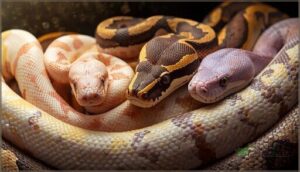
Coloration in snake breeds isn’t random — it’s driven by genetic inheritance, specifically how dominant, recessive, and co-dominant mutation types stack together. These morphological variations produce everything from vibrant albino corn snakes to piebald ball pythons.
The morph market reflects real demand, with rarer combinations fetching hundreds of dollars. Ethical breeding matters here too, since some morphs carry health implications worth knowing before you buy.
For more information on how selective breeding impacts reptile welfare, see this breakdown of genetic and health consequences.
Pattern Recognition

Once you know what to look for, a snake’s pattern tells you almost as much as a DNA test. Corn snakes show blotched markings along the back and a checkered cam of belly scales underneath — that combo alone nails species identification. Milk snakes wear banded stripes of black, red, and white.
Juvenile coloration can shift with age, so morphological variations between young and adult snakes are worth tracking carefully.
Size and Body Shape

Pattern gets you close, but size and body shape often seal the deal. A ball python is stocky and short, while a corn snake is slender and longer. Here’s what to compare:
- Adult Lengths — garter snakes stay small; kingsnakes reach medium size
- Body Girth — ball pythons are thick; corn snakes are lean
- Growth Rates — most pet snakes reach adult size within two to three years
Snake Behavior and Temperament

Not every snake has the same personality — and yes, that matters more than you’d think. Some breeds are calm and easy to handle, while others are quick to strike when they feel threatened.
Here’s a look at how temperament, handling tolerance, and activity levels break down across common pet species.
Docile Vs. Defensive Breeds
Not every snake gets the memo that it’s supposed to be a calm, easygoing pet — and knowing which breeds lean docile versus defensive can save you a lot of surprise nips down the road. Genetic traits play a huge role here. Ball pythons and corn snakes are popular pet snake species precisely because their temperament factors favor calm handling.
Defensive breeds, like some wild-caught garter snakes, may display stress signals — hissing, musking, or striking — until they’re properly acclimated.
Handling Tolerance
Even within docile breeds, individual snakes vary quite a bit in how much handling they’ll actually tolerate — and that gap matters more than most new owners expect. Gentle species like corn snakes and ball pythons still need time to trust you. Watch for stress signals — musking, tight coiling, or repeated tongue-flicking — and back off when you see them.
- Start slow — short, calm sessions build confidence faster than long ones
- Approach from the side — never from above, which triggers a defensive startle response
- Support the full body — secure handling reduces anxiety and teaches the snake you’re safe
- Stay consistent — regular handling frequency, two to three times weekly, is a proven taming technique
Activity Levels
How often your snake moves around — and when — tells you almost as much about its wellbeing as its appetite does. Most pet snakes are nocturnal animals, so don’t worry if yours stays coiled all day.
Garter snakes are especially active and need daily stimulation, while ball pythons conserve energy like pros.
Reptile movement tied to predatory behavior — hunting, exploring, thermoregulating — is healthy snake behavior worth watching for.
Unique Characteristics of Snake Breeds

Every snake breed carries a set of traits that makes it genuinely one of a kind, from the way its scales catch the light to the patterns evolution has been quietly refining for millions of years.
Some of these features are purely visual, while others serve a real biological purpose.
Here’s a closer look at what sets different breeds apart.
Iridescent and Shiny Scales
Some snakes don’t just reflect light — they seem to collect it. The Brazilian rainbow boa (Epicrates cenchria) is the standout example of scale iridescence in the hobby.
Its scales produce a prismatic effect through structural coloration, not pigment, bending light refraction into a visible rainbow sheen. It’s one of the most visually striking unique snake characteristics found across the family Boidae.
Unusual Patterns and Colors
Beyond iridescence, the reptile world offers up patterns so bold they look almost painted on. Genetic variations drive these visual surprises, producing some of the most unique snake characteristics in the hobby.
Three species worth knowing:
- Corn snake — checkered belly scales that genuinely resemble maize kernels
- Green tree python — vivid emerald scales with stark white unique marks along the spine
- Ball python — hundreds of morphs born from pattern evolution in captivity
Evolutionary Adaptations
Millions of years of evolution packed a lot into a legless body. Your snake’s flexible jaws can stretch wide enough to swallow prey larger than its own head — no hands needed.
Evolution packed millions of years of survival into a legless body with jaws that swallow prey whole
Sensory organs like the Jacobson’s organ give snakes “stereo smell,” while limbless movement lets constrictors like ball pythons anchor and squeeze with surprising precision.
These snake evolutionary adaptations aren’t quirks — they’re engineering.
Habitat and Enclosure Needs by Breed

Every snake species has its own idea of a perfect home, and getting it right makes a real difference in their health and behavior. Temperature, humidity, and space all vary depending on the breed you choose. Here’s what you need to know for each one.
Temperature Requirements
Getting the temperature right in your snake’s enclosure isn’t just a comfort thing — it’s the difference between a thriving animal and a sick one. Snakes are ectotherms, so they rely entirely on their environment to regulate body temperature. A proper temperature gradient lets them move between a warm basking site and a cooler retreat as needed.
- Use a heat lamp, not a heat rock — rocks cause burns
- Corn snakes need a basking temperature near 90°F
- Ball pythons prefer a warm side around 95°F
- Always monitor both ends with a reliable thermometer
Humidity Preferences
Humidity is just as important as heat — get it wrong and your snake will struggle through every shed. Most species do well between 40–60% humidity levels, but tropical snakes like ball pythons need closer to 70–80%.
Track it with a hygrometer in your terrarium, and adjust substrate moisture as needed. Good ventilation effects airflow without drying everything out too fast.
Space and Hiding Places
A snake without a hide is a snake on edge — and a stressed snake stops eating, starts hiding in corners, and generally makes your life harder. Every terrarium needs at least two hides: one on the warm side, one on the cool. Enclosure size matters too — a corn snake needs far less room than a boa.
Add substrate choices like coconut fiber, some plants decor, and climbing structures if your species uses vertical space. That’s your habitat setup done right.
Diet and Feeding Habits

Feeding a pet snake isn’t complicated, but getting it right makes a real difference in their health and temperament. Every species has its own preferences regarding prey type, portion size, and how often they want to eat.
Here’s what you need to know about feeding habits across the most popular breeds.
Prey Types for Each Species
What your snake eats depends almost entirely on the species you’re keeping, and getting that match right makes all the difference. Most pet snakes thrive on a carnivorous diet built around rodents, but prey size and diet variety matter more than people realize.
A few key things to keep in mind:
- Ball pythons and corn snakes do well on appropriately sized mice or rats
- Garter snakes lean insectivore, accepting fish and earthworms as rodent alternatives
- Prey sourcing should always prioritize frozen-thawed over live prey
Feeding Frequency
Once you’ve sorted out what your snake eats, the next question most keepers wrestle with is how often to feed them. Feeding frequency ties directly to age and meal size — hatchling feeding runs more often than adult feeding, since younger snakes need fuel for rapid growth rates.
| Life Stage | Feeding Schedule |
|---|---|
| Hatchling | Every 5–7 days |
| Juvenile | Every 7–10 days |
| Adult | Every 10–14 days |
A carnivorous diet built on rodents doesn’t need daily top-ups — snakes digest slowly, and overfeeding causes more problems than skipping a meal.
Safe Feeding Practices
Knowing when to feed your snake is only half the equation — how you feed them matters just as much. Safe snake feeding and diet habits protect both you and your snake.
- Always offer frozen/thawed prey — never live rodents that can injure your snake.
- Match proper prey size to your snake’s girth, not its length.
- Keep the feeding environment calm and separate from its main enclosure.
- Wait 48 hours post-feeding before handling to avoid regurgitation.
Health Considerations for Snake Breeds

Keeping a snake healthy isn’t complicated, but it does require knowing what to watch for. Like any animal, snakes have a handful of common issues that show up more often than others, and catching them early makes a real difference.
Here’s what you should know about health problems, shedding, and how long your snake might actually live.
Common Health Issues
Even the hardiest species can run into trouble — and catching problems early makes all the difference.
Respiratory Issues, Mouth Rot, Skin Ailments, and Digestive problems are the most common threats to snake health and welfare, usually tied to husbandry mistakes like wrong temperatures or dirty enclosures. Parasite Control matters too.
Regular vet visits and prompt veterinary advice keep your snake healthy and give you peace of mind. For more details on common illnesses of pet snakes, including prevention tips and specific symptoms, consult expert veterinary resources.
Shedding Patterns
Shedding is one of the clearest windows into your snake’s overall health — when it goes smoothly, you’re doing something right. The Shedding Process usually takes one to two weeks, and Pre-Shed Signs are easy to spot:
- Eyes turn blue or milky
- Colors look dull or faded
- Your snake becomes less active
- Appetite often drops temporarily
Incomplete Sheds usually signal low humidity or dehydration — both fixable with basic snake care adjustments.
Lifespan Expectations
Before you bring home any snake, it’s worth knowing that many of these animals will still be with you a decade or two from now. Ball pythons regularly hit 25–30 years in captivity. Corn snakes usually reach 15–20.
Species longevity varies, but captive-bred individuals with consistent snake care often outlive wild counterparts. Genetic factors matter too, so ask your veterinarian and buy from reputable breeders.
Venomous Vs. Non-Venomous Pet Snakes
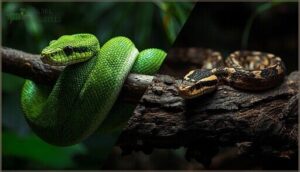
Choosing between a venomous and non-venomous snake is one of the biggest decisions you’ll make as an owner. Most people stick with non-venomous species, and honestly, there’s plenty of variety to keep things interesting.
Here’s what you need to know before making that call.
Safe Species for Ownership
Most snakes kept as pets fall into a surprisingly short list of species that are reliably safe, non-venomous, and genuinely well-suited to life in captivity. For beginner snake ownership, that’s actually good news — you don’t need to wade through hundreds of options. Popular pet snake varieties like the corn snake offer docile temperaments, manageable size, and straightforward care, making the venomous vs nonvenomous question easy to answer.
| Species | Why It’s Beginner-Friendly |
|---|---|
| Corn Snake | Docile, handleable, non-venomous choices |
| Ball Python | Calm, manageable, hardy |
| Kingsnake | Adaptable, low-maintenance |
| Rosy Boa | Gentle, slow-moving |
| Milk Snake | Bright, docile temperaments |
Identifying Venomous Traits
Telling a venomous snake from a harmless one isn’t as simple as checking for a rattle or bright colors — nature is a bit sneakier than that. Pupil shape, head shape, and heat pits can give you useful clues when distinguishing venomous vs nonvenomous species.
| Trait | Venomous | Non-Venomous |
|---|---|---|
| Pupil Shape | Elliptical (slit-like) | Round |
| Head Shape | Broad, triangular | Narrow, oval |
| Heat Pits | Present (pit vipers) | Absent |
Snake venom comes in two main forms — neurotoxic venom, which attacks the nervous system, and haemotoxic venom, which targets blood and tissue. Keel scales and body markings can also hint at species identity, but none of these traits are foolproof on their own.
Legal and Safety Concerns
Ownership laws around venomous snakes vary sharply by state — and your city’s zoning rules may be stricter than state law. Many jurisdictions require a reptile license, detailed escape prevention plans, and facility inspections. Injury liability is real; standard home insurance often won’t cover exotic pet incidents. Health risks like Salmonella add another layer. Know the captive reptile regulations before any snake acquisition and licensing process begins.
| Concern | What It Means | Your Action |
|---|---|---|
| Ownership Laws | State bans or permit requirements | Research your state first |
| Zoning | City codes may override state rules | Check local ordinances |
| Injury Liability | Insurance may not cover snake incidents | Get exotic pet coverage |
| Health Risks | Salmonella shedding is common | Practice strict hand hygiene |
| Escape Prevention | Permits require secure, locked enclosures | Plan containment before acquisition |
Choosing The Right Snake for You

Picking the right snake comes down to three honest questions: how much experience you have, how much space you can offer, and how far you’re willing to commit.
Some species are forgiving of beginner mistakes; others aren’t. Here’s what to weigh before you decide.
Owner Experience Level
Your experience level isn’t just a box to check — it’s the single biggest factor that determines which snake will thrive in your care and which one will quietly stress you both out.
First-time care with beginner snakes like corn snakes or rosy boas makes handling snakes far less intimidating.
As your skill progression grows, specialized husbandry provides entry to more demanding species with specific temperament needs.
Space and Commitment
Beyond picking the right species for your skill level, you’ll need to take an honest look at how much space you can actually offer — and how much of your time you’re willing to commit. A ball python’s housing demands more floor space as it grows, while beginner snakes like corn snakes need far less.
Daily care is minimal, but the financial investment and lifespan planning are real — some snakes live 20+ years.
Long-Term Care Needs
Committing to a snake isn’t just a weekend decision — it’s closer to adopting a decade-long (or longer) responsibility. This entails feeding schedules, veterinary checkups, and enclosure upgrades as your animal grows.
Your commitment level shapes everything: routine cleaning, heating adjustments, and shedding support become weekly habits. Growth adjustments mean bigger snake housing and environment upgrades over time.
Factor in enrichment needs, safe snake handling, and periodic reptile veterinary care — and you’ll be ready.
Frequently Asked Questions (FAQs)
What is the best breed of snake for a pet?
There’s no one-size-fits-all answer here. Owner suitability and lifestyle match matter most.
For beginner-friendly, low-maintenance types of snakes, ball pythons and corn snakes top the list thanks to their calm snake temperament.
Can a snake know its owner?
Snakes don’t recognize owners the way dogs do, but they do respond to owner scent and handling routines.
Through snake memory and familiarity response, they simply learn you’re not a threat.
How do I identify my pet snake?
Look at three things first: head shape, belly scales, and tail markings. Triangular heads often signal venomous vs nonvenomous snakes.
Scale texture and eye color help narrow down snake families and types of snakes fast.
What to know before getting a pet snake?
Getting a pet snake takes real commitment — time, money, and setup.
Research legal requirements in your area, source from reputable breeders, and invest in a proper pet snake starter kit before bringing one home.
Do pet snakes recognize their owners?
Pet snakes don’t recognize faces, but they do pick up on your scent and handling routine. Over time, familiar cues can reduce defensive behavior — that’s about as close to bonding as snake behavior gets.
What are some popular pet snake breeds?
Several species stand out in the Snake Owner Community. Ball pythons, corn snakes, and kingsnakes top the list for beginner-friendly types of snakes, while the Brazilian rainbow boa and green tree python attract more experienced keepers.
What are the different types of pet snakes?
There are three main groups: terrestrial species like the kingsnake, arboreal snakes like the green tree python, and aquatic varieties.
Nocturnal types, constrictors, and the iridescent Brazilian rainbow boa round out the diversity.
Should you get a pet snake?
If you’ve got the readiness for snake ownership, it can be deeply rewarding. Consider your lifestyle fit, time investment, and financial costs honestly — pet snakes aren’t demanding, but they do need consistent, informed care.
What are the best pet snakes for beginners?
Like picking a first car, the best beginner pet snakes balance handling tolerance, care simplicity, and size management.
Corn snakes, ball pythons, and kingsnakes top the list — all low-maintenance and beginner-friendly.
Which snake species should you keep as a pet?
The right species depends on your owner lifestyle and experience. Captive-bred options like the kingsnake or rosy boa are beginner-friendly, low-maintenance, and widely available — solid starting points for most compatibility factors.
Conclusion
A first-time keeper who picks a ball python over a boa constrictor based on solid pet snake breed information doesn’t just avoid a headache—they set up an animal to actually thrive.
The right match comes down to honest self-assessment: your space, your schedule, your tolerance for a 20-year commitment. Snakes don’t ask for much, but they do ask for the right keeper. Get that part right, and everything else follows naturally.
- https://a-z-animals.com/animals/snake/snake-facts/pet-snakes-that-stay-small/
- https://www.geniusvets.com/pet-care/learn/reptiles/snakes/blog/top-5-beginner-friendly-pet-snakes-according-vets
- https://www.reptilecentre.com/blogs/reptile-blog/7-awesome-pet-snakes
- https://reptifiles.com/corn-snake-care-guide/corn-snake-temperatures-humidity/
- https://www.petmd.com/reptile/ball-python-care-sheet