This site is supported by our readers. We may earn a commission, at no cost to you, if you purchase through links.

A boa constrictor outgrows its first enclosure faster than most keepers expect. A juvenile that fits in a 20-gallon tank today can hit six feet within a few years, and suddenly you’re looking at a 75-125 gallon requirement on a budget that wasn’t built for it.
Getting the housing wrong costs more than getting it right the first time. Poor heat retention, inadequate depth, or materials that warp under humidity don’t just inconvenience you, they stress your animal.
These ten enclosures give you real options without forcing you to choose between your snake’s welfare and your wallet.
Table Of Contents
- Key Takeaways
- Choose The Right Boa Constrictor Enclosure Size
- Top 10 Budget Boa Constrictor Enclosure Products
- 1. Ecoflex Reptile Lounge Enclosure
- 2. Large Black Reptile Hide Cave
- 3. ToxiRium Extra Tall Terrarium
- 4. Phailozoo Large Reptile Enclosure
- 5. 120 Gallon Reptile Enclosure
- 6. Unipaws Black Stackable Terrarium
- 7. Royxen Large Glass Reptile Terrarium
- 8. Phailozoo 120 Gallon Terrarium
- 9. Annzoe 80 Gallon Acrylic Reptile Terrarium
- 10. ToxiRium Stackable PVC Terrarium
- Compare Affordable Boa Enclosure Materials
- Control Heat and Humidity on a Budget
- Build a Safe, Low-Maintenance Boa Habitat
- Frequently Asked Questions (FAQs)
- What is the best enclosure for a boa constrictor?
- How to build a cheap snake enclosure?
- What snake is worth $100,000?
- How much do snake enclosures cost?
- Is it cheaper to build or buy a reptile enclosure?
- How cold is too cold for a boa?
- Can a boa live in a 20 gallon tank?
- How big of an enclosure do you need for a boa constrictor?
- What is the easiest boas to care for?
- What is the best terrarium for a boa?
- Conclusion
Key Takeaways
- Boa constrictors grow fast, so buy for where your snake is headed — adults need 75–125 gallons minimum, not the starter tank they came home in.
- Cheap enclosures cost more long-term: poor heat retention and humidity control stress your animal and rack up fixes that outprice doing it right the first time.
- PVC outperforms glass and wood for budget setups because it holds heat and humidity better, weighs less, and costs less to heat — but seal the bottom before adding moisture.
- Every enclosure on a budget needs three non-negotiables before anything else: a secure latch your boa can’t test open, a reliable temperature gradient of 78–95°F, and humidity held between 40–70%.
Choose The Right Boa Constrictor Enclosure Size
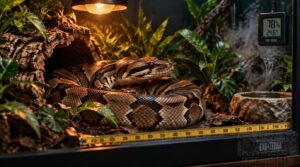
Sizing your boa constrictor enclosures correctly is the first thing you need to get right. Getting enclosure size wrong is one of the most common mistakes keepers make.
Before anything else, confirm you’re working with accurate boa constrictor tank size measurements — the numbers matter more than most keepers realize.
Start juveniles in a 20-30 gallon setup. Juvenile enclosure dimensions stay manageable at this stage, but you’ll want to upgrade as your snake grows. Move to a 40-55 gallon when they pass the two-foot mark.
Adult boa space needs are significant. A 6-8 ft boa needs at least 75-125 gallons to move properly. If yours hits 8-10 ft, push for 125-180 gallons. Any solid snake enclosure sizing guide will tell you to target 1.5x the snake’s body length.
Depth matters too. Keep it at 26-30 inches so your boa can fully coil.
Top 10 Budget Boa Constrictor Enclosure Products
These ten enclosures cover the full range of budget options without cutting corners on what matters. Each one brings something different to the table, so knowing what you’re comparing will help you choose fast. Price, material, and dimensions are what you’ll want to track as you go through the list.
1. Ecoflex Reptile Lounge Enclosure
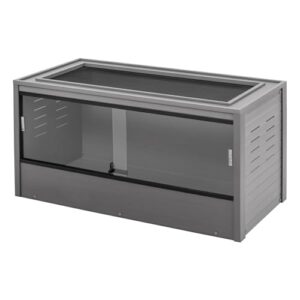
Most budget enclosures cut corners somewhere, but the Ecoflex Reptile Lounge mostly avoids that trap. At $246.90, you’re getting ECOFLEX composite construction built from recycled polymers and wood fiber, which stays moisture-resistant and doesn’t trap odors over time. Cleanup is genuinely quick.
The interior runs 46.46" x 22.32" x 21.26", giving a juvenile boa solid room to settle and grow. Front sliding glass doors with a lock give you clean, secure access without disturbing your snake unnecessarily. The large mesh screen top fits standard heat and UV lamp setups without any fuss.
A few things to watch: ECOFLEX isn’t waterproof, so skip standing water entirely. Keep heat lamps off the material directly or you’ll damage it. Assembly takes 20-30 minutes, and the 10-year warranty adds real value at this price point.
| Best For | Reptile keepers who want an easy-to-clean, well-ventilated enclosure for snakes, lizards, or tortoises in low-to-moderate humidity setups. |
|---|---|
| Material | ECOFLEX composite |
| Dimensions | 46.46" x 22.32" x 21.26" |
| Weight | 50.7 lb |
| Ventilation | Mesh screen top and vented side panels |
| Door Style | Sliding glass front doors with lock |
| Compatible Reptiles | Snakes, lizards, tortoises |
| Additional Features | 10-year warranty, odor-resistant ECOFLEX, 20-30 min assembly |
| Best For | Reptile and exotic pet owners who want a durable, easy-to-clean enclosure with solid ventilation for snakes, lizards, tortoises, or small mammals in low-to-moderate humidity setups. |
|---|---|
| Material | ECOFLEX composite |
| Dimensions | 46.46″ x 22.32″ x 21.26″ |
| Weight | 50.7 lb |
| Compatible Species | Snakes, lizards, tortoises |
| Door Style | Sliding glass, front lock |
| Ventilation | Mesh top and vented side panels |
| Additional Features |
|
- ECOFLEX composite resists moisture and odors, making routine cleanup fast and straightforward.
- Front sliding glass doors with a lock provide secure, low-stress access for both keeper and animal.
- The large mesh top and vented side panels support standard heat and UV lamp setups while keeping airflow strong.
- The material is moisture-resistant but not waterproof, so it can’t accommodate setups with standing water or high-humidity species.
- ECOFLEX isn’t chew-proof, making it a poor fit for gnawing animals like rabbits or rodents.
- Heat lamps must be kept from direct contact with the enclosure material, which limits some lamp placement options.
2. Large Black Reptile Hide Cave
Once you’ve sorted your main enclosure, the hide comes next. Every snake needs one, and skipping it adds stress you don’t want.
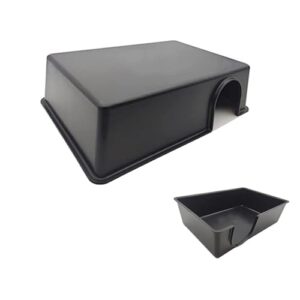
This black plastic hide cave is designed for smaller species. At 10.2 x 7.48 x 2.75 inches with a 2.75 x 2.36-inch entrance, it fits juvenile corn snakes, milk snakes, king snakes, and small geckos well. Always check your animal’s girth against that entrance before buying.
Smooth, nonporous plastic keeps cleaning fast. Wipe it down with a reptile-safe disinfectant, dry it fully, and it’s ready again. No odor buildup, no mold risk lurking in porous gaps.
At just 5.29 ounces, it’s light but practical for small species. The dark color helps retain ambient heat inside. This doesn’t fit large ball pythons or adult boas, so match it carefully to your species first.
| Best For | Small reptile owners looking for an affordable, easy-to-clean hide that keeps juvenile corn snakes, milk snakes, king snakes, geckos, and similar species feeling secure. |
|---|---|
| Material | Plastic and resin |
| Dimensions | 10.2" x 7.48" x 2.75" |
| Weight | 5.29 oz |
| Entrance Opening | 2.75" x 2.36" |
| Compatible Reptiles | Juvenile corn snakes, milk snakes, king snakes, small geckos, spiders |
| Additional Features | Heat-retaining dark color, easy-clean surface, suitable as a humid hide for baby reptiles |
| Best For | Small reptile keepers who need an affordable, easy-to-clean hide for juvenile corn snakes, milk snakes, king snakes, small geckos, or similar species. |
|---|---|
| Material | Plastic and resin |
| Dimensions | 10.2″ x 7.48″ x 2.75″ |
| Weight | 5.29 oz |
| Compatible Species | Corn snakes, milk snakes, king snakes, geckos |
| Door Style | N/A |
| Ventilation | N/A |
| Additional Features |
|
- Smooth, nonporous plastic makes cleaning quick and prevents odor or mold buildup
- Compact and lightweight at just 5.29 oz, with a dark color that helps retain ambient heat inside
- Versatile enough for multiple small species and doubles as a humid hide for baby reptiles
- The entrance opening is small, so you’ll need to measure your animal’s girth before purchasing
- Not suitable for larger snakes like adult ball pythons or boas
- Requires regular cleaning to stay hygienic, which may be an ongoing commitment for some owners
3. ToxiRium Extra Tall Terrarium
The hide covers your security needs. Now scale up to the main enclosure.
For enclosures housing adult or larger snakes, explore snake hide boxes sized for quarantine setups that offer the room and security bigger reptiles need to settle in comfortably.
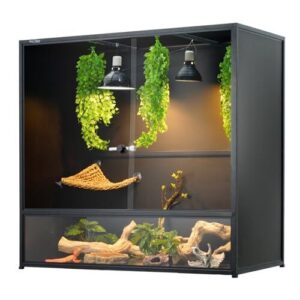
The ToxiRium Extra Tall Terrarium is built for serious keepers. At 48 x 24 x 46 inches and 230 gallons, it gives a full-grown boa the vertical space it needs. That 46-inch height lets you stack climbing branches and cork rounds without crowding. It’s one of the larger footprints in this price range.
PVC side panels hold heat and humidity well. You’re not constantly fighting temperature drops. The sliding tempered glass doors lock without a key, keeping access quick and clean.
The adjustable crossbar system lets you reposition heat lamps or UVB lighting as your setup changes. That flexibility matters long-term as your animal grows.
One practical note: the mesh top loses heat faster than a solid lid would. Factor that into your heating plan, especially in cooler rooms.
| Best For | Reptile owners with large climbing species like ball pythons or boa constrictors who need serious vertical space and reliable heat retention. |
|---|---|
| Material | Aluminum, PVC, tempered glass |
| Dimensions | 48" x 24" x 46" |
| Weight | 75 lb |
| Ventilation | Screened mesh top |
| Door Style | Sliding tempered glass front doors with keyless lock |
| Compatible Reptiles | Bearded dragons, ball pythons, boa constrictors |
| Additional Features | 230-gallon capacity, adjustable crossbar hangers, raised bottom for substrate heaters |
| Best For | Reptile owners keeping large climbing species like ball pythons or boa constrictors who need a spacious, tall enclosure with solid heat and humidity retention. |
|---|---|
| Material | Aluminum, PVC, tempered glass |
| Dimensions | 48″ x 24″ x 46″ |
| Weight | 75 lb |
| Compatible Species | Bearded dragons, ball pythons, boa constrictors |
| Door Style | Sliding tempered glass, keyless lock |
| Ventilation | Screened mesh top |
| Additional Features |
|
- Massive 48 x 24 x 46-inch frame with 230-gallon capacity gives large reptiles genuine vertical room to climb and explore.
- PVC side panels and insulated construction hold heat and humidity effectively, reducing the constant battle against temperature drops.
- Sliding tempered glass doors with keyless locks make daily access fast while keeping your animal secure.
- Mesh top ventilation loses heat faster than a solid lid, which can complicate heating in cooler environments.
- Assembly instructions are frequently reported as unclear or lacking enough detail to guide a smooth build.
- Some users note the frame feels flimsy, with wobbly metal poles that raise durability concerns over time.
4. Phailozoo Large Reptile Enclosure
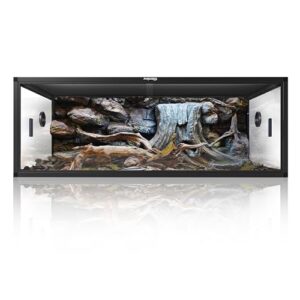
The Phailozoo Large Reptile Enclosure gives you a 48" x 24" x 18" footprint that comfortably fits a medium-sized boa without crowding the warm or cool side.
Construction uses aerospace-grade aluminum, PVC, tempered glass, and steel mesh. The steel mesh top screen blocks 28% of light while keeping airflow consistent, which matters when you’re running a heat lamp above it. Assembly is tool-free.
Feeding and spot-cleaning stay simple with sliding tempered glass doors and integrated substrate barriers. One real limitation: the doors don’t lock from the factory. If your boa tests boundaries, add an aftermarket latch before you need one.
It stacks neatly with the Phailozoo V2 stacker system, though those stackers are brand-exclusive and won’t fit other brands. For the price, this enclosure is a practical pick for corn snakes, bearded dragons, and green tree pythons.
| Best For | Reptile keepers who want a spacious, well-ventilated enclosure for medium-sized species like bearded dragons or corn snakes without sacrificing style or floor space. |
| Material | Aluminum, tempered glass, plexiglass, PVC |
| Dimensions | 48" x 24" x 18" |
| Weight | 33.5 lb |
| Ventilation | Metal mesh top screen |
| Door Style | Sliding tempered glass front doors |
| Compatible Reptiles | Corn snakes, bearded dragons, uromastyx |
| Additional Features | Five color options, stackable V2 system, no plastic joints |
Best For: Reptile keepers who want a roomy, well-ventilated enclosure for medium-sized species like bearded dragons, corn snakes, or green tree pythons.
| Material | Aluminum, tempered glass, PVC |
|---|---|
| Dimensions | 48″ x 24″ x 18″ |
| Weight | 33.5 lb |
| Compatible Species | Corn snakes, bearded dragons, uromastyx |
| Door Style | Sliding tempered glass, no lock |
| Ventilation | Metal mesh top screen |
| Additional Features |
|
- Spacious 48" x 24" x 18" footprint gives medium-sized reptiles plenty of room to thermoregulate properly
- Sliding tempered glass doors and substrate barriers make feeding and spot-cleaning quick and low-hassle
- Stackable with the Phailozoo V2 stacker system, making it easy to house multiple animals without losing floor space
- Doors have no built-in locks, so escape-prone reptiles will need an aftermarket latch
- The bottom isn’t leakproof out of the box, requiring re-sealing with silicone for bioactive or high-humidity setups
- V2 stackers are Phailozoo-exclusive and won’t work with enclosures from other brands
5. 120 Gallon Reptile Enclosure
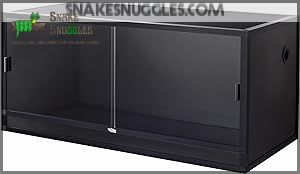
Few enclosures offer this much space at this price point. At 48" x 24" x 24", this enclosure gives juveniles room to explore and adults a long-term home without demanding a room renovation.
PVC panels hold heat and humidity far better than glass. That means less work for your thermostat and less money on supplemental heating. You’ll also get 12 integrated wire ports to route cables cleanly, no clutter snaking across your setup.
Assembly takes under 30 minutes. The toleranced quick-disassembly joints connect with a mallet on a hard surface, so skip the carpet. If you’re running humidity above 60%, seal the bottom with silicone first. It’s not waterproof out of the box, and skipping that step causes problems.
Weighing just 36 lbs, it’s much easier to move than most glass options.
| Best For | Reptile owners housing bearded dragons, ball pythons, leopard geckos, or small monitors who want a spacious, long-term enclosure without the bulk and cost of a comparable glass tank. |
|---|---|
| Material | PVC panels |
| Dimensions | 48″ x 24″ x 24″ |
| Weight | 36 lb |
| Compatible Species | Bearded dragons, ball pythons, leopard geckos, monitors |
| Door Style | N/A |
| Ventilation | N/A |
| Additional Features |
|
- At 48" x 24" x 24", it gives juveniles and adults plenty of room to grow into, making it a genuinely long-term housing solution.
- PVC panels retain heat and humidity more efficiently than glass, reducing strain on thermostats and cutting heating costs.
- Weighing only 36 lbs and assembling in under 30 minutes, it’s far more practical to set up and move than most same-size glass enclosures.
- The bottom isn’t waterproof out of the box, so you’ll need to apply silicone sealant before adding moisture if you’re maintaining higher humidity levels.
- Assembly requires a hard surface — carpet prevents the mallet-connected joints from seating properly, which limits where you can put it together.
- The enclosure must not be lifted from the top, which can make repositioning it after setup more awkward than expected.
6. Unipaws Black Stackable Terrarium

Space is what most reptile keepers run out of first. The Unipaws Black Stackable Terrarium is built with that directly in mind.
At 47.24 x 23.62 x 22.83 inches, it gives you 110 gallons, which is enough room for an adult boa to move, thermoregulate, and behave naturally. The sliding tempered glass doors lock with a custom metal latch, and silicone gap-seal bars close off any escape gaps. Four rotating cable holes let you route your heating and UVB cords without extra drilling or improvised cable management.
The stackable vertical design is the real draw. If you’re keeping multiple animals, you can stack units and reclaim floor space. That’s a genuine advantage in a smaller room.
One caveat: the MDF build holds heat well, but skip it for humid setups. It’s not rated for any high-humidity species, and the thinner back panel may need reinforcement over time.
| Best For | Reptile owners who want a clean, modern-looking enclosure for adult bearded dragons or large lizards, especially if they plan to stack multiple terrariums to save floor space |
| Material | Engineered MDF wood, metal mesh, glass |
| Dimensions | 47.24" x 23.62" x 22.83" |
| Weight | 57 lb |
| Ventilation | Metal mesh top |
| Door Style | Sliding glass doors with metal lock |
| Compatible Reptiles | Bearded dragons, large lizards |
| Additional Features | Rotating cable management holes, custom metal escape lock, vertical stacking ready |
Best For: Reptile owners who keep adult bearded dragons or large lizards and want a heat-retaining, modern-looking enclosure they can stack to save floor space.
| Material | Engineered MDF, metal mesh, glass |
|---|---|
| Dimensions | 47.24″ x 23.62″ x 22.83″ |
| Weight | 57 lb |
| Compatible Species | Bearded dragons, large lizards |
| Door Style | Sliding glass, metal lock |
| Ventilation | Metal mesh top |
| Additional Features |
|
- 110-gallon interior gives adult reptiles plenty of room to move and thermoregulate naturally
- Sliding tempered glass doors with a metal lock and silicone gap-seal bars keep escape attempts in check
- Stackable design lets you house multiple animals vertically without taking over the room
- MDF construction makes it unsuitable for humid or aquatic species
- The split top screen makes mounting a single UVB light bar awkward
- The thinner back panel may need reinforcing over time
7. Royxen Large Glass Reptile Terrarium
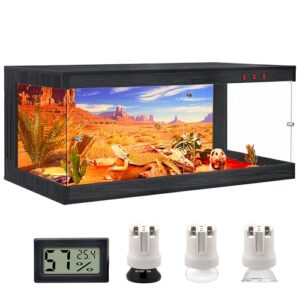
Glass clarity is underrated in reptile keeping. Being able to read your boa’s posture, color shifts, and active patterns without opening the lid? That’s real data.
The Royxen sits at 48"×20"×20", giving you roughly 82 gallons of interior space. That’s a solid fit for a juvenile boa. The front sliding door with locking handle keeps feeding clean and secure, and three built-in lamp holders let you dial in independent heat and UV zones without cable clutter.
The waterproof acrylic base is a genuine plus. It takes regular misting without warping, which matters when you’re maintaining humidity.
Ventilation is the weak point. Top and side openings exist, but they may not move enough air in high-humidity setups. Add a small clip fan if you’re pushing above 70%.
Assembly requires two people. And watch for mixed durability reviews on the glass panels before you commit.
| Best For | Reptile keepers housing juvenile boas or similarly sized terrestrial species who want clear observation and organized lighting without the cable mess. |
|---|---|
| Material | Glass, acrylic base |
| Dimensions | 48″ x 20″ x 20″ |
| Weight | N/A |
| Compatible Species | Juvenile boas, terrestrial species |
| Door Style | Front sliding, locking handle |
| Ventilation | Top and side openings |
| Additional Features |
|
- Three independent lamp holders let you set up separate heat and UV zones cleanly
- Waterproof acrylic base handles regular misting without warping
- Front sliding door with a locking handle makes feeding easy and secure
- Ventilation may fall short in high-humidity setups — a clip fan is likely needed above 70%
- Exposed internal wiring is a hazard for any climbing animals
- Glass panel durability has drawn mixed reviews, so inspect carefully on arrival
8. Phailozoo 120 Gallon Terrarium
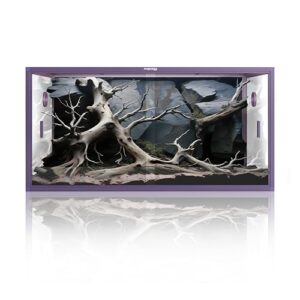
At 48" x 24" x 24", this enclosure actually delivers on what a large boa needs. That’s adult territory with room to spare for a full bioactive setup.
The sliding tempered glass doors make daily access fast. No awkward top-down reach needed. You feed, spot clean, and get out quickly. The rust-proof aluminum frame holds up against persistent humidity without corroding, which matters more than most budget buyers realize.
A few things need your attention before setup. The silicone-sealed bottom isn’t fully leakproof, so add extra sealant if you’re running a wet or bioactive environment. The sliding doors also have no built-in locking mechanism. Grab an aftermarket latch before your boa figures that out.
Five color options, stackable compatibility with Phailozoo V2 Stackers, and built-in side cable ports make this a serious budget contender at this price point.
| Best For | Boa constrictors and other large reptiles that need serious space, plus hobbyists who want room for a full bioactive setup |
| Material | Acrylic, aluminum, PVC, tempered glass |
| Dimensions | 48" x 24" x 24" |
| Weight | 44 lb |
| Ventilation | Rust-proof top screen |
| Door Style | Front-opening tempered glass doors |
| Compatible Reptiles | Bearded dragons, snakes, lizards |
| Additional Features | Built-in substrate barrier, minimal door gap frame, multiple color options |
Best For: Hobbyists housing adult boa constrictors or other large reptiles who want a spacious enclosure with room for a full bioactive setup.
| Material | Acrylic, aluminum, PVC, tempered glass |
|---|---|
| Dimensions | 48″ x 24″ x 24″ |
| Weight | 44 lb |
| Compatible Species | Bearded dragons, snakes, lizards |
| Door Style | Front sliding tempered glass, no lock |
| Ventilation | Rust-proof top screen |
| Additional Features |
|
- At 48" x 24" x 24", the enclosure offers genuine adult-sized space with room for enrichment, hides, and a full bioactive substrate layer.
- Front-sliding tempered glass doors make daily feeding and spot cleaning fast and stress-free, with no awkward top-down access required.
- The rust-proof aluminum frame and steel mesh top hold up well against persistent humidity, making it a durable choice for tropical and desert setups alike.
- The silicone-sealed bottom is not fully leakproof, so bioactive and high-moisture setups require additional sealant before use.
- The sliding doors have no built-in lock, meaning you’ll need to buy an aftermarket latch to keep escape-prone reptiles safely contained.
- Stackable compatibility is limited exclusively to Phailozoo V2 Stackers, which restricts flexibility if you plan to expand your setup with other brands.
9. Annzoe 80 Gallon Acrylic Reptile Terrarium
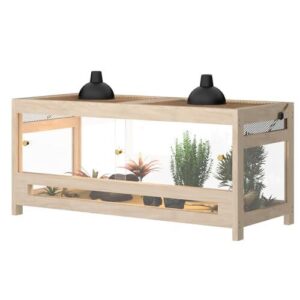
Not every boa needs a 120-gallon setup right now. The Annzoe 80 Gallon gives juvenile boas and smaller adults real coil room without overwhelming your space, measuring 47.2" x 21.2" x 20".
Four clear acrylic panels give you all-around visibility without cracking the lid every time you want to check on your snake. The flip-top mesh lid keeps airflow steady and locks down with a secure latch. That’s non-negotiable with boas.
The natural wood frame looks clean and holds up well, but it’s not waterproofed from the factory. Seal the wood before setup if you’re running cypress mulch or coconut fiber at humidity above 60%. Moisture gets into untreated wood fast and creates problems quickly.
Some buyers report broken bottom panels and snapped wooden dowels on arrival. Inspect every single piece before you start building.
| Best For | Juvenile boas, mid-size snakes, or reptile keepers who want clear all-around visibility without committing to a massive enclosure. |
|---|---|
| Material | Acrylic panels, natural wood |
| Dimensions | 47.2" x 21.2" x 20" |
| Weight | 27.7 lb |
| Ventilation | Ventilated mesh flip-top lid |
| Door Style | Ventilated mesh flip-top lid with latch |
| Compatible Reptiles | Bearded dragons, snakes, geckos |
| Additional Features | All-acrylic side panels, secure flip-top latch, natural wood aesthetic frame |
| Best For | Reptile keepers housing juvenile boas, mid-size snakes, bearded dragons, or geckos who want clear all-around visibility without committing to a large enclosure. |
|---|---|
| Material | Acrylic panels, natural wood |
| Dimensions | 47.2″ x 21.2″ x 20″ |
| Weight | 27.7 lb |
| Compatible Species | Bearded dragons, snakes, geckos |
| Door Style | Flip-top mesh lid, latch |
| Ventilation | Mesh flip-top lid |
| Additional Features |
|
- Four clear acrylic panels give you unobstructed views on all sides without opening the enclosure
- Flip-top mesh lid promotes steady airflow and allows UVB and heat lamp penetration
- Deep acrylic base keeps substrate contained and the natural wood frame gives it a clean, attractive look
- Some units arrive with broken bottom panels or snapped wooden dowels, so careful inspection before assembly is a must
- Wood is not waterproofed from the factory, requiring extra sealing before use in humid setups
- Reports of missing top latches and misaligned screw holes suggest inconsistent quality control
10. ToxiRium Stackable PVC Terrarium
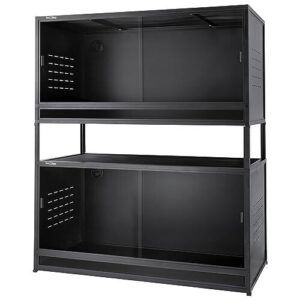
If you’re thinking beyond a single enclosure, the ToxiRium Stackable PVC Terrarium is worth serious attention. At 44" x 20" x 20" with roughly 76 gallons of usable space, it fits juvenile boas and smaller adults comfortably.
PVC retains heat far better than glass or acrylic, which means your heating equipment works less hard. That translates to real savings on energy bills month over month, not just a convenience on day one.
The stackable, interlocking design with reinforced support bars lets you add tiers as your collection grows. Those bars carry up to 105 lbs of décor, so you’re not cutting corners on enrichment or hides.
Tempered glass sliding front doors with a key lock mechanism handle daily access cleanly. Just check the door seal every single time you close it. Some units ship missing spacers or hardware, so inspect every component before you start setting up.
| Best For | Reptile keepers who want to expand their collection efficiently, offering stacking capability and PVC heat retention for species like bearded dragons, ball pythons, and small tortoises. |
|---|---|
| Material | PVC panels, acrylic |
| Dimensions | 44″ x 20″ x 20″ |
| Weight | N/A |
| Compatible Species | Bearded dragons, ball pythons, leopard geckos, tortoises |
| Door Style | Sliding tempered glass, key lock |
| Ventilation | Stainless steel mesh top |
| Additional Features |
|
- PVC construction retains heat better than glass, reducing energy costs over time
- Stackable design with reinforced support bars (rated to 105 lbs) makes multi-enclosure setups practical and space-efficient
- Tempered glass sliding doors with a key lock provide secure, convenient daily access
- Some units arrive missing spacers or hardware, requiring inspection before setup
- Thin PVC panels may bulge under heavy substrate when enclosures are stacked
- Front doors must be checked every time they’re closed to ensure a proper seal
Compare Affordable Boa Enclosure Materials
Now that you’ve seen the products, material is what separates a reliable setup from a frustrating one.
PVC panels lead budget boa constrictor enclosures. Light, affordable, easy to cut. UV exposure can cause brittleness within 6-12 months.
Here’s how the five materials stack up:
- PVC panels: Budget-friendly and light, though UV exposure shortens lifespan.
- Acrylic: Clear visibility, impact-resistant, but scratches easily and needs exact sealing.
- Tempered glass: Durable, cleanable, but glass tank limitations mean extra weight and cost.
- Solid wood frames: Natural look and wood enclosure savings, but moisture warping is a risk.
- Foam with polycarbonate skin: Cheap and insulating, but fragile edges need protection.
Match material to your climate. That decision shapes every boa constrictor enclosure upgrade you make.
Control Heat and Humidity on a Budget
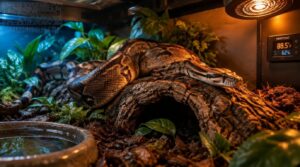
Material choice affects how heat moves through your enclosure. If you picked PVC or foam, you’ll retain heat more efficiently than with glass.
Start with a temperature gradient. Place heat sources on one end only. Boas need a basking spot of 90-95°F and a cool side around 78°F. That range lets them thermoregulate.
Budget thermostats make this simple. A basic on/off model runs under $30 and stops dangerous spikes. Pair it with a ceramic heat emitter for moisture-safe warmth without added cost.
Hygrometer placement is where keepers cut corners. Put one near the basking zone, one at mid-height. Target 40-60% for humidity control. Mist 1-3 minutes every few hours during dry spells. A shallow water bowl helps buffer levels too.
A dual-sensor reptile hygrometer thermometer lets you monitor both zones at once, so you catch humidity swings before they stress your boa.
Build a Safe, Low-Maintenance Boa Habitat
Once your heat gradient is dialed in, the rest comes down to structure and habits.
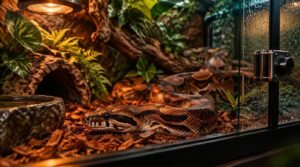
Escape prevention starts at the seams. Check every latch, every panel edge, every ventilation gap. A boa constrictor enclosure only works if it holds. Boas push. They find gaps you didn’t know existed. One loose hinge at 2 AM and you’ve got a problem.
A boa finds every gap you missed — check every latch, seam, and vent before it does
For low maintenance habitat upkeep, spot-clean daily and do a substrate swap monthly. Two to four inches of cypress mulch or coconut fiber holds moisture without trapping ammonia. It makes cleanup faster.
Budget pet reptile keeping doesn’t mean skipping safety. A $15 lock upgrade beats the cost of a lost snake. Keep your setup simple, clean, and consistent. That’s what lasts. Sliding bolt latches or reptile enclosure security locks give you peace of mind without breaking your budget.
Frequently Asked Questions (FAQs)
What is the best enclosure for a boa constrictor?
Think of a boa constrictor enclosure as a life support system. The best reptile enclosure is at least 6 feet long, locks securely, and reliably holds humidity between 50 and 70 percent for your snake.
How to build a cheap snake enclosure?
A boa constrictor builds its world from what you give it. Use PVC enclosures cut to size, follow a snake enclosure sizing guide, and keep cost-effective pet care simple with a basic DIY reptile habitat.
What snake is worth $100,000?
No verified sale record confirms a boa constrictor ever reaching $100, Rare morphs and exotic imports push prices high, but those six-figure claims consistently lack documented proof, making them speculation rather than real market benchmarks.
How much do snake enclosures cost?
Snake enclosures run $100 to $500. Enclosure size is the main cost driver. For cost-effective pet care, a boa constrictor enclosure starts near $120, while a 120 gallon reptile enclosure easily reaches $280 to $
Is it cheaper to build or buy a reptile enclosure?
A hammer costs less than a storefront. DIY snake enclosures often save 40–60% on a boa constrictor enclosure. But hinges, latches, and sealants quietly push your total up by $20–$ Always budget for those extras.
How cold is too cold for a boa?
Cold is a slow leak running through your whole setup. Keep ambient temps above 70°F at night without exception. Drop below that and your boa turns lethargic, refuses meals, and can’t properly digest a thing.
Can a boa live in a 20 gallon tank?
Think a 20 gallon can actually handle a boa constrictor long-term? It works for fresh hatchlings, but only very briefly. Boa constrictors outgrow it fast. Stress spikes, growth stalls. Upgrade your enclosure size within months.
How big of an enclosure do you need for a boa constrictor?
Picture your boa constrictor pressed tight against every wall, with nowhere to turn. Juvenile enclosure dimensions start at 2×5×1 ft. Adults reaching 6–8 ft need at least a 6×3×3 ft minimum to stretch and thrive.
What is the easiest boas to care for?
Ironically, ‘easy’ is always relative. Kenyan sand boas and rosy boas are genuinely forgiving, small, calm, and tolerant of beginner mistakes. Want more snake? Boa imperator feeds reliably and holds up to varied husbandry conditions without stress.
What is the best terrarium for a boa?
The best boa constrictor terrarium is one that holds heat, allows airflow, and gives your snake room to climb. A PVC reptile enclosure at 4’x2’x2′ minimum covers all three while maintaining a proper temperature gradient.
Conclusion
Budget doesn’t mean compromise. The right boa constrictor enclosures for snake enthusiasts exist at every price point, but only if you know what actually matters: floor space, humidity retention, and heat stability.
Skip the undersized starter tanks. Stop patching problems with workarounds that cost more over time. Pick an enclosure built for where your boa is headed, not just where it is now. Your animal’s health depends on that decision, and your wallet will thank you too.