This site is supported by our readers. We may earn a commission, at no cost to you, if you purchase through links.
Your ball python’s eyes look a little sunken today, and you’re not sure if you should worry. Here’s the thing, dehydration sneaks up on snakes faster than most new keepers realize, and by the time the signs become obvious, your pet might already be seriously compromised.
Unlike mammals that pant or show clear thirst, reptiles mask their distress until they’re really struggling. The good news? Once you know what to look for, spotting the early signs of dehydration in pet snakes becomes second nature.
Understanding these warning signals, what causes them, and how to respond quickly can mean the difference between a simple fix and an emergency vet visit.
Table Of Contents
- Key Takeaways
- Recognizing Signs of Dehydration in Snakes
- Common Causes of Snake Dehydration
- How to Diagnose Dehydration in Snakes
- Treating and Rehydrating Your Dehydrated Snake
- Top Products for Preventing Snake Dehydration
- Frequently Asked Questions (FAQs)
- How to fix dehydration in snakes?
- How do I tell if my pet is dehydrated?
- How to tell if a snake is unwell?
- Can snakes drink from moving water sources?
- Do certain seasons increase dehydration risk?
- How often should I mist my snakes enclosure?
- Can tap water harm my snakes hydration?
- Whats the ideal water bowl depth for snakes?
- Conclusion
Key Takeaways
- Dehydration in snakes shows up through sunken eyes, wrinkled skin that won’t snap back when pinched, dull scales, stuck shed, and lethargy—catching these early prevents serious health problems.
- Most cases stem from fixable husbandry mistakes like low humidity (aim for 50–70% for most species), dirty water bowls, or incorrect temperatures that silently drain your snake’s hydration reserves.
- You can treat mild dehydration at home by offering fresh water daily, raising humidity through misting and substrate changes, and providing 10–15 minute warm soaks, but severe cases need vet-administered fluid therapy.
- Prevention beats treatment every time—invest in a reliable hygrometer to monitor humidity, keep water bowls clean and accessible, and learn your specific snake’s natural habitat needs since tropical pythons require vastly different conditions than desert kingsnakes.
Recognizing Signs of Dehydration in Snakes
Spotting dehydration early can make all the difference in your snake’s health. You’ll want to know what to look for before things get serious, and the good news is that your snake will show you clear warning signs.
Understanding how often snakes actually need to drink water helps you distinguish between normal hydration patterns and genuine dehydration concerns.
Here are the key physical and behavioral changes that signal your pet needs more water.
Sunken or Dented Eyes
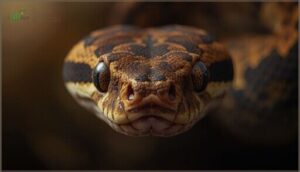
One of the first red flags you’ll notice is a sunken eye appearance—your snake’s eyes look hollow, almost dented, like someone pressed them gently inward. This eye tissue recession happens when dehydration pulls moisture from the delicate orbital area, compromising orbital health.
Dehydration pulls moisture from your snake’s eyes, making them look hollow and dented as though gently pressed inward
You might see dented eye caps or notice the eye socket depth looks more pronounced than usual, signaling your pet snake needs immediate hydration attention. Because conditions like sunken eyes in reptiles can be influenced by loss of collagen and elastin, it’s important to address dehydration quickly.
Wrinkled or Loose Skin
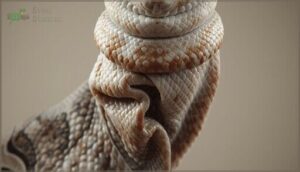
Right alongside those sunken eyes, you’ll spot wrinkled skin, especially around your snake’s neck and torso. This loose skin appears crinkled and saggy when moisture drops too low.
Dry skin loses its smooth texture, looking dull and rough instead of glossy. Desert species show wrinkles more dramatically than forest dwellers, so know your snake’s normal appearance to catch dehydration early.
Certain genetic conditions, such as those that cause reduced skin elasticity, can also contribute to similar symptoms in both humans and animals.
Loss of Skin Elasticity
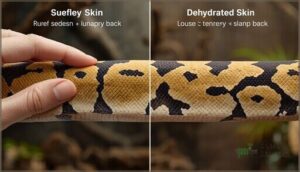
Beyond a wrinkled appearance, dehydrated skin won’t spring back when you gently pinch it. This happens because hydration levels drop, reducing collagen production and weakening elastic fiber networks in the dermal thickness.
Test skin elasticity by carefully lifting a fold along your snake’s side:
- Healthy skin snaps back instantly
- Mild dehydration shows slow recoil
- Severe cases leave skin tented
- Older snakes naturally have reduced elasticity
- Combine this test with other symptoms for accuracy
Dull or Darkened Scales
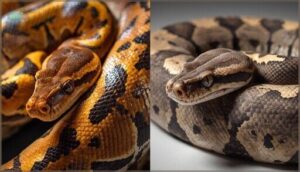
Skin elasticity tells part of the story, but your snake’s scales reveal hydration levels too. Healthy scales should shine with rich color, while dehydration symptoms often show up as dull, grayish tones.
You might notice darkening patterns along your snake’s body, especially during shedding issues when inadequate humidity prevents clean sheds. These color changes signal your pet needs better reptile care and immediate attention to restore proper skin health.
Lethargy and Reduced Activity
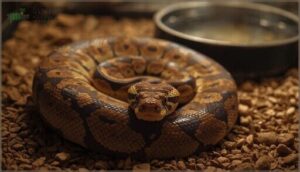
When dehydration sets in, your snake’s activity levels drop noticeably. You’ll see behavioral changes like reduced exploration and prolonged resting habits, signaling energy loss from fluid deficiency.
Movement patterns shift from alert responses to sluggish reactions, with your pet spending more time coiled in one spot. This lethargy in pet snakes demands quick action, as proper hydration restores normal snake health and behavior.
Decreased Appetite
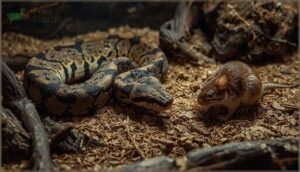
One of the clearest red flags for dehydration in pet snakes is a sudden drop in appetite. When your pet refuses meals, dehydration may be disrupting normal metabolism and feeding strategies.
Environmental factors like low humidity compound the problem, sometimes creating nutrient deficiencies that worsen lethargy. Dietary adjustments and appetite stimulation techniques won’t work until you restore proper hydration and address the underlying fluid loss affecting snake health.
Dry Mucous Membranes and Eye Caps
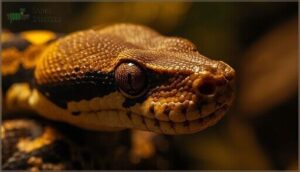
When you peek inside your snake’s mouth, dry gums, tongue, or oral tissue signal serious dehydration symptoms and threaten snake health. The eye caps may look dull, crusted, or sunken, losing their normal moist shine.
These ocular hydration issues lead to discomfort and potential infections. Proper eye cap care and mucous membrane health depend on rehydration methods that restore moisture quickly.
Stuck Shed (Dysecdysis)
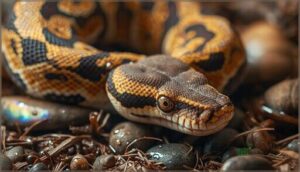
If your snake’s old skin clings in patches instead of peeling off in one piece, you’re seeing dysecdysis, a classic dehydration red flag. This stuck shed often appears around the eyes, snout, or tail when humidity drops too low.
Catching these moisture issues early with a reliable digital thermometer and hygrometer helps you adjust humidity before your snake struggles through another incomplete shed.
Skin retention interrupts the natural shedding process and compromises snake health. Proper humidity management and snake hydration prevent shedding issues, while dysecdysis treatment may require gentle warm soaks under vet guidance.
Common Causes of Snake Dehydration
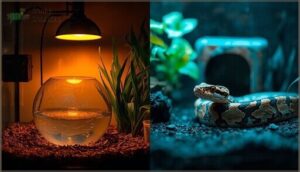
Understanding what causes dehydration helps you prevent it before it becomes a problem.
Most cases trace back to simple husbandry issues you can fix with a few adjustments to your snake’s setup.
Let’s look at the most common culprits so you know exactly what to watch for.
Inadequate Humidity Levels
Most pet snakes need 50–70% humidity, but dry air in our homes rarely hits that mark.
When humidity drops too low, your snake loses moisture through its skin and respiratory tract faster than it can replace it.
This silent drain on hydration happens slowly, which is why humidity control matters so much for snake health—especially during winter when indoor air gets extra dry.
Insufficient Water Sources
Even a full water bowl won’t help if your snake can’t reach it easily or won’t drink from it.
Here’s what undermines water intake:
- Bowls too small or shallow for your snake to comfortably soak or drink
- Dirty water contaminated by waste, prey remains, or substrate debris
- Hard-to-reach placement on elevated perches or tucked in awkward corners
- Bowl tipping over from vibrations or snake movement, leaving no water available
- High mineral content in tap water that some species avoid
Check your setup daily—fresh, accessible water is non-negotiable for proper hydration.
Improper Enclosure Temperature
While water and humidity matter, incorrect temperatures can quietly drain your snake’s hydration reserves.
Temperature problems push dehydration in several sneaky ways:
| Issue | Effect on Snake | Hydration Impact |
|---|---|---|
| Heat Source malfunction | Irregular cycling, hot spots | Increased water loss, stress |
| Poor Temperature Gradients | Limited thermoregulation | Disrupted metabolic balance |
| Inadequate Gradient Maintenance | Unstable thermal zones | Chronic dehydration risk |
Environmental factors like seasonal shifts and ambient room temperatures demand regular thermostat adjustments—your snake can’t adapt without your help.
Illness and Parasitic Infections
Illness throws another wrench into your snake’s hydration balance. Respiratory infections often reduce water intake as your pet struggles to breathe, while parasites like roundworms cause diarrhea that drains fluids fast.
Watch for infection signs—wheezing, mouth gaping, or unusual stool—because reptile diseases accelerate dehydration symptoms quickly. Parasite control and prompt veterinary care protect your snake’s reptile health before dehydration becomes critical.
Species-Specific Hydration Needs
Your snake’s species dictates its hydration blueprint. Tropical pythons need 70 percent humidity or higher, while desert dwellers like kingsnakes manage fine around 30 to 40 percent if you provide generous water sources.
Arboreal species benefit from vertical humidity gradients, and some snakes drink daily while others rely on prey moisture. Research your specific snake’s needs—matching natural habitat conditions prevents dehydration before it starts.
Poor Enclosure Maintenance
Beyond species needs and water bowls, neglected enclosure cleaning sets the stage for dehydration. Dirty substrates harbor bacteria that destabilize humidity levels, while accumulated waste clogs ventilation issues and triggers temperature fluctuations.
Infrequent substrate maintenance lets mold thrive, compromising humidity control and water quality. Regular spot cleaning and full enclosure overhauls keep your snake’s environment stable, preventing the hidden stress that compounds dehydration risk.
How to Diagnose Dehydration in Snakes
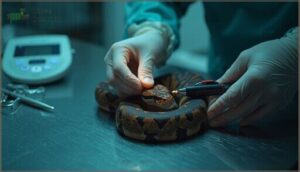
Catching dehydration early can make all the difference for your snake’s health, but you need to know what you’re looking for. A proper diagnosis involves more than just a quick glance—it requires checking several physical and behavioral signs together.
Here’s how to assess your snake’s hydration status at home and when it’s time to call your vet.
Visual Examination of Physical Symptoms
Your first checkpoint is always a head-to-tail visual scan. Start with eye condition—sunken eyes with dented pupils are telltale dehydration symptoms.
Next, check for skin wrinkles along the neck and body, plus dry skin that’s lost its sheen. Don’t skip the mouth; dry mouth membranes look chalky instead of moist.
Skin Elasticity Test
The pinch test measures skin turgor by gently lifting a fold on your snake’s neck or side. Healthy hydration means the skin snaps back in seconds—that’s good recoil timing.
If it stays tented or returns slowly, you’re seeing poor elasticity scores and a red flag for dehydration. Track these hydration metrics over time to catch changes early and guide your rehydration efforts.
Monitoring Weight Loss and Body Condition
Consistent weight tracking catches dehydration early in pet snakes. Weigh yours weekly on a digital scale, then log the number—if you see a drop over 5 percent in two weeks, hydration is slipping.
Pair that with body scoring: run your fingers along the spine and ribs to feel for muscle loss or visible bone. Healthy snakes hold smooth curves, not sharp angles. Those feeding patterns and health records you keep? They connect the dots between appetite dips and weight loss tied to dehydration.
Observing Behavioral Changes
Your snake’s daily routine tells you more than any single physical check. Watch for lethargy that keeps them coiled in one spot instead of exploring at dusk, or feeding patterns that stall even when prey’s offered.
These behavioral shifts—paired with environmental factors like low humidity—signal dehydration symptoms before severe pet snake health issues develop. Stress responses also intensify when hydration drops, so track activity levels daily.
When to Seek Veterinary Care
Don’t wait when dehydration symptoms escalate beyond home care. You’ll need veterinary guidance if your snake shows emergency signs like refusing water for more than a week or displaying multiple severe indicators at once.
Urgent care needs arise when you notice:
- Sunken eyes paired with complete lethargy
- Skin that stays tented after the elasticity test
- Persistent refusal to eat for two weeks
- Respiratory distress or gasping
- Dramatic weight loss over several days
Snake emergencies demand immediate attention—reptile health deteriorates quickly without proper intervention.
Treating and Rehydrating Your Dehydrated Snake
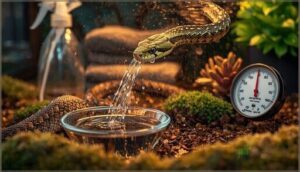
Once you’ve confirmed your snake is dehydrated, it’s time to act quickly but calmly.
The good news is that most cases can be treated at home with a few simple steps, though severe dehydration requires a vet’s help. Here’s what you need to know to get your snake rehydrated and back to normal.
Providing Fresh Clean Water
Water quality starts your recovery plan. Offer fresh, filtered water in a clean bowl that’s large enough for your snake to soak if needed. Replace it daily—even twice if you notice cloudiness—and keep the temperature near room temp so your snake won’t be shocked when drinking.
Good hydration begins with accessible, pure water sources that encourage natural water intake and support overall snake hydration.
Increasing Enclosure Humidity
Once clean water is in place, raising humidity control becomes your next priority for rehydration. Aim for species-specific humidity levels—tropical snakes often need 70–90 percent, while others thrive at 50–70 percent.
- Mist the enclosure twice daily with warm water misting to boost moisture.
- Switch to moisture-retaining substrate choice like coconut fiber or sphagnum moss.
- Add a larger water dish on the warm side for steady evaporation.
- Adjust ventilation management by partially covering mesh tops to slow humidity loss.
Monitor with a hygrometer and pair humidity control with temperature regulation to prevent stress.
Warm Water Soaking Techniques
Beyond raising humidity, gentle warm water soaks offer direct rehydration support. Use a clean basin filled with dechlorinated water at 95–104°F—check with a thermometer. Submerge your snake’s body (not the head) for 10–15 minutes.
Water quality matters, so skip tap water if it’s heavily chlorinated. This technique improves skin benefits, boosts water intake, and aids recovery without stressing your pet.
Electrolyte Baths for Severe Cases
When simple soaks don’t cut it, an electrolyte bath can restore critical mineral balance. Mix a reptile-safe electrolyte solution—never human formulas—and maintain water at 95–104°F for 10–20 minutes.
Here’s your action plan:
- Monitor skin color and activity during the bath
- Rinse your snake gently afterward
- Track weight before and after treatment
Always consult your vet first for severe dehydration.
Veterinary Fluid Therapy Options
Sometimes home treatment isn’t enough, and that’s when your vet steps in with professional fluid therapy.
Rehydration methods include intravenous fluids for rapid volume restoration in critical cases, subcutaneous injections that absorb over hours, or oral solutions when your snake can still swallow. Each route restores electrolyte balance differently, with careful fluid monitoring ensuring your pet doesn’t get overloaded during veterinary care.
Monitoring Recovery Progress
Once rehydration begins, you’ll need to track hydration metrics closely to confirm your snake’s recovery. Weight tracking every week catches gradual gains, while daily health monitoring reveals faster progress—watch for brighter eyes, elastic skin, and improved appetite as electrolyte balance restores.
- Log weight changes with a digital scale to spot trends
- Check skin turgor and eye brightness twice daily during recovery time
- Record feeding events and activity levels in a progress logging diary
Top Products for Preventing Snake Dehydration
Keeping your snake properly hydrated starts with having the right tools in your enclosure. The products below can help you maintain consistent water access and monitor humidity levels, both of which are essential for preventing dehydration.
Here are some reliable options that make it easier to keep your snake healthy and well-hydrated.
1. CalPalmy Reptile Food And Water Bowls

Your snake’s water bowl isn’t just a place to drink—it’s a lifeline. CalPalmy bowls feature a broad, shallow rim that prevents tipping when your snake dips in for a drink or decides to soak.
Made from food-safe plastic with smooth interiors, they’re easy to clean and resist algae buildup. The wide base stays put even on moist substrate, and you can choose from small to large sizes holding 100 to 400 milliliters depending on your snake’s needs.
| Best For | Small to medium-sized reptile owners who want a lightweight, easy-to-clean bowl that stays stable during drinking and soaking. |
|---|---|
| Material | Plastic |
| Brand | CALPALMY |
| Easy to Clean | Yes |
| Target Use | Food/water bowl |
| Size | 4″ x 4″ x 0.9″ |
| Weight | Lightweight |
| Additional Features |
|
- Wide, shallow design prevents tipping when snakes drink or soak
- BPA-free plastic with smooth interior resists algae and cleans easily
- Stable wide base holds 100–400ml and stays put on moist substrate
- Can be difficult to clean thoroughly, especially after meat-based foods
- May be smaller than expected based on product photos
- Requires daily washing if used for multiple reptiles or raw food
2. Exo Terra Reptile Water Dish
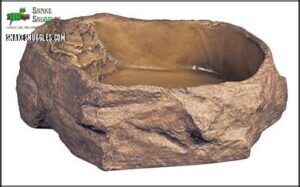
If you prefer a water dish that actually looks good in your terrarium, the Exo Terra model rocks the natural aesthetic.
Its stone-like exterior blends seamlessly with desert or tropical setups, while the smooth, non-porous interior wipes clean in seconds. The wide base won’t tip when your ball python decides to take a dip, and the gently sloped inner edge makes drinking easy.
At 9.7 x 10 x 2.5 inches, it holds plenty of water without hogging floor space.
| Best For | Reptile and amphibian owners who want a sturdy, natural-looking water dish that’s easy to clean and won’t tip over during use. |
|---|---|
| Material | Stone |
| Brand | Exo Terra |
| Easy to Clean | Yes |
| Target Use | Water dish |
| Size | 9.7 x 10 x 2.5 inches |
| Weight | 454 Grams |
| Additional Features |
|
- Natural stone appearance blends into any terrarium setup without looking artificial
- Non-porous surface makes cleaning quick and simple
- Wide, stable base prevents tipping even when larger reptiles climb in
- Heavy weight (454 grams) makes it harder to lift out for cleaning
- Textured exterior can trap debris and make thorough cleaning more challenging
- Large size may overwhelm smaller enclosures or be impractical for tiny reptiles
3. Repti Zoo Digital Terrarium Thermometer Hygrometer
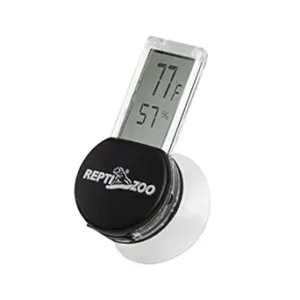
You can’t fix dehydration if you don’t know it’s happening, right? That’s where the Repti Zoo digital thermometer hygrometer earns its spot in your setup.
It tracks both temperature (14 to 122°F) and humidity (20 to 99% RH) on one clear LCD screen, updating every few seconds so you catch problems fast. The suction cup mounts on glass, and it runs for months on a tiny button battery. Accurate within about ±2°F, it’s your early warning system before your snake’s health takes a hit.
| Best For | Reptile owners who need a simple, affordable way to monitor tank temperature and humidity without running wires or dealing with complicated setups. |
|---|---|
| Material | Glass, Plastic |
| Brand | REPTI ZOO |
| Easy to Clean | Yes |
| Target Use | Climate monitoring |
| Size | 2.55 inches |
| Weight | 1.44 ounces |
| Additional Features |
|
- Tracks both temp and humidity on one clear display that updates every few seconds
- Mounts easily with a suction cup so you can move it around the tank as needed
- Runs for months on a button battery and comes with a spare
- Not waterproof—getting it wet can kill the unit completely
- Battery case is fragile and can break if you’re not careful
- Some users report the display is hard to read in bright light or certain angles
4. Mini Digital Indoor Thermometer Hygrometer
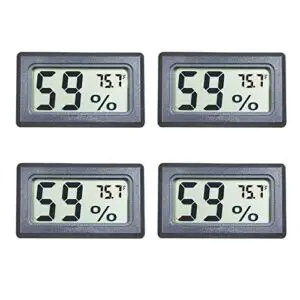
Sometimes the budget version does the job just fine. This tiny hygrometer packs both readings into a screen smaller than two inches square, weighing practically nothing at 0.01 ounces.
It tracks -58℉ to 158℉ and 10% to 99% humidity with ±2℉ accuracy, updating every 10 to 60 seconds on LR44 batteries that last over a year. No backlight, so you’ll need decent lighting to read it, but at this price point you can scatter several around your enclosure to catch microclimates you’d otherwise miss.
| Best For | Anyone who needs basic climate monitoring on a tight budget and wants to place multiple sensors around their space without breaking the bank. |
|---|---|
| Material | Plastic |
| Brand | Not specified |
| Easy to Clean | N/A |
| Target Use | Climate monitoring |
| Size | 1.89″ x 1.13″ x 0.6″ |
| Weight | 0.01 ounces |
| Additional Features |
|
- Dirt cheap price lets you buy several units to monitor different zones or microclimates
- Tiny footprint (under 2 inches) fits anywhere without getting in the way
- Battery lasts over a year, so you’re not constantly swapping cells
- No backlight means you’ll struggle to read it in dim lighting
- Accuracy is just okay at ±2℉ and ±5% humidity, not great for precision work
- Display can be tough to read unless you’re looking straight at it
Frequently Asked Questions (FAQs)
How to fix dehydration in snakes?
Dehydration’s the kryptonite for your scaly friend.
You’ll want to increase enclosure humidity, provide fresh water daily, and offer gentle warm soaks for 15-20 minutes to rehydrate them quickly and safely.
How do I tell if my pet is dehydrated?
Check your snake’s eyes for a sunken appearance, gently pinch the skin to test elasticity, and examine the mouth for dry membranes.
Lethargy, dull scales, and stuck shed also signal dehydration.
How to tell if a snake is unwell?
Look for sunken eyes, wrinkled skin that doesn’t snap back, sticky mucous membranes, lethargy, refusal to eat, and weight loss. These physical changes, plus altered behavior, signal something’s wrong.
Can snakes drink from moving water sources?
Yes, snakes can drink from moving water. They insert their snout into the flow and use capillary suction to draw water into their mouth, just like they do with still water sources.
Do certain seasons increase dehydration risk?
Winter’s relentless dry air and scorching summer heat can turn your snake’s enclosure into a dehydration trap.
Central heating and rapid evaporation, and seasonal humidity swings dramatically increase your pet’s water loss risk year-round.
How often should I mist my snakes enclosure?
Most snakes do well with misting once or twice daily for 5 to 15 minutes each session, especially in dry indoor environments, adjusting frequency based on your hygrometer readings and shedding cycles.
Can tap water harm my snakes hydration?
Tap water can irritate your snake’s eyes and skin if it contains high chlorine levels or chloramine levels.
Let it sit for 24 hours or use a reptile-safe water conditioner to neutralize these chemicals.
Whats the ideal water bowl depth for snakes?
Think of the water bowl as your snake’s personal oasis. Aim for 5 to 5 inches deep for adults, and 1 to 5 inches for hatchlings—shallow enough to access, deep enough to soak.
Conclusion
What’s the best part about knowing the signs of dehydration in pet snakes? You’ll catch problems early, before they snowball into something serious.
Those sunken eyes, wrinkled skin, and stuck sheds aren’t mysteries anymore—they’re signals you can read and respond to. Keep that water dish full, humidity dialed in, and your observation skills sharp. Your snake depends on you to notice what it can’t tell you, and now you’re ready.