
This site is supported by our readers. We may earn a commission, at no cost to you, if you purchase through links.

Ball pythons strike fast—faster than most keepers expect during their first feeding mishap. When your snake locks onto movement near the enclosure, it doesn’t distinguish between a thawed mouse and the fingers holding it. That split-second confusion explains why experienced reptile veterinarians treat more feeding-related bites than any other husbandry injury.
Quality snake feeding tongs for ball pythons create the distance you need between your hand and your python’s feeding response, transforming a risky routine into a controlled process. The right tongs do more than protect you—they reduce stress on your snake, prevent dental damage from improper prey presentation, and give you the precision to feed even the most cautious eaters without triggering defensive behavior.
Table Of Contents
Key Takeaways
- Quality feeding tongs with rubber-coated tips and proper length (12-18 inches for adults) create essential distance from strike zones while protecting your python’s teeth from metal contact during feeding sessions.
- Curved jaw designs offer superior safety by angling prey away from metal surfaces and allowing better access in cluttered enclosures, though straight jaws provide more precision for direct placement in tight spaces.
- Stainless steel construction with serrated grips ensures corrosion resistance through repeated disinfection protocols, but you’ll need to hand-wash and thoroughly dry tongs after every feeding to prevent rust and bacterial buildup.
- Your python’s size dictates tong length requirements—juveniles need 9-12 inches while adults approaching 5 feet benefit from 16-18 inch models that keep your hands outside their extended strike range.
Key Features of Ball Python Feeding Tongs
When you’re choosing feeding tongs for your ball python, the right features make all the difference between a safe feeding session and a stressful one. You’ll want tools that protect both you and your snake while giving you the control you need during those critical moments.
Let’s look at the key features that separate quality feeding tongs from the ones that’ll just frustrate you.
Serrated and Rubber-Coated Tips
You’ll want snake feeding tongs with the right tip material—rubber or PVC coatings cushion strikes and protect your ball python’s teeth better than bare metal. Serrated grip patterns prevent prey from slipping during presentation, while rubber thickness matters: too thick and your snake’s jaw might embed during aggressive strikes.
Look for coating durability that withstands repeated use without tearing, ensuring grip security on wriggling rodents while keeping your reptile safe. When selecting tongs, consider the importance of proper snake feeding equipment to guarantee a safe and healthy feeding experience.
Curved Vs. Straight Jaw Design
Jaw geometry shifts your entire feeding technique. Curved jaws grip cylindrical prey more securely and let you angle rodents downward toward your ball python’s head, directing strikes away from the metal—that reduces mouth trauma. Straight jaws offer precision placement through narrow terrarium doors but align more metal with your snake’s strike path, increasing contact risk. Choose curved for safety, straight for tight spaces.
Understanding proper snake feeding techniques, including snake feeding methods, is vital for the health and well-being of your pet.
Ergonomic and Non-Slip Handles
Ergonomic design matters when you’re holding feeding tongs steady through multiple strikes. Premium snake feeding tongs use angled grips—not 90-degree grips—that reduce wrist strain during repeated sessions.
Pairing these ergonomic features with safe snake feeding practices explained ensures you maintain control while minimizing stress for both handler and snake.
Look for reptile feeding tongs with textured or rubberized surfaces; that nonslip grip keeps control when moisture builds. Stainless steel long-reach feeding tongs with contoured grip texture deliver user comfort and safety features you’ll notice after the third feeding.
Pair your tongs with the right feeding schedule and prey size by checking out this complete guide to feeding pet snakes safely.
Length Options for Safe Feeding
Tong length directly affects safety distance and feeding accuracy. For juvenile ball pythons, 9 to 12 inch reptile feeding tongs give you strike prevention without sacrificing control.
Adult ball pythons around 3 to 4 feet do well with 12-inch long-reach feeding tongs, while larger individuals nearing 5 feet benefit from 16 to 18 inches. That extra reach improves handler comfort and keeps your hand outside the strike zone.
For more insights on handling and husbandry techniques that apply across python species, check out this guide to caring for green tree pythons.
Stainless Steel and Durable Materials
Stainless steel snake feeding tongs resist corrosion from repeated disinfection, offering metal durability that outlasts cheaper alternatives. Austenitic grades like 304 stainless steel form a self-healing oxide layer, maintaining material strength through years of use.
Combine rigid steel arms with rubber tips for ergonomic handling and prey control. Nonporous surfaces simplify tong maintenance, reducing bacterial harborage.
For a complete breakdown of safe feeding practices and recommended prey sizes, check out what corn snakes eat in captivity.
This corrosion resistance keeps your reptile feeding tongs safe and functional feeding after feeding.
Safety Considerations When Using Feeding Tongs

Using feeding tongs properly isn’t just about convenience—it’s about protecting both you and your ball python during one of the most vulnerable moments in captivity. The right techniques minimize strike risks, reduce feeding stress, and prevent accidental injuries that can lead to mouth rot or other complications.
Proper feeding tong technique protects both handler and snake during feeding—the most vulnerable moment in captivity
Here’s what you need to know to keep feeding time safe and stress-free for everyone involved.
Reducing Bite Risks and Stress
You’ll want longer tongs—ideally 12 to 18 inches for juveniles and 24 to 40 inches for adults—to keep your hands safely beyond striking range. This distance alone cuts bite risk factors dramatically while reducing stress for your ball python.
Rubber tips on quality snake feeding tongs protect both you and your snake during those critical moments when feeding techniques matter most. Long-reach feeding tongs with ergonomic handling give you the control needed for safe handling without triggering defensive behavior.
Proper Grip and Prey Presentation
Mastering presentation techniques transforms routine feeding into a stress-free ritual. Your snake feeding tongs with rubber tips and curved jaws need proper grip pressure and feeding angles to work safely.
- Prey alignment: Position the rodent head-first toward your snake, gripping the tail or rear third with reptile feeding tongs for natural strike timing.
- Height matters: Present at or slightly below head level—never from above.
- Movement: Gentle wiggling mimics live prey without triggering defensiveness.
- Distance: Maintain a small gap between prey and face to encourage voluntary strikes.
- Angle: Approach from the front arc using your nonslip handle for control.
Preventing Injury to Snakes
Protecting your ball python during feeding starts with equipment choices that prioritize reptile welfare. Snake feeding tongs with rubber tips shield delicate jaw structures from metal-on-bone contact, while proper handling techniques prevent crushing or puncture wounds during prey transfer.
Your tong design directly impacts snake safety and reptile care outcomes during each feeding session.
| Injury Prevention Factor | Protective Design Feature |
|---|---|
| Jaw trauma from hard surfaces | Silicone or rubber-coated tips |
| Tissue damage from sharp edges | Smooth, deburred stainless steel construction |
| Pressure injuries during grip | Wide jaw surfaces distributing force evenly |
| Stress-induced defensive strikes | Curved designs maintaining safe distance |
Maintaining a Safe Feeding Distance
Safe distance begins the moment you position your snake feeding tongs in the enclosure. When using reptile feeding tongs in the 10–16 inch range, you’ll keep your hand beyond most ball pythons’ strike distance—roughly half their body length—while mastering effective prey presentation techniques.
- Position prey in your snake’s strike zone while keeping your wrist outside
- Use longer reach feeding tongs to maintain proper handling distance for snakes over 4 feet
- Keep fingers behind tong grips throughout the entire feeding session
- Present prey from the side rather than reaching across your snake’s body
- Close the enclosure immediately if your snake advances toward the opening
These handler safety practices reduce contact risk and support calm snake behavior during every feeding.
Types of Feeding Tongs for Ball Pythons
Choosing the right feeding tongs for your ball python depends on your snake’s size, your enclosure setup, and how you prefer to handle feeding sessions. Different jaw designs and configurations offer specific advantages, from reaching into tight corners to maintaining a safer distance during strikes.
Here’s a breakdown of the main types you’ll encounter and what makes each one useful.
Straight-Jawed Tongs

Straight-jawed tongs offer precise control when you’re positioning prey directly in front of your ball python, making them the go-to choice for routine feeding sessions where accuracy matters most. Their parallel jaw alignment ensures you won’t accidentally drop prey mid-presentation, while the straight design gives you better visual tracking of your snake’s strike zone.
| Feature | Benefit |
|---|---|
| Tong Material | Stainless steel resists corrosion during cleaning |
| Jaw Alignment | Parallel grip maintains secure prey control |
| Feeding Technique | Direct placement reduces feeding stress |
| Snake Handling | Clear sightlines improve herpetology equipment safety |
Curved-Jawed Tongs
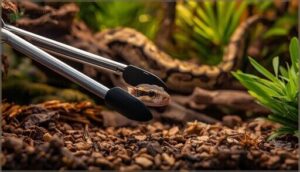
Curved-jawed tongs offer significant advantages when feeding in cluttered enclosures. Their design allows you to navigate around hides and plants without fully reaching inside, providing better angles for feeding. The angled jaw geometry keeps your hand farther from the strike zone, improving visibility and reducing the likelihood of spooking your ball python. Movement stays peripheral, which helps maintain a calm feeding environment. Look for models with rubber-coated tips, as they protect your snake’s mouth in case it strikes the tongs instead of the prey. Additionally, the curved design ensures a secure grip when holding rodents at natural presentation heights.
Key advantages of curved jaw designs:
- Access tight corners and hard-to-reach feeding spots without dismantling decor
- Present prey at natural angles that trigger stronger feeding responses
- Maintain safer distance during feeding sessions with reactive snakes
- Reduce wrist strain when positioning food items at various terrarium heights
- Minimize visible hand movement that can interrupt your python’s strike behavior
Narrow Vs. Wide Jaw Tongs

Jaw width plays a bigger role in snake safety than most keepers realize. Wide jaws distribute jaw pressure across a broader contact area, reducing rib compression and soft tissue injury risk compared to narrow designs. When you grip prey with wide, rubber-coated surfaces, you’ll achieve secure holding with less force—critical for preventing mouth trauma if your ball python strikes the tongs. Narrow jaw tongs concentrate pressure, increasing injury risk during feeding techniques.
| Feature | Narrow Jaw Tongs | Wide Jaw Tongs |
|---|---|---|
| Pressure Distribution | Concentrated point contact | Broad surface contact |
| Injury Risk | Higher localized compression | Lower rib and tissue trauma |
| Grip Security | Requires more clamping force | Secure hold with less pressure |
| Best For | Small prey items, precision | Larger rodents, gentle handling |
| Material Pairing | Often bare stainless steel | Rubber-coated or padded tips |
Collapsible and Adjustable Tongs
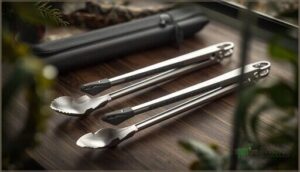
Beyond jaw shape, portability matters when you’re managing multiple enclosures or traveling to reptile shows. Folding designs with safety locks collapse to half their deployed length, fitting easily into equipment bags while maintaining 40–47 inch reach when extended.
Adjustable lengths let you fine-tune distance based on your ball python’s strike range, and telescopic models with ergonomic grips reduce storage bulk without sacrificing control:
- Self-locking mechanisms prevent collapse during prey presentation
- Telescopic sections adjust from 28 to 47 inches for different snake sizes
- Stainless steel construction withstands repeated folding and outdoor humidity
Top 8 Feeding Tongs for Ball Pythons
You need feeding tongs that won’t stress your ball python or put your fingers at risk during mealtime. The right pair combines safe distance, secure grip, and materials that protect both you and your snake.
Here are eight reliable options that balance durability with the features ball python keepers actually need.
1. Snake Feeding Tongs Tool
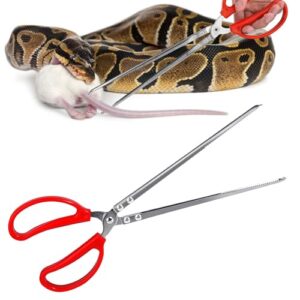
You’ll find the Vodolo 15-inch feeding tongs deliver practical solutions for ball python feeding safety. These snake feeding tongs feature stainless steel construction with serrated jaws and rubber-coated tips that protect your snake’s mouth during prey presentation.
The non-slip silicone sleeve ensures comfortable snake handling even during extended feeding sessions.
While the tong materials resist rust and support proper feeding techniques, note that the serrated edges aren’t suitable for direct reptile handling—only for feeding safety and long-reach feeding tongs applications in reptile nutrition management.
| Best For | Snake owners who need a safe way to present live or thawed prey to their ball pythons or other reptiles without risking bites during feeding time. |
|---|---|
| Material | Stainless Steel |
| Length | 15 inches |
| Handle Design | Non-slip silicone sleeve |
| Tip Style | Serrated |
| Rust Resistance | Yes |
| Use Case | Reptile feeding |
| Additional Features |
|
- The 15-inch length keeps your hands at a safe distance from striking snakes while the serrated, rubber-coated tips grip prey securely without crushing it or damaging your snake’s teeth.
- Stainless steel construction with a rust-resistant finish means you can wash and disinfect these tongs repeatedly without worrying about corrosion or breakdown over time.
- The non-slip silicone handle gives you solid control even during longer feeding sessions, and the tongs work well for other tasks like aquarium cleaning or picking up cage debris.
- The serrated edges and teeth design make these tongs unsafe for handling or moving snakes directly—they’re strictly for feeding purposes only.
- Some users, particularly those with smaller hands, find the handle too large or bulky to grip comfortably during use.
- The straight jaw design works best with live prey, so if you primarily feed frozen-thawed rodents, you might prefer tongs with angled or curved jaws for easier positioning.
2. Reptile Feeding Tongs Stainless Steel
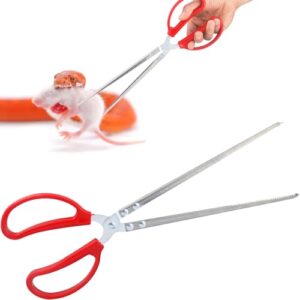
The WORFACE 15-inch tongs combine stainless steel durability with thoughtful reptile handling features that make snake feeding techniques safer for you and your ball python. You’ll appreciate the smooth serrated wide jaw that maintains maximum grip pressure without damaging your snake during feeding sessions, while the non-slip handle design ensures confident control.
These feeding tools resist corrosion with proper hand washing, though you’ll want to skip the dishwasher to prevent stickiness.
Available in both straight and curved configurations, they provide the long-reach feeding tongs advantage essential for reptile care and feeding protocols.
| Best For | Snake owners and reptile keepers who need safe, long-reach tongs for feeding live prey or handling their pets without risking bites. |
|---|---|
| Material | Stainless Steel |
| Length | 15 inches |
| Handle Design | Non-slip handle |
| Tip Style | Smooth serrated |
| Rust Resistance | Yes |
| Use Case | Reptile feeding |
| Additional Features |
|
- 15-inch length keeps your hands at a safe distance during feeding time
- Smooth serrated jaws grip firmly without hurting your reptile’s scales
- Stainless steel construction resists rust and holds up to regular use
- Hand washing only—dishwasher will make them sticky
- Plastic handle components can break with rough handling
- Not ideal if you want something you can toss in the dishwasher after each use
3. Stainless Steel Aquarium Tweezers Set
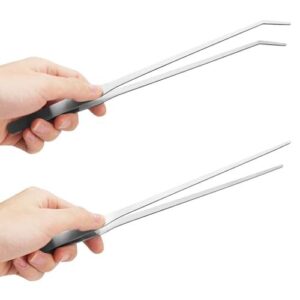
You’ll find the Fri4Free 10.6-inch stainless steel aquarium tweezers set offers dual straight and curved configurations ideal for precise snake feeding tongs applications in ball python care. The serrated tips deliver a secure grip during reptile feeding techniques, while the corrosion resistance withstands repeated disinfection with 70% isopropyl alcohol—essential herpetology equipment maintenance.
Though primarily marketed as aquarium tools, these tweezer materials adapt well to animal handling tasks. The tweezer lengths provide adequate reach for juvenile pythons, though you may prefer longer options for adult specimens.
| Best For | Reptile keepers who need affordable tweezers for feeding small to medium snakes and lizards, plus occasional aquarium planting tasks. |
|---|---|
| Material | Stainless Steel |
| Length | 10.6 inches |
| Handle Design | Non-slip clip |
| Tip Style | Serrated |
| Rust Resistance | Yes |
| Use Case | Reptile feeding |
| Additional Features |
|
- Dual straight and curved tips give you flexibility for different feeding angles and reaching into hides
- Serrated tips grip insects and prey securely without slipping during feeding
- Stainless steel resists rust and handles regular cleaning with reptile-safe disinfectants
- Some users report the tweezers bend easily and may not hold up to heavy use
- A few customers experienced rusting after just one use, especially in saltwater
- Grip quality is inconsistent according to reviews, with some finding it too weak for secure handling
4. Stainless Steel Reptile Feeding Tongs
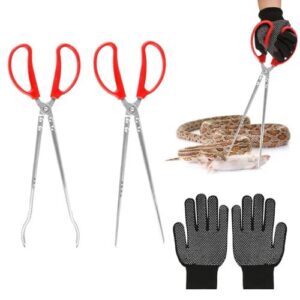
When you’re evaluating Stainless Steel Reptile Feeding Tongs made from 410 stainless steel, you’re looking at corrosion-resistant Herpetology Equipment built for repeated use. These 15-inch models provide adequate distance for Snake Feeding Techniques while the serrated jaws maintain prey control—critical for Reptile Safety during strikes.
The Tong Materials withstand standard disinfection protocols, though Durability Tests suggest grips may feel oversized for smaller hands. You’ll appreciate the included nylon gloves as additional protection, making these practical tools for routine Reptile Care and diverse Feeding Techniques across multiple species.
| Best For | Reptile owners who need a safe, hygienic way to feed snakes, lizards, or other species without risking bites or contamination during feeding sessions. |
|---|---|
| Material | Stainless Steel |
| Length | 15 inches |
| Handle Design | Non-slip handle |
| Tip Style | Serrated |
| Rust Resistance | Yes |
| Use Case | Reptile feeding |
| Additional Features |
|
- 410 stainless steel construction resists rust and handles repeated disinfection, making these tongs more sanitary than hand feeding
- 15-inch length keeps your hands at a safe distance from strikes, especially useful for defensive or larger reptiles
- Serrated jaws grip prey securely so you won’t drop food mid-feeding, and the angled design helps reach tricky spots in terrariums
- Handles may feel too bulky for people with smaller hands or kids trying to help with feeding
- Included gloves might not fit everyone properly, limiting their usefulness as protective gear
- Not ideal for handling very small or delicate items since the serrations are designed for larger prey
5. EvaGO Curved Aquarium Tweezers
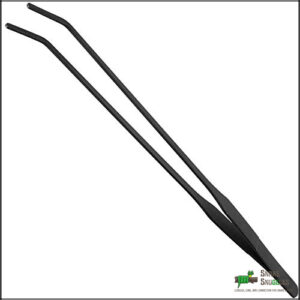
You’ll find EvaGO Curved Aquarium Tweezers marketed as multi-purpose Aquarium Tools, though their 14.96-inch stainless steel design raises questions for dedicated Snake Handling and Care. The curved profile assists Tank Maintenance tasks like plant positioning, but lacks rubber tip protection—a concern for Reptile Handling during feeding.
While the serrated anti-slip surface aids Feeding Techniques with worms or insects, reviews note limitations in deep enclosures and grip security with delicate prey, making these better suited for occasional Reptile Care and Handling rather than primary Snake Feeding Tongs.
| Best For | Hobbyists who need a versatile tool for both aquarium maintenance and occasional reptile feeding across multiple tank setups. |
|---|---|
| Material | Stainless Steel |
| Length | 14.96 inches |
| Handle Design | Anti-skid handle |
| Tip Style | Serrated |
| Rust Resistance | Yes |
| Use Case | Reptile feeding |
| Additional Features |
|
- The 15-inch curved design gives you solid reach into deep tanks and terrariums without dunking your hands in the water.
- Serrated tips grip small objects like worms and plants pretty reliably, even when wet.
- Stainless steel with anti-corrosion coating holds up well to constant submersion and cleaning.
- No rubber tip covers included, which makes holding delicate aquarium plants frustrating.
- The length still falls short for really deep tanks like 16-gallon setups.
- Takes some practice to get comfortable with the grip and feeding angle, especially with squirmy prey.
6. Duedusto Snake Feeding Tongs
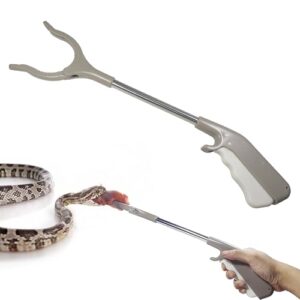
Duedusto Snake Feeding Tongs deliver solid performance for routine Ball Python care with their 16-inch reinforced stainless steel construction and textured rubber tips. The Tong Material resists corrosion during weekly feedings, while dual grip zones accommodate pinkies through adult rats—essential for proper Reptile Nutrition as your snake matures.
The trigger-style handle improves control during Feeding Techniques, keeping your hands safely distant from strike zones. Though rubber tips may wear with aggressive biters, the design balances Feeding Safety with practical Snake Handling and Care for most Ball Python keepers following sound Herpetology practices.
| Best For | Ball python owners who need a reliable, budget-friendly feeding tool that keeps hands safely away from strike zones during weekly feedings. |
|---|---|
| Material | Stainless Steel |
| Length | 16 inches |
| Handle Design | Ergonomic trigger-style |
| Tip Style | Textured rubber |
| Rust Resistance | Yes |
| Use Case | Snake feeding |
| Additional Features |
|
- 16-inch stainless steel body gives you plenty of distance and won’t rust when rinsed after handling thawed prey
- Textured rubber tips grip everything from pinkies to adult rats without slipping, making feeding less stressful for both you and your snake
- Straightforward tweezer design means no complicated hinges to break, and you can operate it smoothly with one hand
- Rubber tips can get chewed up over time if your snake’s an aggressive striker, though this is common across most rubber-tipped tongs
- Not ideal for really large meals—you’ll want something heavier-duty if you’re feeding jumbo rats regularly
- Requires a bit of care to keep clean and functional, so you’ll need to rinse and dry it properly after each feeding session
7. Oliss Reptile Feeding Tongs
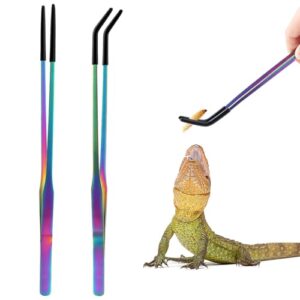
You’ll appreciate Oliss Reptile Feeding Tongs when budget meets function—these 10.6-inch stainless steel tools use rubber-coated tips to protect your Ball Python’s mouth during feeding techniques while maintaining a secure prey grip.
The tong material resists corrosion in humid enclosures, though durability tests show tips may detach with repeated use.
Handle design facilitates controlled placement of crickets through small rodents, making them practical herpetology equipment for keepers prioritizing reptile safety. Their straight profile suits standard terrarium access, balancing affordability with essential reptile care performance.
| Best For | Budget-conscious reptile keepers who need a safe, rust-resistant tool for feeding small to medium reptiles like Ball Pythons, bearded dragons, and lizards without spending much. |
|---|---|
| Material | Stainless Steel |
| Length | 10.6 inches |
| Handle Design | Ergonomic design |
| Tip Style | Rubber tips |
| Rust Resistance | Yes |
| Use Case | Reptile feeding |
| Additional Features |
|
- Rubber-coated tips protect your reptile’s mouth and teeth during feeding while giving you a solid grip on prey items
- Stainless steel construction holds up well in humid terrariums and cleans easily after each feeding
- 10.6-inch length keeps your hands at a safe distance while still letting you place food accurately
- Rubber tips can slip off or wear out over time with regular use
- Straight design might make it tricky to reach into corners of smaller enclosures
- Quality isn’t premium—you’re getting functional budget equipment, not high-end durability
8. Stainless Steel Snake Feeding Tongs
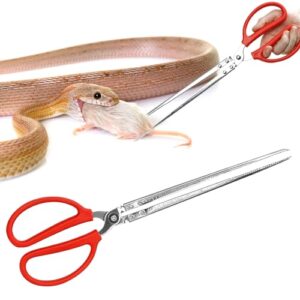
At 15 inches, zhcoy’s heavy-duty stainless steel snake feeding tongs give you the distance needed for safe snake handling during feeding techniques. However, quality control varies, with some units arriving bent.
The non-slip serrated tips grip prey securely, but you’ll need to dry these tongs thoroughly after each session since the metal durability suffers when moisture lingers.
This herpetology equipment trades premium consistency for accessibility in reptile care, making it suitable for keepers who can inspect their tong materials upon arrival and commit to proper maintenance for long-term snake safety.
| Best For | Reptile keepers on a budget who need basic feeding tongs and don’t mind inspecting for defects or maintaining the tools carefully between uses. |
|---|---|
| Material | Stainless Steel |
| Length | 10.6 inches |
| Handle Design | Standard |
| Tip Style | Rubber tips |
| Rust Resistance | Yes |
| Use Case | Reptile feeding |
| Additional Features |
|
- The 15-inch length keeps your hands safely away from strikes during feeding sessions
- Serrated tips grip frozen-thawed prey securely without slipping
- Stainless steel construction is easy to clean and disinfect after each feeding
- Quality control is inconsistent—some units arrive bent or with uneven tips
- Requires thorough drying after every use to prevent rust and corrosion
- The long design can feel awkward if you have a weaker grip or smaller hands
Maintenance and Cleaning of Feeding Tongs
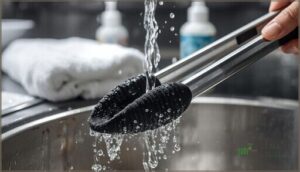
Keeping your feeding tongs clean isn’t just about hygiene—it’s about protecting your ball python from bacterial infections that can turn a routine meal into a health crisis.
Stainless steel construction makes maintenance straightforward, but you’ll need the right techniques to prevent corrosion and keep those rubber tips in working condition.
Here’s what you need to know to make your tongs last while keeping your snake safe.
Preventing Bacterial Buildup
Regular cleaning protocols prevent bacterial resistance that threatens both your ball python’s health and your own safety. After each feeding session, you’ll want to inspect your snake feeding tongs for residual prey matter or saliva. Stainless steel construction and rubber tips simplify hygiene practices when you follow consistent sanitizing methods that protect reptile health and support animal welfare.
| Bacterial Risk | Location on Tongs | Prevention Strategy |
|---|---|---|
| Salmonella buildup | Jaw tips and rubber coating | Rinse immediately after use |
| Prey residue | Serrated grip surfaces | Inspect before storage |
| Cross-contamination | Handle and pivot points | Separate tongs per animal |
| Biofilm formation | Textured grip areas | Weekly deep cleaning |
| Moisture retention | Joint mechanisms | Dry thoroughly post-wash |
Safe Cleaning and Disinfection Methods
You’ll need a two-step approach: wash your snake feeding tongs with hot soapy water first, then disinfect them using diluted bleach (1 tablespoon per quart), chlorhexidine, or veterinary products like F10. These cleaning protocols protect stainless steel and rubber tips while controlling pathogens.
Essential disinfection steps:
- Remove visible debris with hot water and detergent
- Soak tongs in disinfectant solution for 5–10 minutes
- Rinse thoroughly to eliminate chemical residues
- Air-dry completely before storage
Replacing Worn or Damaged Parts
After you’ve disinfected your tongs, inspect them carefully—tool inspection catches problems early. Check rubber tips for cracks or missing chunks and examine stainless steel for bending or corrosion. Damage assessment determines when replacement is needed: worn tips compromise safety, while structural defects in long-reach feeding tongs demand immediate retirement. Keep spare parts on hand so maintenance costs don’t interrupt your reptile care routine.
| Wear Detection | Action Required |
|---|---|
| Cracked or peeling rubber tips | Replace tip set immediately |
| Bent or misaligned jaws | Retire entire tool |
| Loose or wobbly hinge | Replace tongs |
| Pitting or rust on steel | Discontinue use |
| Persistent staining after cleaning | Consider replacement |
Tips for Long-Term Durability
Consistent tong maintenance keeps your long-reach feeding tongs functional for years. Material selection matters—stainless steel resists corrosion control issues better than coated metals.
Wear monitoring catches problems early: inspect rubber tips monthly and replace them before they crack.
Storage practices protect your investment; keep snake feeding tongs with ergonomic grips dry and away from kitchen areas to prevent rust and cross-contamination.
Frequently Asked Questions (FAQs)
How often should I feed my ball python?
Your ball python’s feeding schedule depends on age and size. Hatchlings under five weeks generally eat every five days, juveniles under 200 grams every seven days, and adults every two to three weeks.
Can I use feeding tongs for other tasks?
Absolutely—these tools are lifesavers for enclosure maintenance, reptile grooming, and even minor medical tasks. Just keep separate sets for feeding versus cleaning to maintain biosecurity measures and prevent cross-contamination between tasks.
What size prey is appropriate for ball pythons?
Your ball python should receive prey items weighing about 10–15 percent of its body weight, with diameters matching its widest body section to support healthy snake growth rates and proper body condition scores.
Do ball pythons prefer live or frozen prey?
Many keepers wonder whether their ball python truly prefers live rodents or accepts frozen thawed meals. In the wild, ball pythons hunt moving prey, but captive snakes adapt well to frozen options with proper warming and presentation.
When should I upgrade to longer feeding tongs?
You should upgrade to longer feeding tongs once your ball python reaches 3 feet in length, usually around 2–3 years of age, when strike distance and bite risk increase markedly with adult feeding.
Conclusion
A ball python’s strike covers twelve inches in under a second—you won’t pull back in time. Snake feeding tongs for ball pythons aren’t optional equipment; they’re the boundary between controlled feeding and emergency room visits.
Choose tongs that match your enclosure depth, maintain them like surgical instruments, and present prey with steady confidence. Your python doesn’t need your fingers near its meal—it needs consistency, distance, and a keeper who respects its feeding drive without testing it.
- https://mocfv.org/index.php/view/Steel-Tweezers-With-Rubber-Tips-For-Bearded-Dragons-Snakes/533493
- https://www.youtube.com/watch?v=kUlVbwJa1Go
- https://petwave.com.au/blogs/our-blog-2/essential-equipment-for-feeding-your-snake
- https://community.morphmarket.com/t/stuck-on-tongs/18563
- https://www.lllreptile.com/catalog/36-reptile-husbandry-tools