This site is supported by our readers. We may earn a commission, at no cost to you, if you purchase through links.
Most people don’t think about invisible threats when they venture into tall grass or reach into a woodpile, but snake habitat health risks extend far beyond the obvious danger of fangs. Venomous bites account for thousands of deaths annually, yet zoonotic diseases, bacterial infections, and parasitic exposures from snake environments create a complex web of health concerns that agricultural workers, field researchers, and rural families face daily.
Your proximity to snake habitats—whether through occupation, recreation, or location—determines your exposure to risks that range from immediate medical emergencies to chronic health conditions. Understanding these dangers, recognizing high-risk situations, and implementing targeted prevention strategies can mean the difference between safe coexistence and life-threatening encounters.
Table Of Contents
- Key Takeaways
- Key Health Risks in Snake Habitats
- Snakebite Risk Factors
- Symptoms and Effects of Snakebites
- Preventing Health Risks in Snake Habitats
- High-Risk Groups and Occupations
- The Role of Snakes in Disease Control
- Emergency Response and Medical Treatment
- Frequently Asked Questions (FAQs)
- Are venomous snakes a hazard for outdoor workers?
- Are venomous snakes a threat to vulnerable communities?
- Are venomous snakes dangerous?
- Can venomous snakes survive?
- What are the ecological challenges faced by snake populations?
- Why are snakes a threat to ecosystems?
- What diseases can snakes give you to humans?
- Can a pet snake make you sick?
- What not to put in a snake enclosure?
- Can holding a snake make you sick?
- Conclusion
Key Takeaways
- Your risk of encountering venomous snakes extends beyond fangs—zoonotic diseases like Salmonella (carried by 20–100% of snake populations), Leptospirosis, and parasitic infections create complex health threats in snake habitats that demand the same caution you’d apply to any contaminated environment.
- Geographic hotspots in South Asia and Southeast Asia account for the majority of global snakebite deaths (10,000–20,000 annually in India alone), while climate change is pushing venomous species into previously safe zones at rates of 20–50 km per decade, redrawing the risk map you thought you knew.
- Timely antivenom administration within the first hour cuts life-threatening progression by 30–50%, yet long-term consequences like chronic pain, reduced limb function, and neurotoxic effects can persist for years when emergency treatment is delayed—making immediate medical access the difference between recovery and permanent disability.
- Snakes provide measurable public health benefits by controlling rodent populations, reducing snake encounters near human settlements by 18–32% and lowering vector-borne disease transmission by 20–30% in areas where snake populations thrive, proving that informed coexistence protects both human health and essential predator species.
Key Health Risks in Snake Habitats
When you spend time in snake habitats, you’re entering a complex environment where health risks extend beyond the obvious threat of a venomous bite.
Snakes themselves can transmit diseases, trigger unexpected immune responses, and carry parasites that affect human health in ways you mightn’t anticipate.
Understanding these four key risks will help you make informed decisions about protection and preparedness in snake-prone areas.
Venomous Snakebite Dangers
Venom toxicity from venomous snakes poses serious threats you need to understand. Envenomation symptoms include local tissue death in up to 40% of untreated cases, while coagulopathy affects 50–60% of viperid snakebite victims. Neurotoxic species can cause respiratory failure requiring ventilation in 15–25% of severe cases.
Snakebite mortality ranges from 2–10% in rural areas, though antivenom efficacy varies with timely access to treatment. Understanding AP Biology concepts is essential for developing effective prevention strategies.
Zoonotic Disease Transmission
Beyond direct bites, you face zoonotic diseases when handling snakes or entering their habitats. Studies show exposure risks span several pathogens:
- Leptospirosis – seroprevalence increases up to 12% in endemic areas after snake handling
- Salmonellosis – documented in captive snake facilities requiring strict infection control
- Bacterial infections – affect 5–25% of bite cases in poor sanitation zones
Animal reservoirs and wildlife epidemiology research reveal these public health risks demand careful habitat management. Effective research networks are vital for understanding and mitigating these risks.
Allergic and Toxic Reactions
When you’re exposed to venomous snakes, your body might react in unexpected ways. Immediate IgE-mediated allergic reactions occur in roughly 2–5% of bites, while anaphylaxis affects about 0.1–0.5%. Toxic reactions differ—coagulopathy and neurotoxicity appear in 20–60% of elapid and viperid bites. Antivenom therapy within an hour cuts life-threatening progression by 30–50%. Here’s what you should watch for:
| Reaction Type | Key Features |
|---|---|
| Venom allergy | Urticaria, angioedema (3–12% of cases) |
| Anaphylaxis symptoms | Airway involvement, generalized urticaria |
| Cytotoxic effects | Tissue necrosis (10–40% with cytotoxins) |
| Hemolysis | Schistocytes, decreased haptoglobin (5–15%) |
| Cardiotoxic effects | Arrhythmias requiring monitoring (1–3%) |
Understanding immune responses and toxin exposure helps you recognize when standard treatment isn’t enough.
Bacterial and Parasitic Infections
Handling snakes or their enclosures exposes you to zoonotic risks like Salmonella, carried by 20–100% of wild and captive populations. Campylobacteriosis prevalence reaches 60% in some captive settings. Snake carriage of Giardia and Cryptosporidium (5–15% in wild populations) poses environmental health risks.
Bacterial resistance complicates infection control. Public health measures and wildlife conservation efforts must address parasite transmission while maintaining ecological balance and biodiversity conservation.
Snakebite Risk Factors

Your risk of encountering a venomous snake isn’t random—it depends on where you live, what you do, and how the environment around you is changing.
Some regions and occupations put you squarely in snake territory, while shifting weather patterns are redrawing the map of where these animals can thrive.
Understanding what increases your exposure helps you prepare and stay safe.
Geographic Distribution and Hotspots
South Asia and Southeast Asia consistently dominate global snakebite statistics, with India alone recording 10,000 to 20,000 annual deaths. Geographic hotspots are concentrated where agricultural margins meet natural refugia, and edge habitats heighten encounter risk by twofold.
Climate shifts drive species distribution changes, pushing venomous snakes into previously non-endemic zones. Habitat fragmentation and warming trends reshape habitat suitability, making geographic information systems essential for snakebite risk assessment.
Occupational and Recreational Exposure
Frequently, your job or weekend hike places you directly in harm’s way. Park rangers, farmers, and landscapers face elevated workplace safety risks—occupational health and safety data show these outdoor workers encounter venomous snakes routinely.
Recreational hazards spike during camping and trail running, where human behavior and environmental factors converge. Wildlife encounters don’t discriminate; whether you’re clearing brush or photographing wildflowers, outdoor recreation risks demand vigilance and respect for snakebite prevention.
Climate Change and Habitat Shifts
Across warming landscapes, climate change is reshaping where you’ll cross paths with snakes. Species distribution now shifts poleward by up to 1.5 degrees of latitude per decade, with habitat fragmentation and ecosystem disruption altering traditional ranges.
Climate shifts expand habitat suitability northward—some venomous species have moved 20–50 km per decade. This species migration brings biodiversity loss and climate change impact that increases your encounter risk in previously safe zones.
Seasonal and Environmental Conditions
When temperatures peak at 25–35°C in summer, snake behavior intensifies—venom activity and prey availability surge simultaneously.
Climate variability drives habitat shifts that alter your exposure window: monsoon humidity (70–90%) amplifies ectoparasite loads, while drought concentrates species into refugia near human spaces.
Environmental toxins from agricultural runoff disrupt ecosystem balance, modifying habitat suitability and deepening human-wildlife conflict as climate change reshapes species distribution patterns.
Symptoms and Effects of Snakebites
When a venomous snake strikes, the effects can range from mild discomfort to life-threatening complications that demand immediate medical attention. Your body’s response to venom depends on the species involved, the amount injected, and how quickly treatment begins.
Understanding what happens after a bite—from the first signs at the wound site to potential systemic damage—helps you recognize when every second counts.
Local and Systemic Reactions
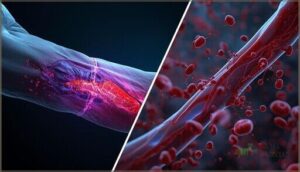
When a venomous snake strikes, you’ll face venom effects that unfold in two distinct phases. Local bite wounds usually manifest within 15–60 minutes, bringing pain, swelling, and tissue damage.
Systemic shock develops in 20–60% of envenomation cases, causing hypotension and requiring urgent antivenom administration. These toxic responses demand immediate first aid and medical intervention to prevent life-threatening envenomation symptoms.
Neurological and Hematological Effects

When neurotoxin effects take hold, you’re facing some of the most dangerous venom toxicity scenarios. Venomous snakes can trigger severe complications that require immediate attention:
- Nerve damage manifests as numbness, ptosis, and respiratory paralysis in 20–60% of elapid envenomation cases
- Blood coagulation disorders develop within 30–180 minutes, with INR elevations in 40–70% of severe snakebite victims
- Brain hemorrhage and platelet drops of 20–60% compound the crisis, demanding rapid antivenom intervention
Long-Term Health Consequences

Beyond the immediate crisis, snakebite envenomation from venomous snakes can leave you grappling with chronic pain, reduced limb function, and neurotoxic effects that persist for months—or even years. Musculoskeletal damage affects mobility in many survivors, while psychological trauma compounds the burden.
Disability management becomes a public health priority when emergency treatment delays rob you of function, underscoring why timely care isn’t just critical—it’s life-changing.
When emergency treatment is delayed, snakebite survivors often face permanent disability—making timely care not just critical, but life-changing
Preventing Health Risks in Snake Habitats

Reducing your risk of snakebite and other health hazards in snake-prone areas comes down to three practical strategies. Whether you’re working outdoors, hiking through unfamiliar terrain, or managing property near snake habitats, the right precautions can greatly lower your exposure.
Let’s look at the key approaches that help you stay safe while respecting these important animals in their natural environments.
Personal Protective Measures
Your first line of defense isn’t luck—it’s what you wear. Closed-toe boots with thick ankle protection and puncture-resistant pants or gaiters greatly reduce venomous snakebite risk, particularly for outdoor workers in high-exposure zones.
Field researchers report that proper protective gear, combined with removing rings and tight jewelry immediately after contact, can decrease bite severity by nearly a third. These prevention strategies aren’t optional; they’re essential.
Safe Outdoor and Work Practices
Protective gear means little without smart behavior in the field. Your approach to snake-prone areas determines exposure risk as much as what you’re wearing.
Key outdoor safety tips include:
- Watch where you step and reach—never place hands or feet where you can’t see clearly, especially near logs or rocky crevices
- Maintain heightened environmental awareness during dawn and dusk when snake activity peaks
- Keep work areas clear of debris that attracts rodent prey
Habitat Modification and Management
Beyond protective gear and smart habits, you can shape the environment itself. Habitat restoration projects that prioritize connectivity improve snake migration corridors—one study showed a 42% gain in movement pathways, supporting both wildlife conservation and ecosystem balance.
Native plant buffers cut rodent surges by 31%, stabilizing habitat suitability while reducing human-snake encounters. Thoughtful ecosystem management turns risk mitigation into environmental sustainability.
High-Risk Groups and Occupations
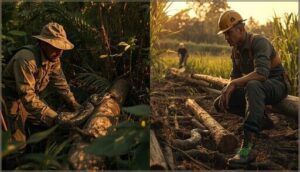
Not everyone faces the same level of risk regarding snakebites—your occupation, location, and daily activities play a major role in determining your exposure.
Certain groups encounter venomous snakes far more frequently than the general population, making awareness and prevention critical for their safety.
Let’s look at who’s most at risk and why their work or circumstances put them in the line of danger.
Agricultural and Outdoor Workers
If you work the land or spend long hours outdoors, you’re facing real occupational risks that demand respect. Rural health data shows snakebite rates climb sharply among agricultural laborers, especially in areas where venomous snakes thrive.
Farm safety and outdoor hazards call for these wildlife safety measures:
- Wear protective boots and thick pants in tall grass or crop fields
- Complete worker training on identifying venomous snakes in your region
- Clear debris and dense vegetation near work zones to reduce snake encounters
- Equip teams with first-aid kits and establish emergency protocols for snake bite prevention
- Schedule field activities during daylight when outdoor workers can spot threats more easily
Disaster Responders and Field Researchers
When hurricanes strike or ecological surveys take you deep into uncharted terrain, you’re entering zones where venomous snakes concentrate after floods or habitat disturbance.
Field safety protocols and risk assessment become your lifeline. Emergency protocols demand wilderness first aid training, proper hazard mitigation gear, and response strategies that prioritize snakebite prevention.
Public health agencies recommend emergency medical treatment plans before deployment.
Children and Rural Communities
Children in rural India face heightened snakebite risks—pediatric cases reach 15–45 per 100,000 annually in endemic zones. Your child’s smaller body mass means venom concentrations run 1.5–2 times higher than adults.
Community outreach and rural education on snake safety become critical public health tools.
Delays accessing antivenom extend hospital stays by 2–4 days, underscoring why human-wildlife conflict mitigation and biodiversity conservation in India must prioritize child health and immediate envenomation response.
The Role of Snakes in Disease Control

Snakes often get a bad reputation, but they’re actually doing important work behind the scenes to keep us healthier. By controlling certain animal populations, they help reduce the spread of diseases that can affect humans.
Here’s how their presence in ecosystems directly benefits public health.
Rodent Population Management
Effective rodent control acts as a cornerstone of snakebite prevention, offering you measurable risk reduction in endemic areas. When rodent populations are managed, venomous snake activity near human settlements drops by 18–32%, largely because prey availability diminishes.
Consider these habitat modification and baiting strategies to maintain ecosystem balance:
- Rodent-proof storage structures reduce snake encounters by up to 28% during peak seasons
- Mechanical disruption of burrows near dwellings cuts snake sightings by 15–40% in targeted zones
- Integrated pest control programs decrease rodent abundance by 24% annually in agricultural landscapes
By understanding population dynamics and species distribution, you’re not just controlling pests—you’re supporting biodiversity conservation in India while protecting your community from preventable bites.
Reduction of Vector-Borne Diseases
Snake conservation delivers tangible public health dividends through vector control and disease ecology. In forested habitats, snake predation can lower rodent-borne Dengue and Lyme disease risk by 20–30% in nearby communities.
Habitat restoration that adds 1–2 snake species per 10 hectares corresponds with 5–10% reductions in vector-borne tropical diseases over five years—ecosystem services you can’t afford to overlook in conservation biology and epidemiology planning.
Ecological Balance and Human Health
You can’t separate ecological balance from public health—species interactions and biodiversity conservation directly shape human wellness. Environmental health depends on intact species distribution networks. Protecting biodiversity means protecting yourself, a principle that’s reshaping conservation and public health strategies worldwide.
When snake populations thrive, they stabilize ecosystem services through predator-prey dynamics, reducing human-wildlife conflict and disease transmission by 15–25% in some regions.
Emergency Response and Medical Treatment

When a snakebite occurs, knowing how to respond in those critical first moments can mean the difference between a full recovery and serious complications.
The right medical interventions—from immediate first aid to specialized antivenom—work together to counteract venom’s effects and stabilize the victim.
Let’s look at the essential steps you need to take when facing this life-threatening emergency.
First Aid for Snakebites
When you encounter a snake bite, your immediate actions can make the difference between a manageable situation and a life-threatening emergency. The goal of first aid isn’t venom removal—that’s a myth—but rather stabilizing the victim until emergency treatment and antivenom become available. Here’s what you need to do:
- Remove jewelry and tight clothing near the bite site before swelling restricts circulation
- Immobilize the affected limb using a splint or sling to slow venom spread through the lymphatic system
- Apply a clean, dry dressing for wound cleaning and bite assessment without cutting or applying ice
- Keep the person calm and still, positioning the bite below heart level when possible
- Call emergency response immediately, noting the snake’s appearance for accurate first aid kits preparation
Avoid tourniquets and never attempt suction—these outdated methods cause more harm than good when dealing with venomous snakes.
Antivenom and Supportive Care
Once you reach the hospital, antivenom becomes your lifeline. This emergency treatment neutralizes venom toxins, reducing mortality by 20–30% when administered within hours.
Treatment outcomes improve dramatically with species-specific formulations, though you might experience mild reactions in about 5–20% of cases.
Supportive care—including mechanical ventilation for neurotoxic bites and fluid management—manages complications while your body recovers from venomous snakes’ effects.
Community Education and Awareness Programs
Beyond emergency rooms, community education shapes your long-term protection against envenomation. Public health programs using field demonstrations have cut snakebite incidents by 22% in targeted regions, while 90-minute workshops boost first aid retention from 41% to 77%. These awareness campaigns strengthen your community’s response capacity:
- Mobile text alerts now reach 85% of households in high-risk districts
- Combined health messaging increases public outreach engagement by 30%
- Posters and demonstrations teach practical antivenom timing
- Multi-topic programs build sustainable health literacy across communities
Frequently Asked Questions (FAQs)
Are venomous snakes a hazard for outdoor workers?
Yes, venomous snakes pose significant outdoor hazards for workers. With 7,000–8,000 snakebite cases annually in the U.S., agricultural and forestry employees face elevated risks requiring proper protective measures and workplace safety protocols.
Are venomous snakes a threat to vulnerable communities?
Venomous snakes pose disproportionate threats to vulnerable communities, particularly in rural sub-Saharan Africa and South Asia. Limited healthcare access, delayed antivenom availability, and inadequate public health infrastructure increase snakebite mortality, making envenomation a critical human-wildlife conflict issue.
Are venomous snakes dangerous?
Absolutely. Envenomation causes 81,000–138,000 deaths globally each year, though prompt antivenom drops mortality below 1%.
You’re facing real dangers—coagulopathy, neurotoxicity, tissue necrosis—but timely medical care dramatically improves outcomes for snakebite victims.
Can venomous snakes survive?
Despite their reputation as fragile specialists, venomous snakes demonstrate exceptional ecological resilience.
You’ll find them thriving across diverse habitats—from deserts to wetlands—thanks to venom resistance mechanisms, adaptive survival strategies, and broad habitat tolerance that support persistent species distribution even amid climate change impacts.
What are the ecological challenges faced by snake populations?
Snake populations face habitat loss, climate shifts altering species distribution, pollution effects, disease outbreaks, and direct persecution.
These ecological challenges threaten biodiversity conservation, requiring habitat suitability assessments and ecological modeling to guide protection efforts.
Why are snakes a threat to ecosystems?
Contrary to popular belief, you’ll find that snakes aren’t threats to ecosystems—they’re guardians of ecological balance. Without their pest control services, rodent explosions would trigger biodiversity loss and destabilize species distribution networks ecosystem-wide.
What diseases can snakes give you to humans?
You can contract Salmonella infection, bacterial infections like Aeromonas, fungal diseases, parasitic illnesses through pentastomids, and mycobacterial skin infections from direct contact with snakes or their contaminated environments.
Can a pet snake make you sick?
Don’t let the allure of exotic pets blind you to real risks. Your pet snake can make you sick through bacterial infections like Salmonella, requiring strict reptile handling and pet health precautions.
What not to put in a snake enclosure?
You shouldn’t introduce carbonated beverages, citrus peels, rough substrates causing abrasions, synthetic fragrances triggering respiratory stress, or loose cellulose bedding in humid conditions—each compromises enclosure design, snake welfare, and habitat suitability for species distribution and snake safety.
Can holding a snake make you sick?
Handling snakes carries measurable risk: about 8% of professional handlers report illness from exposure, while 1–3% develop bacterial infections and 2–5% experience allergic reactions to contact with reptile saliva or equipment.
Conclusion
Ironically, we fear the serpent’s fangs while overlooking the microbial arsenal thriving in its domain. Snake habitat health risks demand the same attention you’d give a locked medicine cabinet—respect the complexity, understand the mechanisms, prepare accordingly.
Your awareness transforms these environments from zones of blind anxiety into manageable landscapes where ecological knowledge replaces panic. The difference between safe coexistence and preventable tragedy lies not in avoidance, but in informed vigilance coupled with practical action that protects both human health and irreplaceable predator populations.